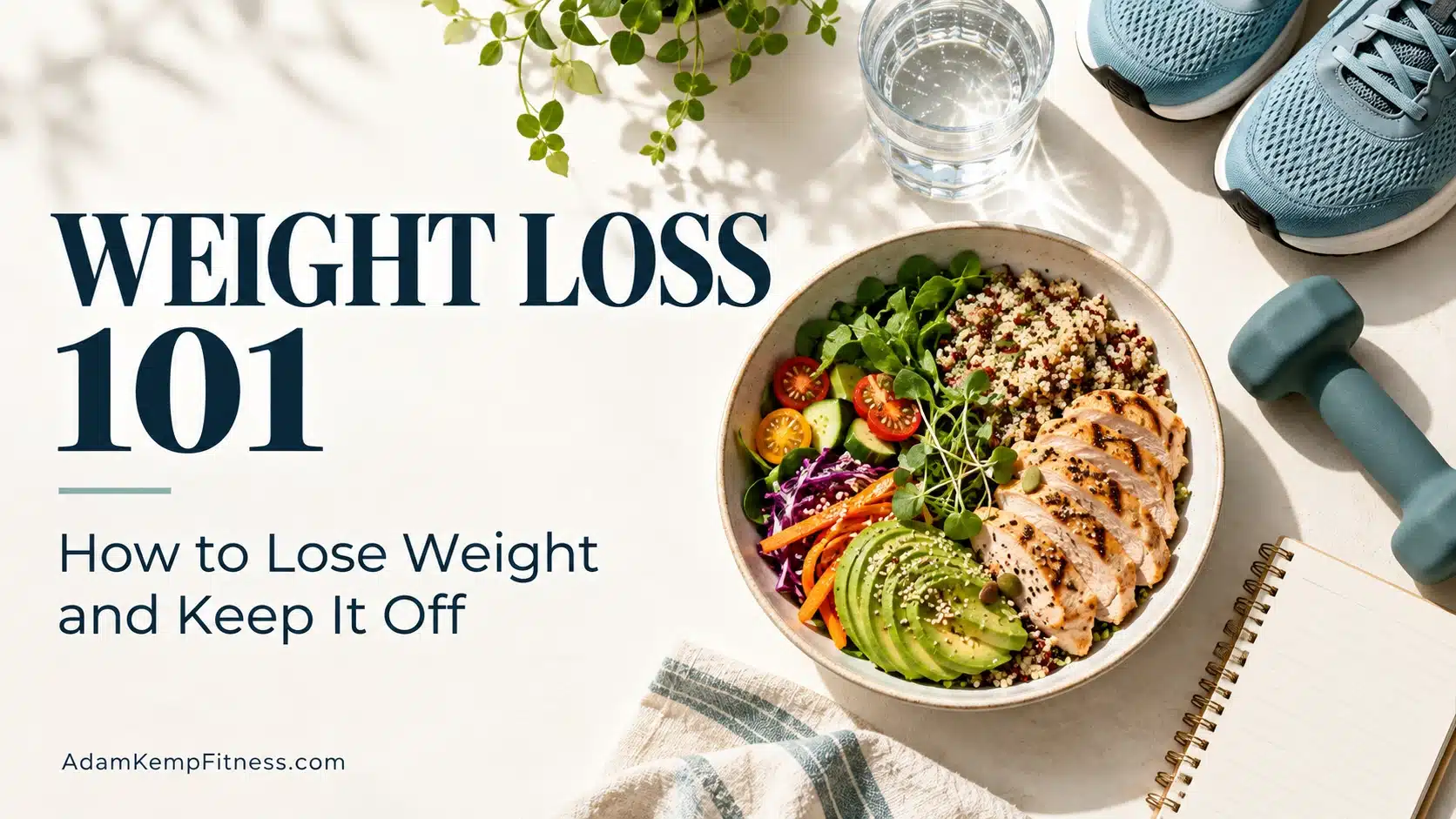
Weight Loss 101: How to Lose Weight and Keep It Off
 Reading Time: 55 minutes
Weight loss is one of the most common fitness goals in the world, but it is also a complicated problem with many intricate details.
Although the basics of weight loss are simple: calories in vs. calories out, there are many, many factors affecting how and why you intake calories v how and why you burn calories, and how many for each.
To lose weight sustainably, you need an approach to eating, movement, recovery, and support that fits your life well enough to stick with.
A calorie deficit is necessary to lose stored body energy, but the factors that influence it include appetite, food choices, physical activity, medications, health conditions, and your environment (Hall et al., 2011; Centers for Disease Control and Prevention [CDC], 2025).
As a professional basketball player with a master’s degree in Nutrition Education, I approach body composition with health and physical performance in mind. I want a weight loss plan to help you feel capable, eat adequately, and develop habits you can maintain after the scale reaches your goal.
That means giving the most attention to useful fundamentals while keeping individual foods, supplements, and specialized tactics in perspective.
You do not need to implement every idea below; use the sections that address the obstacles you actually face.
The essentials: Build satisfying meals, create a manageable calorie deficit, preserve muscle through resistance training and adequate protein, move regularly, protect sleep, and adjust your plan using trends rather than daily scale changes.
Medical Disclaimer: This guide is intended for adults considering intentional weight loss and provides general education based on research and my experience as a professional athlete with a master’s degree in Nutrition Education. It is not a substitute for individualized medical advice, diagnosis, or treatment. Consult a qualified healthcare professional before making major dietary changes or starting weight-loss supplements, especially if you take medication or have a medical condition. Weight management during pregnancy, adolescence, or eating disorder recovery requires individualized guidance, and unexplained weight loss should be medically evaluated.
Affiliate Disclosure: This guide contains affiliate links, which means I may earn a commission if you purchase through them, at no additional cost to you. You are never obligated to purchase a product through these links.
What Is Weight Loss?
Weight loss is a decrease in total body mass, which can reflect changes in body fat, muscle, water, glycogen, and digestive contents.
A bathroom scale combines those changes into one number, so it cannot tell you exactly what you lost (Hall et al., 2011).
For most adults pursuing a healthier body composition, the practical goal is to reduce excess body fat while retaining strength and useful muscle.
My guide to how to reduce body fat percentage explores that distinction in more detail.
Weight Loss vs. Fat Loss
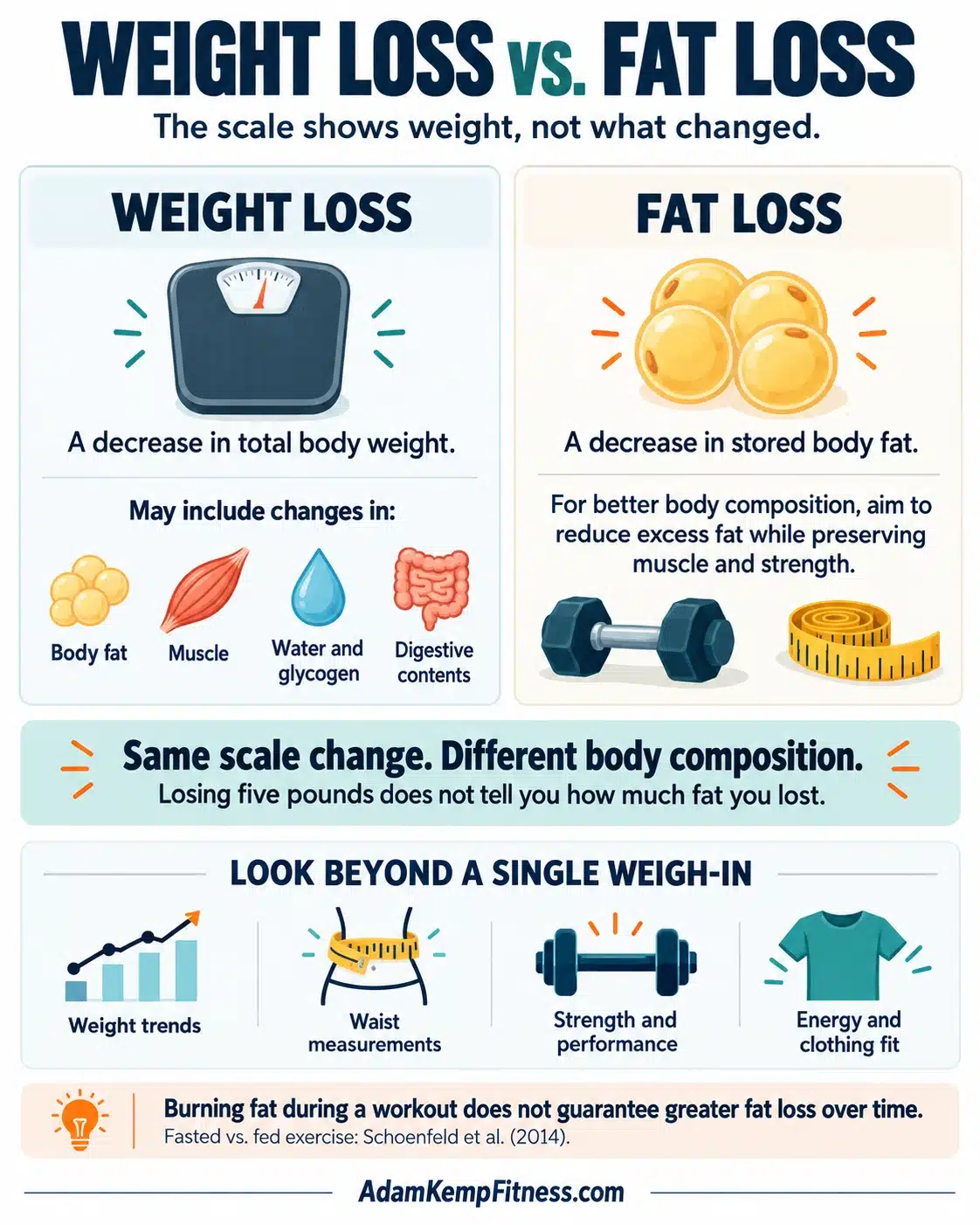
Weight loss means a reduction in total body weight, while fat loss specifically means a reduction in stored body fat.
Normal bodyweight scales cannot distinguish between changes in fat, muscle, water, or digestive contents, so it is crucial that you make a conscious effort to analyze your body composition by more thanjust than the scale when you are “losing weight.”
Two people might each lose five pounds, yet experience different changes in body composition.
One may lose primarily fat while maintaining muscle, while the other’s drop may largely reflect temporary changes in hydration and carbohydrate stores.
When your goal is improving body composition, I recommend focusing on losing excess fat while preserving muscle and strength.
Track your weight trend alongside waist measurements, training performance, energy, and how your clothes fit.
My guide to how to burn fat explains how to build a routine around lasting changes in body composition, rather than judging success by a single workout or weigh-in.
Do You Need to Lose Weight at All?
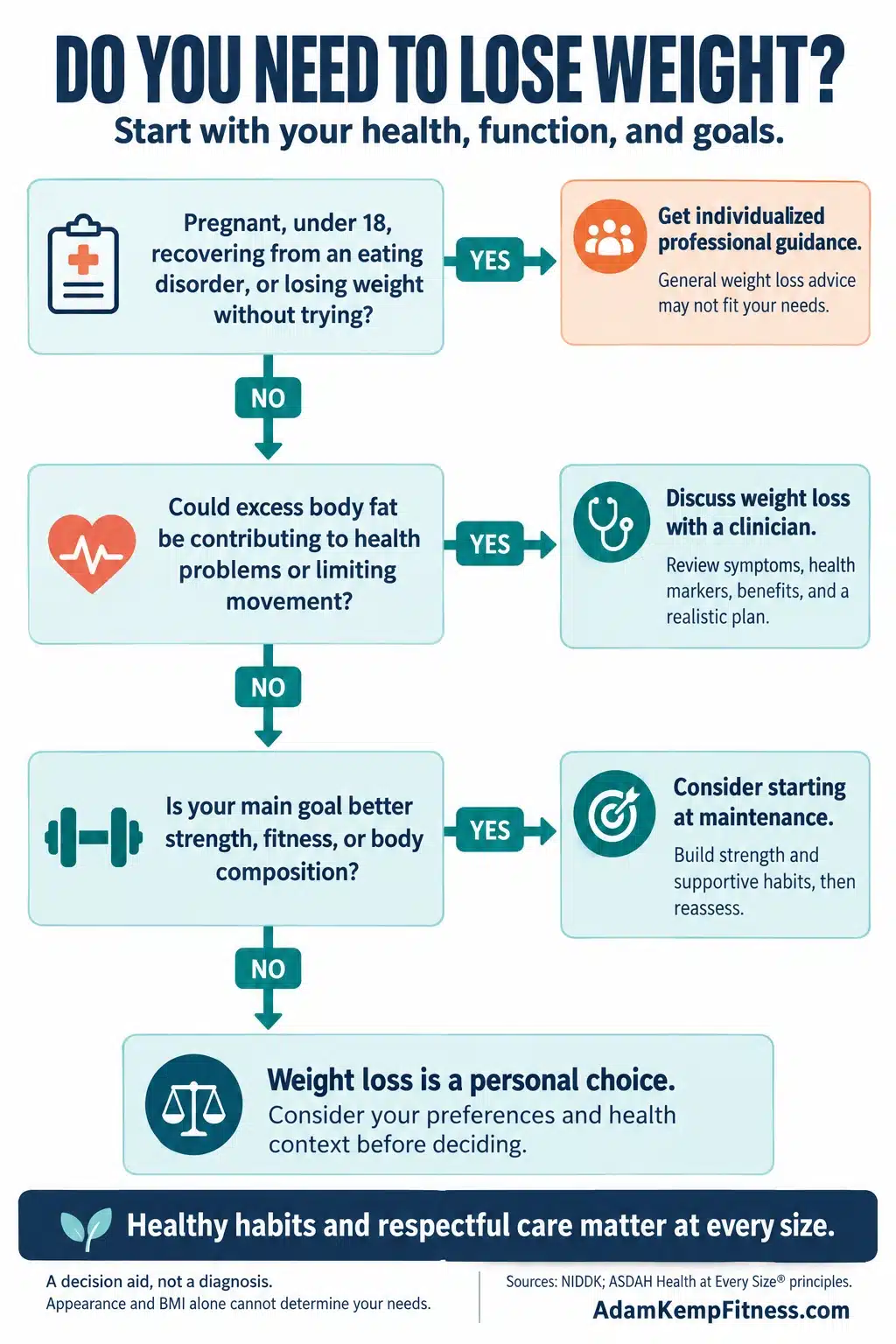
Whether you need to lose weight depends on your health, physical function, and personal goals.
Alongside your weight and personal opinion of your body composition and appearance, I recommend considering your blood pressure, blood sugar, waist measurement, symptoms, and medical history before deciding if you need to lose weight.
Health at Every Size® emphasizes respectful care and well-being for people of all body sizes, without making weight loss a condition for receiving support (Association for Size Diversity and Health [ASDAH], n.d.).
You deserve that respect throughout any decision about changing your weight.
When excess weight contributes to health problems, losing some of it can reduce pressure on weight-bearing joints, improve cardiovascular risk factors, and reduce excess fat in the liver (National Institute of Diabetes and Digestive and Kidney Diseases [NIDDK], n.d.).
These benefits provide practical reasons to pursue weight loss beyond appearance.
If feeling more confident is part of your motivation, define what that means to you, such as feeling comfortable in your clothes or more capable during exercise.
I encourage building confidence through those experiences throughout the process.
If your health markers are appropriate and your main goal is becoming stronger, maintaining your weight while improving your fitness may be a suitable starting point.
How Fast Should You Lose Weight?
The CDC describes gradual weight loss of approximately one to two pounds per week as a common target associated with better maintenance than faster loss.
Your appropriate pace still depends on your starting size, health, and circumstances, and slower progress can be entirely worthwhile (CDC, 2025).
Avoid treating two pounds per week as a minimum requirement.
Someone who is smaller, already relatively lean, older, or training hard may need a more conservative plan.
If you are interested in how to lose weight fast, focus on removing obstacles to consistent progress rather than forcing the fastest possible scale change.
A plan that repeatedly leaves you exhausted deserves adjustment even if it produces an impressive first week.
My articles on losing two pounds per week and how to lose 20 pounds address specific targets.
How to Set a Weight Loss Goal
To set a weight loss goal, start by identifying what you want losing weight to help you accomplish, whether that means walking more comfortably, improving your health markers, or keeping up with your children, and use that purpose to choose a meaningful target.
Your first target can be modest, as losing around 5% of starting body weight can improve blood pressure, cholesterol, and blood sugar in adults with excess weight (CDC, 2025).
For someone weighing 200 pounds, that would mean aiming to lose 10 pounds before reassessing their progress and health needs.
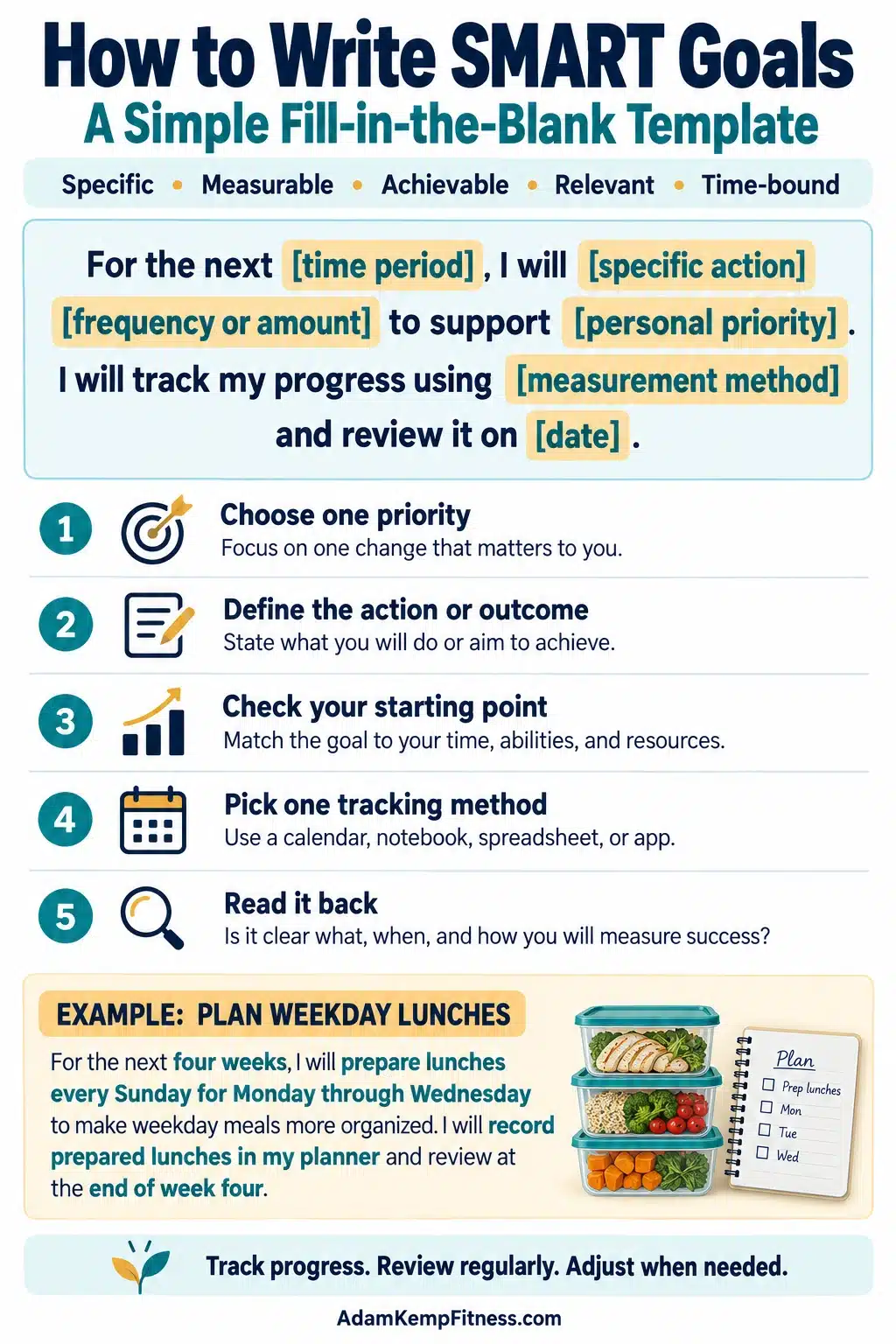
Once you have a target, use SMART Goals (Specific, Measurable, Achievable, Relevant, and Time-bound) to identify the habits you will practice and when you will review them.
For example, “For the next four weeks, I will prepare lunch for work four days a week and complete two strength workouts each week” gives you clear actions to track while allowing flexibility in how quickly your weight changes.
After four weeks, review your consistency, weight trend, and energy levels, along with how comfortably the routine fits your life, then use those observations to decide what to continue or adjust.
How to Create a Calorie Deficit for Weight Loss Without Making Life Miserable
A calorie deficit means your energy intake is lower than your energy expenditure over time.
Your body responds dynamically, so the same intake does not guarantee the same rate of weight loss indefinitely (Hall et al., 2011).
Use that principle to guide decisions, not to reduce your experience to willpower. The useful question is which changes make an appropriate intake easier to repeat.
Understand Where You Use Energy
Your body uses energy for basic functions at rest, processing food, structured exercise, and movement throughout the day.
Basal metabolic rate and resting metabolic rate are related measurements of resting energy use; they should not be added together as separate calorie-burning categories (Hall et al., 2011).
This is why a gym session represents only part of your daily activity picture.
My guide to how to burn calories is most useful when you think about the entire day rather than chasing a workout number.
Begin With Your Actual Routine
Before making major changes, spend several ordinary days observing meals, drinks, snacks, movement, sleep, and hunger.
Include a weekend or another day when your schedule changes.
You can use a food log, photographs, written notes, or a simple checklist.
Choose a method that helps you notice patterns without making eating feel like a surveillance task.
Look for specific opportunities: a large sweetened coffee, unplanned evening snacks, a lunch that leaves you hungry, or a commute that replaces your usual walking.
A clear observation is more useful than deciding your entire diet is bad.
If recording food intensifies anxiety, guilt, or compulsive behavior, stop and use professional support instead.
A tracking method is only useful if it fits your well-being.
Choose One of Two Starting Approaches
- The portion-based approach: Keep regular meals, include a recognizable protein source, add vegetables or fruit, and reduce one or two calorie-dense extras you do not particularly value. Monitor how your routine and longer-term trend respond.
- The number-based approach: Estimate maintenance needs, choose a modest reduction, and treat the estimate as a starting hypothesis. Review actual results before making further changes rather than assuming a calculator is perfectly accurate.
For example, someone estimating maintenance at 2,400 calories might initially experiment around 2,100 calories if that still supports adequate nutrition and manageable hunger.
This is an illustration of the decision process, not a calorie prescription for every reader.
My custom weight loss plan guide is useful for thinking through preferences, training demands, and scheduling. The right starting plan should be specific enough to follow and flexible enough to adjust.
Why the 3,500-Calorie Rule Is Only an Approximation
The familiar calculation that a 3,500-calorie deficit always equals one pound of weight loss overlooks changes in energy expenditure and body composition.
Dynamic models predict a slowing trajectory rather than an endlessly straight line (Hall et al., 2011).
That does not make planning useless, but it does mean a mathematical estimate should not become a reason to panic when the scale behaves differently.
Use calculations to choose a reasonable starting point, then use repeated observations to improve the estimate.
Look at the Week Without Compensating for Every Meal
Consider an illustrative week with five days averaging 2,000 calories and two days averaging 3,000.
The seven-day average is approximately 2,286 calories, which may be closer to maintenance than the weekday routine suggests.
The lesson is to include weekends in your planning. It is not to punish yourself after a celebration or remove enjoyable meals from your life.
Decide which social meals matter to you, keep your surrounding routine recognizable, and return to normal eating afterward.
You can learn from a pattern without turning one meal into a failure.
What to Eat to Lose Weight
I recommend building a weight loss diet around foods that serve several purposes at once: adequate protein, useful fiber, enjoyable flavor, and enough variety to make meals worth repeating.
Start by deciding what your meals need to include.
Removing foods is only one possible way to change energy intake.
Protein
Including protein throughout the day can help you build satisfying meals, with research suggesting that approximately 1.2–1.6 grams per kilogram of body weight daily can support appetite control and weight management when maintained consistently (Leidy et al., 2015).
For an 80-kilogram adult, that equals roughly 96–128 grams per day, although individual needs vary.
Start by identifying a protein source for each main meal, such as eggs or Greek yogurt at breakfast, chicken or tofu at lunch, and fish, beans, or lentils at dinner.
If breakfast is usually just toast, adding eggs or cottage cheese gives you a straightforward place to begin.
When food alone makes your target difficult to reach, protein powder can be a convenient addition to a weight loss diet, whether mixed into oatmeal or used in a smoothie.
Treat the calculation as a starting point and, if you have kidney disease, seek an individualized target, as kidney disease can change your protein requirements (National Institute of Diabetes and Digestive and Kidney Diseases [NIDDK], n.d.-a).
Fiber
To increase fiber, build on meals you already enjoy by adding oats at breakfast, beans to soup, lentils to pasta sauce, or fruit alongside a snack.
A commonly used intake guideline is 14 grams per 1,000 calories, with daily needs differing by age and sex (Dahl & Stewart, 2015).
This can be a useful first step when a complete dietary overhaul feels overwhelming: in a year-long trial, adults with metabolic syndrome who focused on increasing fiber lost an average of about 2.1 kilograms, compared with 2.7 kilograms among those following broader dietary guidance (Ma et al., 2015).
Choose one addition you can repeat consistently, then gradually expand your intake while drinking enough fluids to support bowel regularity (NIDDK, n.d.-b).
For example, start with oatmeal at breakfast, then add larger servings of legumes throughout the day.
Carbohydrates
Carbohydrates can remain part of a successful weight loss plan, as the DIETFITS trial found no significant difference in average weight loss between healthy lower-fat and lower-carbohydrate diets after 12 months (Gardner et al., 2018).
Choose portions that fit your appetite, activity, and overall intake, using foods such as oats, potatoes, fruit, legumes, and whole grains to build meals you enjoy.
If you like bread, consider how it fits into the whole meal: a sandwich with chicken, hummus, and vegetables offers a practical lunch you can adjust to your needs.
SImple carbohydrates, such as bread, may require additional attention to make sure you are not causing unncessary blood sugar spikes, which can increase hunger and overall calorie consumption over time.
For example, you could include sourdough bread in a weight-loss diet, but highly refined white bread may not be ideal.
The Role Fruits & Vegetables
To eat fruits and vegetables more consistently, choose options that fit the meals you already prepare, such as frozen broccoli for rice bowls, berries for yogurt, or canned tomatoes for a bean dish.
Keep a few dependable choices available each week so adding produce does not require a new recipe or another shopping trip.
For example, carrots and frozen vegetables can cover several lunches and dinners, while apples and bananas provide convenient snacks.
If fresh produce often spoils before you use it, buy smaller amounts and keep frozen or canned options as backups.
I would rather plan around foods that reliably get eaten than repeatedly buy ingredients that do not suit your routine.
Dietary Fat
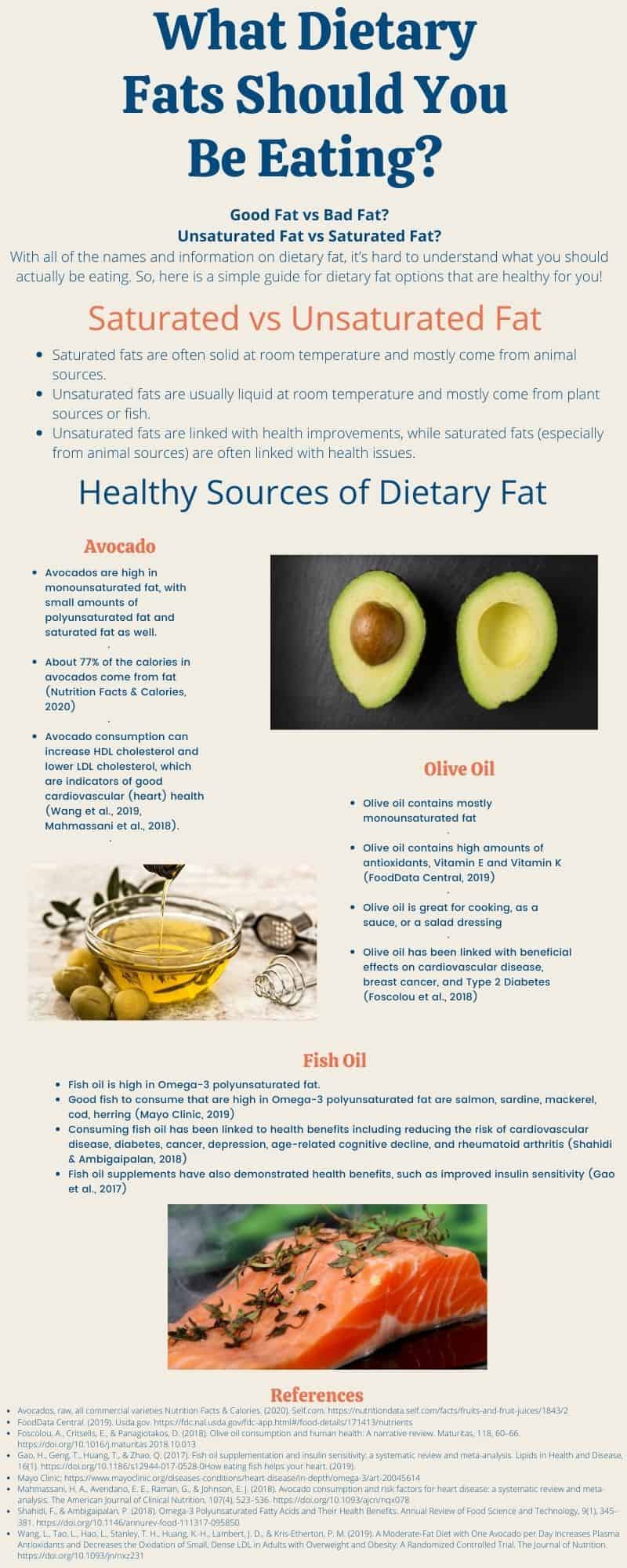
Dietary fats add flavor and texture, but their portions deserve attention because fat provides approximately nine calories per gram, compared with four for protein or carbohydrate (U.S. Food and Drug Administration [FDA], 2013).
A salad with olive oil, avocado, nuts, cheese, and dressing can therefore contain more energy than you expect, even when you have chosen each ingredient for a good reason.
I recommend measuring your usual oil, dressing, or nut butter occasionally to see what you typically use, then deciding which portions are worth keeping.
You might keep the avocado you enjoy most and use less dressing, preserving the meal’s appeal while making a manageable adjustment.
The Roles of Whole & Processed Foods for Weight Loss
Building meals around minimally processed foods can help shape your overall eating pattern, although processing alone does not tell you everything about a food’s usefulness.
In a small inpatient trial, participants consumed about 500 more calories daily and gained weight during an ultra-processed diet compared with an unprocessed diet, despite the offered menus being matched on several nutritional measures (Hall et al., 2019).
The study compared complete diets, so it should not be used to judge every packaged product in isolation.
I recommend keeping convenient ingredients that make balanced meals easier to assemble, including canned beans, prewashed vegetables, frozen fruit, and microwavable grains.
Combining those foods with a ready-to-eat protein can give you a realistic dinner for evenings when cooking from scratch is unlikely.
How to Support Gut Health Through Food Choices for Weight Loss
To support gut health while working toward weight loss, start with a varied diet, fiber sources you tolerate, and meals you can eat comfortably.
Increasing fiber gradually and maintaining adequate fluid intake can help support bowel regularity.
If you enjoy fermented foods, try including kefir in your weight loss diet as part of breakfast or a snack, choosing the type and portion according to your preferences and nutritional needs.
If you are considering kombucha for weight loss, compare its sugar and calorie content with the drink it would replace.
Evidence about probiotic supplements and body weight remains uncertain, so probiotic supplements claims alone are not a sound reason to expect fat loss (Office of Dietary Supplements [ODS], 2022).
I also recommend assessing digestive comfort separately from changes in body composition, rather than using reduced bloating as your measure of fat loss.
“Superfoods” for Weight Loss
When choosing foods marketed as “superfoods,” consider what a realistic serving contributes to your meals, including its taste, nutritional content, cost, and convenience.
Check serving-level information carefully, especially when powders advertise nutrient amounts measured per 100 grams.
The ingredients in my superfoods for weight loss guide, such as cacao, matcha, turmeric, and moringa, offer variety as you use them.
For example, mix cacao into plain yogurt or add turmeric to a lentil dish if those flavors make the meal more appealing.
I recommend choosing these ingredients for a clear place in your routine, without feeling that you need a collection of specialty products to eat well.
Which Diet Is the Best for Weight Loss?
My preferred starting point is a flexible eating pattern with plenty of plant foods, enough protein, and portions matched to the goal.
I would choose the structure by asking what you can shop for, prepare, enjoy, and maintain.
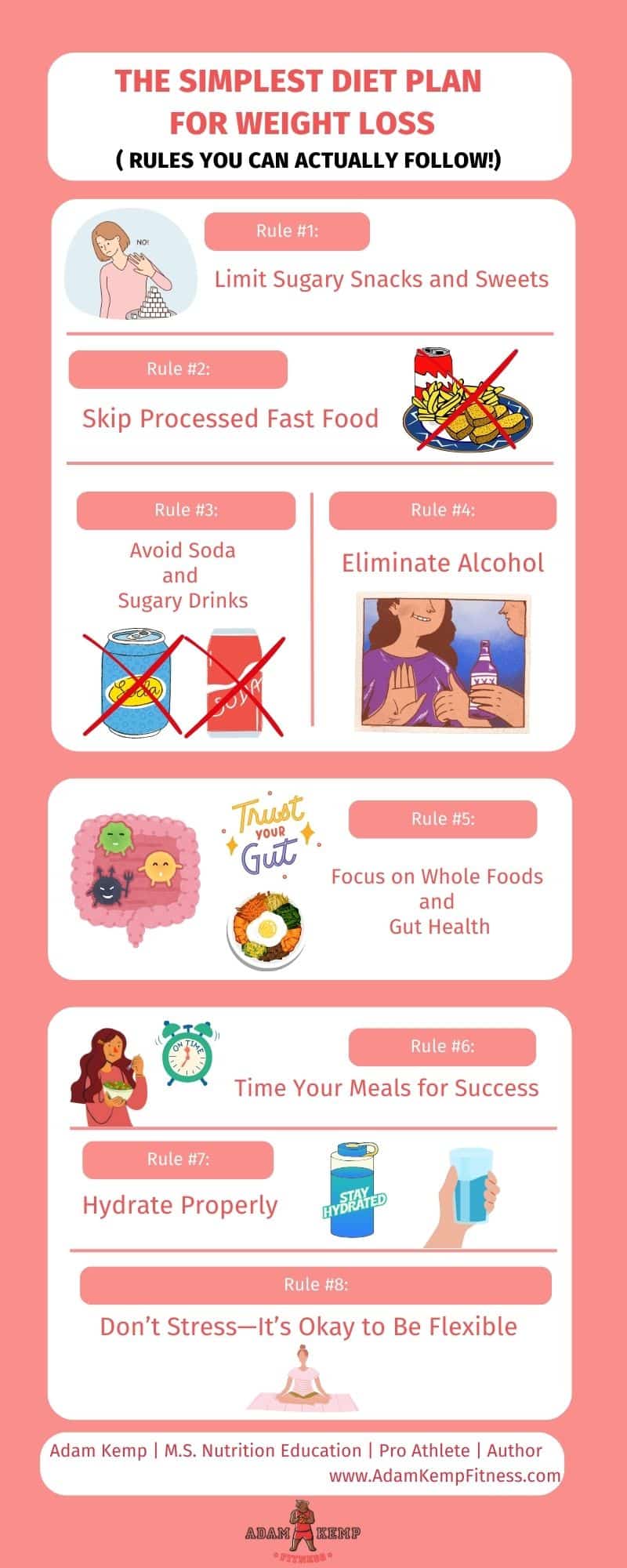
My simple diet plan for weight loss is a useful companion if you want a shorter set of daily rules.
| Approach | How it can organize meals | Question to ask before choosing it |
|---|---|---|
| Mediterranean-style eating | Uses vegetables, fruit, legumes, whole grains, fish, and unsaturated fats | Can I make portions and preparation fit my routine? |
| Higher-protein eating | Places a protein source in meals and snacks | Is the target appropriate for my health and body size? |
| Lower-carbohydrate eating | Reduces selected carbohydrate foods | Am I still eating enough fiber and fueling activity adequately? |
| Lower-fat eating | Reduces concentrated fats and higher-fat choices | Are meals still satisfying and varied? |
| Plant-based eating | Centers meals on plant foods | Have I planned reliable protein sources and any necessary nutrient support? |
| Flexible dieting | Allows varied foods within chosen targets | Does tracking help me, and is food quality receiving attention too? |
| Intermittent fasting | Sets a defined eating window or schedule | Does the schedule improve my routine without creating rebound hunger? |
This table is a decision aid rather than a ranking of diets, as the evidence does not support assuming that one named approach is the best choice for every adult (Gardner et al., 2018; Liu et al., 2022).
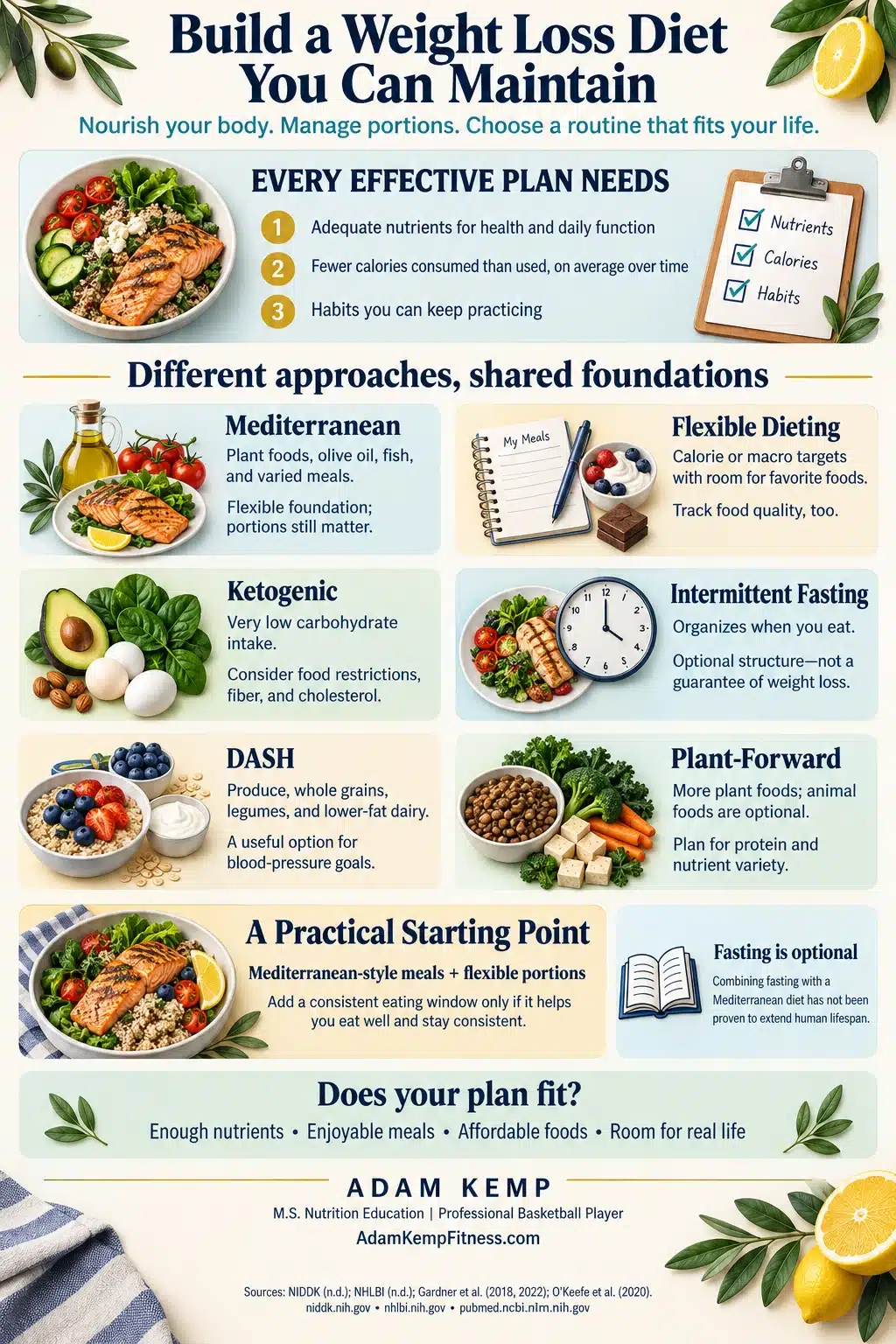
Regardless of what weight loss diet plan you choose, you need to choose a meal schedule that helps you arrive at meals with manageable hunger.
Some people prefer breakfast and three regular meals; others do well with a later first meal and fewer eating occasions.
A protein-containing breakfast may be worth trying if you repeatedly feel hungry soon after eating. Higher-protein meal patterns have shown appetite benefits, but that does not establish a universal requirement to eat breakfast or six small meals (Leidy et al., 2015).
You can use my metabolism-boosting breakfast ideas for meal inspiration.
Eggs with toast and fruit, yogurt with oats, or tofu with vegetables are practical templates.
If you eat at night because of work or training, design a suitable meal instead of judging it solely by the clock.
If you eat at night because dinner was too small, examine dinner before adding another restriction.
Intermittent Fasting
Intermittent fasting for weight loss can provide structure for people who prefer a defined eating window.
In a 12-month trial, adding time-restricted eating to calorie restriction did not significantly improve weight loss compared with calorie restriction alone (Liu et al., 2022).
Before adopting it, ask what problem it solves.
If the problem is unplanned late-night snacking, a consistent evening routine may help; if the problem is arriving at dinner ravenous after skipping lunch, a shorter eating window may be the wrong direction.
Do not use intermittent fasting to compensate for meals you regret.
People who are pregnant, breastfeeding, have an eating disorder history, or take medications that can cause hypoglycemia should seek individualized guidance before considering fasting.
You also do not need to combine every timing strategy.
My article on the topic of intermittent fasting and carb backloading explores a more specialized approach, but placing carbohydrates later in the day does not remove the need for appropriate overall intake.
Flexible Dieting

Flexible dieting can be a way to include favorite foods while using calorie or macronutrient targets.
However, I would judge its usefulness by whether it makes meals easier to manage without crowding out nutrition or creating rigidity.
You might plan a dessert, keep pizza as part of a family meal, or choose a satisfying restaurant dinner. None of those choices requires declaring the entire day as “off plan.”
If the numbers become more important than hunger, social life, or adequate nourishment, use a less numerical approach.
Flexibility should be visible in how the plan functions, not just in its name.
How to Make Healthy Eating for Weight Loss Easier
Knowing what to eat and having it available at the right time are different challenges. I recommend putting as much effort into preparation and convenience as you put into researching individual ingredients.
Use a Repeatable Meal Template
Start with a protein source, add vegetables or fruit, choose a carbohydrate portion that fits your needs, and include a measured or intentional source of fat.
Adjust the proportions rather than treating the template as a rigid plate rule.
Examples include chicken with potatoes and roasted vegetables, tofu with rice and broccoli, or lentil soup with yogurt and bread. Your meals can reflect your culture, budget, and preferences.
For mixed dishes, think about the ingredients across the whole meal. A bean chili, a sandwich, or a stir-fry does not need to look like four separate compartments to be balanced.
Make Portion Changes You Can Live With
Start with a portion you intend to eat, sit down when possible, and give yourself time to decide whether you want more.
If meals repeatedly leave you hungry, revise their composition rather than insisting that smaller is always better.
Try serving chips or nuts into a bowl instead of eating directly from a large package. The practical benefit is that you can see the portion and decide deliberately whether to refill it.
Keep useful additions available for meals that need more volume: vegetables, fruit, broth-based soup, or another appropriate side. Do not automatically shrink the protein portion when reducing a meal.
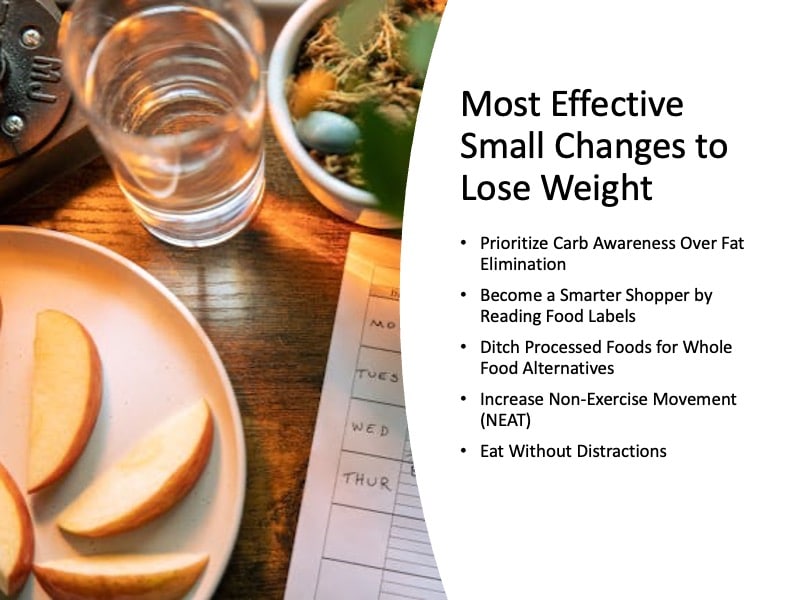
My small changes to lose weight article provides additional habit ideas.
Choose one change you can test for a week before adding several more.
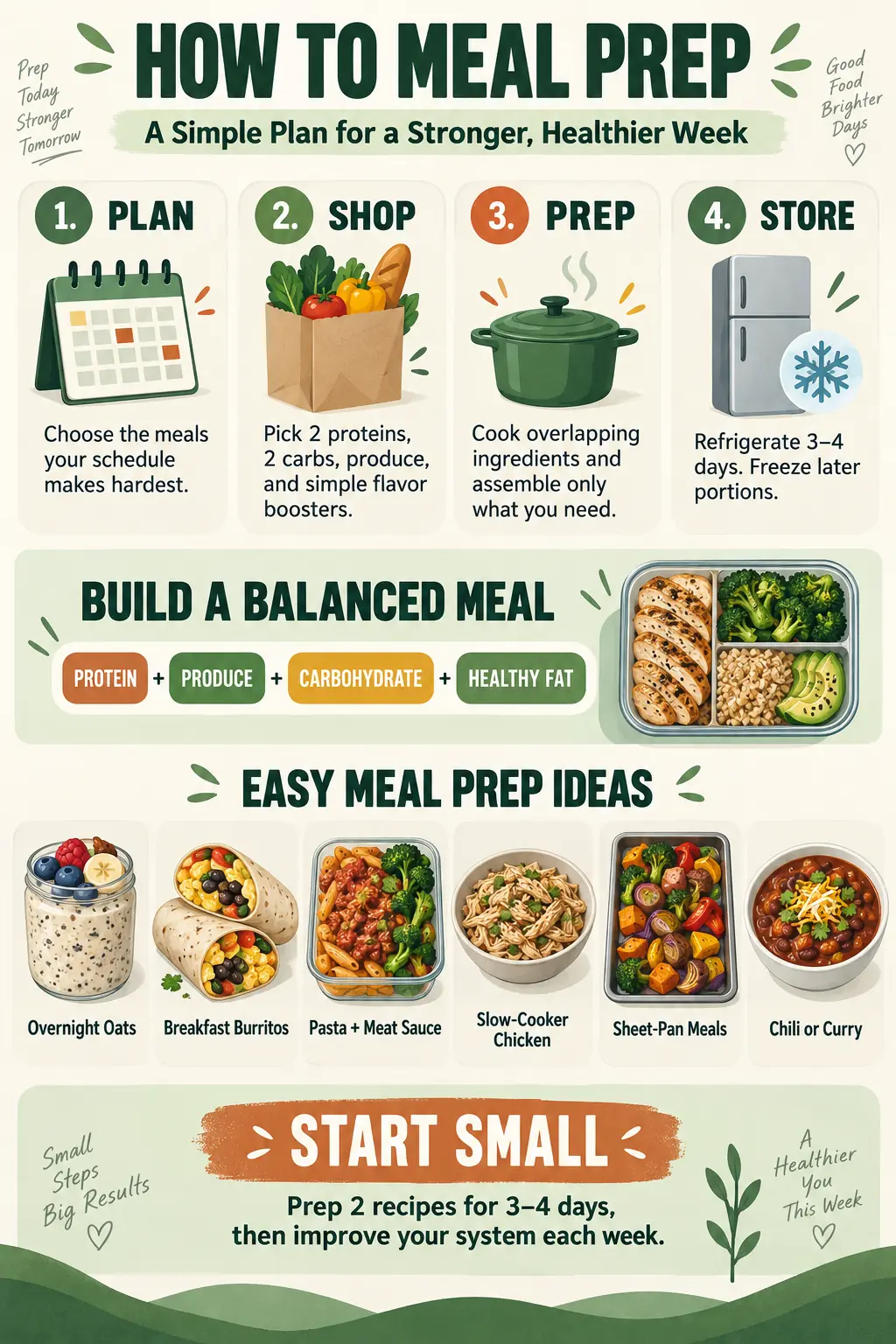
Prepare Ingredients Instead of Identical Meals
You do not have to cook seven matching containers on Sunday. A more flexible version of meal prep is to prepare a few interchangeable components.
For example, cook one protein, prepare a pot of grains or potatoes, wash vegetables, and keep a convenient fruit available.
Those ingredients can become bowls, sandwiches, salads, and quick dinners.
Write a short backup list for days when preparation does not happen. Options might include eggs and toast, canned beans with microwavable rice, a simple supermarket meal, or yogurt with fruit and oats.
Build a Useful Snack
Choose a snack for a reason: to bridge the long gap between meals, support a workout, or prevent an afternoon scramble.
A snack does not need to be earned through exercise.
Try combinations such as yogurt and fruit, an egg with toast, edamame, or hummus with vegetables and a suitable carbohydrate.
Adjust the amount to how long it needs to carry you.
If a snack repeatedly turns into an entire second meal, look at the meal before it. Y
our lunch may need more food, a better protein source, or a schedule change.
Use Shakes and Bars for Convenience
A high-protein shake can help fill a protein gap, while a meal replacement is designed to provide broader nutritional support.
Check the actual product rather than assuming every drink or bar is a complete meal.
My guide to meal replacement protein bars for weight loss discusses portable options and compares calories, protein, fiber, and your own satisfaction afterward.
My Garden of Life Protein and Greens review and OWYN protein shake review can help you compare two of my favorite options I have tried.
Buying either one is optional; neither product is required for a successful plan.
If a shake replaces a rushed meal, consider whether it needs fruit, oats, or another food alongside it.
If it is simply added to an already adequate day, count it as additional intake.
Keep Smoothies Matched to Their Job
A smoothie can be a snack, a meal, or recovery nutrition depending on its ingredients and size.
Decide which job it needs to perform before adding multiple powders, fats, and sweeteners.
A practical starting template is a protein source, one fruit, and an appropriate liquid.
Add other ingredients for a clear reason, such as oats for a more substantial meal.
For weight loss, review the combined portion rather than assuming that a long list of nutritious ingredients remains a low-calorie drink.
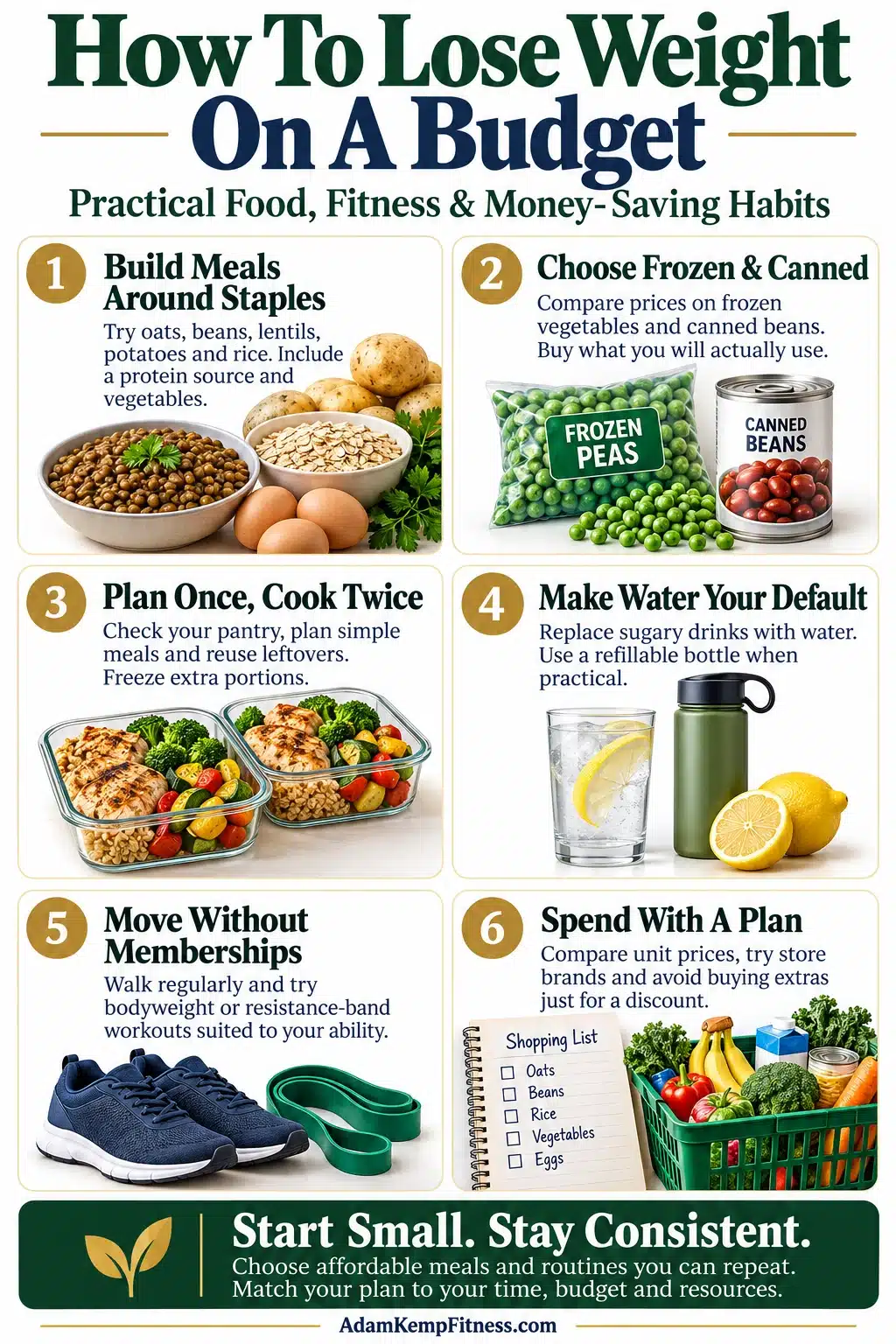
How to Lose Weight on a Budget
Build your shopping list around meals you can repeat before adding specialized products.
Oats, potatoes, beans, lentils, eggs, frozen vegetables, and seasonal fruit can form the basis of a practical routine.
Compare cost per usable serving and consider how much food you discard. A larger package is not a bargain if you cannot finish or safely store it.
My guide to losing weight on a budget focuses on shopping and meal prep, prioritizing dependable meals over premium “fat-burning” groceries.
Organic food can be a personal choice, but I would not make organic labeling a requirement for a weight loss plan.
Choose produce and other staples that fit your budget and that you will actually eat.
Navigate Restaurants and Social Meals
Look at the menu early if it reduces last-minute decision fatigue.
Choose the meal you want, then decide which extras you value rather than ordering them automatically.
You might keep the main dish and skip a caloric drink, share a starter, or take leftovers home.
You can also decide that a special meal is worth enjoying without modification.
Avoid arriving intensely hungry because you skipped meals to save calories.
Afterward, keep the next meal normal and evaluate your overall pattern instead of compensating.
For holidays or a demanding travel week, maintaining your routine imperfectly may be the most useful goal.
Practicing maintenance is part of learning long-term weight management.
What to Drink for Weight Loss
Drinks are worth reviewing because changing them may be simpler than redesigning every meal. In the CHOICE randomized trial, replacing caloric beverages with water or diet beverages was a useful weight-management strategy, although average weight changes did not differ significantly across all individual study groups (Tate et al., 2012).
Make Water an Easy Default
Keep water accessible where you work, eat, and exercise.
If plain water is unappealing, try sparkling water or add fruit slices, but don’t treat the addition as a detox.
One trial in middle-aged and older adults found greater weight loss when premeal water was added to a calorie-restricted diet.
That finding does not justify forcing large volumes or assuming water has the same effect in every population (Dennis et al., 2010).
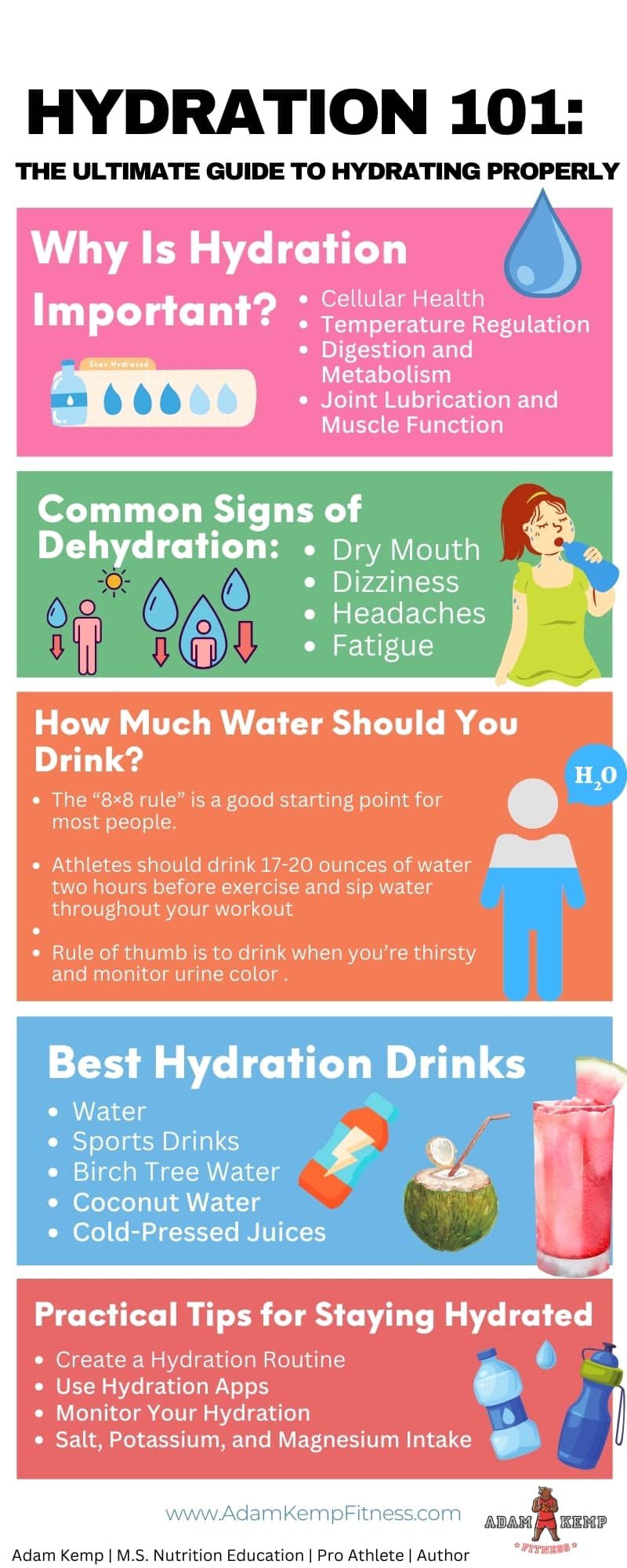
My hydration guide covers the overall topic. Follow individualized fluid guidance if a medical condition requires it.
Limit Sugary Drinks and Liquid Extras
List the drinks you consume over an ordinary week, including coffee additions, juice, sports drinks, alcohol, and smoothies.
Compare each drink with an alternative you would realistically enjoy.
Try changing one regular beverage first.
You might choose unsweetened tea, a smaller sweetened coffee, water with meals, or a lower-calorie substitute.
Milk, kefir, and meal replacement drinks can contribute useful nutrition, so do not assume all liquid calories are unnecessary.
Consider their role in the day rather than applying one rule to every beverage.
Coffee Can Fit, but It Is Not a Weight Loss Requirement
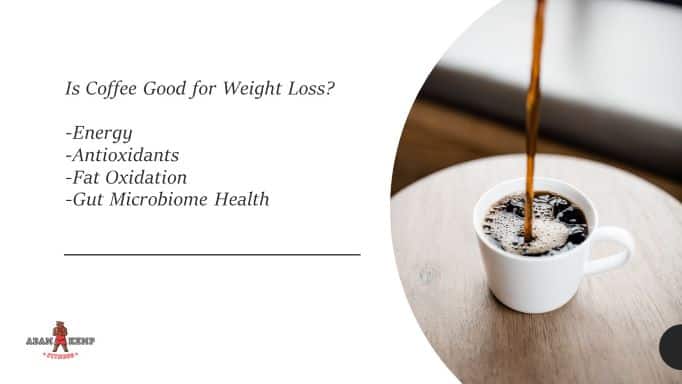
Drinking coffee for weight loss can support your goals, but it will not make enormous improvements.
Caffeine can affect energy expenditure, but tolerance develops, and it is not a reliable substitute for a broader plan.
The practical comparison is often between two coffee routines.
Keeping a preferred coffee while reducing a large amount of syrup or cream may be more useful than buying a product marketed as slimming coffee.
My best coffee for weight loss comparison can help you explore specifc types of coffee which may support your weight loss goals better than others.
Be cautious about the coffee loophole diet and claims that a narrowly timed drink can bypass energy balance.
A beverage routine should make your day easier, not another rule you fear breaking.
What Should You Add to Coffee for Weight Loss?
When considering ingredients to add to coffee for weight loss, start with flavor and tolerance.
Cinnamon, cacao, or a measured amount of milk may make a simpler coffee more enjoyable.
Adding butter or oil also adds energy, so it should serve a deliberate purpose rather than being treated as free fuel.
Salt does not turn coffee into a fat-loss treatment.
My discussion of cinnamon in coffee for weight loss explores that ingredient.
Use culinary amounts for flavor rather than increasing the dose to achieve faster results.
Green Tea, Matcha, Oolong, and Other Teas
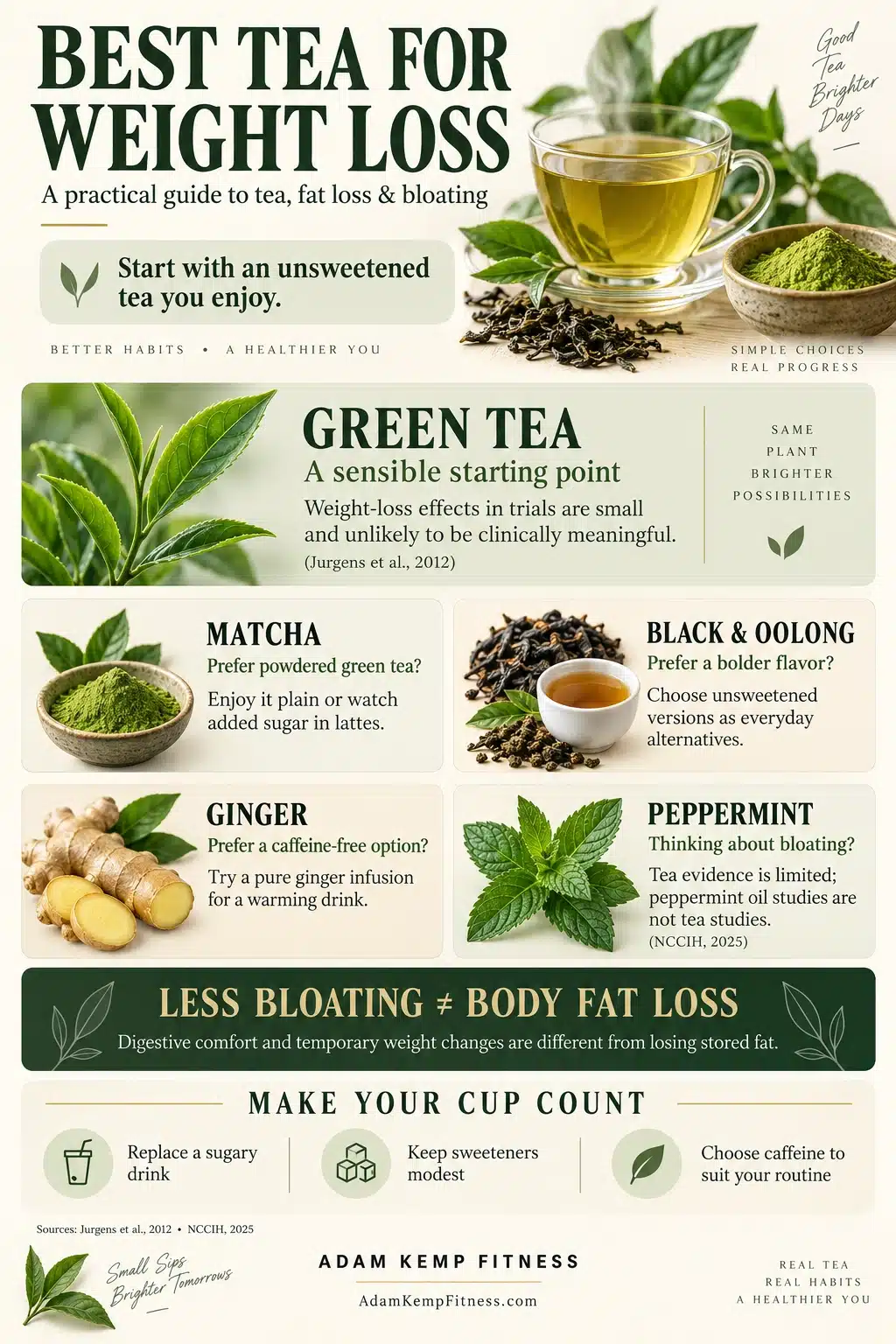
Unsweetened tea is another option when you want a flavorful alternative to a caloric drink.
The evidence for tea extracts as weight loss products is limited, and results from concentrated supplements should not automatically be applied to ordinary cups of tea (ODS, n.d.).
You can compare my guides to green tea for weight loss, matcha, and oolong tea to learn more about the best teas for weight loss.
Choose one you enjoy rather than assuming a specific variety will determine your results.
If you drink several caffeinated beverages, consider them together.
A morning coffee, afternoon energy drink, and evening tea all belong in the same daily caffeine picture.
Energy Drinks, Celsius, and Pre-Workout Products
A low-calorie energy drink can replace a sugary beverage, but drinking it does not establish that additional body fat will be lost.
I would judge the swap by the drink it replaces, your total caffeine intake, and whether it affects sleep or comfort.
My energy drinks for weight loss guide covers the category, and my broader caffeine guide can help you consider timing and sensitivity.
For a specific example, compare the questions in Celsius for weight loss and does Celsius burn fat?.
However, an ingredient’s short-term effect on fat oxidation should not be presented as a guarantee that a finished energy drink produces meaningful long-term fat loss.
Do not combine products simply because each contains a different metabolism.
Review the full labels, especially when an energy drink, pre-workout, and supplement all contain stimulants.
Alcohol and Weight Loss
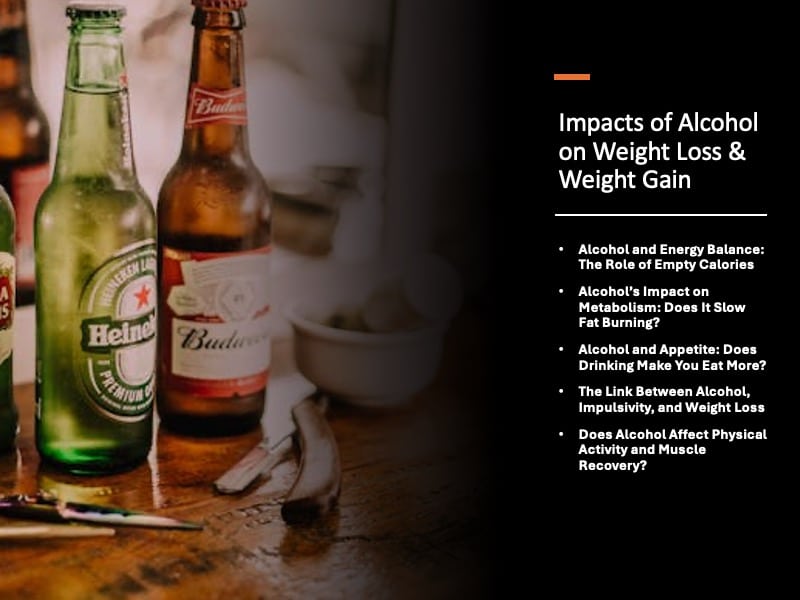
When assessing alcohol and weight loss, look beyond the drink itself and review the surrounding routine.
Consider the mixers, food choices, sleep, and next-day activity that accompany your usual drinking occasions.
An easy experiment is to make some occasions alcohol-free and notice what changes.
Try a drink you enjoy, plan an activity that is not centered on alcohol, or decide on a smaller amount before the event.
Avoid skipping food to make room for alcohol.
If reducing alcohol is difficult or you may be physically dependent, seek medical support rather than abruptly changing your intake on your own.
Exercise for Weight Loss: Strength, Cardio, and Daily Movement
Exercise supports health even when the scale changes little.
The World Health Organization recommends that adults aim for 150-300 minutes of moderate-intensity aerobic activity or 75-150 minutes of vigorous-intensity activity per week, alongside muscle-strengthening activity on at least 2 days (World Health Organization [WHO], 2024).
Those are general health guidelines rather than a guarantee of a particular amount of weight loss.
Start from your current abilities and build gradually instead of treating the full recommendation as a first-week test.
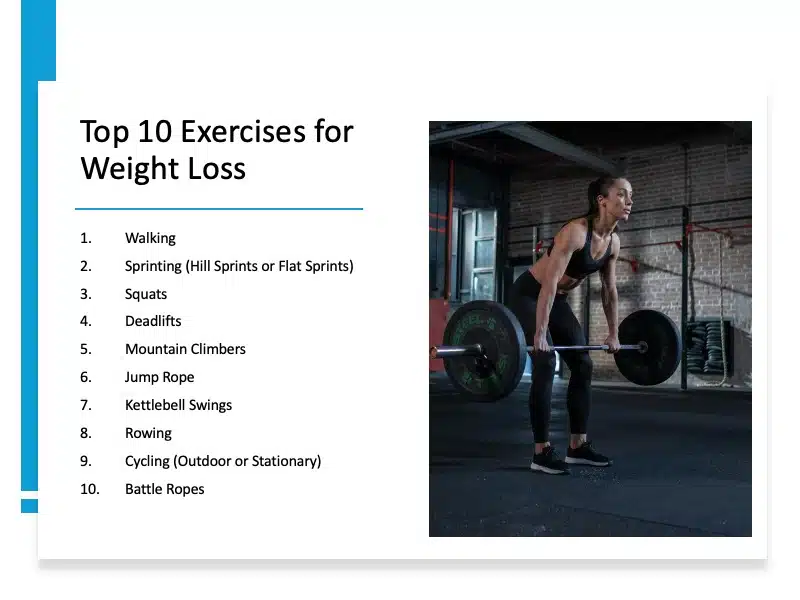
My best exercises for weight loss guide can help you explore options. I recommend choosing activities you can repeat without constantly disrupting recovery or daily life.
Can You Lose Weight Without Exercise?
Weight loss can occur through dietary changes without adding exercise, while physical activity provides benefits beyond weight change (CDC, 2026; WHO, 2024).
This matters for people recovering from injury, living with disability, or managing temporary activity restrictions.
Work with the movement you can safely do and focus on an adequate, manageable eating pattern.
Adapted resistance exercise or rehabilitation may be appropriate, but the plan should be based on your situation.
Avoid interpreting limited exercise capacity as a reason for an extremely restrictive diet. If movement is medically limited, get help balancing nutrition and recovery.
Make Strength Training a Foundation
I recommend making strength training a regular part of your weight loss plan because preserving strength matters for everyday activities like climbing stairs, carrying groceries, and getting up from a low chair.
In a six-month trial of adults aged 65 and older with obesity, participants who combined resistance training and aerobic exercise during weight loss improved their ability to perform everyday tasks more than those who did either type of exercise alone.
Both groups that included resistance training also lost less lean mass than the aerobic-only group (Villareal et al., 2017).
A practical starting point is to set aside two days each week for strength training, then fit walking or other cardio around those sessions (Centers for Disease Control and Prevention, 2025).
Choose a few exercises you can perform comfortably and record the weight and repetitions so you know when you’re ready for a little more resistance.
During a calorie deficit, maintaining your usual lifts with good technique is a worthwhile goal.
If the same weights feel noticeably harder for several workouts in a row, I’d review how much you’re eating, how well you’re sleeping, and how much training you’re trying to recover from before adding more exercise.
Train Your Whole Body
Training your whole body during weight loss can help you lose fat while preserving muscle.
In a review of adults with overweight or obesity, those who added resistance training to a weight loss diet lost more fat and retained more lean tissue than those who changed their diet alone, even though the groups lost similar amounts of weight overall (Binmahfoz et al., 2025).
To put that into practice, build your week around a few movements that challenge your legs, hips, upper body, and core.
You might combine a squat, a hip hinge, a push, a pull, and a core exercise in one workout, or spread them across shorter sessions using weights, resistance bands, or bodyweight exercises.
I recommend tracking a few exercises alongside your weight and waist measurements.
If your waist is gradually getting smaller and you can still lift the same weight for the same number of repetitions, you have a useful sign that you’re maintaining strength as your measurements change, even during weeks when the scale barely moves.
Choose Cardio You Can Sustain
When choosing cardio workouts for weight loss, start with activities you enjoy enough to make time for on an ordinary week.
A brisk walk with your family, a swim before work, or a dance class you look forward to can each give you a dependable way to stay active alongside your strength workouts.
How much cardio you accumulate over the week matters.
A review of 116 randomized trials found that, among adults with overweight or obesity, more weekly aerobic exercise was generally associated with greater reductions in waist size and body fat, with meaningful improvements around 150 minutes per week (Jayedi et al., 2024).
If you’re just starting, treat 150 minutes as a goal to build toward.
To find a moderate pace without watching a heart-rate monitor, use the talk test: your breathing should be deep enough that singing would be difficult, but you can still carry on a conversation (Centers for Disease Control and Prevention, 2025).
Walking Is a Practical Starting Point
To make walking for weight loss part of your routine, choose a time and route that already fit your day.
A ten-minute loop after lunch is a good starting point if it’s comfortable, and once it feels familiar, you can extend the route or take a second walk after dinner.
If you enjoy tracking steps, use your current daily average as a starting point instead of jumping straight to 10,000.
If you’d rather leave the watch at home, walking your child to school or taking the longer route to a nearby shop gives you a goal with a destination you already have a reason to reach.
Jogging, Running, and Low-Impact Alternatives
If you enjoy a quicker pace, ease into jogging for weight loss by adding short jogging intervals to a familiar walk.
For example, jog gently to the next lamppost, then walk until your breathing settles; as those stretches become comfortable, gradually spend more of the route jogging.
If running repeatedly bothers your joints, stationary cycling or pool exercise may let you keep the same workout time with less impact.
Choose an activity that feels comfortable, and have persistent or worsening pain assessed before increasing your running volume.
Use HIIT When It Fits Your Week
High-intensity interval training (HIIT) alternates short bouts of hard exercise with easier recovery periods.
It can suit people who enjoy a faster-paced workout, but current evidence does not show that HIIT is superior to other moderate-to-vigorous activity for managing body weight (Jakicic et al., 2024).
If you want to try intervals, start with an activity you know well.
On a stationary bike, for example, warm up at an easy pace, add a few short, hard efforts with easy pedaling between them, and finish while you can still pedal smoothly.
I’d judge that session partly by what happens the next day.
If your legs regularly feel too tired for your usual walk or strength workout, shorten the hard efforts or move them farther from your most demanding lifting day.
Conditioning Tools Are Optional
Choose conditioning tools according to the kind of workout you want.
For example, prowler sled pushes give you a way to work against resistance over a short distance, and battle ropes are useful for intervals when space is limited.
Pick one movement, learn it at a controlled pace, and give it a specific place in your week, such as a few short rounds after a strength session.
If you already enjoy walking, cycling, or swimming, you can build your weight loss routine around those activities without buying anything else.
Increase Non-Exercise Activity Thermogenesis
Non-exercise activity thermogenesis (NEAT) is the energy you use moving through daily life, whether you’re carrying groceries, climbing stairs at work, or playing outside with your children.
If you’re trying to lose weight, these activities give you opportunities to increase your daily energy expenditure even on days when you don’t work out.
In a controlled overfeeding study, researchers found that people varied considerably in how much their energy expenditure from everyday movement changed (Levine et al., 1999).
That’s why I recommend focusing on how often you move rather than trying to assign a calorie target to each chore or errand.
To move more each day, start with a part of your routine where you usually sit, and look for an opportunity to get on your feet.
You might take a phone call while walking, pick up a few groceries on foot, or use halftime to tidy the kitchen while you’re watching sports at home.
Fasted Exercise and Morning Workouts
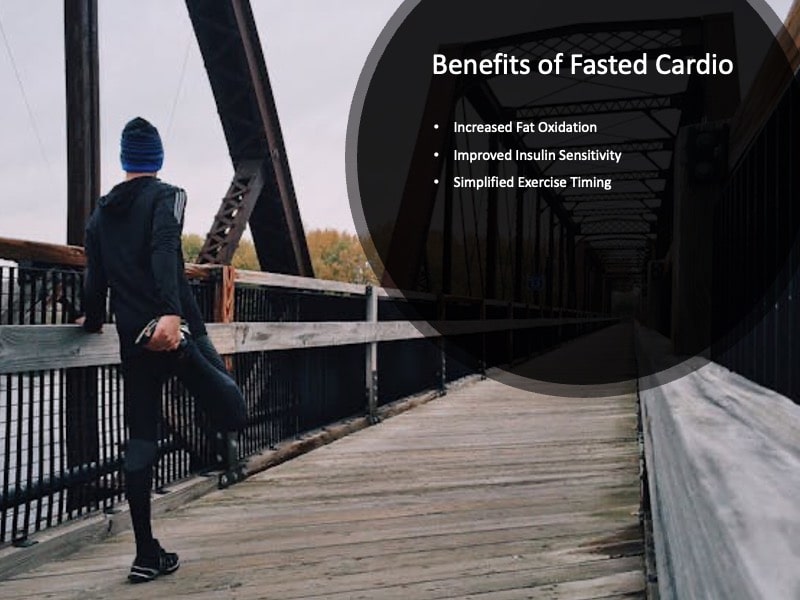
If a morning workout fits your schedule, decide when to eat based on how you feel and what you plan to do.
You might enjoy a fasted walk before breakfast, but prefer a banana or a slice of toast before a longer run.
However, there is no compelling reason to choose fasted cardio for weight loss.
In a four-week trial of 20 young women following a reduced-calorie diet, both groups lost body fat, and researchers found no significant difference between exercising before or after eating (Schoenfeld et al., 2014).
If you feel lightheaded or unusually weak during a fasted workout, stop and rest.
For your next session, try eating beforehand or exercising later in the day, especially if an early start also means cutting your sleep short.
Protect Recovery and Avoid Punishment Workouts
When planning exercise for weight loss, give each session a purpose you can name, whether that’s building strength, improving endurance, or enjoying a walk with your family.
If you eat more than usual at dinner, return to your regular plan the next day without adding extra cardio to “work off” the meal.
I recommend paying attention to two patterns: how well you’re recovering and how you feel about training.
If your usual weights feel heavier across several sessions and fatigue lingers between workouts, take an easier day and review your overall workload; my guide to avoiding overtraining explains what to look for.
If you still feel physically capable but increasingly dread workouts you once enjoyed, consider what makes them feel like an obligation.
To help prevent exercise burnout, you might trade a weekly interval session for a bike ride with a friend or leave one evening free for rest.
During a busy week or road trip, decide in advance what a shorter routine will look like.
A brief workout and a walk after dinner give you a plan for the time you actually have, with no missed sessions to make up when you get home.
Sleep, Stress, and Weight Loss Habits
When a weight loss plan becomes difficult to follow, I recommend looking at what happens before the meal or workout you keep missing.
If you regularly order takeout on nights you work late, having dinner ready when you get home may do more for your routine than setting a stricter calorie target.
Give Sleep a Place in Your Weight Loss Plan
If you regularly cut sleep short, protecting your bedtime is one of the first changes I’d consider.
In a randomized trial of 80 adults with overweight who typically slept less than 6.5 hours a night, those assigned to extend their sleep reduced their average daily calorie intake by about 270 calories relative to the control group over two weeks.
That finding gives short sleepers a reason to prioritize rest, though it doesn’t predict how much weight someone will lose (Tasali et al., 2022).
Most adults need at least seven hours of sleep, so start with the healthy sleep habit that addresses what usually keeps you awake.
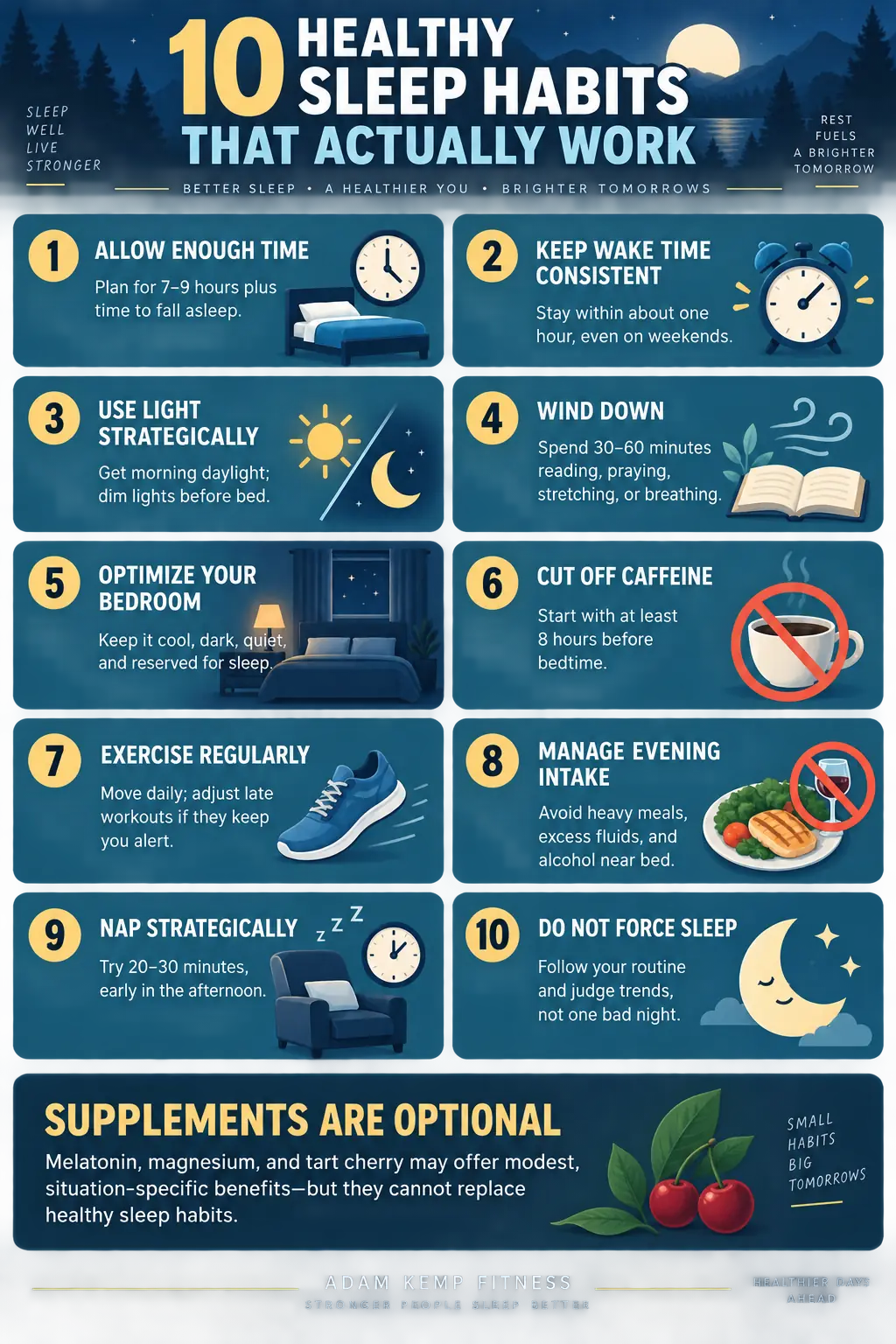
If your alarm is set but work regularly pushes bedtime past midnight, set a work-stop time; if you struggle to fall asleep after an afternoon coffee, try moving your coffee earlier (CDC, 2024a).
If someone notices frequent loud snoring or pauses in your breathing, or you regularly feel sleepy during the day despite allowing enough time for sleep, discuss those symptoms with a clinician who can assess you for sleep apnea (National Heart, Lung, and Blood Institute, 2025).
Manage Stress Without Assuming Cortisol Explains a Plateau
A stressful week and a stubborn scale tell you little about your cortisol levels.
Stress, sleep, medications, and health conditions can all influence weight management, so a more useful starting point is to identify what changes in your routine when you’re under pressure (CDC, 2025).
If back-to-back meetings leave you skipping lunch and arriving home unusually hungry, protect a lunch break or keep a meal at work.
If you’ve eaten enough but your mind is still on the workday, a walk, a few minutes of prayer, or a conversation with someone you trust may better address what you need.
Understand Emotional Eating Without Shame
Enjoying food for comfort is part of the psychology of eating, and you can be both stressed and hungry at the same time.
If you find yourself snacking after a difficult day, ask two separate questions: “When did I last eat a satisfying meal?” and “What else would help me feel better right now?”
Sometimes the answer is dinner and a chance to talk through what happened.
You can respond to both needs without judging the food you chose or trying to make up for it the next day.
If you repeatedly feel unable to stop eating despite wanting to, speak with a clinician or registered dietitian experienced in eating disorders.
Regular meals and support for the distress around eating are more appropriate responses than fasting or adding exercise to compensate (National Institute for Health and Care Excellence, 2020).
Plan for the Days Your Routine Changes
When building healthy habits for weight loss, give the part of your routine that gets interrupted most often a backup plan.
If evening practices regularly push dinner late, pick a meal you can assemble in five minutes, such as leftover chicken, microwave rice, and frozen vegetables.
The same approach works for exercise: “If I miss my lunchtime walk, I’ll take a ten-minute loop after dinner.”
Choose the backup in advance, then return to your usual schedule at the next opportunity without doubling up on workouts or skipping a meal.
Choose Accountability That Makes Your Week Easier
Ask a supportive person for something specific, whether that’s joining you for a Wednesday walk, helping prepare lunches, or checking in on a habit you chose.
A question like “What got in the way of lunch this week?” gives you more to work with than “How much did you lose?”
If you’re considering a structured weight loss program, ask how it handles setbacks and what support continues after you reach your goal.
Look for private, respectful check-ins and practical help adjusting your routine; pressure to weigh in publicly or restrict more aggressively would be reasons for me to look elsewhere (NIDDK, 2024).
Supplements for Weight Loss: What Deserves Your Attention?
When considering supplements for weight loss, start with the problem you want to solve.
A protein powder that makes breakfast more filling or creatine that supports your strength workouts can earn a place in your routine even if neither product directly causes weight loss.
Products marketed specifically as “fat burners” deserve closer scrutiny. For many ingredients, human studies show little benefit, and some products can cause side effects or interact with medications (NIH Office of Dietary Supplements [ODS], 2022).
Before buying, I recommend asking four questions:
- What was actually tested? Look for the same ingredient, dose, and formulation in people with a goal similar to yours. A study on one ingredient tells you little about a blend that doesn’t disclose how much it contains.
- What changed, and by how much? Look for the difference in weight or body fat between the supplement and control groups. A temporary change in appetite or a laboratory marker answers a different question.
- How long did the study last, and what are the risks? Check reported side effects, possible medication interactions, and whether you already get the same ingredient elsewhere, especially caffeine.
- Is the likely benefit worth the cost? Compare the monthly price with something else that would make your plan easier to follow, such as groceries for work lunches or access to a place you enjoy exercising.
My guide to the best supplements for weight loss looks more closely at individual products. If you’re considering a supplement stack for cutting, apply those questions to each ingredient before deciding whether the combination is worth buying.
Protein Powder
The most useful reason to choose protein powder for weight loss is that it improves a specific meal.
If breakfast is usually oatmeal and fruit, for example, stirring in a scoop of whey or plant protein is an easy way to increase the meal’s protein content without changing what you enjoy eating.
Higher-protein eating patterns can support fullness and help preserve lean mass during weight loss, and those benefits come from your overall protein intake (Leidy et al., 2015).
When comparing powders, look at the protein, calories, and cost per serving, then choose one you enjoy and digest comfortably.
Creatine
If you lift weights while eating in a calorie deficit, the strongest reason to consider creatine monohydrate is its ability to support repeated high-intensity efforts, such as challenging sets in the gym.
Creatine can also increase the water held in muscle, so an early rise on the scale can occur without an increase in body fat (Kreider et al., 2017).
I recommend noting when you start taking creatine and following your usual lifts, waist measurement, and weight trend together.
That distinction is especially useful when evaluating supplements for weight loss and muscle gain, since a product that helps you train may be worthwhile even when the scale barely moves.
Caffeine
Caffeine can temporarily increase energy expenditure, but regular use can reduce that effect, and taking more can bring jitters or interfere with sleep (ODS, 2022).
If coffee already gives you the energy you want before a workout, check how much caffeine a pre-workout or weight loss supplement would add.
I judge caffeine for weight loss by how you feel during training and how you sleep that night before spending money on another source.
Green Tea Extract
Concentrated green tea extract offers, at most, a small potential weight loss benefit.
Rare cases of liver injury have been reported primarily with extracts sold as capsules or tablets, an important distinction if you’re deciding between brewing tea and taking a daily supplement (National Center for Complementary and Integrative Health, n.d.).
If you enjoy unsweetened green tea, its clearest role may be as an alternative to a sweetened drink you regularly buy.
That swap has a practical purpose without requiring a concentrated extract.
L-Carnitine
A review of 37 randomized trials found that adults taking L-carnitine lost about 1.2 kilograms (2.7 pounds) more than controls on average, with no significant overall difference in waist circumference or body fat percentage (Talenezhad et al., 2020).
That figure describes the difference across trials of varying lengths, not what you can expect to lose each month.
For weight loss alone, I’d give L-carnitine a low priority, particularly if the cost is significant or it causes nausea, diarrhea, or a fishy body odor (ODS, 2022).
CLA
Conjugated linoleic acid (CLA) has shown minimal average effects on body weight and body fat in human studies (ODS, 2022).
Turmeric
Much of the research cited for turmeric and weight loss tested concentrated curcumin, a compound found in turmeric.
Reviews of randomized trials have reported small average reductions in weight with supplementation (Unhapipatpong et al., 2023).
Black Seed Oil
A review of randomized trials found that people taking Nigella sativa for weight loss lost more weight on average than control groups.
The studies used different preparations, however, which limits how confidently you can apply the pooled result to a particular bottle of oil (Namazi et al., 2018).
Moringa
A 2026 review of randomized trials found no significant overall effect of moringa supplementation on body weight or BMI (Samarin et al., 2026).
If you enjoy moringa in tea or food, there’s room for that preference, but the evidence gives me little reason to recommend buying moringa for weight loss.
Spirulina
A review of 17 randomized trials found that adults taking spirulina lost about 1.1 kilograms (2.4 pounds) more than controls on average.
The researchers also found a small reduction in body fat percentage, but no significant overall change in waist circumference (Lak et al., 2025).
Those findings give spirulina for weight loss some research support, while also putting its likely contribution in perspective.
Greens Powders
When evaluating a greens powder like Bloom Greens for weight loss, start with your reason for buying it.
If you want more fiber at breakfast, compare the grams per scoop and cost per serving with adding berries or chia seeds to a meal you already eat.
If your interest is digestive comfort, judge the powder by that outcome.
Feeling less bloated can matter to you without telling you how much body fat you’ve lost.
Probiotics
A higher number of live organisms on a label doesn’t establish that a probiotic will help you lose more weight.
Research on probiotics and body weight has produced mixed findings, and results for one strain or mixture don’t automatically apply to another (ODS, 2022).
When comparing probiotic supplements, look for the strain named on the label and what researchers measured in people who took it.
A trial showing improvement in a digestive symptom may be relevant to that symptom, but it doesn’t establish fat loss.
Colostrum
A 2026 systematic review found that human trials of bovine colostrum produced inconsistent body fat results, with the certainty of the evidence generally rated very low (Goluch et al., 2026).
I’d evaluate colostrum separately for any other reason you’re considering it and leave it off the shopping list if fat loss is your only goal.
Digestive Enzymes
Digestive enzymes make the most sense when there’s a specific problem to address.
For example, lactase helps break down the sugar in milk and can make dairy easier to tolerate for some people with lactose intolerance (National Institute of Diabetes and Digestive and Kidney Diseases, 2018).
Being able to eat yogurt comfortably is a useful outcome, but it’s a different outcome from losing body fat.
If digestive symptoms regularly interfere with meals, discuss the pattern with a clinician before spending money on a broad enzyme blend.
L-Tyrosine
L-tyrosine is an amino acid your body uses to make chemical messengers such as dopamine and norepinephrine (European Food Safety Authority, 2011).
That helps explain the theory behind L-tyrosine for weight loss, but it doesn’t show that taking extra tyrosine leads to sustained fat loss.
I wouldn’t choose it to speed up metabolism or use it to self-treat a suspected thyroid problem.
CBD
I wouldn’t recommend buying CBD for weight loss.
A change in appetite while taking CBD is a different finding from evidence that it helps people lose body fat and maintain that loss.
CBD can also interact with medications and may cause liver injury.
If you’re considering it for a specific symptom, discuss that intended use and your medications with a clinician or pharmacist (U.S. Food and Drug Administration, 2023).
Apple Cider Vinegar
One widely publicized trial behind claims about apple cider vinegar for weight loss was retracted after concerns about its data and statistical analysis.
If an advertisement or article still quotes dramatic results from that trial, disregard those figures (BMJ Group, 2025).
I’d use apple cider vinegar in a dressing or marinade if you like the flavor. The retracted study gives you no reason to start drinking it every morning.
Garcinia Cambogia
Garcinia cambogia has shown little to no benefit for weight loss, and liver injury has been reported in people taking products containing it (ODS, 2022).
Given how little benefit you could reasonably expect, I would avoid it as a weight loss supplement.
Weight Loss Hacks, Home Remedies, and Myths
The weight loss hacks I find most useful solve a specific problem.
If lunch is the meal you tend to skip, packing leftovers while you put dinner away gives you something to eat tomorrow and saves you a second round of meal prep.
I use a different standard for home remedies for weight loss that promise to burn fat: What did researchers actually measure, and how long did the effect last?
A lower weigh-in after a sweaty workout, for example, tells you something quite different from a sustained reduction in body fat.
Can You Target Belly Fat or Arm Fat?
You can choose which muscles to train, but working a particular muscle doesn’t reliably determine where you lose fat.
In a six-week randomized trial, participants who performed abdominal exercises five days a week improved their curl-up endurance without significantly reducing abdominal fat (Vispute et al., 2011).
If your goal is developing six-pack abs or losing arm fat, include exercises that strengthen those muscles while using your overall eating and activity habits to support fat loss.
Being able to do more push-ups or a harder core exercise is progress you can recognize even before you see a difference in the mirror.
Does Sweating More Mean You’re Losing More Fat?
If you weigh two pounds less after a hot workout, much of that immediate change can reflect fluid lost through sweat.
As you rehydrate, some of that weight returns; neither weigh-in tells you how much fat you burned during the session.
I wouldn’t recommend wearing a sauna suit during exercise to make the scale move.
Exercising in hot conditions already increases the risk of dehydration and heat-related illness, so choose clothing that lets heat escape and judge the workout by what you set out to do, such as completing your planned walk or strength session (CDC, 2024b).
Overnight Weight Loss and Extreme Deadlines
You can lose weight overnight and weigh less the next morning without losing a comparable amount of body fat.
Changes in body water and the amount of food still moving through your digestive system can shift the scale, which is why a trend across several weeks is more informative than the difference between bedtime and breakfast (Bhutani et al., 2017).
If an upcoming trip has you wondering whether you can lose 20 pounds in two weeks, I wouldn’t pursue that target through fasting, dehydration, or extra workouts.
A more useful weight-loss goal is one you can act on before and after the trip, such as walking with your family after dinner.
You can enjoy the beach while you’re still working toward your goal.
Do Cleanses and Detox Diets Work?
There’s little convincing evidence that commercial cleanses remove toxins, and research hasn’t established lasting weight loss benefits.
A juice-only plan may initially lower your weight because it provides very little food, while laxative-based cleanses can cause diarrhea, dehydration, and impaired nutrient absorption (National Center for Complementary and Integrative Health, 2025).
If a three-day weight loss cleanse appeals because you’ve been traveling or eating irregularly, use those three days to put familiar meals back on the table.
Buy what you need for breakfast, prepare enough dinner for lunch the next day, and return to your usual bedtime.
Those steps address the disruption that made you want a fresh start.
What Does “Boosting Metabolism” Actually Mean?
When a product claims to boost your metabolism, look for two details that advertisements often leave out: how many additional calories participants burned and for how long.
Caffeine, for example, can temporarily increase energy expenditure, but tolerance develops with regular use, and a short-term increase doesn’t establish lasting fat loss (NIH Office of Dietary Supplements, 2022).
I’d apply the same test to any natural fat burner: Did people taking that ingredient at the advertised dose actually lose more body fat than a comparison group over several weeks or months?
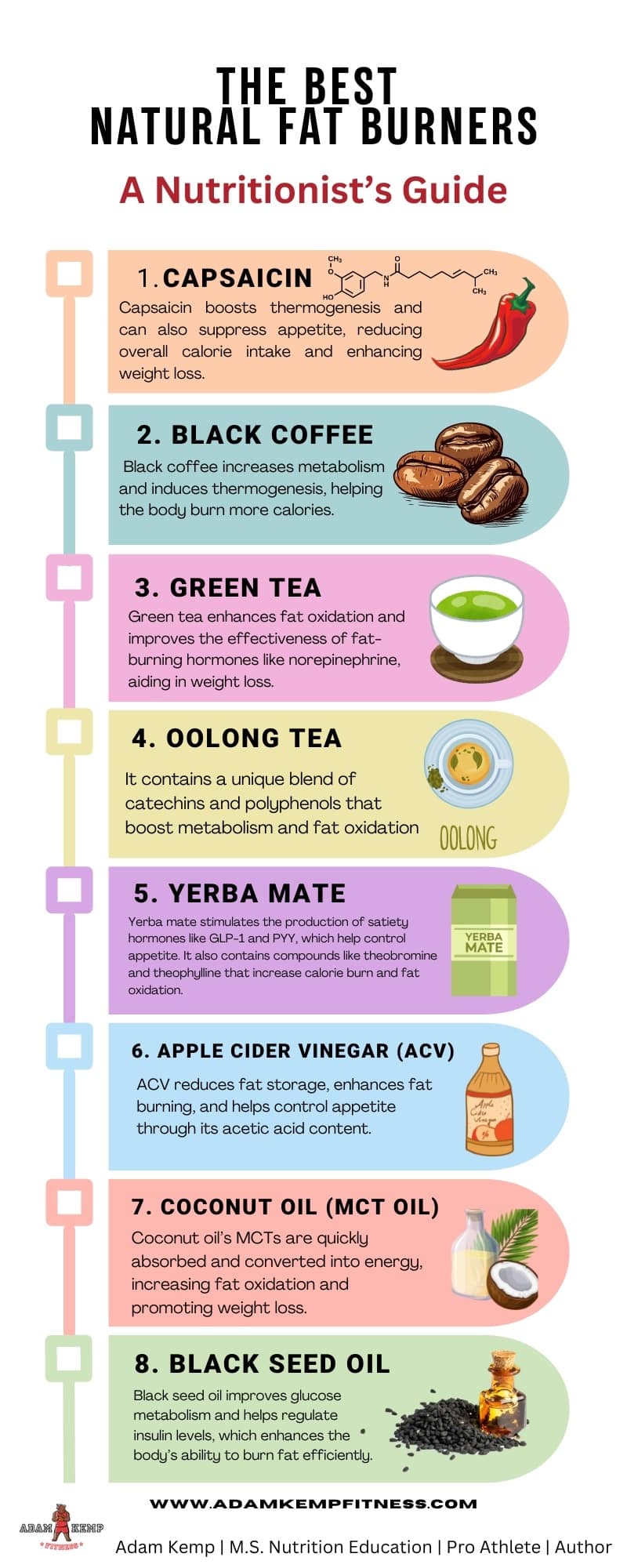
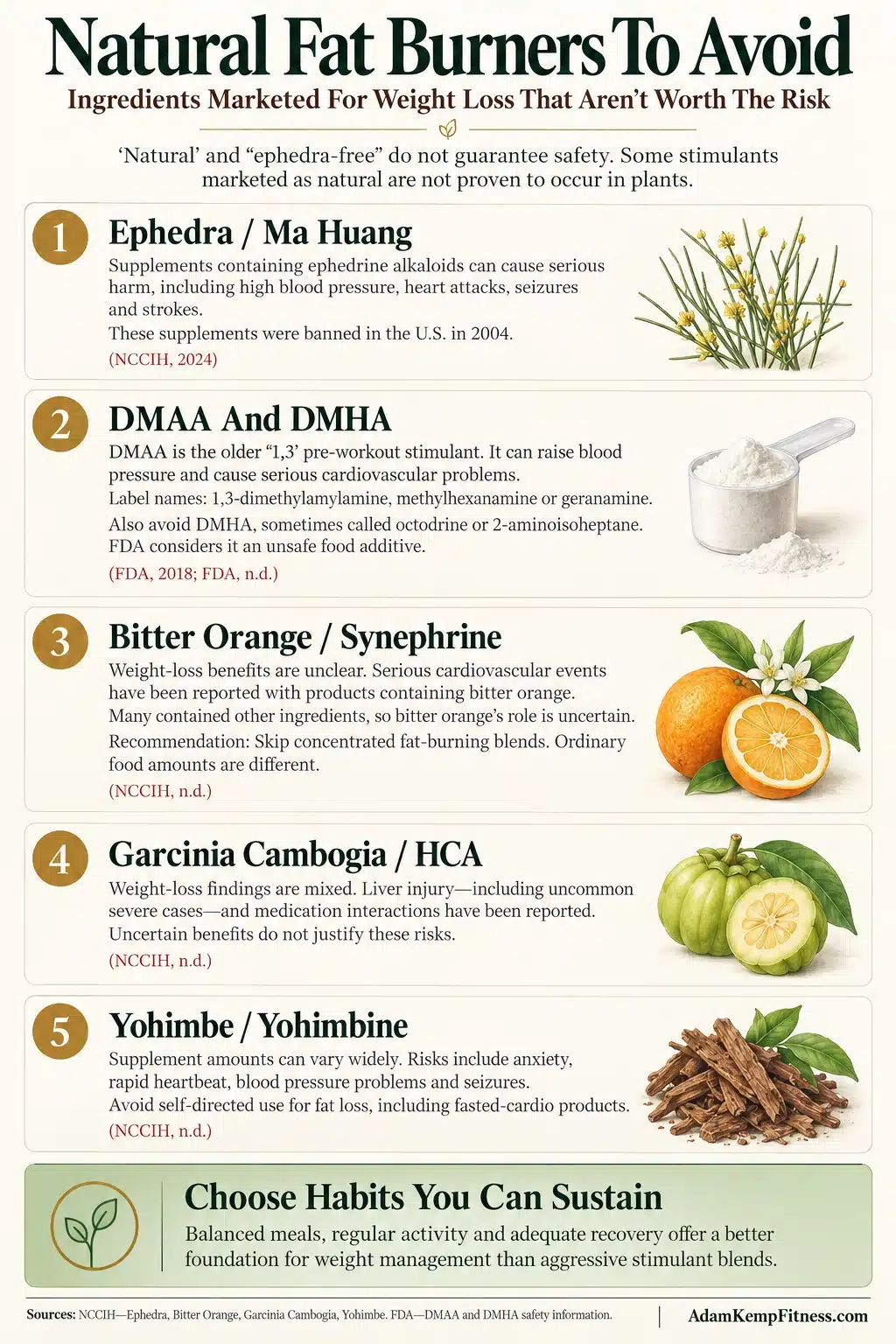
If all you’re shown is a percentage increase for a few hours after one dose, you still don’t know whether the product helps people lose weight.
How to Track Weight Loss Progress Without Overreacting
Choose a small set of measures that helps you make decisions.
You do not need daily photographs, several tracking apps, and a constantly changing supplement routine to determine whether your habits are useful.
Use Comparable Weigh-Ins
If you choose to weigh yourself, use a similar time and routine, such as after using the bathroom and before breakfast.
Compare averages or a series of measurements rather than interpreting one reading alone.
Mark events that may change the context, including travel, unusual meals, menstrual-cycle timing, illness, new training, or starting creatine.
The note can help you avoid making a dietary decision from an isolated number.
If frequent weighing affects your mood or eating negatively, choose a less frequent schedule or another method with professional support. Measurement should help guide the plan, not dominate the day.
Track What You Want to Preserve
Record a few training exercises, walking tolerance, daily energy, or another useful function.
Weight loss is more informative when you also know how you are functioning.
If you use waist measurements, choose a consistent location and method.
Treat a consumer body-fat estimate as an estimate rather than a precise diagnosis of what happened that week.
Consider a short weekly review with four questions: What was repeatable, what was difficult, how did I feel, and what is the smallest useful adjustment?
Keep the review focused on decisions rather than self-criticism.
Distinguish a Slow Week From a Plateau
A few unchanged readings are not enough to establish that a plan has stopped working.
Review a longer stretch of comparable information before making another change, unless symptoms or excessive weight loss require earlier attention.
If the pattern has been flat for several weeks, examine intake, movement, and adherence together.
Look for ordinary changes such as larger portions, fewer walking opportunities, or a schedule that made meal preparation harder.
Avoid assuming dishonesty or laziness when estimates differ from results. Treat the mismatch as information about the plan.
Understand Metabolic Adaptation
Weight reduction changes energy requirements, and appetite-related adaptations can make maintenance harder.
Research has documented persistent hormonal and hunger changes following a weight-loss intervention, showing why continued support can matter (Sumithran et al., 2011).
My metabolic adaptation guide explores the topic.
Adaptation should not be interpreted as proof that your metabolism is permanently damaged or that a supplement can reliably prevent it.
You may need to revise the plan as circumstances change.
That can include accepting a slower pace, improving meal satisfaction, adjusting activity, or getting professional help rather than indefinitely reducing food.
A Practical Weight Loss Plateau Checklist
| What you notice | What to review | A reasonable next step |
|---|---|---|
| Weight is unchanged for a few days | Normal variation and inconsistent measurement | Keep the routine steady and gather more information |
| Weekdays feel structured but weekends vary widely | Drinks, meal timing, portions, and social habits | Create one workable weekend routine |
| Workouts increased but daily movement fell | Fatigue and time spent sitting afterward | Reduce excessive training demands and restore manageable movement |
| Hunger is consistently intense | Meal composition, size of the deficit, and sleep | Improve nourishment and review whether the deficit is too aggressive |
| Strength and recovery are declining | Energy intake, protein, training load, and illness | Adjust the plan and consider professional guidance |
| The pattern is flat for several weeks | Overall intake, expenditure, adherence, and medical context | Make one modest change or seek an individualized assessment |
| Weight changes are unexpected or accompanied by symptoms | Health conditions and medication changes | Arrange medical evaluation |
This checklist is a practical decision aid, not a diagnostic tool. If the next step is unclear, a registered dietitian or clinician can help interpret the pattern.
Take a Maintenance Phase When Appropriate
Sometimes the useful goal is to practice maintaining your current weight while keeping meals and exercise organized.
You might choose this during a stressful period, after sustained dieting, or when performance and recovery need more attention.
I would view a maintenance phase as a chance to practice skills, not as a guaranteed way to reset metabolism.
Keep the routine recognizable and decide what you want to learn before returning to a deficit.
When to Get Help Losing Weight
Weight management can involve medical care as well as lifestyle changes.
NIDDK describes behavioral programs, medications, and metabolic or bariatric surgery among the available treatment approaches for overweight and obesity (NIDDK, n.d.-b).
Asking for help does not mean you have failed at the basics. It can make the plan more appropriate to the barriers you are facing.
Thyroid Conditions and Other Medical Concerns
An underactive thyroid can cause symptoms that include fatigue and weight gain, but those symptoms are not specific enough to diagnose hypothyroidism.
Diagnosis requires clinical evaluation and appropriate testing (NIDDK, n.d.-c).
My site includes an article on thyroid function and weight loss medication results.
Use it to prepare questions for an appointment, not to interpret laboratory values or change medication independently.
Also tell your clinician about medication changes, unusual fatigue, menstrual changes, unexplained weight changes, or other symptoms affecting the plan.
Avoid buying a thyroid support product to treat a suspected condition.
What Can a Weight Loss Clinic Offer?
When comparing weight loss clinics, ask who provides care, what qualifications they hold, and how the program is individualized.
Look for a clear discussion of follow-up, adverse effects, costs, and long-term support.
Ask whether the program helps with eating patterns and physical activity or mainly sells products.
Be wary of guaranteed rapid results or pressure to purchase proprietary supplements (NIDDK, n.d.-a).
You can also seek a registered dietitian without joining a large program. Bring a description of your schedule, current meals, previous attempts, and the obstacles you want help solving.
Prescription Weight Loss Medication
Prescription weight loss medications can be appropriate for some people with obesity or overweight and related health conditions.
Suitability depends on the medication, medical history, contraindications, and local prescribing guidance (NIDDK, n.d.-d).
My guide to GLP-1 treatments introduces the topic.
Treatment should include a discussion of nutrition, side effects, monitoring, affordability, and what long-term management will involve.
Do not assume reduced appetite means nutrition no longer needs attention.
Discuss persistent gastrointestinal symptoms or difficulty eating adequately with the prescriber rather than independently increasing, stopping, or switching doses.
Investigational Treatments Are a Separate Category
New research can be promising without establishing that a substance is appropriate to buy and use.
As of the FDA guidance checked for this guide, retatrutide is not a component of an FDA-approved drug and cannot be used in compounding under U.S. federal law (U.S. Food and Drug Administration [FDA], 2026).
My retatrutide overview discusses the research topic but does not recommend buying unapproved products advertised online as research peptides.
Bariatric Surgery and Long-Term Care
Metabolic and bariatric surgery may be considered for eligible patients after a medical assessment.
It requires discussion of benefits, risks, nutrition, and continuing follow-up rather than being framed as an effortless shortcut (NIDDK, n.d.-b).
If you are considering it, ask the care team how preparation, postoperative nutrition, supplementation, and monitoring will work.
The decision deserves an individualized discussion rather than a comparison with someone else’s outcome.
Adapting Weight Loss to Your Life Stage and Training
A useful guide provides a starting framework, but your plan may need to look different from the example routine below.
Age, recovery demands, reproductive health, disability, and sporting goals can all change what is appropriate.
Athletes and Highly Active Adults
As an athlete, I do not treat lower body weight as automatically better.
If the plan undermines training, recovery, or health, the number on the scale is an incomplete measure of success.
The IOC’s consensus on Relative Energy Deficiency in Sport describes the health and performance consequences of problematic low energy availability.
This can affect male and female athletes, so aggressive restriction should not be treated as proof of discipline (Mountjoy et al., 2023).
Discuss persistent fatigue, recurrent injuries, disrupted menstrual function, reduced libido, or unexplained performance decline with a qualified professional.
Do not respond by adding more cardio before reviewing fueling and recovery.
Older Adults
For older adults, preserving strength and physical function should be central when weight loss is appropriate.
The trial discussed earlier supports including resistance exercise within a broader program rather than focusing on diet alone (Villareal et al., 2017).
Ask how your plan will support daily tasks such as getting up from a chair, carrying groceries, and maintaining balance.
Seek individualized guidance if frailty, low appetite, or multiple medical conditions are present.
Pregnancy and Postpartum
Pregnancy is not a time to apply a general self-directed calorie-deficit plan.
After delivery, nutritional needs, healing, breastfeeding, sleep, and return to activity require individualized consideration.
My postpartum weight loss guide addresses the topic separately.
Consult your maternity or primary care team to determine when intentional weight loss and different types of exercise are appropriate.
Do not use someone else’s postpartum timeline as a target.
The immediate priorities may be recovery, adequate food, and practical support.
Weight Loss for Men and Women
My weight loss guide for men addresses one audience, but neither sex needs a completely different set of basic energy-balance rules. Individual size, training, appetite, health, and life stage are more useful planning inputs than a generic male or female supplement package.
For women who track weight, note menstrual-cycle context instead of demanding an uninterrupted downward line.
For anyone whose hormonal symptoms or health concerns are affecting daily life, seek an assessment rather than relying on social-media diagnoses.
Body Confidence After Weight Loss
Changing weight does not automatically answer every concern about appearance or confidence.
I recommend keeping valued activities, relationships, and personal goals in your life throughout the process.
My body confidence after weight loss guide explores this side of the experience. You can pursue a health goal while refusing to make your self-worth depend on a measurement.
A Four-Week Weight Loss Starter Plan
Use this as an adaptable example, not a prescription or a promise of a particular amount of weight loss.
Keep changes smaller if you are new to activity, managing a health condition, or rebuilding after injury.
Week One: Observe and Simplify
Record your normal routine in whichever format feels useful.
Note the meals that work, the times you become excessively hungry, and where your schedule repeatedly gets in the way.
Choose one food change and one movement change. Examples include adding a dependable protein source at lunch and taking a short walk on three days.
Do not buy a collection of supplements before you know the problem you are trying to solve. Spend the first week building a clearer picture of ordinary life.
Week Two: Create Reliable Meals
Choose two breakfasts, two lunches, and several dinners you would happily repeat. Write a grocery list that supports those meals and includes at least one backup option.
Check portions of the extras that are easy to overlook, such as oils, spreads, drinks, and snacks eaten while preparing dinner. Adjust only what seems useful rather than removing every source of enjoyment.
If you are using a calorie target, compare how it feels with what you can sustain. Persistent intense hunger is a reason to review the design, not simply an instruction to try harder.
Week Three: Build a Repeatable Training Week
Keep manageable daily movement and add or maintain two appropriate strength sessions. Increase activity gradually if the first two weeks were comfortable.
Here is one possible week for someone ready for this amount of exercise:
| Day | Example activity | Practical focus |
|---|---|---|
| Monday | Full-body strength session and a short walk | Learn movements and record manageable loads |
| Tuesday | Comfortable walk or stationary bike | Finish with enough energy for the rest of the day |
| Wednesday | Everyday movement and an optional easy walk | Keep the routine flexible |
| Thursday | Full-body strength session | Repeat familiar movements with good control |
| Friday | Comfortable cardio | Choose a mode you enjoy |
| Saturday | Longer walk, recreation, or an outdoor activity | Fit movement into your life |
| Sunday | Rest or gentle movement, plus meal planning | Prepare for the next week |
The table intentionally leaves duration and load individualized. A starting routine should build on your ability rather than require you to match an athlete’s training volume.
Week Four: Review Before Adding More
Look at the whole pattern: meals, hunger, sleep, activity, training performance, and any weight or waist trend you chose to track.
Identify the part of the routine that needs the most practical help.
If the plan is working and you feel well, repeat it. You do not need a new tactic merely because four weeks have passed.
If the plan is difficult, change the design before making it stricter.
A simpler lunch, fewer but better-planned workouts, or professional support may be more useful than another numerical target.
A Sample Day of Eating for Weight Loss
This example shows meal structure rather than a universal calorie target. Adjust portions and ingredients to your needs, preferences, allergies, training, and medical guidance.
| Meal | Example | Ways to adapt it |
|---|---|---|
| Breakfast | Plain Greek yogurt with oats, berries, and a measured portion of seeds | Use a suitable plant-based option and check protein content |
| Lunch | Chicken or tofu bowl with rice and vegetables | Change the grain, protein, and seasoning to fit your preferences |
| Snack, if useful | Fruit with yogurt, cottage cheese, or another protein food | Skip or enlarge it according to the gap between meals and your needs |
| Dinner | Fish, lentils, or poultry with potatoes and vegetables | Use a familiar family dish with the same basic components |
| Drinks | Water, unsweetened tea, or coffee prepared to preference | Account for additions and consider caffeine timing |
Use the example to solve a real planning problem.
If you usually miss lunch, concentrate on creating a lunch you can bring or buy reliably rather than redesigning breakfast and dinner too.
If the portions leave you hungry or underfueled, increase or rebalance them. A table of foods cannot determine the right amount for an individual reader.
How to Keep Weight Off After Losing It
Maintenance deserves its own plan instead of being treated as the moment planning ends.
In the Look AHEAD study, ongoing intensive lifestyle intervention supported greater average weight loss than the comparison condition after eight years, although individual outcomes varied (Look AHEAD Research Group, 2014).
I recommend beginning maintenance practice before reaching a final target.
Notice which habits you can imagine retaining when weight loss is no longer the central project of the week.
Keep the Structure and Adjust the Goal
Retain the meals, activity, and preparation habits that have become useful.
Adjust intake toward maintenance rather than interpreting the end of dieting as a return to all previous routines.
You may prefer a flexible weight range rather than a single exact number.
Decide in advance what pattern would prompt a calm review, so one unusual reading does not trigger a new restrictive phase.
Continue strength training and enjoyable movement for what they allow you to do.
Exercise can remain valuable even when you stop evaluating it through calories.
Plan for Regain Without Catastrophizing
If some weight returns, review the context: work changes, illness, injury, caregiving, travel, medication, or a disrupted routine.
Choose the smallest useful response and ask for support when needed.
Avoid declaring that previous progress was meaningless. You can retain skills and health improvements while revising the next step.
My article on effective fat-loss strategies can serve as a shorter reminder of the fundamentals.
The aim is a process you can return to without escalating punishment.
Build a Life That Does Not Revolve Around Dieting
Consider new goals that do not require being lighter: getting stronger, learning a sport, walking a new route, improving cooking skills, or making time for recreation.
Give those goals room beside body-weight monitoring.
Maintenance is not a less impressive stage of the process.
It is the stage where you find out whether the routines support the life you want.
Frequently Asked Questions About Weight Loss
Final Thoughts: Build a Weight Loss Plan You Can Keep Using
My recommendation is to start with the part of your routine that needs the most help.
Make meals more dependable, choose movement you can repeat, preserve strength, and keep your expectations connected to health and daily life.
Use the shorter weight loss tips or weight loss for dummies guide when you want a simpler reminder. Return to the detailed sections here when you need to troubleshoot a specific question.
Losing weight should not require believing every claim, buying every product, or following every tip at once. Choose a few useful actions, give them a fair trial, and build a plan you can revise with confidence.
Explore More Weight Loss Articles
Choose your next step from my complete collection of nutrition, exercise, lifestyle, and weight-management guides.
Explore All Weight Loss Articles
This website does not provide medical advice. This website site does contain affiliate links, and purchases may earn a commission.
Read my Medical Disclaimer, Review Disclaimer, and Publishing Policies for more details. Use of this site indicates acceptance of these terms.
Check Out Some of My YouTube Videos Below, and Please Follow on YouTube for More Educational Health and Fitness Content!