What is Metabolic Adaptation to Weight Loss & How to Prevent It From Causing Weight Gain
 Reading Time: 10 minutes
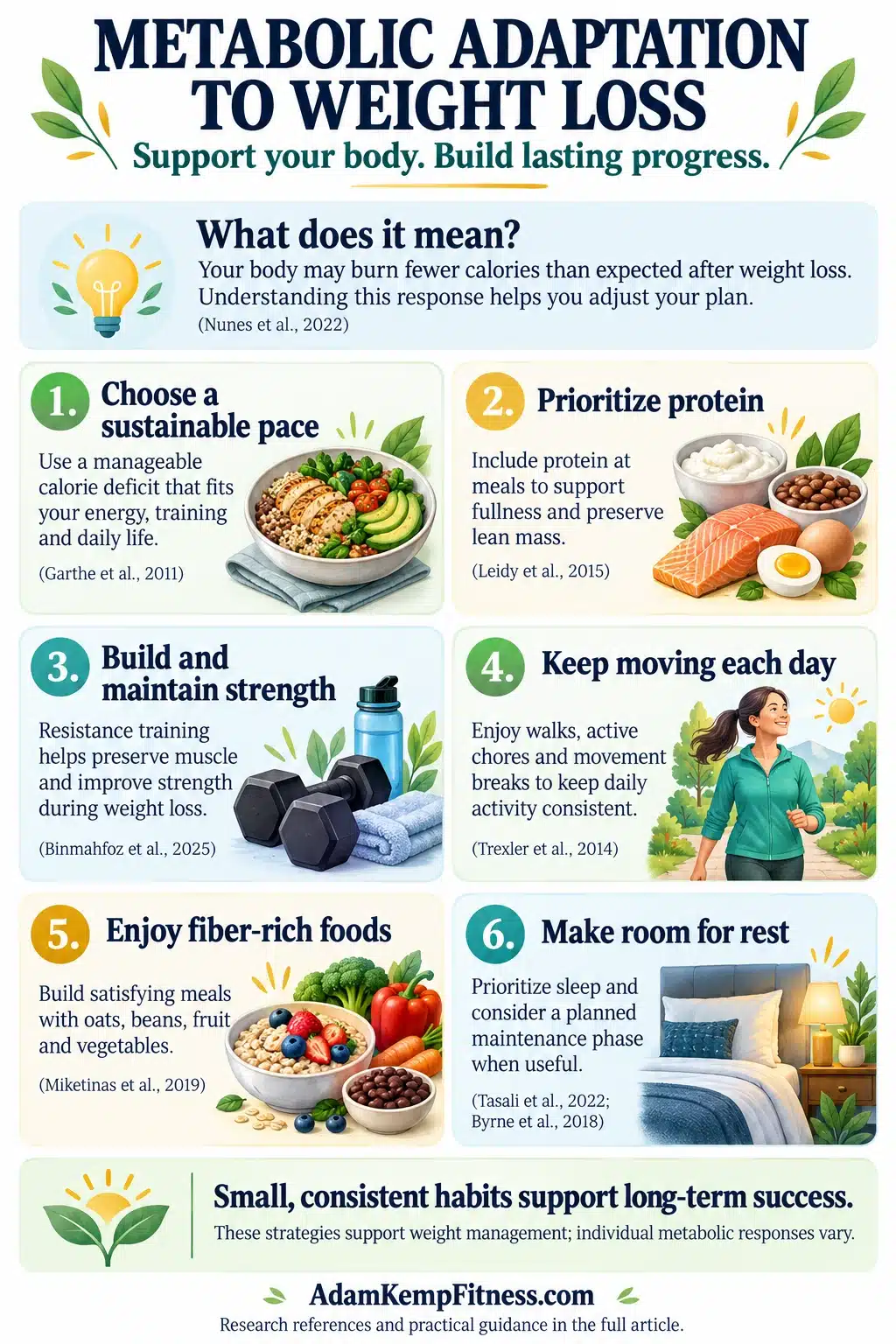
 Metabolic adaptation to weight loss is a biological response following weight loss in which the body decreases energy expenditure, improves its metabolic efficacy, and increases signals for energy intake as an apparent survival mechanism to regain or retain lost body mass.
Consequently, metabolic adaptions make continued weight loss more difficult while increasing the chances of weight regain, especially in those who are overweight or obese.
Metabolic adaptation can play a significant role in the long-term success of many weight loss journeys as body mass makes up the largest component of resting metabolic rate (RMR), and decreasing body mass inherently results in decreased RMR.
However, you can reduce and prevent metabolic adaptations to weight loss with the simple, effective tips in this article!
What is Metabolic Adaptation to Weight Loss?
As mentioned before, metabolic adaptation to weight loss is a biological response that happens when someone loses weight, in which the body decreases energy expenditure, improves metabolic efficacy, and increases signals for energy (calorie) intake as a survival mechanism to regain or retain lost body mass (Martínez-Gómez & Roberts, 2021; Trexler et al., 2014).
What Causes Metabolic Adaptation to Weight Loss?
The primary cause of metabolic adaptation to weight loss is losing weight too quickly, but metabolic adaptations to weight loss happen with any significant weight loss efforts.
Since metabolic adaptation to weight loss is an inherently biological feature of the human body, it can be difficult to fight.
As the body has a biological system in place to regain fat mass that is lost, it can be difficult to prevent “fat overshooting” and the regain of additional fat mass following periods of weight loss (Dulloo et al., 2015).
Therefore, it is critical that anyone who is beginning a weight loss program be aware that repeated bouts of weight cycling (weight loss followed by weight gain) can produce more metabolic adaptions and additional “fat overshooting.”
For these reasons, it is important to make healthy lifestyle improvements that produce weight loss instead of just trying to lose large amounts of weight quickly through extreme dieting or other extreme measures.
By reducing the number of weight cycling bouts, individuals will have better chances for long-term body composition improvements.
Why Do Calorie Needs Change During Weight Loss?
Your daily calorie expenditure includes resting metabolism, digestion, structured exercise, and movement outside workouts.
Several of these components can change during dieting (Trexler et al., 2014).
| Change | What it means |
|---|---|
| Lower body mass | A smaller body generally requires less energy to maintain and move. |
| Reduced food intake | Eating less usually reduces the energy spent digesting and processing food. |
| Less spontaneous movement | You may walk, stand, or fidget less while dieting. |
| Adaptive thermogenesis | Energy expenditure can fall beyond the change predicted by body composition. |
These changes can shrink the calorie deficit created by an eating plan that initially produced weight loss, and they explain why the same intake does not necessarily produce the same rate of progress indefinitely (Trexler et al., 2014).
Hunger Is Another Part of the Challenge
Appetite changes are related to the body’s response to weight loss, but they are not the same measurement as adaptive thermogenesis.
In one study, increased hunger and changes in several appetite-related hormones remained evident a year after initial weight loss (Sumithran et al., 2011).
That finding helps explain why maintaining a lower weight can require ongoing support, and why feeling hungrier after losing weight isn’t automatically a sign of a lack of discipline.
Can You Prevent Metabolic Adaptation to Weight Loss?
There is no established method that guarantees complete prevention.
However, you can focus on factors that make weight management more sustainable, including muscle retention, food quality, physical activity, and ongoing support (Hall & Kahan, 2018).
I prefer to judge a weight loss strategy by whether you can keep practicing it while living well.
A plan that leaves room for satisfying meals, useful training, and everyday responsibilities gives you more to build on than a short-term challenge.
How to Prevent Metabolic Adaptation to Weight Loss?
Exercise has been theorized as a primary solution to maintaining fat-free and lean body mass, the most metabolically active components of total body mass, to combat metabolic adaptations to weight loss.
However, some research has indicated that even the preservation of fat-free mass does not negate decreases in RMR caused by substantial body mass loss (Johannsen et al., 2012).
Exercise can play a role in reducing metabolic adaptation to weight loss (as I will explain below), but there are other options as well.
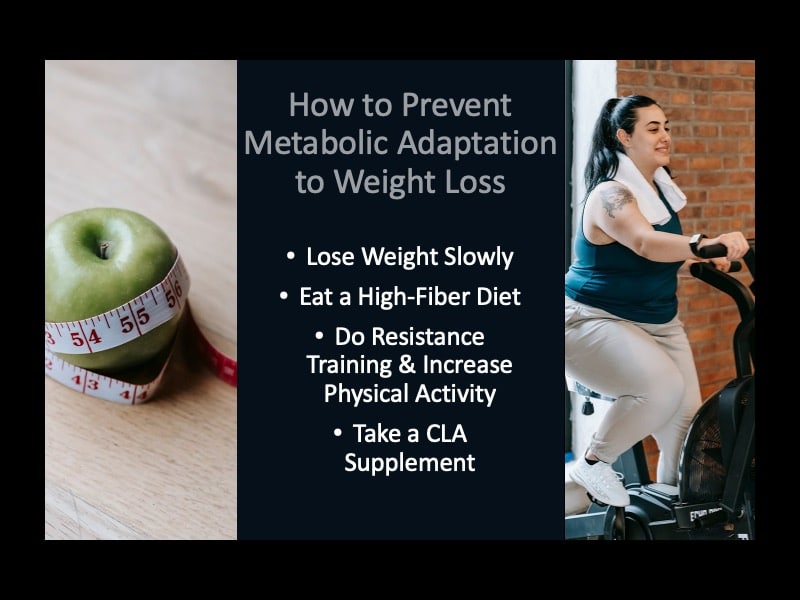
Here are some of the most important tips to reducing metabolic adaptation to weight loss so that you can continue to lose weight and keep off the weight you have already lost!
Lose Weight Slowly
If you want to lose weight and keep it off, a primary way of combatting metabolic adaptation for long-term weight loss success is that individuals should attempt to utilize the smallest energy deficit that promotes substantial weight loss.
Large energy deficits will result in increased lean body mass losses and should be avoided in an effort to maintain or even increase lean body mass losses during long-term weight loss programs.
Personally, I suggest a goal of losing two pounds per week or less.
This means, you should maintian a calorie deficit of around 500-700.
Any more than this rate can have detrimental long-term effects.
Weight loss diet plans that attempt to tell you to lose 20 pounds in two weeks or other irrational goals are more likely to promote metabolic adaptations to weight loss.
Eat a High-Fiber Diet
A high-fiber diet is one of the most effective ways to combat metabolic adaptation to weight loss, as it promotes satiety, stabilizes blood sugar levels, and supports gut health, which are key factors in long-term weight management (Melby et al., 2017).
High-fiber foods, especially those rich in prebiotic fiber, play a crucial role in maintaining a healthy gut microbiome and are often the best foods for suppressing appetite and keeping you fuller throughout the day.
Prebiotics are a type of fiber that feed beneficial gut bacteria, helping to regulate metabolism, enhance digestion, and support sustained weight loss.
When prebiotic fibers ferment in the gut, they produce short-chain fatty acids (SCFAs) such as butyrate, acetate, and propionate. These SCFAs have been shown to:
- Improve insulin sensitivity and glucose metabolism, reducing fat storage.
- Enhance energy expenditure by promoting thermogenesis and increasing fat oxidation.
- Regulate appetite hormones like leptin and ghrelin, decreasing hunger and preventing overeating.
- Reduce inflammation, which can interfere with weight loss and metabolic efficiency.
Some of the best prebiotic-rich food sources to include in your diet are:
- Asparagus
- Garlic and onions
- Leeks
- Bananas (especially unripe ones, which contain resistant starch)
- Oats
- Chicory root
- Legumes (lentils, chickpeas, and black beans)
By consistently eating fiber-rich foods, especially prebiotic fibers, you can improve gut health, regulate metabolism, and counteract some of the metabolic slowdowns that occur with weight loss.
Additionally, a well-balanced gut microbiome has been linked to better weight maintenance, reducing the risk of regaining lost weight after a diet.
Do Resistance Training & Increase Physical Activity
There are many aspects of metabolic adaptation to weight loss and its potential for promoting weight regain, but I believe the role of physical activity in preventing weight regain despite metabolic adaptation is critical.
In a study on contestants of “The Biggest Loser,” it was clear that significant long-term increases in physical activity played a key role in preventing weight regain and promoting additional weight loss or weight management (Hall, 2021).
This suggests that staying active isn’t just beneficial for weight loss; it’s also essential for maintaining weight loss.
Not only does physical activity promote lean body mass gains that offset some of the metabolic adaptations created by body mass loss, but it also offsets decreases in RMR and has an effect on appetite signaling feedback.
Along with dieting to reduce caloric intake, developing a physical activity program is crucial for long-term weight loss success.
Resistance Training: The Key to Maintaining Metabolism
Weight training is one of the most effective ways to combat metabolic adaptation because it helps preserve and even increase lean muscle mass, which is a primary determinant of RMR.
Since muscle tissue burns more calories at rest than fat tissue, maintaining muscle during weight loss prevents dramatic metabolic slowdowns.
Key benefits of resistance training for metabolic adaptation include:
- Preserving Lean Muscle Mass – Prevents excessive loss of metabolically active tissue during weight loss.
- Increasing Post-Exercise Energy Expenditure – Strength training induces excess post-exercise oxygen consumption (EPOC), meaning the body burns additional calories even after the workout ends.
- Enhancing Insulin Sensitivity – Improves how the body processes carbohydrates, reducing fat storage.
- Regulating Appetite Hormones – Helps manage hunger and satiety signals, reducing cravings and overeating.
Recommended Resistance Training Guidelines:
- Train at least 3-5 times per week, focusing on compound exercises like squats, deadlifts, lunges, presses, and rows.
- Aim for moderate to high resistance (6-12 reps per set) to stimulate muscle growth and metabolic activity.
- Incorporate progressive overload, gradually increasing weights or reps to continuously challenge muscles.
Increase NEAT (Non-Exercise Activity Thermogenesis)
Non-exercise activity thermogenesis (NEAT) is the energy expended from all daily activities outside of structured exercise, including walking, standing, fidgeting, and household chores.
While structured workouts help with calorie burn, adding more NEAT to your daily routine can be even more significant in preventing metabolic adaptation and weight regain because it accounts for a major portion of TDEE.
Incorporating small changes to lose weight, such as standing more often, taking the stairs, or staying active with light chores, helps increase NEAT and supports long-term fat loss success.
Ways to increase NEAT:
- Walk more throughout the day – Set a goal of walking 8,000-12,000 steps per day to keep your metabolism elevated.
- Take the stairs instead of the elevator – Small changes in movement add up over time.
- Use a standing desk – Standing burns more calories than sitting and improves circulation.
- Do more household chores – Activities like vacuuming, gardening, and cleaning can increase energy expenditure and act as a “house cleaning workout.”
- Incorporate short movement breaks – Take a 2-5 minute break every hour to stretch, walk, or do bodyweight exercises.
Take a CLA Supplement
Unlike the other suggestions above, this suggestion to prevent metabolic adaptation to weight loss has less scientific evidence to support it, but I theorize that it can play an important role.
Conjugated Linoleic Acid (CLA) suppresses lipogenesis (the creation of body fat) and reduces lipoprotein lipase production in body fat, which promotes the storage of body fat (Kennedy et al, 2010).
Animal models consistently demonstrate anti-weight gain and anti-obesity effects of CLA, although human studies are inconclusive,
However, I believe CLA has enough promising research that it can be safely utilized to help prevent metabolic adaptation to weight loss.
If you would like to try a CLA supplement, I believe the best option is Bulk Supplements CLA:

Last update on 2026-10-15 / This article includes affiliate links/Images via Amazon Product Advertising API. I may earn commissions on purchases made through these links.
What Should You Do When Weight Loss Stalls?
A weight loss plateau alone cannot tell you whether adaptive thermogenesis is responsible.
Weight management involves both changing energy requirements and the difficulty of sustaining reduced intake over time (Hall & Kahan, 2018).
Before changing the plan, I suggest reviewing these questions:
- Is there a consistent trend? Compare measurements taken under similar conditions across several weeks.
- Has your eating routine changed? Review portions, drinks, snacks, and weekends without treating the exercise as a judgment.
- Are you moving less? Compare your current routine with the activity you maintained earlier.
- How is the plan affecting daily life? Consider hunger, training, sleep, and whether a maintenance phase would be more useful than further restriction.
- Would professional support help? A registered dietitian or clinician can help personalize the next step.
Make one manageable adjustment at a time so you can assess its effect.
I would avoid responding to every stalled week by cutting food and adding demanding workouts at the same time.
How Long Does Metabolic Adaptation Last?
There is no single recovery timeline.
Research suggests that adaptive thermogenesis often decreases or becomes undetectable after weight stabilization, though results vary across studies and individuals (Nunes et al., 2022).
Final Thoughts: Can You Actually Prevent Metabolic Adaptations to Weight Loss?
Metabolic adaptation to weight loss is a natural survival mechanism that can make sustained weight loss challenging, but strategic lifestyle adjustments can minimize its impact.
The key to preventing metabolic adaptation to weight loss which will cause weight rebounding or weight gain after weight loss is to avoid extreme calorie deficits, maintain muscle mass, and keep overall activity levels high.
To prevent metabolic slowdowns and weight regain:
- Lose weight gradually – Aim for no more than 1-2 pounds per week to reduce lean muscle loss and metabolic suppression.
- Prioritize resistance training – Strength training helps preserve muscle mass, supporting a higher resting metabolic rate.
- Increase NEAT – Small, daily movements like walking, standing, and fidgeting can significantly boost calorie expenditure.
- Eat a fiber-rich diet – Prebiotic fibers support gut health, regulate appetite, and improve metabolic function.
- Stay consistent – Long-term adherence to healthy habits prevents weight cycling and metabolic disruptions.
By focusing on sustainable lifestyle changes instead of drastic dieting, you can outsmart metabolic adaptation and achieve lasting weight management.
This website does not provide medical advice. This website site does contain affiliate links, and purchases may earn a commission.
Read my Medical Disclaimer, Review Disclaimer, and Publishing Policies for more details. Use of this site indicates acceptance of these terms.
Check Out Some of My YouTube Videos Below, and Please Follow on YouTube for More Educational Health and Fitness Content!
![Subscribe to @AdamKempFitness for more training, general health, recovery, and nutrition tips from a professional basketball player with a master’s degree in Nutrition Education! 🏀💪
Seated Max Vertical Jumps From a Box are one way I train explosive takeoff power with maximum intent on every rep.
Starting seated, with a pause and minimal rocking or dipping, reduces the contribution of a quick countermovement and emphasizes producing force from a relatively static position (National Strength and Conditioning Association [NSCA], 2020).
For athletes, the training goal is explosive lower-body force production and coordinated extension through the hips, knees, and ankles. I use this variation to practice driving hard into the floor and accelerating my body upward.
My preferred setup: 3 sets of 3 reps or 4 sets of 2 reps, supersetted with a strength or power exercise.
I keep the reps low, reset between jumps, and take longer rest periods so I’m ready to attack every takeoff. Even when pairing exercises, I give myself enough recovery to keep the jumps sharp.
Every rep has one goal: jump as high as possible. I focus on an explosive takeoff, a controlled landing, and consistent quality throughout the session.
Save this for your next power workout! 🚀
Reference: NSCA. (2020). Stretch-shortening cycle.
#VerticalJump #JumpTraining #ExplosivePower #AthleticPerformance #BasketballTraining](https://www.adamkempfitness.com/wp-content/plugins/feeds-for-youtube/img/placeholder.png)