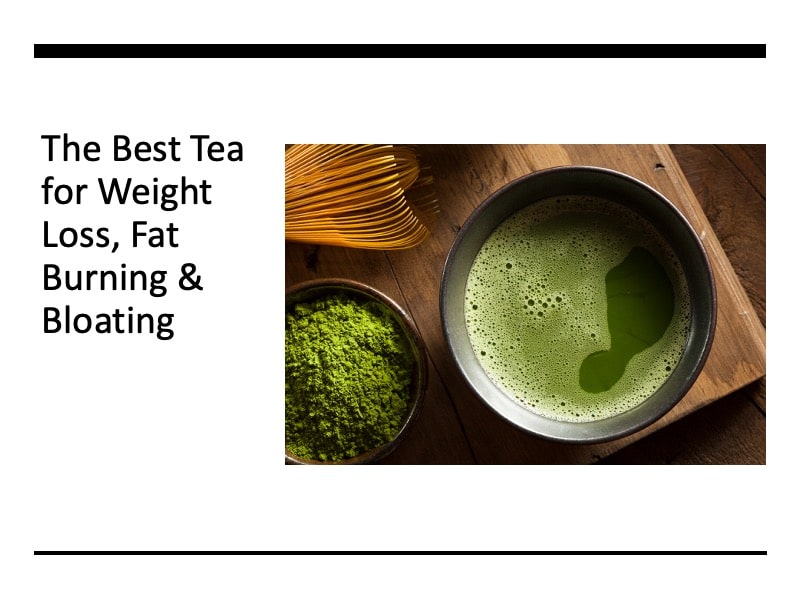
The Best Tea For Weight Loss, Fat Burning & Bloating
 Reading Time: 13 minutes
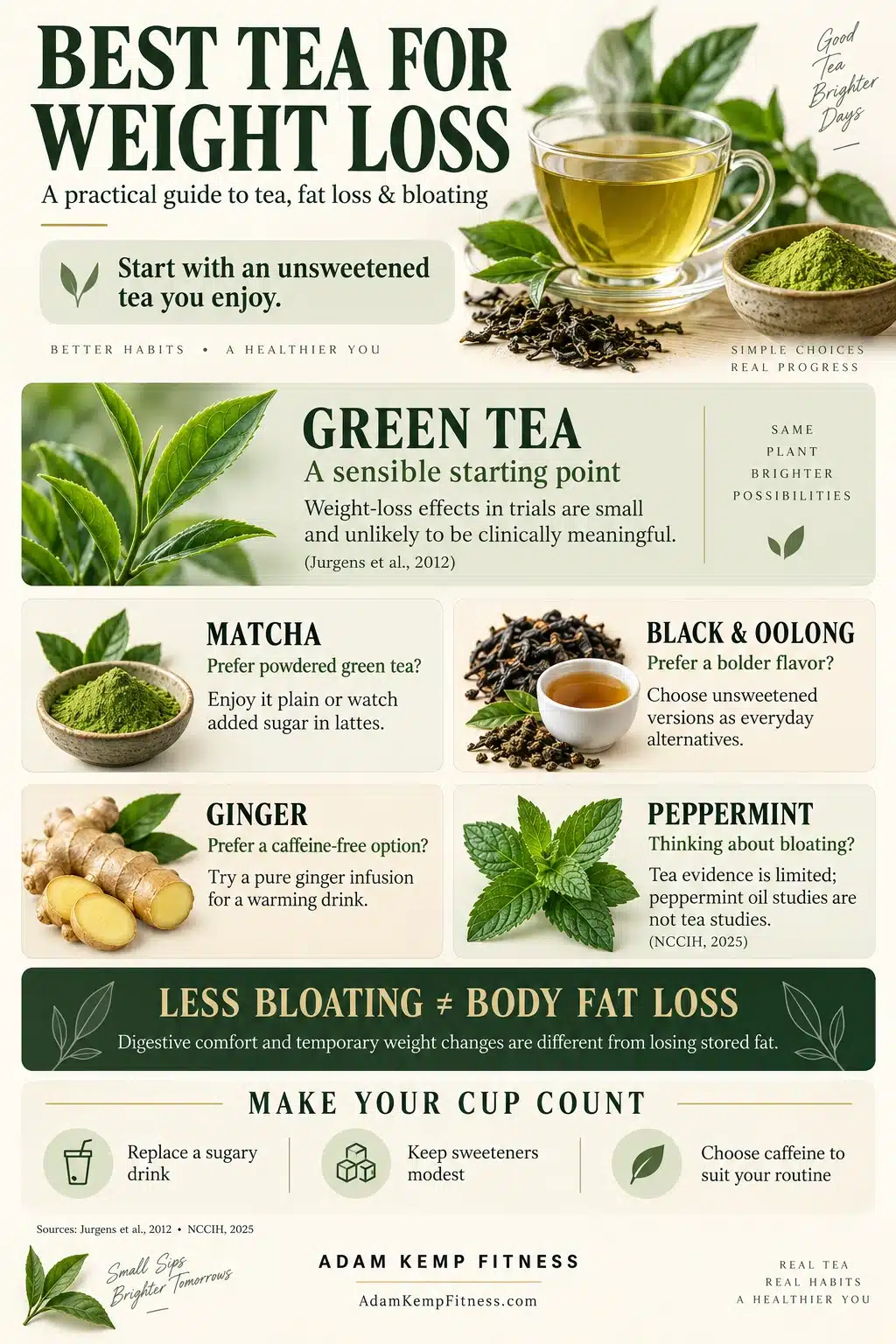
 The best tea for weight loss is an unsweetened tea you enjoy enough to drink regularly, especially when it replaces sugary drinks.
Green tea is a reasonable starting point, but its reputation as a powerful fat burner goes beyond what research supports.
A Cochrane review found that green tea preparations produced weight changes that were small and unlikely to be clinically meaningful, highlighting the difference between a potential metabolic effect and noticeable weight loss (Jurgens et al., 2012).
As a professional basketball player with a master’s degree in nutrition education, I appreciate tea as part of a consistent daily routine.
I see it as a beverage choice that complements other healthy habits, not a shortcut to a leaner physique.
Choosing the best tea for weight loss also means understanding that losing body fat, losing water weight, and relieving bloating are different outcomes.
Feeling less full or seeing a temporary drop on the scale does not necessarily mean you have burned stored fat.
That distinction matters when comparing green tea, oolong, black tea, and matcha with herbal options such as ginger and peppermint.
A useful comparison should consider the evidence for each drink, its caffeine content, and how you prepare it, not simply whether its packaging promises “slimming” or “detox” benefits.
My recommendations combine personal experience with a realistic look at the research to help you choose the best tea for weight loss.
How Can Drinking Tea Help with Weight Loss?
Tea is the second most consumed beverage in the world after water, revered for its abundance of antioxidants, polyphenols, and other bioactive compounds.
When it comes to weight loss, tea can provide several key benefits:
- Boosting Metabolism – Certain teas contain catechins and caffeine, which enhance thermogenesis and calorie burning (Venables et al., 2008).
- Reducing Appetite – Some herbal teas can help suppress hunger, leading to lower calorie intake.
- Improving Digestion – Many teas support gut health, promoting efficient digestion and nutrient absorption (Wu et al., 2023).
- Reducing Fat Absorption – Some teas contain bioactive compounds that inhibit fat absorption from food (Murase et al., 2002).
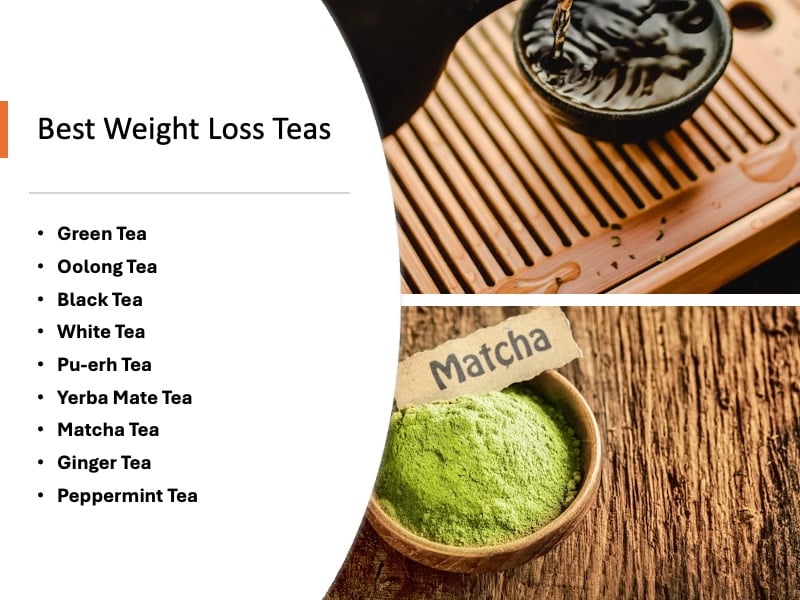
Best Weight Loss Teas
If you’re looking for one tea that supports both weight loss and bloating relief, Ahmad Tea Green Tea, Lemon, Mate, & Matcha “Slim” Natural Benefits Teabags is my top pick.
This blend combines green tea, matcha, mate, lemon, and peppermint to boost metabolism, improve digestion, and reduce bloating.
It provides natural energy without a crash, supports fat burning, and helps eliminate excess water weight. I’ve found it especially helpful after heavy meals or while maintaining a lean physique during the season.

Last update on 2026-09-18 / This article includes affiliate links/Images via Amazon Product Advertising API. I may earn commissions on purchases made through these links.
Now, let’s take a deeper look into the best teas for weight loss and their specific benefits.
Green Tea
Green Tea
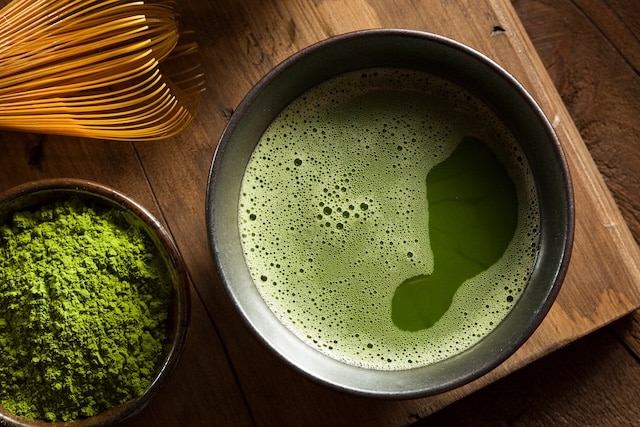
Green tea contains caffeine and catechins, including epigallocatechin gallate (EGCG), which researchers have investigated for their effects on energy expenditure and fat oxidation (Dulloo et al., 1999; Hursel et al., 2011; Hursel & Westerterp-Plantenga, 2013).
However, its weight-management effects appear modest and vary between products and individuals, so it is best approached as a beverage that complements healthy habits (National Center for Complementary and Integrative Health [NCCIH], 2025).
How It Works
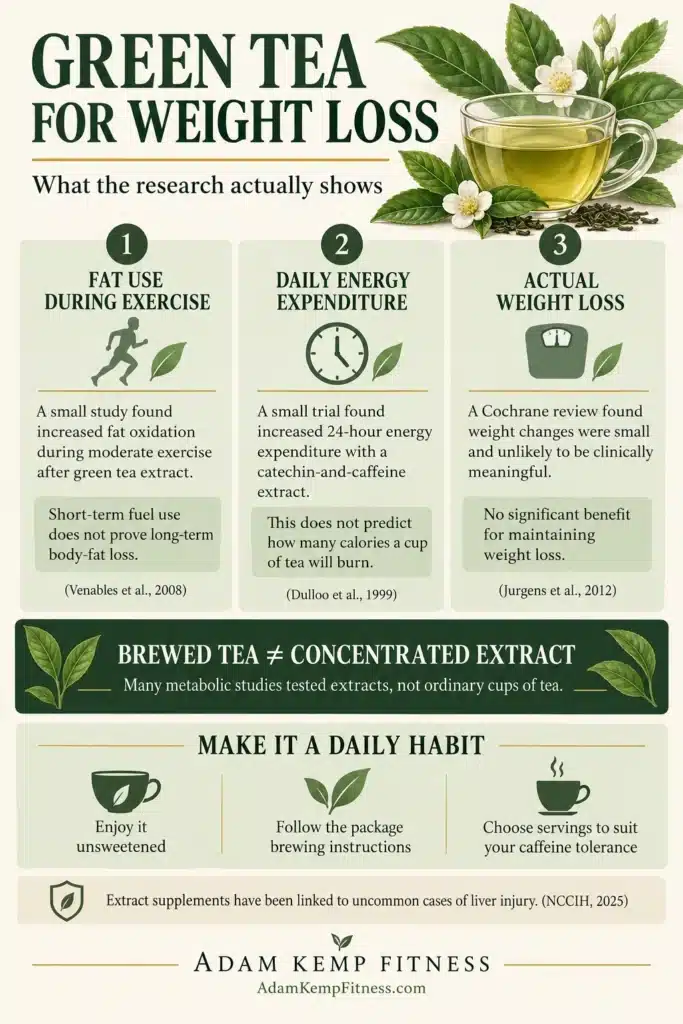
- May Increase Fat Oxidation During Exercise – A small human study found that green tea extract increased fat oxidation during moderate-intensity exercise. This measured short-term fuel use, rather than long-term body-fat loss, and involved an extract rather than ordinary brewed tea (Venables et al., 2008).
- May Modestly Increase Energy Expenditure – A small trial found that a catechin- and caffeine-containing green tea extract increased 24-hour energy expenditure compared with placebo. This does not establish that each cup of green tea produces a predictable calorie-burning effect (Dulloo et al., 1999).
- Has Limited Effects on Weight Loss – A Cochrane review found that weight changes from green tea preparations were small and unlikely to be clinically meaningful, with no significant benefit for maintaining weight loss (Jurgens et al., 2012).
How to Consume
- Serving Size – Start with one cup and adjust to your preferences and caffeine tolerance. Treat this as a practical starting point, rather than a proven weight-loss dose.
- Brewing Tips – Follow the temperature and steeping time on your tea’s packaging, then adjust to taste. I recommend enjoying it unsweetened.
- Tea Versus Supplements – Concentrated extracts are not interchangeable with brewed tea; liver injury has been reported primarily with extract tablets and capsules (NCCIH, 2025).
I enjoy green tea for its flavor and the energy boost I personally notice.
My approach to using green tea for weight loss is to make it an enjoyable part of my routine while keeping expectations about fat burning realistic, knowing it does provide some support and can also help me be more active each day.
It’s easy to find quality green tea, but this simple, organic bulk option is perfect to keep on hand for anytime use.

Last update on 2026-09-18 / This article includes affiliate links/Images via Amazon Product Advertising API. I may earn commissions on purchases made through these links.
Oolong Tea

Although you’re probably less familiar with it compared to green tea, oolong tea is great for weight loss.
Oolong tea falls between green and black tea in terms of oxidation, providing a balanced mix of catechins and theaflavins. Research suggests that oolong tea can increase metabolism and fat oxidation significantly (He et al., 2009).
How It Works
- Enhances Metabolic Rate – Studies show oolong tea increases energy expenditure by 10% (Komatsu et al., 2003).
- Mobilizes Fat – Oolong tea helps release stored fat for energy.
- Regulates Blood Sugar – Stabilizing blood sugar levels reduces cravings and promotes steady energy levels.
How to Consume
- Daily Dose – 1-2 cups per day.
- Brewing Tips – Steep at 190-200°F (90-95°C) for 3-5 minutes.
As someone who has dealt with weight fluctuations, I’ve found that drinking oolong tea in the morning helps keep my metabolism steady and energy levels consistent throughout the day.
Without a doubt, it is one of the best teas to drink in the morning.

Last update on 2026-09-18 / This article includes affiliate links/Images via Amazon Product Advertising API. I may earn commissions on purchases made through these links.
Black Tea
Black tea undergoes full oxidation, giving it a robust flavor and a higher concentration of flavonoids. Research suggests that black tea polyphenols may reduce fat absorption and improve gut microbiota composition (Bond & Derbyshire, 2019).
How It Works
- Reduces Fat Absorption – Black tea polyphenols can inhibit fat-digesting enzymes (Henning et al., 2017).
- Boosts Metabolism – Increases calorie burn through thermogenesis.
- Improves Gut Health – Supports beneficial gut bacteria, aiding digestion and weight regulation.
How to Consume
- Daily Dose – 1-2 cups per day.
- Brewing Tips – Use boiling water (212°F or 100°C) and steep for 3-5 minutes.
I often use black tea as an alternative to coffee. Its bold flavor satisfies cravings while keeping me focused and energized.

Last update on 2026-09-18 / This article includes affiliate links/Images via Amazon Product Advertising API. I may earn commissions on purchases made through these links.
White Tea
White tea is the least processed of all teas, preserving the highest levels of antioxidants. Research suggests it can inhibit fat cell formation and promote fat breakdown (Abiri et al., 2023).
How It Works
- Inhibits Fat Cell Formation – White tea polyphenols prevent the creation of new fat cells.
- Boosts Metabolism – Helps accelerate fat-burning processes.
- Breaks Down Stored Fat – Promotes lipolysis, helping the body burn fat more efficiently.
How to Consume
- Daily Dose – 1-2 cups per day.
- Brewing Tips – Use 160-185°F (70-85°C) water and steep for 2-3 minutes.
During periods of lighter training, I turn to white tea for its metabolism-boosting properties without excessive caffeine intake.

Last update on 2026-09-18 / This article includes affiliate links/Images via Amazon Product Advertising API. I may earn commissions on purchases made through these links.
Pu-erh Tea
Pu-erh tea undergoes microbial fermentation, enriching its bioactive compounds.
How It Works
- Increases Fat Burn – Enhances lipolysis, breaking down fats for energy.
- Reduces Fat Storage – Inhibits new fat cell formation.
- Aids Digestion – Supports gut microbiota health (Liu et al., 2023).
How to Consume
- Daily Dose – 1-2 cups per day.
- Brewing Tips – Use boiling water (212°F or 100°C) and steep for 2-4 minutes.
I often drink pu-erh tea after heavy meals to support digestion and reduce bloating.

Last update on 2026-09-18 / This article includes affiliate links/Images via Amazon Product Advertising API. I may earn commissions on purchases made through these links.
Yerba Mate Tea
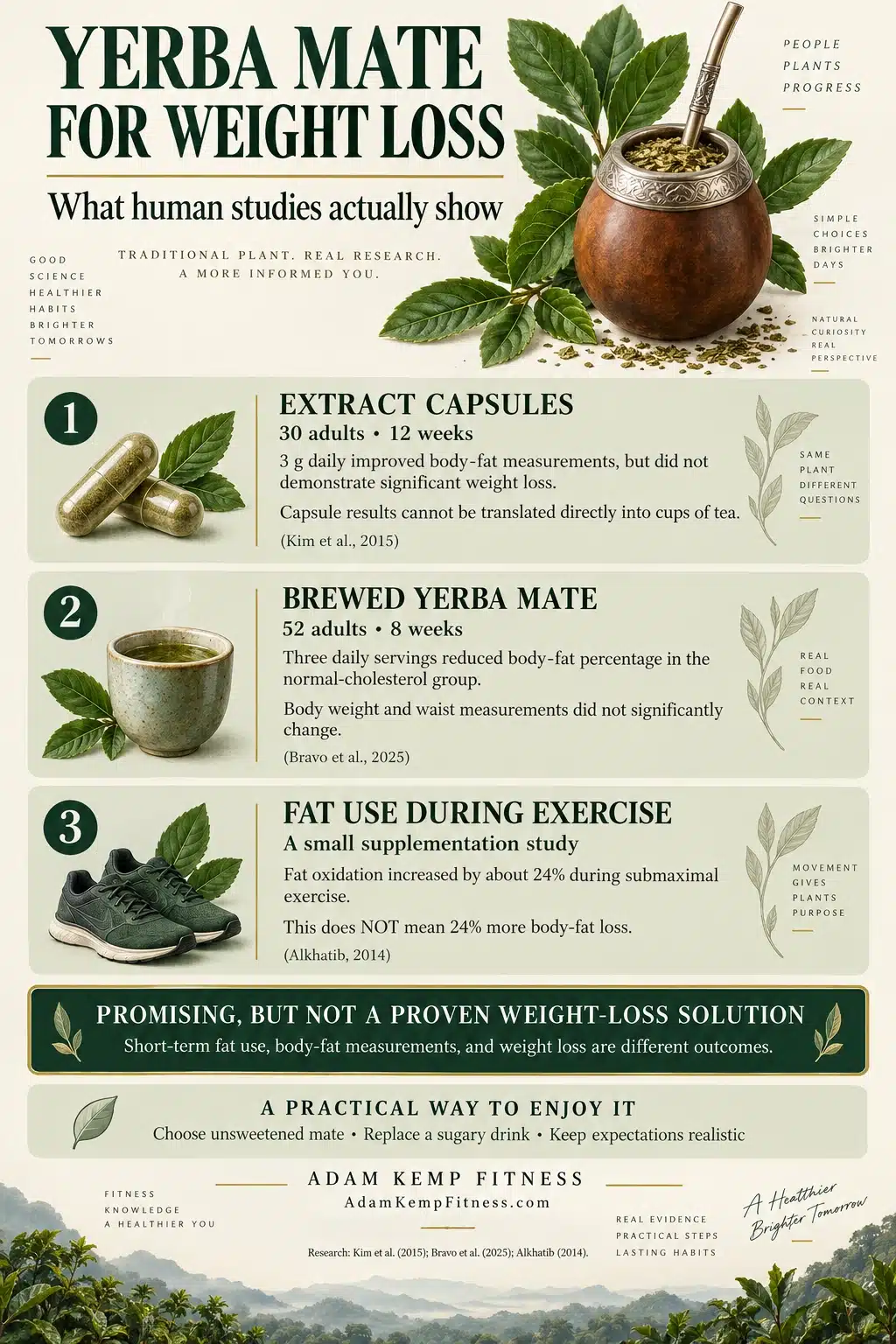
Yerba mate tea has promising research on body composition, but evidence that drinking it produces meaningful weight loss remains limited (Kim et al., 2015; Bravo et al., 2025).
For example, a 12-week trial involving 30 adults found that 3 grams of yerba mate extract daily improved body-fat measurements compared with placebo, but did not show a significant weight-loss advantage.
These results involved concentrated capsules, so they cannot be directly translated into cups of tea (Kim et al., 2015).
More directly relevant, a study published in 2025 tested three daily servings of brewed yerba mate for eight weeks in 52 adults.
Body-fat percentage decreased in participants with normal cholesterol, but body weight and waist measurements did not significantly change (Bravo et al., 2025).
Yerba mate may also influence exercise metabolism: a small study found approximately 24% greater fat oxidation during submaximal exercise after supplementation.
Note: This describes the fuel used during a workout, not 24% more body-fat loss over time (Alkhatib, 2014).
I’ve used yerba mate as an energy booster before training, but I prefer to treat it as an enjoyable beverage within my routine and caffeine needs.
For weight management, my practical recommendation is to drink it unsweetened instead of a sugary drink or other caffeine source, while keeping expectations for direct fat loss modest.
How It Works
- May Increase Fat Oxidation During Exercise – Small human studies found that yerba mate supplementation increased the amount of fat used for fuel during exercise; this does not establish greater long-term fat loss or a lasting increase in metabolism (Alkhatib, 2014).
- May Improve Some Body-Fat Measurements – A 12-week trial involving 30 adults found that 3 grams of yerba mate extract daily reduced body-fat mass and percentage compared with placebo, but did not demonstrate significant weight loss. The study used capsules, so the results cannot be directly applied to brewed tea (Kim et al., 2015).
- May Temporarily Reduce Hunger – In a small crossover study of 12 active women, taking 2 grams of yerba mate before an exercise session reduced self-reported hunger and desire to eat compared with placebo. This does not establish that drinking mate before meals prevents overeating (Alkhatib & Atcheson, 2017).
What about the tea itself? A trial published in 2025 found that three daily servings of brewed yerba mate for eight weeks reduced body-fat percentage in participants with normal cholesterol, but did not significantly change body weight or waist measurements (Bravo et al., 2025).
How to Consume
- Serving Size – Start with one small cup to assess your tolerance. There is no established weight-loss dose; even three daily servings did not significantly reduce body weight in a controlled brewed-tea trial (Bravo et al., 2025).
- Brewing Tips – Follow your product’s instructions and enjoy it unsweetened. For reference, the brewed-tea trial used 3 grams of dried leaves in 150 mL of freshly boiled water, steeped for five minutes; this was a study preparation, not a proven optimal brewing method (Bravo et al., 2025).
- Timing – Consider drinking it earlier in the day, particularly if caffeine affects your sleep. Yerba mate’s caffeine can improve alertness but may also cause restlessness, stomach discomfort, or difficulty sleeping (Mayo Clinic, 2023).
I’ve personally used yerba mate as an energy boost during long training sessions. I enjoy it as part of my routine, while keeping my expectations about weight loss realistic.
I strongly suggest you buy a full yerba mate brewing device, but if you want a simple version, this is a quality brand of tea when using yerba mate for weight loss:

Last update on 2026-09-18 / This article includes affiliate links/Images via Amazon Product Advertising API. I may earn commissions on purchases made through these links.
Matcha Tea
Matcha tea is great for weight loss, and matcha lattes are one of my favorite mid-day pick-me-ups.
Matcha tea is a finely ground green tea powder known for its high concentration of antioxidants, particularly epigallocatechin gallate (EGCG), which has powerful fat-burning and metabolism-boosting properties.
Because matcha involves consuming whole tea leaves, it provides a more potent dose of nutrients compared to traditional steeped teas.
How It Works
- Supports Digestion – Matcha promotes gut health by supporting beneficial bacteria and reducing digestive discomfort.
- Reduces Water Retention – Its natural diuretic properties help flush out excess fluids.
- Detoxifies the Body – High in chlorophyll, matcha helps eliminate toxins that can contribute to bloating and sluggish digestion.
- Enhances Fat Oxidation – Matcha has been shown to increase the body’s ability to burn fat, especially when combined with exercise.
- Boosts Metabolism – The combination of caffeine and catechins stimulates thermogenesis, leading to higher calorie burn.
- Provides Sustained Energy – Unlike coffee, matcha releases energy gradually, reducing energy crashes and promoting steady activity levels.
How to Consume
- Daily Dose – 1 cup per day, preferably in the morning or before a workout.
- Preparation Tips – Whisk 1 teaspoon of matcha powder with hot water (175°F or 80°C) until frothy. Can also be blended with plant-based milk for a matcha latte.
I’ve used matcha tea for years as a clean energy source before workouts. It sharpens focus, reduces bloating, and helps maintain a lean physique without the jitters of traditional caffeine sources.
Although there are some higher grade options, MatchaDNA is the one I recommend based on its cost and quality:

Last update on 2026-09-18 / This article includes affiliate links/Images via Amazon Product Advertising API. I may earn commissions on purchases made through these links.
Ginger Tea
Ginger tea has been used in traditional medicine for centuries to aid digestion, reduce inflammation, and alleviate bloating.
Its active compound, gingerol, is known for its powerful anti-inflammatory and digestive benefits, making it an excellent natural remedy for bloating and weight loss.
How It Works
- Reduces Gas and Water Retention – Ginger contains compounds that help relax the digestive tract, allowing gas and bloating to subside more quickly.
- Aids Digestion – It stimulates the production of digestive enzymes, speeding up digestion and preventing the buildup of undigested food that can cause bloating.
- Soothes Inflammation – Ginger’s anti-inflammatory properties help calm an irritated gut, which is often a cause of bloating and discomfort (Ballester et al., 2022).
- Boosts Metabolism – Ginger has thermogenic properties that can enhance calorie burning and fat oxidation (Mansour et al., 2012).
- Reduces Appetite – Studies suggest that ginger can help regulate appetite and promote satiety, making it easier to control calorie intake (Mansour et al., 2012).
How to Consume
- Daily Dose – Drink 1-2 cups per day, especially after meals for digestion and bloating relief.
- Brewing Tips – Steep 1-2 teaspoons of freshly grated ginger in hot water (200°F or 93°C) for 5-10 minutes. Add lemon or raw honey for extra digestive benefits.
As an athlete, I’ve relied on ginger tea to keep my digestion running smoothly, especially when traveling and adjusting to different cuisines. It’s an excellent way to reduce bloating and keep energy levels steady.

Last update on 2026-09-18 / This article includes affiliate links/Images via Amazon Product Advertising API. I may earn commissions on purchases made through these links.
Peppermint Tea
Peppermint tea is one of the best natural remedies for bloating and digestive discomfort.
It contains menthol, a compound that helps relax the muscles of the gastrointestinal tract, making it particularly effective for relieving bloating, gas, and indigestion.
How It Works
- Relaxes the Digestive Tract – Menthol in peppermint relaxes intestinal muscles, preventing cramps and bloating (Khanna et al., 2014).
- Reduces Gas Formation – It helps release trapped gas in the digestive system, relieving pressure and discomfort.
- Improves Gut Motility – Peppermint tea promotes the movement of food through the digestive system, preventing bloating caused by sluggish digestion (Alam et al., 2013).
- Suppresses Appetite – The aroma and taste of peppermint can naturally reduce hunger and cravings, making it easier to maintain a calorie deficit.
- Supports Digestion – A healthy digestive system enhances nutrient absorption and prevents weight gain caused by digestive inefficiencies.
How to Consume
- Daily Dose – 1-2 cups per day, particularly after meals or when experiencing bloating.
- Brewing Tips – Steep fresh peppermint leaves or a peppermint tea bag in hot water (200°F or 93°C) for 5-7 minutes.
I’ve personally used peppermint tea as a go-to remedy for bloating after big meals. It’s refreshing, soothing, and helps keep my digestion on track, especially when I need to feel light and energized before workouts.

Last update on 2026-09-18 / This article includes affiliate links/Images via Amazon Product Advertising API. I may earn commissions on purchases made through these links.
Final Thoughts: How to Maximize the Weight Loss Benefits of Tea
Tea is a comforting beverage and a natural tool for weight management.
Whether you prefer the bold taste of black tea, the metabolism-boosting effects of green tea, or the gentle benefits of herbal teas, there’s an option to suit every preference.
To optimize weight loss, combine tea with these lifestyle habits:
- Balanced Diet – Pair tea with a diet rich in lean proteins, fiber, and healthy fats.
- Regular Exercise – Tea before workouts enhances fat oxidation.
- Stay Hydrated – Drink plenty of water alongside tea.
- Monitor Intake – Avoid adding sugar or high-calorie sweeteners.
By incorporating weight-loss-friendly teas into a well-balanced diet and active lifestyle, you can enhance your results and enjoy a healthier body.
For a tea that supports both weight loss and bloating relief, Ahmad Tea Green Tea, Lemon, Mate, & Matcha “Slim” Natural Benefits Teabags is my go-to choice.
This blend brings together green tea, matcha, mate, lemon, and peppermint to naturally boost metabolism, aid digestion, and reduce bloating.
It delivers steady energy without jitters, promotes fat burning, and helps flush out excess water. I’ve found it especially useful after heavy meals or when staying lean during the season.
Last update on 2026-09-18 / This article includes affiliate links/Images via Amazon Product Advertising API. I may earn commissions on purchases made through these links.
This website does not provide medical advice. This website site does contain affiliate links, and purchases may earn a commission.
Read my Medical Disclaimer, Review Disclaimer, and Publishing Policies for more details. Use of this site indicates acceptance of these terms.