How to Meal Prep for a Stronger, Healthier Week
 Reading Time: 13 minutes
 Learning how to meal prep is less about filling identical containers with identical food and more about removing obstacles between you and balanced meals that actually help you achieve your health and fitness goals.
A practical meal preparation system can save time, reduce last-minute food decisions, and make it easier to consistently eat meals that support your health, training, and recovery.
As a professional basketball player who’s lived and managed a wide, wide variety of places to live in, I know eating healthy gets much harder when every meal requires a new decision.
Meal prepping provides my family and me reliable options during travel, two-a-day practices, late evenings, and weeks when motivation is not enough.
Research supports this practice as well, as meal planning has been associated with greater food variety and better overall diet quality, although observational research cannot prove that planning alone causes these improvements (Ducrot et al., 2017).
The real value of meal prepping is simple: when useful food is already prepared, eating well requires less time and effort.
What Is Meal Prepping?
Meal prepping is the practice of planning and preparing meals before you need them.
It can involve preparing complete meals, cooking versatile ingredients, assembling breakfasts, portioning snacks, or freezing meals for later.
There is no requirement to prepare an entire week of food on Sunday.
For many households, preparing three or four days at a time, or completing one larger prep session followed by a smaller midweek session, is more manageable.
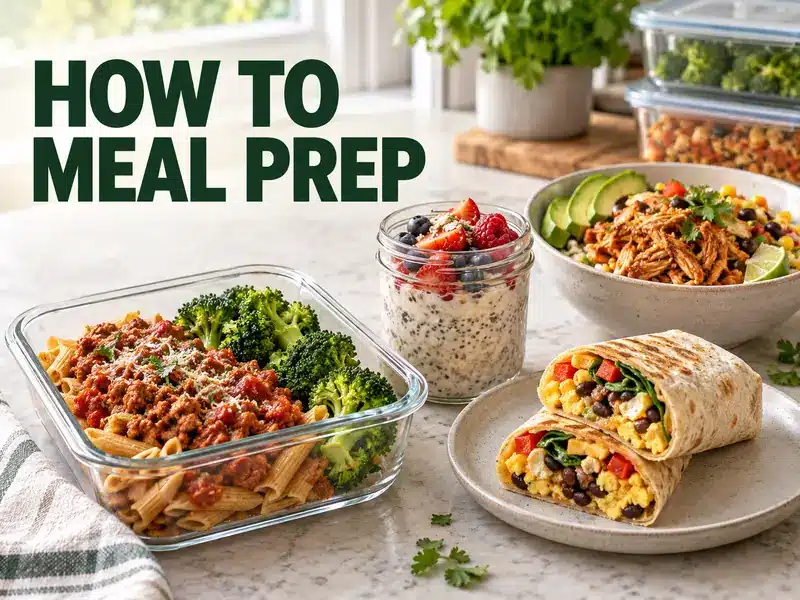
The most useful meal prep system solves your recurring problems. If you rush breakfast, prepare overnight oats or breakfast burritos; if healthy dinner ideas are the challenge, make a large entrée like meat sauce, chili, or slow-cooker chicken.
How to Meal Prep in Seven Practical Steps
A meal prep routine should make the rest of your week easier without consuming most of your weekend.
These seven steps provide enough structure to get started while allowing room for different diets, budgets, schedules, and calorie needs.
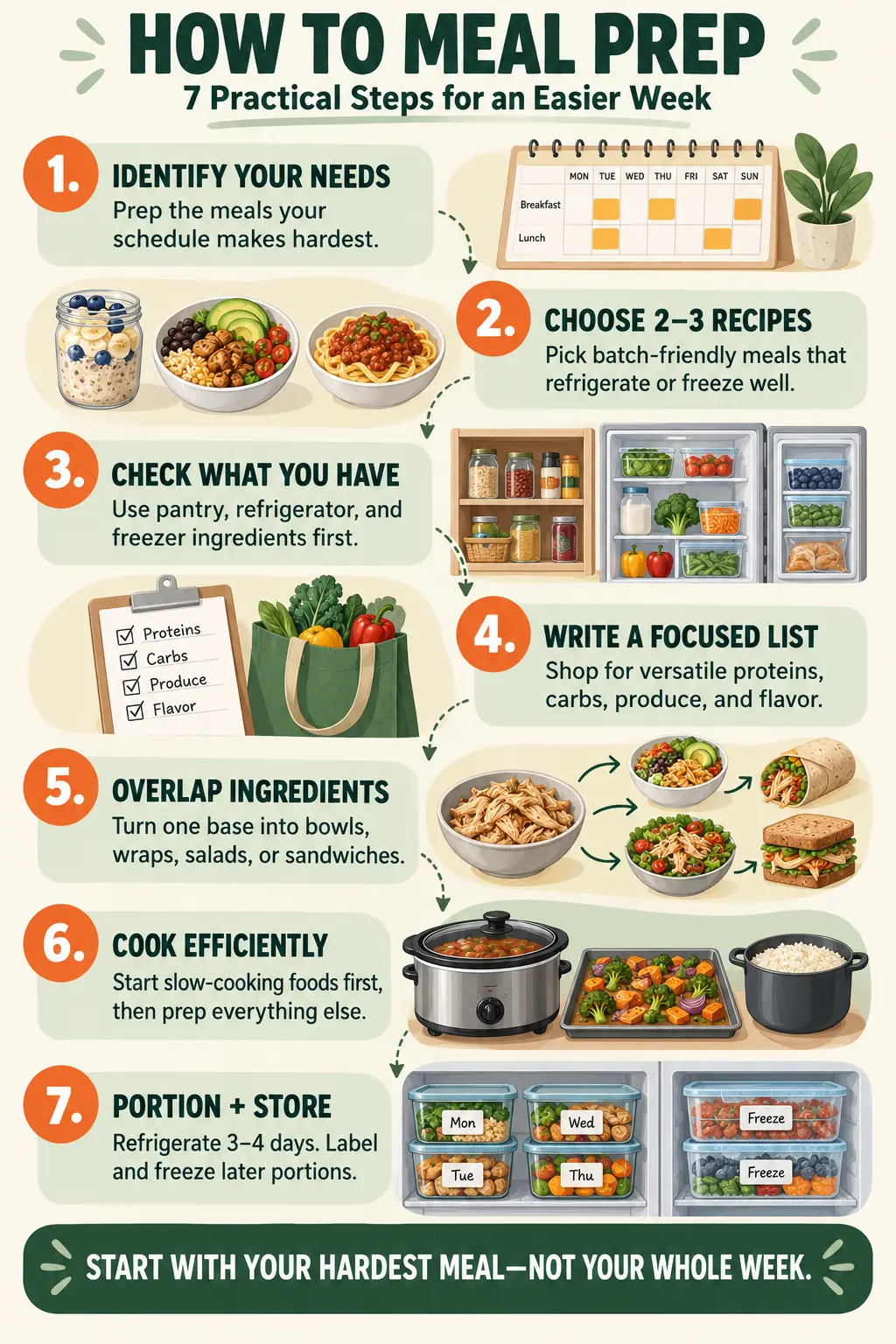
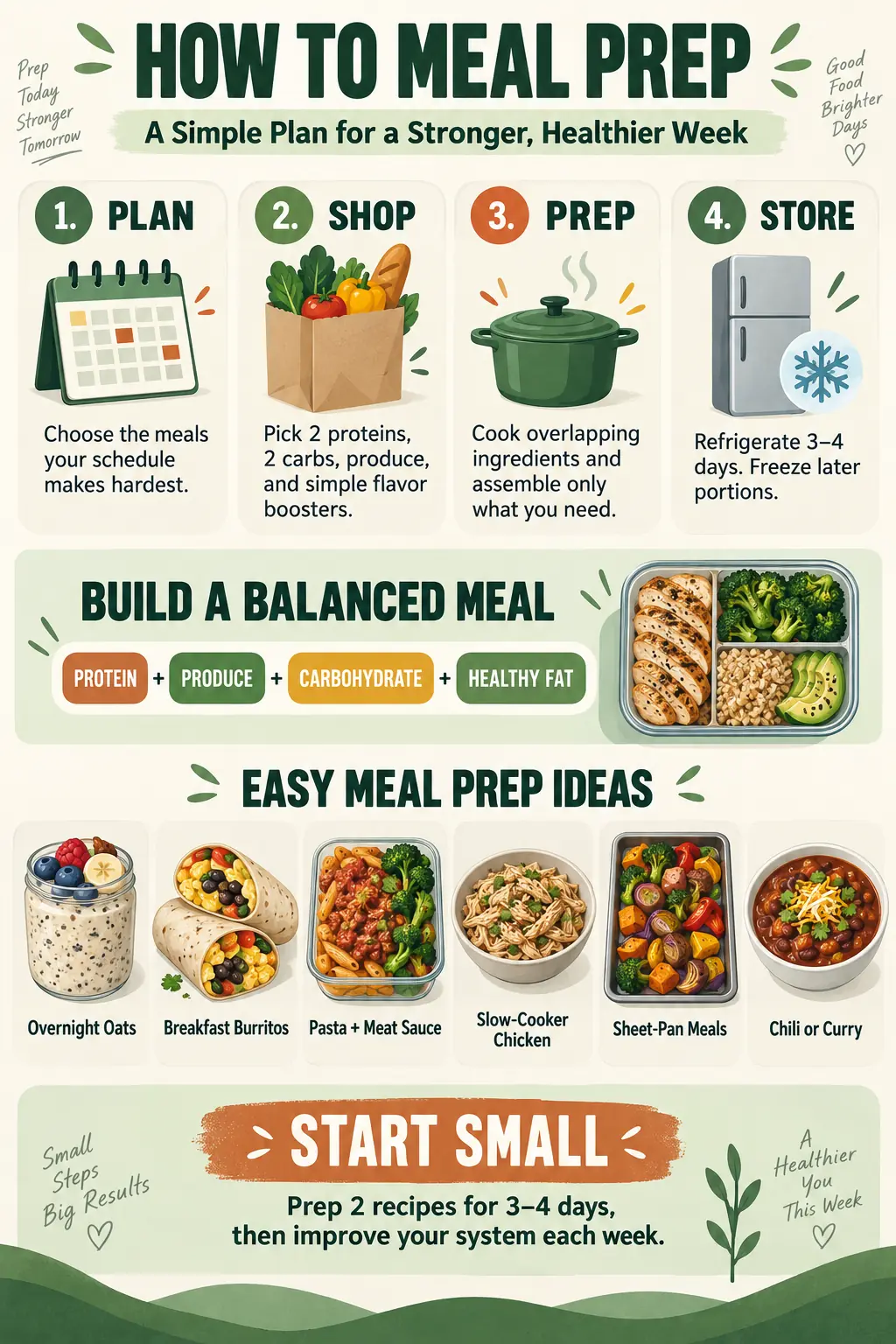
1.) Identify the Meals You Actually Need
Look at the coming week and identify the meals most likely to become inconvenient.
You may need five portable lunches, but only two prepared dinners because you plan to cook or eat with family on other nights.
Start with your most difficult meal instead of attempting to prepare everything.
Successfully preparing breakfast for five days is more useful than creating an elaborate full-week plan that you abandon after one attempt.
2.) Choose Two or Three Main Recipes
It is important that you choose meals that are easy to cook in large batches and still taste good after refrigeration or freezing.
Pasta with meat sauce, burritos, soups, curries, casseroles, and slow-cooker recipes generally work better than delicate foods that quickly become soggy or dry.
Using different formats can also prevent boredom.
For example, prepare overnight oats for breakfast, chicken burrito bowls for lunch, and pasta with meat sauce for dinner instead of eating three variations of chicken and rice.
3.) Check What You Already Have
Before shopping, check your refrigerator, freezer, and pantry for ingredients that need to be used.
Building one or two meals around existing ingredients can reduce food waste and lower the weekly grocery bill.
Keep a short list of reliable staples such as oats, rice, pasta, frozen vegetables, canned beans, canned tomatoes, eggs, Greek yogurt, tortillas, herbs, and spices.
A useful pantry makes meal prepping possible even when your grocery trip is limited.
4.) Write a Focused Grocery List
Organize your list by food group or grocery-store section.
A basic list might include two protein sources, two carbohydrate sources, several fruits and vegetables, one or two sauces, and convenient snacks.
Buying more ingredients does not necessarily create more variety. A shorter list of versatile foods is often easier to turn into several different meals.
5.) Use Overlapping Ingredients
One of the most effective kitchen hacks is choosing ingredients that serve more than one purpose.
Slow-cooker pulled chicken, for example, can become a burrito bowl, wrap, salad, sandwich, baked-potato topping, or quick quesadilla.
This approach creates variety without requiring five separate recipes.
Changing the sauce, seasoning, vegetable, or serving format can make the same base ingredient feel like a different meal.
6.) Cook in an Efficient Order
Begin with the foods that require the longest unattended cooking time.
Start the slow cooker, oven, rice cooker, or pot of meat sauce before you assemble overnight oats, chop produce, or portion snacks.
You can roast vegetables and potatoes on sheet pans while a protein cooks elsewhere.
This parallel approach lets you prepare several days of food without spending an entire afternoon in the kitchen.
7.) Portion, Label, Refrigerate, and Freeze
Divide food according to when you expect to eat it.
Keep the next three or four days of meals refrigerated and freeze portions intended for later in the week.
Label frozen meals with the name and preparation date.
This small step prevents containers from becoming anonymous permanent residents of the freezer.
How to Build a Balanced Meal Prep Formula
Meal prepping does not automatically make a meal nutritious. A container can be homemade and convenient while still lacking protein, produce, fiber, or enough total energy.
A simple main-meal structure includes:
- A protein source
- Vegetables or fruit
- A carbohydrate source
- A moderate amount of dietary fat
- A sauce, seasoning, or garnish that makes the meal enjoyable
Healthy dietary patterns can include fruits, vegetables, legumes, whole grains, nuts, seeds, dairy, seafood, eggs, poultry, and other lean protein sources.
Variety within and across these groups helps increase the likelihood of meeting vitamin and mineral needs (World Health Organization [WHO], 2026).
Your portions should match your body size, appetite, activity level, and goals.
A basketball player completing a demanding practice needs more total energy, and usually more carbohydrates, than someone working at a desk on a rest day.
Simple Healthy Meal Prep Ideas That Are Actually Achievable
The best options are not necessarily the most creative recipes.
They are meals that use accessible ingredients, store well, and can be adjusted without requiring advanced cooking skills.
Overnight Oats
Overnight oats take only a few minutes to assemble and can provide carbohydrates, protein, fiber, and dietary fat in one portable breakfast.
Combine oats with milk or fortified soy milk, Greek yogurt, chia seeds, and fruit, then refrigerate overnight.
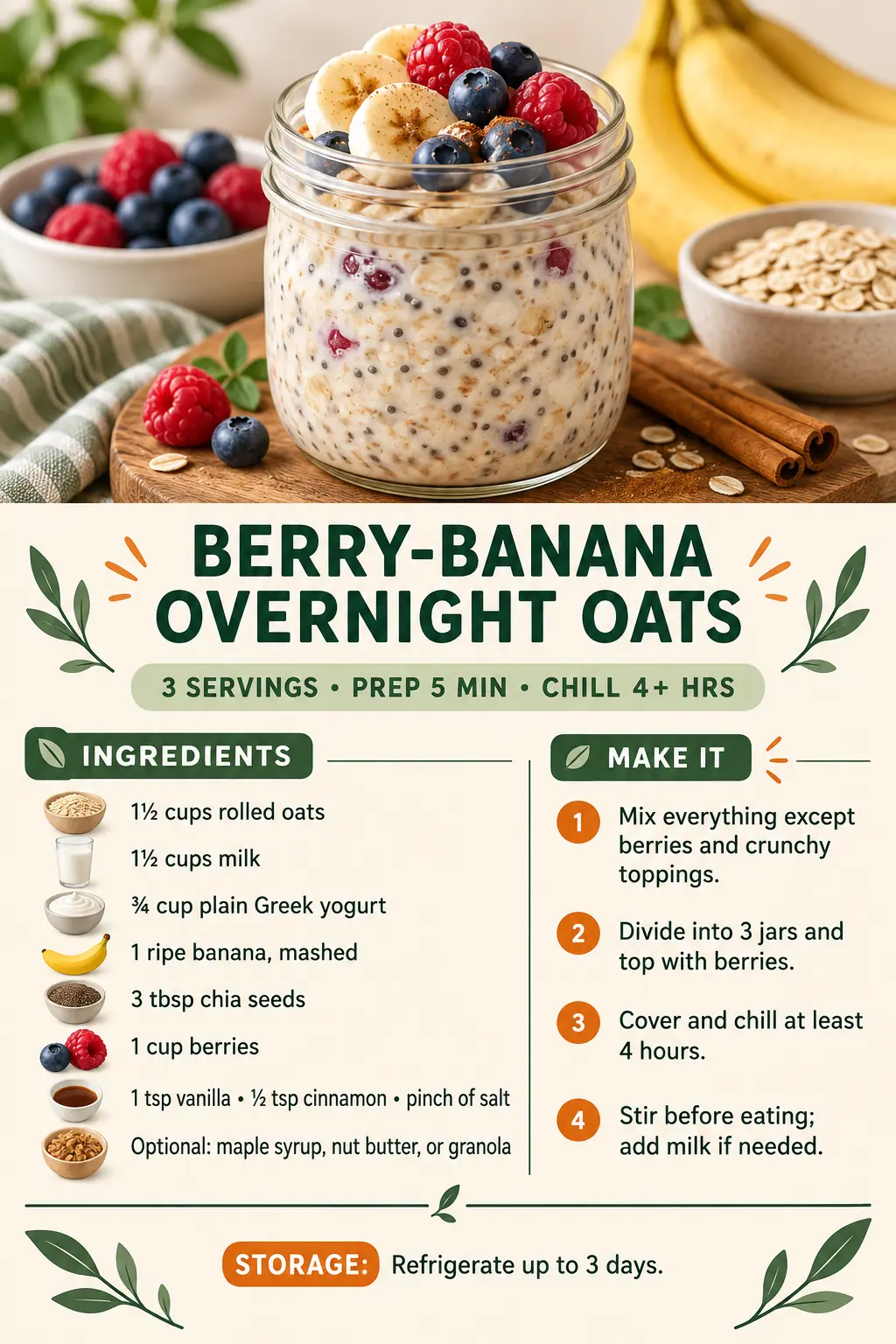
A basic combination includes:
- ½ to 1 cup of oats
- Milk or fortified soy milk
- Greek yogurt
- Berries or sliced banana
- Chia seeds or ground flaxseed
- Cinnamon
- Optional protein powder or nut butter
Prepare two or three jars at a time rather than an entire week.
Add crunchy toppings shortly before eating so they maintain their texture.
Make-Ahead Breakfast Burritos
Breakfast burritos are useful when you need a substantial meal that can be reheated quickly.
Fill whole-grain or regular tortillas with scrambled eggs, beans, potatoes or rice, sautéed vegetables, cheese, and optional lean meat.
Allow the filling to cool before rolling the burritos so excess steam does not make the tortillas soggy.
Wrap and freeze individual portions, then thaw them overnight in the refrigerator or reheat them from frozen.
The same concept works for lunch burritos.
Use shredded chicken, lean ground beef, beans, rice, vegetables, salsa, and a measured amount of cheese or avocado.
Pasta With Meat Sauce
Pasta with meat sauce is an underrated meal prep option because it provides protein and carbohydrates in an affordable, familiar format.
Prepare the sauce with lean ground beef, turkey, chicken, or lentils and add onions, carrots, peppers, mushrooms, or spinach.
The pasta and meat sauce form the base meal rather than the entire meal.
Add a side salad, roasted vegetables, frozen broccoli, or fruit each day to create a more balanced plate.
Active adults can increase the pasta portion to support training, while someone pursuing fat loss can use a smaller pasta portion and add more vegetables.
Whole-grain or legume-based pasta can increase fiber, but traditional pasta can also fit within a healthy diet.
Slow-Cooker Pulled Chicken or Pork
Slow-cooker meat requires little active cooking and can be repurposed throughout the week.
Add chicken breasts, chicken thighs, or a lean pork cut to the slow cooker with broth, tomatoes, salsa, herbs, or a moderate amount of barbecue sauce.
Use the finished meat in:
- Rice or quinoa bowls
- Burritos and tacos
- Sandwiches or wraps
- Salads
- Soups
- Baked potatoes
- Pasta dishes
Keep strongly flavored sauces separate when possible.
This allows you to turn one batch into barbecue sandwiches one day and Mexican-inspired bowls the next.
Sheet-Pan Protein, Potatoes, and Vegetables
A sheet-pan meal is one of the simplest ways to prepare several meal components at once.
Roast chicken, salmon, tofu, sausage, or chickpeas alongside potatoes and vegetables, adjusting cooking times so each ingredient is cooked properly.
Use olive oil and seasonings deliberately rather than pouring them freely.
Oils are useful cooking ingredients, but their high energy density means small quantity differences can substantially change a meal’s calorie content.
Chili, Soup, or Curry
One-pot meals are easy to scale, portion, and freeze.
Chili made with lean meat or beans can provide protein, carbohydrates, fiber, and vegetables without requiring several separate pans.
Soups and curries can be adjusted according to the ingredients available.
Add rice, bread, potatoes, or noodles when you need more carbohydrates, or serve a smaller portion of starch when your energy needs are lower.
Rice or Grain Bowls
Prepare a protein, grain, and vegetables separately, then assemble bowls as needed. Suitable combinations include chicken with rice and roasted vegetables, ground beef with quinoa and edamame, or salmon with potatoes and green beans.
Use salsa, pesto, hummus, tzatziki, vinaigrette, or yogurt-based sauces to change the flavor.
Storing wet ingredients separately helps vegetables and greens retain their texture.
Snack Boxes
Not every prep needs to produce a full entrée.
A snack box containing Greek yogurt or cottage cheese, fruit, vegetables, whole-grain crackers, nuts, hummus, cheese, or hard-boiled eggs can prevent an unplanned snack from becoming an inadequate meal.
Portion calorie-dense foods such as nuts, nut butter, cheese, and dried fruit if appetite or calorie control is a concern.
These foods can be nutritious, but their compact portions make them easy to underestimate.
A Realistic Weekly Meal Prep Example
This structure creates enough food to help during a busy week without requiring every meal to be decided in advance.
| Meal | Prepared Option | How to Add Variety |
|---|---|---|
| Breakfast | Overnight oats | Rotate berries, banana, apple, cinnamon, or nut butter |
| Second breakfast | Frozen breakfast burritos | Alternate beans, potatoes, vegetables, or lean meat |
| Lunch | Slow-cooker pulled chicken | Use in bowls, wraps, salads, or sandwiches |
| Dinner | Pasta with meat sauce | Add different vegetables or side salads |
| Backup meal | Frozen chili | Serve with rice, bread, potatoes, or Greek yogurt |
| Snacks | Fruit, yogurt, eggs, hummus | Change options according to hunger and schedule |
You could prepare the overnight oats, chicken, meat sauce, and chopped vegetables on Sunday.
Freeze extra burritos and chili so you have convenient options without expecting one refrigerated meal to remain fresh all week.
How to Adjust Meal Prep for Your Goal
The same recipes can support different goals when you adjust portions and additions.
You rarely need to prepare completely separate “weight-loss food” or “muscle-building food.”
Meal Prep for Fat Loss
For fat loss, prioritize meals that include protein, vegetables or fruit, and fiber, while keeping calorie-dense additions in proportion.
Pay particular attention to cooking oils, dressings, creamy sauces, cheese, nuts, and frequent unplanned snacks.
Meal prepping may improve portion awareness because ingredients and serving sizes are selected in advance.
However, meal prep supports weight loss and fat burning only when the overall diet creates an appropriate, sustainable energy deficit.
Meal Prep for Muscle Gain
For muscle gain, increase total meal size and add convenient sources of energy.
Larger portions of rice, pasta, oats, bread, potatoes, dairy products, olive oil, nuts, and dried fruit can help meet higher energy needs.
Protein is important, but muscle gain also requires resistance training and sufficient total energy.
Preparing large amounts of lean protein while consistently under-eating carbohydrates and calories is unlikely to support optimal training or growth.
Meal Prep for Athletic Performance
Athletes should adjust food intake as training demands change rather than expecting every day to look identical.
Sports nutrition guidance emphasizes individualizing energy, carbohydrate, protein, and fluid intake according to the athlete and the demands of training and competition (Thomas et al., 2016).
Meals before demanding exercise generally benefit from familiar, easily digested carbohydrates and a moderate amount of protein.
Meals prepared for after training should make it easy to consume both protein and carbohydrates to support recovery.
If fiber, fat, and highly seasoned foods cause digestive discomfort, reduce them immediately before training.
Your ideal pre-workout meal depends partly on nutrition principles and partly on what your body tolerates.
Sports nutrition principles can optimize athletic performance, and meal prepping is a highly effective way to help athletes meet their nutritional needs.
Use Convenient Foods Without Feeling Like You Cheated
Healthy meal prepping does not require cooking every ingredient from scratch.
Frozen vegetables, canned beans, canned fish, pre-washed greens, microwaveable grains, rotisserie chicken, jarred tomato sauce, and plain yogurt can significantly shorten prep time.
The relevant question is whether a convenience food improves the overall meal.
Microwaveable rice served with chicken and vegetables can be more useful than an elaborate recipe you never have time to make.
Check nutrition labels when sodium, added sugar, saturated fat, or a food allergy is a concern.
You can also balance a higher-sodium prepared ingredient with minimally seasoned vegetables, fruit, grains, and other foods throughout the day.
How to Meal Prep Without Getting Bored
Preparing components instead of identical meals provides more flexibility.
One batch of rice, roasted vegetables, and chicken can become a bowl, wrap, stir-fry, soup, or salad.
Choose two sauces or seasoning profiles for the week.
For example, pair half of your chicken with salsa and lime and the other half with pesto or a yogurt-herb sauce.
Texture also matters.
Keep greens, fresh herbs, chopped nuts, croutons, dressings, and crunchy vegetables separate until you are ready to eat.
You can intentionally leave one or two meals unplanned for a restaurant, family dinner, or spontaneous choice.
A useful meal prep routine creates a dependable baseline without turning food into an inflexible schedule.
Meal Prep Food Safety Tips
Cooked food should not remain at room temperature for more than two hours, or more than one hour if the surrounding temperature exceeds 90°F (32 °C).
Divide large batches into shallow containers so they cool more quickly, rather than leaving a deep pot on the counter for several hours (U.S. Department of Agriculture [USDA], 2020).
Most cooked leftovers can be refrigerated for three to four days.
Freeze portions that will not be eaten within that period instead of assuming a Sunday meal will remain safe in the refrigerator through Friday or Saturday (USDA, 2020).
Keep the refrigerator at 40°F (4°C) or below, and keep raw meat separate from ready-to-eat foods.
Reheat leftovers to an internal temperature of 165°F or 74°C, using a food thermometer when practical.
Do not depend exclusively on smell or appearance to determine whether food is safe.
Disease-causing microorganisms may be present without creating an obvious change in taste, odor, or appearance.
Common Meal Prepping Mistakes
Preparing Too Much Food
Your first prep does not need to cover 21 meals. Start with one breakfast and one main entrée, then expand once you know how much food you realistically eat.
Choosing Recipes That Do Not Store Well
Crispy foods, dressed salads, delicate seafood, and fully assembled sandwiches may lose quality quickly.
Store sauces and moisture-sensitive ingredients separately or choose meals specifically suited to refrigeration and freezing.
Ignoring Your Schedule
A meal plan can be nutritionally sound and still be impractical.
Consider travel, training times, family meals, workplace refrigeration, reheating access, and how much time you will actually have to eat.
Making Every Meal Too Low in Calories
A meal containing only lean protein and vegetables may not provide enough energy for a large or highly active person.
Add carbohydrates and fats according to your workload, body size, hunger, and goals.
Making “Healthy” Meals Too Calorie-Dense
Olive oil, avocado, nuts, cheese, granola, and nut butter can contribute valuable nutrients, but portions still matter.
Combining several of these foods in one meal can produce more energy than you expect.
Refusing to Use Shortcuts
Convenience and nutrition are not opposites.
A combination of prepared ingredients can produce a balanced meal while saving enough time to make the habit sustainable.
A Simple Meal Prep Shopping List

A flexible weekly list could include:
Protein
- Eggs
- Greek yogurt or cottage cheese
- Chicken or lean pork
- Lean ground beef or turkey
- Beans, lentils, tofu, or canned fish
Carbohydrates
- Oats
- Rice or quinoa
- Pasta
- Potatoes
- Tortillas or whole-grain bread
- Fruit
Vegetables
- Frozen mixed vegetables
- Salad greens
- Onions and peppers
- Broccoli or green beans
- Carrots or tomatoes
Fats and Flavor
- Olive oil
- Nuts or seeds
- Avocado
- Salsa
- Tomato sauce
- Hummus
- Herbs, spices, and yogurt-based sauces
You do not need every item on this list. Choose ingredients that overlap across two or three recipes and that you already know you enjoy eating.
Final Thoughts: How to Meal Prep Consistently
The most sustainable answer to how to meal prep is to prepare the foods that solve your most predictable problems.
That could mean overnight oats for hurried mornings, frozen breakfast burritos after early training, pasta with meat sauce for family dinners, or slow-cooker chicken that can become several different lunches.
Begin with two recipes, prepare three or four days of food, and freeze anything intended for later.
As you learn how much food you need and which meals reheat well, meal prepping can become a normal part of your week instead of another demanding fitness project.
This website does not provide medical advice. This website site does contain affiliate links, and purchases may earn a commission.
Read my Medical Disclaimer, Review Disclaimer, and Publishing Policies for more details. Use of this site indicates acceptance of these terms.