
How to Stay Active While Watching Sports
 Reading Time: 7 minutes
 Watching your favorite team does not have to mean spending the entire game on the couch or creating a fancy fitness regimen you’ll never stick with after your first try.
Learning how to stay active while watching sports starts with finding small opportunities to move before the game, during breaks, and after the final whistle.
As a professional basketball player, I value both physical activity and the enjoyment that sports bring to everyday life.
My recommendation for fans is simple: build a few manageable movement habits around the games you already look forward to watching.
You don’t need to turn every broadcast into the most difficult at-home workout.
A short walk, a few controlled exercises, or several minutes of cardio in place can add movement to your game-day routine.
Why Move More During Sports Broadcasts?
The World Health Organization recommends limiting sedentary time and emphasizes that all physical activity counts, including walking, recreation, and everyday movement (World Health Organization [WHO], 2024).
For sports fans, the practical opportunity is straightforward: use some of the time you already spend watching television to move more and add activity you might otherwise skip.
Everyday movements outside structured exercise contribute to non-exercise activity thermogenesis (NEAT), the energy you expend through activities such as household tasks, casual walking, and fidgeting (Levine, 2002).
Getting up to refill your water or tidying the room during commercials offers simple opportunities to add this everyday movement.
Think about the entire viewing window, including pregame coverage, halftime analysis, and postgame discussion.
You can choose a few of those moments to move while still sitting for the parts you most want to watch.
Start with a goal that feels realistic for your current fitness level. Even deciding to walk during two commercial breaks gives you a clear action to repeat at the next game.
Watch my video below to learn more about NEAT, and subscribe to my YouTube channel for practical fitness, nutrition, and healthy living tips.
How to Remain Active While Watching Sports on TV
Staying active while watching sports on TV can be as simple as planning a few movement breaks around the action.
Walk during commercials, try a few comfortable bodyweight exercises at halftime, or take a short stroll before the game begins.
Choose activities that suit your fitness level and let you enjoy the broadcast.
Start with one or two of the ideas below and build a game-day routine you want to repeat.
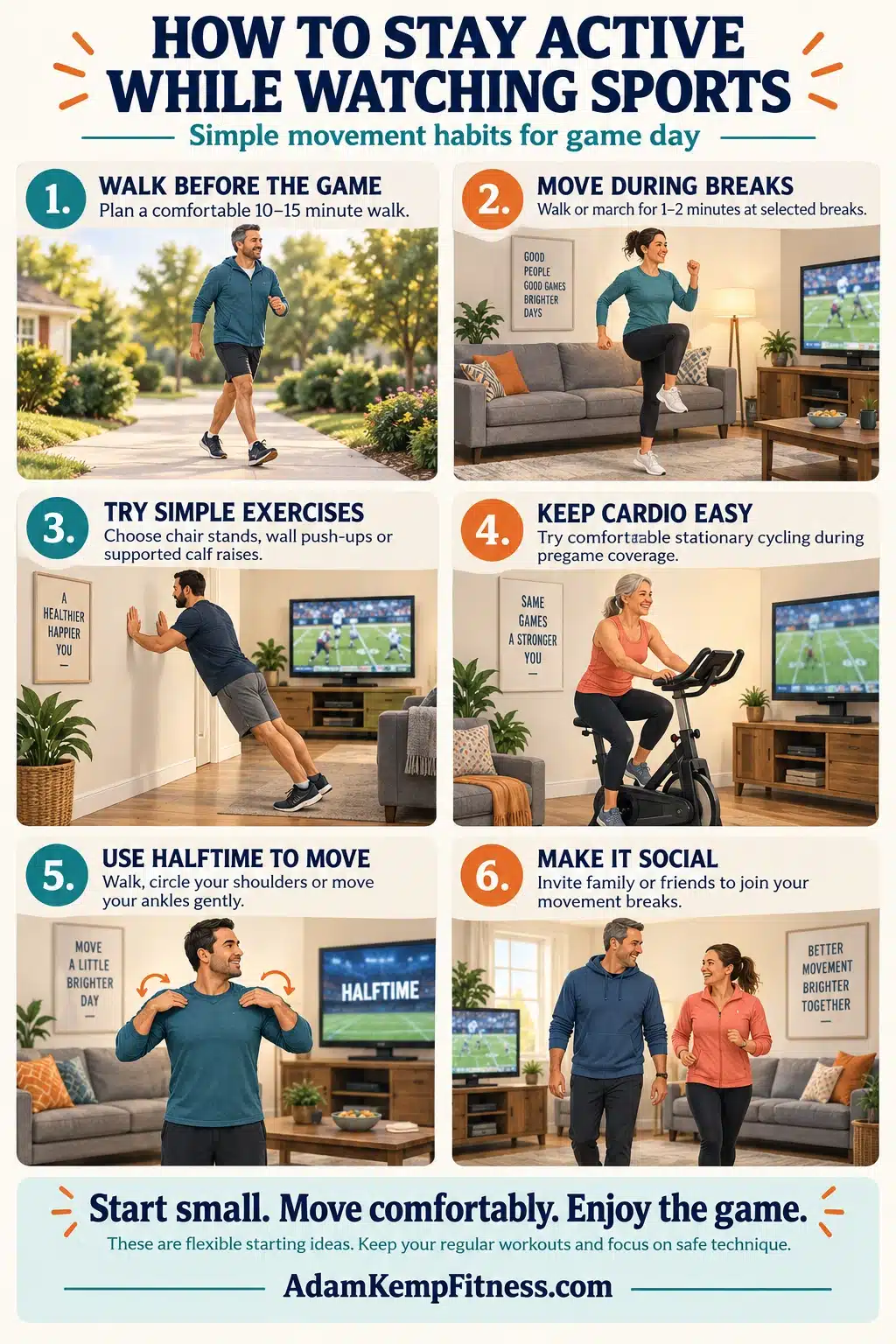
Use Breaks in Play as Movement Reminders
Commercial breaks, timeouts, and intermissions provide convenient reminders to get moving.
Choose a predictable cue before the broadcast begins, rather than waiting until you remember halfway through the game.
For example, understanding how long a basketball game lasts can help you plan your movement breaks, since college, NBA, and international basketball differ in game length, timeout rules, and commercial-break schedules.
In baseball, you can move between innings, while halftime offers a longer break in football or soccer.
My suggestion is to begin with one or two minutes of easy movement at a few breaks.
This is a practical starting point, not a scientifically established schedule that everyone needs to follow.
You could walk down the hallway, march beside the couch, or do a small household task.
If standing or walking is not suitable for you, choose comfortable seated movements that match your abilities.
Avoid tying exercise to unpredictable outcomes, such as doing push-ups whenever your team allows a score.
Set your own manageable amount of activity before the game starts.
Try a Simple Commercial Break Routine
A short routine works best when the exercises are familiar and the setup is minimal.
Clear enough space to move comfortably, and use a stable chair or wall when you need support.
Try the following sequence during one break, adjusting the repetitions or leaving out movements that do not suit you:
- Walk or march for 30–60 seconds: Move at a comfortable pace.
- Perform 5–8 chair stands: Stand up from a firm chair, then sit down with control.
- Try 5–8 wall push-ups: Keep your body aligned and use a comfortable range of motion.
- Finish with 8–10 supported calf raises: Hold a stable surface and lift and lower your heels slowly.
You do not need to finish everything before the broadcast resumes.
Complete one movement during one break and save another for later if that feels more manageable.
Keep your attention on your technique whenever you exercise. If an exciting play draws your eyes away, pause the movement and enjoy the game.
For readers who want to build a separate exercise program, my strength training guide explains how to structure sessions more effectively.
Treat these brief movement breaks as an addition to that plan.
Match the Activity to Your Attention
Some activities require more concentration than others, which matters when your attention is divided between exercise and the screen.
For viewing time, I suggest familiar, repetitive movements such as easy stationary cycling or marching in place.
Save heavy lifting, challenging balance exercises, and unfamiliar movements for a session when you can focus fully.
If you already own a stationary bike, consider riding comfortably during part of the pregame show.
Start with a short period and stop before fatigue makes maintaining your position difficult.
You do not need to purchase equipment to make this work.
Walking around your home during breaks is a perfectly reasonable starting option.
If you want ideas for dedicated conditioning sessions outside game time, explore my guide to cardio workouts for weight loss.
Choose activities that fit your preferences and current capacity.
Make a Pregame Walk Part of Getting Ready
A pregame walk is another way to build activity around your viewing schedule.
Pick a short route and a departure time that gets you home comfortably before the action begins.
Lay out comfortable shoes and clothing beforehand.
If wearing your favorite team’s colors is part of your routine, a Chicago Cubs shirt or sweatshirt can be part of your casual walking outfit, with additional layers chosen for the weather.
The clothing is optional; the useful habit is giving the walk a specific place in your plans.
For example, you might decide to head outside 30 minutes before the broadcast and walk for 10–15 minutes.
Invite someone who is watching with you, or use the time for a relaxed conversation about the upcoming matchup.
On days when outdoor conditions are unsuitable, choose an indoor route or a few minutes of movement at home.
Use Halftime for a Comfortable Mobility Break
Halftime gives you an opportunity to step away from the screen and move through comfortable positions.
You might try shoulder circles, gentle upper-back rotations, or controlled ankle movements while seated.
Keep the movements slow and stay within a range that feels comfortable. There is no need to force a stretch or turn the break into an intense flexibility session.
For example, spend a minute walking, then try a few shoulder circles and seated heel raises.
Finish by returning to your chair without rushing.
If you want to practice more demanding exercises, set aside separate time for them.
Invite Family and Friends to Join In
An active game-day routine can be social without becoming competitive. Ask whether anyone wants to join a pregame walk or take a movement break with you at halftime.
For families, consider a few minutes of playing catch or shooting baskets before the broadcast. Choose an activity and space appropriate for everyone involved.
During the game, keep participation optional and let each person choose a comfortable movement. One person might walk around the room while another remains seated and moves their arms or ankles.
I would avoid exercise penalties for the losing team or challenges based on maximum repetitions. A shared routine should leave room for different ages, abilities, and reasons for watching.
Set Up Your Viewing Space Before the Game
Make the movement you intend to do easy to begin. Clear the floor, move loose cables, and leave enough room around furniture before the broadcast starts.
If you plan to use a chair for exercises, choose one that is stable and will not slide. Keep drinks and snacks outside your movement area.
You can also decide in advance which breaks you will use. A simple plan such as “walk before kickoff and move at halftime” is enough for your first attempt.
For long viewing days with several games, choose a longer break between broadcasts. That might be a walk, a regular workout, or time away from the television doing something active around the house.
Final Thoughts: Keys to Staying Active When Watching Sports
The WHO identifies regular physical activity as beneficial for physical and mental health and recommends reducing sedentary behavior (WHO, 2024).
However, a few easy movements during commercials should not automatically be counted as a complete strength or cardiovascular training session. Keep your planned workouts on the calendar and use viewing-time movement to complement them.
The same principle applies to recovery. If you are tired after training, choose a comfortable amount of activity rather than forcing another demanding session.
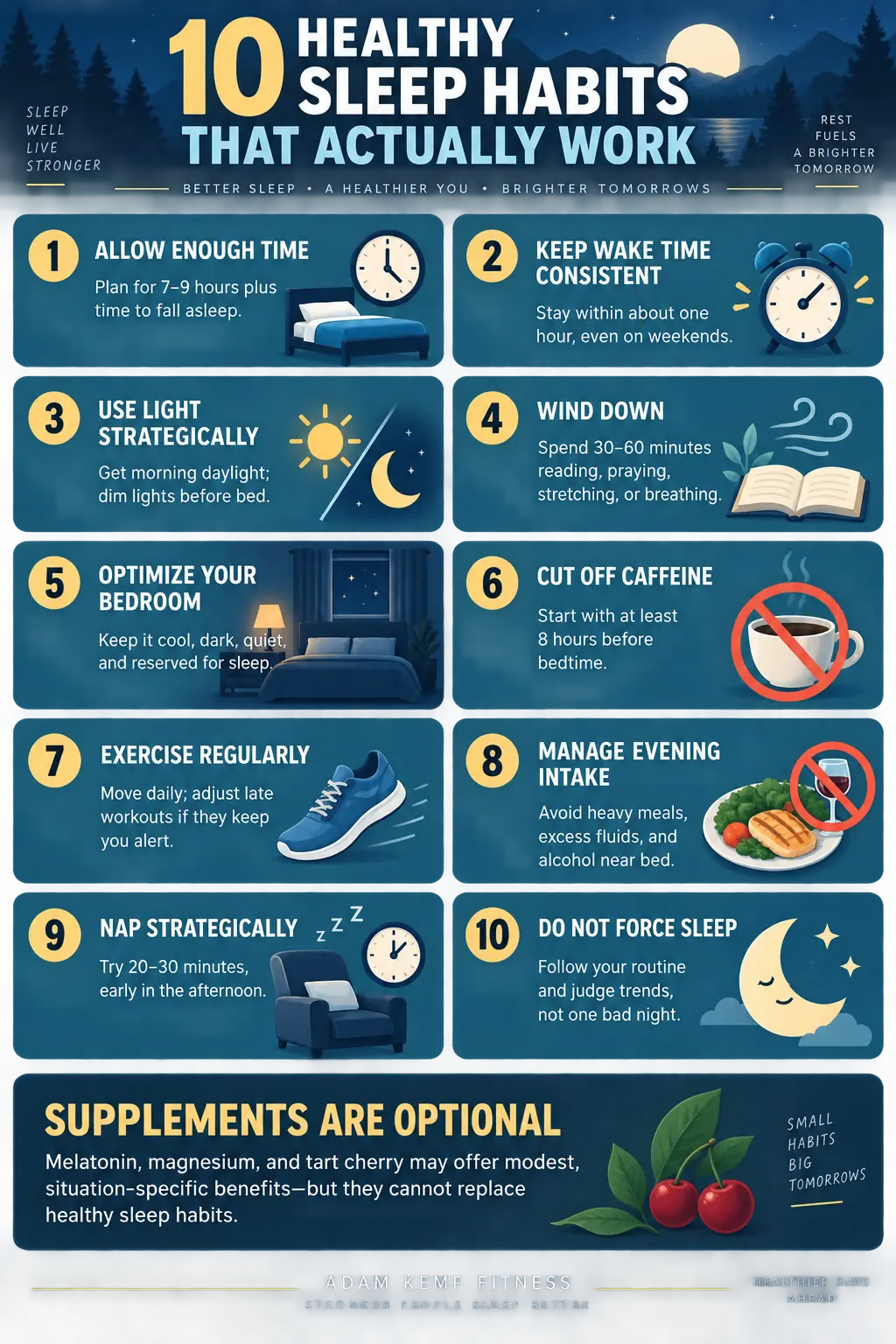
For late games, decide how much of the broadcast fits your normal bedtime.
My guide to healthy sleep habits can help you plan an evening routine that fits your interest in sports.
For your next game, choose just two actions: take a short pregame walk and move during a few planned breaks.
Afterward, consider whether the routine felt comfortable and whether you enjoyed watching.
If it worked, repeat it at the next broadcast before adding more.
If it felt distracting or overly ambitious, reduce the amount of activity or move more of it before the game.
Knowing how to stay active while watching sports is ultimately about making room for movement in a routine you already enjoy.
Let the game remain enjoyable, and give your own activity a regular place alongside it.
This website does not provide medical advice. This website site does contain affiliate links, and purchases may earn a commission.
Read my Medical Disclaimer, Review Disclaimer, and Publishing Policies for more details. Use of this site indicates acceptance of these terms.