Moringa for Weight Loss: Can Moringa Help You Lose Weight?
 Reading Time: 10 minutes
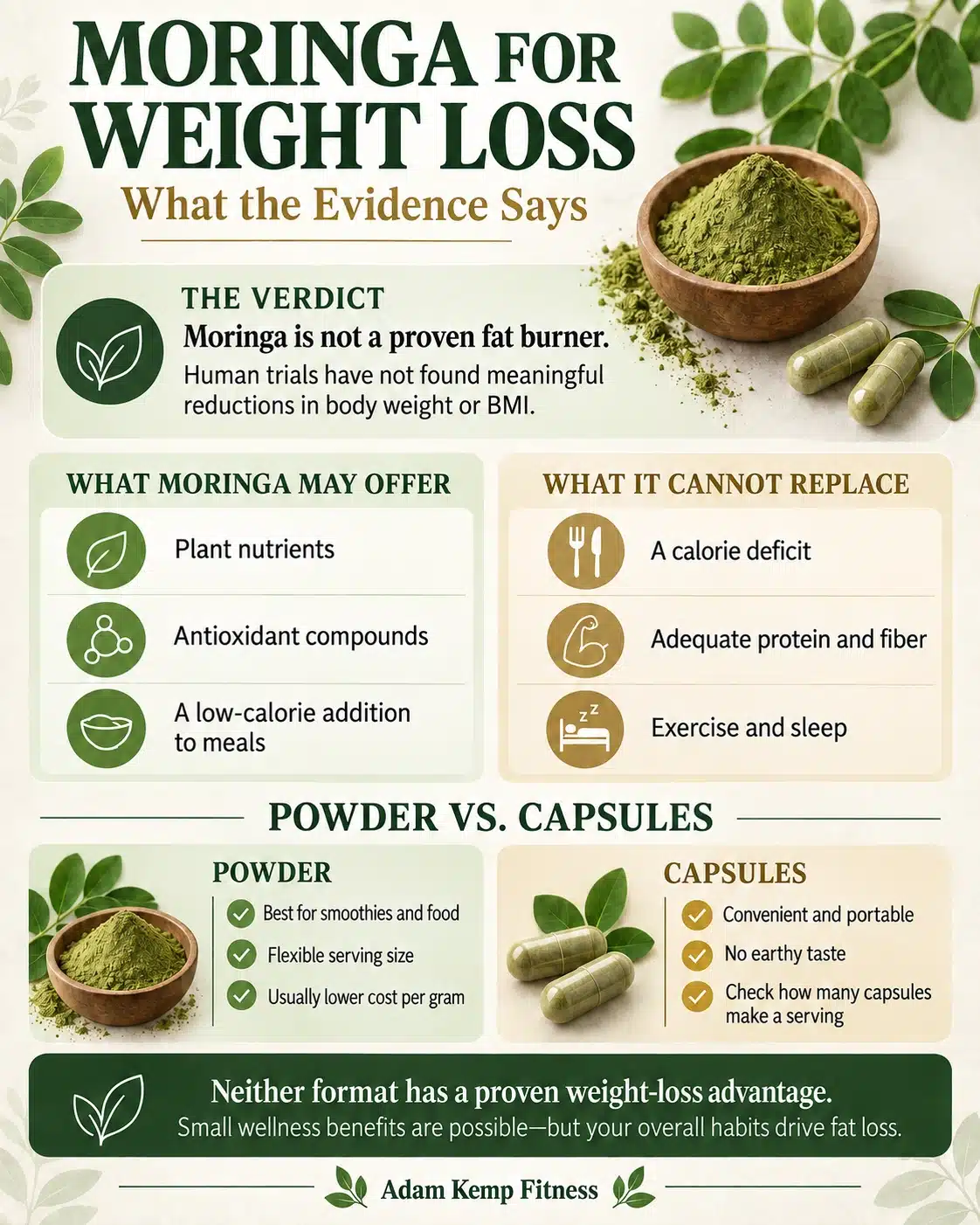
 Moringa for weight loss is not a proven fat-burning solution.
Although moringa leaves contain fiber, micronutrients, and plant compounds that may support general health, the strongest recent analysis of randomized human trials found no significant reduction in body weight or body mass index (BMI) (Samarin et al., 2026).
But that doesn’t make moringa useless for weight loss or improving body composition.
However, it does means its value should be kept in perspective: moringa powder or capsules may add plant nutrients to an otherwise balanced diet, but they cannot replace the calorie deficit, adequate protein intake, resistance training, daily movement, and sleep habits that drive sustainable fat loss.
I occasionally use moringa in the same way I use turmeric, ashwagandha, and other “superfood” spices or plant powders, as an optional addition rather than the foundation of my diet.
Since I haven’t personally used the Pura Vida Moringa capsules discussed below, my assessment is based on the formula, product information, and customer feedback rather than firsthand experience.
However, I believe this is a high-quality moringa supplement at a decent price you can add to your diet if you are interested in using moringa for weight loss.
Disclosure: This article may contain affiliate links. If you purchase through it, I may earn a commission at no additional cost to you.

Last update on 2026-09-15 / This article includes affiliate links/Images via Amazon Product Advertising API. I may earn commissions on purchases made through these links.
What Is Moringa?
Moringa oleifera is a tree native to parts of South Asia and now cultivated in many tropical and subtropical regions.
Its leaves are eaten as a vegetable or dried and ground into powder, while supplements may contain whole-leaf powder or a concentrated extract.
Moringa leaves contain protein, fiber, carotenoids, minerals, and polyphenols such as quercetin and chlorogenic acid.
However, the nutrient content of a small capsule serving is much lower than the values often quoted for 100 grams of dried moringa, so moringa supplements should not be treated as a substitute for vegetables, fruit, legumes, or other nutrient-dense foods.
Is Moringa Good for Weight Loss?
Moringa can fit into a weight-loss diet, but current human evidence does not show that moringa itself causes meaningful weight loss.
A 2026 meta-analysis of randomized controlled trials found no significant effect on body weight or BMI, even though some blood-pressure outcomes improved (Samarin et al., 2026).
Much of moringa’s reputation as a fat burner comes from cell and animal research examining compounds that may affect glucose metabolism, inflammation, fat-cell development, or lipid metabolism.
These mechanisms are scientifically interesting, but they do not prove that ordinary moringa powder or capsules make people lose fat.
This distinction also matters because some frequently cited anti-obesity research used a proprietary combination of moringa, curry leaf, and turmeric extracts in rats. Results from animals given a multi-ingredient extract cannot establish that ordinary moringa leaf powder causes weight loss in people (Kundimi et al., 2020).
Does Moringa Boost Metabolism or Burn Fat?
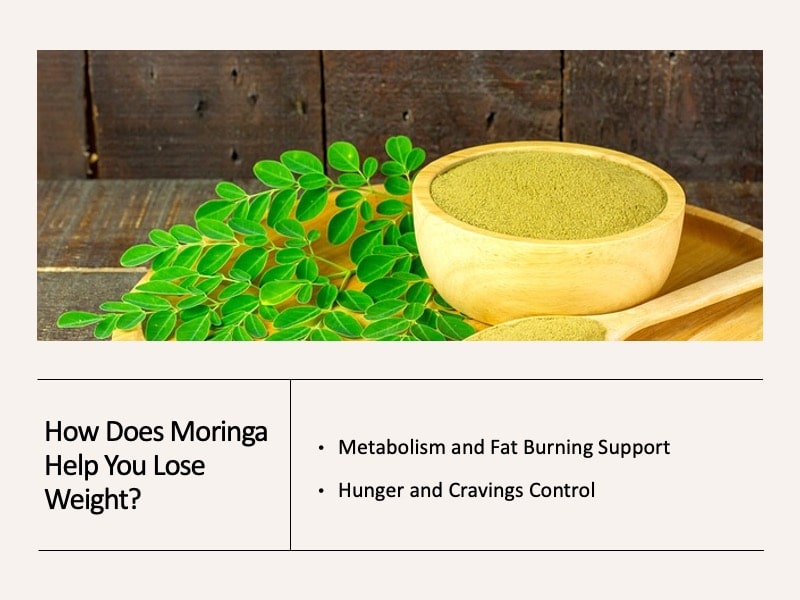
There is not enough clinical evidence to say that moringa meaningfully increases resting metabolism or causes the body to burn more calories.
Descriptions like “metabolism support” on supplement labels do not equate to trials showing greater daily energy expenditure or fat loss.
Moringa contains bioactive compounds with possible metabolic effects, but a plausible mechanism is not the same as a noticeable outcome.
If someone’s weight decreases while taking moringa, the more likely explanation is that their overall eating pattern, activity, or calorie intake has also changed.
Can Moringa Control Hunger and Cravings?
Whole moringa leaf contains fiber, but most supplement servings are too small to provide the amount of fiber normally associated with a substantial increase in fullness.
Capsules containing one or two grams of leaf powder should not be expected to control appetite the way a meal rich in protein, vegetables, beans, fruit, and whole grains does.
Moringa powder may still help indirectly if it replaces a higher-calorie ingredient in a smoothie or becomes part of a structured routine.
That benefit would come from the complete meal and the habit it supports, not from a proven appetite-suppressing effect of moringa.
What About Blood Sugar and Inflammation?
Moringa has been studied for possible effects on blood glucose, blood pressure, lipids, and inflammatory markers, but human findings remain inconsistent and many trials are small or methodologically limited.
A broad 2025 systematic review concluded that moringa shows promising biological activity but emphasized the need for better-standardized clinical research (Soto et al., 2025).
Even if future research confirms modest improvements in a metabolic marker, that would not automatically mean greater weight loss.
Improved blood glucose and reduced body fat are related health outcomes, but they are not interchangeable.
How to Use Moringa for Weight Loss
The most sensible way to use moringa for weight loss is as a minor part of a diet that already supports a manageable calorie deficit.
It can add flavor and plant compounds, but it should not displace foods that provide meaningful amounts of protein, fiber, and volume.
Practical options include:
- Blending a small amount of moringa powder into a smoothie containing fruit and a protein source.
- Stirring it into soup, lentils, oatmeal, yogurt, or a savory sauce.
- Brewing moringa tea as an unsweetened alternative to a sugary drink.
- Using capsules when the taste of powder or meal preparation makes consistency difficult.
Start with the lowest amount listed on the product label and assess tolerance before increasing it.
More is not necessarily better, and there is no clinically established dose of moringa for weight loss.
How to Use Moringa Powder for Weight Loss
If you choose powder, begin with approximately 1 teaspoon or the manufacturer’s labeled serving rather than a large scoop.
Mix it into a meal or drink you already enjoy, since its earthy, slightly bitter flavor can be strong.
Avoid turning a low-calorie ingredient into a high-calorie “weight-loss smoothie” loaded with juice, honey, sweetened yogurt, nut butter, and multiple powders.
The total energy and nutrient composition of the drink matters much more than whether it contains moringa.
How to Make Moringa Tea for Weight Loss
To make moringa tea, steep a moringa tea bag or the labeled amount of dried moringa leaf in hot water, then strain if necessary.
Lemon, ginger, or cinnamon can improve the flavor without adding much energy, whereas sugar and honey can work against the goal if used generously.
Moringa tea does not burn fat, but unsweetened tea can support weight management when it replaces a calorie-containing beverage.
That substitution is the relevant advantage.
When Should You Take Moringa for Weight Loss?
There is no proven best time to take moringa for weight loss.
Take it when you are most likely to remember it and tolerate it comfortably, preferably with food if it causes nausea or stomach discomfort.
Claims that morning use “starts your metabolism” or nighttime use burns more fat are not supported by clinical evidence.
Consistency, overall diet quality, and total calorie intake matter more than timing.
Moringa Powder vs. Capsules for Weight Loss
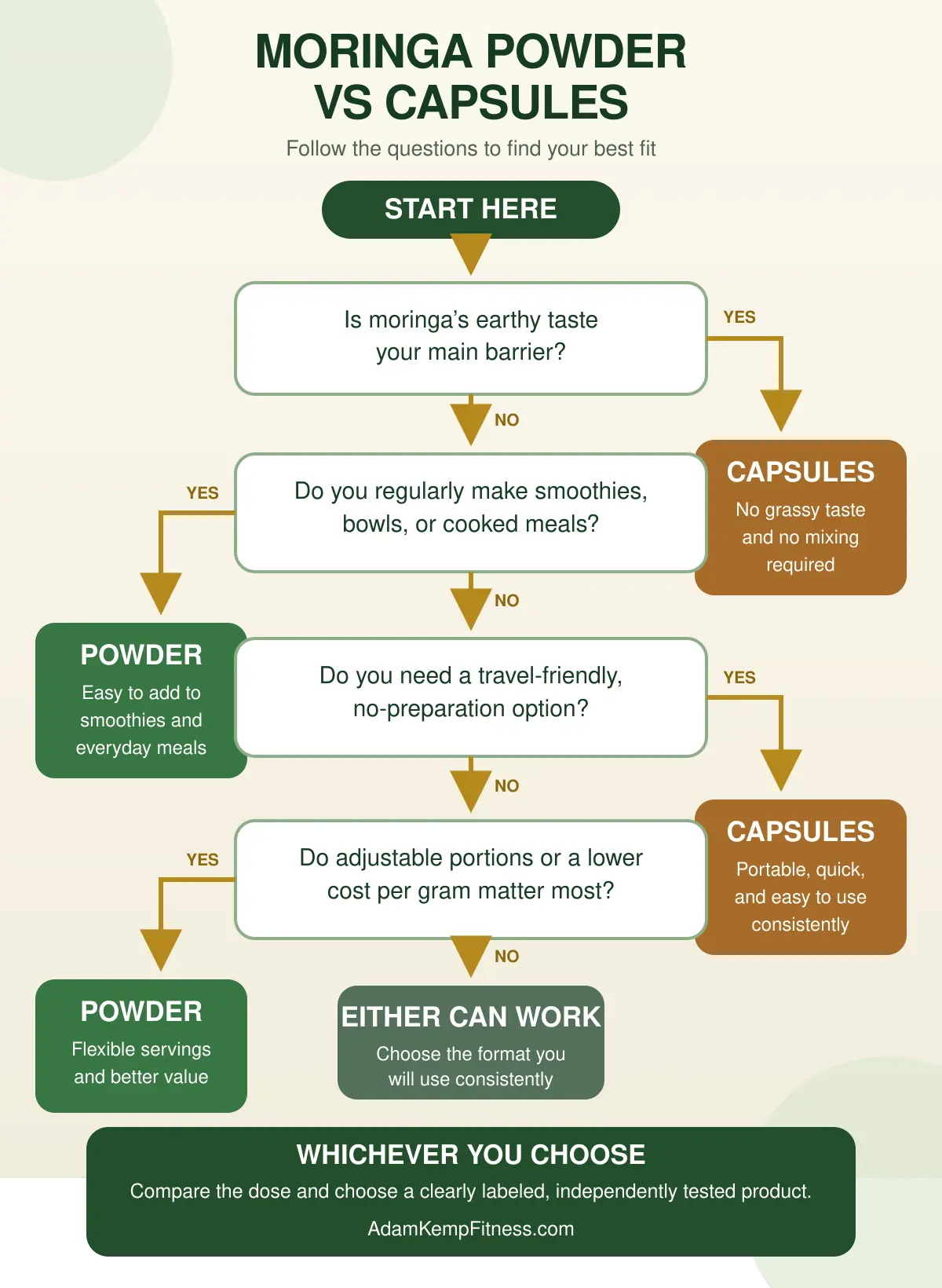
Moringa powder and capsules can contain the same whole-leaf material, so neither format is inherently better for fat loss.
The more useful comparison is serving size, ingredient quality, convenience, taste, and cost per gram.
| Consideration | Moringa powder | Moringa capsules |
|---|---|---|
| Best for | Smoothies, bowls, soups, and tea-like drinks | Travel and no-preparation use |
| Taste | Earthy and sometimes bitter | Mostly avoids the taste |
| Serving flexibility | Easy to adjust | Limited to capsule increments |
| Amount per serving | Often several grams | Check the label; multiple capsules may be required |
| Cost per gram | Often lower | Usually higher |
| Weight-loss advantage | None demonstrated | None demonstrated |
Choose powder if you already make smoothies or want a flexible culinary ingredient.
Choose capsules if convenience makes you more likely to use the product consistently, but check how many capsules constitute one serving.
How to Take Moringa Capsules for Weight Loss
Follow the serving instructions on the label rather than copying a dose from another brand, because capsule size and extract concentration can differ.
A capsule labeled “500 mg” contains only half a gram, and the suggested serving may include more than one capsule.
Do not combine several moringa products in an attempt to accelerate results.
If a product causes nausea, diarrhea, abdominal discomfort, dizziness, or another unexpected reaction, stop taking it and speak with a qualified healthcare professional.
How Much Moringa Should You Take for Weight Loss?
There is no evidence-based moringa dosage specifically for weight loss.
Studies have used different leaves, powders, extracts, doses, and study populations, which prevents a universal effective dose from being established.
Use the manufacturer’s labeled serving as a ceiling rather than assuming that higher amounts will work better.
If weight loss is the primary goal, spend more attention on daily calorie intake, protein, fiber-rich foods, resistance training, walking, and sleep than on optimizing a moringa dose.
The Moringa Supplement I Would Consider
If I wanted a convenient whole-leaf option, Pura Vida Moringa Organic Moringa Capsules would be one of the products I would consider.
The listing describes single-origin organic moringa leaf powder in 500-milligram capsules, with 120 capsules per bottle, and it has earned many favorable customer reviews.
I have not personally used this product, so I cannot confirm its effects, purity, or batch-to-batch quality from experience.
Based on the simple whole-leaf format, organic positioning, and established customer feedback, it appears to be a high-quality option with a reasonable chance of providing modest general wellness benefits, but I wouldn’t expect it to produce noticeable weight loss on its own.
Before buying, confirm the current Supplement Facts panel, suggested serving, capsule ingredients, certifications, country of origin, expiration date, and whether the company provides recent independent testing for identity and contaminants.
Customer ratings can describe user satisfaction, but they do not verify purity or clinical effectiveness.
Last update on 2026-09-15 / This article includes affiliate links/Images via Amazon Product Advertising API. I may earn commissions on purchases made through these links.
Can You Eat Moringa Seeds for Weight Loss?
Moringa seeds are not necessary for weight loss, and their safety and nutrient profile are different from the commonly consumed leaf.
Most human research and commercial supplement use involve moringa leaves, so I would not eat seeds specifically to lose weight or improvise a dose from online advice.
Root, bark, flowers, seeds, leaves, powders, and concentrated extracts should not be treated as interchangeable.
For routine use, choose a clearly labeled leaf product from a reputable manufacturer rather than consuming less-studied plant parts.
Moringa Safety, Side Effects, and Interactions
Moringa leaf foods and supplements are generally tolerated in the small human studies conducted so far, but long-term safety data and standardized dosing remain limited.
Possible side effects include nausea, diarrhea, stomach discomfort, and other digestive symptoms.
Moringa may affect blood glucose or blood pressure, so speak with a physician or pharmacist before using it if you take diabetes or blood-pressure medication.
The same caution applies during pregnancy or breastfeeding, before surgery, or when using anticoagulants or other medications with a narrow therapeutic range.
Product quality also matters because powders and capsules can vary in identity, contamination control, and labeling accuracy.
Check current recall notices and favor companies that provide clear lot information and recent independent testing rather than relying only on marketplace ratings.
Frequently Asked Questions About Moringa for Weight Loss
Final Thoughts: Should You Use Moringa for Weight Loss?
Moringa is a nutrient-containing plant, not a weight-loss treatment.
The most current clinical evidence does not show a meaningful reduction in weight or BMI, so view claims that it melts belly fat, suppresses cravings, detoxifies the body, or significantly boosts metabolism skeptically.
I see moringa much like turmeric, ashwagandha, and other plant powders I use occasionally: it can add variety and may offer small health benefits, but it belongs at the edge of a sound nutrition plan rather than at its center.
If you enjoy it and choose a reputable product, moringa for weight loss can be a reasonable complementary habit, just not the reason you expect the scale to move.
This website does not provide medical advice. This website site does contain affiliate links, and purchases may earn a commission.
Read my Medical Disclaimer, Review Disclaimer, and Publishing Policies for more details. Use of this site indicates acceptance of these terms.