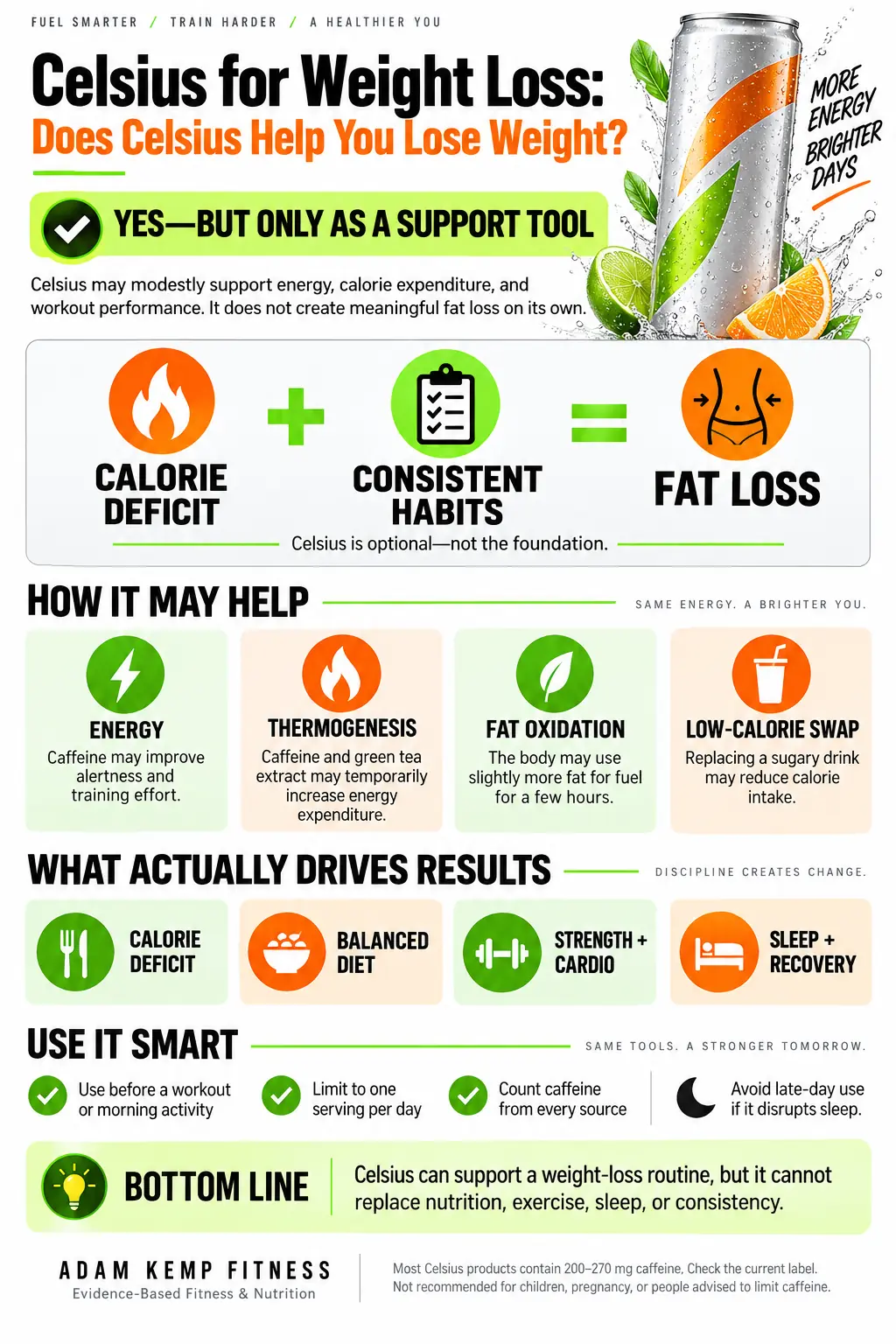
Celsius for Weight Loss: Does Celsius Help You Lose Weight?
 Reading Time: 14 minutes
 Can you drink Celsius for weight loss?
As a professional athlete with a Master’s degree in Nutrition Education, I’ve consistently used Celsius drinks over the past few years to support my weight management and energy levels.
When used properly, as part of a healthy routine, they can absolutely help you lose weight.
One of my favorite ways to use Celsius drinks for weight loss is by starting the day is with a fasted morning walk.
The combination of caffeine, green tea extract, and other thermogenic compounds provides a clean energy boost and helps increase calorie burning, particularly when paired with physical activity.
So, does Celsius help with weight loss?
Technically, yes.
Its ingredients are known to elevate thermogenesis and metabolic rate.
Pro Tip: If you’re planning to use Celsius consistently, I highly recommend trying the Celsius On-the-Go Packets. They’re more affordable than the cans, easier to travel with, and create less waste, making them a convenient and sustainable option for daily use.
However, real, sustained weight loss only happens when you’re in a calorie deficit, meaning you’re burning more energy than you consume.
Celsius isn’t a magic fat burner, but it’s a helpful tool when used alongside regular exercise, good sleep, and a balanced diet.
Although I don’t recommend drinking more than one can per day due to its high caffeine content, for those seeking a healthier energy drink to support weight loss goals, my experience suggests that Celsius can help you achieve your weight loss goals!
Disclaimer: This article contains affiliate links, which means I may earn a commission if you make a purchase through these links, at no extra cost to you. I only recommend products I use or believe in. Thank you for supporting my work and helping me continue to share evidence-based fitness and nutrition content.

Last update on 2026-09-18 / This article includes affiliate links/Images via Amazon Product Advertising API. I may earn commissions on purchases made through these links.
Fat Burning vs. Weight Loss: What’s the Difference?
Although the terms fat burning and weight loss are often used interchangeably, they are not the same.
Fat burning refers to your body’s ability to use stored fat as a source of energy, usually triggered by thermogenic ingredients, exercise, or periods of low insulin (like fasted cardio).
Celsius contains ingredients such as caffeine, green tea extract, guarana, and ginger root that can increase fat oxidation, a technical term for burning fat.
However, weight loss means a reduction in total body weight, which includes fat, water, and sometimes even muscle mass.
Real, lasting weight loss requires a calorie deficit, which means burning more energy than you consume, which is something no energy drink can achieve on its own.
This article focuses specifically on how Celsius can support weight loss when paired with a healthy diet and exercise.
Why Celsius Claims to Help You Lose Weight
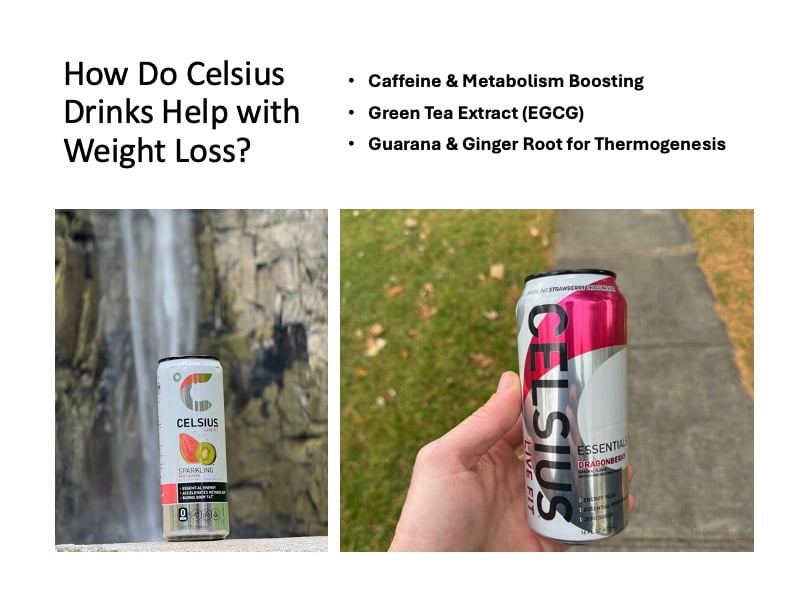
Celsius Energy Drinks promotes itself as a clinically proven energy drink designed to accelerate metabolism and enhance fat burning.
Unlike traditional energy drinks that rely on excessive sugar and artificial additives, Celsius is sugar-free, low-calorie, and free from preservatives or artificial flavors, making it a seemingly better choice for those focused on fitness and health.
Its formula includes thermogenic ingredients, like caffeine, green tea extract (EGCG), guarana, and ginger, that may increase calorie expenditure and support fat oxidation, even without exercise.
In my experience, Celsius is one of the best energy drinks for weight loss, especially when paired with an active lifestyle.
As I mentioned earlier, I often begin my mornings with a Celsius drink and a fasted walk to help kick-start fat burning and elevate my metabolism.
Additionally, the clean energy boost helps power workouts and supports consistency with your healthy weight loss diet or training plan.
That said, Celsius won’t cause weight loss on its own.
Sustainable results still depend on following a weight loss diet plan and maintaining a calorie deficit.
When used correctly, particularly as a pre-workout supplement, Celsius can support fat metabolism, increase workout intensity, and aid in weight loss more efficiently.
Just be mindful of the high caffeine content. I recommend limiting it to one can a day to avoid side effects, and relying on a balanced diet and exercise for long-term results.
Ingredients in Celsius That May Support Weight Loss
As I’ve written about before, I believe Celsius is one of the healthiest energy drinks, and a primary reason is that Celsius can help you lose weight when used properly.
Caffeine
Celsius contains between 200–270mg of caffeine per serving, depending on the product line.
Regular 12-oz cans and on-the-go Celsius packets each contain 200mg, while Celsius Essentials bumps the dose to 270mg.
Caffeine is one of the most well-researched thermogenic ingredients available.
It has been shown to increase resting energy expenditure (REE) by approximately 3–11% and improve the body’s ability to burn fat for fuel (Astrup et al., 1990).
Caffeine also improves exercise performance, which means you can train harder and burn more calories, which are key elements in any effective weight loss plan.
While it’s common in most energy drinks, Celsius also combines caffeine with other natural fat-burning compounds.
Green Tea Extract (EGCG)
Celsius also includes green tea extract standardized to 15% EGCG (epigallocatechin gallate), which is a polyphenol known for boosting fat metabolism.
When combined with caffeine, EGCG has been shown to increase fat burning by up to 17% during moderate-intensity exercise (Venables et al., 2008).
This synergy makes green tea extract one of the most important components of Celsius’s MetaPlus® Blend, supporting its claims as one of the best energy drinks for weight loss.
Guarana
Guarana seed extract is a natural source of caffeine found in Celsius, complementing the primary caffeine content with a slower-release effect.
It helps sustain energy without the crash typically associated with sugary or highly processed energy drinks, and may further increase thermogenesis and fat oxidation throughout the day.
Ginger Root
Ginger root extract adds another layer to Celsius’s weight-loss support by assisting with digestion and metabolism regulation.
Some research suggests that ginger can increase thermogenesis and improve insulin sensitivity, which may support better nutrient partitioning and calorie utilization, especially important when following a healthy weight loss diet (Mansour et al., 2012).
B Vitamins
Celsius also includes a range of B vitamins, such as B6, B12, niacin, and riboflavin, which play critical roles in converting food into usable energy.
While they don’t directly cause fat loss, B vitamins help ensure your metabolism functions efficiently, especially when you’re reducing calories or increasing activity levels.
Chromium
Celsius drinks include a small amount of chromium, an essential trace mineral that plays a role in glucose metabolism and insulin sensitivity.
While not a direct fat-burning compound, chromium may support weight loss by helping to regulate blood sugar levels, curb appetite, promote more stable energy levels, and reduce cravings, especially for carbohydrates.
Research suggests that supplementation with chromium, primarily in the form of chromium picolinate, may reduce body weight and body fat percentage to a small, yet statistically significant, extent (NIH ODS, 2025).
Although the dose in Celsius is modest, it contributes to the drink’s appeal as a functional, fitness-focused energy beverage.
Does Celsius Burn Fat?
Main Point: Celsius alone does not burn enough body fat to produce meaningful weight loss.
However, its caffeine and green tea extract may temporarily increase energy expenditure and fat oxidation, meaning your body may burn slightly more calories or use more fat for energy for a few hours after drinking it.
This distinction matters because burning more fat in a short period is not the same as losing body fat over time.
Sustainable fat loss still requires an appropriate calorie deficit, regular exercise, adequate protein, sufficient sleep, and habits you can maintain.
The caffeine in Celsius drinks likely drives most of their noticeable metabolic and performance effects.
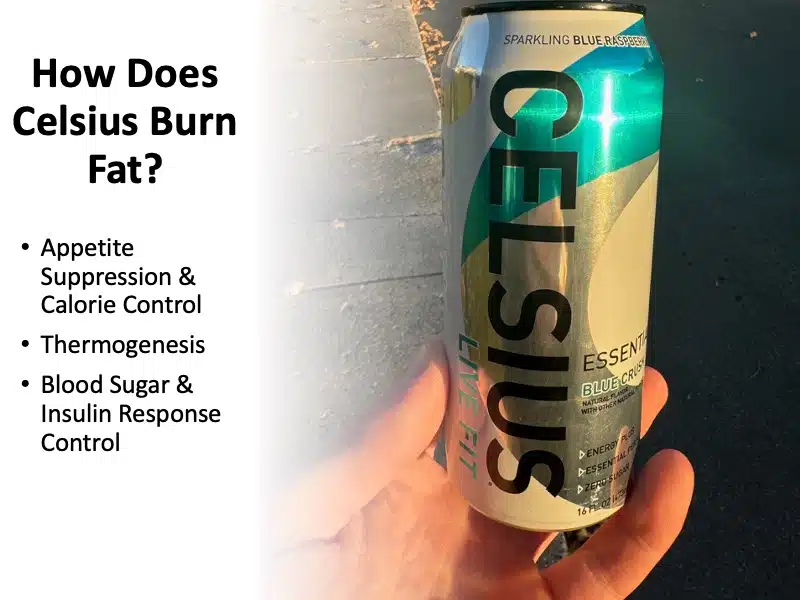
Original Celsius cans and most On-the-Go packets contain 200 milligrams of caffeine, while Celsius Essentials contains 270 milligrams, though you should always confirm the amount on the current label.
Caffeine can temporarily increase energy expenditure and may improve exercise performance by increasing alertness and reducing perceived effort.
Green tea catechins, including EGCG, may provide a modest additional effect on thermogenesis and fat oxidation, but these effects vary considerably among individuals and are unlikely to produce substantial fat loss on their own (Hursel & Westerterp-Plantenga, 2010; Spriet, 2014).
Does Celsius Burn Fat Without Exercise?
Celsius-specific research has reported improvements in fat mass and cardiorespiratory fitness when participants consumed the drink alongside a supervised 10-week exercise program.
However, the study included only 38 participants, did not test Celsius as a replacement for proper nutrition and exercise, and was funded by Celsius, so its findings should be interpreted cautiously rather than treated as proof that the drink independently burns body fat (Stout et al., 2008).
The most realistic fat-loss benefits are indirect.
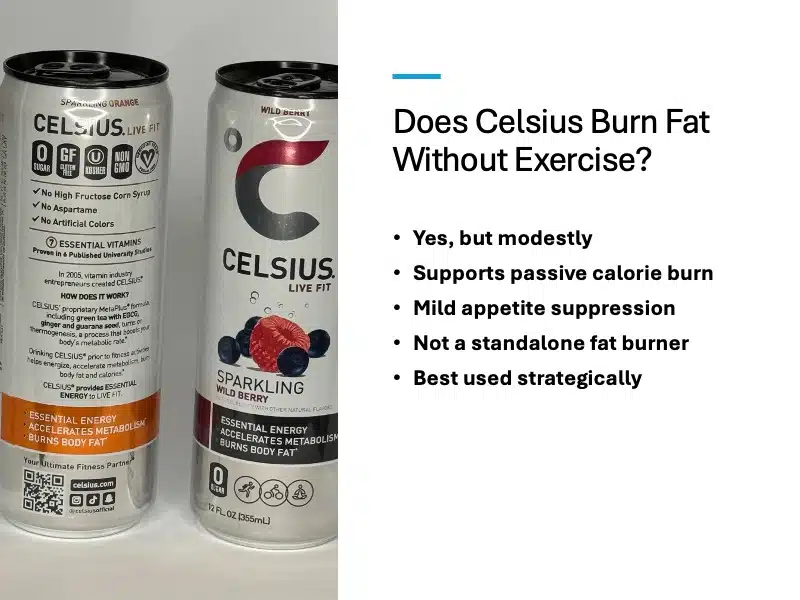
Celsius may help you train with more energy, and replacing a sugary drink with a very-low-calorie Celsius can reduce calorie intake, but drinking Celsius without changing your diet or activity level is unlikely to produce a noticeable reduction in body fat.
I often drink Celsius before workouts because its caffeine can support energy, focus, and training quality; not because I consider it a miracle fat burner.
That distinction matters because harder or more consistent training can support fat loss, whereas simply drinking more stimulants cannot compensate for excessive calorie intake.
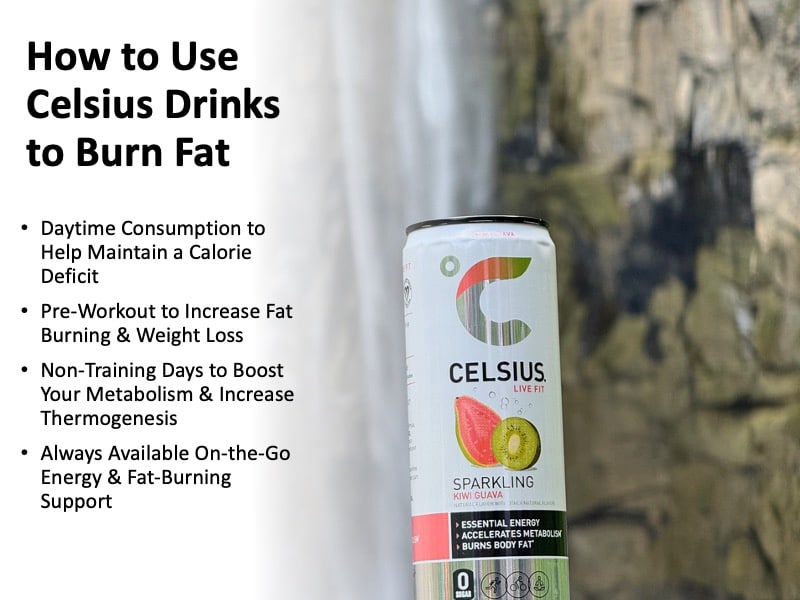
Celsius can even work against fat-loss goals if drinking it too late disrupts sleep, increases caffeine dependence, or leaves you fatigued the next day.
Poor sleep can make appetite regulation, recovery, workout performance, and consistent dietary choices more difficult.
The bottom line: Celsius may modestly support fat burning by temporarily increasing energy expenditure, promoting fat oxidation, improving workout performance, or replacing a higher-calorie beverage. It cannot cause meaningful fat loss on its own, and it works best as an optional source of caffeine within a balanced diet and sustainable fat-loss strategy.
Does Drinking Celsius Cause Weight Gain?
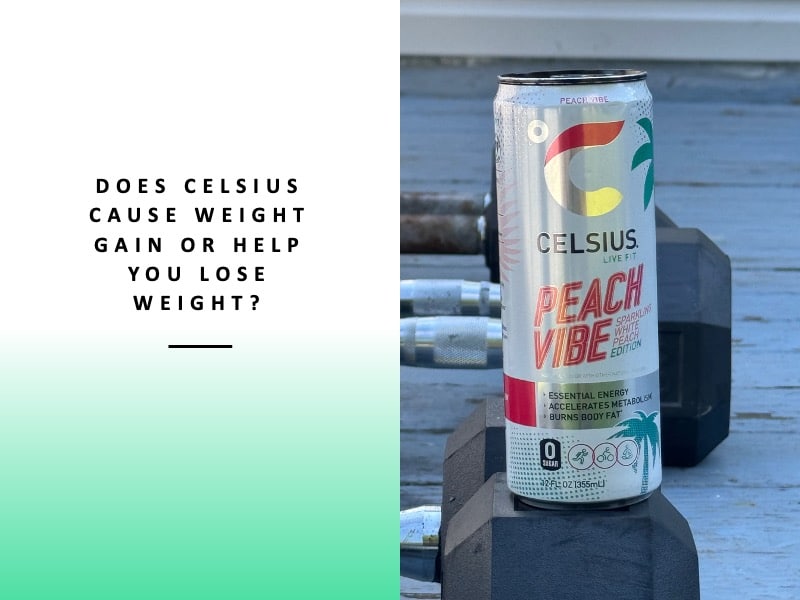
Celsius is unlikely to directly cause weight gain because its primary energy drinks contain very few calories and no added sugar.
Gaining body fat requires consuming more energy than your body uses over time, and one low-calorie Celsius contributes very little toward that surplus.
That does not mean Celsius is completely irrelevant to weight management.
Its high caffeine content can influence sleep, appetite, food choices, and exercise habits, which may indirectly affect whether someone gains or loses weight.
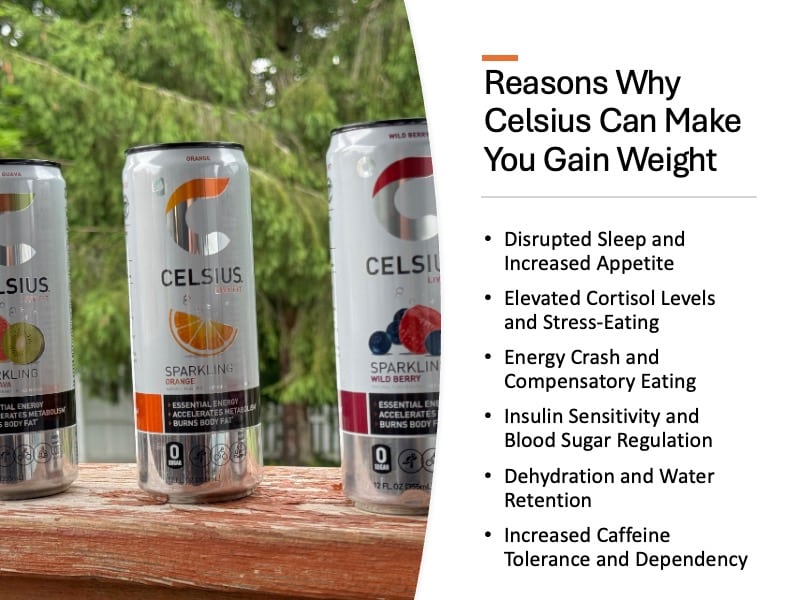
The most credible concern is sleep disruption.
A systematic review found that caffeine reduced total sleep time, decreased sleep efficiency, and made it more difficult to fall asleep, although individual responses depend on caffeine tolerance, dose, genetics, and timing (Gardiner et al., 2023).
Poor sleep can make weight management harder by increasing opportunities to eat, impairing appetite regulation, reducing motivation to exercise, and encouraging higher calorie intake.
Controlled research has found that sleep restriction can increase food consumption and promote weight gain, even when energy expenditure remains relatively unchanged (Covassin et al., 2022).
Therefore, drinking Celsius late in the afternoon or evening could indirectly contribute to weight gain if it consistently interferes with sleep and leads to increased hunger, poorer food choices, or less physical activity the following day.
This is a behavioral chain of events, not evidence that Celsius automatically causes fat storage.
Concerns about the sucralose in Celsius also require context.
Current evidence does not establish that consuming a low-calorie, artificially sweetened beverage automatically causes weight gain, and randomized trials suggest that replacing sugar-sweetened beverages with noncaloric alternatives can produce a small reduction in body weight while the substitution is maintained (Tobiassen & Køster-Rasmussen, 2024).
However, replacing water with Celsius is different from replacing a high-calorie soda. If Celsius simply gets added to an already excessive caffeine routine without replacing calories or improving activity, it may offer little weight-management benefit.
Temporary changes on the scale after drinking Celsius should not automatically be interpreted as fat gain. Body weight naturally fluctuates because of hydration, sodium intake, stored carbohydrates, digestion, hormonal changes, and the amount of food and liquid inside the body.
Celsius can support weight management by replacing a sugary beverage or helping someone train more consistently.
Caffeine may improve alertness and workout performance, and its low-calorie content makes it less likely to interfere with an appropriate calorie deficit.
From my experience as a professional athlete, Celsius has never been something I viewed as inherently fattening.
I use it strategically for energy or before certain workouts, while monitoring my total caffeine intake, sleep schedule, diet, and recovery.
The bottom line: Celsius doesn’t directly cause weight gain, but excessive or poorly timed consumption could make weight management harder by disrupting sleep, encouraging reliance on stimulants, or contributing to inconsistent eating habits. When used moderately within a balanced diet and healthy routine, it is unlikely to produce fat gain and may be a better option than a sugar-sweetened energy drink.
Tobiassen, P. A-S., & Køster-Rasmussen, R. (2024). Substitution of sugar-sweetened beverages with non-caloric alternatives and weight change: A systematic review of randomized trials and meta-analysis. Obesity Reviews, 25(2), e13652.
Potential Downsides or Risk of Using Celsius for Weight Loss
High Caffeine Content (200-300mg Per Can)
Not a Substitute for a Healthy Lifestyle
Overreliance on Energy Drinks
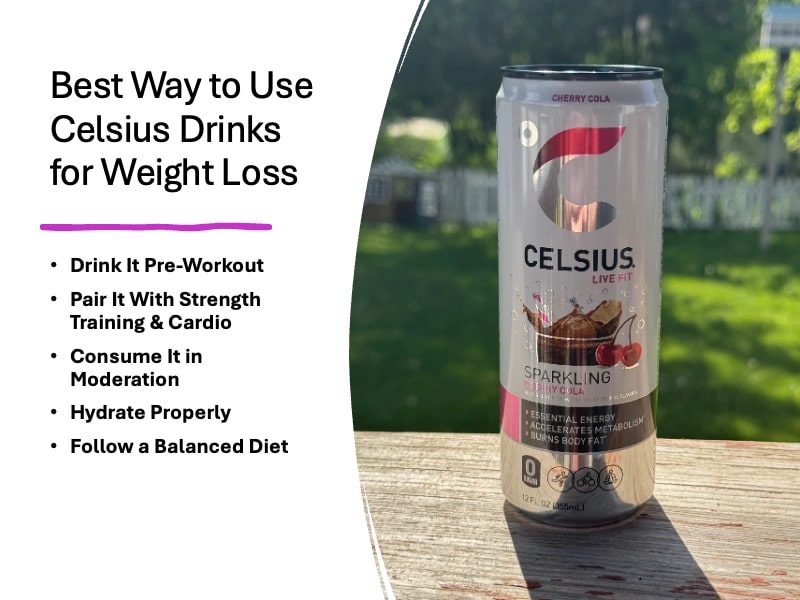
Best Way to Use Celsius Drinks for Weight Loss
Final Thoughts: Is Celsius Good for Weight Loss?
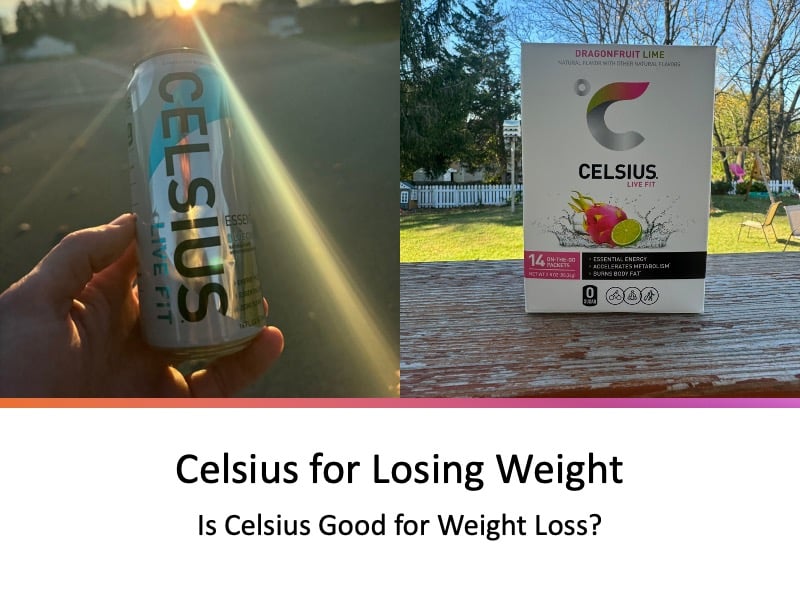
Here are some key points about using Celsius for weight loss:
While there are still better alternatives to energy drinks, such as black coffee or green tea, Celsius drinks are healthier than most energy drinks and are my preferred option.
Frequently Asked Questions About Celsius and Weight Loss
This website does not provide medical advice. This website site does contain affiliate links, and purchases may earn a commission.
Read my Medical Disclaimer, Review Disclaimer, and Publishing Policies for more details. Use of this site indicates acceptance of these terms.