Magnesium for Sleep: Does Magnesium Improve Sleep Quality?
 Reading Time: 14 minutes
 Using magnesium for sleep has become one of the most popular natural remedies for improving sleep quality, reducing nighttime restlessness, and promoting relaxation, and for good reason.
Although social media and supplement marketing often portray magnesium as a miracle sleep aid, research suggests a less dramatic picture while still providing sound evidence for using magnesium for sleep.
Research indicates that magnesium may help some people fall asleep more easily, stay asleep longer, and experience better overall sleep quality, particularly if they have inadequate magnesium intake, chronic stress, muscle tension, or certain health conditions associated with poor sleep (Abbasi et al., 2012; Rondanelli et al., 2021).
However, magnesium is not a sedative, and it cannot overcome poor sleep habits, excessive caffeine intake, untreated sleep disorders, or chronic lifestyle stress on its own.
As a professional basketball player and nutrition educator, I’ve learned that quality sleep is built through consistent recovery habits rather than a single supplement.
Magnesium can be an important piece of that foundation, but it works best when combined with healthy nutrition, good sleep hygiene, and effective stress management.
Understanding when taking magnesium for sleep is likely to help, what the best type of magnesium for sleep is, and when magnesium supplements are unlikely to improve sleep can help you decide whether they’re a worthwhile addition to your nighttime routine.

Optimize Your Sleep.
Improve Your Performance.
Learn the exact sleep strategies I use as a professional athlete to improve recovery, boost energy, and perform at a higher level every day.
Does Magnesium Improve Sleep for Everyone?
No, and that’s one of the most important things to understand before trying magnesium for sleep.
Magnesium is an essential mineral involved in more than 300 enzymatic reactions throughout the body.
It helps regulate muscle contraction and relaxation, nerve signaling, energy production, blood sugar control, protein synthesis, and other processes that support overall health (National Institutes of Health [NIH], 2024).
It also plays a role in normal sleep physiology by supporting melatonin production and regulating GABA, a neurotransmitter that helps promote relaxation.
That sounds impressive, and in the right circumstances, it can be.
However, there is an important difference between supporting the body’s natural sleep processes and acting like a sedative.
Magnesium may help create better conditions for falling and staying asleep, but it does not force sleep.
In my experience, this is where many people become disappointed.
They take magnesium once, lie awake wondering whether it’s working, and decide that magnesium simply doesn’t help them.
In reality, the benefits are often much more gradual and subtle, and they also depend on which form of magnesium you’re taking and why you’re taking it.
For many people, the improvements aren’t dramatic.
You may fall asleep a little faster, wake up less often during the night, feel less physically tense before bed, or simply wake up feeling more refreshed.
Those changes may seem modest, but when they occur consistently, they can have a meaningful impact on recovery, mood, energy levels, and overall health.
Remember, the type of magnesium you choose also matters.
- Magnesium glycinate is often my first recommendation for people who struggle to relax at bedtime or have trouble falling asleep.
- Glycine is an amino acid that may promote relaxation and support sleep onset, making magnesium glycinate one of the best-studied and most popular forms of magnesium for sleep.
- Magnesium L-threonate, on the other hand, is unique because research suggests it may raise magnesium concentrations within the brain more effectively than other forms.
- Although the evidence is still developing, some people find it especially helpful for improving sleep quality, reducing nighttime awakenings, and supporting cognitive function. The downside is that it’s significantly more expensive than other forms of magnesium.
Personally, I’ve found that combining both works well for me.
Most evenings, I take 200 mg of magnesium glycinate (Qunol Magnesium Glycinate) along with approximately 1,333 mg of Life Extension Neuro-Mag® Magnesium L-Threonate, which provides about 96 mg of elemental magnesium.


Last update on 2026-10-16 / This article includes affiliate links/Images via Amazon Product Advertising API. I may earn commissions on purchases made through these links.

Last update on 2026-10-16 / This article includes affiliate links/Images via Amazon Product Advertising API. I may earn commissions on purchases made through these links.
The glycinate seems to help me relax and fall asleep more easily, while the threonate appears to help me stay asleep and wake up feeling mentally sharper the next morning.
For most healthy adults, 200-400 mg of supplemental elemental magnesium per day is a reasonable range, although your ideal dose depends on your diet, health status, and the specific form you’re using.
Starting with a lower dose and gradually increasing it as needed is usually the best approach, particularly if you’re new to magnesium supplementation.
Better sleep supports hormone regulation, muscle repair, cognitive performance, immune function, and may even help you recover from exercise faster, especially when magnesium is combined with a well-balanced diet and healthy sleep habits.
Rather than viewing magnesium as a sleeping pill, it’s more accurate to think of it as one tool that helps optimize your body’s recovery environment.
What Does the Research Say About Magnesium for Sleep?
Research on magnesium for sleep is promising, but it is not as clear-cut as supplement advertisements often suggest.
Several clinical studies have found that magnesium supplementation may improve sleep quality, reduce the time it takes to fall asleep, decrease early morning awakenings, and increase overall sleep efficiency, particularly among older adults and people with poor sleep or inadequate magnesium intake (Abbasi et al., 2012; Rondanelli et al., 2021).
However, not every study has found meaningful improvements.
Systematic reviews generally conclude that while magnesium appears to benefit certain populations, the overall quality of evidence remains moderate because studies vary in design, participant characteristics, magnesium dosage, and the forms of magnesium used (Mah & Pitre, 2021).
That inconsistency makes sense because sleep is influenced by far more than a single nutrient.
If someone has low magnesium intake, chronic stress, a physically demanding training program, or poor overall nutrition, magnesium supplementation may provide noticeable benefits.
On the other hand, if someone already consumes adequate magnesium and their sleep problems stem from untreated sleep apnea, excessive evening screen time, chronic anxiety, or another medical condition, magnesium alone is unlikely to make a significant difference.
For that reason, I view magnesium as a recovery-support supplement rather than a cure for insomnia.
It tends to work best as one part of a broader sleep strategy that also includes a consistent bedtime, proper light exposure, stress management, regular physical activity, and a nutrient-rich diet.
Why Magnesium May Help You Sleep Better

Magnesium participates in more than 300 enzymatic reactions throughout the body, playing an important role in nervous system function, muscle contraction, energy metabolism, and hormone regulation, and several of these functions may indirectly support healthier sleep (National Institutes of Health, 2024).
It Helps Regulate the Nervous System
One of magnesium’s most important roles is helping regulate the balance between excitation and relaxation within the nervous system.
Research suggests it supports normal GABA activity while helping regulate NMDA receptors, both of which influence how easily the brain transitions into a relaxed state that’s conducive to sleep (Boyle et al., 2017).
If you’ve ever felt physically exhausted but mentally unable to “shut your brain off,” you’ve experienced how stress can interfere with sleep.
While magnesium is not a sedative, it may help reduce nervous system overactivity and promote a calmer transition into sleep.
This is especially relevant for athletes, people with physically demanding jobs, and busy professionals who spend much of the day in a heightened state of mental or physical stress.
It Supports Muscle Relaxation
Magnesium also plays a critical role in normal muscle contraction and relaxation.
People who experience nighttime muscle cramps, twitching, or persistent muscular tightness may find that improving their magnesium status reduces physical discomfort before bed.
For active individuals, this can be especially valuable because intense training increases recovery demands, and inadequate magnesium intake has been associated with fatigue, impaired recovery, and neuromuscular dysfunction.
It Works Best When You’re Not Getting Enough Magnesium
Perhaps the most overlooked point is that magnesium supplements are generally most effective when they correct an existing deficiency or inadequate dietary intake.
Many adults fail to meet the recommended intake for magnesium, particularly those who consume diets high in processed foods and low in magnesium-rich foods such as leafy green vegetables, beans, nuts, seeds, and whole grains (National Institutes of Health, 2024).
When magnesium intake is low, restoring adequate levels may improve more than sleep.
Some people also notice better muscle function, fewer muscle cramps, improved bowel regularity (depending on the form of magnesium used), and steadier daily energy levels.
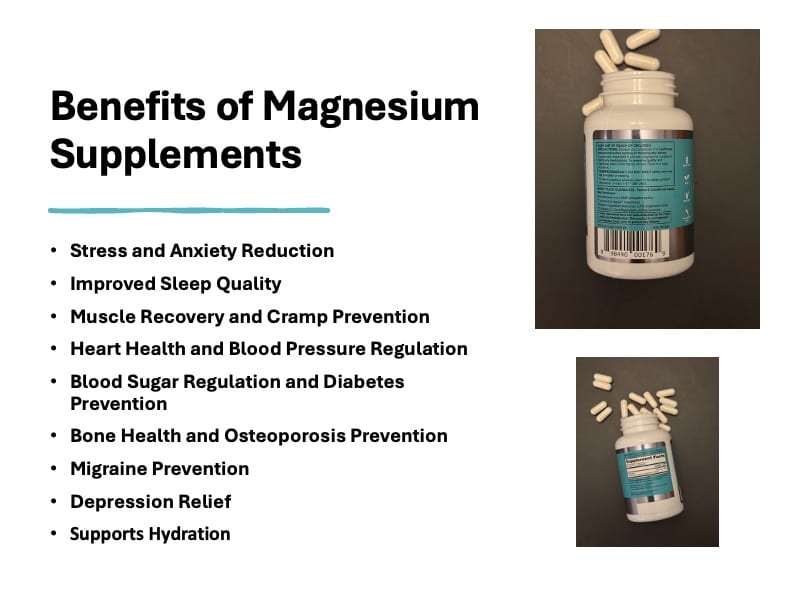
Best Forms of Magnesium for Sleep
Not all magnesium supplements are created equal.
Different forms vary in how well they are absorbed, how likely they are to cause digestive side effects, and the specific benefits they may provide.
Choosing the right form depends on your goals, whether that’s falling asleep faster, staying asleep longer, or simply increasing your overall magnesium intake.
Magnesium Glycinate
For most people, magnesium glycinate is the best magnesium for sleep.
It is highly bioavailable, gentle on the digestive system, and bound to the amino acid glycine, which may promote relaxation and support healthy sleep.
Because of these characteristics, magnesium glycinate is often recommended for people who struggle to unwind at bedtime, experience muscle tension, or have difficulty falling asleep.
If someone asks me where to start, this is almost always my first recommendation.
Last update on 2026-10-16 / This article includes affiliate links/Images via Amazon Product Advertising API. I may earn commissions on purchases made through these links.
Magnesium L-Threonate

Magnesium L-threonate is unique because it appears to cross the blood-brain barrier more effectively than other forms of magnesium.
Early research suggests it may support cognitive function and brain magnesium levels, leading some researchers to investigate its potential effects on sleep quality and overnight brain recovery.
Although more human research is needed before strong conclusions can be made, I’ve personally found magnesium L-threonate to be a helpful addition to my evening routine.
It seems to help me stay asleep more consistently and wake up feeling mentally refreshed.
The biggest drawback is cost, as it’s significantly more expensive than most other forms of magnesium.
Last update on 2026-10-16 / This article includes affiliate links/Images via Amazon Product Advertising API. I may earn commissions on purchases made through these links.
Magnesium Citrate
Magnesium citrate is another well-absorbed form and can still support overall magnesium status.
However, it draws water into the intestines and has a greater laxative effect than glycinate or threonate.
If constipation is one of your concerns, magnesium citrate may provide two benefits.
If your primary goal is improving sleep, though, there are usually better options that are less likely to disrupt your digestive system.
Magnesium Oxide
Magnesium oxide is inexpensive and widely available, but it has relatively poor absorption compared with many other forms.
It is also one of the forms most likely to cause gastrointestinal discomfort or diarrhea, especially at higher doses.
While it can still increase magnesium intake, it is generally not my first choice for improving sleep quality.
My Recommendation
For most healthy adults looking to improve sleep, magnesium glycinate is the best place to start because it combines good absorption, excellent tolerability, and evidence supporting relaxation.
My go-to choice is Qunol Magnesium Glycinate:
Last update on 2026-10-16 / This article includes affiliate links/Images via Amazon Product Advertising API. I may earn commissions on purchases made through these links.
If your budget allows and you’re interested in optimizing both sleep and cognitive recovery, adding magnesium L-threonate may be worth considering.
Personally, I use both forms because they appear to complement each other well.
Magnesium glycinate helps me relax and fall asleep more easily, while magnesium L-threonate seems to improve my sleep quality and helps me wake up feeling more mentally refreshed.
How Much Magnesium Should You Take for Sleep?
The ideal magnesium dosage for sleep depends on your age, diet, overall health, medications, and the specific form of magnesium you choose.
Because different magnesium compounds contain different amounts of elemental magnesium, it’s important to read the Supplement Facts label rather than comparing the total weight of each compound.
For most healthy adults, 200-400 mg of supplemental elemental magnesium per day is a common range used in clinical research and is often enough to support sleep, muscle function, and overall magnesium status.
However, that doesn’t mean everyone needs the higher end of the range.
If your diet already provides plenty of magnesium-rich foods, a smaller supplemental dose may be all you need.
If you’re trying magnesium for sleep for the first time, I generally recommend starting with 100-200 mg of elemental magnesium in the evening and gradually increasing the dose if needed.
Beginning with a lower dose allows you to assess how your body responds while reducing the likelihood of digestive side effects, particularly if you’re using magnesium citrate or another form with laxative effects.
Timing can also make a difference, although consistency is usually more important than taking it at the exact same minute each night.
Many people find that taking magnesium 30 to 60 minutes before bed helps them relax before falling asleep, while others prefer taking it with dinner to improve consistency and reduce the chance of stomach discomfort.
Like most nutrition strategies, the benefits of magnesium supplements tend to build over time rather than after a single dose.
When Magnesium Probably Won’t Fix Your Sleep
Magnesium can be a helpful tool for improving sleep, but it isn’t a cure-all.
If the underlying cause of your sleep problems isn’t related to magnesium status, muscle tension, or stress, supplementation may have little or no noticeable effect.
Your Sleep Hygiene Needs Improvement
If your bedtime changes every night, your bedroom is too warm or bright, you scroll on your phone until you fall asleep, or you regularly consume caffeine or alcohol late in the day, magnesium probably isn’t the missing piece.
Good sleep starts with consistent habits.
Supplements work best when they’re supporting healthy sleep hygiene rather than trying to overcome poor lifestyle choices.
Your Sleep Problems Have Another Cause
If you snore loudly, wake up gasping for air, feel exhausted despite spending enough time in bed, or struggle with persistent insomnia, your sleep difficulties may be caused by an underlying medical condition rather than inadequate magnesium intake.
Conditions such as obstructive sleep apnea, restless legs syndrome, chronic anxiety, depression, chronic pain, thyroid disorders, or certain medications can significantly impair sleep quality and often require medical evaluation and treatment.
Magnesium should complement appropriate care.
You Aren’t Taking the Right Form, or You Don’t Need It
Not everyone benefits from magnesium supplementation.
If you’re already meeting your magnesium needs through your diet or your sleep problems aren’t related to magnesium status, you may not notice much of a difference.
Likewise, choosing a form that doesn’t match your goal can lead to disappointing results.
For example, someone looking to fall asleep faster may respond better to magnesium glycinate than magnesium oxide, while others may find magnesium L-threonate better supports their overall sleep quality.
You Expect a Dramatic Overnight Change
One of the biggest misconceptions is that magnesium works like a prescription sleeping pill.
For some people, the benefits appear within a few days.
Others may need several weeks of consistent supplementation before noticing improvements, and some people won’t experience any meaningful change at all.
Instead of expecting magnesium to “knock you out,” think of it as a tool that may help create better conditions for healthy sleep over time.
When combined with good nutrition, effective stress management, regular exercise, and consistent sleep habits, those small improvements can add up to meaningful gains in recovery, energy, and long-term health.
Why Dietary Sources of Magnesium are Still Important

Before relying too heavily on supplements, take a close look at your diet.
While magnesium supplements can help fill nutritional gaps, obtaining magnesium from whole foods provides additional vitamins, minerals, fiber, antioxidants, and other beneficial plant compounds that work together to support overall health and recovery.
Some of the best dietary sources of magnesium include pumpkin seeds, almonds, cashews, spinach, Swiss chard, black beans, edamame, lentils, whole grains, avocados, and even dark chocolate with a high cocoa content.
Regularly including these foods in your meals can help you meet your daily magnesium needs naturally while supporting healthy sleep, muscle function, and energy production.
This is something I’ve come to appreciate throughout my professional basketball career and my education in nutrition.
Key Takeaway: Recovery isn’t built from a single supplement or “magic” ingredient. It’s built from consistently eating nutrient-dense foods, training intelligently, managing stress, staying hydrated, and getting quality sleep. Magnesium can certainly support that process, but it works best as part of a strong nutritional foundation rather than a replacement for one.
Safety and Potential Side Effects
Magnesium is generally considered safe for most healthy adults when taken in appropriate amounts, but more isn’t always better.
Exceeding your body’s needs, particularly from supplements, can lead to side effects such as diarrhea, nausea, abdominal cramping, and other digestive discomfort.
These symptoms are especially common with forms like magnesium citrate and magnesium oxide because of their laxative effects.
Certain people should be more cautious with magnesium supplementation.
Individuals with kidney disease or impaired kidney function may not be able to eliminate excess magnesium efficiently, increasing the risk of magnesium accumulation and potentially serious complications.
Anyone with kidney disease should speak with their healthcare provider before taking a magnesium supplement.
Magnesium can also interfere with the absorption of certain medications, including some antibiotics, bisphosphonates used to treat osteoporosis, and thyroid hormone replacement medications.
In many cases, simply separating magnesium from these medications by several hours can minimize interactions, but it’s always best to follow your healthcare provider’s recommendations.
For most healthy adults, magnesium remains one of the safest and most well-tolerated dietary supplements available when used responsibly.
Choosing an appropriate form, taking a reasonable dose, and combining supplementation with a nutrient-rich diet are usually the best strategies for maximizing benefits while minimizing side effects.
Final Thoughts: Does Magnesium Improve Sleep Enough to Try It?

For many people, the answer is yes.
If you struggle with light or restless sleep, chronic stress, muscle tension, or a diet that’s low in magnesium-rich foods, taking magnesium for sleep may help you fall asleep more easily, improve your overall sleep quality, and support better overnight recovery.
While the effects are rarely dramatic, they can become meaningful when combined with other healthy sleep habits and practiced consistently over time.
The key is to keep your expectations realistic.
Magnesium isn’t a sleeping pill, nor is it a cure for insomnia.
Instead, it’s a nutritional tool that helps support your body’s natural sleep and recovery processes.
Choosing the right form, taking an appropriate dose, and maintaining a consistent routine are often just as important as deciding whether to supplement in the first place.
As a professional basketball player and nutrition educator, I’ve learned that the biggest improvements in recovery rarely come from one product.
They come from combining small, evidence-based habits that reinforce one another.
Quality nutrition, regular exercise, effective stress management, proper hydration, and a consistent sleep schedule all work together to create the conditions for better sleep.
Magnesium can absolutely be part of that foundation, but it shouldn’t be expected to carry the entire load.
The best long-term results usually come from stacking simple habits that help your body recover, repair, and perform at its best night after night.
This website does not provide medical advice. This website site does contain affiliate links, and purchases may earn a commission.
Read my Medical Disclaimer, Review Disclaimer, and Publishing Policies for more details. Use of this site indicates acceptance of these terms.
Check Out Some of My YouTube Videos Below, and Please Follow on YouTube for More Educational Health and Fitness Content!
![Subscribe to @AdamKempFitness for more training, general health, recovery, and nutrition tips from a professional basketball player with a master’s degree in Nutrition Education! 🏀💪
Seated Max Vertical Jumps From a Box are one way I train explosive takeoff power with maximum intent on every rep.
Starting seated, with a pause and minimal rocking or dipping, reduces the contribution of a quick countermovement and emphasizes producing force from a relatively static position (National Strength and Conditioning Association [NSCA], 2020).
For athletes, the training goal is explosive lower-body force production and coordinated extension through the hips, knees, and ankles. I use this variation to practice driving hard into the floor and accelerating my body upward.
My preferred setup: 3 sets of 3 reps or 4 sets of 2 reps, supersetted with a strength or power exercise.
I keep the reps low, reset between jumps, and take longer rest periods so I’m ready to attack every takeoff. Even when pairing exercises, I give myself enough recovery to keep the jumps sharp.
Every rep has one goal: jump as high as possible. I focus on an explosive takeoff, a controlled landing, and consistent quality throughout the session.
Save this for your next power workout! 🚀
Reference: NSCA. (2020). Stretch-shortening cycle.
#VerticalJump #JumpTraining #ExplosivePower #AthleticPerformance #BasketballTraining](https://www.adamkempfitness.com/wp-content/plugins/feeds-for-youtube/img/placeholder.png)