
How to Improve Ankle Mobility: Pro Athlete Adam Kemp Explains
Reading this article will help you improve ankle mobility by utilizing my experience as a professional basketball player…
Mobility exercises are a regular part of my training, especially when preparing for basketball, lifting, and the demands of an active life. This collection brings together movement guides and exercise explanations to help you explore your ankles, hips, shoulders, and overall movement more thoughtfully.
My interest in mobility comes from years of professional basketball and the ongoing process of adapting my training. I use this section to share exercises and practical considerations that readers can explore according to their own experience and goals.
When using this library of mobility exercises, begin with a specific question: which movement would you like to understand or perform more comfortably? That question gives you a clearer direction than simply searching for the hardest stretch or the longest mobility routine.
I recommend reading the exercise instructions before comparing your range of motion with someone else’s. Use the demonstrations as guidance, and avoid treating a particular depth or position as a requirement you must reach immediately.
For the hips and back of the legs, explore my guide to chronically tight hamstrings. Use it to examine the questions behind recurring tightness and to prepare a more informed conversation with a qualified professional when needed.
Consider the mobility exercises on my website as options to learn about, not a checklist you need to complete.
For the upper body, my shoulder exercises at home guide offers a broader selection of movements.
I prefer to introduce unfamiliar exercises conservatively and pay attention to how they feel during and after practice. More range, more resistance, and more repetitions are separate changes; I would avoid increasing all three simply because an exercise begins to feel familiar.
Stretching should create tension rather than pain, and a dynamic warm-up can use easier versions of movements involved in your upcoming activity (Mayo Clinic, n.d.). These principles offer a useful starting point when deciding how mobility work fits into a training session.
For a simple routine, choose a small number of relevant mobility exercises and leave enough time to practice them without rushing. Keep a brief note about which movements you used and whether they addressed the reason you selected them.
If you have an injury or a chronic condition, ask a healthcare professional about appropriate modifications rather than forcing a stretch that feels wrong (Mayo Clinic, n.d.). An online exercise description cannot assess your individual situation.
Explore the mobility exercise articles below by body region or movement goal, then return to the guides most relevant to your routine. My aim is to help you make mobility practice purposeful, manageable, and connected to the activities you want to do.
Subscribe to my YouTube channel to see more of my mobility exercises, including many I haven’t shared on my website yet, plus training, general health, recovery, and nutrition tips informed by my professional basketball career and master’s degree in Nutrition Education.

Reading this article will help you improve ankle mobility by utilizing my experience as a professional basketball player…
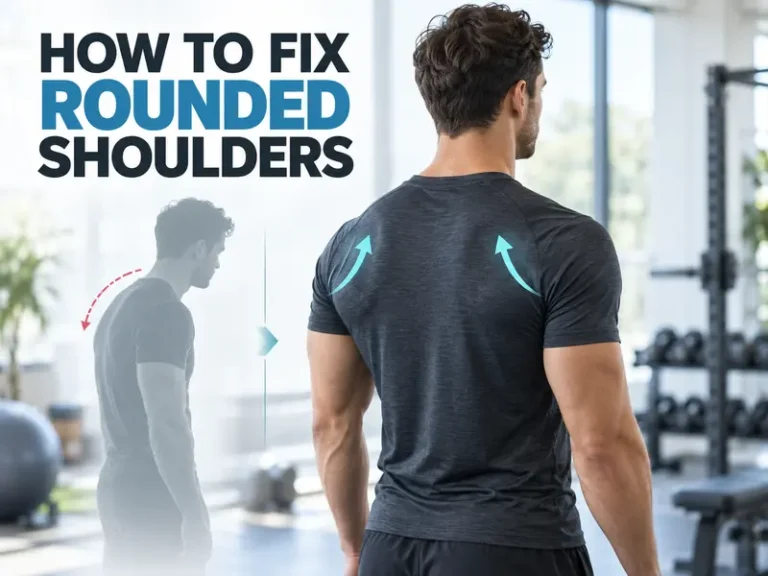
Learn how to fix rounded shoulders with mobility drills, upper-back strength, and daily habits that improve posture without chasing one rigid position.
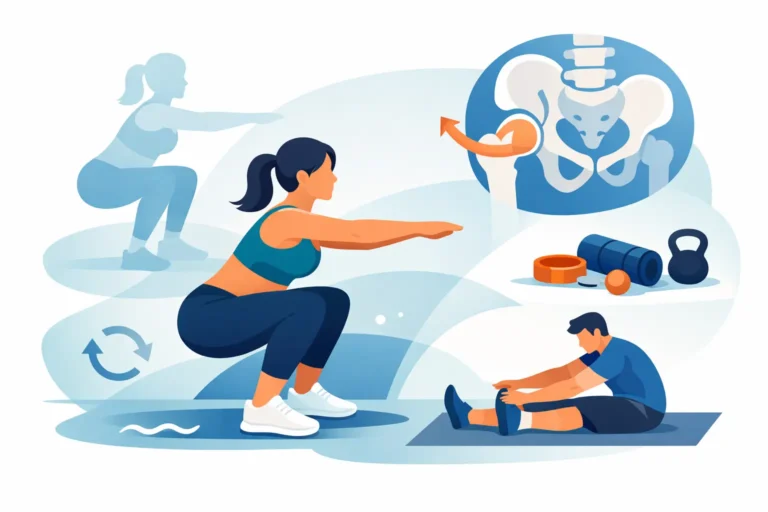
Learn how to improve squat depth with mobility drills, technique cues, smart loading, and progression strategies that build stronger, safer squats today.

Foam roller exercises are one of the most practical and evidence-supported tools for improving recovery, mobility, and overall movement…

Knowing how to warm up for sprinting is one of the most overlooked factors in running faster, staying healthy,…

The inchworm exercise is one of the most underrated full-body movements for developing functional strength, flexibility, and coordination….

Throughout my career as a professional basketball player, I’ve learned that hip hurdle mobility is one of the most…

Knowing how to warm up for workouts is one of the most overlooked yet critical skills in fitness. A proper…
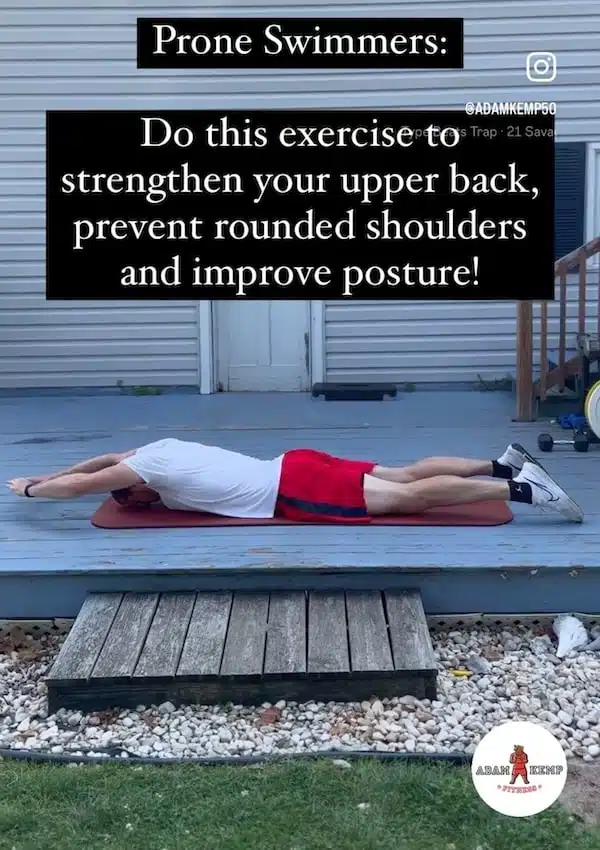
The prone swimmers exercise is one of the most reliable and effective movements I use to support shoulder mobility,…

The banded hip-flexor march is a highly effective exercise designed to improve hip flexor strength, core stability, and overall lower-body…

Dynamic stretching is a movement-based approach to flexibility and mobility that has become a staple in modern fitness…

Like most people, I used to skip warm-ups entirely or just do a few static stretches before starting…

Learning how to warm up for high school sports builds the cornerstone of athletic performance and injury prevention….
End of content
End of content
Reset in 7 Days!
Subscribe to my email list and get my FREE, 60-page 7-Day Detox Plan eBook that will help you boost energy, improve gut health, and build sustainable habits that will keep you healthier!
No fluff. Just practical strategies that actually work!
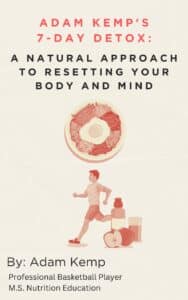
Reset in 7 Days!
Subscribe to my email list and get my FREE, 60-page 7-Day Detox Plan eBook that will help you boost energy, improve gut health, and build sustainable habits that will keep you healthier!
No fluff. Just practical strategies that actually work!