How to Do Strength Training for Longevity
 Reading Time: 9 minutes
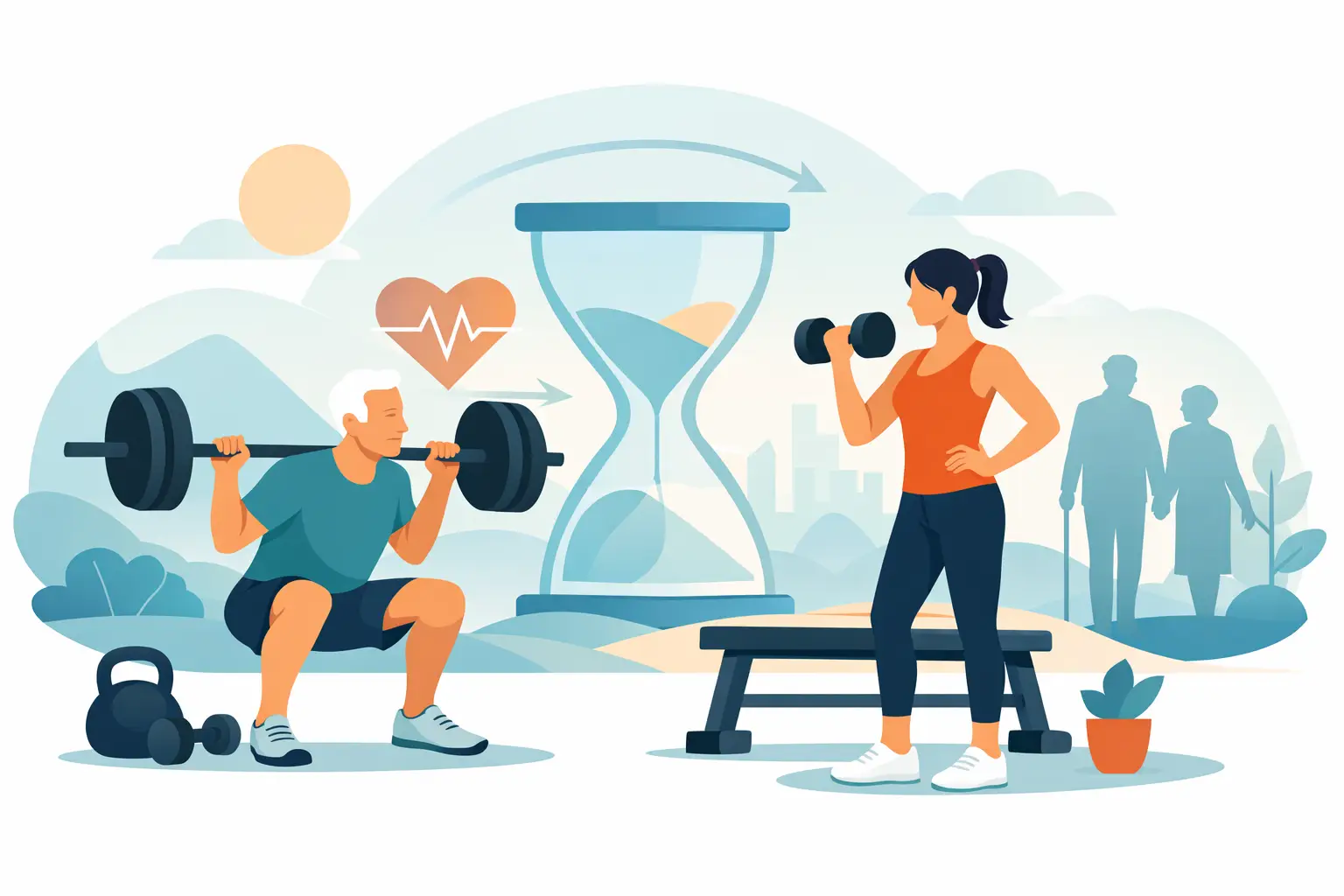
 Strength training for longevity is about preserving the physical capacity to live independently and confidently as you age.
It helps determine whether you can carry groceries, get up from the floor, travel comfortably, play with your children or grandchildren, and continue doing the activities that make life fulfilling.
The benefits of strength training also extend beyond daily function.
A systematic review and meta-analysis found that regular muscle-strengthening activity was associated with a 10%–17% lower risk of all-cause mortality and several major chronic diseases, although the observational nature of the evidence does not establish direct causation (Momma et al., 2022).
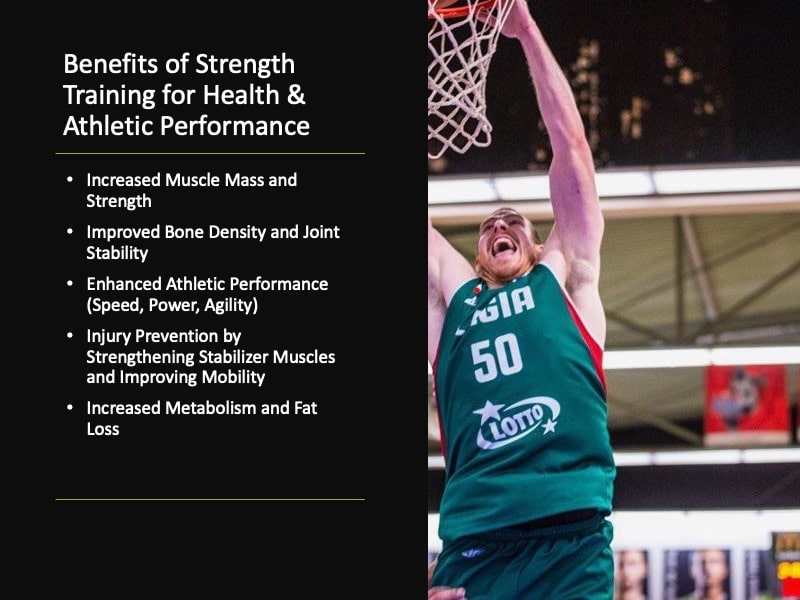
As a professional basketball player, I have learned that meaningful strength isn’t simply how much weight you can lift.
For example, a large meta-analysis also found that resistance training improves physical function in older adults, reinforcing its value for maintaining real-world capability rather than merely building muscle or changing appearance (Kashi et al., 2023).
Most people do not need to train like elite athletes or chase personal records year-round.
They need a sustainable plan that develops muscle, power, balance, joint resilience, and confidence, which are qualities that form the foundation of effective strength training for longevity.
Why Strength Matters More With Age
Adults naturally lose muscle mass and power as they age, particularly when they become inactive.
This loss can reduce metabolic health, make everyday tasks harder, and increase the consequences of a fall or injury.
Strength training for longevity directly challenges that decline by giving your muscles, bones, tendons, and nervous system a reason to adapt.
Muscle is also metabolically active tissue, and maintaining it supports glucose control, helps preserve a healthy body composition, and gives you a larger reserve during illness, injury, surgery, or periods when you cannot be as active.
A person with more strength and muscle capacity generally has more margin for error than someone who has spent years becoming weaker.
Bone health is another major reason to lift.
Resistance training places appropriate mechanical stress on bone, which can support bone density when combined with adequate nutrition, especially protein, calcium, vitamin D, and overall energy intake.
It is not a replacement for medical care if you have osteopenia or osteoporosis, but it is often an important part of a long-term plan.
Strength also improves function.
Squatting, hinging, pushing, pulling, carrying, and bracing are not arbitrary gym movements.
They reflect demands you encounter outside the gym.
Training them helps maintain the ability to move through life independently.
What are the Benefits of Strength Training for Longevity?
The benefits of strength training for longevity extend beyond building larger muscles or lifting heavier weights.
Consistent resistance training helps preserve the physical reserve needed to remain active, recover from setbacks, and maintain independence as the body ages.
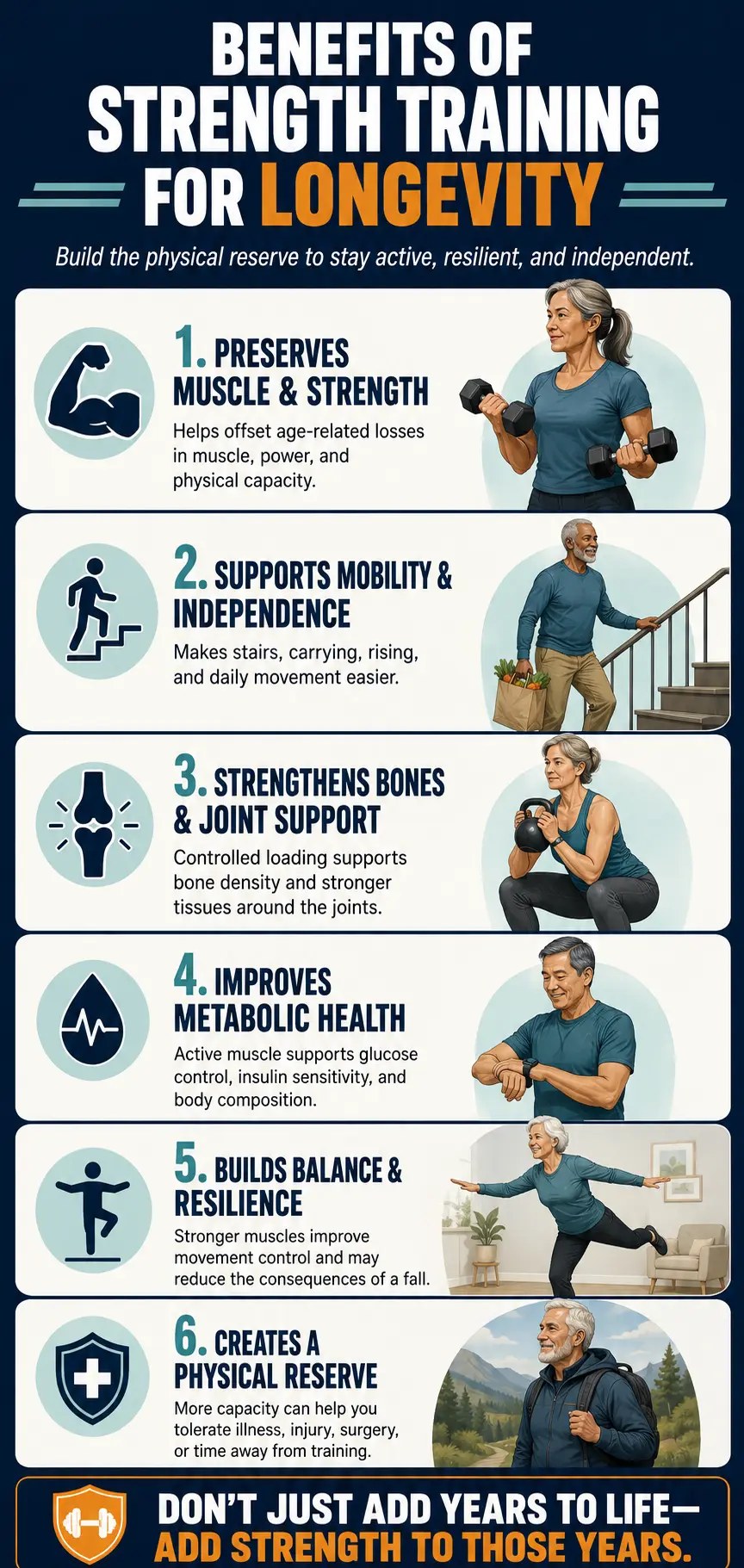
Preserves Muscle Mass and Strength
Age-related muscle loss can make everyday activities progressively harder, particularly when it is combined with inactivity.
Strength training provides the stimulus needed to preserve or regain muscle mass, strength, and power.
Supports Independence and Mobility
Stronger legs, hips, back, and core make it easier to climb stairs, rise from a chair, carry groceries, and get up from the floor.
Research indicates that resistance training can improve physical function in older adults, even with relatively modest weekly training volume (Radaelli et al., 2025).
Strengthens Bones and Connective Tissue
Progressive resistance training places controlled mechanical stress on bones, encouraging them to maintain or increase mineral density.
It also strengthens the muscles and connective tissues surrounding the joints, which can improve movement control and physical resilience (Massini et al., 2022).
Improves Metabolic Health
Skeletal muscle plays an important role in absorbing and storing glucose from the bloodstream.
Building and regularly using muscle can improve insulin sensitivity, blood sugar regulation, and body composition, with particularly meaningful benefits for people with type 2 diabetes (Wan & Su, 2024).
Helps Preserve Balance and Reduce Fall Consequences
Strength training can improve lower-body force production, coordination, and the ability to recover from a loss of balance.
Although it cannot prevent every fall, stronger muscles and bones may reduce both fall risk and the physical consequences of a fall.
Builds Reserve for Illness and Injury
Muscle and strength function as a physiological reserve during surgery, illness, injury, or periods of reduced activity.
Starting with greater capacity gives you more room to absorb temporary declines without immediately losing the ability to perform essential daily tasks.
May Support a Longer Life
Observational research has associated regular muscle-strengthening activity with a 10%–17% lower risk of all-cause mortality and several major chronic diseases (Momma et al., 2022).
This does not prove that strength training alone causes a longer life, but it strengthens the case for including it in a comprehensive longevity plan alongside aerobic activity, nutritious food, adequate sleep, and preventive medical care.
Ultimately, the greatest benefit of strength training for longevity is not simply adding years to your life. It is improving your chances of having the strength, mobility, and confidence to use those years well.
Important: Strength Training for Longevity Is Not Maximal Training
One of the biggest mistakes people make is confusing longevity-focused lifting with constantly testing their limits.
Heavy training has a place, and learning to produce force matters, but a lifetime program cannot depend on grinding through painful repetitions, chasing personal records every week, or treating fatigue as proof of effort.
The best science-based strength training programs are challenging enough to drive adaptation and conservative enough to repeat consistently.
Most sets should finish with one to three good repetitions still available.
You should feel that you worked, but your technique should remain controlled, and your joints should not feel punished.
This matters even more if you are returning to exercise after years away, managing a demanding job, playing recreational sports, or dealing with old injuries.
Progress is valuable, but durability is the priority.
A workout that leaves you unable to train for the next week is rarely a winning long-term strategy.
How to Properly Do Strength Training for Longevity
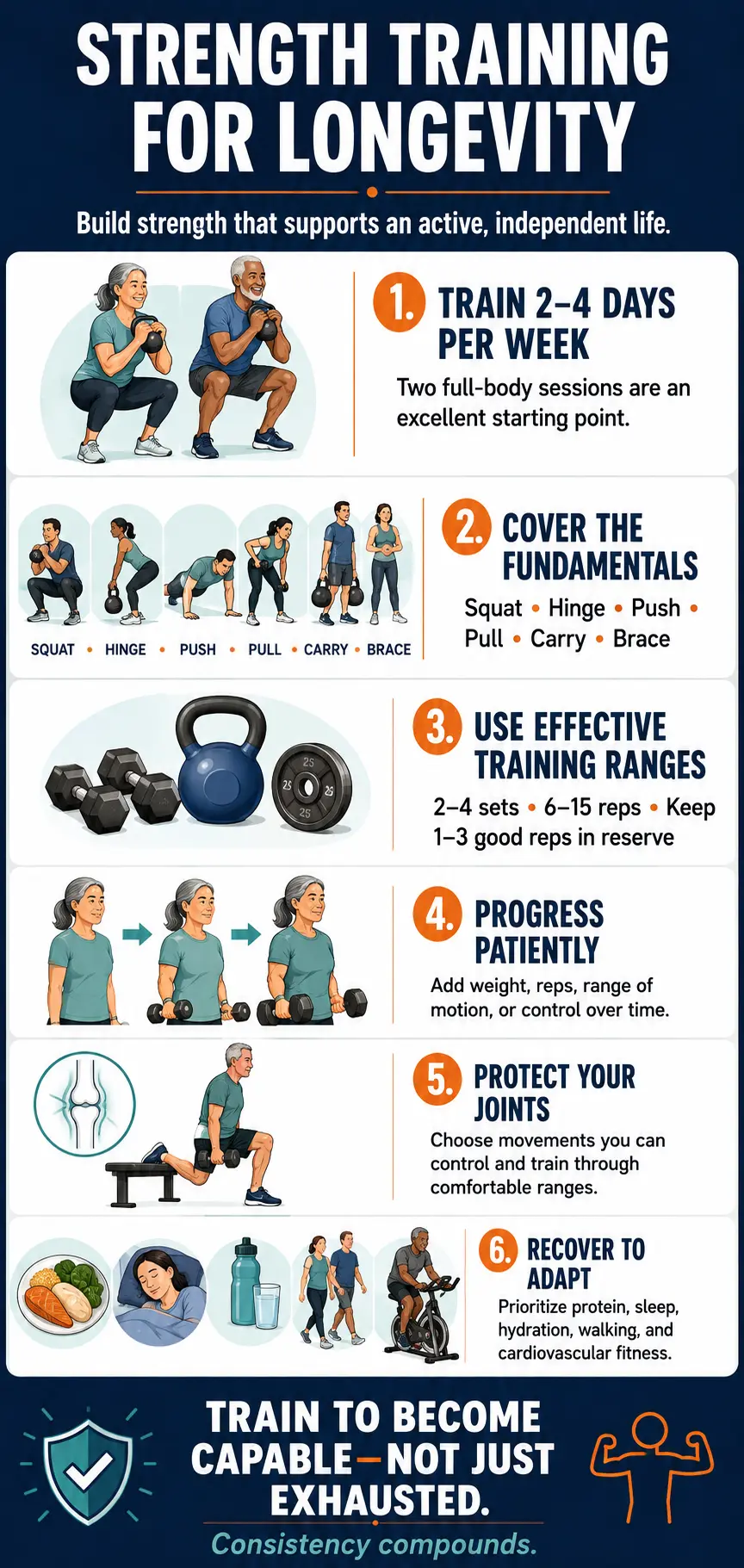
Train the Fundamental Movement Patterns
A simple full-body plan works because it covers the movements that matter without creating unnecessary complexity.
You do not need dozens of exercises.
You need a few movements performed consistently, with sound technique and gradually increasing difficulty.
You should use an evidence-based strength training program that includes these core patterns:
- A squat or knee-dominant movement, such as a goblet squat, split squat, leg press, or step-up.
- A hip hinge, such as a Romanian deadlift, kettlebell deadlift, hip thrust, or back extension.
- An upper-body push, such as a push-up, dumbbell bench press, or overhead press.
- An upper-body pull, such as a cable row, dumbbell row, pull-down, or assisted pull-up.
- Carries and trunk stability work, such as farmer carries, suitcase carries, planks, or Pallof presses.
The exact exercise depends on your experience, equipment, mobility, and injury history.
A goblet squat may be a better long-term choice than a barbell back squat for one person, while another may tolerate and enjoy barbell training for decades.
There is no prize for choosing the most advanced variation.
Choose the variation you can perform well and progress safely.
Learn to Progress Without Beating Up Your Body
Progressive overload simply means asking your body to do slightly more over time.
That might mean adding five pounds, completing an extra repetition, using a better range of motion, improving control, or performing the same workout with less fatigue.
Load matters, but it is not the only form of progress.
Use a training log.
Using a workout log book or another form of training log is one of the simplest habits that separates intentional training from random exercise.
Record the exercise, weight, sets, repetitions, and a brief note on how it felt.
Over months, you will see patterns in your recovery and know when to progress or pull back.
However, do not force progress during poor sleep, major stress, illness, or unusual joint pain.
This is not a weakness.
It is intelligent autoregulation.
Long-term trainees learn when to push and when to maintain.
Taking an easier week every six to 10 weeks can also help manage accumulated fatigue, especially if you train hard or participate in sports.
Protect Your Joints With Better Decisions
Strength training does not inherently damage joints.
Poor exercise selection, rushed technique, excessive loading, and ignoring pain are usually the larger problems.
Your joints benefit when the muscles around them are strong and when you can control movement through usable ranges of motion.
Train through a comfortable range first, then gradually earn more range as your control improves.
If a movement creates sharp pain, instability, numbness, or symptoms that worsen after training, stop and get qualified medical or physical therapy guidance.
Do not try to outwork a legitimate problem.
Warm-ups do not need to be elaborate.
Spend five to 10 minutes increasing body temperature, moving the joints you will use, and performing lighter sets of your first exercises.
The most specific preparation for a lift is usually a lighter, well-executed version of that lift.
Recovery Is Part of the Program
You cannot separate strength training from nutrition, sleep, and daily activity.
Resistance exercise provides the stimulus, but recovery is where much of the adaptation happens.
Prioritize adequate protein across the day, enough total food to support your activity level, hydration, and consistent sleep.
Walking, cycling, and other low-impact cardiovascular work complement lifting well.
Aerobic fitness supports heart health, recovery between sets, and staying active as you age.
Strength and conditioning are not competing goals. For longevity, they work better together.
Also remember that a program only works when it survives busy seasons.
If three weekly workouts become unrealistic, train twice.
If you only have 25 minutes, perform a few high-value movements instead of skipping the session entirely.
Exercise consistency compounds more than occasional perfect workouts.
How Often Should You Do Strength Training for Longevity?

For most adults, two to four strength training sessions per week are enough to produce meaningful results.
Two full-body sessions are an excellent starting point because they are manageable and cover each major movement pattern multiple times each week.
If you enjoy training and recover well, three or four sessions can provide more volume without requiring marathon workouts.
Start with two to four sets per exercise and roughly six to 15 repetitions for most movements.
Lower repetitions can build strength, while moderate and higher repetitions are often joint-friendly and effective for muscle growth. Both have value.
A balanced approach works well.
For example, include some moderately heavy compound movements, and use controlled, moderate-to-high-rep accessory work for muscles that need more attention.
A practical two-day routine could include squats or leg presses, rows, presses, and carries on one day.
On the second day, use hinge movements, split squats, pull-downs, push-ups, or dumbbell presses, and trunk stability work.
Keep sessions focused, not exhaustive.
Forty-five to sixty minutes of purposeful training is enough for most people.
Final Thoughts: Understanding the Mindset That Makes Strength Last
Train to become more capable, not simply more exhausted.
The goal is to build a body that can handle work, exercise, travel, family responsibilities, and the unexpected physical demands of everyday life.
Improved appearance can be a valuable benefit, but it should not be the only reason you train.
Performance, independence, confidence, and quality of life provide more meaningful motivation for staying consistent over decades.
Start with movements you can control, progress at a pace your body can tolerate, and adjust your training when life or recovery requires it.
Strength training for longevity is a long-term investment, and every well-executed session helps preserve the capable, resilient, and independent life you want to keep living.
This website does not provide medical advice. This website site does contain affiliate links, and purchases may earn a commission.
Read my Medical Disclaimer, Review Disclaimer, and Publishing Policies for more details. Use of this site indicates acceptance of these terms.