
Understanding Sexual Health: Problems & Positive Indicators
 Reading Time: 9 minutes
 Sexual health is a fundamental part of overall wellness, yet it remains one of the least openly discussed aspects of personal health.
For many individuals, concerns related to intimacy, sexual function, or reproductive well-being are met with silence, embarrassment, or misinformation.
However, addressing these topics with clarity and confidence can significantly improve both physical and emotional health outcomes.
Many sexual health problems are far more common than people realize and are often rooted in physiological changes, hormonal imbalances, circulatory or neurological issues, or the effects of medications and lifestyle habits.
Others may stem from psychological stressors or unresolved emotional concerns.
Regardless of the cause, these challenges deserve thoughtful attention and evidence-based solutions—not shame or stigma.
By examining sexual health through an anatomical and medical lens, we can better understand how the body functions, what factors disrupt sexual well-being, and which approaches can effectively restore balance.
Whether you’re navigating low libido, discomfort during intercourse, or managing a diagnosed condition like erectile dysfunction or a sexually transmitted infection, taking a proactive approach to sexual health empowers you to build confidence, comfort, and connection.
In the sections below, we’ll explore the most common sexual health problems affecting both men and women, break down their physiological origins, and discuss practical steps for prevention, treatment, and long-term well-being.
What Is Sexual Health?

Sexual health encompasses physical, emotional, mental, and social well-being related to sexuality.
It is not merely the absence of disease or dysfunction, but the ability to engage in safe, respectful, and satisfying relationships—alone or with a partner.
This includes healthy function of the reproductive system, balanced hormone levels, and unobstructed blood flow and nerve signaling in sexual organs.
What Are Indications of Good Sexual Health?
Good sexual health reflects a combination of physical function, hormonal balance, mental well-being, and relationship quality, all working together in a sustainable way.
Consistent Sexual Desire (Libido)
A steady, natural interest in sexual activity is one of the clearest indicators of good sexual health.
Libido can fluctuate with stress, sleep, and lifestyle, but chronically low desire may signal hormonal imbalances such as low testosterone or elevated cortisol.
Reliable Physical Function
For men, consistent ability to achieve and maintain erections without difficulty is a key sign of healthy blood flow and nerve function.
For women, adequate lubrication and comfort during intimacy indicate proper hormonal balance and physiological readiness.
Difficulties in these areas can sometimes reflect underlying cardiovascular or endocrine issues (Jackson et al., 2006).
Normal Hormonal Balance
Balanced levels of sex hormones like testosterone, estrogen, and progesterone support sexual function, mood, and energy.
Signs of balance include stable energy levels, healthy mood, and regular reproductive cycles in women (Bhasin et al., 2018).
Positive Body Awareness and Confidence
Feeling comfortable in your body and having a healthy sense of sexual identity are often overlooked but important indicators.
Psychological factors such as confidence and reduced performance anxiety play a major role in sexual satisfaction and function.
Ability to Experience Pleasure and Orgasm
Being able to experience pleasure and reach orgasm without pain or significant difficulty is another strong indicator.
Persistent issues such as pain during sex or inability to climax may indicate conditions like pelvic floor dysfunction or psychological barriers.
Absence of Pain or Discomfort
Sex should not be consistently painful.
Pain during intercourse can be linked to infections, inflammation, hormonal issues, or musculoskeletal problems that deserve attention.
Healthy Relationships and Communication
Open communication with a partner about needs, boundaries, and preferences reflects strong sexual health.
Emotional safety and trust directly influence physical intimacy and satisfaction.
Good General Health Markers
Sexual health often mirrors overall health.
Regular exercise, good cardiovascular fitness, quality sleep, and balanced nutrition all support sexual function by improving blood flow, hormone production, and energy levels (Esposito et al., 2004).
Common Sexual Health Issues
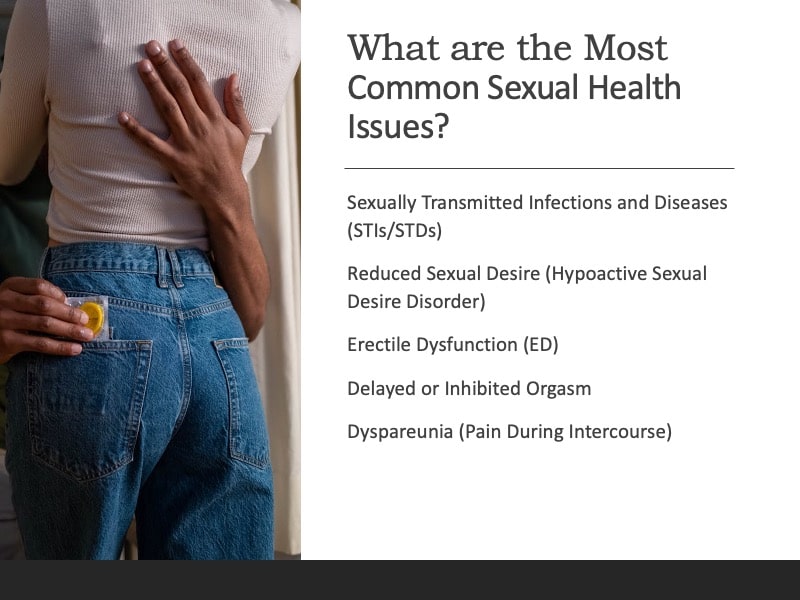
Not all sexual health concerns involve infections.
Many challenges are physiological or psychological in nature and can affect individuals regardless of relationship status or sexual activity.
Sexually Transmitted Infections and Diseases (STIs/STDs)
STIs and STDs remain among the most widespread sexual health concerns.
These infections often affect the reproductive system, urinary tract, or surrounding tissues.
While some are asymptomatic, others can result in serious complications if left untreated.
The consistent use of condoms, open communication with partners, and routine sexual health screenings can dramatically reduce the risk of STI transmission.
Accessing early treatment not only protects personal health but also contributes to community-wide prevention.
Common examples of STDs include Human papillomavirus (HPV) and chlamydia.
HPV is the most common STI globally.
While most cases are cleared naturally by the immune system, certain strains can lead to genital warts or even cervical, penile, or throat cancers.
Sadly, there is no cure for HPV, but there are treatments that you can explore to remove genital warts.
Vaccination and regular screenings are crucial preventive tools.
Chlamydia is another common STD that often presents no symptoms but can cause burning sensations, abnormal discharge, and reproductive complications if untreated.
Antibiotics are highly effective, and regular testing helps reduce transmission.
Reduced Sexual Desire (Hypoactive Sexual Desire Disorder)
A decline in libido can result from hormonal shifts (such as menopause or low testosterone), psychological stress, certain medications, or lifestyle factors like poor nutrition and lack of exercise.
For women, estrogen fluctuations during menopause are especially impactful.
In men, androgens such as testosterone play a major role.
Addressing underlying causes through lifestyle changes, hormone therapy, or counseling can restore balance.
Erectile Dysfunction (ED)
Erectile dysfunction is defined as the consistent inability to achieve or maintain an erection sufficient for sexual performance.
It affects approximately 20% of men over the age of 20 and becomes increasingly common with age.
ED often results from vascular issues, hormonal imbalances, or neurological disruption, though psychological stress and certain medications can also be contributing factors.
Treatment options include phosphodiesterase inhibitors (e.g., sildenafil), lifestyle changes, and behavioral therapy.
Phosphodiesterase type 5 inhibitors—most notably sildenafil (commonly recognized by the brand name Viagra)—are one of the most effective treatment options for erectile dysfunction, with clinical success rates of approximately 80% in eligible users.
While sildenafil requires a prescription, accessing it has become more convenient to order prescription medications online through telehealth platforms like Oxford Online Pharmacy, which offers confidential online consultations.
This makes it possible to receive appropriate care without the need for an in-person doctor visit.
However, medication is only one part of the solution.
In many cases, erectile dysfunction is influenced by modifiable factors such as chronic stress, anxiety, excessive alcohol use, smoking, or underlying mental health conditions.
Addressing these root causes through lifestyle changes, counseling, or holistic health strategies may significantly improve outcomes and reduce reliance on medication.
Delayed or Inhibited Orgasm
Failing to achieve orgasm, or anorgasmia, can occur in both men and women due to physiological or psychological reasons.
For men, it may stem from antidepressant use or pelvic nerve dysfunction.
For women, it may be linked to inadequate stimulation, hormonal changes, or pelvic floor dysfunction.
Treatment may involve pelvic floor therapy, hormone evaluation, and improved communication with a partner.
Dyspareunia (Pain During Intercourse)
Pain during penetrative activity is most commonly experienced by women but can also affect men.
For females, causes include vaginal dryness, hormonal changes, infections (e.g., yeast or bacterial), endometriosis, and pelvic floor muscle dysfunction.
For males, conditions like a torn frenulum or penile infection may be the cause.
Medical evaluation is essential to identify root causes and initiate appropriate treatment, such as topical therapies, pelvic physical therapy, or surgical intervention in severe cases.
When to Seek Professional Support
Ignoring symptoms can lead to worsening conditions or long-term reproductive health consequences.
Consulting with a urologist, gynecologist, pelvic floor specialist, or sexual health therapist can provide targeted treatment strategies.
Mental health professionals can also support the psychological side of sexual dysfunction, including performance anxiety and past trauma.
For example, Premature ejaculation, which is commonly defined as ejaculation occurring within one to three minutes of penetration, can be influenced by neurological sensitivity, anxiety, or lack of experience.
Techniques ranging from behavioral therapy, topical anesthetics, or delay delay condoms can improve control.
In some cases, SSRIs may be prescribed to assist with timing regulation.
How Can You Improve Sexual Health?
Improving sexual health comes down to strengthening the same systems that drive performance, recovery, and overall well-being: hormones, blood flow, mental health, and relationship quality.
When those areas are functioning well, sexual health tends to improve naturally rather than needing quick fixes.
Prioritize Cardiovascular Fitness
Sexual function is heavily dependent on blood flow, which means your heart health directly affects sexual performance and arousal.
Regular aerobic exercise like running, cycling, or basketball can improve endothelial function and circulation, both of which are essential for erectile function and arousal responses (Kouidrat et al., 2017).
Even moderate activity, around 150 minutes per week, has been linked to better sexual function in both men and women.
Build Strength and Support Hormonal Health
Resistance training helps maintain healthy testosterone levels and overall hormonal balance, which plays a major role in libido and performance.
Compound movements such as squats, deadlifts, and presses stimulate large muscle groups and can support endocrine health when paired with adequate recovery (Kraemer & Ratamess, 2005).
Chronic overtraining, on the other hand, can suppress libido and should be avoided.
Improve Sleep Quality
Sleep is one of the most overlooked drivers of sexual health.
Testosterone production, recovery, and nervous system regulation all depend on consistent, high-quality sleep, and even short-term sleep restriction can reduce testosterone levels and sexual desire (Leproult & Van Cauter, 2011).
A consistent sleep schedule and minimizing alcohol before bed can improve sleep quality naturally, along with many other simple changes you can make.

Manage Stress and Mental Health
Psychological stress can disrupt sexual health by increasing cortisol and impairing arousal, libido, and performance.
Chronic stress is also strongly associated with conditions like erectile dysfunction and decreased sexual satisfaction.
Strategies such as breathwork, mindfulness, prayer, or simply reducing daily overload can help restore balance.
Maintain a Nutrient-Dense Diet (Best Foods for Sexual Health)
Sexual health is closely tied to nutrition, especially nutrients that support blood flow, hormone production, and energy metabolism.
Key nutrients include zinc, magnesium, omega-3 fatty acids, and dietary nitrates found in foods like beets and leafy greens, which may enhance nitric oxide production and circulation (Lundberg et al., 2008).
Limiting ultra-processed foods and excessive alcohol also helps maintain hormonal stability.
Practice Safe and Preventive Care
Regular STI screening, open communication with partners, and the use of protection when appropriate are foundational for long-term sexual health.
Preventive care also includes addressing any early symptoms such as pain, dysfunction, or hormonal concerns before they become chronic issues.
Strengthen Communication and Relationship Quality
Sexual health is not purely physical.
Being able to communicate openly about needs, boundaries, and expectations contributes significantly to satisfaction and reduces anxiety or performance pressure.
Healthy relationships tend to support better sexual outcomes over time.
Final Thoughts: Keys to Maintaining Positive Sexual Health
Maintaining sexual health involves much more than addressing problems when they arise.
Preventive care, open dialogue with partners, and ongoing education about the body are foundational for overall wellness.
Regular physical activity, a nutrient-dense, well-balanced diet, adequate sleep, and utilizing natural remedies for stress can enhance hormonal balance and circulation—two pillars of optimal sexual function.
This website does not provide medical advice. This website site does contain affiliate links, and purchases may earn a commission.
Read my Medical Disclaimer, Review Disclaimer, and Publishing Policies for more details. Use of this site indicates acceptance of these terms.
Check Out Some of My YouTube Videos Below, and Please Follow on YouTube for More Educational Health and Fitness Content!
![Subscribe to @AdamKempFitness for more training, general health, recovery, and nutrition tips from a professional basketball player with a master’s degree in Nutrition Education! 🏀💪
Seated Max Vertical Jumps From a Box are one way I train explosive takeoff power with maximum intent on every rep.
Starting seated, with a pause and minimal rocking or dipping, reduces the contribution of a quick countermovement and emphasizes producing force from a relatively static position (National Strength and Conditioning Association [NSCA], 2020).
For athletes, the training goal is explosive lower-body force production and coordinated extension through the hips, knees, and ankles. I use this variation to practice driving hard into the floor and accelerating my body upward.
My preferred setup: 3 sets of 3 reps or 4 sets of 2 reps, supersetted with a strength or power exercise.
I keep the reps low, reset between jumps, and take longer rest periods so I’m ready to attack every takeoff. Even when pairing exercises, I give myself enough recovery to keep the jumps sharp.
Every rep has one goal: jump as high as possible. I focus on an explosive takeoff, a controlled landing, and consistent quality throughout the session.
Save this for your next power workout! 🚀
Reference: NSCA. (2020). Stretch-shortening cycle.
#VerticalJump #JumpTraining #ExplosivePower #AthleticPerformance #BasketballTraining](https://www.adamkempfitness.com/wp-content/plugins/feeds-for-youtube/img/placeholder.png)