The Best Self Massage Tools for Muscle Soreness, Mobility and Recovery
 Reading Time: 15 minutes
 The best self-massage tools can help you manage temporary muscle soreness, improve mobility, and prepare your body for another workout without scheduling a massage every time you feel stiff.
As a professional basketball player, I have used massage guns, foam rollers, rolling devices, cupping tools, massage sticks, and massage balls throughout my career. Some have remained part of my routine for years, while others were useful only for a specific injury or situation.
My top overall choice is a high-quality massage gun because it is powerful, adjustable, and easy to use on most large muscle groups.
However, a foam roller, the Roll Recovery R8, TheraCups, a massage stick, or a massage ball may be a better choice, depending on the area you want to target and the pressure you prefer.
Self-massage tools cannot diagnose an injury or replace treatment from a physician, physical therapist, or qualified massage therapist.
Their best role is to help you feel and move better as part of a complete recovery plan, and I’m here to help you choose the best self-massage tools!
What Are Self-Massage Tools?
| Tool category | Best for | My top choice or experience | Typical cost | Main limitation |
|---|---|---|---|---|
| Massage gun | Large muscles and targeted pressure | Theragun G5 Pro, which I currently use. The Theragun PRO Plus is the newer model. | $$$ | Easy to use too aggressively |
| Foam roller | General muscle soreness, mobility, and lower-body rolling | Therabody Wave Roller for vibration or the classic TriggerPoint GRID Foam Roller for a simpler option | $–$$$ | Difficult to target small or hard-to-reach areas |
| Rolling device | Calves, hamstrings, quadriceps, and repetitive leg recovery | Roll Recovery R8 | $$$ | Less versatile than a massage gun or conventional foam roller |
| Cupping device | Localized pressure and at-home cupping | Therabody TheraCup | $$$ | Evidence is mixed, and it can leave temporary skin marks |
| Massage stick | Portable recovery and controlling pressure manually | The Stick | $–$$ | Requires both hands and more physical effort |
| Massage ball | Feet, glutes, hips, shoulders, and small trigger points | A firm massage ball appropriate for the target area | $ | Concentrated pressure can feel overly intense |
Cost guide: $ generally means under $50, $$ means approximately $50–$150, and $$$ means more than $150. Prices vary by model and retailer.
Self-massage tools are devices that help you apply pressure, rolling, vibration, percussion, suction, or kneading to your own muscles.
They range from inexpensive massage balls and foam rollers to electronic massage guns and cupping systems.
These products are sometimes described as self-myofascial release tools, although that term can make their effects sound more mechanical than the evidence supports.
A foam roller does not literally break apart scar tissue or permanently reshape fascia during a short session.
The more realistic benefits are short-term improvements in range of motion, reduced perceptions of soreness, relaxation, and easier access to muscles that feel stiff.
If you want to learn the techniques before choosing a product, read my self-massage therapy guide.
Do Self-Massage Tools Actually Work?
Research supports several practical uses for self-massage tools, but the results are usually modest and depend on the tool, technique, and outcome being measured.
A meta-analysis of 21 foam-rolling studies found small improvements in flexibility and some recovery measures without meaningful reductions in strength, sprinting, or jumping performance (Wiewelhove et al., 2019).
This makes foam rolling a reasonable warm-up or recovery option, but it should not be presented as a treatment that repairs damaged tissue.
Massage may also reduce how sore people feel after demanding exercise.
In a controlled study, massage reduced delayed-onset muscle soreness and swelling but did not restore muscle function (Zainuddin et al., 2005).
Evidence for massage guns is still developing.
One small study of 16 healthy men found that five minutes of percussive massage increased ankle dorsiflexion range of motion without reducing maximal voluntary strength (Konrad et al., 2020).
Those findings support using self-massage tools to improve comfort and short-term mobility.
They do not prove that these products accelerate tissue healing, prevent injuries, remove toxins, strengthen the immune system, or replace sleep, nutrition, rehabilitation, and appropriate training loads.
Benefits of Using Self-Massage Tools
Depending on the product and how you use it, a self-massage tool may help you:
- Temporarily increase range of motion
- Reduce perceived muscle soreness
- Relax muscles before stretching or sleep
- Apply pressure to a specific area without another person
- Prepare stiff muscles for exercise without reducing strength
- Make a recovery routine more convenient and repeatable
- Spend less than you would on frequent professional massage sessions
I use these and other muscle recovery tools because they help me feel less stiff and move more comfortably before or after basketball training.
That subjective benefit matters, even if it doesn’t mean faster biological healing.
How to Choose the Right Self-Massage Tool
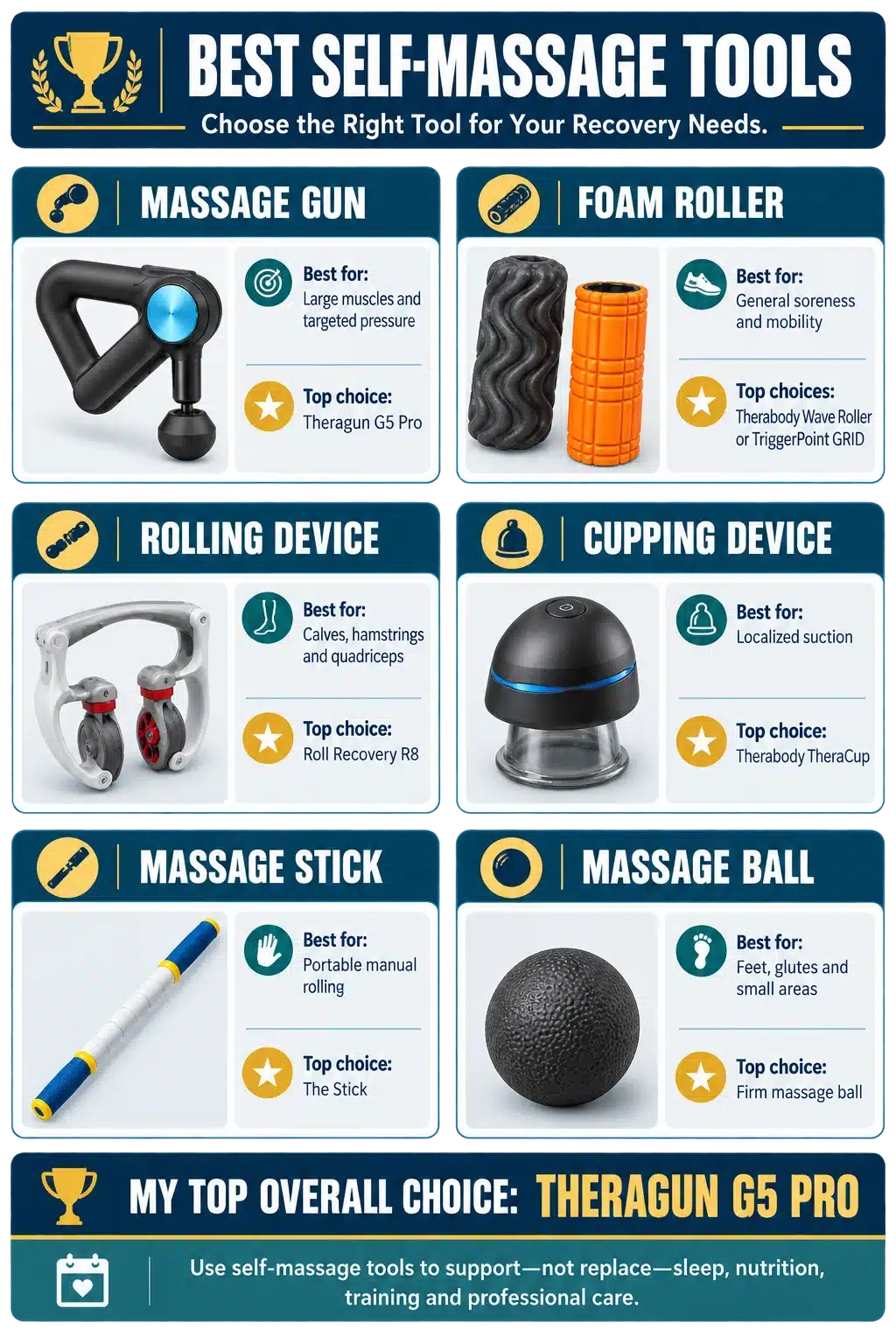
The best tool is the one that fits the body part you want to reach, the pressure you can tolerate, and how you plan to use it.
| If your main need is… | Start with… |
|---|---|
| One versatile tool for most large muscle groups | Massage gun |
| General rolling for the legs, glutes, and upper back | Foam roller |
| Frequent calf, shin, hamstring, or quadriceps work | Roll Recovery R8 |
| Neck and upper-back kneading while seated | Resteck Neck and Back Massager |
| Portable manual rolling | The Stick |
| Feet, glutes, and other small areas | Massage ball |
| At-home dry cupping | TheraCup |
If you are deciding between the two most popular options, my foam roller vs. massage gun comparison explains where each one works best.
How to Use Self-Massage Tools Effectively
Start with less pressure than you think you need. Self-massage should feel tolerable and controlled, not like a test of how much pain you can withstand.
Place the target muscle in a relaxed position and move slowly enough to notice how the area responds.
Better leverage is useful, but forcing your full body weight onto one painful point can irritate the area instead of helping it settle down.
For a general warm-up, use a foam roller or massage gun briefly and follow it with movement specific to your workout.
For recovery or relaxation, you can spend more time on the muscles that feel stiff while continuing to avoid aggressive pressure.
Do not apply a massage gun, hard roller, or massage ball directly over bones, joints, the front or sides of the neck, open wounds, recent surgical sites, or areas with unexplained swelling, numbness, or sharp pain.
Stop if the tool increases pain, causes tingling, or produces symptoms that remain after the session.
Persistent pain, a suspected muscle or tendon injury, significant bruising, or loss of strength warrants professional assessment.
Self-massage tools can support a recovery routine, but they should not be used to repeatedly suppress symptoms while an injury gets worse.
For a broader plan beyond self-massage, see my post-workout recovery tips.
Best Overall Self-Massage Tool: Theragun Massage Gun
The Theragun G5 Pro is my current massage gun and my top overall self-massage tool.
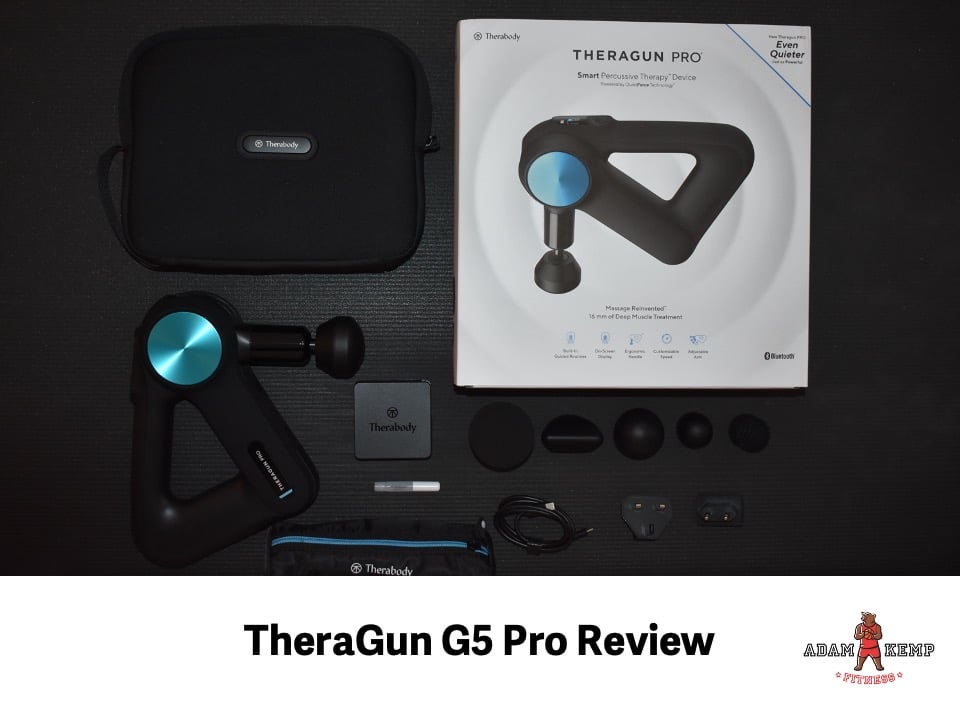
Its power, 16-millimeter amplitude, adjustable arm, multiple speeds, and interchangeable attachments make it useful for large muscle groups and smaller areas that need more targeted pressure.
I use it most often on my quadriceps, hamstrings, glutes, calves, upper back, and shoulders.
The ergonomic handle is particularly useful when I need to reach behind my body without putting my wrist in an awkward position.
You can read my complete Theragun G5 Pro review for my firsthand experience with this specific model.

Last update on 2026-09-28 / This article includes affiliate links/Images via Amazon Product Advertising API. I may earn commissions on purchases made through these links.
Theragun G5 Pro vs. Theragun PRO Plus
The Theragun PRO Plus is the newer premium model, but I currently own and use the G5 Pro.
I do not want to describe the PRO Plus as personally tested when my direct experience is with the previous generation.
The PRO Plus combines percussive massage with near-infrared LED light, heat, vibration, and an optional cold attachment.
Those added features make it the more complete device on paper, while the G5 Pro remains a powerful choice for people who mainly want deep percussive massage.
My broader Theragun review and comparison can help you decide which Theragun provides the right balance of power, features, portability, and price.

Last update on 2026-09-28 / This article includes affiliate links/Images via Amazon Product Advertising API. I may earn commissions on purchases made through these links.
Why I Recommend a Massage Gun
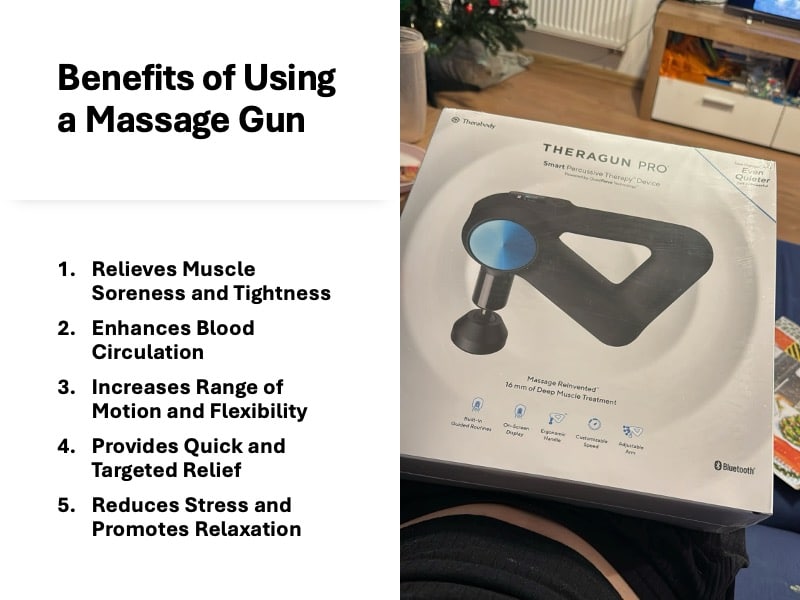
A massage gun is easier to position than a foam roller and gives you more control over speed, pressure, and the exact area being treated.
It is especially useful when you want to reach one muscle without supporting your body on the floor.
The main drawback is that greater power makes overuse easier.
My guide to the benefits of massage guns explains what percussive massage can and cannot reasonably do.
If you need a smaller and less expensive travel option, consider the Hypervolt Go 2. It is not as powerful or adjustable as my Theragun G5 Pro, but its compact size is easier to carry in a gym bag or suitcase.
Massage guns also require more caution around painful tendons and acute injuries. My guide to using a massage gun for patellar tendonitis explains why I work around the surrounding muscles instead of aggressively pressing directly onto an irritated tendon.
Best for: Athletes, lifters, and anyone who wants one powerful tool for several muscle groups.
Skip it if: You dislike strong vibration, need only occasional light pressure, or want the least expensive option.
Best Foam Roller: Therabody Wave Roller or TriggerPoint GRID
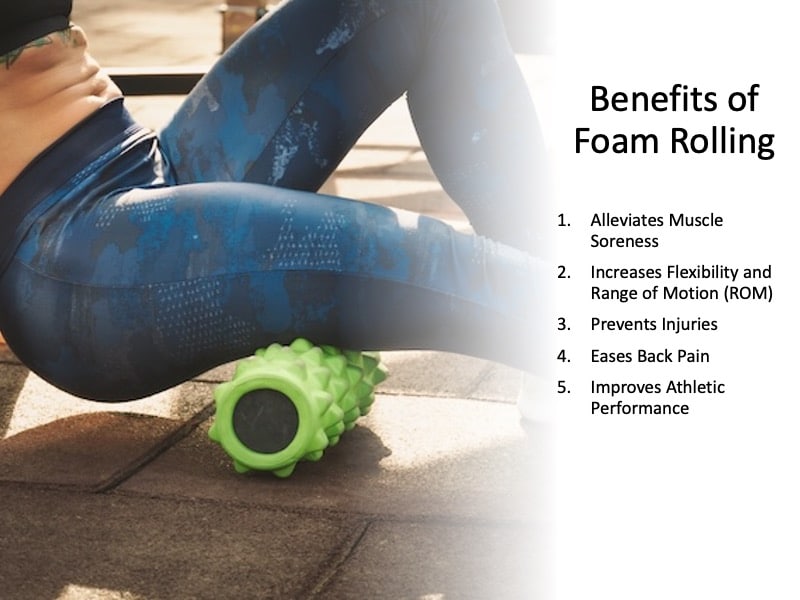
Foam rollers are simple, versatile, and generally less expensive than electronic recovery tools.
They work especially well for the quadriceps, hamstrings, calves, glutes, and upper back.
I prefer the Therabody Wave Roller when I want vibration along with rolling pressure. Its textured surface and adjustable vibration offer a different experience than a standard roller, and you can read my full Therabody Wave Roller review for more details.

Last update on 2026-09-28 / This article includes affiliate links/Images via Amazon Product Advertising API. I may earn commissions on purchases made through these links.
The TriggerPoint GRID Foam Roller is my preferred conventional option.
It is durable, compact, and firm enough to be useful without relying on aggressive spikes or an unnecessarily painful surface.

Last update on 2026-09-28 / This article includes affiliate links/Images via Amazon Product Advertising API. I may earn commissions on purchases made through these links.
Junker and Stöggl found that a four-week foam-rolling program improved hamstring flexibility to a degree comparable with contract-relax stretching in the participants they studied (Junker & Stöggl, 2015).
However, individual studies do not establish that every foam-rolling routine will create the same result.
If you are new to the method, begin with my Foam Rolling 101 guide.
You can then use my guide on how to foam rolland these foam-roller exercises for recovery and mobility to build a practical routine.
Best for: General lower-body rolling, warm-ups, and people who want a lower-cost recovery tool.
Skip it if: Getting onto the floor is difficult or you need precise pressure on a small area.
Best Lower-Body Rolling Tool: Roll Recovery R8
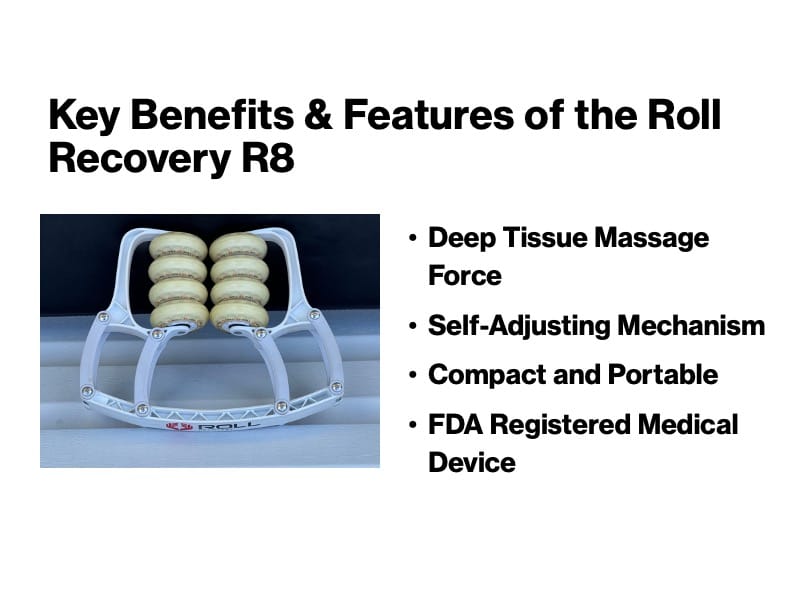
The Roll Recovery R8 is one of the best lower-body self-massage tools I have used.
I discovered it while rehabilitating a serious ankle injury during the 2015–2016 season, when tightness through my calves and lower legs was a persistent problem.
Its spring-loaded design places opposing rollers on both sides of the leg.
This gives it a mechanical advantage that is difficult to reproduce with The Stick and does not require you to support your body weight on the floor like a foam roller.
The R8 is particularly effective for the calves, shins, hamstrings, and quadriceps. It also fits in a larger gym bag, although it is bulkier and more expensive than a basic massage stick.
Its main limitation is specialization.
A massage gun can be used on more parts of the body, while the R8 is most valuable for athletes who repeatedly need lower-body work.
Best for: Runners, basketball players, cyclists, and athletes with recurring lower-leg tightness.
Skip it if: You want one tool for both the upper and lower body.

Last update on 2026-09-28 / This article includes affiliate links/Images via Amazon Product Advertising API. I may earn commissions on purchases made through these links.
Best Neck and Back Massager: Resteck Neck and Back Massager
I originally bought the Resteck Neck and Back Massager for my mother’s 60th birthday.
She enjoyed using it while sitting at her desk, and I have used it enough myself to understand why it works well for people who want kneading pressure without holding a massage gun.
The handles allow you to change the pressure by pulling forward, while the rotating nodes and heat function make it comfortable for the upper back and shoulders.
It is less useful for athletic warm-ups or precise work on the legs, but it fills a different role than the other tools on this list.
Best for: Seated use, desk workers, and people who want kneading around the shoulders and upper back.
Skip it if: You need a portable tool for several muscle groups.

Last update on 2026-09-28 / This article includes affiliate links/Images via Amazon Product Advertising API. I may earn commissions on purchases made through these links.
Best Manual Massage Stick: The Stick
Before I owned a Theragun or Roll Recovery R8, The Stick was my favorite self-massage tool.
It is affordable, portable, durable, and easy to use on the calves, quadriceps, hamstrings, and forearms.
Because you control the pressure with your hands, The Stick offers more feedback than a spring-loaded device.
The tradeoff is that producing firm pressure can become tiring, particularly when your arms are already fatigued from training.
Newer products have surpassed it for power and convenience, but The Stick still makes sense for people who want a straightforward tool without charging, batteries, apps, or electronic controls.
Best for: Travel, warm-ups, and basic manual rolling.
Skip it if: You have difficulty gripping or want hands-free pressure.

Last update on 2026-09-28 / This article includes affiliate links/Images via Amazon Product Advertising API. I may earn commissions on purchases made through these links.
Best At-Home Cupping Tool: Therabody TheraCup
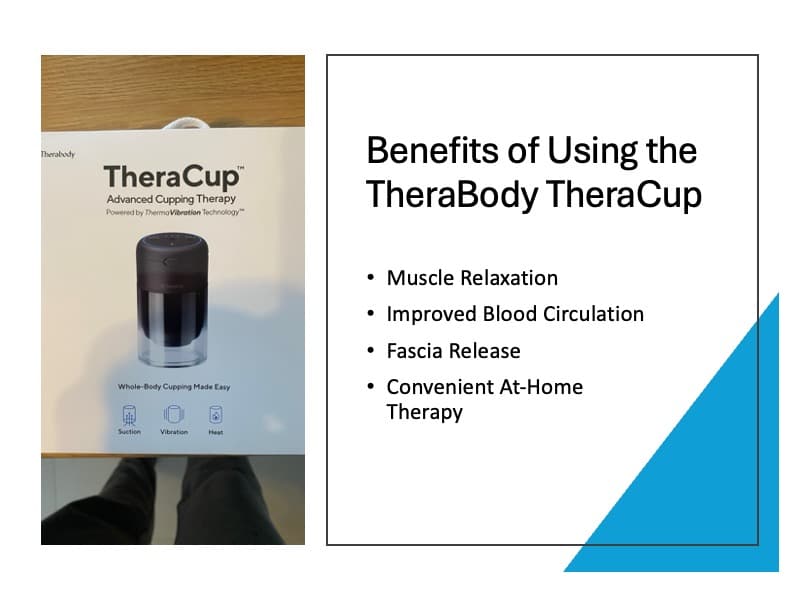
The Therabody TheraCup combines adjustable suction, heat, and vibration in a rechargeable device. Interchangeable cup sizes make it easier to use on different areas than a single traditional cup.
I like that its controls and automatic safety features make the process more consistent than improvised cupping methods.
However, cupping evidence is less dependable than product marketing often suggests.
A systematic review of dry cupping reported possible pain improvements for some musculoskeletal conditions, but the authors could not make firm conclusions about effectiveness or safety because the included evidence was only low to moderate quality (Wood et al., 2020).
Temporary circular marks, skin irritation, discomfort, and bruising are also possible.
The TheraCup should therefore be viewed as an optional comfort tool rather than a necessary recovery device.
My DIY cupping review discusses the evidence, risks, and situations where professional guidance is more appropriate.
Best for: People who already enjoy dry cupping and want a controlled home-use device.
Skip it if: You bruise easily, use blood-thinning medication, have sensitive or damaged skin, or expect cupping to heal an injury.

Last update on 2026-09-28 / This article includes affiliate links/Images via Amazon Product Advertising API. I may earn commissions on purchases made through these links.
Best Budget Tool for Small Areas: Massage Ball
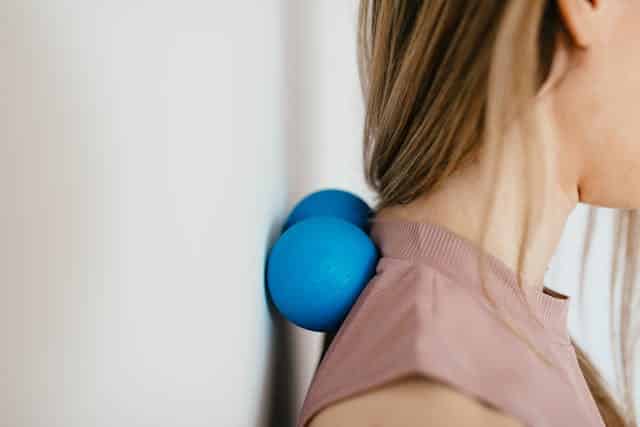
A firm massage ball is one of the cheapest ways to apply concentrated pressure to the feet, glutes, hips, shoulders, and upper back.
A lacrosse ball can work, although its hard surface may be unnecessarily painful for beginners or sensitive areas.
Place the ball between your body and a wall before trying it on the floor.
The wall makes it easier to regulate pressure and move away immediately if you experience sharp pain, numbness, or tingling.
A massage ball does not provide adjustable vibration, speed, or pressure, but it can reach areas that are awkward for a foam roller.
Softer balls are usually more appropriate for the feet and upper body, while firmer options may work better for larger muscles around the hips.
Best for: Small areas, travel, and people with a limited budget.
Skip it if: Concentrated pressure feels painful or controlling your body position is difficult.

Last update on 2026-09-28 / This article includes affiliate links/Images via Amazon Product Advertising API. I may earn commissions on purchases made through these links.
Which Self-Massage Tool Should You Buy?
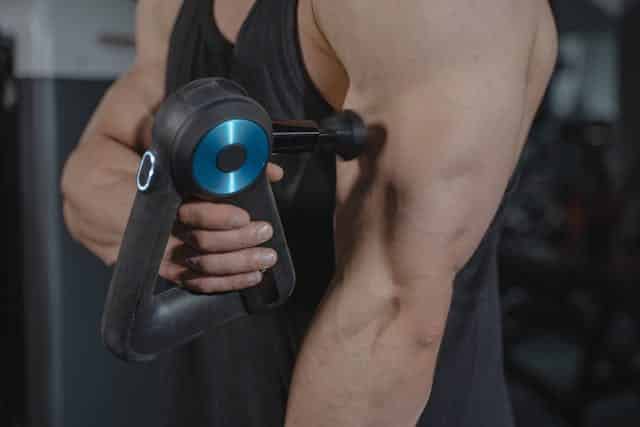
The Theragun G5 Pro is my top overall choice because it combines power, adjustability, and access to several muscle groups.
The newer Theragun PRO Plus adds more recovery features, but my recommendation is based primarily on my direct experience with the G5 Pro.
Choose the Therabody Wave Roller or TriggerPoint GRID if you want a traditional rolling routine.
Choose the Roll Recovery R8 if your main concern is frequent lower-body tightness, especially through the calves, shins, hamstrings, and quadriceps.
The Stick and a massage ball are the best lower-cost options.
The Resteck Neck and Back Massager is better for seated relaxation, while the TheraCup is a specialized option for people who already respond well to cupping.
You can also compare these products with the other devices I have tested in my complete collection of Therabody reviews.
Whichever tool you choose, use it to support good training decisions instead of covering up warning signs.
Sleep, nutrition, progressive training, and appropriate medical or rehabilitation care remain more important than any recovery device.
Frequently Asked Questions About Self-Massage Tools
Final Thoughts: Which Self-Massage Tool Should You Buy?
The best self-massage tool depends on the muscles you want to target, the pressure you prefer, your budget, and where you plan to use it.
The Theragun G5 Pro is my top overall choice because it combines power, adjustability, and access to several muscle groups.
The newer Theragun PRO Plus offers additional features, but my recommendation is based primarily on my direct experience with the G5 Pro.
Choose the Therabody Wave Roller or a standard foam roller for an affordable, versatile option for broad areas like your quadriceps, hamstrings, glutes, calves, and upper back.
My comparison of foam rollers vs. massage guns can help you decide which option better matches your recovery routine.
The Roll Recovery R8 is my preferred choice for frequent lower-body work, particularly around the calves, shins, hamstrings, and quadriceps.
The Resteck Neck and Back Massager is better suited for seated relaxation, while The Stick remains a dependable, portable option that doesn’t require charging.
A massage ball is the most affordable choice for targeting small areas such as the feet, glutes, and shoulders.
The TheraCup is a more specialized device for people who already enjoy cupping, although it should be treated as an optional comfort tool rather than an essential recovery product.
Whichever tool you choose, use it to complement sensible training, adequate sleep, proper nutrition, and professional care when necessary.
Self-massage tools can help you feel less sore or stiff, but they should not be used to conceal worsening pain or avoid having an injury properly evaluated.
This website does not provide medical advice. This website site does contain affiliate links, and purchases may earn a commission.
Read my Medical Disclaimer, Review Disclaimer, and Publishing Policies for more details. Use of this site indicates acceptance of these terms.
Check Out Some of My YouTube Videos Below, and Please Follow on YouTube for More Educational Health and Fitness Content!