How to Increase Grip Strength
 Reading Time: 7 minutes
 Grip strength plays a much larger role in human health and performance than most people realize, and learning how to increase grip strength can directly impact longevity, athleticism, and daily function.
Studies show that grip strength is strongly associated with overall health status and even long-term mortality risk, making it a reliable measure of physical capability and resilience (Bohannon, 2019).
A strong grip improves sports performance, protects against upper body injuries, and makes everyday tasks easier, especially as people age and naturally lose hand strength.
Because the hands and forearms are involved in nearly every physical movement, training them properly results in strength improvements that carry over to nearly every other lift, sport, and functional task.
Even a few minutes per week of targeted exercises and strategic tool use can produce meaningful improvements in hand, wrist, and forearm capacity, making it easier to increase grip strength at any fitness level.
Benefits of Good Grip Strength: Why is Grip Strength Important
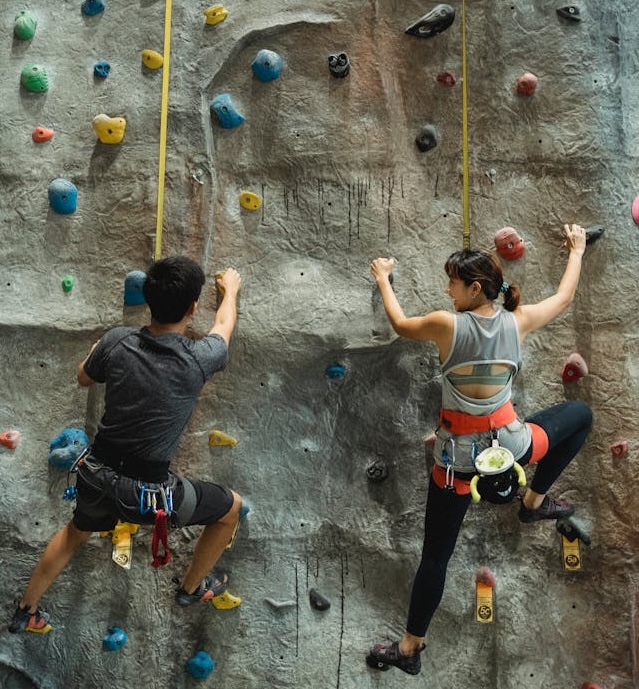
Good grip strength influences far more than athletic performance, serving as a marker of overall health, functional capability, and injury resilience.
It reflects how well the body can generate force, maintain stability, and perform daily tasks without pain or limitation.
These benefits make it easy to understand why grip strength is important for long-term physical performance and healthy aging (Lawman et al., 2016).
Reduced Risk of All-Cause Mortality
Research indicates that grip strength is a primary predictor of all-cause mortality, with weaker grip strength associated with a higher mortality risk (Lu et al., 2022).
It’s also a key metric for identifying older adults at risk of poor health, as better grip strength often correlates with increased physical activity, better physical function, and fewer chronic diseases (Bohannon, 2019).
Improved Sports Performance
In sports, strong grip strength enhances performance in activities like rock climbing, wrestling, gymnastics, golf, basketball, football, hockey, and baseball.
Reduced Upper Body Injury Risk
Good grip strength helps reduce the risk of common injuries by providing better control and stability, thus preventing slips and injuries to the wrist, elbow, and shoulder.
Improved Strength for Everyday Tasks
Lastly, improved grip strength makes it easier to perform everyday tasks such as carrying groceries, opening jars, and turning doorknobs, which is especially important for older adults, who often experience a decline in grip strength as they age.
Best Grip Strength Exercises
Whether you are an athlete or just looking to improve your overall health and fitness, I believe these are the best grip strength exercises.
Deadlifts
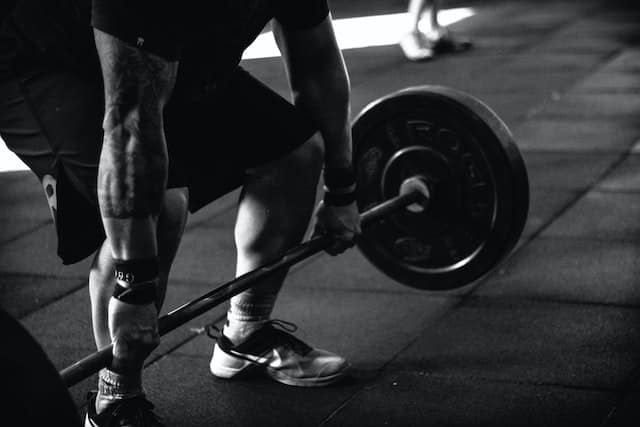
Deadlifts are a compound exercise targeting multiple muscle groups, including the back, legs, and grip muscles.
They significantly improve grip strength because they require a firm grip on the barbell throughout the exercise.
The grip muscles work harder as the weight increases, stimulating greater strength and endurance.
The double overhand grip is the most challenging variation, demanding a firm grip with both hands.
The mixed grip, with one hand overhand and the other underhand, allows for lifting heavier weights but may cause muscular imbalances.
Farmer’s Walks
Farmer’s walks are a simple yet effective exercise that improves grip strength, endurance, and overall physical performance.
This exercise involves picking up heavy objects in each hand and walking for a set distance or time while maintaining a firm grip.
The primary benefit is the significant demand placed on the grip muscles, which enhances strength and endurance.
Additionally, farmer’s walks engage multiple muscle groups, including the back, core, legs, and forearms, providing a full-body workout.
Variations include using dumbbells or kettlebells for greater range of motion and challenge or a trap bar for a more natural grip position.
To perform the exercise, squat down to grab the weights with an overhand grip, stand up, and walk forward, keeping a stable posture and the weights close to the body.
Wrist Curls
Wrist curls are a popular exercise to develop grip strength and forearm size, performed with a barbell, dumbbells, or resistance bands.
The movement involves holding a weight with an overhand grip and curling the wrists upward, targeting the wrist flexors.
Wrist curls are easy to perform, require minimal equipment, and can be done anywhere with varying weights, making them accessible to all fitness levels.
Adjusting the weight, repetitions, and sets allows for customization.
Pull-ups, Chin-ups, and Inverted Rows
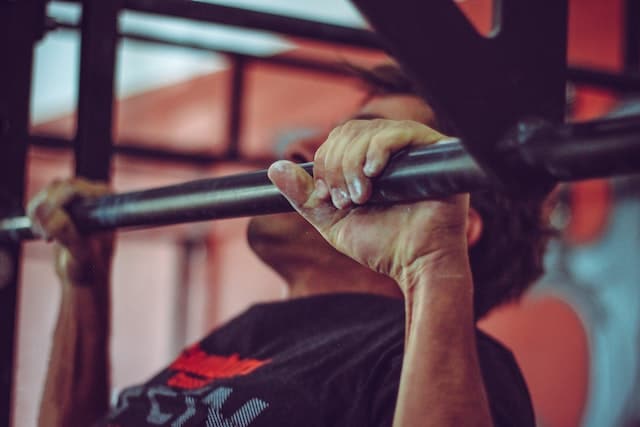
Pull-ups, chin-ups, and inverted rows are all effective exercises for improving grip strength.
These exercises work the muscles in the hands, forearms, and upper back, which are important for developing a strong grip and maintaining good posture.
By gripping the bar tightly during the exercise, the muscles in the hands and forearms are forced to work harder, which can help improve grip strength over time.
When performed correctly, pull-ups, chin-ups, and inverted rows can help improve grip strength and overall upper body strength.
Rock Climbing
Rock climbing is one of the most effective and engaging ways to improve grip strength because it forces the fingers, hands, and forearms to generate constant tension while supporting bodyweight.
Climbers develop exceptional grip endurance and finger strength due to the continuous need to pinch, pull, and hold onto small surfaces for extended periods (Phillips et al., 2012).
Even beginners experience rapid improvements in hand and forearm strength because each route demands different grip patterns, including open-hand grips, fingertip holds, and crimp grips that cannot be fully replicated with traditional gym equipment.
Also, you do not need to climb outdoors to access these benefits.
Indoor rock climbing facilities offer bouldering walls and top-rope climbing routes that allow you to practice regularly in a safe and controlled environment.
Many climbing gyms also include hang boards and grip-training tools designed specifically to build finger and forearm strength, making them a valuable addition to a grip-focused training program.
Whether you climb outdoors on natural rock or indoors on artificial holds, the sport provides a highly effective, practical, and mentally stimulating way to improve grip performance while also training balance, core strength, mobility, and problem-solving skills.
Best Grip Strengthener Tools
Using specialized tools is one of the most direct and quickest ways to improve your grip strength.
Fat Gripz
Fat Gripz are a popular training tool designed to improve grip strength by increasing the diameter of standard barbells, dumbbells, and other exercise equipment, making them thicker and more challenging to hold.
This added difficulty forces the hands and forearms to work harder, enhancing grip strength and overall physical performance.
Using Fat Gripz during exercises like bicep curls and bench presses activates the grip muscles more intensely, stimulating greater muscle growth and strength in the hands, forearms, and upper body.
They also help improve grip endurance, allowing for a strong grip over extended periods.
Training with Fat Gripz can prevent injuries related to grip strength, such as hand and wrist strain, tendonitis, and carpal tunnel syndrome.
Lastly, they are useful for rehabilitation, helping individuals with conditions like arthritis improve grip strength, reduce pain, and increase mobility.

Last update on 2026-09-13 / This article includes affiliate links/Images via Amazon Product Advertising API. I may earn commissions on purchases made through these links.
Hand Grippers
Hand grippers are a popular tool for improving grip strength, favored by athletes, weightlifters, and fitness enthusiasts.
These handheld devices target the muscles in the hands, fingers, and forearms, providing effective resistance training.
The resistance can be adjusted to suit individual strength levels, making them versatile for all users.
Hand grippers are convenient and portable, allowing for grip training anywhere.
Their small, lightweight design makes them easy to carry in a gym bag or pocket for quick sessions throughout the day.
To use hand grippers, select the appropriate resistance level.
Hold the device in one hand, squeeze the handles together using hand and forearm muscles, hold for a few seconds, and then release.
Repeat for several sets of 10-15 repetitions, gradually increasing resistance as strength improves.

Last update on 2026-09-13 / This article includes affiliate links/Images via Amazon Product Advertising API. I may earn commissions on purchases made through these links.
Final Thoughts: Keys to Improving Grip Strength
Improving grip strength becomes much easier when training is consistent, varied, and focused on progressive challenge.
A combination of direct exercises, compound lifts, and grip-specific tools builds balanced strength across the hands, wrists, and forearms, helping you make measurable progress over time.
Small daily habits such as carrying groceries without straps, squeezing a hand gripper while walking, or hanging from a pull-up bar can create meaningful improvements without adding major time to your workouts.
The most effective strategy is to train grip strength just like any other muscle group: gradually increase resistance, track progress, and give your hands time to recover.
These principles help reinforce the connection between grip strength and overall physical health, making strong hands and forearms a long-term asset for athletic performance and everyday life.
This website does not provide medical advice. This website site does contain affiliate links, and purchases may earn a commission.
Read my Medical Disclaimer, Review Disclaimer, and Publishing Policies for more details. Use of this site indicates acceptance of these terms.