What Is Ghee? Benefits, Uses, and Nutrition Facts
 Reading Time: 8 minutes
 Ghee, also known as clarified butter, originates from Ayurvedic traditions and is created by simmering butter to remove water and separate the milk solids.
This process results in a product that is essentially “butter oil,” rich in beneficial fats and devoid of moisture and milk proteins.
According to the journal Ayurveda, ghee is considered the healthiest source of edible fat due to its high concentration of essential nutrients and fat-soluble vitamins, such as Vitamin A, E, and K (Sharma et al., 2010).
Ghee also has a higher smoke point compared to butter and many other oils, making it safer for cooking at high temperatures and reducing the risk of oxidized fats, which can create harmful free radicals.
My wife, Anna, was the first to introduce me to ghee, as it’s traditionally used in her home country of Kazakhstan.
The first ghee I ever tried was actually homemade because, back in 2016 or 2017, it wasn’t readily available in stores like it is today.
We made it ourselves when she wanted to share it with me, and I’ve loved it ever sincw.
Now, I’m glad it’s easy to find in grocery stores worldwide!
Whether you’re looking to increase flavor, improve digestion, or cook with a more stable and nutrient-dense fat, ghee offers benefits that extend far beyond the kitchen.
What is Ghee?

As mentioned before, ghee is a type of clarified butter that has its roots in traditional Ayurvedic medicine.
It is made by simmering butter until the water evaporates and the milk solids separate, leaving behind pure butterfat.
This process results in a rich, nutty-flavored oil that is highly valued for its culinary and medicinal properties.
Nutritional Properties of Ghee

Ghee is packed with essential nutrients that make it a valuable addition to a balanced diet.
It’s composed almost entirely of healthy fats, primarily saturated and monounsaturated fatty acids, which serve as a vital energy source and support hormone production.
One tablespoon of ghee provides roughly 120 calories and 13–14 grams of fat, with zero carbohydrates and proteins.
This makes it suitable for ketogenic, low-carb, and paleo-style diets.
Ghee also contains small amounts of short-chain and medium-chain fatty acids, such as butyric acid, which promote gut health and reduce inflammation (Canani et al., 2011).
Additionally, ghee is rich in fat-soluble vitamins A, D, E, and K, which are crucial for vision, immune function, bone health, and cardiovascular wellness.
Its conjugated linoleic acid (CLA) content, especially when made from grass-fed butter, has been linked to improved metabolism, reduced body fat, and anti-inflammatory effects (Bhattacharya et al., 2006).
Because ghee is free of lactose and casein, it’s easier to digest than regular butter, making it an excellent choice for those with mild dairy sensitivities.
When consumed in moderation, ghee supports energy, digestion, and overall wellness as part of a nutrient-dense diet.
Health Benefits of Ghee: Why Is Ghee Good for You?

Ghee provides a range of science-backed health benefits that make it one of the most valuable natural fats in modern nutrition.
High Butyrate Concentration
One of the key reasons ghee supports wellness is its high concentration of butyrate, a short-chain fatty acid that plays a vital role in maintaining gut health.
Butyrate nourishes the cells of the intestinal lining, reduces inflammation, and supports a balanced microbiome, all of which contribute to improved digestion and immune function (Canani et al., 2011).
CLA
Ghee also contains Conjugated Linoleic Acid (CLA), particularly when made from grass-fed butter.
CLA has been associated with improved body composition, reduced fat accumulation, and better metabolic health (Bhattacharya et al., 2006).
Fat-Soluble Vitamin Content
In addition, ghee is rich in fat-soluble vitamins A, E, and K, which help maintain skin health, vision, hormone balance, and cardiovascular function.
Lactose & Casein Free
Because ghee is free of lactose and casein, it’s often better tolerated than butter for those with mild dairy sensitivities.
Antioxidants
Its anti-inflammatory and antioxidant properties also make it a smart choice for supporting long-term wellness.
For those looking to nourish their bodies with clean, nutrient-rich energy, ghee is one of the most effective and natural sources of healthy fats.
How to Use Ghee in Your Cooking
Ghee’s unique texture and flavor make it an incredibly versatile cooking fat. Its high smoke point (around 450°F or 230°C) means it remains stable during high-heat cooking, unlike many oils that oxidize and form harmful compounds.
This makes ghee perfect for frying, sautéing, roasting, or even searing meats and vegetables to achieve a crispy, flavorful finish.
My wife, Anna, originally from Kazakhstan, uses ghee in nearly all her cooking.
In her country, ghee is a staple ingredient prized for both its taste and nutritional value.
She first introduced me to ghee back in 2016 or 2017 when it wasn’t commonly available in stores.
We made our own batch at home, and I immediately loved it.
Since then, we’ve replaced butter and other oils with ghee in many of our meals.
Beyond savory dishes, ghee adds richness to baked goods, oatmeal, pancakes, and even coffee or tea.
It provides a smooth, nutty flavor that enhances both sweet and savory recipes while boosting their nutritional content.
Whether you’re preparing traditional recipes or experimenting with modern meals, using ghee can elevate flavor, support digestion, and bring a touch of authentic nourishment to your kitchen.
Is Ghee Dairy Free?
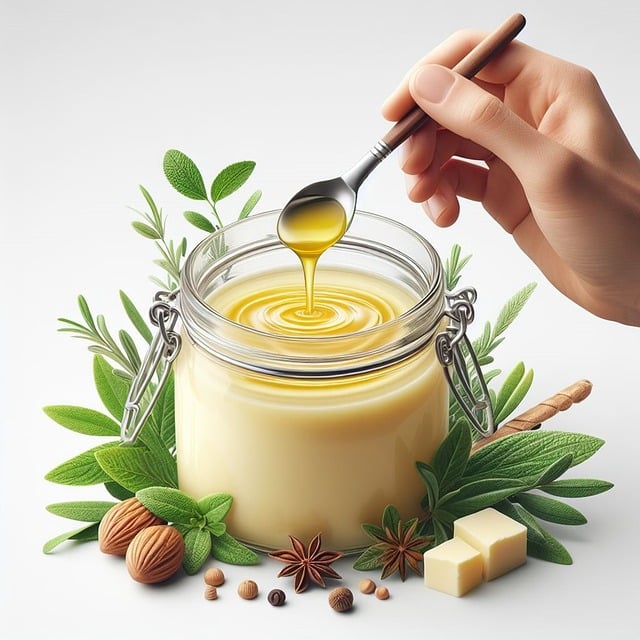
Ghee is dairy free.
One of the key benefits of ghee is that it does not contain lactose or casein, the primary components that make traditional dairy products problematic for those with lactose intolerance or dairy sensitivities.
The process of making ghee removes these elements, making it a suitable alternative for those who avoid dairy.
Is Ghee Vegan?
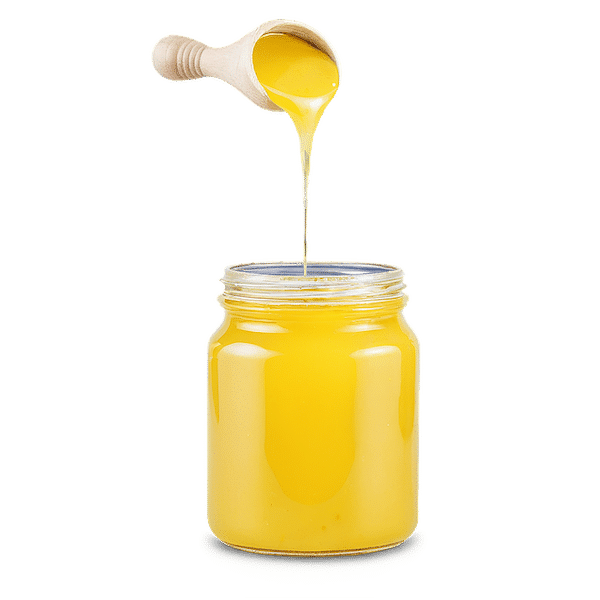
Ghee is not vegan. Although the process of making ghee removes lactose and casein, it is still derived from butter, a product of animal origin.
Therefore, ghee does not align with vegan dietary principles, which exclude all animal products.
Vegans typically seek plant-based alternatives such as coconut oil, avocado oil, or vegan butter substitutes to achieve similar cooking properties and flavors without using animal-derived ingredients.
Ghee vs Butter: Is Ghee Healthier Than Butter?

Ghee offers several health advantages over traditional butter:
- Higher Smoke Point: Ghee can withstand higher cooking temperatures without burning, which helps preserve its nutritional content and flavor.
- Lactose and Casein Free: Ideal for individuals with dairy sensitivities or lactose intolerance.
- Rich in Nutrients: Ghee contains fat-soluble vitamins and Conjugated Linoleic Acid (CLA), which is beneficial for weight management and overall health.
- Enhanced Flavor: The process of making ghee from high-quality, grass-fed butter enhances its taste and nutritional profile.
Switching from butter to ghee can be an effortless way to enhance your diet and overall health, providing you with a nutrient-rich, dairy-free alternative that is both delicious and beneficial.
What Does Ghee Taste Like?
Ghee has a rich, nutty, and slightly caramelized flavor that sets it apart from regular butter.
The process of simmering butter to remove its water and milk solids gives ghee a deeper, more complex taste that feels both savory and slightly sweet.
In my experience, ghee is far more flavorful than butter, and it almost tastes like movie theater butter, but it’s real, natural, and nutrient-dense!
The aroma is warm and toasty, and its smooth texture improves both savory and sweet dishes.
Whether drizzled over vegetables, spread on toast, or used for frying, ghee adds a distinctive richness that elevates everyday meals into something special.
How to Make Ghee

Making ghee at home is surprisingly simple, allowing you to control the quality of the ingredients while ensuring a rich, authentic flavor.
All you need is unsalted butter, a saucepan, and a fine-mesh strainer or cheesecloth.
Using grass-fed butter provides the best nutritional profile, as it contains higher levels of conjugated linoleic acid (CLA) and fat-soluble vitamins.
Step-by-Step Instructions
- Start with high-quality butter: Place 1 pound (about 450 grams) of unsalted, grass-fed butter in a heavy-bottomed saucepan. Avoid salted butter, as it can affect both flavor and clarity.
- Melt the butter slowly: Heat the butter over medium-low heat until it fully melts. Once melted, reduce the heat to low. The butter will begin to bubble as water evaporates and milk solids start to separate.
- Simmer and clarify: Continue to simmer gently for about 15–25 minutes. You’ll notice three layers forming: foam on top, clarified golden liquid in the middle, and milk solids settling at the bottom. The ghee is ready when the bubbling slows and the milk solids turn a light golden brown.
- Strain and store: Remove from heat and let it cool for a few minutes. Carefully pour the liquid through a cheesecloth or fine-mesh strainer into a clean, dry glass jar. Discard the browned milk solids.
- Cool and seal: Allow the ghee to cool completely before sealing the jar. Store it at room temperature or in the refrigerator for a longer shelf life. Properly made ghee can last for several months without spoiling due to its lack of water content.
Tips for Perfect Homemade Ghee
- Use low heat: Slow cooking prevents burning and enhances the nutty flavor.
- Avoid stirring: This keeps the milk solids from mixing back into the fat.
- Watch for the aroma: Ghee is ready when it smells rich and slightly caramelized.
- Storage: Always use a dry spoon when scooping ghee to prevent contamination.
Homemade ghee captures the essence of traditional Ayurvedic preparation; pure, golden, and nutrient-rich.
It’s more flavorful than store-bought versions and allows you to enjoy the same wholesome fat that’s been used in cooking and medicine for centuries.
This website does not provide medical advice. This website site does contain affiliate links, and purchases may earn a commission.
Read my Medical Disclaimer, Review Disclaimer, and Publishing Policies for more details. Use of this site indicates acceptance of these terms.
Check Out Some of My YouTube Videos Below, and Please Follow on YouTube for More Educational Health and Fitness Content!
![Subscribe to @AdamKempFitness for more training, general health, recovery, and nutrition tips from a professional basketball player with a master’s degree in Nutrition Education! 🏀💪
Seated Max Vertical Jumps From a Box are one way I train explosive takeoff power with maximum intent on every rep.
Starting seated, with a pause and minimal rocking or dipping, reduces the contribution of a quick countermovement and emphasizes producing force from a relatively static position (National Strength and Conditioning Association [NSCA], 2020).
For athletes, the training goal is explosive lower-body force production and coordinated extension through the hips, knees, and ankles. I use this variation to practice driving hard into the floor and accelerating my body upward.
My preferred setup: 3 sets of 3 reps or 4 sets of 2 reps, supersetted with a strength or power exercise.
I keep the reps low, reset between jumps, and take longer rest periods so I’m ready to attack every takeoff. Even when pairing exercises, I give myself enough recovery to keep the jumps sharp.
Every rep has one goal: jump as high as possible. I focus on an explosive takeoff, a controlled landing, and consistent quality throughout the session.
Save this for your next power workout! 🚀
Reference: NSCA. (2020). Stretch-shortening cycle.
#VerticalJump #JumpTraining #ExplosivePower #AthleticPerformance #BasketballTraining](https://www.adamkempfitness.com/wp-content/plugins/feeds-for-youtube/img/placeholder.png)