How to Foam Roll for Better Performance & Recovery
 Reading Time: 12 minutes
 After over a decade playing professional basketball across Europe, I’ve learned that recovery is as important as training itself, and one of the most overlooked yet effective techniques for exercise recovery is understanding how to foam roll properly.
At 33 years old, after years of pushing my body through intense practices, travel, and competition, I realized that the foam roller wasn’t just a warm-up tool; it’s incredibly effective for maintaining tissue health, improving circulation, and reducing chronic tightness that builds up over time.
Foam rolling, also known as self-myofascial release, works by applying pressure to the fascia and muscles, breaking up adhesions and improving mobility.
It’s an accessible, evidence-based method that can increase flexibility, prevent injuries, and improve overall athletic performance when used consistently (Cheatham et al., 2015).
Whether you’re an athlete, weekend warrior, or simply someone looking to move and feel better, learning how to foam roll correctly can dramatically improve your recovery, mobility, and long-term physical performance.
What is Foam Rolling?
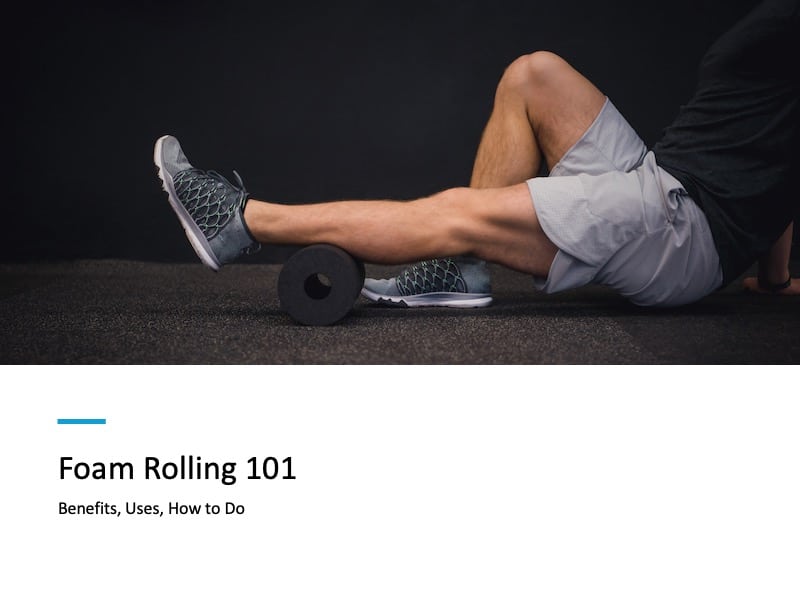
Foam rolling, also known as self-myofascial release, is a form of self-massage that helps relieve muscle tightness, improve mobility, and enhance recovery.
It involves using a cylindrical piece of foam (a foam roller) to apply gentle pressure to muscles and connective tissue, breaking up adhesions and knots that can restrict movement and cause discomfort.
When you roll slowly over different muscle groups, the pressure stimulates blood flow, improves oxygen delivery, and promotes the removal of metabolic waste products.
This is similar to the effects of a sports massage.
Studies have shown that consistent foam rolling can improve flexibility, reduce delayed-onset muscle soreness (DOMS), and support faster recovery after exercise (Wiewelhove et al., 2019).
In simple terms, foam rolling helps your body move better and recover faster by keeping your muscles healthy and supple.
It’s a low-cost, time-efficient method that anyone can use to prepare for workouts or improve recovery afterward.
Benefits of Foam Rolling
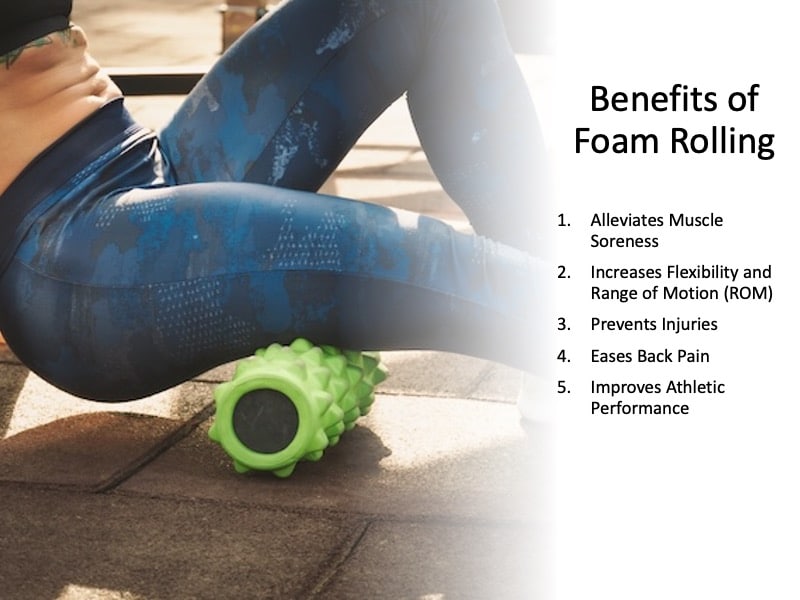
Foam rolling is one of the most effective recovery and performance tools you can add to your training routine.
It acts as a form of self-massage therapy, targeting the connective tissue (fascia) surrounding your muscles to reduce tightness, improve blood flow, and restore healthy movement patterns.
When performed before exercise, foam rolling helps “wake up” your muscles by stimulating circulation and preparing your body for movement.
This primes the neuromuscular system, increases range of motion, and improves muscle activation, which are key factors for improving strength, power, and coordination (Behm & Wilke, 2019).
Foam rolling after training or on rest days can also help you recover faster after exercise by reducing delayed-onset muscle soreness (DOMS) and alleviating stiffness.
Personally, I include 15-20 minutes of foam rolling on my off days and even before bed to help my body relax, release built-up tension, and prevent overuse injuries that accumulate throughout a long basketball season.
Here is some more information on the benefits of foam rolling:
Improved Circulation
Foam rolling boosts blood flow and oxygen delivery to working muscles, promoting faster nutrient exchange and waste removal.
This increased circulation supports muscle repair and reduces inflammation.
Increased Flexibility and Mobility
By applying controlled pressure to the fascia, foam rolling helps lengthen muscle fibers and improve joint mobility.
Over time, it leads to smoother, more efficient movement and reduced stiffness.
Reduced Muscle Soreness
Research has shown that foam rolling can significantly reduce post-workout soreness and discomfort by breaking up adhesions and speeding up muscle recovery (Wiewelhove et al., 2019).
Injury Prevention
Tight or immobile muscles often contribute to overuse injuries and muscle imbalances.
Consistent foam rolling keeps tissues pliable and responsive, lowering the likelihood of strains or movement restrictions.
Faster Recovery
Incorporating foam rolling into your post-workout or evening routine accelerates recovery by reducing muscle tension and supporting optimal tissue health, thus helping you feel looser, lighter, and more ready for your next session.
How to Foam Roll Properly
Learning how to foam roll properly ensures you get the maximum benefit from this simple recovery technique.
Each muscle group requires slightly different positioning and pressure to effectively release tightness, improve circulation, and enhance mobility.
Move slowly, breathe deeply, and spend at least 30 to 60 seconds on each area.
You can roll longer if you find a particularly tight spot.
How to Foam Roll the Calves
Sit with your legs extended and place the foam roller underneath your calves.
Lift your hips slightly off the ground using your hands and roll slowly from your ankles to just below your knees.
Rotate your legs inward and outward to target all sides of the calf muscles.
This movement improves circulation in the lower legs and helps alleviate tightness caused by running, jumping, or long periods of standing.
- Pro Tip: For deeper pressure, try crossing one leg over the other while rolling.
- Best Foam Roller Alternative for Calves: The Roll Recovery R8 is excellent for athletes who need targeted calf compression and quick relief.
How to Foam Roll the Hamstrings
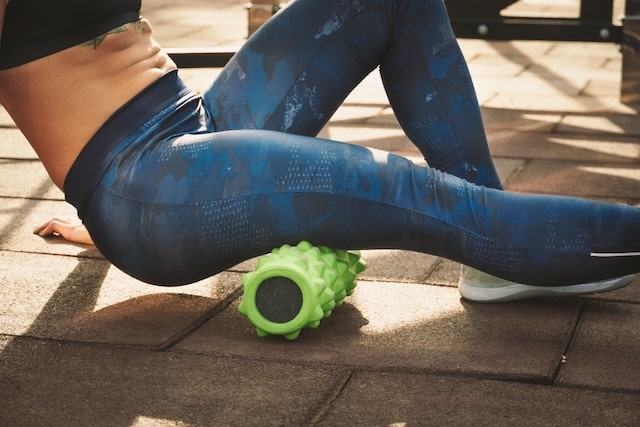
Foam rolling is one of the best ways to deal with chronic hamstring tightness.
To foam roll your hamstrings, sit on the floor and position the foam roller beneath your thighs.
Support your body weight with your hands behind you and gently roll from just above the back of your knees up to your glutes.
Move slowly to identify tender areas and pause on any knots or tight bands for 20–30 seconds.
Foam rolling the hamstrings improves flexibility and supports hip mobility, both of which are essential for proper movement mechanics and injury prevention.
- Bonus Tip: Use a textured or spiked roller to reach deeper layers of muscle tissue when dealing with stubborn hamstring tension.
How to Foam Roll the Quadriceps
Lie face down with the foam roller positioned beneath your thighs.
Use your forearms to slowly move your body forward and backward, rolling from your hip flexors down to just above the knees.
Avoid rolling directly over the kneecap.
You can also rotate your legs like windshield wipers over tight spots to promote additional fascia mobilization.
Foam rolling the quadriceps helps improve knee stability and can reduce post-workout soreness, especially after squats, lunges, or sprinting sessions.
- Pro Tip: Turn your toes slightly inward and outward during the roll to reach different sections of the quads.
- Best Foam Roller Alternative for Quads: TheraGun or similar percussive massager for targeted deep-tissue work.
How to Foam Roll the Upper Back
Lie on your back and place the foam roller under your upper or mid-back.
Cross your arms over your chest or place your hands behind your head to open the shoulder blades.
- Lift your hips slightly and roll from your upper back to your mid-back, stopping before you reach the lower back.
Foam rolling this area helps improve posture, alleviate shoulder tension, and enhance thoracic spine mobility—crucial for athletes and anyone who spends long hours sitting.
Bonus Tip: Try a vibrating roller like the Therabody Wave Roller to increase relaxation and improve blood flow.
How Long Should You Foam Roll For?
The amount of time you spend foam rolling depends on your goals—whether you’re preparing for a workout or focusing on recovery afterward.
In general, short and focused sessions before training help “wake up” your muscles and improve circulation, while longer sessions after workouts or on rest days allow for deeper tissue release and relaxation.
Research suggests that spending 5 to 10 minutes on pre-workout foam rolling can enhance range of motion and athletic performance, while 15 to 20 minutes of post-workout rolling can significantly reduce muscle soreness and improve recovery (Cheatham et al., 2015).
The key is consistency, as regular foam rolling, even for just a few minutes per day, can produce lasting improvements in mobility, performance, and overall well-being.
Pre-Workout Foam Rolling
A quick 5–8 minute foam rolling session before exercise can make a noticeable difference in how your body performs.
Pre-workout foam rolling improves circulation, reduces muscular stiffness, and prepares your nervous system for movement.
Here’s how to foam roll before workouts effectively:
- Choose the Right Foam Roller: Beginners should start with a softer roller, while experienced athletes can use a firmer or textured one for deeper pressure.
- Target Major Muscle Groups: Focus on high-use areas like the calves, quads, hamstrings, glutes, adductors, and back.
- Move Slowly: Roll each area for 1–2 minutes, allowing the muscles to relax into the pressure.
- Pause on Tight Spots: When you find a tender area, hold for 20–30 seconds until the discomfort eases.
- Breathe Deeply: Controlled breathing helps your muscles relax and increases the effectiveness of each roll.
A short foam rolling warm-up primes your body for explosive, coordinated movement while reducing your risk of injury.
General Recovery Foam Rolling
For post-workout recovery and overall muscle health, I suggest dedicating 15–20 minutes to a full-body foam rolling session.
Longer, slower sessions that incorporate a more diverse range of foam roller exercises help break up muscle adhesions, improve tissue quality, and promote relaxation throughout your entire body.
Here’s a simple structure for an effective recovery routine:
- Warm-Up (2–3 Minutes): Begin with light rolling on your upper back and shoulders to increase circulation.
- Focus on Problem Areas: Spend extra time on tight or sore muscles, such as the hamstrings, quads, or hip flexors, rolling each for 3–4 minutes.
- Cover the Entire Body: Include all major muscle groups, from the calves and glutes to the lats and shoulders.
- Use Technique Variations: Try cross-fiber rolling (rolling side to side instead of straight up and down) to reach deeper muscle layers.
- Finish Calmly: End with gentle, rhythmic rolling to relax the muscles and soothe your nervous system. Follow with light stretching for enhanced recovery.
For guided routines, I personally recommend the Full Body Foam Rolling Program: Chop Wood Carry Water by Amoila Cesar on the Team Beachbody BODi App.
This 25-minute foam rolling routine blends perfectly with any workout program and helps maintain tissue health.
Should You Foam Roll Before or After a Workout?
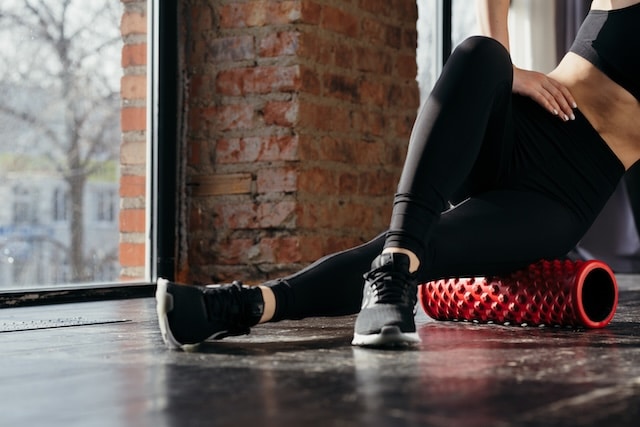
Foam rolling can be beneficial both before and after exercise, but the timing determines its primary effect. Understanding when to foam roll depends on whether your goal is performance enhancement or recovery and relaxation.
Before a workout, foam rolling prepares your muscles and joints for movement. It increases blood flow, improves tissue elasticity, and activates the nervous system, which helps you move more efficiently and reduces injury risk.
Research indicates that pre-workout foam rolling can improve range of motion without reducing strength or power output (Behm & Wilke, 2019).
Pairing it with dynamic stretching creates an ideal warm-up routine that boosts mobility and performance.
After a workout, foam rolling supports recovery by alleviating muscle tension and minimizing delayed-onset muscle soreness (DOMS). It encourages lymphatic flow and helps flush out metabolic waste accumulated during training, promoting faster recovery and reduced stiffness in the following days (Wiewelhove et al., 2019).
Key Points: Foam rolling is effective both before and after exercise, just with different goals. Use short, active sessions before workouts to improve performance, and longer, slower sessions afterward to accelerate recovery and relaxation.
How Long Does it Take for Foam Rolling to Work?
The benefits of foam rolling can often be felt immediately, but lasting results come with consistency.
Many people notice improvements in flexibility, reduced muscle tightness, and a greater sense of mobility after just one session.
This is because foam rolling improves blood flow, reduces neuromuscular tension, and temporarily increases range of motion (Cheatham et al., 2015).
However, sustained improvements, like reduced chronic stiffness, better posture, and long-term mobility gains, typically develop after 2 to 4 weeks of regular use.
Performing foam rolling at least 3 to 5 times per week has been shown to improve muscle recovery, decrease soreness, and support overall performance over time (Wiewelhove et al., 2019).
The key is to make foam rolling a consistent habit rather than an occasional fix.
Incorporate it into your warm-up before training and again during recovery days or before bed.
Just a few minutes of focused rolling each day can lead to lasting improvements in movement quality, recovery speed, and overall well-being.
What Foam Roller Should You Use?
Choosing the right foam roller can significantly enhance your foam rolling experience and outcomes.
I always use a variety of self massage tools during my recovery workouts, and I own 4-5 different types of foam rollers.
With various options available on the market, it’s important to select one that suits your specific needs and preferences.
Each of these foam rollers offers distinct features and benefits.
- The Theragun Wave Roller is ideal for those seeking advanced muscle relief with customizable vibration settings, though it comes at a higher cost.
- The AmazonBasics High-Density Foam Roller is perfect for budget-conscious users looking for a durable and straightforward option.
- The TriggerPoint Grid Foam Roller strikes a balance between advanced features and affordability, making it a versatile choice for all levels.
By selecting the appropriate foam roller, you can enhance your recovery routine and achieve better performance and overall well-being.
TheraBody Wave Roller
I own a TheraBody Wave Roller, and it is my favorite foam roller for my upper back, mid-back, lats, and quads.
Features:
- Vibrating Technology: The Theragun Wave Roller incorporates vibration to enhance muscle relaxation and increase blood flow.
- Bluetooth Connectivity: Allows you to control the roller’s settings via a smartphone app, offering a customizable experience.
- High-Density Foam: Provides a firm surface for deeper muscle penetration.
- Battery Life: Offers up to 3 hours of use on a single charge.
Pros:
- Effective for deep tissue massage and intense muscle relief.
- Customizable settings for different intensity levels.
- Long battery life for extended use.
Cons:
- Higher price point compared to basic foam rollers.
- Requires charging and maintenance.
- Not very dense.


Last update on 2026-02-02 / This article includes affiliate links/Images via Amazon Product Advertising API. I may earn commissions on purchases made through these links.
AmazonBasics High-Density Round Foam Roller
I haven’t used this foam roller before, but it appears to be a great, affordable option.
Features:
- High-Density Foam: Durable and provides firm support for all body types.
- Simple Design: No-frills, straightforward roller suitable for beginners and advanced users.
- Various Sizes: Available in multiple lengths to suit different needs.
Pros:
- Affordable and accessible for all budgets.
- Durable construction ensures longevity.
- Lightweight and easy to transport.
Cons:
- Lacks additional features like vibration or texture.
- May not provide as deep of a massage as more advanced rollers.

Last update on 2026-02-02 / This article includes affiliate links/Images via Amazon Product Advertising API. I may earn commissions on purchases made through these links.
TriggerPoint Grid Foam Roller
I own this foam roller as well, and I mostly use it for trigger points in my hamstrings and back.
Features:
- Multi-Density Foam: Features a unique grid pattern to mimic the feel of a therapist’s hands.
- Compact Size: Easy to store and transport.
- Durable Construction: Made to withstand heavy use without losing shape.
Pros:
- Grid pattern helps target specific muscle groups effectively.
- Provides a balance of firmness and flexibility.
- Ideal for both beginners and experienced users.
Cons:
- Mid-range price point, more expensive than basic models.
- Some users may find the grid pattern uncomfortable initially.

Last update on 2026-02-02 / This article includes affiliate links/Images via Amazon Product Advertising API. I may earn commissions on purchases made through these links.
Final Thoughts: Keys to Foam Rolling for Maximum Results
Foam rolling is one of the simplest and most effective ways to improve mobility, enhance recovery, and maintain peak performance.
Whether you’re an elite athlete or someone who trains a few times per week, understanding how to foam roll correctly can transform how your body feels and functions.
However, consistency matters far more than intensity.
Rolling for just a few minutes daily, especially before and after workouts, helps release tension, prevent injuries, and improve circulation.
Pairing foam rolling with dynamic warmups, proper hydration, and post-workout stretching will maximize its benefits and promote long-term muscle health.
Choosing the right tools also makes a difference.
Firmer rollers, vibration rollers, or targeted devices like the Theragun Wave Roller can help reach deeper tissues, while softer models or manual rollers are great for beginners or sensitive areas.
Ultimately, foam rolling is a form of self-care that improves both your physical performance and overall well-being.
Stay patient, stay consistent, and your body will reward you with greater freedom of movement, less soreness, and improved recovery every single week.
This website does not provide medical advice. This website site does contain affiliate links, and purchases may earn a commission.
Read my Medical Disclaimer, Review Disclaimer, and Publishing Policies for more details. Use of this site indicates acceptance of these terms.