Creatine Monohydrate: Benefits, Uses, and Dosage Guidelines
 Reading Time: 11 minutes
 Creatine monohydrate is one of the most effective and well-researched supplements for building strength, muscle, and athletic performance.
Not only that, creatine monohydrate has also demonstrated remarkable benefits for brain health, including improved memory, reduced mental fatigue, and potential support for mood and cognitive function.
Backed by decades of scientific studies, creatine monohydrate works by replenishing ATP, the body’s primary energy source, allowing you to train harder and recover faster.
As a professional basketball player for over a decade, I’ve relied on creatine monohydrate to sustain peak performance through grueling seasons in Europe and international competitions.
My background, including a Master’s degree in Nutrition Education, also enables me to approach this supplement from both personal experience and an evidence-based perspective.
In this guide, you’ll learn exactly how creatine monohydrate works, the benefits it provides for both athletes and the general population, and the safest ways to use it for optimal results.
Whether your goal is muscle growth, improved endurance, or even better cognitive function, creatine monohydrate is one of the simplest and most powerful additions to any health and fitness plan!
What is Creatine Monohydrate?
Creatine monohydrate is a compound formed by combining creatine and one water molecule.
Creatine is a naturally occurring substance found in small amounts in certain foods, such as red meat and fish.
The human body also synthesizes it from the amino acids arginine, glycine, and methionine.
Chemical Composition:
- Creatine (C4H9N3O2): A nitrogenous organic acid that helps supply energy to cells, particularly muscle cells.
- Monohydrate (H2O): One molecule of water attached to each molecule of creatine.
Natural Sources:
- Dietary Sources: Red meat, poultry, and fish.
- Biosynthesis: Synthesized in the liver, kidneys, and pancreas from amino acids.
Benefits of Creatine Monohydrate
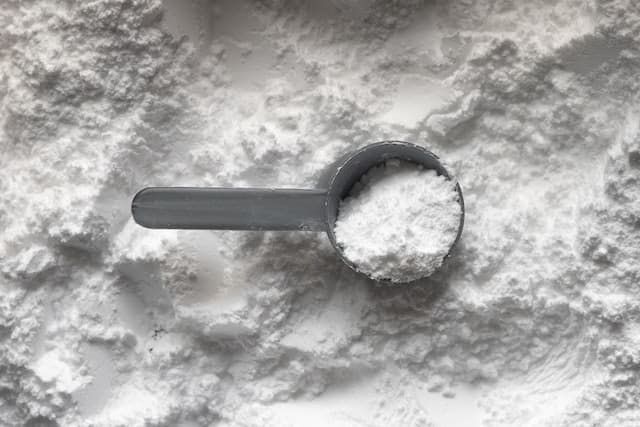
Although most commonly used as a muscle-building supplement, there are an incredible number of benefits of creatine monohydrate that extend far beyond muscle growth alone.
Backed by hundreds of peer-reviewed studies, this supplement has been shown to improve strength, increase recovery, support athletic performance, and even promote brain health.
From increasing ATP production during high-intensity exercise to reducing muscle damage and improving mental focus, creatine offers a wide range of advantages for both athletes and everyday fitness enthusiasts.
Understanding these benefits can help you see why creatine monohydrate has earned its reputation as one of the most effective and trusted supplements in sports nutrition.
Muscle Building

Creatine monohydrate supports muscle growth through two primary mechanisms.
First, it increases water content in muscle cells, creating a state of cell volumization that signals anabolic pathways and promotes hypertrophy.
Second, it enhances the resynthesis of adenosine triphosphate (ATP), the body’s main energy currency, which is essential for sustaining repeated high-intensity muscle contractions.
A substantial body of research confirms its effectiveness.
A meta-analysis of over 20 studies found that creatine supplementation significantly increases both muscle mass and strength compared to placebo groups (Branch, 2003).
More recent research has demonstrated that creatine enhances muscle protein synthesis and reduces post-exercise muscle damage, resulting in faster recovery and improved training adaptations (Kreider et al., 2017).
These findings, along with many others, make creatine monohydrate one of the most effective and reliable supplements for individuals aiming to build lean muscle and recover efficiently.
Muscle Recovery
Research suggests that creatine supplements support muscle recovery and help reduce reduce muscle damage through various physiological pathways, including:
- Anti-inflammatory Effects: Creatine has anti-inflammatory properties that can help reduce inflammation and muscle damage following exercise (Cordingley et al., 2022).
- Antioxidant Effects: It helps neutralize harmful free radicals, protecting cells from damage (Lawler et al., 2002).
- Cell Signaling Pathways: Creatine may stimulate the production of proteins essential for muscle repair, such as myogenin and MyoD.
- Mitochondrial Function: By improving mitochondrial function, creatine ensures cells have sufficient energy for muscle repair and regeneration.
Athletic Performance
Creatine monohydrate is widely recognized as one of the most effective supplements for enhancing athletic performance.
By rapidly replenishing adenosine triphosphate (ATP) stores during high-intensity exercise, it provides a quick and readily available energy source that delays fatigue and sustains explosive movements.
Evidence consistently shows that creatine supplementation improves performance in short-duration, high-intensity activities such as sprinting, weightlifting, and repeated sprint efforts.
A systematic review reported that creatine significantly increases power output, maximal strength, and overall training capacity in both recreational and elite athletes (Mielgo-Ayuso et al., 2019).
These improvements translate into greater endurance during repeated bouts of intense exercise, allowing athletes to train harder and recover more quickly between efforts.
Brain Health

Beyond its role in muscle performance, creatine monohydrate also demonstrates promising benefits for brain health.
Creatine supports cellular energy production in the brain by increasing ATP availability, which is critical for neurons that require high energy to function optimally.
This has led researchers to investigate creatine’s potential as a neuroprotective agent.
Emerging studies suggest that creatine supplementation can improve cognitive function, short-term memory, and mental clarity, particularly during periods of fatigue or sleep deprivation (Avgerinos et al., 2018).
It has also shown potential in alleviating depressive symptoms, especially in individuals with low brain creatine levels, and may serve as an adjunct therapy for mood disorders (Allen et al., 2010).
Creatine is also being studied for its role in slowing the progression of neurodegenerative diseases such as Alzheimer’s.
Early evidence indicates that by preserving mitochondrial function and reducing oxidative stress, creatine could help protect against neuronal damage associated with cognitive decline (Andres et al., 2008).
Another promising area of research is concussion recovery.
Since traumatic brain injury disrupts cellular energy metabolism, creatine supplementation may help restore ATP balance and reduce post-concussive symptoms.
Animal studies and preliminary human data suggest that creatine may reduce brain tissue damage and improve recovery outcomes following concussions (Sakellaris et al., 2006).
Together, these findings highlight the wide-ranging effects of creatine monohydrate, not only as a tool for improving muscle and athletic performance, but also as a supplement with significant potential in supporting brain health and recovery.
Body Fat Loss

One of the most overlooked benefits of creatine monohydrate is its indirect role in reducing body fat.
By increasing lean muscle mass and enhancing workout performance, creatine elevates your basal metabolic rate (BMR), allowing your body to burn more calories throughout the day.
Studies have shown that consistent creatine supplementation combined with resistance training improves body composition by increasing muscle and decreasing fat mass (Forbes et al., 2019).
When used strategically, taking creatine for weight loss is a smart decision for long-term fat reduction by improving energy efficiency and promoting a stronger, more metabolically active physique.
Optimal Usage and Dosage
To maximize the benefits of creatine monohydrate, it’s important to follow an effective usage and dosage strategy.
This includes an initial loading phase to saturate muscle stores, a maintenance phase to sustain elevated levels, and best practices for enhancing absorption and effectiveness.
To improve creatine absorption, take it with a source of carbohydrates.
This can be in the form of a sugary drink or a meal rich in carbs, which increases insulin levels and improves creatine uptake by muscle cells.
Additionally, staying well-hydrated is crucial, as creatine draws water into muscle cells, so ensure you drink plenty of fluids throughout the day.
By following these guidelines, you can ensure that you are getting the most out of your creatine supplement.
Loading Phase
The loading phase is a brief period at the start of creatine supplementation, during which you take higher doses to quickly saturate your muscles with creatine.
Typically lasting 5–7 days, it helps raise intramuscular creatine levels faster than standard daily dosing.
This rapid increase allows athletes to experience the performance, strength, and recovery benefits of creatine sooner, rather than waiting several weeks for levels to build gradually.
Dosage and Duration:
For the initial loading phase, take 20 grams of creatine monohydrate daily, divided into four doses of 5 grams each, for 5-7 days.
Pros of the Loading Phase:
- Rapid Saturation: Research indicates that the loading phase can increase muscle creatine levels by 20-40% within a week, leading to quicker performance benefits.
- Immediate Results: Users often report noticeable improvements in strength and endurance within the first week.
Cons of the Loading Phase:
- Gastrointestinal Issues: Some people may experience stomach cramps, diarrhea, or bloating due to the high intake of creatine.
- Increased Water Retention: Creatine can cause weight gain due to water retention is common, which might be undesirable for some athletes.
Gradual Loading (Alternative)
- Slow and Steady Approach: Another method is to skip the loading phase and start with the maintenance dose of 3-5 grams daily. Although this method takes longer (3-4 weeks) to saturate the muscles, it minimizes the risk of side effects.
Maintenance Phase
- Daily Dosage Recommendations: After the loading phase, switch to a maintenance dose of 3-5 grams per day to maintain elevated creatine levels in the muscles.
Potential Side Effects and Precautions
Common Side Effects
- Gastrointestinal Issues: Some users may experience stomach cramps, diarrhea, or nausea.
- Weight Gain: Due to increased water retention in muscles, some may notice a slight weight increase.
Who Should Avoid Creatine
- Kidney Issues: Individuals with pre-existing kidney conditions should avoid creatine, as it may exacerbate kidney problems.
- Pregnant or Nursing Women: Insufficient research exists on creatine’s safety for pregnant or breastfeeding women.
Consultation with Healthcare Providers
- Before starting creatine supplementation, consult a healthcare provider to ensure it’s safe and appropriate for your health status and fitness goals.
Best Creatine Monohydrate Supplement (2025)
Choosing the right creatine supplement ensures you receive the maximum benefits while minimizing potential risks.
Key factors to consider when choosing a creatine mononhydrate supplement include:
- Purity and Quality: Look for creatine monohydrate with high purity, often labeled as “Creapure.” This German-made creatine is renowned for its quality and safety.
- Brand Reputation: Opt for reputable brands with positive reviews and third-party testing to ensure product quality.
- Certifications: Look for certifications such as NSF Certified for Sport or Informed-Choice, which indicate that the product is free from banned substances.
- Powder vs. Capsules: Choose between powder (for customizable doses) and capsules (for convenience).
- Flavor and Mixability: Consider unflavored options to mix with other supplements or flavored options for better taste.
By evaluating these factors, you can select a creatine supplement that best fits your needs and ensures safe, effective supplementation.

There are many high-quality creatine monohydrate supplements available today, and most athletes will see similar results as long as they choose a product that is pure, third-party tested, and properly dosed.
However, after years of using different creatine brands throughout my professional basketball career, my personal favorite, and the one I recommend most often, is Optimum Nutrition Micronized Creatine Monohydrate Powder.
Why Optimum Nutrition?
- Consistent Quality at a Fair Price: Optimum Nutrition has maintained an excellent balance of affordability and quality, making it a reliable choice for both new users and seasoned athletes.
- Micronized for Better Absorption: The micronized form mixes easily with liquids, preventing the gritty texture often associated with standard creatine powders.
- Trusted Global Brand: As the world’s #1 sports nutrition brand, Optimum Nutrition is known for rigorous testing, ensuring purity and safety in every batch.
- Proven Effectiveness: Each serving provides 5 grams of pure creatine monohydrate, supporting muscle strength, endurance, recovery, and overall performance.
At just $33.39 (about $1.58/oz) for 120 servings on Amazon, with options to subscribe and save, it offers one of the best cost-to-quality ratios on the market.
While several excellent creatine supplements exist, Optimum Nutrition Micronized Creatine consistently delivers the best mix of purity, reliability, and value, making it my top pick for 2025.

Last update on 2026-03-12 / This article includes affiliate links/Images via Amazon Product Advertising API. I may earn commissions on purchases made through these links.
Final Thoughts: Should You Use Creatine Monohydrate?
As a professional basketball player, I’ve used creatine monohydrate every year of my career.
Competing across Europe and participating in high-level competitions, such as the NBA Summer League, I’ve relied on creatine monohydrate supplements to maintain peak performance.
It has consistently boosted my strength and endurance, allowing me to recover faster from intense workouts and reduce soreness, which helps me sustain my career at the highest levels.
This personal experience is backed by extensive scientific research showing creatine’s safety and effectiveness.
Creatine monohydrate is one of the most trusted and well-studied supplements, with proven benefits for muscle growth, athletic performance, recovery, and even cognitive function.
By following an effective supplementation strategy, whether that means beginning with a loading phase or gradually increasing your intake, you can maximize results and experience improvements in both strength and endurance.
To get the most out of creatine, stay hydrated, take it with carbohydrates to improve absorption, and consult a healthcare provider before adding it to your regimen.
For those who want to use the best supplements for weight loss and muscle building, creatine monohydrate is consistently ranked at the top thanks to its versatility and effectiveness.
Also, it’s not just for men!
Research supports the benefits of creatine monohydrate for women, showing improvements in strength, bone health, energy, and even mood regulation.
Incorporating creatine into your fitness plan can help you push past plateaus, recover more efficiently, and achieve lasting results, both in the gym and in daily life.
FAQs About Creatine Monohydrate
Read Next: Best Supplements for Weight Loss & Muscle Gain
This website does not provide medical advice. This website site does contain affiliate links, and purchases may earn a commission.
Read my Medical Disclaimer, Review Disclaimer, and Publishing Policies for more details. Use of this site indicates acceptance of these terms.