Sunflower vs Safflower Oil: Which Cooking Oil is Healthier?
 Reading Time: 8 minutes
 Cooking oils play a bigger role in our health than most people realize, and the debate of sunflower vs safflower oil is one worth paying attention to.
Both oils are light, versatile, and commonly chosen for high-heat cooking; however, each has its own distinct nutritional profile and potential health benefits.
Sunflower oil is recognized for its high vitamin E content and neutral flavor, while safflower oil is praised for its high linoleic acid concentration and higher smoke point.
As a professional athlete and nutrition educator, I’ve relied on choosing healthy cooking oils to support performance, recovery, and overall wellness, and I know how important it is to choose the right oil for your needs.
Whether you’re concerned about cholesterol, blood sugar management, heart health, or simply picking the best option for frying, understanding the differences can help you make smarter decisions in the kitchen.
In this guide, we’ll break down the unique benefits, drawbacks, and best uses of both oils so you can decide which fits your lifestyle best.
By the end, you’ll have a clear answer on how to approach sunflower vs safflower oil for your cooking and health goals.
Are Sunflower and Safflower Oil Good Oils for High-Heat Cooking?
Smoke Point
Sunflower Oil: 440°F/225°C
Safflower Oil: 510°F/266°C
Their stability at high temperatures comes from their relatively high smoke points and balanced fatty acid profiles, which help prevent the breakdown of oils into harmful free radicals.
When comparing sunflower vs safflower oil, safflower oil has the edge with a slightly higher smoke point (510°F/266°C) compared to sunflower oil (440°F/225°C).
This makes both oils healthier and safer alternatives to vegetable oil, canola oil, or butter for cooking methods that require high heat.
Differences Between Sunflower and Safflower Oil

Although sunflower and safflower oils are both popular for their high smoke points and health benefits, they differ in several important ways:
- Source
- Sunflower oil is pressed from sunflower seeds.
- Safflower oil is derived from safflower seeds.
- Smoke Point
- Sunflower oil: 440°F (225°C)
- Safflower oil: 510°F (266°C) – slightly more stable for deep frying.
- Fatty Acid Profile
- Sunflower oil: Rich in vitamin E and contains a high level of omega-6 fatty acids, which may be pro-inflammatory if not balanced with omega-3s.
- Safflower oil: Higher in linoleic acid (a polyunsaturated fat that supports cholesterol and blood sugar control) and monounsaturated fats, especially in high-oleic varieties.
- Health Benefits
- Sunflower oil: Helps reduce oxidative stress, supports immune function, and is low in saturated fat.
- Safflower oil: Linked to improved heart health, cholesterol management, and potential blood sugar regulation.
- Flavor and Versatility
- Sunflower oil: Neutral flavor, works well for baking, sautéing, and salad dressings.
- Safflower oil: Also mild in taste but slightly pricier and less widely available.
- Availability and Cost
- Sunflower oil is more common and generally more affordable.
- Safflower oil tends to be a specialty product with a higher price point.
In short, sunflower vs safflower oil comes down to preference and health goals.
Sunflower oil offers affordability and vitamin E benefits, while safflower oil provides a higher smoke point and stronger support for heart health.
Health Benefits of Safflower Oil
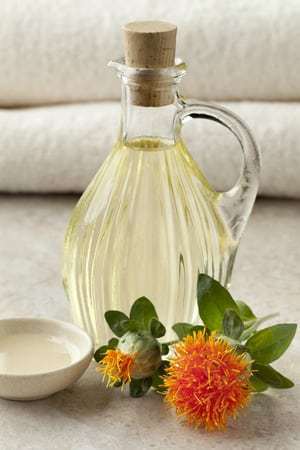
Not only does safflower oil have a suitable smoke point for high-heat cooking, but it also has many other health benefits.
Linoleic Acid Content
- Prevent the Hardening of Arteries
- Lower Cholesterol
- Reduce the Risk of Heart Disease
- Manage Blood Sugar Levels
According to a study produced by National Product Research, about 70% of safflower oil is linoleic acid.
Linoleic acid is a polyunsaturated Omega-6 fatty acid, which means it is one of the few omega-6 fatty acids which is good for our health.
The typical Western diet is already higher in Omega-6 fatty acids than Omega-3 fatty acids, yet safflower oil still provides health benefits.
Diabetes Prevention & Management
The linoleic acid in safflower oil can help prevent and manage diabetes due to its linoleic acid content.
Research has found that individuals with Type 2 diabetes who consumed a diet high in linoleic acid had significantly lower blood sugar levels compared to those who did not (Zong et al., 2019).
Moreover, other research has found that linoleic acid may improve insulin sensitivity and reduce the risk of developing type 2 diabetes in individuals with prediabetes (Belury et al., 2018).
Heart Health
Along with that, safflower oil can also help promote a healthy heart.
Research indicates that individuals who consumed a diet high in linoleic acid had lower levels of total cholesterol and low-density lipoprotein (LDL) cholesterol, also known as “bad” cholesterol, compared to those who did not consume a diet high in linoleic acid (Jackson et al., 2024).
Similarly, another study found that linoleic acid may increase the levels of high-density lipoprotein (HDL) cholesterol, also known as “good” cholesterol, in individuals with high cholesterol (Mercola & D’Adamo, 2023).
It is important to note that more research is needed to fully understand the relationship between linoleic acid and cholesterol levels, and the results of these studies should be interpreted with caution.
Weight Management
The presence of linoleic acid also may also promote a state of fat oxidization instead of fat storage due to the compound Conjugated Linoleic Acid (CLA).
Safflower oil may support weight management thanks to its high linoleic acid and conjugated linoleic acid (CLA) content. These compounds can promote fat oxidation (burning fat for energy) while reducing fat storage.
Studies also suggest linoleic acid improves insulin sensitivity, which helps regulate blood sugar and appetite.
In one trial, postmenopausal women with type 2 diabetes who consumed safflower oil for 16 weeks reduced trunk fat and gained lean muscle mass (Norris et al., 2009).
While not a magic solution, using safflower oil in cooking is a simple dietary swap that may help support fat metabolism and long-term weight control.
Oleic Acid Content
Although most safflower oil is linoleic acid, it also contains about 10% oleic acid.
Oleic acid is present in both animal and plant oils, and it is a monounsaturated Omega-9 fatty acid.
According to a study produced in Mini-Reviews in Medicinal Chemistry, similar to olive oil (also rich in oleic acid), safflower oil can present modulatory effects on wide physiological functions.
Potential areas of benefit are:
- Cancer
- Autoimmune Diseases
- Inflammatory Disease
- Wound Healing
Safflower oil does not contain as much oleic acid as olive oil, but it does contain enough to benefit your body.
Furthermore, oleic acid has direct benefits for your hair and scalp. Oleic acid helps increase circulation on the scalp, which strengthens follicles and stimulates hair growth.
It also can enable vibrant and shiny hair, explaining its use in many organic cosmetic applications.
The linoleic acid and oleic acid content of safflower oil make it an excellent deep fryer oil!
Health Benefits of Sunflower Oil

Sunflower seed oil shares many of the same health benefits as safflower oil, along with a few other unique benefits.
Low Saturated Fat Content
Versatility
Sunflower oil has a neutral flavor and high smoke point, making it suitable for a wide range of dishes and cooking methods.
Antioxidant Content
Sunflower oil is rich in various vitamins, minerals, and antioxidants. Specifically, sunflower oil contains a large amount of the powerful antioxidant Vitamin E.
Vitamin E possesses a compound known as tocopherols, a powerful antioxidant that helps eliminate free radical cells within the body.
Overall, intaking foods rich in Vitamin E is a great way to reduce oxidative stress.
The antioxidants found in Sunflower oil can affect the immune system positively greatly and empower the body to resist attacks from future infections.
Colon Cancer Protection
According to a study produced in the International Journal of Cancer Research, sunflower seeds are potentially effective as chemoprotective agents against colon cancer due to their high levels of phytochemicals, strong antioxidant properties, and ability to kill cancer cells.
Also, sunflower seeds had effects on enzymes and proteins involved in detoxification and inflammation
Best Sunflower & Safflower Oil Online
If you are interested in purchasing sunflower oil online, Baja Precious Organic Sunflower Oil is as good as it gets.
Baja Precious Organic Sunflower Oil is an organic sunflower oil with high oleic acid content. Also, it is all-natural and expeller-pressed.
Compared to other sunflower oils on the market, Baja Precious Organic Sunflower Oil is higher in monounsaturated fat and lower in both saturated and polyunsaturated fats.
For these reasons, Baja Precious Organic Sunflower Oil is both heart-healthy and an effective butter substitute.


Last update on 2026-01-31 / This article includes affiliate links/Images via Amazon Product Advertising API. I may earn commissions on purchases made through these links.
If you don’t want to drive to the grocery store to buy safflower oil, I suggest you purchase Hollywood Expeller-Pressed Safflower Oil on Amazon.
The Hollywood Expeller-Pressed Safflower Oil contains additional Vitamin E and is naturally expeller-pressed.
You can order one bottle for less than 9$, or sign up for a monthly subscription to save even more.
Last update on 2026-01-31 / This article includes affiliate links/Images via Amazon Product Advertising API. I may earn commissions on purchases made through these links.
Safflower Oil vs Sunflower Oil: Which is Better?
One of the best kitchen hacks for healthier cooking is knowing when to choose safflower oil and when to opt for sunflower oil, as each offers unique benefits.
Safflower Oil is better suited for those:
- Looking for oil with a higher smoke point (510°F), making it ideal for high-heat cooking techniques like deep frying.
- Seeking to improve heart health and manage blood sugar levels due to its high linoleic acid content, a beneficial omega-6 fatty acid.
- Interested in a higher content of monounsaturated fats, particularly if choosing high-oleic versions of safflower oil, which may help reduce inflammation.
Sunflower Oil, on the other hand, is a preferable choice for those:
- Requiring an oil that is rich in vitamin E, an antioxidant that helps combat oxidative stress and support immune function.
- Looking for a versatile cooking oil with a neutral flavor, suitable for a variety of dishes.
- Focusing on low-saturated-fat options. Sunflower oil is also available in high-oleic varieties, which offer higher levels of monounsaturated fats that are beneficial for heart health.
Sunflower oil, while lower in omega-6 than safflower oil, still requires consideration of overall dietary intake of fatty acids.
Neither oil is definitively better.
Instead, the choice depends on what fits best with your cooking style, health considerations, and dietary needs.
Both are healthy additions to a kitchen but serve slightly different purposes.
This website does not provide medical advice. This website site does contain affiliate links, and purchases may earn a commission.
Read my Medical Disclaimer, Review Disclaimer, and Publishing Policies for more details. Use of this site indicates acceptance of these terms.