Understanding NAD+ and Its Role in Your Health
 Reading Time: 6 minutes
 Did you know that NAD+ levels drop as you age?
This decline in NAD+ (nicotinamide adenine dinucleotide) is a key factor in reduced energy, weakened immune function, and increased risk of chronic diseases as we age.
NAD+ is a critical molecule found in every cell of the human body, essential for energy production, DNA repair, and maintaining healthy cellular functions.
As a professional athlete with a background in nutrition education, I understand the importance of optimizing health at every level.
While I haven’t personally experimented with NAD+ monitoring or supplementation, the science behind it is compelling (McReynolds et al., 2020).
It suggests that maintaining healthy NAD+ levels could be a vital part of promoting overall well-being, particularly as we age.
Whether through diet, supplements, or lifestyle practices, there are ways to support your body’s NAD+ levels. However, it’s important to approach these methods thoughtfully and safely.
While for some, testing and optimizing NAD+ might be an interesting avenue to explore, for most, maintaining a healthy lifestyle may be the best approach to support NAD+ levels naturally.
What is NAD+?
NAD+ is involved in numerous cellular processes, including converting nutrients into energy and supporting the repair of damaged DNA.
It is also vital for regulating various processes that help keep the body functioning optimally.
When NAD+ levels are sufficient, cells can operate efficiently, but as levels drop, these functions can become impaired, potentially leading to health issues.
How Does NAD+ Affect Your Health?
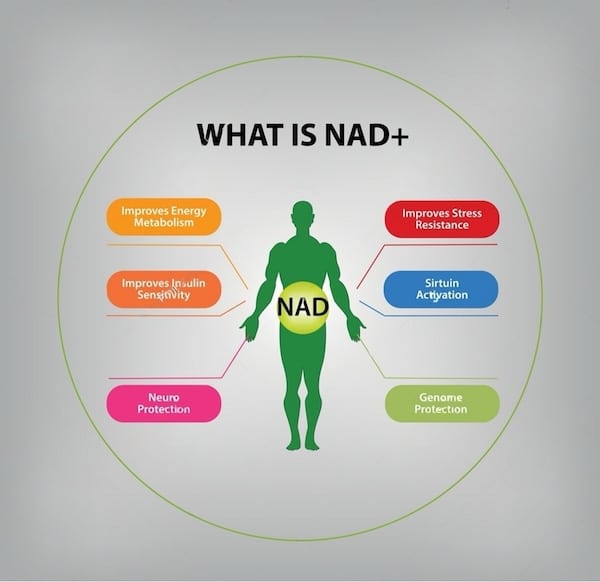
NAD⁺ plays a foundational role in human health because it sits at the center of cellular energy production, helping convert carbohydrates, fats, and proteins into usable energy through mitochondrial respiration (Cantó et al., 2015).
When NAD⁺ availability declines, cells become less efficient at producing ATP, which may contribute to fatigue, reduced physical performance, and impaired metabolic flexibility over time.
NAD⁺ is also essential for DNA repair and genomic stability through its role as a substrate for enzymes such as PARPs and sirtuins, which help repair DNA damage and regulate cellular stress responses (Verdin, 2015).
As DNA damage accumulates with age and environmental stressors, lower NAD⁺ levels can limit the body’s ability to maintain cellular integrity, potentially accelerating aging processes.
Immune function is another area influenced by NAD⁺ status, as immune cells rely heavily on efficient energy metabolism and rapid DNA repair during activation and proliferation.
Research suggests that NAD⁺ depletion may impair immune cell function and resilience, which could partially explain age-related declines in immune response (Minhas et al., 2019).
NAD⁺ also affects metabolic health by regulating insulin sensitivity, lipid metabolism, and mitochondrial biogenesis through sirtuin signaling pathways.
Adequate NAD⁺ levels appear to support healthier glucose metabolism and improved metabolic efficiency, whereas chronically low levels are associated with metabolic dysfunction and increased risk of age-related diseases (Yoshino et al., 2011).
From a neurological perspective, NAD⁺ supports brain health by maintaining neuronal energy balance and protecting against oxidative stress.
Emerging evidence links declining NAD⁺ levels to neurodegenerative processes, making NAD⁺ metabolism a growing focus in cognitive aging and brain resilience research (Lautrup et al., 2019).
Overall, NAD⁺ does not act as a single “longevity switch,” but rather as a central regulator that influences energy, repair, immunity, metabolism, and neurological function simultaneously.
This broad impact helps explain why the decline in NAD is increasingly viewed as a unifying mechanism behind many age-related changes in human health.
How to Increase NAD+ Levels
NAD⁺ levels naturally decline with age and chronic stress, which has led researchers to explore practical ways to support and maintain NAD⁺ availability across the lifespan.
Strategies to increase NAD⁺ generally fall into three categories: targeted supplementation, nutrient-dense dietary choices, and lifestyle practices that enhance cellular energy demand and recovery, each of which influences NAD⁺ metabolism through different biological pathways (Cantó et al., 2015).
Understanding how these approaches work, and their limitations, is essential for making informed decisions, as increasing NAD⁺ is not about aggressive intervention but about supporting the body’s natural regulatory systems in a sustainable and evidence-informed way.
Supplements
Some supplements contain NAD+ precursors like Nicotinamide Riboside (NR) or Nicotinamide Mononucleotide (NMN).
These compounds can be converted into NAD+ in the body, potentially helping to restore NAD+ levels.
The optimal daily dosage of Nicotinamide Mononucleotide (NMN) for boosting NAD+ levels is still under research, and recommendations can vary based on individual factors such as age, health status, and specific health goals.
However, most human studies have used NMN dosages ranging from 250 mg to 500 mg per day. Some studies have gone as high as 1,000 mg per day.
It’s generally advised to start with a lower dose and gradually increase it if needed, while monitoring how your body responds.
As always, it’s important to consult with a healthcare professional before starting NMN supplementation, especially if you have any pre-existing health conditions or are taking other medications.
Dietary Choices
Certain foods contain nutrients that can help support NAD+ production in the body, primarily through their content of B vitamins, particularly vitamin B3 (niacin), and other compounds that contribute to cellular energy metabolism.
Here are some foods that may help boost NAD+ levels:
- Dairy Milk: Rich in riboside nicotinamide, a precursor to NAD+.
- Fish: Fatty fish like tuna, salmon, and sardines are good sources of vitamin B3 (niacin), which is involved in NAD+ production.
- Mushrooms: Particularly cremini and portobello mushrooms, which contain B vitamins, including niacin.
- Yeast: Brewer’s yeast and nutritional yeast are high in niacin and other B vitamins.
- Whole Grains: Foods like brown rice, barley, and whole wheat contain niacin.
- Green Vegetables: Vegetables such as peas, asparagus, and broccoli are good sources of B vitamins.
- Chicken and Turkey: These are also good sources of niacin.
- Avocado: Contains niacin and other beneficial nutrients.
While these foods can contribute to maintaining healthy NAD+ levels, their impact is generally less pronounced compared to direct supplementation with NAD+ precursors like Nicotinamide Riboside (NR) or Nicotinamide Mononucleotide (NMN).
Incorporating these foods into a balanced diet can support overall health and NAD+ metabolism.
Lifestyle Practices
Certain lifestyle practices can naturally enhance NAD+ levels by stimulating the body’s production pathways:
- Fasting: Intermittent fasting triggers metabolic changes, including increased NAD+ production. The body enhances energy efficiency during fasting by boosting NAD+ levels, particularly through processes like autophagy.
- Exercise: Regular physical activity, both aerobic and resistance training, promotes NAD+ production by activating sirtuins, enzymes essential for cellular health. Exercise increases the demand for NAD+, supporting higher levels in the body.
- Caloric Restriction: Reducing daily calorie intake without malnutrition can boost NAD+ levels by mimicking fasting effects. This practice has been linked to longevity and improved cellular energy balance.
- Heat Exposure: Regular sauna use can stimulate NAD+ production through the activation of heat shock proteins, which protect against cellular damage and support overall health.
How to Raise NAD+ Levels Safely
Raising NAD+ levels, whether through supplements or lifestyle changes, should be approached with care. It’s important to start with low doses when trying new supplements and to pay attention to how your body responds.
Consulting with a healthcare provider is also recommended, especially if you are taking other medications, as interactions may occur.
While NAD+ supplements are generally considered safe in the short term, the long-term effects are still being studied. It’s essential to stay informed and make decisions based on the latest available research.
Final Thoughts: How Important is Monitoring NAD+?
Monitoring NAD⁺ levels is an emerging area of interest, but its practical value currently depends more on curiosity and health optimization goals than on clear clinical necessity.
While declining NAD⁺ is consistently associated with aging, metabolic dysfunction, and impaired cellular repair, routine NAD⁺ testing has not yet been established as a standard or actionable marker for the general population (Lautrup et al., 2019).
For most individuals, the strongest evidence still supports focusing on foundational behaviors such as regular exercise, adequate sleep, nutrient-dense eating, and stress management, all of which naturally support NAD⁺ metabolism without the need for testing.
These lifestyle factors influence multiple longevity-related pathways simultaneously, making them more reliable and cost-effective than isolated biomarker tracking (Cantó et al., 2015).
That said, monitoring NAD⁺ may become more relevant for researchers, high-performance individuals, or those experimenting with NAD⁺ precursors under professional guidance.
As testing methods improve and long-term human data expand, NAD⁺ measurements may eventually play a clearer role in personalized health strategies, but current evidence suggests they should complement, not replace, fundamental health practices.
Although I haven’t personally tried to boost or monitor my NAD+ levels, the science shows promising benefits.
It’s an area with interesting potential for the future, and I may consider experimenting with it down the line.
This website does not provide medical advice. This website site does contain affiliate links, and purchases may earn a commission.
Read my Medical Disclaimer, Review Disclaimer, and Publishing Policies for more details. Use of this site indicates acceptance of these terms.