How to Listen to Your Body While Exercising
 Reading Time: 5 minutes
 Learning how to listen to your body while exercising is one of the most overlooked yet essential skills for long-term health, performance, and injury prevention.
Exercise places controlled stress on the body, and adaptation occurs only when that stress is balanced by adequate recovery, hydration, nutrition, and rest.
Research consistently shows that ignoring early warning signs such as persistent pain, unusual fatigue, or declining performance increases the risk of overuse injuries and burnout (Meeusen et al., 2013).
Active individuals who develop better body awareness tend to train more consistently, recover faster, and sustain physical activity well into older age.
Ultimately, sustainable fitness is less about pushing through everything and more about knowing when to push, when to adjust, and when to listen to your body.
Why is it Important to Listen to Your Body While Exercising?
Listening to your body while exercising is important because it helps regulate training stress, reduce injury risk, and support long-term consistency.
Research shows that ignoring physical warning signs such as persistent pain, excessive fatigue, or declining performance increases the likelihood of overuse injuries and overtraining syndrome, which can derail progress for weeks or months (Meeusen et al., 2013).
When you listen to your body, you keep exercise a productive stimulus rather than a chronic source of stress.
Adjusting intensity, volume, or recovery based on how you feel helps maintain nervous system health, hormonal balance, and musculoskeletal resilience, all of which are essential for sustainable fitness and athletic longevity (Kellmann et al., 2018).
Important Ways to Listen to Your Body While Exercising
Listening to your body while exercising is a skill that improves with attention, experience, and self-awareness.
The body communicates constantly through sensations such as soreness, fatigue, thirst, motivation, and movement quality, and these signals provide valuable feedback on how well your training plan supports recovery and adaptation.
Understanding and responding to these cues helps you make smarter day-to-day decisions that protect your health, improve performance, and keep exercise sustainable over the long term.
Pay Attention to Pain
No pain, no gain, as they say, holds true in athletics to some extent.
But it might be better to simply create a new mantra that revolves around paying attention to your pain.
Not all pain is created equal.
When you have that good kind of sore that results from an intense workout, you do not need to be concerned about injuries.
You know the kind, your endorphins are pumping, and your body feels great, but tired and a little sore. This is not usually a problem.
When the pain feels a little off, and in the back of your mind, you know something is wrong, then it is time to pay attention.
This is especially pertinent in cases of back and abdominal pain, as extreme discomfort in these areas could be a sign of something more serious.
What’s more, sometimes, the pain is referred, meaning that an ache in one area of your body could actually be the result of a problem in a completely different place.
If you feel worse than you should after a workout or game, consult your trusted healthcare professional to identify the cause and rule out anything more serious.
It is always best to play it safe and take care of your body today so you can get back out there tomorrow.
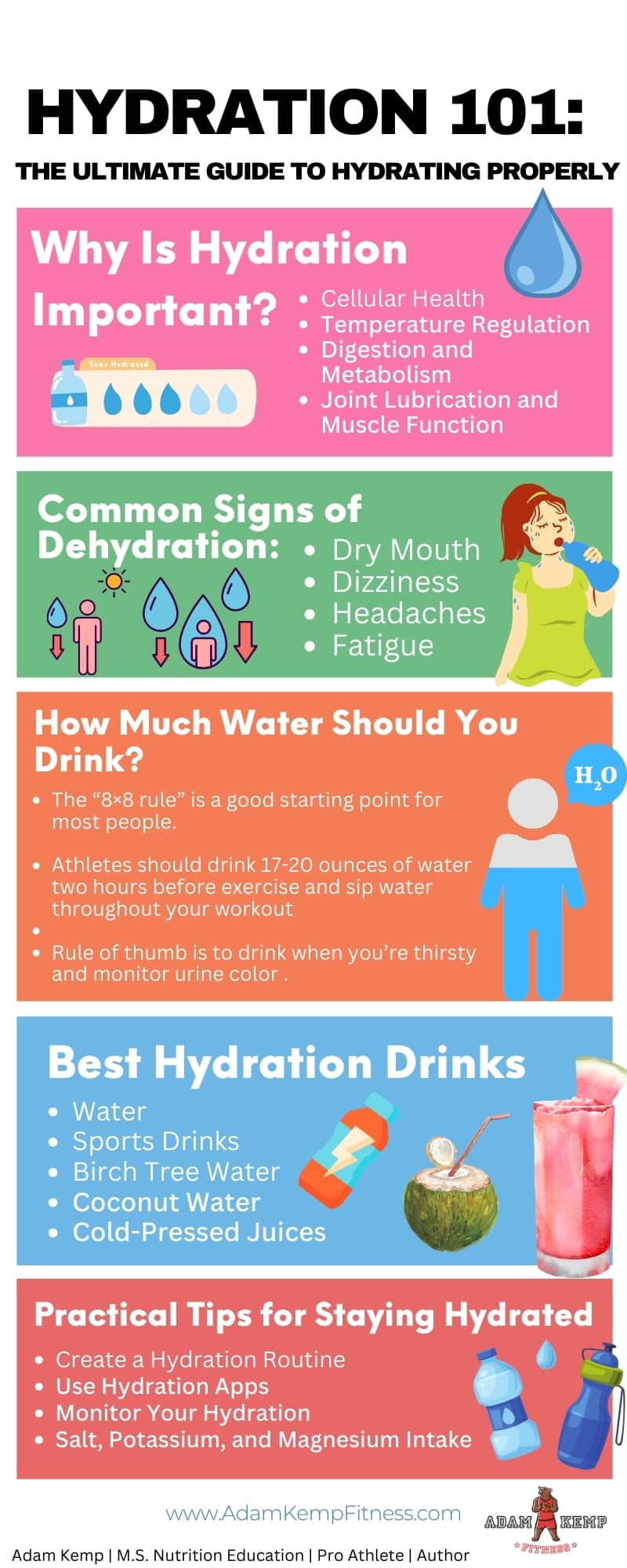
Focus on Hydration
Everyone knows that hydration is essential for fueling a good workout, but remembering to push fluids throughout the day can sometimes seem off-putting and burdensome.
Take steps to make your life easier and ensure you get enough fluids before, during, and after an active workout session by keeping a water bottle with you throughout the day.
Dehydration can lead to stomach and muscle cramps, tiredness, dizziness, and memory fog, or worse.
Here are some tips to help you succeed:
- Have more than one water bottle available so you can keep them on rotation between cleaning and usage, and avoid reducing intake because you do not want to do the dishes.
- Only purchase easy-to-clean water bottles to set yourself up for success.
- Measure your water bottle to ensure it fits in your vehicle’s cupholder as well as your gym and office bags’ water bottle compartments.
- Carry your water bottle with you everywhere you go.
- Set a timer on your smartphone to remind you to take a drink or sip at predetermined intervals.

Pro Tip: You can get your fluid intake from sources other than just water. Work to incorporate water-dense foods into your diet. These include watermelon, melon, greens, cucumbers, tomatoes, and soups.
Monitor Energy Levels and Performance Changes
One of the clearest ways to listen to your body is by paying attention to changes in energy, motivation, and performance.
A single bad workout is normal, but repeated drops in strength, speed, coordination, or enthusiasm often signal that your body is not recovering adequately.
These declines can stem from insufficient sleep, under-fueling, excessive training volume, or accumulating stress outside the gym.
Subtle signs matter.
Feeling unusually sluggish during warm-ups, struggling with loads that normally feel manageable, or needing longer rest between sets are all cues worth respecting.
Adjusting intensity, reducing volume, or taking an extra recovery day can often restore performance faster than pushing through and hoping things improve.
Respect Recovery, Sleep, and Rest Days
Recovery is where adaptation happens, not during the workout itself.
Listening to your body means recognizing that rest days and sleep are not optional extras, but essential components of progress.
Poor sleep quality is consistently linked to slower reaction time, impaired coordination, reduced strength, and increased risk of injury during exercise.
If soreness lingers longer than expected, your joints feel stiff rather than warm after a proper warm-up, or your resting heart rate rises over several days, your body may be asking for more recovery.
Strategic rest, light movement, and prioritizing sleep allow your nervous system, muscles, and connective tissue to reset so you can train hard again with confidence.
Final Thoughts: Listening to Your Body Is a Skill That Protects Your Progress
Learning to listen to your body while exercising is not a sign of weakness, but a marker of maturity, self-awareness, and long-term thinking.
The ability to distinguish productive training stress from warning signals allows you to train consistently, recover effectively, and reduce the likelihood of preventable injuries that interrupt progress.
When you respect pain signals, hydration needs, energy levels, and recovery cues, exercise becomes a tool for building resilience rather than breaking it down.
Over time, this approach supports better performance, improved health, and a stronger relationship with movement that can be sustained for decades rather than just a single training cycle.
This website does not provide medical advice. This website site does contain affiliate links, and purchases may earn a commission.
Read my Medical Disclaimer, Review Disclaimer, and Publishing Policies for more details. Use of this site indicates acceptance of these terms.