Collagen Guide: What It Does, Benefits, Foods & Supplements
 Reading Time: 9 minutes
 Collagen is the most abundant protein in your body, giving your skin, bones, tendons, ligaments, and cartilage structure and strength.
It makes up about 30% of your total body protein, making it relevant to everything from maintaining skin firmness to supporting the tissues you rely on to move (Cleveland Clinic, 2022).
As a professional basketball player with a master’s degree in nutrition education, I recognize that the benefits of collagen naturally present in your body are not automatically the same as the benefits you get from taking collagen powder.
Also, I fully understand that dietary collagen must be digested, and consuming it does not guarantee that it will rebuild a particular tendon, smooth wrinkles, or reach the area you want to improve (Cleveland Clinic, 2022).
Your body also makes collagen itself, using amino acids and nutrients such as vitamin C, zinc, and copper.
Whether your interest is skin health, joint comfort, athletic performance, or healthy aging, start with the fundamentals: what collagen does, how its different types function, and what the evidence can realistically tell you about supporting it.
What Is Collagen?
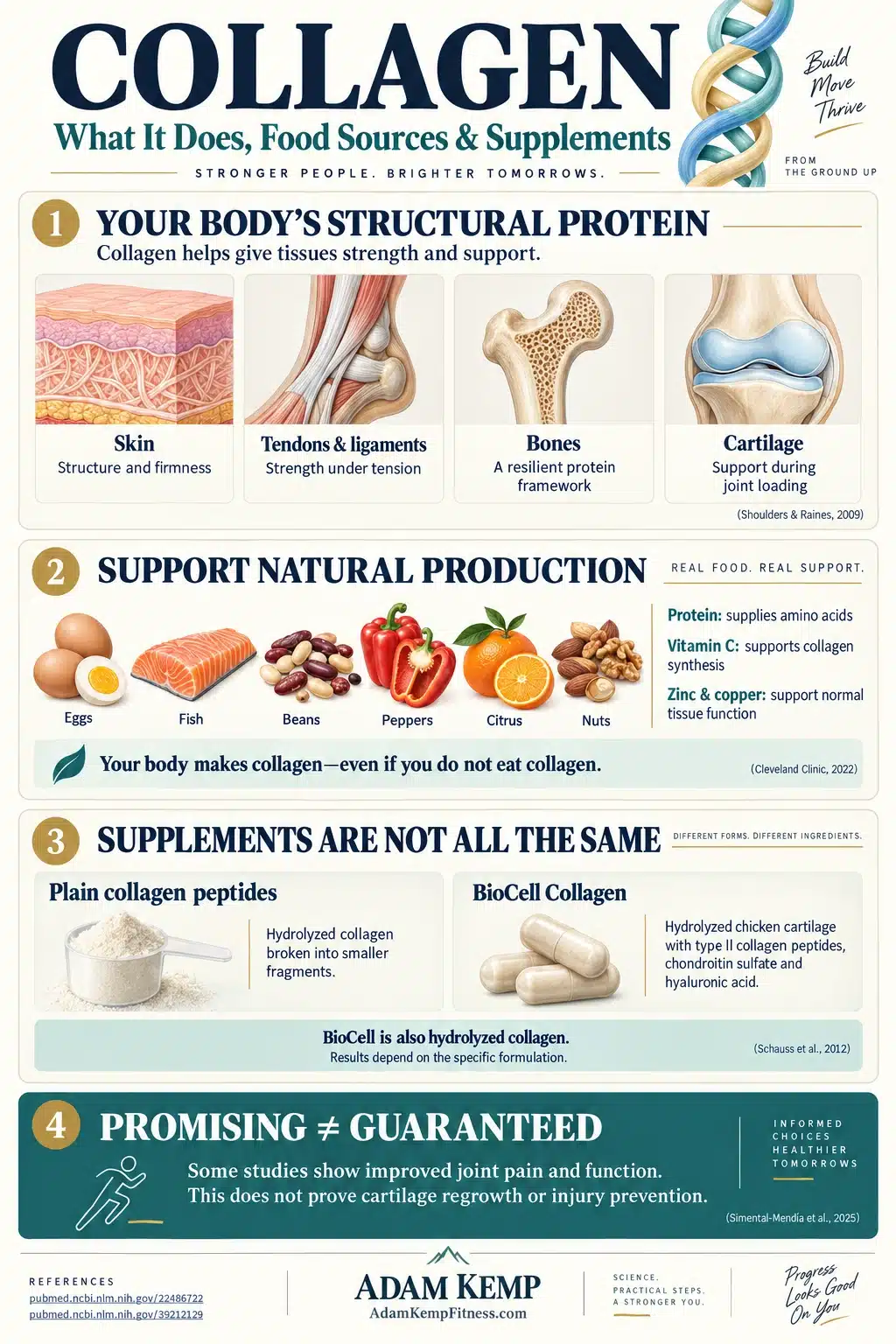
Collagen is a structural protein that helps give your body’s tissues strength, shape, and support.
It is the most abundant protein in the human body, accounting for approximately 30% of total protein, and is found in skin, bones, cartilage, tendons, ligaments, and blood vessels (Cleveland Clinic, 2022).
Think of collagen as part of your body’s internal scaffolding: it helps tissues hold together and withstand the physical demands of everyday movement.
Collagen’s strength comes from its distinctive triple-helix structure, in which three protein chains twist together like strands of a rope.
These chains are rich in the amino acids glycine, proline, and hydroxyproline (Cleveland Clinic, 2022).
Your body produces collagen naturally, using amino acids from dietary protein along with supporting nutrients, including vitamin C, zinc, and copper.
You do not need to eat collagen to make collagen, although collagen-containing foods and supplements can provide some of its building blocks (Cleveland Clinic, 2022).
The term collagen peptides refers to collagen that has been broken down into smaller fragments, commonly used in supplements.
These peptides are different from the organized collagen fibers that provide structure within your tissues (Cleveland Clinic, 2022).
Types of Collagen
There are 28 identified types of collagen, varying by molecular assembly, cellular components, and functional location in the body. The five main types include:
- Type I: Comprising 90% of the body’s collagen, it provides structure to skin, bones, tendons, and ligaments.
- Type II: Found in elastic cartilage, supporting joints.
- Type III: Found in muscles, arteries, and organs.
- Type IV: Present in skin layers.
- Type V: Located in the cornea, some skin layers, hair, and placental tissues.
Benefits of Collagen: What Does Collagen Do?
Collagen helps your body withstand pulling, stretching, and everyday physical
Its fibers make up part of the extracellular matrix, which is the network surrounding cells that gives tissues structure and influences how they function (Shoulders & Raines, 2009).
Learning about the benefits of collagen starts with separating its essential roles inside your body from the potential effects of collagen supplements.
A protein’s importance to healthy tissue does not automatically mean that taking more of it improves every tissue that contains it.
Supports Skin Strength and Firmness
Collagen forms much of the supportive framework within the dermis, the layer beneath your skin’s surface.
It helps the skin resist stretching and tearing, while elastin and other components of the skin’s matrix support elasticity and hydration (Sen et al., 2025).
Fibroblasts produce collagen and maintain this framework.
Rather than directly “replacing dead skin cells,” collagen provides part of the environment in which cells attach, communicate, and repair damaged tissue (Sen et al., 2025).
Strengthens Tendons and Ligaments
Collagen gives tendons and ligaments much of their ability to handle tension.
Tendons transmit force from muscles to bones, while ligaments connect bones and help stabilize joints (Shoulders & Raines, 2009).
The arrangement of collagen matters as much as its presence: organized fibers help these tissues withstand forces in particular directions.
This makes collagen relevant to the physical demands of walking, lifting, running, and jumping.
Supports the Connective Tissue Within Muscles
Muscles contain a collagen-rich network surrounding individual muscle fibers and groups of fibers.
This network helps maintain muscle architecture and transmit the force generated during contraction (Gillies & Lieber, 2011).
Collagen therefore contributes to muscle function through its supporting tissues, rather than acting as the primary protein that contracts to produce movement.
However, its structural role should be distinguished from claims that collagen powder directly builds muscle.
Gives Bones a Strong, Resilient Framework
Bone combines a collagen-based framework with mineral deposits.
Collagen contributes tensile strength and toughness, while minerals provide much of bone’s hardness and resistance to compression (Shoulders & Raines, 2009).
This partnership helps explain why bone health involves more than calcium alone: the quality and organization of the underlying protein framework also matter.
If you are looking for the best supplements for bone health, choosing a supplement that contains collagen is a wise choice.
Helps Cartilage Handle Joint Loading
Type II collagen forms a reinforcing network within articular cartilage, the tissue covering the ends of bones in joints.
It works with water and proteoglycans, which are molecules that help retain water, to allow cartilage to distribute loads and resist deformation (Żylińska et al., 2021).
However, describing collagen as a joint “lubricant” oversimplifies its function.
Its main contribution is reinforcing cartilage’s structure within a broader system that supports smooth movement.
Regardless, collagen supplements are certainly among the best supplements for joint health.
Participates in Blood Clotting and Wound Repair
When a blood vessel is damaged, exposed collagen helps platelets attach and become activated, contributing to the early steps of stopping bleeding.
During subsequent repair, fibroblasts produce collagen to help rebuild the injured tissue (Sen et al., 2025).
Healing also requires collagen to be reorganized over time.
Healthy repair depends on coordinated production and remodeling, not simply on accumulating as much collagen as possible (Sen et al., 2025).
These properties are why my family and I use CelluHeal Wound Care products for deep cuts or other open wounds.

Last update on 2026-10-09 / This article includes affiliate links/Images via Amazon Product Advertising API. I may earn commissions on purchases made through these links.
Can Collagen Supplements Provide Benefits?
Collagen’s biological functions and the benefits of collagen supplements are related but separate questions.
Supplement claims require human studies showing that a particular preparation improves a meaningful outcome.
Joint symptoms show encouraging evidence: a meta-analysis of 11 randomized controlled trials involving 870 people with knee osteoarthritis found improvements in pain and function with oral collagen supplementation, although results varied substantially across studies (Simental-Mendía et al., 2025).
The formulation matters: plain hydrolyzed collagen powders primarily supply collagen peptides, while BioCell Collagen is a hydrolyzed chicken cartilage extract containing type II collagen peptides, chondroitin sulfate, and hyaluronic acid (Schauss et al., 2012).
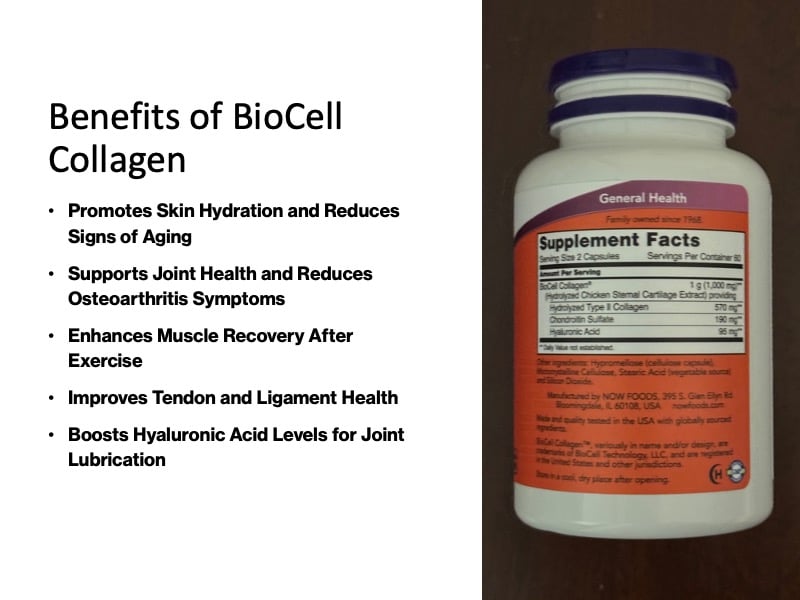
BioCell therefore combines several components that may contribute to its effects, but it is also hydrolyzed collagen, not an entirely separate category, and its clinical results cannot establish that it works better than a plain collagen powder.
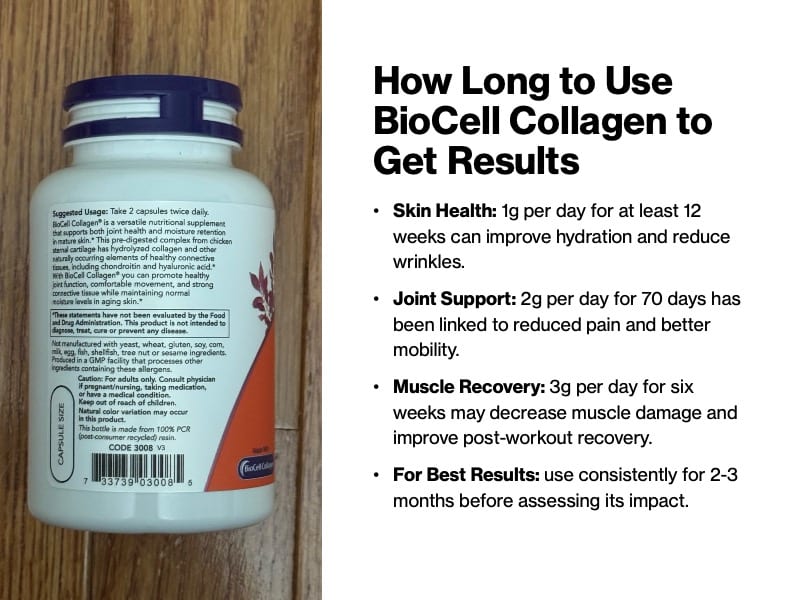
These findings support a potential role in symptom management; they do not establish that collagen supplements rebuild damaged cartilage, prevent injuries, or reproduce every function of collagen naturally present in your body.
What Happens to Collagen During Aging?
Collagen production decreases with age, leading to faster breakdown and lower quality.
Women, particularly post-menopause, experience significant reductions.
By age 60, collagen levels decline for most individuals.
Signs of Collagen Decline
Decreased collagen levels can lead to:
- Wrinkled, sagging skin.
- Hollowness around the eyes and face.
- Muscle weakness and aches.
- Stiffer tendons and ligaments.
- Joint pain or osteoarthritis.
- Digestive issues from thinning intestinal lining.
- Reduced blood flow.
Lifestyle Factors That Damage Collagen
Collagen damage is caused by lifestyle habits and conditions, including:
- Smoking: Reduces production, damages existing collagen and elastin, and slows wound healing.
- Excessive sugar and refined carbohydrate intake: Produces advanced glycation end products, weakening collagen.
- UV light exposure: Breaks down collagen, leading to wrinkles.
- Autoimmune diseases: Conditions like rheumatoid arthritis and lupus attack collagen.
- Genetic mutations: Conditions like Ehlers-Danlos syndrome disrupt collagen production.
How to Improve Collagen Naturally
Supporting collagen production and reducing the effects of aging can be achieved through consistent lifestyle habits and dietary choices.
By combining these practices, you can enhance your body’s ability to produce collagen and maintain healthy, youthful skin and tissues over time.
Protect Your Skin From UV Damage
Ultraviolet (UV) rays break down collagen and accelerate skin aging, causing wrinkles and loss of elasticity.
Wearing sunscreen with SPF 30 or higher every day is one of the best ways to protect your skin.
Apply sunscreen generously to all exposed areas and reapply every two hours, especially after sweating or swimming.
Complement this with protective clothing like wide-brimmed hats, UV-blocking sunglasses, and lightweight, long-sleeved garments when spending extended time outdoors.
Consume Collagen-Rich Foods
Nutrition plays a key role in collagen production.
Following a balanced diet, such as the Mediterranean diet, provides your body with the nutrients it needs to produce collagen naturally.
This diet emphasizes vegetables, fruits, whole grains, nuts, and seeds, which are rich in vitamins and minerals essential for collagen synthesis.
It also includes moderate amounts of seafood, lean proteins, and dairy, which supply the amino acids needed to build collagen.
Although collagen from food cannot be absorbed in its whole form, the body breaks it into amino acids, which are used for various needs. Foods supporting collagen production include:
- Vitamin C sources: Oranges, strawberries, broccoli, potatoes.
- Proline sources: Mushrooms, cabbage, fish, meat.
- Glycine sources: Red meat, chicken, pork skin.
- Copper sources: Liver, nuts, dark chocolate.
- Zinc sources: Oysters, beans, green leafy vegetables.
Incorporate Collagen-supporting Nutrients
Focus on foods rich in vitamin C, zinc, copper, and glycine, as these are vital for collagen formation.
Include citrus fruits, bell peppers, strawberries, and broccoli for vitamin C; oysters, nuts, and seeds for zinc; and leafy greens and dark chocolate for copper.
Glycine-rich foods, such as chicken, turkey, and pork skin, also contribute to collagen production.
Stay Hydrated
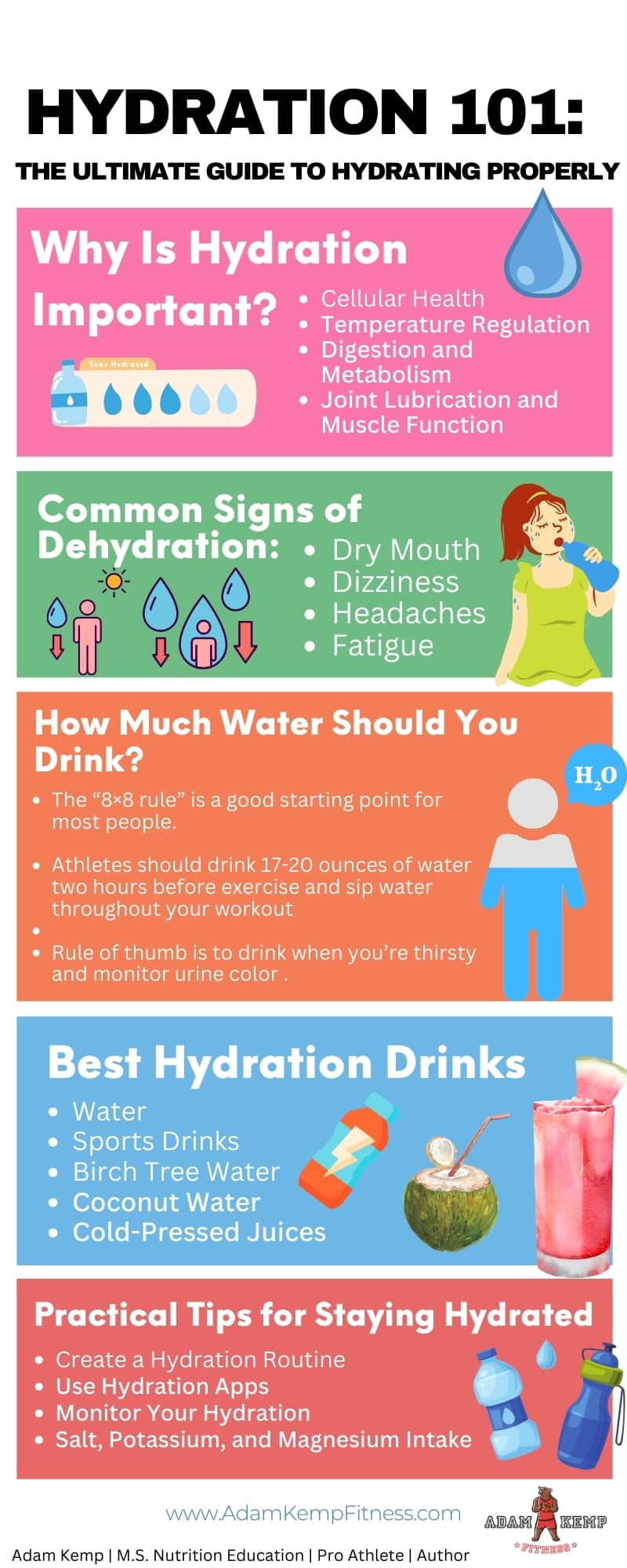
Proper hydration helps maintain skin elasticity and supports the overall health of connective tissues.
Drinking enough water daily ensures that your body can effectively utilize the nutrients required for collagen production.
Avoid Harmful Habits
Smoking and excessive consumption of sugar or refined carbohydrates can damage collagen.
Smoking reduces blood flow to the skin and depletes nutrients required for collagen synthesis, while sugar creates advanced glycation end products that weaken collagen fibers.
Minimizing these habits can help protect your body’s natural collagen reserves.
Consume Collagen Supplements
Collagen supplements are not FDA-regulated and lack extensive randomized controlled trials.
Studies are often industry-funded, raising questions about reliability.
Furthermore, the body distributes collagen peptides as needed, not necessarily to the areas desired.
However, collagen supplements, often sold as peptides or hydrolyzed collagen, are absorbed through the gastrointestinal tract.
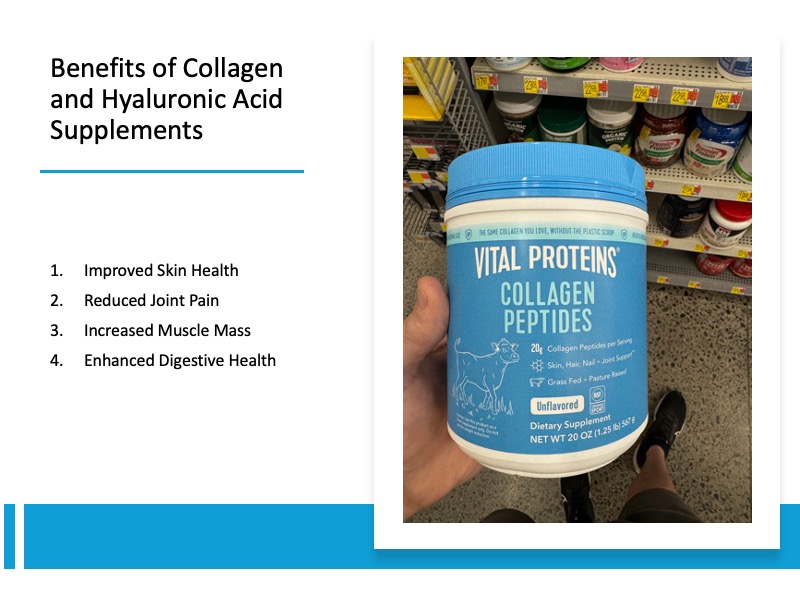
They can improve skin elasticity, hydration, and joint health while aiding muscle recovery after exercise.
Additionally, research highlights their effectiveness in reducing wrinkles, alleviating joint pain, and supporting cartilage integrity.
However, choosing a high-quality supplement is essential, as not all products are created equal.
Trusted brands like Purely Inspired, NOW Foods, and Vital Proteins offer options tailored to specific needs, from budget-friendly choices to those that combine collagen with hyaluronic acid for enhanced benefits.
In my opinion, Purely Inspired Collagen Peptides is the best budget-friendly option, offering high-quality, grass-fed bovine collagen at an affordable price, perfect for those new to collagen supplements or on a tighter budget.


Last update on 2026-10-09 / This article includes affiliate links/Images via Amazon Product Advertising API. I may earn commissions on purchases made through these links.
For premium quality, Vital Proteins Collagen Peptides stands out with its hydrolyzed bovine collagen, enhanced with hyaluronic acid and vitamin C, making it an exceptional choice for supporting skin, joints, and overall health.

Last update on 2026-10-09 / This article includes affiliate links/Images via Amazon Product Advertising API. I may earn commissions on purchases made through these links.
Explore More Collagen Guides & Reviews
This website does not provide medical advice. This website site does contain affiliate links, and purchases may earn a commission.
Read my Medical Disclaimer, Review Disclaimer, and Publishing Policies for more details. Use of this site indicates acceptance of these terms.
Check Out Some of My YouTube Videos Below, and Please Follow on YouTube for More Educational Health and Fitness Content!
![Subscribe to @AdamKempFitness for more training, general health, recovery, and nutrition tips from a professional basketball player with a master’s degree in Nutrition Education! 🏀💪
Seated Max Vertical Jumps From a Box are one way I train explosive takeoff power with maximum intent on every rep.
Starting seated, with a pause and minimal rocking or dipping, reduces the contribution of a quick countermovement and emphasizes producing force from a relatively static position (National Strength and Conditioning Association [NSCA], 2020).
For athletes, the training goal is explosive lower-body force production and coordinated extension through the hips, knees, and ankles. I use this variation to practice driving hard into the floor and accelerating my body upward.
My preferred setup: 3 sets of 3 reps or 4 sets of 2 reps, supersetted with a strength or power exercise.
I keep the reps low, reset between jumps, and take longer rest periods so I’m ready to attack every takeoff. Even when pairing exercises, I give myself enough recovery to keep the jumps sharp.
Every rep has one goal: jump as high as possible. I focus on an explosive takeoff, a controlled landing, and consistent quality throughout the session.
Save this for your next power workout! 🚀
Reference: NSCA. (2020). Stretch-shortening cycle.
#VerticalJump #JumpTraining #ExplosivePower #AthleticPerformance #BasketballTraining](https://www.adamkempfitness.com/wp-content/plugins/feeds-for-youtube/img/placeholder.png)