

BCAAs vs EAAs: What’s the Difference and Which are Better?
 Reading Time: 6 minutes
 Comparing BCAAs vs EAAs for supplemental amino acids is a common debate in the world of sports nutrition and supplementation.
In general, amino acids are the fundamental building blocks of protein, influencing muscle growth, recovery, hormone production, and even cognitive performance.
Among them, branched-chain amino acids (BCAAs) and essential amino acids (EAAs) have unique but overlapping roles in fueling performance and supporting long-term health.
BCAAs (leucine, isoleucine, and valine) are particularly valuable because they can be metabolized directly in the muscle, providing a rapid energy source during training and stimulating muscle protein synthesis.
EAAs, on the other hand, include all nine essential amino acids required for vital biological functions ranging from tissue repair to immune support, making them more comprehensive for overall well-being.
Understanding the scientific differences, benefits, and limitations of these amino acid supplements is critical for athletes, bodybuilders, and health-conscious individuals alike.
A closer look at BCAAs vs EAAs will help you make an informed choice about which option aligns best with your training goals and nutritional needs.
What are BCAAs?

Branched-chain amino acids (BCAAs) are a group of three essential amino acids (leucine, isoleucine, and valine) that play a critical role in muscle growth and recovery.
Unlike most amino acids, BCAAs are metabolized directly in skeletal muscle rather than the liver, making them an immediate energy source during exercise.
Leucine, in particular, is well-known for stimulating muscle protein synthesis, which is essential for repairing and building lean muscle tissue.
Because of these unique properties, BCAAs are often used by athletes and gym-goers to reduce exercise-induced fatigue, improve performance, and decrease post-workout muscle soreness.
What are EAAs?
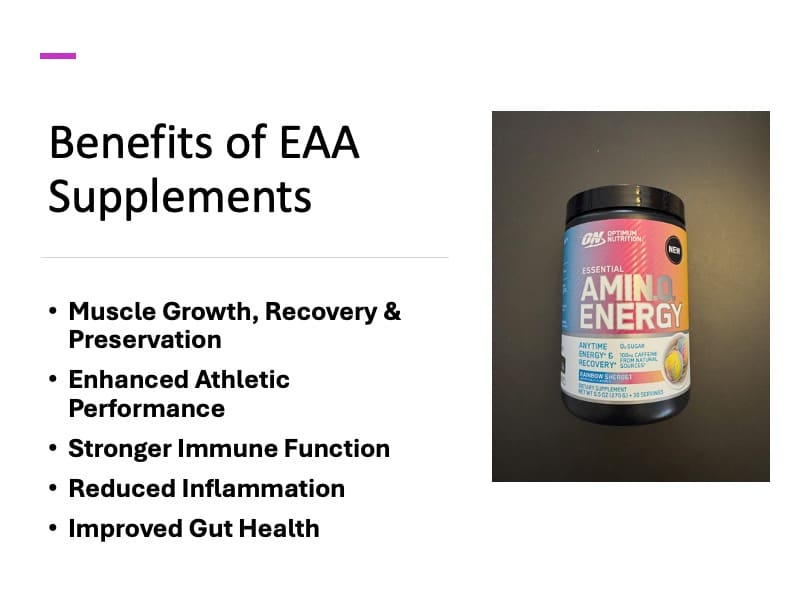
Essential amino acids (EAAs) are the nine amino acids that the human body cannot produce on its own and must be obtained through diet or supplementation.
This group includes the three BCAAs, as well as histidine, lysine, methionine, phenylalanine, threonine, and tryptophan.
Together, EAAs are required for a wide range of biological processes, including protein synthesis, hormone production, immune system function, and neurotransmitter regulation.
Because they provide a complete amino acid profile, EAA supplements are often considered more comprehensive than BCAAs alone, supporting not only athletic performance but also overall health and recovery.
Differences Between BCAAs and EAAs
BCAAs
EAAS
There are many similarities but also several differences between BCAAs and EAAs that are important to understand.
Both play essential roles in muscle growth, recovery, and overall health, but they are not interchangeable.
BCAAs make up three of the nine essential amino acids and are especially useful for providing energy during workouts and stimulating muscle protein synthesis.
EAAs, however, include all nine essential amino acids, offering a more complete foundation for protein building, immune support, and other critical body functions.
Recognizing these similarities and differences can help you choose the supplement that best fits your goals.
Let’s dive into some of the key differences between BCAAs and EAAs:
The Unique Structure and Role of BCAAs
Branched-chain amino acids (BCAAs) are distinguished by their unique molecular structure, comprising three specific amino acids: leucine, isoleucine, and valine.
This distinct ‘branched-chain’ structure imparts unique properties to these amino acids. Notably, BCAAs play a crucial role in muscle protein synthesis, a fundamental process for muscle growth and repair.
Supplementing with BCAAs, as research indicates, can significantly reduce muscle soreness and impprove exercise performance (Shimomura et al., 2006).
An example of a high-quality BCAA supplement is Xtend BCAAs, which offers a precise 2:1:1 ratio of leucine, isoleucine, and valine, optimized for maximum efficacy in muscle recovery and growth.


Last update on 2026-01-06 / This article includes affiliate links/Images via Amazon Product Advertising API. I may earn commissions on purchases made through these links.
The Comprehensive Nature of EAAs
In contrast, essential amino acids (EAAs) encompass a broader group of nine amino acids, which our bodies cannot synthesize independently.
These include not only the three BCAAs but also six others vital for various bodily functions.
EAAs must be acquired either through diet or supplementation, underscoring their importance for overall health and well-being.
EAAs contribute to muscle protein synthesis like BCAAs, but their role extends beyond just muscular support.
They are integral to numerous physiological processes, including hormone production, immune system function, and neurotransmitter synthesis.
An example of an EAA supplement is Controlled Labs Purple Wraath, which not only delivers all nine EAAs but also includes additional unique ingredients for comprehensive workout support.

Last update on 2026-01-06 / This article includes affiliate links/Images via Amazon Product Advertising API. I may earn commissions on purchases made through these links.
Metabolic Pathways
Another pivotal difference lies in how these amino acids are metabolized within the body.
BCAAs have the unique capability to be metabolized directly in the muscle tissues.
This targeted action makes them particularly beneficial for muscle recovery and growth.
In contrast, EAAs are primarily metabolized in the liver, indicating a more systemic effect on the body.
The liver’s role in EAA metabolism suggests a broader influence on various physiological functions, beyond just muscle tissue.
While both BCAAs and EAAs are integral to sports nutrition and overall health, their distinct roles, structures, and metabolic pathways offer different benefits.
Understanding these differences is essential for anyone looking to optimize their dietary and supplementation strategies for improved health, athletic performance, and recovery.
Are BCAA or EAA Supplements Better?
Choosing between BCAA and EAA supplements can be challenging because both offer unique benefits for athletes and active individuals.
BCAAs provide targeted support for muscle recovery and energy during exercise, while EAAs deliver a complete spectrum of amino acids necessary for overall protein synthesis and long-term health.
The best option often depends on your specific training goals, dietary intake, and recovery needs.
Muscle Protein Synthesis
Research suggests that EAA supplements may be more effective than BCAAs for stimulating muscle protein synthesis, particularly in individuals who are protein-deficient or have lower muscle mass.
Because EAAs contain all nine essential amino acids, they provide the full spectrum needed to trigger protein-building processes in the body.
For example, a study in the American Journal of Clinical Nutrition found that EAAs were more effective than BCAAs at promoting muscle protein synthesis in older adults with sarcopenia, highlighting their importance for populations at risk of muscle loss (Paddon-Jones et al., 2004).
Muscle Recovery & Soreness
When it comes to recovery, BCAA supplements may have a distinct advantage. BCAAs can be metabolized directly in muscle tissue, providing quick support for repair and energy during exercise.
A study in the Journal of the International Society of Sports Nutrition showed that supplementing with BCAAs before and after workouts reduced delayed-onset muscle soreness and improved muscle function in trained athletes (Blomstrand et al., 2006).
For individuals prioritizing faster recovery between sessions, BCAAs can be a practical option.
Amino Acid Balance
One potential drawback of relying solely on BCAA supplementation is the risk of disrupting amino acid balance.
Consuming large amounts of BCAAs without sufficient intake of the other essential amino acids can lower blood concentrations of those nutrients, limiting the body’s ability to synthesize proteins effectively.
A review in Nutrients reported that this imbalance may reduce muscle protein synthesis and impair overall muscle function (Kamei et al., 2020).
In contrast, EAA supplements provide all nine essential amino acids in a balanced ratio, helping to support comprehensive protein synthesis while avoiding deficiencies.
Products like Controlled Labs Purple Wraath illustrate this benefit by delivering a complete amino acid profile that supports recovery, performance, and long-term health.
Last update on 2026-01-06 / This article includes affiliate links/Images via Amazon Product Advertising API. I may earn commissions on purchases made through these links.
Final Thoughts: BCAAs vs EAAs
BCAAs and EAAs can be useful supplements for individuals looking to support muscle growth and recovery.
However, it’s important to consider the differences between these two amino acid supplements and choose the one that best fits your needs.
While BCAA supplements like Scivation Xtend can be effective at reducing muscle soreness and improving exercise performance, overconsumption of BCAAs can lead to a disproportionate amino acid intake and potentially interfere with the body’s ability to synthesize proteins.
On the other hand, EAA supplements like Controlled Labs Purple Wraath can provide a more comprehensive array of amino acids and may be more effective at promoting muscle protein synthesis in certain populations.
Ultimately, it’s important to consult a healthcare professional or a certified nutritionist to determine the best amino acid supplement for your specific goals and needs.
This website does not provide medical advice. This website site does contain affiliate links, and purchases may earn a commission.
Read my Medical Disclaimer, Review Disclaimer, and Publishing Policies for more details. Use of this site indicates acceptance of these terms.