How to Unwind After a Long Day and Relax in a Healthy Way
 Reading Time: 5 minutes
 You know that feeling when the day finally ends, but your brain does not get the memo.
Your body is on the couch, but your thoughts are still answering emails, replaying conversations, and planning tomorrow’s problems.
Learning how to unwind after a long day is a skill, not a personality trait.
Most people were never taught how to downshift their nervous system, only how to stay productive.
Unwinding is less about intensity and more about signaling safety to your body.
When you intentionally shift from “go mode” into rest mode, your nervous system finally has permission to recover.
What Happens When You Don’t Unwind Properly
When you do not unwind after a long day, stress does not disappear.
It accumulates.
Chronic stress elevates cortisol, disrupts sleep, impairs digestion, and increases inflammation over time (McEwen, 2007).
This is why constant tension often shows up as poor sleep, irritability, low energy, and unexplained aches.
Over time, living in a perpetual state of alertness increases the risk of anxiety, burnout, cardiovascular disease, and metabolic dysfunction (American Psychological Association, 2023).
Unwinding is not optional recovery. It is basic maintenance.
How to Relax After a Long Day

It is about intentionally helping your body and mind transition out of constant stimulation and responsibility.
Without a deliberate wind-down, stress carries over into the evening, disrupts sleep, and compounds day after day.
Learning how to relax after a long day creates space for recovery, clearer thinking, and more sustainable energy moving forward.
Change Your Environment to Create a Mental Reset
One of the fastest ways to unwind after a long day is to physically change your environment.
Stepping outside, switching rooms, or changing into comfortable clothes creates a clear boundary between work time and personal time.
Removing shoes and tight clothing provides immediate sensory relief.
These small physical cues help the brain recognize that the demand phase of the day is over.
Your nervous system responds to context faster than logic.
Changing your environment gives it a reason to stand down.
Slow Down on Purpose
Most days are rushed, reactive, and fragmented.
Unwinding requires doing the opposite, intentionally.
Cook dinner without multitasking.
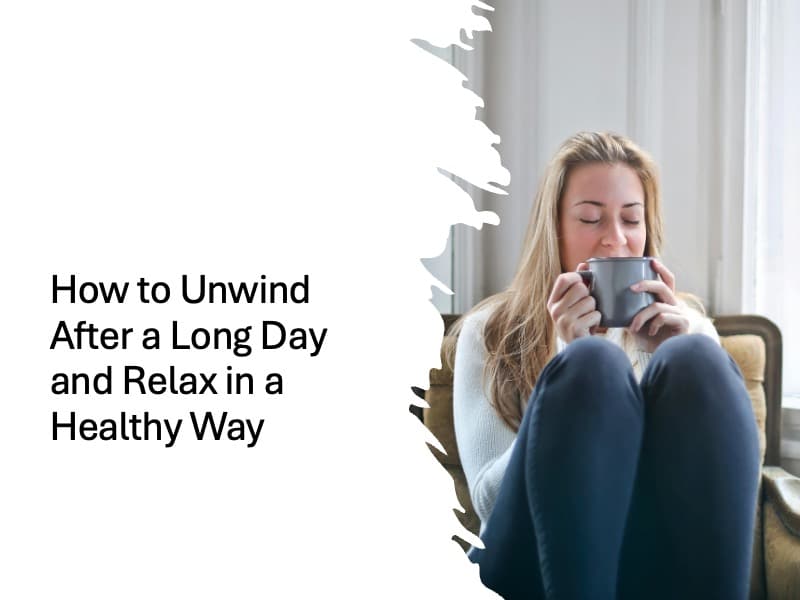
Make tea slowly.
Take a shower without a screen or conversation.
Single-tasking reduces cognitive load and lowers background muscle tension that often goes unnoticed (Mark et al., 2014).
Doing less, but with full attention, helps your brain switch gears.
Use Breathwork to Calm the Nervous System
Breathwork is one of the most efficient tools to unwind after a long day.
Slow, controlled breathing directly activates the parasympathetic nervous system.
Techniques such as nasal breathing, box breathing, or extended exhales can lower heart rate and reduce stress hormones in minutes (Jerath et al., 2015).
Even five minutes can noticeably quiet mental noise.
Breathwork works because it bypasses overthinking.
It gives your body a physical signal that it is safe to relax.
Try combining breathwork with progressive muscle relaxation to create a very effective way to unwind after a long day.
Release Stress Through Light Movement
Stress is not only mental.
It is stored physically in the neck, hips, jaw, and lower back.
Light stretching, mobility work, or a leisurely walk can help release this tension.
Gentle movement improves circulation and promotes relaxation without overstimulation.
Light resistance training or low-intensity cardio can also help when kept truly easy.
The goal is recovery, not performance.
Eat a Calm, Nourishing Evening Meal
Eating a balanced meal supports the transition out of stress mode.
Adequate protein, complex carbohydrates, and healthy dietary fats help stabilize blood sugar and support neurotransmitter balance.
Eating slowly and without screens improves digestion and satiety.
This reinforces the body’s shift toward rest.
Skipping meals or eating chaotically late at night can increase nighttime stress and disrupt sleep.
Evening nutrition plays a role in unwinding.
Stay Hydrated and Limit Alcohol
Mild dehydration can increase fatigue, irritability, and perceived stress.
Many people mistake dehydration for mental exhaustion.
Sipping water or herbal tea in the evening supports circulation and nervous system function.
Caffeine-free teas and mineral-rich water can further promote relaxation.
Alcohol may feel calming at first, but it disrupts sleep architecture and increases nighttime stress hormones (He et al., 2019).
Avoiding or minimizing alcohol improves true recovery.

Choose Low-Stimulation Television
Watching television can help you unwind after a long day, but content matters.
Fast-paced, emotionally charged shows keep the brain in alert mode.
Calm, familiar, or lighthearted programs are easier on the nervous system.
Nature documentaries, comedies, or slower-paced series tend to work best.
Lower volume and dim lighting amplify the relaxing effect.
The environment matters as much as the content.
Read a Book to Naturally Wind Down
Reading a physical book is one of the most effective ways to unwind after a long day.
It slows the mind without overstimulating the nervous system.
Reading reduces stress by lowering heart rate and muscle tension, even when done briefly (University of Sussex, 2009).
Fiction, reflective nonfiction, or familiar material tends to be most calming.
Avoid highly technical or emotionally intense material at night.
A few pages is enough to signal your brain that the day is winding down.
Reduce Phone Use Without Making It a Struggle
Constant scrolling keeps the brain stimulated when it is trying to power down.
Blue light, novelty, and emotional content delay relaxation.
You do not need to eliminate your phone entirely.
Simple boundaries such as a cut-off time or charging it outside the bedroom are often enough.
Reducing evening screen exposure improves sleep quality and lowers mental fatigue (Chang et al., 2015).
Less stimulation creates more space for recovery.
Build Simple Evening Habits That Stick
Consistency matters more than complexity.
Simple healthy habits repeated most nights are more effective than elaborate routines done occasionally.
A warm shower, calming drink, reading, or quiet music can all serve as reliable cues.
Over time, your brain learns that these actions mean it is safe to rest.
Low light and minimal noise strengthen the signal.
Predictability helps the nervous system relax faster.
Final Thoughts: Keys to Unwinding After a Long Day
Unwinding after a long day is not about doing everything perfectly.
It is about giving yourself permission to stop performing, producing, and pushing.
Some people include things like CBD in their evening routine to help signal that it’s time to relax, but unwinding is really about creating that shift from go mode to rest mode.
Rest is not laziness.
It is maintenance for your nervous system, body, and long-term health.
Small moments of calm, repeated consistently, build resilience.
That is how sustainable recovery happens.
This website does not provide medical advice. This website site does contain affiliate links, and purchases may earn a commission.
Read my Medical Disclaimer, Review Disclaimer, and Publishing Policies for more details. Use of this site indicates acceptance of these terms.