A Simple Guide to Better Exercise Recovery
 Reading Time: 8 minutes
 Exercise recovery is not an afterthought to training; it is the biological process that determines whether your workouts translate into measurable progress or chronic fatigue.
As a professional basketball player in my 11th season overseas, I have learned that the difference between peak performance and persistent soreness often has less to do with how hard you train and more to do with how intentionally you recover.
Across long seasons in Europe, congested travel schedules, double practices, and playoff pushes, I have seen firsthand that the athletes who prioritize sleep, nutrition, stress regulation, and intelligent deloading are the ones who stay durable and consistent.
At the physiological level, training creates mechanical tension, metabolic stress, and microscopic muscle damage, which stimulate adaptation through protein synthesis, glycogen replenishment, and nervous system recalibration.
When exercise recovery habits are insufficient, these adaptive mechanisms are blunted, increasing the risk of overtraining, immune suppression, and soft-tissue injury.
Understanding how to optimize sleep quality, nutrient timing, hydration status, inflammation management, and nervous system balance helps your body rebuild stronger after each session.
If you want long-term performance gains rather than short-term exhaustion, mastering exercise recovery is just as important as mastering your workout program.
Why Recovery After Exercise Matters So Much
Recovery after exercise is the physiological bridge between stress and adaptation.
Every strength session, sprint workout, or high-intensity interval creates controlled muscle fiber disruption, nervous system fatigue, and depletion of glycogen stores.
This microscopic damage is not harmful when managed correctly, because it triggers muscle protein synthesis, mitochondrial adaptations, and neuromuscular improvements that ultimately increase strength, endurance, and resilience.
The key is allowing that repair process to fully occur.
When you neglect proper recovery, protein synthesis cannot outpace breakdown, inflammation lingers longer than necessary, and your nervous system remains in a heightened stress state.
Over time, this imbalance makes it much harder to speed up muscle recovery after workouts, and it increases cumulative fatigue.
Performance plateaus, soreness becomes persistent instead of productive, and small aches can gradually evolve into more serious soft-tissue issues.
Strategic recovery practices such as quality sleep, adequate protein intake, hydration, active rest, and stress management help regulate cortisol levels, replenish glycogen stores, and restore neuromuscular efficiency.
These habits are not optional extras.
They are the mechanisms that help you avoid overtraining and sustain long-term progress.
Recovery is not a break from training.
It is the biological process that makes training effective.
How to Recover Better After Exercise
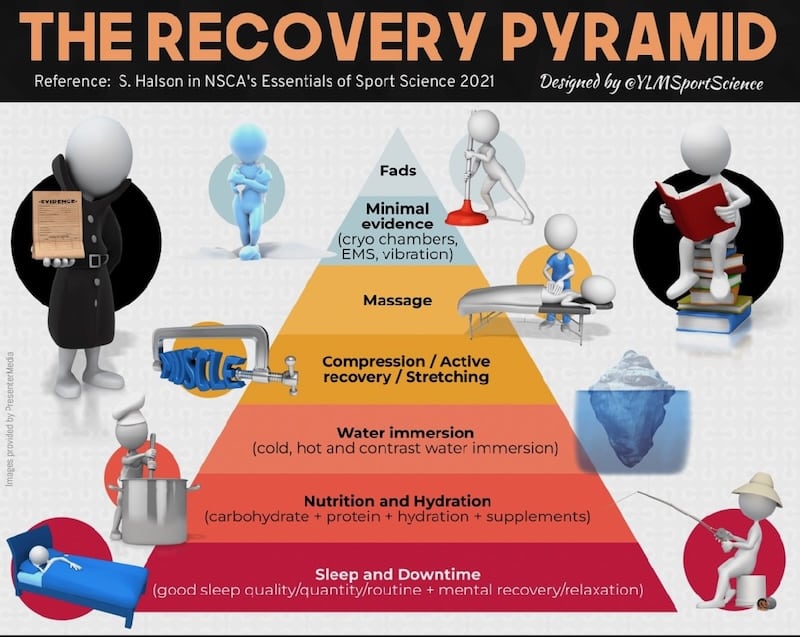
If you want to improve your post-workout recovery, it helps to think in terms of a recovery pyramid rather than a collection of random strategies.
At the base of this pyramid are the fundamentals that help your body recover from exercise faster: sleep quality, adequate calories, sufficient protein intake, hydration, and stress management.
These foundational habits regulate hormones, support muscle protein synthesis, restore glycogen, and rebalance your nervous system.
Above that sit supportive tools such as active recovery sessions, mobility work, contrast therapy, and targeted supplementation.
These can help you recover faster after workouts, but only if the foundational layers are already solid.
At the very top are advanced or experimental methods, which may offer marginal gains but will never compensate for poor sleep, inadequate nutrition, or chronic stress.
When you build recovery from the ground up, you create a sustainable system that consistently turns hard training into measurable performance gains.
Prioritize Quality Sleep
Sleep is the foundation of effective exercise recovery and the single most powerful tool you have to restore performance.
During deep, slow-wave sleep, your body releases growth hormone, increases muscle protein synthesis, replenishes glycogen stores, and downregulates systemic inflammation.
This is also when your nervous system shifts into parasympathetic dominance, enabling true physiological repair.
If you consistently shorten your sleep, you limit your body’s ability to adapt to training stress.
Over time, inadequate sleep can impair reaction time, reduce strength output, disrupt glucose metabolism, and elevate cortisol levels, all of which directly interfere with recovery and long-term progress.
Most active adults should aim for seven to nine hours of quality sleep per night.
If extending total sleep time feels difficult, focus first on improving sleep efficiency by reducing screen time before bed, keeping your room cool and dark, limiting late-night caffeine, and maintaining a consistent sleep schedule.
Small improvements in sleep often produce noticeable gains in energy, coordination, and workout performance within days.
Fuel Your Body Properly
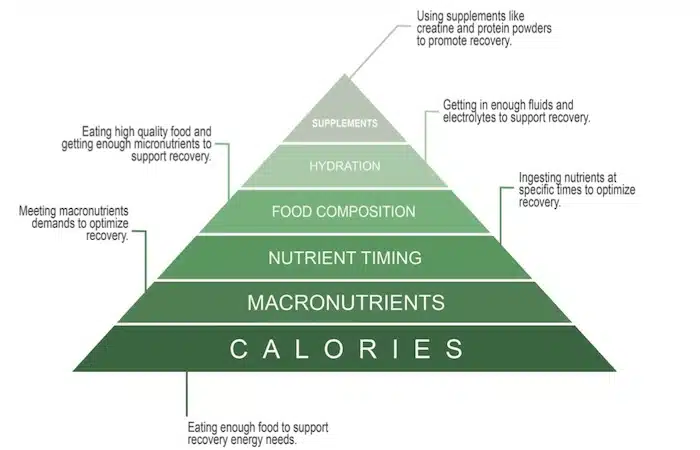
Nutrition is one of the primary drivers of effective exercise recovery because it directly influences muscle repair, glycogen restoration, inflammation control, and hormonal balance.
After intense training, your muscles are more sensitive to nutrients, particularly amino acids and carbohydrates.
Protein provides the essential building blocks needed to repair damaged muscle fibers and stimulate muscle protein synthesis, while carbohydrates replenish depleted glycogen stores and restore energy availability for your next session.
A balanced post-workout meal within one to two hours can meaningfully support recovery.
Prioritize high-quality protein sources, complex carbohydrates, healthy fats, micronutrient-dense foods, and adequate fluids.
Even mild dehydration can impair strength, endurance, and cognitive performance, so rehydration should be intentional rather than incidental.
Electrolytes may also be beneficial, particularly after heavy sweating or long-duration sessions.
Sodium, potassium, and magnesium help restore fluid balance and support neuromuscular function.
Some athletes explore supplementation to enhance recovery. In performance-focused communities, you may see discussions encouraging people to buy peptides online or experiment with advanced compounds.
While interest in cutting-edge recovery methods is understandable, these approaches carry potential risks and legal considerations.
Any supplementation strategy should be approached cautiously and ideally under the supervision of a qualified healthcare professional.
Whole foods, adequate protein intake, intelligent carbohydrate timing, and consistent hydration remain the true foundation of long-term recovery.
Supplements can complement these basics, but they should never replace them.
Incorporate Active Rest
Rest days are not wasted days.
They are strategic opportunities to enhance exercise recovery without adding additional training stress.
Many people assume progress only happens through hard sessions, but low-intensity movement can actually support tissue repair and nervous system recalibration.
Light activity increases circulation, which helps deliver oxygen and nutrients to recovering muscle and assists in removing metabolic byproducts associated with soreness.
Walking, easy cycling, swimming, mobility work, or controlled stretching sessions are all effective forms of active rest.
These activities stimulate blood flow and maintain joint mobility without creating additional muscle damage or central fatigue.
For athletes in long seasons, I have found that structured active recovery sessions can reduce stiffness and improve readiness for the next high-intensity practice.
The goal is not to train harder but to move with intention.
Intensity must remain low.
If your heart rate stays elevated for extended periods or you feel depleted afterward, you likely turned recovery into another workout.
Effective active rest should leave you feeling refreshed, not exhausted.
Manage Inflammation Effectively
A certain level of soreness is a normal and expected part of adaptation, especially when introducing new training stimuli or increasing intensity.
However, persistent inflammation, lingering joint stiffness, or swelling that does not improve with movement may signal that recovery capacity is being exceeded.
Productive muscle soreness typically improves as you warm up, whereas inflammatory joint pain often feels sharp, localized, or mechanically restrictive.
Strategies such as structured warm-ups, gradual load progression, mobility training, and foam rolling can improve tissue quality and reduce unnecessary joint stress.
These approaches enhance circulation and maintain range of motion, supporting long-term durability.
Cold exposure, ice baths, and contrast therapy are commonly used in athletic settings.
While some athletes report reduced soreness, responses vary, and excessive use immediately after strength training may blunt certain adaptive signals.
Context matters.
Learning to distinguish between adaptive soreness and warning signs is one of the most important skills for sustainable progress.
Sharp, escalating, or asymmetrical pain should never be ignored.
Manage Stress Appropriately
Training stress is only one component of your total recovery load.
Psychological stress, travel demands, work pressure, and disrupted sleep all contribute to cumulative fatigue.
When stress remains chronically elevated, cortisol levels rise and can interfere with muscle repair, glycogen replenishment, immune function, and sleep quality.
Even a well-designed training program can feel overwhelming when life stress is high.
Incorporating nervous system regulation practices can meaningfully improve recovery.
Simple interventions such as controlled breathing, short walks outdoors, prayer or meditation, journaling, or device-free quiet time help shift the body toward parasympathetic dominance.
Recovery is holistic.
You cannot expect optimal physical adaptation if your mind is constantly under pressure.
Adjust Your Training When Needed
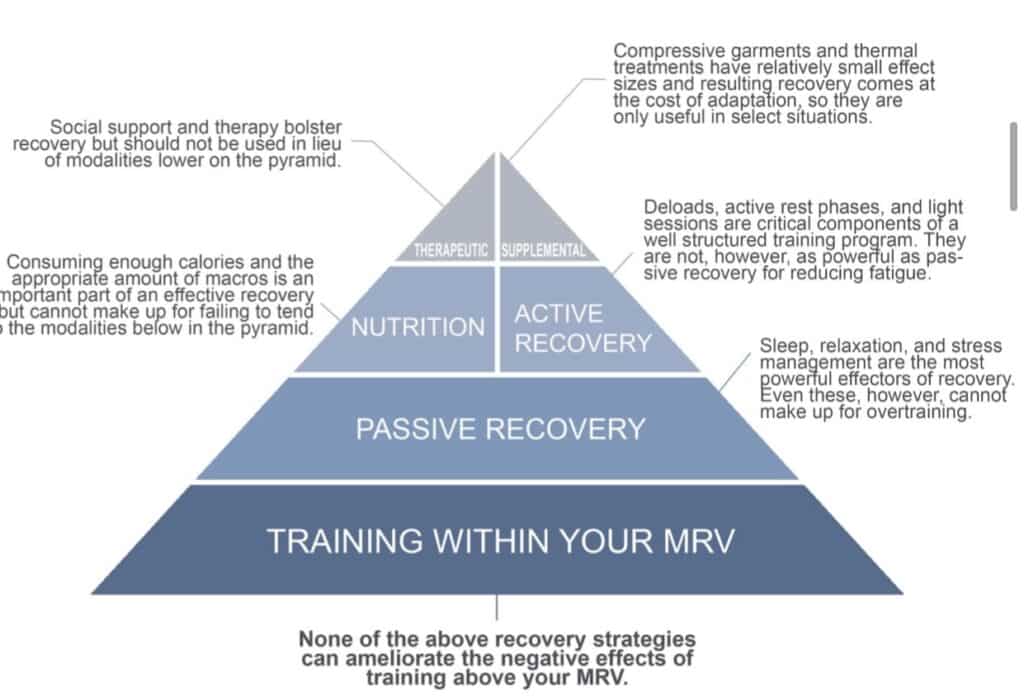
One of the most intelligent recovery strategies is knowing when to reduce load rather than increase it.
Persistent fatigue, declining strength output, reduced motivation, poor sleep, and irritability are common early indicators of excessive training stress.
Ignoring these signals can gradually push you toward overreaching or even overtraining.
Planned deload weeks, reduced volume phases, or temporary intensity adjustments allow connective tissue, the nervous system, and hormonal balance to recalibrate.
These strategic reductions often lead to improved performance once full training resumes.
Progress is not linear. Strategic restraint can be more productive than constant intensity.
Final Thoughts: How to Build Exercise Recovery into Your Routine
Effective exercise recovery is not driven by a single technique but by consistent, integrated habits.
Prioritizing sleep, consuming adequate protein and carbohydrates, staying hydrated, incorporating active rest, regulating stress, and adjusting training load all work together to support adaptation.
When these behaviors become automatic rather than reactive, recovery improves without requiring extreme interventions.
When recovery is treated as essential rather than optional, training quality increases.
Energy remains more stable, injury risk decreases, and performance becomes more sustainable over time.
Exercise provides the stimulus. Recovery determines the outcome.
This website does not provide medical advice. This website site does contain affiliate links, and purchases may earn a commission.
Read my Medical Disclaimer, Review Disclaimer, and Publishing Policies for more details. Use of this site indicates acceptance of these terms.