How to Lose Fat and Keep Muscle: The Ultimate Guide
 Reading Time: 25 minutes
 Learning how to lose fat and keep muscle requires more than eating less and adding extra cardio; it requires a measured strategy that reduces body fat while protecting your strength, lean muscle mass, recovery, and performance.
I’m Adam Kemp, a professional basketball player with a master’s degree in Nutrition Education.
Throughout my career, I have regularly needed to lower my body-fat percentage without sacrificing the muscle, power, and energy necessary to compete at a high level.
Although losing weight requires a sustained calorie deficit, losing weight and improving body composition are not necessarily the same outcome.
An overly aggressive diet can cause some or even most of the weight you lose to come from water, stored glycogen, and lean tissue instead of primarily body fat.
Research suggests that a slower rate of weight loss is generally more favorable for preserving lean mass, particularly among lean, resistance-trained individuals and competitive athletes (Aragon et al., 2017).
Adequate protein and consistent resistance training provide additional protection by supporting muscle protein synthesis and giving your body a reason to retain the muscle it has already built (Hector & Phillips, 2018; Longland et al., 2016).
Based on this understanding, I believe the best way to lose body fat without losing muscle is not to follow the most restrictive diet or complete the greatest possible amount of cardio exercises, but it is to create a moderate calorie deficit, consume enough protein, continue strength training, use cardio workouts strategically, and protect your sleep and overall exercise recovery.
These principles can help you build a sustainable fat-loss plan that improves how you look and feel without unnecessarily compromising your metabolism, training quality, or athletic ability.
Whether you are an athlete, an experienced lifter, or simply pursuing a healthier body composition, this guide will show you how to lose fat and keep muscle.
Key Takeaways: How to Lose Body Fat and Keep Muscle Mass
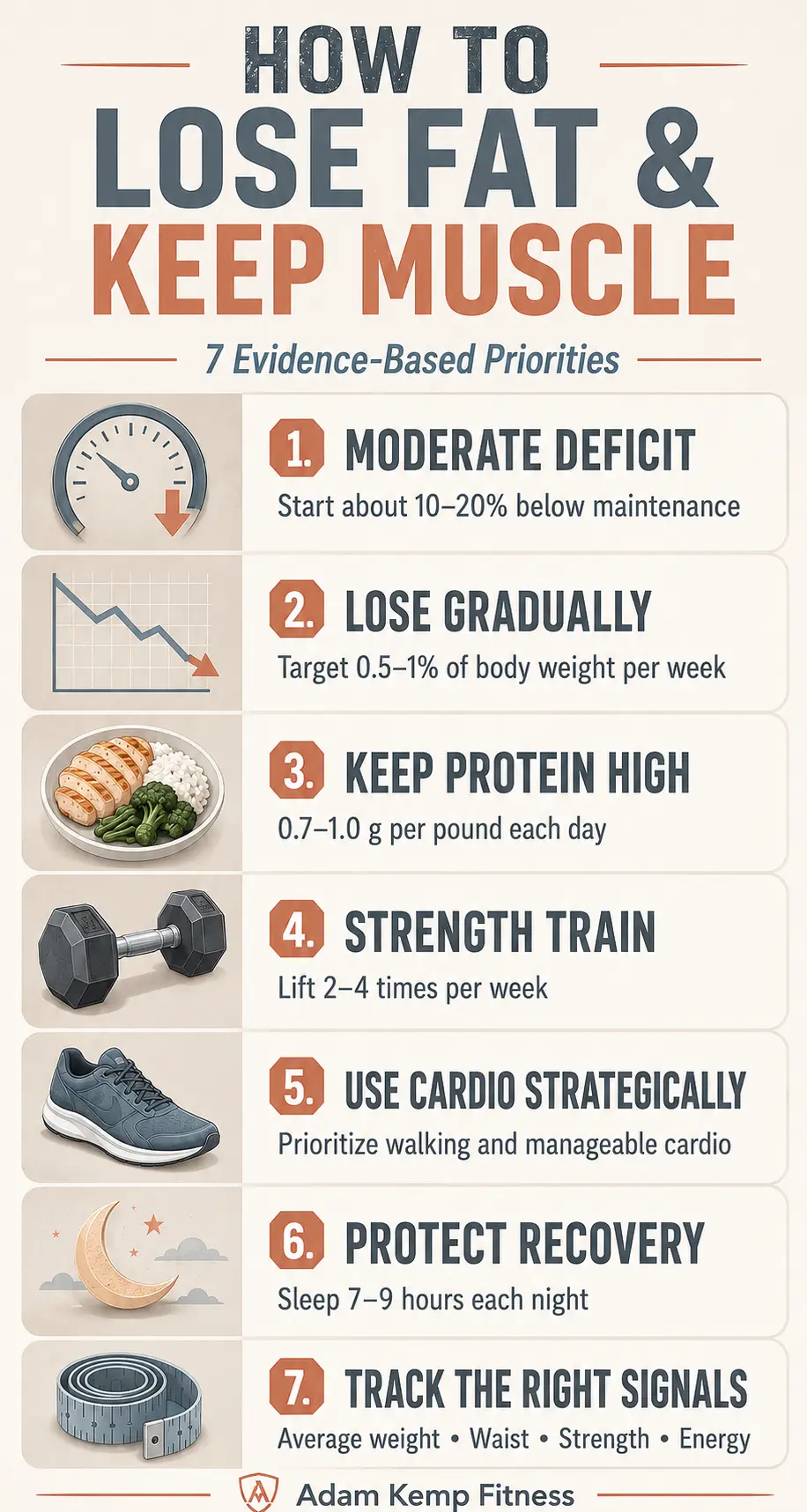
Losing fat while maintaining muscle is the key to achieving a lean, strong, aesthetic physique, and the best way to lose fat and keep muscle is to create a moderate calorie deficit while continuing to give your body the nutrition, training stimulus, and recovery it needs to preserve lean tissue.
- Maintain a Moderate Calorie Deficit: Start approximately 10%–20% below your estimated maintenance calories instead of reducing food intake as aggressively as possible.
- Lose Weight Gradually: Target approximately 0.5%–1% of your body weight per week. Lean athletes and experienced lifters should generally remain near the lower end of this range to better protect muscle and performance.
- Consume Enough Protein: Aim for approximately 0.7–1.0 grams of protein per pound of body weight—or 1.6–2.2 grams per kilogram—each day, distributed across several meals.
- Continue Strength Training: Complete two to four resistance-training sessions per week and try to maintain your strength in foundational movement patterns.
- Use Cardio Strategically: Walking and moderate-intensity cardio can increase calorie expenditure without creating excessive fatigue. HIIT can also help, but it should complement your strength training instead of compromising recovery.
- Protect Your Sleep and Recovery: Aim for seven to nine hours of sleep per night and adjust your training demands when stress or fatigue becomes excessive.
- Measure More Than “Scale Weight”: Monitor your weekly average weight, waist circumference, progress photos, workout performance, energy, and how your clothes fit.
A successful fat-loss plan should gradually reduce your body weight and waist measurement while keeping your strength and training performance relatively stable.
If your weight is falling rapidly but your strength, energy, sleep, and recovery are deteriorating, your calorie deficit or training workload may be too aggressive (Aragon et al., 2017; Hector & Phillips, 2018).
Can You Lose Fat Without Losing Muscle?

Yes, you can lose body fat while preserving most (or sometimes all) of your muscle mass.
However, this outcome is not automatic, and guaranteeing absolutely no muscle loss during a calorie deficit is unrealistic.
Fat loss requires an energy deficit, which means consistently consuming fewer calories than your body expends.
When that deficit is moderate and supported by adequate protein, resistance training, and proper recovery, a greater proportion of the weight you lose is more likely to come from stored body fat rather than lean tissue.
It is also important to understand that weight loss and fat loss are not the same thing.
A change on the scale can reflect changes in body fat, muscle tissue, water, stored carbohydrates, and digestive contents.
For example, glycogen, the carbohydrate stored in your muscles and liver, holds water.
Reducing calories or carbohydrates can rapidly lower glycogen and its associated water, producing an early drop in scale weight that should not be mistaken for an equivalent amount of fat loss (Müller & Bosy-Westphal, 2016).
The practical goal is therefore not simply to reduce your body weight as quickly as possible, but to maximize fat loss while minimizing reductions in lean mass, strength, energy, and athletic performance.
Losing Weight vs. Losing Fat vs. Body Recomposition
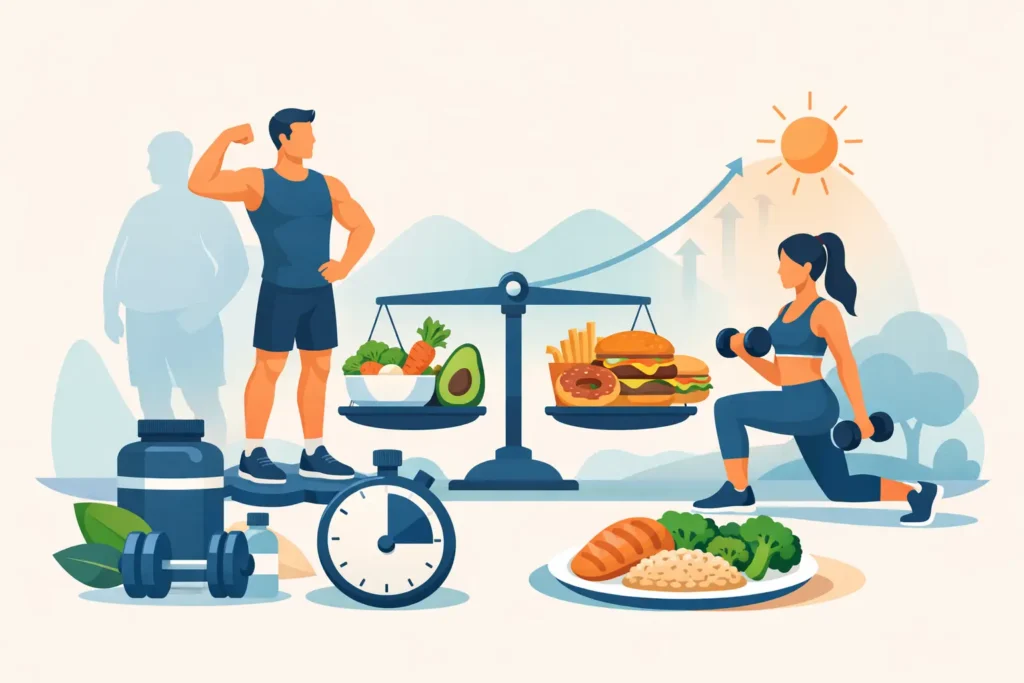
Although these terms are sometimes used interchangeably, they describe three different outcomes:
- Losing weight means your total body weight decreases, regardless of whether the loss comes from fat, water, glycogen, muscle, or other tissue.
- Losing body fat while maintaining muscle means reducing fat mass while keeping lean mass and strength relatively stable. This is the primary goal of a well-designed cutting phase.
- Losing fat while gaining muscle is known as body recomposition. In this situation, fat mass decreases while muscle mass increases, sometimes with little change in total body weight.
Body recomposition is possible, but the likelihood and rate of progress depend on your starting body composition, training experience, calorie deficit, protein intake, sleep, genetics, and resistance-training program.
Research has demonstrated that people can gain lean mass while losing fat when a calorie deficit is combined with high protein intake and intensive resistance exercise, although individual results vary (Longland et al., 2016).
Beginners often have the greatest potential to lose fat and gain muscle simultaneously because resistance training provides a new and powerful stimulus.
People returning after a long training break may also regain previously developed muscle relatively quickly while reducing body fat.
Individuals with more stored body fat may have greater energy reserves available to support muscle growth during a moderate calorie deficit.
However, that does not eliminate the need for sufficient protein, progressive resistance training, and adequate recovery.
Body recomposition becomes more difficult as you grow leaner and more experienced. Lean, advanced lifters are already closer to their muscle-building potential, and an energy deficit provides fewer resources for additional growth.
For these individuals, a successful fat-loss phase may mean maintaining nearly all existing muscle and strength rather than building substantial new muscle.
Preserving performance while body weight and waist circumference gradually decrease is still an excellent result.
Important Reminder: The best way to lose fat without losing muscle is to judge progress by body composition and performance, not only by the number on the scale. If your waist is shrinking, your average body weight is gradually decreasing, and your strength remains relatively stable, your approach is likely working. By focusing on a calorie deficit without extreme restrictions and incorporating strength training, you can optimize body composition and retain muscle mass while getting rid of unwanted pounds.
How Fast Should You Lose Weight to Preserve Muscle?
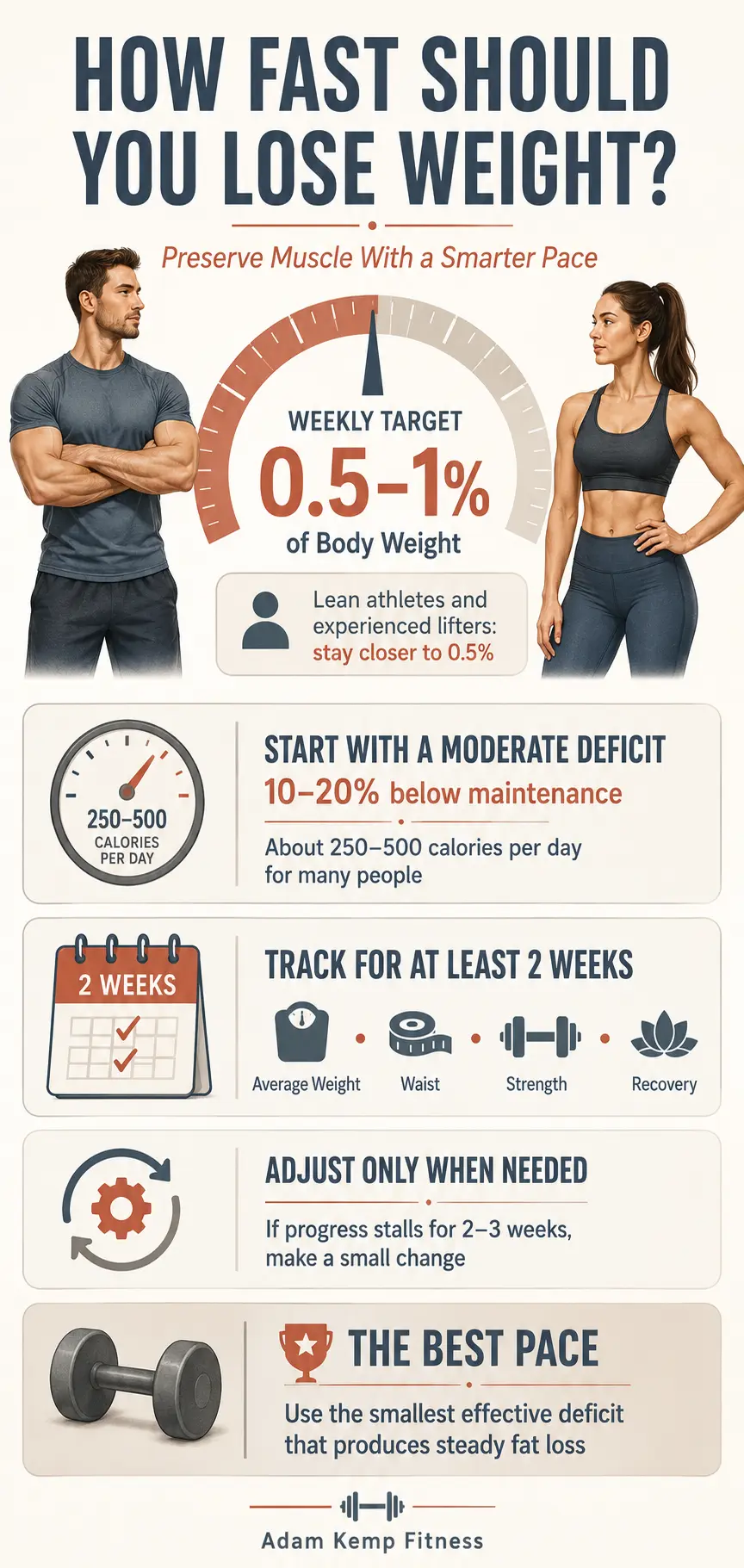
The fastest way to lose fat and keep muscle is usually slower than crash diets promise.
Aim to lose approximately 0.5%–1% of your body weight per week, with lean athletes and experienced lifters generally staying closer to 0.5%.
For example, a 150-pound person might target approximately 0.75–1.5 pounds per week, while a 200-pound person might aim for 1–2 pounds.
People with more body fat can often tolerate the higher end, whereas leaner individuals should generally lose weight more slowly.
Research involving elite athletes found that losing approximately 0.7% of body weight per week produced more favorable changes in lean mass and strength than a faster approach.
Slower weight loss appears particularly valuable as someone becomes leaner and more experienced with resistance training (Aragon et al., 2017; Garthe et al., 2011).
Begin with a calorie deficit of approximately 10%–20% below maintenance, or roughly 250–500 calories per day for many people.
This individualized approach is less likely to push smaller or already-lean individuals into an unnecessarily aggressive deficit.
Follow your initial calorie target for at least two weeks and compare weekly weight averages rather than reacting to individual weigh-ins.
If your waist and average weight are gradually decreasing while your strength remains relatively stable, continue with the same plan.
If progress stalls for two or three weeks, modestly reduce calories or increase activity.
If your weight falls faster than intended while your strength, energy, sleep, and recovery deteriorate, slightly increase your calorie intake or reduce your training workload.
The goal is not to create the largest calorie deficit you can tolerate, but to use the smallest effective deficit that produces consistent fat loss while preserving muscle and performance.
Best Diet to Lose Fat and Keep Muscle
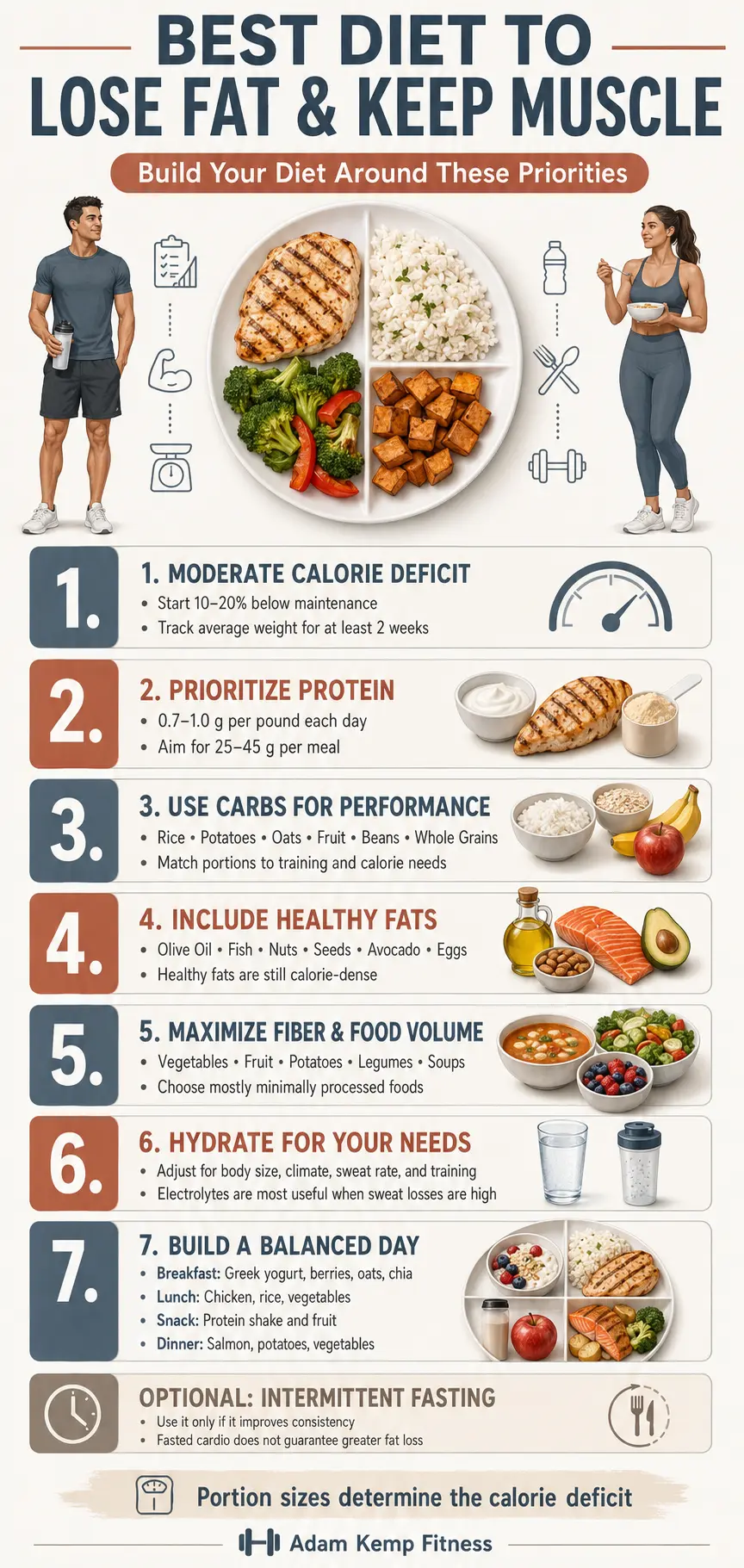
The best diet to lose fat and keep muscle is not defined by a particular food list, carbohydrate limit, or fasting schedule, but it is a sustainable eating pattern that creates a moderate calorie deficit while supplying enough protein, carbohydrates, dietary fat, micronutrients, fiber, and fluid to support training and recovery.
How Many Calories Do You Need to Lose Fat and Keep Muscle?
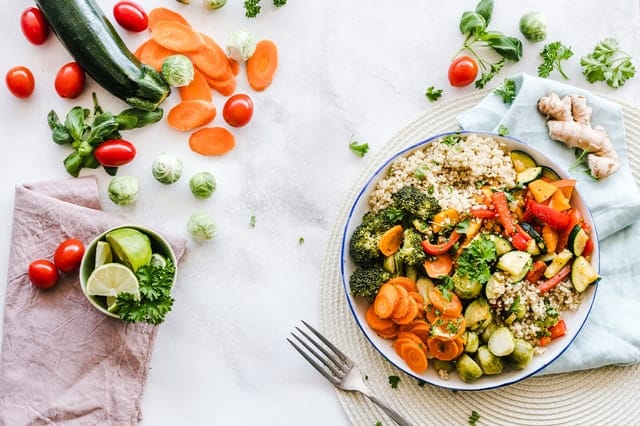
Key Point: Fat loss requires consistently consuming fewer calories than you expend.
Your maintenance calories represent the approximate amount needed to keep your average body weight stable at your current activity level.
Research has indicated that a slow rate of weight loss, around 0.7% of your body weight per week, helps you maintain the most muscle mass (Helms et al., 2014).
Online calorie calculators can estimate maintenance needs using your age, sex, height, weight, and activity level.
However, differences in metabolism, daily movement, training volume, and food tracking mean that the result should be treated as a starting estimate rather than an exact prescription.
Another option is to track your food intake and morning body weight for two weeks while maintaining your normal routine.
If your weekly average weight remains relatively stable, your average calorie intake during that period is likely close to your current maintenance level.
Begin approximately 10%–20% below maintenance, which may equal a deficit of roughly 250–500 calories per day for many people.
Follow that target for at least two weeks before deciding whether it needs to be changed.
Daily body weight can fluctuate because of hydration, sodium, glycogen, digestion, inflammation, and hormonal changes.
Compare weekly weight averages rather than lowering calories in response to one unusually high weigh-in.
If your average weight and waist measurement have not changed for two or three consecutive weeks, modestly reduce calories or increase daily activity.
Avoid changing both aggressively at the same time because you may not know which adjustment produced the result.
Rapidly declining strength, persistent fatigue, disrupted sleep, excessive hunger, poor workout performance, and weight loss that consistently exceeds 1% of body weight per week can indicate that your deficit is too aggressive.
In that situation, slightly increasing calories or reducing cardio may help preserve muscle and performance.
How Much Protein Do You Need to Lose Fat and Keep Muscle?
Protein is the most important macronutrient for muscle retention during a calorie deficit.
Energy restriction can increase its importance because fewer calories are available to support muscle protein synthesis, training recovery, and lean-tissue maintenance.
Related Reading: How Much Protein Do You Need to Build Muscle?
Daily Protein Target
A practical target for many active adults is approximately 0.7–1.0 grams of protein per pound of body weight, or 1.6–2.2 grams per kilogram, each day.
Athletes training frequently, people with lower body-fat levels, and those following larger calorie deficits may benefit from the upper end of this range (Hector & Phillips, 2018).
People carrying a substantial amount of body fat may find it more practical to calculate protein from goal body weight or estimated lean mass.
This prevents total body weight from producing an unnecessarily high protein target.
Lean, resistance-trained athletes under demanding cutting conditions may require approximately 2.3–3.1 grams per kilogram of fat-free mass.
Needs within that range may increase as someone becomes leaner or uses a more aggressive calorie deficit (Helms et al., 2014).
Protein Per Meal
A useful target for many people is approximately 25–45 grams of high-quality protein per meal.
Larger individuals may need more, while smaller adults may adequately stimulate muscle protein synthesis with a smaller serving.
Another individualized approach is to consume approximately 0.25–0.40 grams of protein per kilogram of body weight at each meal.
Your daily protein intake remains more important than hitting a perfect number at every meal, but consistent servings can make the total easier to reach (Jäger et al., 2017).
Protein Distribution
The best plan is to distribute protein across three to five meals rather than saving most of it for dinner.
Consuming a substantial serving approximately every three to five hours provides repeated opportunities to stimulate muscle protein synthesis throughout the day.
You do not need to eat on a rigid schedule or consume protein immediately after your final repetition.
A protein-rich meal within a few hours before or after training is generally sufficient when your total daily intake is adequate.
Best Protein-Rich Foods
Build most meals around a recognizable protein source such as lean meat, poultry, fish, eggs, Greek yogurt, cottage cheese, tofu, tempeh, beans, lentils, or a combination of these foods.
Rotating protein sources also provides a broader range of iron, calcium, zinc, omega-3 fats, fiber, and other nutrients.
Beans and lentils provide protein but also contain carbohydrates, so larger portions may be needed to match the protein supplied by meat, fish, dairy, or soy.
Combining legumes with tofu, tempeh, whole grains, dairy, eggs, or protein powder can make plant-focused meals more protein-dense.
When Protein Powder Is Useful
Protein powder is not required to lose fat or preserve muscle, but it can make a high-protein diet more convenient.
Whey, casein, soy, pea, and well-formulated plant blends can help when work, travel, appetite, or calorie limitations make whole-food meals difficult to prepare.
Whole foods should provide most of your diet because they generally offer greater satiety and more accompanying nutrients.
Protein powder is best viewed as a practical tool for filling a nutritional gap rather than a metabolism booster or fat-burning supplement.
Use Carbohydrates to Support Training
Carbohydrates do not prevent fat loss when total calorie intake remains below maintenance.
They can support resistance training, conditioning, sports performance, and recovery by supplying energy and helping replenish muscle glycogen.
Although it is commonly mentioned, the universal recommendation of five grams per kilogram is inappropriate because carbohydrate needs vary substantially.
That amount may be useful for a high-volume athlete but could consume most of the calorie allowance available to a smaller or less active person.
Set protein first, include sufficient dietary fat, and use the remaining calories for carbohydrates according to your training demands and preferences.
People who complete frequent strength sessions, basketball workouts, sprint training, or endurance exercise will generally need more carbohydrates than those who perform a few moderate workouts each week.
Focus on nutrient-dense complex carbohydrates such as sweet potatoes, quinoa, oats, lentils, and beans, as well as fiber-rich vegetables like spinach, kale, and broccoli, which can support training without preventing fat loss.
These foods provide steady energy, prevent blood sugar spikes, and support digestion, helping you stay full and energized throughout the day.
Portions, not the mere presence of carbohydrates, determine whether these foods fit your calorie target.
Consuming some carbohydrates before demanding workouts can support energy and training quality, while eating carbohydrates afterward can help restore glycogen.
However, your total daily intake and overall dietary consistency matter more than following a rigid nutrient-timing schedule.
Include Enough Dietary Fat
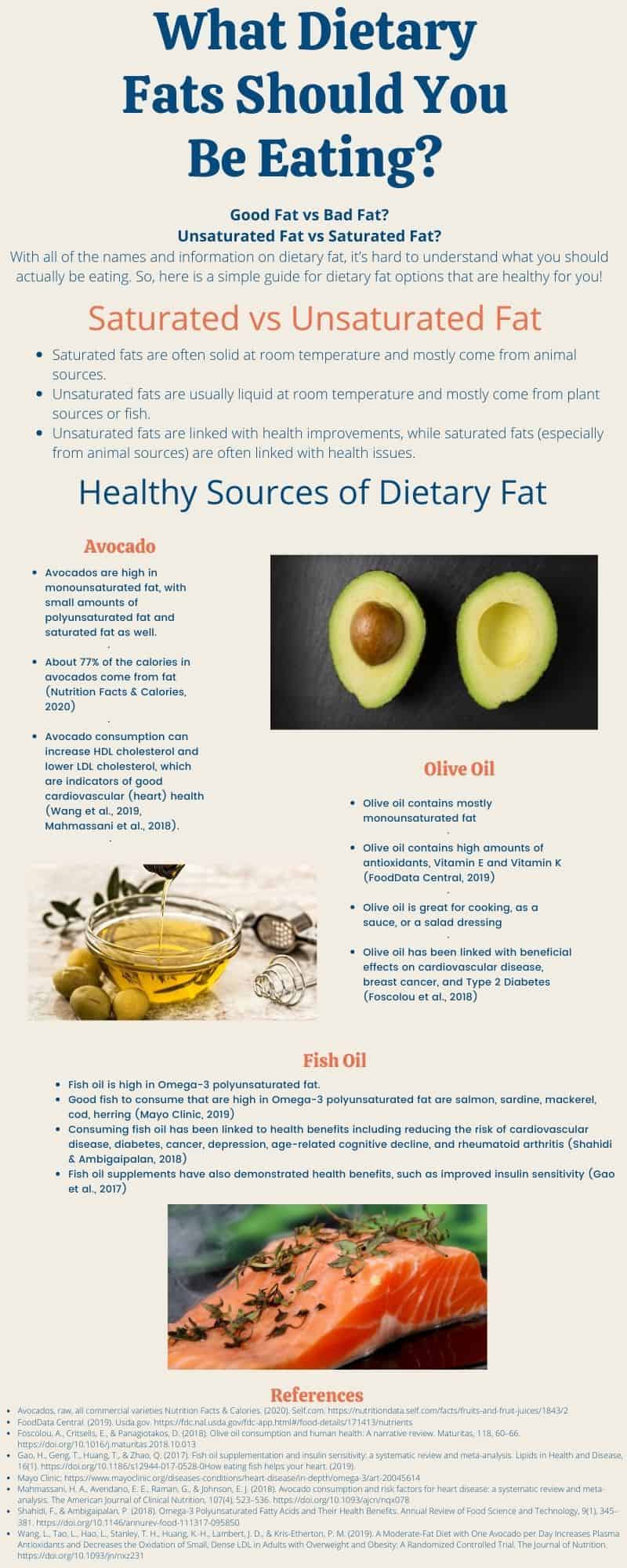
Dietary fat supports cell function, nutrient absorption, hormone production, and meal satisfaction. Instead of setting fat at exactly 20% of calories, use a flexible intake that leaves enough room for protein and performance-supporting carbohydrates.
Olive oil, fatty fish, nuts, seeds, avocado, and whole eggs provide beneficial fats and valuable micronutrients.
However, these foods remain calorie-dense, so unmeasured portions can quickly reduce or eliminate your intended deficit.
People who prefer higher-fat meals can allocate more of their calories to fat, while athletes who rely heavily on glycogen may perform better with more carbohydrates.
Prioritize Fiber and Food Volume
Vegetables, fruit, potatoes, beans, lentils, whole grains, broth-based soups, and other minimally processed foods can help you eat satisfying portions within a limited calorie budget.
These foods provide fiber, water, micronutrients, and physical volume that can make hunger easier to manage.
Food volume is especially important during a prolonged fat-loss phase because hunger often increases as calories and body weight decrease.
Building meals around lean protein and high-volume foods generally provides more satisfaction than using most of your calories on oils, desserts, snack foods, and caloric drinks.
Fiber intake should still reflect digestive tolerance and workout timing, as very large servings of beans, raw vegetables, or bran immediately before intense exercise may cause discomfort, and lower-fiber carbohydrates may be more practical around training.
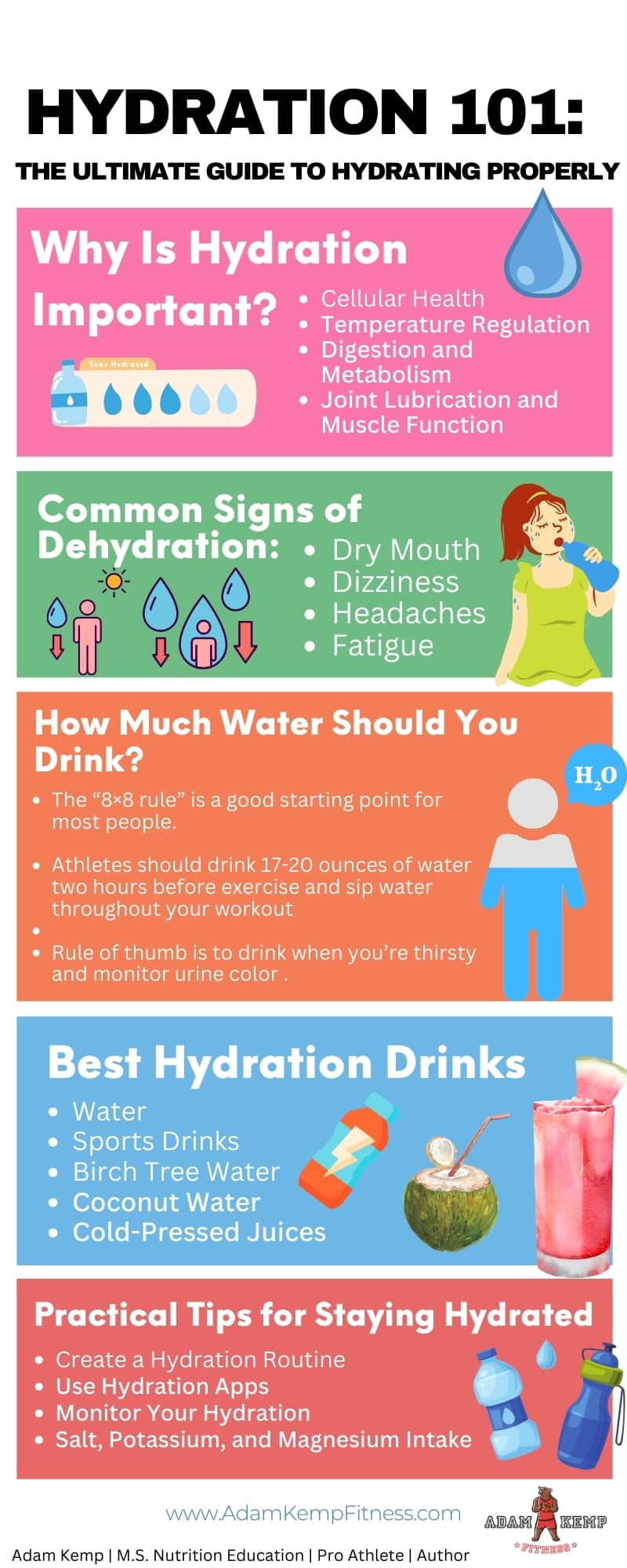
Hydrate According to Your Needs
Consistently hydrating is important as proper hydration supports metabolic processes and helps maintain muscle cell volume.
There is no universal amount of water that is correct for everyone, as fluid needs change with body size, climate, altitude, diet, pregnancy, illness, training duration, and individual sweat rate.
Instead, you should use thirst, urine color, body-weight changes around workouts, and performance as practical guides.
Pale-yellow urine generally suggests adequate hydration, although supplements, medications, and certain foods can affect its color.
Water is sufficient for many shorter or lower-intensity workouts.
Sodium and carbohydrates become more valuable during prolonged training, hot conditions, multiple daily sessions, or activities that produce substantial sweat losses.
Adding salt to every glass of water is unnecessary for most people and can be inappropriate for those with certain health conditions, but it can support those who sweat a lot.
Electrolyte replacement should reflect actual sweat losses, workout demands, dietary sodium intake, and, when relevant, guidance from a qualified healthcare professional.
Water, milk, coconut water, herbal tea, coffee, soups, fruits, and vegetables can all contribute to daily hydration.
Sports drinks can be useful during demanding exercise, but their carbohydrates and calories should be included in your nutrition plan.
Low-sugar, natural options like Gatorade Fit and Prime Hydration are two of the best sports drinks.
Sample Meal Plan to Lose Fat and Keep Muscle
The following day illustrates how to combine protein, carbohydrates, fats, fiber, and produce.
It is an example rather than a universal prescription because portion sizes must be adjusted to your calorie target, body size, training schedule, appetite, and dietary needs.
Breakfast: Greek yogurt with berries, oats, and chia seeds provides protein, carbohydrates, fiber, and dietary fat. Increase or decrease the oats and chia seeds according to your calorie and training needs.
Lunch: Chicken, rice, vegetables, and an olive-oil dressing create a balanced meal that can be adjusted easily. Use more rice around demanding training days and measure the olive oil when precise calorie control is necessary.
Snack: A protein shake with a piece of fruit offers a convenient combination of protein and carbohydrates. Milk, soy milk, oats, or nut butter can be added when more calories are needed.
Dinner: Salmon, potatoes, and roasted vegetables supply high-quality protein, carbohydrates, omega-3 fats, fiber, and micronutrients. Leaner fish can replace salmon when you need to reduce calories while keeping the protein serving similar.
Optional snack: Cottage cheese or eggs can help you reach your protein target when calories permit. Fruit or vegetables can be added if you need more food volume.
The ingredients alone do not create the calorie deficit; the portions do.
Two people can eat the same foods but require substantially different serving sizes to lose fat while preserving muscle.
Is Intermittent Fasting Helpful for Fat Loss?
Intermittent fasting can be helpful when a shorter eating window simplifies calorie control.
I have used a 16-hour fast with an eight-hour eating window during parts of my offseason because I find that structure convenient, but it is not necessary for successful fat loss.
Research generally indicates that intermittent fasting and continuous calorie restriction produce similar weight-loss results when calorie intake is comparable, and time-restricted eating does not appear to offer a unique advantage for reducing body weight or body fat beyond its potential effect on dietary structure and adherence (Ezzati et al., 2023; Liu et al., 2022).
However, the primary relevant question is whether fasting makes your nutrition plan easier to follow without harming your protein intake, training, recovery, or relationship with food.
If skipping breakfast causes low energy, intense evening hunger, or difficulty distributing protein, a traditional meal schedule may work better.
Athletes who train early, complete multiple daily sessions, or have very high calorie requirements may struggle to consume enough food within a short window.
Intermittent fasting should support the overall plan rather than forcing every meal into an inconvenient schedule.
People who are pregnant, breastfeeding, younger than 18, taking glucose-lowering medication, living with certain medical conditions, or managing a history of disordered eating should consult an appropriate healthcare professional before fasting.
Does Fasted Cardio Burn More Fat?

Fasted cardio can increase the amount of fat oxidized during an individual exercise session.
However, burning more fat during one workout does not necessarily lead to greater long-term body-fat loss because the body adjusts fuel use for the remainder of the day (Vieira et al., 2016).
Research comparing fasted and fed aerobic training has not demonstrated a clear body-composition advantage for fasted cardio when calorie intake is controlled, and both approaches can support fat loss when they contribute to a sustained calorie deficit (Schoenfeld et al., 2014).
Perform cardio fasted if you feel comfortable, enjoy it, and can maintain the intended effort.
Eat beforehand if training without food reduces your intensity, duration, energy, or recovery.
Fasted cardio is therefore a scheduling and preference option—not a shortcut around calorie balance. The best choice is the one that helps you train consistently while preserving strength, muscle, and overall performance.
Best Supplements for Losing Fat and Keeping Muscle
While a well-balanced diet without optimal nutrient timing is the key to losing fat and maintaining muscle, supplements play a very supportive role in optimizing your results.
By incorporating the right supplements into your regimen, you can keep muscle while losing fat.
Personally, I believe I have made some incredible improvements with my body over the years based on my approach to supplements.
However, it is important to remember that your approach to physical activity, sleep, exercise, and nutrition are significantly more important than the supplements you use.
With that being said, there are a variety of supplements for weight loss and muscle building that can actually help you keep muscle while cutting fat:
Protein Powder
Protein powder is one of the most convenient and effective supplements for maintaining muscle mass while cutting fat.
Protein powders can serve several roles for people trying to maintain muscle while losing fat, but primarily, they help you meet your daily protein requirements, which is crucial for muscle protein synthesis and preservation.
Moreover, research indicates that supplementing with protein powder can enhance muscle mass retention, especially when dietary protein intake might be insufficient due to caloric restriction (Morton et al., 2018).
There are several other reasons to consume a protein powder supplement when trying to lose fat but keep muscle, including:
- Act as a simple, effective metabolism-boosting breakfast
- Curbs appetite as an on-the-go protein snack
- Rapidly promotes muscle protein synthesis after workouts
- Supports overall muscle development and maintenance
Personally, I often consume one to two scoops of my favorite protein powder (Garden of Life Raw Protein and Greens) as a metabolism-boosting breakfast.
Protein has the highest Thermic Effect on Food, so consuming around 30 grams of protein instead of your usual breakfast can provide a simple, appetite-satiating, metabolism-boosting, muscle-preserving option.
If you are new to protein powder supplements, vegan and whey protein powder are the two primary options.
Vegan protein powders, such as Garden of Life Raw Protein & Greens, are excellent options for those looking to avoid dairy-based whey protein, and they often contain higher micronutrient contents than whey protein supplements.


Last update on 2026-07-24 / This article includes affiliate links/Images via Amazon Product Advertising API. I may earn commissions on purchases made through these links.
BCAA & EAA Supplements
Branched-Chain Amino Acids (BCAAs) are essential amino acids (EAAs) that the body cannot synthesize on its own and must be obtained through diet or supplements.
More importantly, BCAAs play a significant role in muscle protein synthesis and can help reduce muscle protein breakdown during caloric deficits.
Studies have shown that BCAA supplementation can support muscle retention during weight loss (Dudgeon et al., 2016).
However, for optimal benefits, a full-spectrum EAA supplement is often the better choice, as all essential amino acids contribute to muscle repair and growth.
In my opinion, the best amino acid supplements are Xtend and RSP Nutrition AminoLean.
Xtend BCAAs is a traditional BCAA supplement that includes additional muscle-promoting and non-stimulant energy-boosting ingredients like Citrulline Malate, L-Glutamine, and electrolytes for hydration.

Last update on 2026-07-24 / This article includes affiliate links/Images via Amazon Product Advertising API. I may earn commissions on purchases made through these links.
On the other hand, RSP AminoLean is an EAA supplement that contains a targeted weight-loss matrix that includes caffeine and fat-burning ingredients like green tea extract, green coffee bean extract, and CLA.

Last update on 2026-07-24 / This article includes affiliate links/Images via Amazon Product Advertising API. I may earn commissions on purchases made through these links.
CLA
Conjugated Linoleic Acid (CLA) is a fatty acid known for its ability to reduce body fat and support muscle retention by inhibiting the enzyme lipoprotein lipase, which promotes fat storage.
Research has shown that CLA supplementation can be particularly effective in aiding fat loss and preserving muscle mass during periods of caloric restriction, making it an ideal choice for those looking to cut without losing muscle.
My personal experience with CLA has been positive, as I’ve used it intermittently over the years.
Additionally, I often include products like RSP AminoLean, which contain CLA, in my supplement regimen.
For effective use of CLA supplements in maintaining muscle while losing fat, consistent long-term use is crucial.
Regular use for at least 12 months has been shown to produce noticeable improvements in body composition, and a commonly recommended dosage is 3 to 6 grams per day.
Starting with a lower dosage of around 3 grams per day is advisable, gradually increasing to a maximum of 6 grams per day if well-tolerated.
Taking CLA with meals can help improve absorption and reduce potential gastrointestinal discomfort.
Sports Research Max Potency CLA is a recommended product for those looking to try CLA supplementation.
As always, consult with a healthcare professional before starting any new supplement regimen to ensure it is appropriate for your individual health needs and goals.

Last update on 2026-07-24 / This article includes affiliate links/Images via Amazon Product Advertising API. I may earn commissions on purchases made through these links.
Creatine Monohydrate
Lastly, creatine monohydrate is a well-researched supplement known for its ability to increase muscle strength and size.
It works by increasing the amount of ATP (adenosine triphosphate) in your muscles, providing more energy for muscle contractions.
Creatine can be particularly beneficial during a cut, as it helps maintain strength and muscle mass despite a caloric deficit (Rawson & Volek, 2003).
I’ve used several creatine monohydrate supplements, and my favorite is Optimum Nutrition Micronized Creatine Monohydrate.
No products found.
Best Exercise Programs to Keep Muscle While Losing Fat
Maintaining muscle mass while losing fat isn’t solely dependent on nutrition; your training regimen plays an equally vital role.
The right combination of resistance training and cardiovascular exercise can help signal to your body that muscle mass is needed, thus preventing muscle breakdown.
If you are looking for a specific online workout program that will help you cut fat and keep muscle, I suggest you check out the workouts in my Workout of the Day category.
The 645 Workout Program is my favorite online workout program because it combines several important aspects of health and fitness, such as mobility, stability, strength, and power, into convenient 45-minute workouts.
If you are planning to continue your own exercise routine, here are some tips to make it easier for you to cut fat without losing muscle:
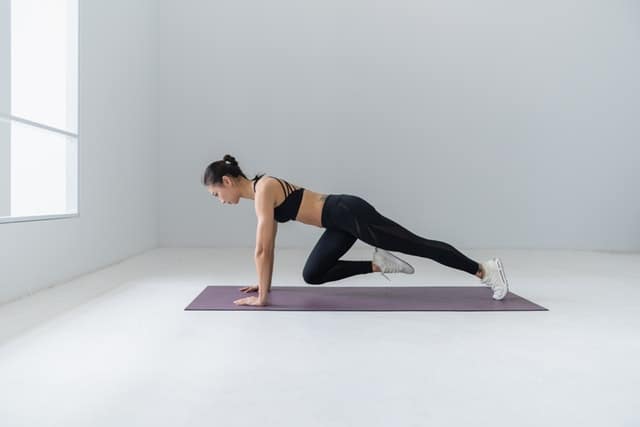
Start with Progressive Overload
Maintaining or increasing training intensity through progressive overload is crucial during a cut.
Progressive overload involves gradually increasing the weight, frequency, or number of repetitions in your strength training routine to continuously challenge your muscles.
This method signals to your body that your muscle mass is needed, even during a caloric deficit.
Ensuring that your workouts remain challenging can help preserve muscle mass and support continued strength gains.
By incorporating these training approaches, you can effectively lose fat while preserving muscle, leading to a leaner and stronger physique.
Regularly adjusting your workout plan to maintain intensity and variety will help you achieve your body composition goals.
Strength Training
Strength training is essential for preserving muscle mass during a calorie deficit because it stimulates muscle protein synthesis and the maintenance of muscle mass.
Research has shown that engaging in regular resistance training can significantly reduce muscle loss during periods of weight loss.
To increase HGH naturally and maintain muscle while losing weight, you should focus on compound exercises like squats, deadlifts, and bench presses, which target multiple muscle groups and provide a strong anabolic stimulus.
You also have the opportunity to choose from free weights, workout machines, and body weight exercises.
People often debate between exercise machines vs free weights, but I think you can use all types of exercises to get your dream body.
All these options are effective, but weight training with free weights has the most benefits for people trying to maintain muscle while losing fat because they produce the highest hormonal stimulus that signals the body to maintain muscle.
Cardio
Cardiovascular exercise is important for burning fat, but it needs to be balanced to avoid excessive muscle loss.
High-intensity interval training (HIIT) is an effective form of cardio, and research indicates that it helps to burn calories and increase metabolism without breaking down muscle mass.
Moreover, combining weight training with HIIT workouts such as CrossFit can be an excellent way to promote muscle hypertrophy and weight loss.
To achieve a well-rounded body, it’s essential to include both resistance training and cardio workouts in your workout regimen.
Lifestyle Tips to Preserve Muscle During Fat Loss
In addition to nutrition and exercise, certain lifestyle changes can significantly impact your ability to lose fat while preserving muscle mass.
Incorporating healthy habits that promote overall health and well-being will improve your efforts and support muscle retention during a caloric deficit.
Get Enough Rest and Sleep

Adequate rest and sleep are critical for muscle recovery and preservation.
During sleep, your body undergoes essential repair processes that help maintain muscle mass, and research suggests that sleeping 7-9 hours per night can optimize these processes and support muscle health.
Maintaining a regular sleep schedule, creating a restful environment, using natural sleep aids, and avoiding stimulants before bedtime can help you sleep better.
Quonol Magnesium Glycinate is an excellent natural sleep aid that promotes relaxation, reduces muscle cramps, and improves sleep quality.
Magnesium plays a key role in regulating neurotransmitters and stress hormones, which can enhance recovery, support fat loss, and help preserve muscle during a caloric deficit.

Last update on 2026-07-24 / This article includes affiliate links/Images via Amazon Product Advertising API. I may earn commissions on purchases made through these links.
Manage Stress Appropriately
Stress and stress management are also major factors in fat loss and muscle preservation.
Chronic stress can negatively affect muscle preservation by increasing cortisol levels, which can lead to muscle breakdown and fat retention (a hormone that can break down muscle and increase fat storage), and negatively impact sleep quality.
Incorporating natural stress remedies such as meditation, prayer and progressive muscle relaxation can be incredibly helpful.
Limit Alcohol Consumption
Alcohol can interfere with fat loss and muscle preservation efforts.
While moderate consumption may not significantly impact your goals, excessive alcohol intake can lead to muscle breakdown and hinder fat loss.
Limiting alcohol consumption or choosing healthier options, like a glass of red wine, can mitigate these effects.
Compared to other alcoholic beverages, moderate red wine consumption offers some health benefits, such as antioxidants, which can support overall health.
However, even drinking red wine before bed, as many people love to do, can prevent muscle building and increase fat development, so I suggest avoiding it.
By incorporating these lifestyle changes into your routine, you can enhance your efforts to preserve muscle while losing fat.
These habits support your overall well-being and help you achieve a leaner, healthier physique.
Monitor Progress and Adjust as Needed
Regularly assessing your body composition and making necessary adjustments are key to losing fat while preserving muscle mass.
To get the best results, you should use body composition analysis tools like bioelectrical impedance analysis (BIA), dual-energy X-ray absorptiometry (DEXA), or skinfold calipers to monitor muscle mass and body fat percentage.
I have used a few different body analysis tools throughout my career as a professional athlete, and I currently own a BodyPedia Smart Scale.
A few ways you can monitor your progress include scheduling regular weigh-ins and monthly body composition assessments.
Additionally, keeping a workout logbook to track exercises, sets, reps, and weights helps monitor progress and maintain or increase training intensity.
Fitness trackers like Whoop, Oura Ring, Fitbit, or Apple Watch can also provide valuable insights into heart rate variability, sleep quality, daily activity levels, and calorie expenditure.
These tools help fine-tune your training and recovery by ensuring you’re balancing intensity and rest appropriately.
By consistently monitoring progress and making data-driven adjustments, you can effectively understand how your body responds to nutrition and training strategies and adjust your approach if you notice signs of muscle loss, such as a drop in strength or muscle size.
Final Thoughts: Best Ways to Lose Fat and Keep Muscle

As my experience of having a 10+ year professional basketball career has shown me, achieving a lean, muscular physique requires a strategic balance of nutrition, exercise, and lifestyle adjustments.
By focusing on preserving muscle mass while losing fat, you can optimize your body composition and ensure long-term success.
Incorporating cardiovascular exercise, especially high-intensity interval training (HIIT), can enhance fat loss without compromising muscle mass.
Additionally, supplements like protein powder, EAAs, BCAAs, CLA, and creatine monohydrate can support your efforts, while lifestyle changes such as adequate sleep, stress management, and proper hydration are crucial for overall health and muscle preservation.
Consistently monitoring your progress and being flexible with your approach will help you stay on track, and by making data-driven adjustments, you can effectively navigate your cutting phase while retaining muscle mass.
Remember to celebrate small victories along the way and stay patient, as achieving a leaner, healthier body is a journey that requires dedication and consistency.
Embrace these strategies to transform your physique, boost your metabolism, and enhance your athletic performance, leading to a stronger, more confident you.
This website does not provide medical advice. This website site does contain affiliate links, and purchases may earn a commission.
Read my Medical Disclaimer, Review Disclaimer, and Publishing Policies for more details. Use of this site indicates acceptance of these terms.