
Muscle Cramps: Causes, Prevention Tips & Home Remedies
 Reading Time: 14 minutes
 Why do muscles cramp during a workout or while you sleep?
Muscle cramps are sudden, painful, involuntary contractions, and although their exact triggers vary, exercise-related cramps often involve fatigue and changes in the nerve signals that control muscle contraction and relaxation (Miller et al., 2022).
Dehydration and salt loss may contribute in some cases, but they don’t explain every cramp, and drinking more water or taking an electrolyte supplement isn’t a universal solution.
Instead, research supports looking at individual factors, including exercise intensity, conditioning, and previous cramping, to understand why a particular muscle keeps tightening unexpectedly (Miller et al., 2022).
As a professional basketball player, I have absolutely experienced cramps during and after long practices, games, travel, and hot-weather training, and the solution was rarely as simple as drinking more water.
Those experiences have taught me to look beyond the cramp itself and consider what changed in my workload, preparation, and recovery.
Recurring muscle cramps were one reason I began taking “salt shots” a couple of seasons ago, usually about ½ teaspoon when I wake up, ½ teaspoon before practice, and ½ teaspoon later in the day during the season when I expect to sweat heavily, as a personal strategy for preventing cramping.
Whether you want to manage a sudden calf cramp or understand a recurring problem, knowing when cramps happen provides a useful starting point for choosing your next steps.
Recognizing when cramps happen and what might trigger them can help you make practical changes to your training and recovery, starting with the question: why do muscles cramp?
What Are Muscle Cramps?
Muscle cramps are sudden, involuntary, painful contractions of a muscle or muscle group that often form a tight, hard knot that is difficult to relax.
They are temporary and can occur during exercise or at rest (Maughan & Shirreffs, 2019).
Exercise-associated muscle cramps occur during or shortly after physical activity, such as when your calf tightens during a sprint or your hamstring seizes late in a game.
Fatigue-related changes in nerve signaling appear to contribute to many exercise cramps, although the factors involved can differ between people and situations (Miller et al., 2022).
Why Do Muscles Cramp During Exercise or Sleep?
Muscles cramp when involuntary nerve activity causes them to contract forcefully and remain tight, but the circumstances behind that response can differ.
A calf that seizes during a late-game sprint and a foot that cramps while you sleep may feel similar but have different triggers (Maughan & Shirreffs, 2019).
During exercise, fatigue can alter the balance between signals that stimulate muscle contraction and those that help control it.
This is one leading explanation for why cramps often affect heavily working muscles, especially when the intensity or duration exceeds what an athlete is prepared to handle (Miller et al., 2022).
Nighttime cramps, also called nocturnal leg cramps, commonly affect the calves or feet and become more frequent with age.
Their exact cause is often unclear, and although pregnancy and certain medical conditions are associated with them, ordinary nighttime cramps are not consistently linked to dehydration or electrolyte deficiencies (Allen & Kirby, 2012).
The Most Common Causes of Muscle Cramps
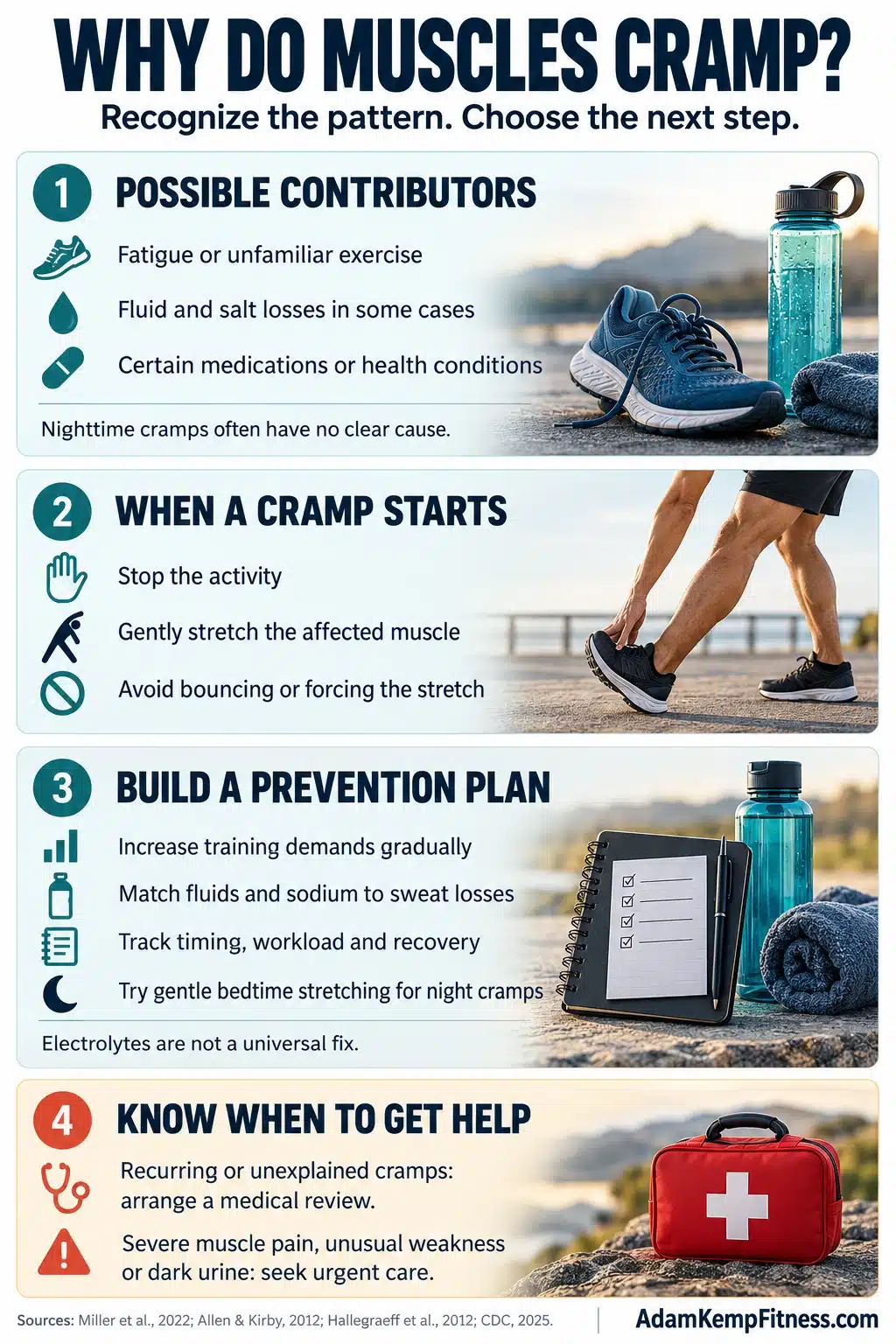
Muscle cramps can develop under several different circumstances, and identifying the pattern is more useful than assuming every episode has the same cause.
Consider which muscle cramps, when they happen, and whether anything has changed in your activity, health, or daily routine.
Muscle Fatigue and a Training Load You Were Not Ready For
Exercise-related cramps often occur when the demands placed on a muscle exceed its current preparation, particularly during unusually intense or prolonged activity.
Fatigue appears to contribute to many episodes, although it does not explain every case (Maughan & Shirreffs, 2019).
For example, running three flat miles regularly provides a different challenge than racing a hilly 10K, just as lifting weights does not fully prepare your calves for an afternoon of repeated basketball sprints.
When reviewing a cramp, consider the demands of the actual activity alongside your general fitness.
Use that information to guide your preparation by gradually building the duration, pace, and repeated efforts your sport requires.
If a particular workout repeatedly ends with cramping, review where the workload starts to exceed what you can comfortably sustain.
Fluid and Electrolyte Losses
Heavy sweating can create substantial fluid and sodium losses, making hydration particularly important during long practices, hot-weather workouts, or multiple sessions in one day.
Some exercise cramps may involve disturbances in water and salt balance, but research does not support treating dehydration as the explanation for every episode (Maughan & Shirreffs, 2019).
An effective approach to hydration for athletes accounts for sweat losses, workout duration, environmental conditions, and opportunities to drink.
Your needs during a short session in a cool gym may differ considerably from those during a long outdoor practice in summer.
Salt marks on clothing can prompt a closer look at sodium replacement, but they do not tell you exactly how much sodium to take.
For athletes with heavy losses, comparing body weight before and after representative workouts, while accounting for drinks and bathroom breaks, can help estimate sweat rate and inform an individualized plan (McDermott et al., 2017).
Avoid forcing fluids beyond your needs.
Excessive drinking can dilute blood sodium and cause exercise-associated hyponatremia, and adding electrolytes does not eliminate that risk if you continue drinking too much (McDermott et al., 2017).
Poor Recoer, Sleep and Accumulated Stress Control
Recovery deserves attention when cramps appear during a demanding training period, although poor sleep or stress alone cannot establish why a muscle cramped.
Exercise-cramp prevention is best approached by reviewing the individual’s circumstances, including preparation, fatigue, and recovery, rather than choosing one explanation in advance (Miller et al., 2022).
In my own training, I consider practices, games, and travel together when reviewing how much recovery time I have available.
A session that looks manageable on paper can fall in the middle of a much more demanding week.
Start by checking whether you are eating regular meals, allowing enough time between demanding sessions, and protecting your sleep schedule.
My guide to sleep optimization for athletes offers practical ways to approach late games, travel, and inconsistent bedtimes.
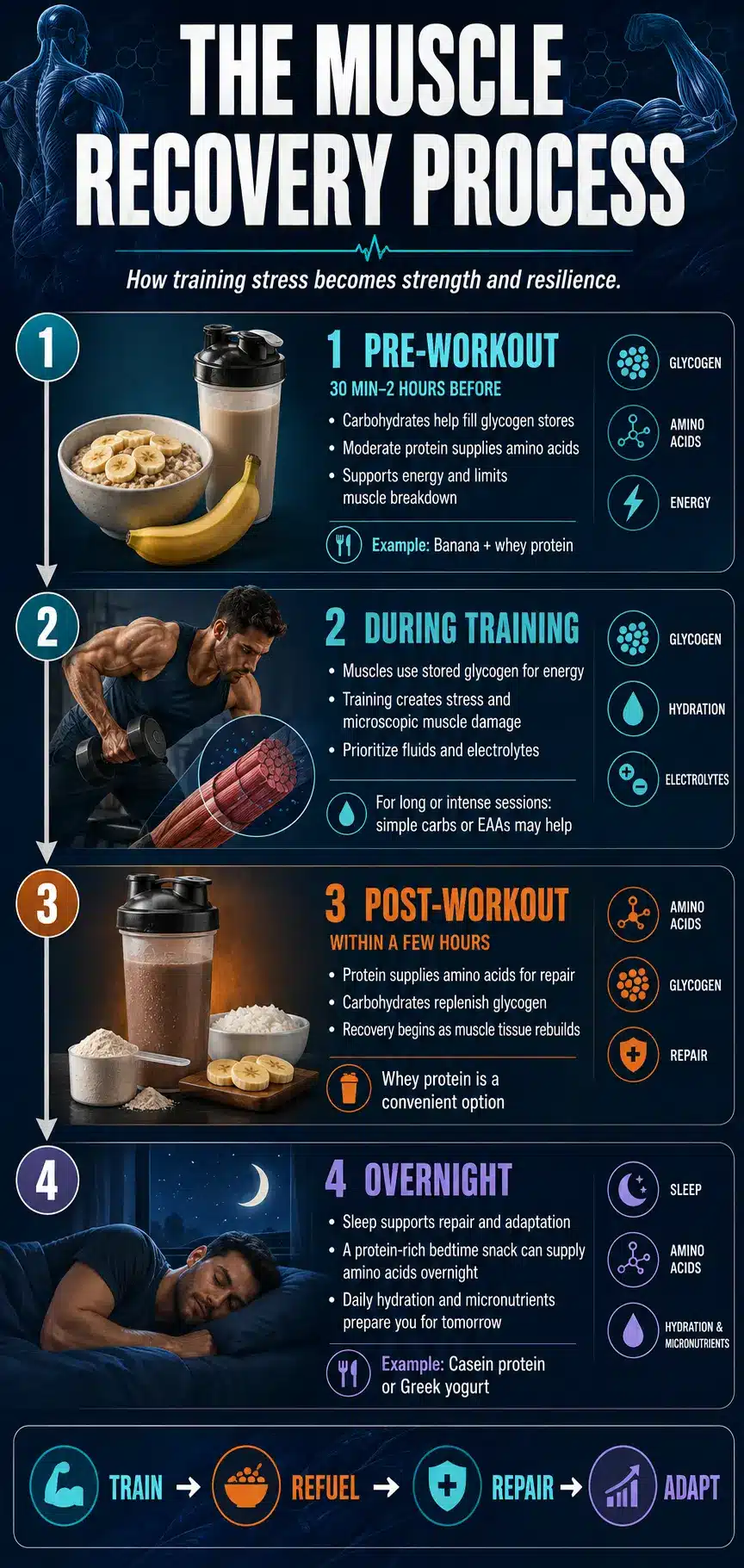
Limited Mobility or Staying in One Position Too Long
Tight muscles and prolonged sitting are relevant to evaluating recurrent cramps, particularly if your routine includes extended periods of inactivity (Merck Manual, n.d.).
Notice whether episodes follow a long drive, an inactive workday, or a position that keeps the affected muscle shortened.
Try building comfortable movement breaks into those situations, such as walking briefly during travel stops or moving your ankles while seated.
Treat these changes as a way to explore your own pattern rather than assuming that stiffness explains every episode.
For nighttime cramps, gentle stretches before bed may help.
A randomized trial involving 80 adults over age 55 found that six weeks of nightly stretching reduced cramp frequency and severity, although that result does not establish the same benefit for every age group or for exercise-related cramps (Hallegraeff et al., 2012).
Medications and Health Conditions
Some medications, including certain diuretics, statins, and bronchodilators, can be associated with muscle cramps or related muscle symptoms.
Nerve disorders, hypothyroidism, significant electrolyte abnormalities, and kidney disease requiring dialysis are also relevant considerations when cramps become recurrent or unexplained (Merck Manual, n.d.).
The timing can provide useful information: note whether symptoms began after a new prescription, a dose change, an illness, or a noticeable change in your overall health.
Bring those details to your clinician rather than stopping a prescribed medication on your own.
What to Do When a Muscle Cramps
If you have a muscle cramp, stop the activity and gently stretch the affected muscle, holding a comfortable position until the contraction eases.
Rest and gentle static stretching remain the main immediate treatments for an exercise-associated cramp (Miller et al., 2022).
- For a calf cramp, straighten the knee as tolerated and gently bring your toes toward your shin.
- For a hamstring cramp, slowly straighten the affected leg until you feel a mild stretch along the back of the thigh, avoiding bouncing or forcing the movement.
Once the cramp releases, reassess how the muscle feels before returning to activity.
If you have been sweating heavily, address fluid loss, but recognize that drinking isn’t an immediate substitute for stretching a muscle that is still tightly contracted (Miller et al., 2022).
If cramping returns when you resume, end the session and review what may have contributed.
Persistent pain, unusual weakness, or other symptoms deserve further attention rather than another attempt to push through.
How to Prevent Muscle Cramps More Effectively
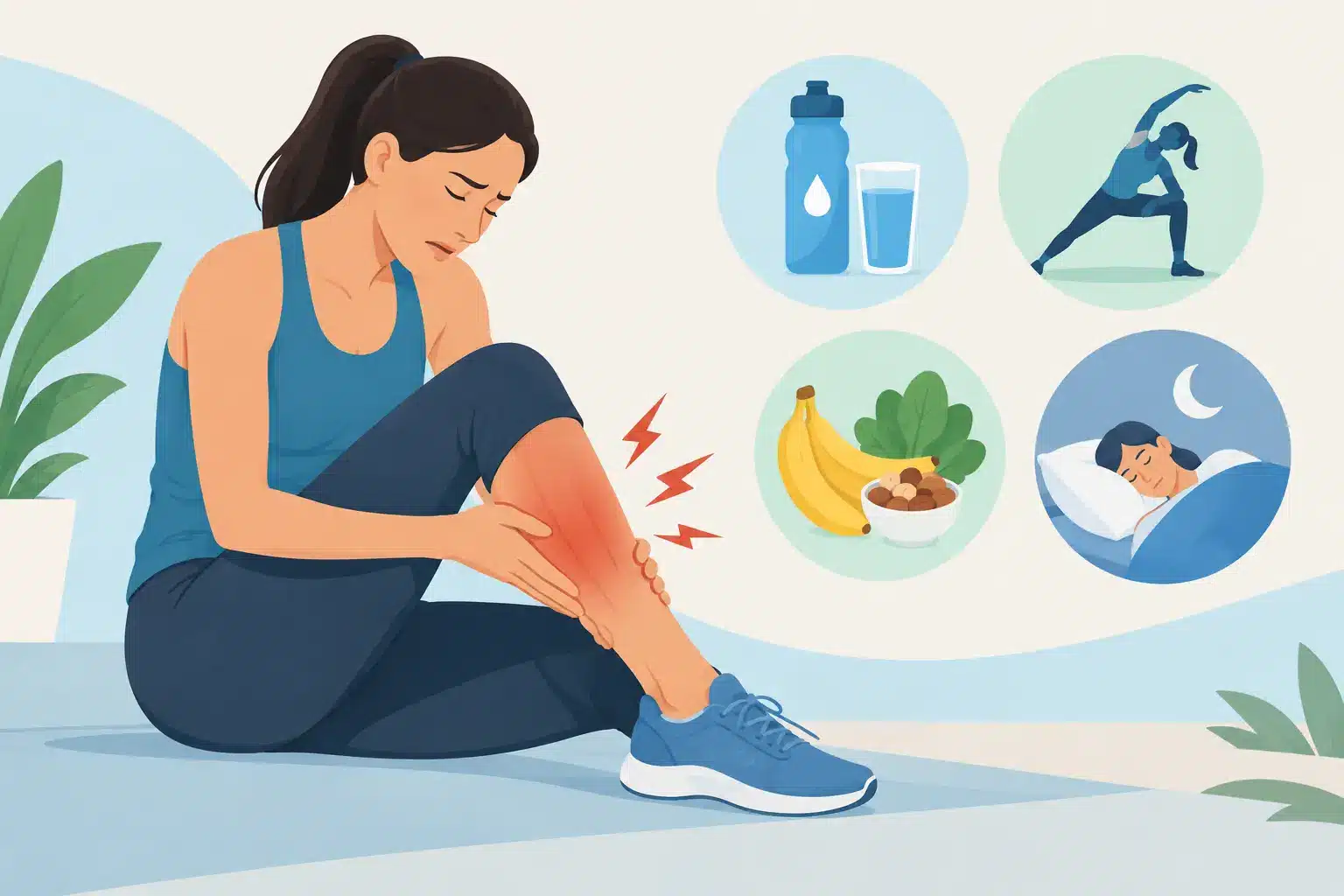
To prevent muscle cramps, build your prevention plan around the situations in which you actually cramp.
Keep a brief record of the affected muscle, the activity, when symptoms started, and anything unusual about the day, then use those observations to choose manageable changes.
For exercise-related episodes, review your pacing and preparation before increasing the workload again.
A practical adjustment might involve shortening a demanding session, introducing hills more gradually, or building court time before returning to a full afternoon of pickup basketball.
Also, plan your drinking to match conditions and your individual losses, using thirst as a useful guide when you don’t have a measured hydration plan.
Prolonged, sweaty sessions may warrant additional sodium, but the amount should reflect your overall diet and sweat losses (McDermott et al., 2017).
If you use a supplement, compare its sodium content, carbohydrate content, serving size, and digestive tolerance with what your session requires.
My electrolyte powder review explains how to make that comparison.
Keep your daily nutrition practical by including regular meals that include carbohydrates, protein, fruits, vegetables, and other foods you enjoy.
Before adding another supplement, check whether you consistently make time to eat around your training schedule.
For cramps that mainly occur at night, consider a consistent trial of gentle stretching before bed and track whether it helps.
For cramps during activity, prioritize preparation and pacing while reviewing hydration and recovery alongside them.
Home Remedies for Muscle Cramps
To choose useful home remedies for muscle cramps, consider whether you need relief from a muscle that is tightening right now or a strategy for managing recurring episodes.
Stretching, pickle juice, electrolyte drinks, and supplements each serve different purposes, and understanding those differences makes it easier to choose the right option.
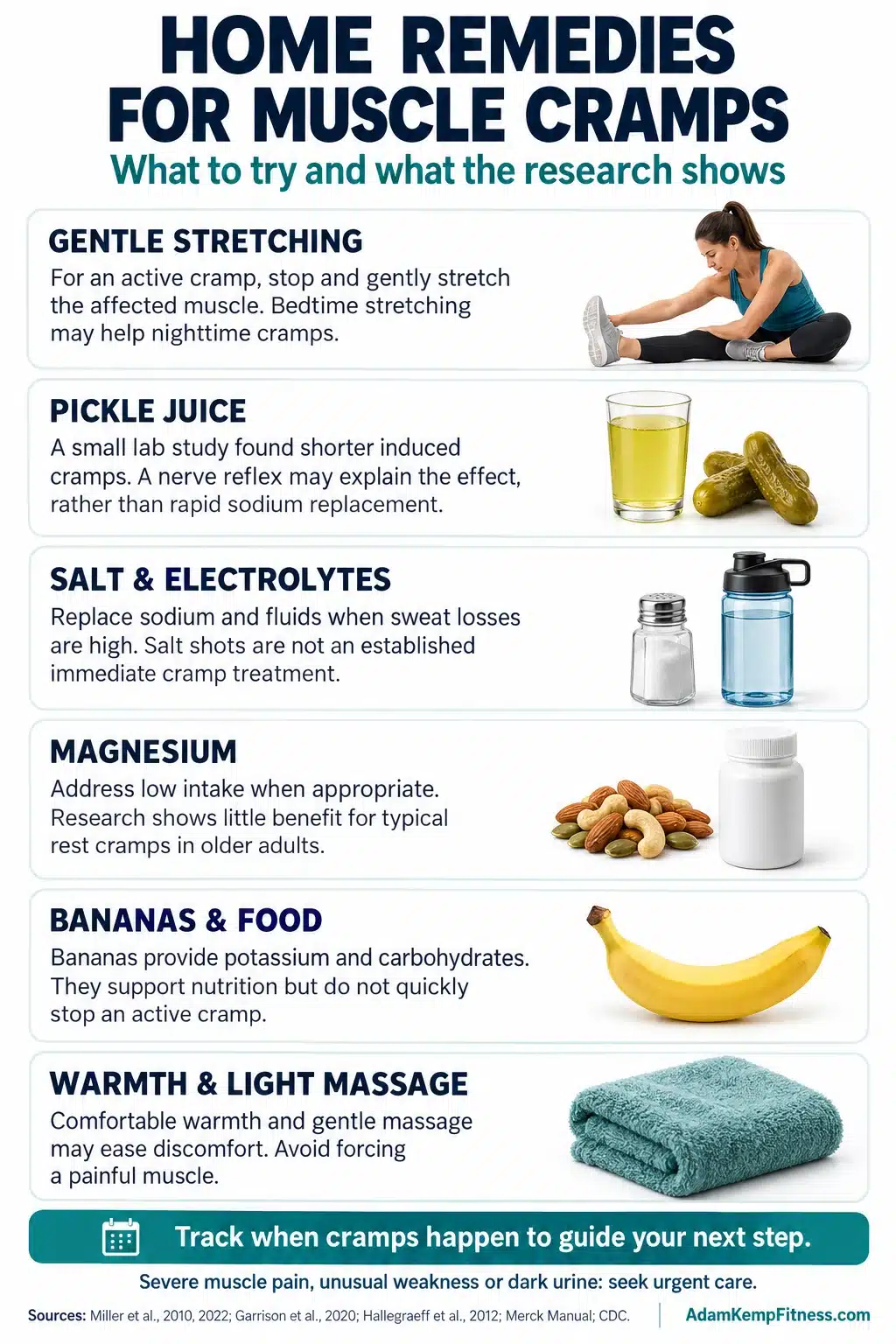
Gentle Stretching and Massage
To relieve an active muscle cramp, stop the activity and gently lengthen the affected muscle, holding a comfortable stretch until the contraction eases.
For a calf cramp, straighten your knee as tolerated and pull your toes toward your shin, then gently massage the muscle once it begins to relax (Miller et al., 2022).
For recurring nighttime cramps, gentle calf and hamstring stretching before bed is another practical option.
A randomized trial involving adults over age 55 found that six weeks of nightly stretching reduced both cramp frequency and severity (Hallegraeff et al., 2012).
Pickle Juice
Pickle juice is a popular muscle cramp remedy with some experimental support: in one small laboratory study, approximately 74 milliliters shortened electrically induced foot cramps by about 49 seconds compared with water (Miller et al., 2010).
The response occurred too quickly to be explained by replacing lost sodium, leading researchers to suggest that stimulation of the mouth and throat triggered a reflex that reduced the cramp.
Those findings make pickle juice an interesting option for acute relief, although the study examined artificially induced cramps rather than cramps during competition.
Its potential benefit appears to involve nerve signaling, which is different from using a sports drink to replace fluids and electrolytes.
Magnesium Supplements
Magnesium supplements are commonly used for muscle cramps because magnesium contributes to normal nerve and muscle function, making adequate intake an important part of everyday nutrition.
However, a Cochrane review found that supplementation was unlikely to meaningfully reduce typical rest cramps in older adults, while findings for pregnancy-related cramps were inconsistent (Garrison et al., 2020).
The review found no eligible trials evaluating magnesium for exercise-associated cramps, so its usefulness for athletes remains uncertain.
If your intake is low, discuss whether supplementation is appropriate, keeping in mind that larger supplemental amounts can cause diarrhea.
Taking Qunola Magnesium Glycinate and a magnesium L-threonate supplemnet before bed is one of my favorite home remedies for muscle cramps
Salt Shots and Salty Foods
Salt shots are one way some athletes add sodium during periods of heavy sweating, while salted meals, broth, and electrolyte drinks can serve the same replacement goal.
Sodium replacement is most relevant when sweat losses are substantial, with the amount guided by your training conditions, individual losses, and overall diet (McDermott et al., 2017).
Recurring muscle cramps were one reason I began using salt shots a couple of seasons ago as part of my in-season routine when I expect to sweat heavily.
I approach them as part of my hydration strategy, while recognizing that research has not established salt shots themselves as a reliable treatment for an active cramp (Miller et al., 2022).
Electrolyte Drinks
To replenish fluids and electrolytes after heavy sweating, an electrolyte drink provides a convenient source of water and sodium.
In a small crossover study involving 10 men exercising in the heat, an oral rehydration solution reduced susceptibility to electrically induced cramps compared with spring water (Lau et al., 2021).
The study supports further investigation, although it did not establish that every sports drink prevents cramps during normal training.
Bananas and Potassium-Rich Foods
Bananas are a familiar home remedy for muscle cramps because they provide potassium and carbohydrates, making them a practical food to include around exercise.
However, a small study found that changes in blood potassium after eating bananas were modest and too slow to explain immediate relief from an exercise cramp (Miller, 2012).
Include bananas alongside other potassium-containing foods, such as potatoes, beans, and yogurt, as part of your regular eating routine.
Their value is in supporting your overall nutrition rather than quickly releasing a muscle that has already seized.
Warm Baths and Heating Pads
To ease discomfort around a cramped muscle, try a warm shower, bath, or heating pad set to a comfortable temperature.
Heat may help ease pain, especially when the muscle remains uncomfortable after the contraction releases (Merck Manual, n.d.).
A warm bath can also provide a comfortable setting for gentle movement without forcing a stretch. Keep the temperature moderate and avoid falling asleep on a heating pad.
Mustard and Spicy Foods
Mustard packets and spicy foods are sometimes used by athletes hoping to interrupt a cramp through strong sensory stimulation in the mouth.
Researchers have explored whether ingredients that activate sensory receptors could influence the nerve activity involved in cramping, a proposed mechanism related to the interest in pickle juice (Miller et al., 2022).
Evidence for ordinary mustard or spicy foods as dependable cramp remedies remains limited.
Their potential role is as a sensory trigger, rather than a rapid source of replacement electrolytes.
Tonic Water
Tonic water became associated with cramp relief because it contains quinine, a substance historically used for nighttime leg cramps.
Although quinine has shown modest benefits in some studies, it can cause serious adverse reactions and is not recommended as a home treatment for cramps (Miller et al., 2022).
Tonic water is not an established treatment for exercise-related cramps. For home care, gentle stretching and attention to your individual triggers provide a more useful starting point.
When Muscle Cramps Need Medical Attention
Arrange a medical evaluation if cramps are frequent, increasingly painful, regularly interrupt your sleep, or occur with unexplained weakness or changes in sensation.
A symptom record and an up-to-date medication list can help your clinician determine whether to investigate an underlying cause (Merck Manual, n.d.).
Seek urgent medical attention for severe muscle pain after exertion, especially when accompanied by unusual weakness or tea- or cola-colored urine.
These can be signs of rhabdomyolysis, a condition involving muscle breakdown that requires prompt assessment (Centers for Disease Control and Prevention [CDC], 2025).
Pain with new swelling, warmth, or skin discoloration in one leg also needs urgent evaluation because a blood clot can resemble a muscle problem.
If those symptoms occur with chest pain or shortness of breath, call emergency services immediately (National Health Service [NHS], n.d.).
Frequently Asked Questions About Muscle Cramps
Final Thoughts: How to Build a Muscle Cramp Prevention Plan That Fits Your Routine
To better understand why muscles cramp, start by noticing when they happen, which muscles are affected, and what changed in your routine before they began.
Repeated cramping late in a basketball game raises different questions about preparation and workload than cramps that regularly wake you during the night.
My approach is to review my training demands, hydration, nutrition, and recovery together, then use those details to decide what needs attention.
That gives each adjustment a clear purpose, whether I am building up to longer practices, planning fluids for a hot gym, or allowing more recovery between demanding sessions.
To put that approach into practice, choose a manageable change and keep track of whether the pattern improves.
If cramps remain frequent, disrupt your sleep, or occur without an obvious trigger, bring those observations to a healthcare professional for a closer evaluation.
This website does not provide medical advice. This website site does contain affiliate links, and purchases may earn a commission.
Read my Medical Disclaimer, Review Disclaimer, and Publishing Policies for more details. Use of this site indicates acceptance of these terms.
Check Out Some of My YouTube Videos Below, and Please Follow on YouTube for More Educational Health and Fitness Content!
![Subscribe to @AdamKempFitness for more training, general health, recovery, and nutrition tips from a professional basketball player with a master’s degree in Nutrition Education! 🏀💪
Seated Max Vertical Jumps From a Box are one way I train explosive takeoff power with maximum intent on every rep.
Starting seated, with a pause and minimal rocking or dipping, reduces the contribution of a quick countermovement and emphasizes producing force from a relatively static position (National Strength and Conditioning Association [NSCA], 2020).
For athletes, the training goal is explosive lower-body force production and coordinated extension through the hips, knees, and ankles. I use this variation to practice driving hard into the floor and accelerating my body upward.
My preferred setup: 3 sets of 3 reps or 4 sets of 2 reps, supersetted with a strength or power exercise.
I keep the reps low, reset between jumps, and take longer rest periods so I’m ready to attack every takeoff. Even when pairing exercises, I give myself enough recovery to keep the jumps sharp.
Every rep has one goal: jump as high as possible. I focus on an explosive takeoff, a controlled landing, and consistent quality throughout the session.
Save this for your next power workout! 🚀
Reference: NSCA. (2020). Stretch-shortening cycle.
#VerticalJump #JumpTraining #ExplosivePower #AthleticPerformance #BasketballTraining](https://www.adamkempfitness.com/wp-content/plugins/feeds-for-youtube/img/placeholder.png)