Workout Recovery for Older Adults: 7 Tips for Better Recovery
 Reading Time: 10 minutes
Workout recovery for older adults deserves as much attention as the exercise itself.
A sustainable routine makes room for challenging workouts, adequate rest, and the everyday activities you want to keep enjoying.
Throughout my professional basketball career, recovery has been part of preparing for the next practice or game and keeping my body healthy enough to do my job.
For older adults, I would apply that same practical mindset to maintaining strength, mobility, and independence, although I certainly understand there is a difference e between a professional athlete and an older adult who is exercise for general health and longevity.
You do not need an athlete’s lifestyle or recovery routine schedule or expensive equipment to build a useful recovery routine.
Consistent sleep, adequate nutrition, manageable training loads, and comfortable movement provide the foundation for workout recovery for older adults.
How Aging Can Affect Exercise Recovery
Resistance training helps older adults maintain muscle strength and physical function, making it an important part of healthy aging (Fragala et al., 2019).
Research linking strength training with longer life provides additional context, although an association does not prove that lifting weights alone extends lifespan.
However, recovery does not follow a universal timeline based on your birthday.
A review of resistance exercise in adults aged 65 and older found substantial differences between studies, making precise recovery recommendations difficult (Hayes et al., 2023).
Muscle Repair Is Only Part of Recovery
Exercise challenges muscles and draws on stored energy, while exercise recovery involves restoring readiness for future activity.
Soreness, strength, and physical function can recover at different rates, so feeling less sore does not necessarily mean every aspect of recovery is complete (Hayes et al., 2023).
This overview of muscle recovery science offers further background on this topic, while my guide to how to recover from exercise explores practical recovery strategies.
Judge Recovery by Everyday Function
For older adults, I recommend looking beyond how your muscles feel during a workout.
Notice whether yesterday’s session makes climbing stairs, carrying groceries, or getting out of a chair unusually difficult.
Keep a brief record of your workouts, soreness, sleep, and energy.
These observations can help you and a qualified professional adjust your routine without assuming every difficult day is simply part of aging.
Most Important Exercise Recovery Tips for Older Adults
Workout recovery for older adults should fit both the demands of training and the activities of everyday life.
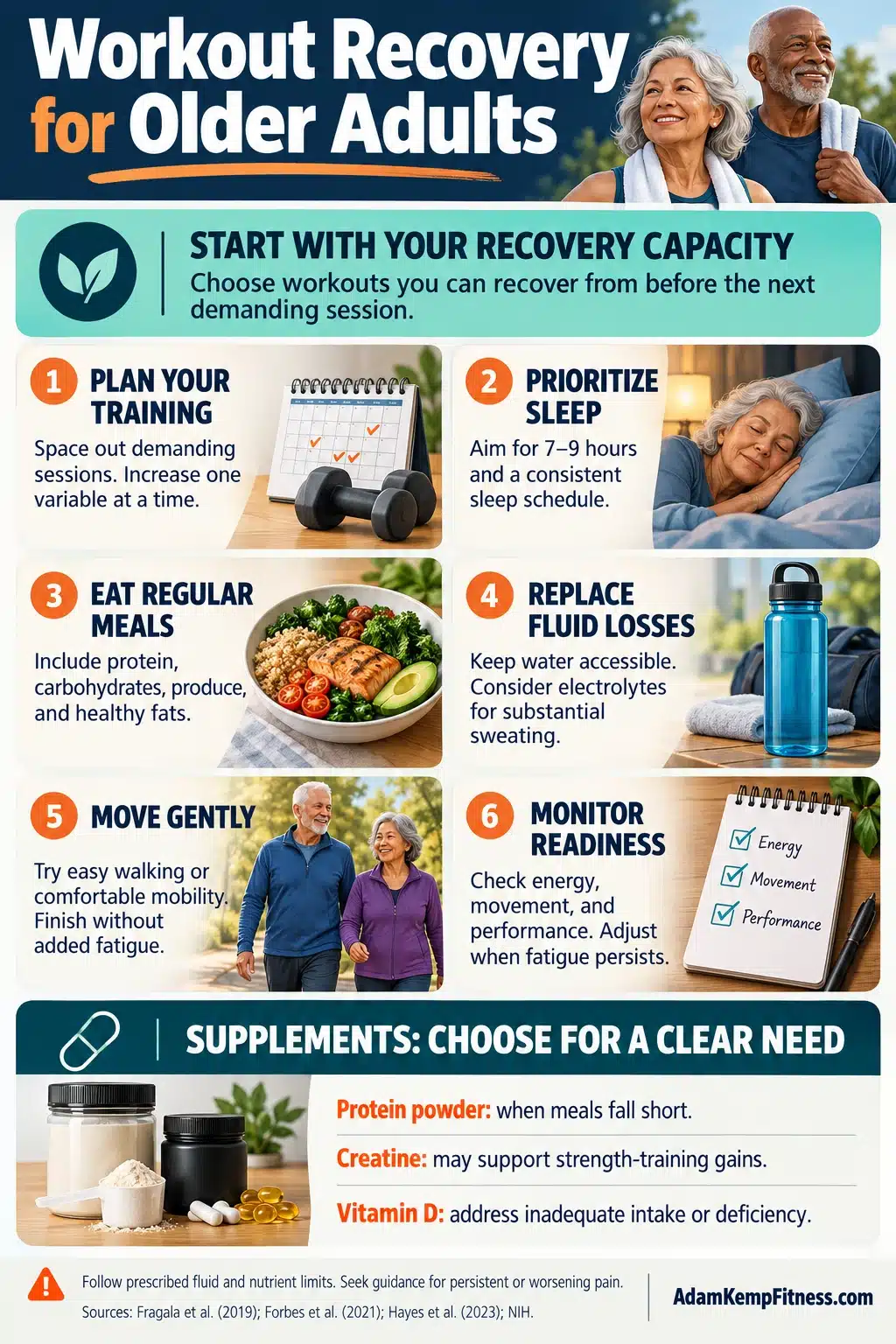
Start with the essentials below, then adjust your routine based on how you feel, move, and perform between sessions.
Schedule Workouts Around Your Recovery Capacity
The most important starting point for workout recovery is training within your recovery capacity, meaning your workouts challenge you without consistently leaving you too fatigued to recover before the next session.
The National Strength and Conditioning Association recommends individualized, progressive resistance training for older adults, commonly working toward two or three sessions weekly (Fragala et al., 2019).
Leave Space Between Demanding Sessions
For someone beginning full-body strength training, Monday and Thursday sessions offer a practical starting schedule. Easier walking or comfortable mobility work can fill the days between them.
Treat that schedule as an example rather than a recovery deadline. Before lifting again, consider whether normal movement feels comfortable and your warm-up feels reasonably close to usual.
If fatigue repeatedly carries into the next session, reduce the number of sets, lower resistance, or allow another easier day. Progress should reflect what you can sustain across several weeks.
Only Increase One Training Variable at a Time
Avoid simultaneously adding weight, extra sets, longer walks, and harder intervals.
Choose one modest change, then observe how you respond before adding another.
Individual coaching can help match exercises to your experience and limitations.
Resources focused on senior longevity training may be useful when exploring professional support, but ask about qualifications and experience with your specific needs.
Prioritize Sleep and Recovery Nutrition
Sleep and food deserve a regular place in your schedule.
I would address inconsistent meals and short nights before spending money on additional recovery products.
Protect Your Sleep Window
Older adults generally need approximately seven to nine hours of sleep per night; getting older does not eliminate that need (National Institute on Aging, n.d.).
Guidance on recovery and sleep provides additional background.
Start with a consistent bedtime and wake time, a comfortable bedroom, and a quiet evening routine. Reading, prayer, or another relaxing activity can provide a predictable transition away from the day’s demands.
If late workouts seem to interfere with your sleep, experiment with earlier sessions. These sleep recovery tips offer additional habits to consider.
Persistent insomnia, loud snoring with breathing pauses, or substantial daytime sleepiness deserves a conversation with your healthcare professional. Simply spending more time in bed may not address the underlying problem.
Eat Enough Protein Throughout the Day
Although each macro and micronutrient plays a role in workout recovery for older adults in one way or another, protein is the most important.
The PROT-AGE Study Group recommends approximately 1.0–1.2 grams of protein per kilogram of body weight dailyfor healthy older adults, with at least 1.2 grams per kilogram advised for those who exercise regularly (Bauer et al., 2013).
However, these are starting points for individual planning, not universal prescriptions.
For a 165-pound adult (roughly 75 kilograms), 1.2 grams per kilogram equals about 90 grams daily; dividing that across three meals means about 30 grams per meal.
I recommend building meals around foods such as fish, eggs, poultry, Greek yogurt, tofu, beans, or combinations of these.
If you have kidney disease or a prescribed protein restriction, discuss your target with your clinician before increasing intake (Bauer et al., 2013).
Include Carbohydrates, Fluids, and Regular Meals
For better recovery after workouts, pair protein with carbohydrate-containing foods and produce rather than treating a protein shake as a complete recovery plan.
Practical meals include yogurt with oats and berries or tofu with rice and vegetables.
My guide to what to do after a workout offers more ideas for organizing your post-exercise routine.
You also must keep water accessible during the day and around exercise.
My electrolyte powder review can help you consider whether an electrolyte product fits your sweating, environment, and training habits.
Best Supplements for Workout Recovery for Older Adults
The best supplements for workout recovery for older adults depend on what your diet and training routine actually need.
I would prioritize filling nutritional gaps and supporting consistent strength training before buying products marketed specifically for soreness.
Protein Powder When Meals Fall Short
Protein powder offers a convenient way to meet your daily protein target when appetite, preparation time, or food preferences make that difficult.
It provides the amino acids needed for muscle repair, but you don’t need a shake if your meals already provide enough protein (National Institutes of Health Office of Dietary Supplements [NIH ODS], n.d.-a).
Choose a complete protein such as whey or soy, or a plant-based blend providing all essential amino acids.
Adjust the serving to fill the gap in your diet rather than automatically adding several shakes daily.
Creatine Monohydrate to Support Strength Training
Creatine monohydrate is one of the most useful supplements for overall health, and it is worth considering for older adults who regularly perform resistance exercise.
A meta-analysis found that adding creatine to resistance training improved strength gains compared with training and a placebo, although results varied between studies (Forbes et al., 2021).
Its value here is supporting training adaptations over time; improved strength does not automatically mean faster relief from post-workout soreness.
A common approach for healthy adults is 3–5 grams daily, including rest days, without a required loading phase (NIH ODS, n.d.-a).
My guide to taking creatine daily provides additional context on consistent use.
If you have kidney disease or are being evaluated for kidney problems, discuss creatine with your clinician before starting.
My comparison of creatine vs. protein powder explains how these two primary supplements for muscle recovery serve different purposes.
Electrolytes for Substantial Sweat Losses
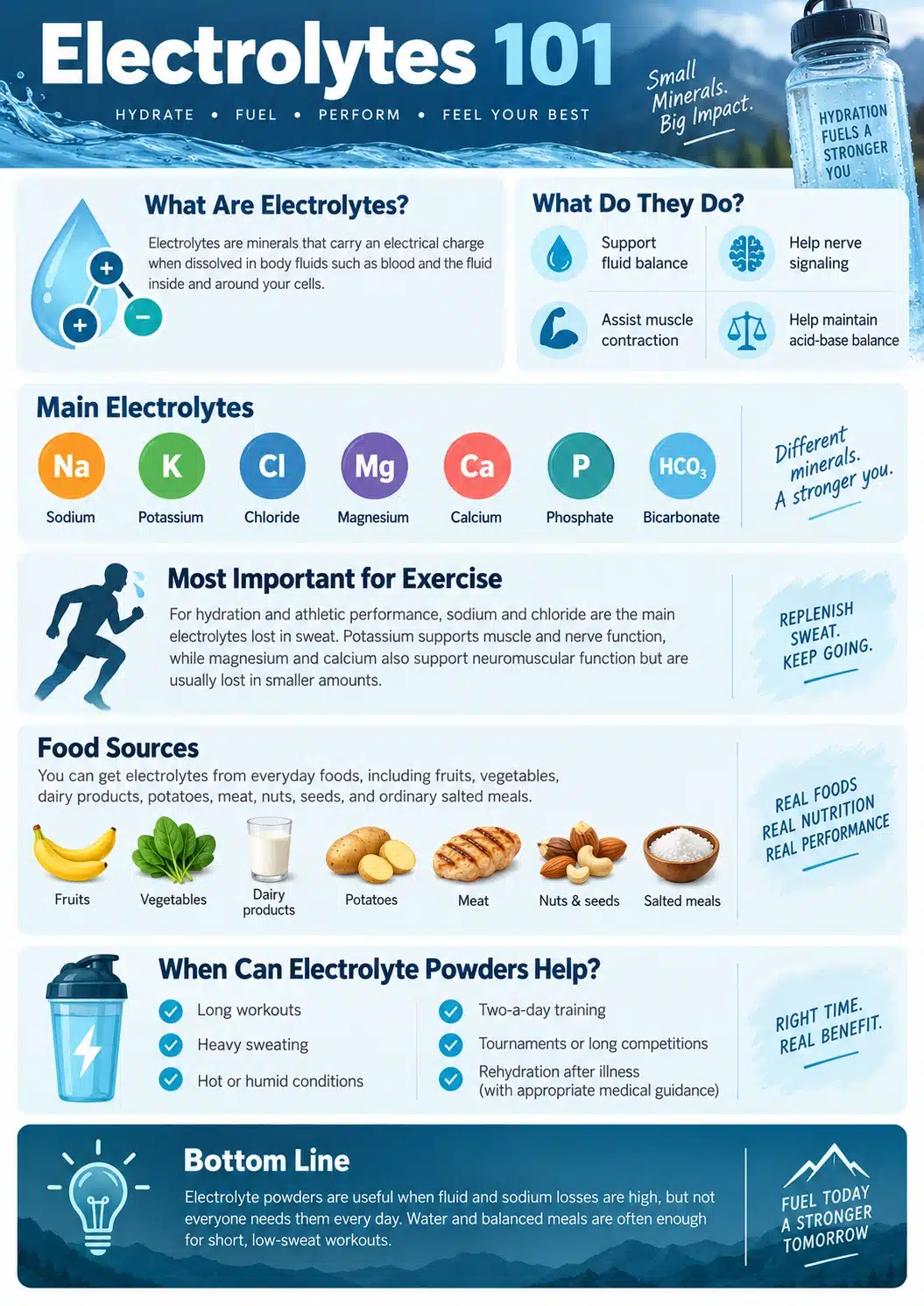
Electrolyte supplements may be useful after prolonged exercise or substantial sweating, particularly in hot conditions.
They are not automatically necessary after every workout, and their usefulness depends on your fluid losses and diet (NIH ODS, n.d.-a).
Older adults should especially pay attention to unusual changes in sweating patterns.
While sweating during exercise is normal, sudden excessive sweating in older adults may be related to medications, underlying health conditions, or changes in temperature regulation.
If sweating occurs unexpectedly or without physical exertion, consult a healthcare professional rather than assuming it is part of normal exercise recovery.
My electrolyte powder review explains how to compare products.
Vitamin D When Intake or Status Is Inadequate
Vitamin D deserves attention when intake is inadequate or deficiency has been identified, but it should not be presented as a reliable post-workout recovery booster.
Trials examining vitamin D supplements and muscle function have produced inconsistent results (NIH ODS, n.d.-b).
Discuss your needs with a healthcare professional rather than assuming a higher dose will improve recovery.
For my approach to workout recovery for older adults, every supplement should have a clear purpose that fits the person taking it.
Use Active Recovery Without Adding More Fatigue
An active recovery day should feel noticeably easier than a training day. I recommend choosing movement you enjoy and finishing with enough energy for the rest of your day.
Keep Walking and Mobility Comfortable
Try 10–20 minutes of comfortable walking, easy cycling, or relaxed swimming, adjusting the duration to your ability.
Keep the effort easy enough for an uninterrupted conversation.
For mobility, consider gentle ankle movements, shoulder circles, or comfortable upper-back rotations.
Start with a small range of motion and avoid forcing a painful joint.
If movement increases discomfort or leaves you more depleted, shorten the session or rest.
Active recovery is an option, not an obligation.
Practice Balance When You Feel Steady
Recovery days can also provide space for brief balance practice.
Consider supported weight shifts or a short single-leg stance beside a stable counter, provided these movements are appropriate for you.
Avoid treating balance work as a fatigue challenge.
If you have fallen recently, experience dizziness, or feel unsafe standing on one leg, seek guidance on suitable exercises.
Manage Soreness and Use Recovery Tools Selectively
Especially as you age, you should always judge a workout by the progress it supports, not how uncomfortable it makes the following day.
Recovery habits should help you continue training without repeatedly sacrificing normal movement.
Adjust the Workout Before Adding More Treatments
Begin sessions with easy movement and lighter versions of the exercises you plan to perform.
Use those warm-up sets to assess comfort, coordination, and readiness.
During working sets, reduce the resistance or stop when controlled movement breaks down.
If your program regularly leaves you struggling with everyday tasks, revisit its demands before adding more recovery treatments.
Treat Recovery Accessories as Optional
My guide to muscle recovery tools compares the best optiions available, but you shouldn’t rely on massage guns for foam rollers to recover from workouts.
Instead, choose tools based on what feels comfortable, what’s accessible, and what you actually enjoy using.
An expensive device shouldn’t become a requirement to maintain your exercise routine.
Frequently Asked Questions About Workout Recovery for Older Adults
Final Thoughts: Essential Workout Recovery Tips for Older Adults
The foundation of workout recovery for older adults is choosing a training workload you can consistently recover from.
Before adding another supplement or recovery tool, consider whether your workouts leave enough room for adequate sleep, regular meals, and comfortable movement between sessions.
For older adults, your training should support the strength and energy you need beyond the gym.
Pay attention to patterns in your energy, movement, and performance rather than judging recovery by soreness alone.
When fatigue repeatedly interferes with your next workout or daily activities, adjust the workload instead of treating exhaustion as proof of progress.
Approach workout recovery for older adults as an ongoing process of matching effort with readiness, and aim for a routine that challenges you today and remains manageable next week, next month, and beyond.
This website does not provide medical advice. This website site does contain affiliate links, and purchases may earn a commission.
Read my Medical Disclaimer, Review Disclaimer, and Publishing Policies for more details. Use of this site indicates acceptance of these terms.
Check Out Some of My YouTube Videos Below, and Please Follow on YouTube for More Educational Health and Fitness Content!