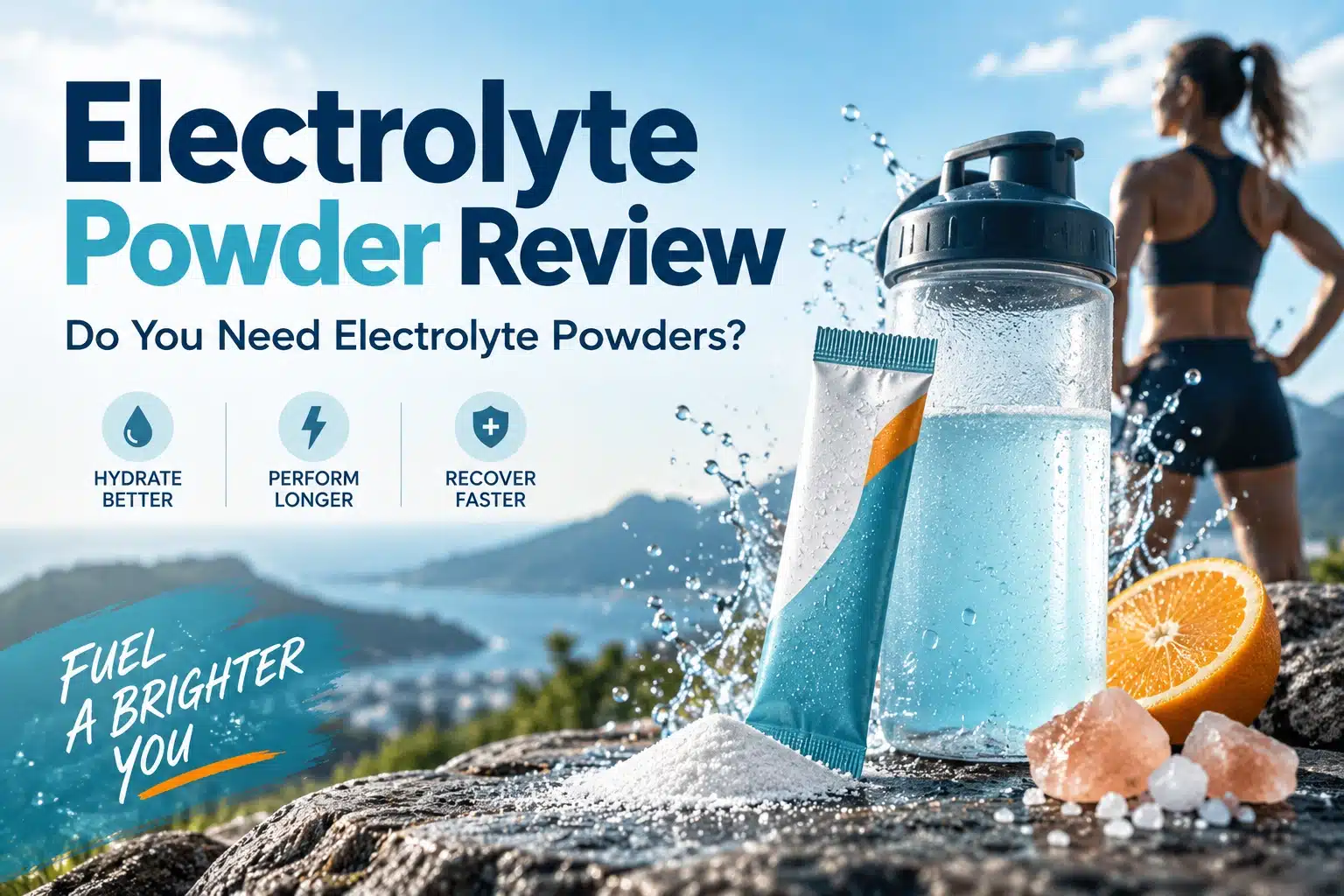
Electrolyte Powder Review: Do You Need to Take Electrolyte Powders?
 Reading Time: 11 minutes
 A good electrolyte powder is not supposed to feel exciting, but it is supposed to help you replace what you are actually losing when sweat, heat, travel, illness, or long training sessions make plain water less effective.
Throughout my professional basketball career, I have consistently used electrolyte supplements and isotonic drinks during the season because practices, games, travel days, shootarounds, and recovery sessions can create a much higher fluid and electrolyte demand than a normal workout.
However, that does not mean everyone who exercises needs an electrolyte powder.
Even among athletes, one of the biggest distinctions is how much you actually sweat.
Someone playing basketball casually for an hour in a cool gym may lose relatively little fluid and sodium, while another athlete can finish the same session with a soaked uniform and substantial sweat loss.
Current sports nutrition guidance reflects that difference as well.
Most people training for less than roughly 60 to 90 minutes in normal conditions are unlikely to need aggressive electrolyte replacement, while longer sessions, heavy sweating, heat exposure, and repeated training bouts make fluid and sodium replacement more important.
My own hydration strategy is also a good example of why electrolyte needs should not be treated as an all-or-nothing decision.
I use electrolyte powders and isotonic drinks, but I also regularly use salt supplements because sodium is often the electrolyte I need to replace most aggressively.
Sodium helps replace sweat losses and can improve fluid retention during rehydration, which becomes particularly valuable during periods of heavy training and repeated sweating.
At the same time, I already get substantial potassium from foods and drinks such as bananas and coconut water, and I take magnesium supplements separately.
Because of that, I do not necessarily need large amounts of potassium or magnesium every time I want additional sodium.
That is one reason I do not think athletes should automatically assume that a powder containing the most electrolytes is the best option.
Your hydration strategy can include plain water, electrolyte powders, isotonic sports drinks, salty foods, sodium supplements, and electrolyte-rich whole foods depending on your diet, training volume, sweat rate, environment, and individual tolerance.
Caffeine intake is another factor worth considering, although it is important not to overstate its effect.
Caffeine can influence fluid balance in some circumstances, but moderate caffeine intake does not automatically dehydrate an athlete, particularly when it is consumed regularly and alongside adequate fluids.
For me, the practical question is not, “Do electrolyte powders work?”
They certainly can.
The better question is, “What am I actually losing, and what is the most practical way to replace it?”
This electrolyte powder review focuses on that question by looking beyond flavors and wellness claims and examining what actually matters on the label, especially sodium content, carbohydrate content, other electrolytes, sweeteners, ingredient quality, and how the formula fits your individual hydration needs.
Disclaimer: This article contains affiliate links, which means I may earn a commission if you make a purchase through these links, at no extra cost to you. I only recommend products I use or believe in. Thank you for supporting my work and helping me continue to share evidence-based fitness and nutrition content.
What Are Electrolytes?
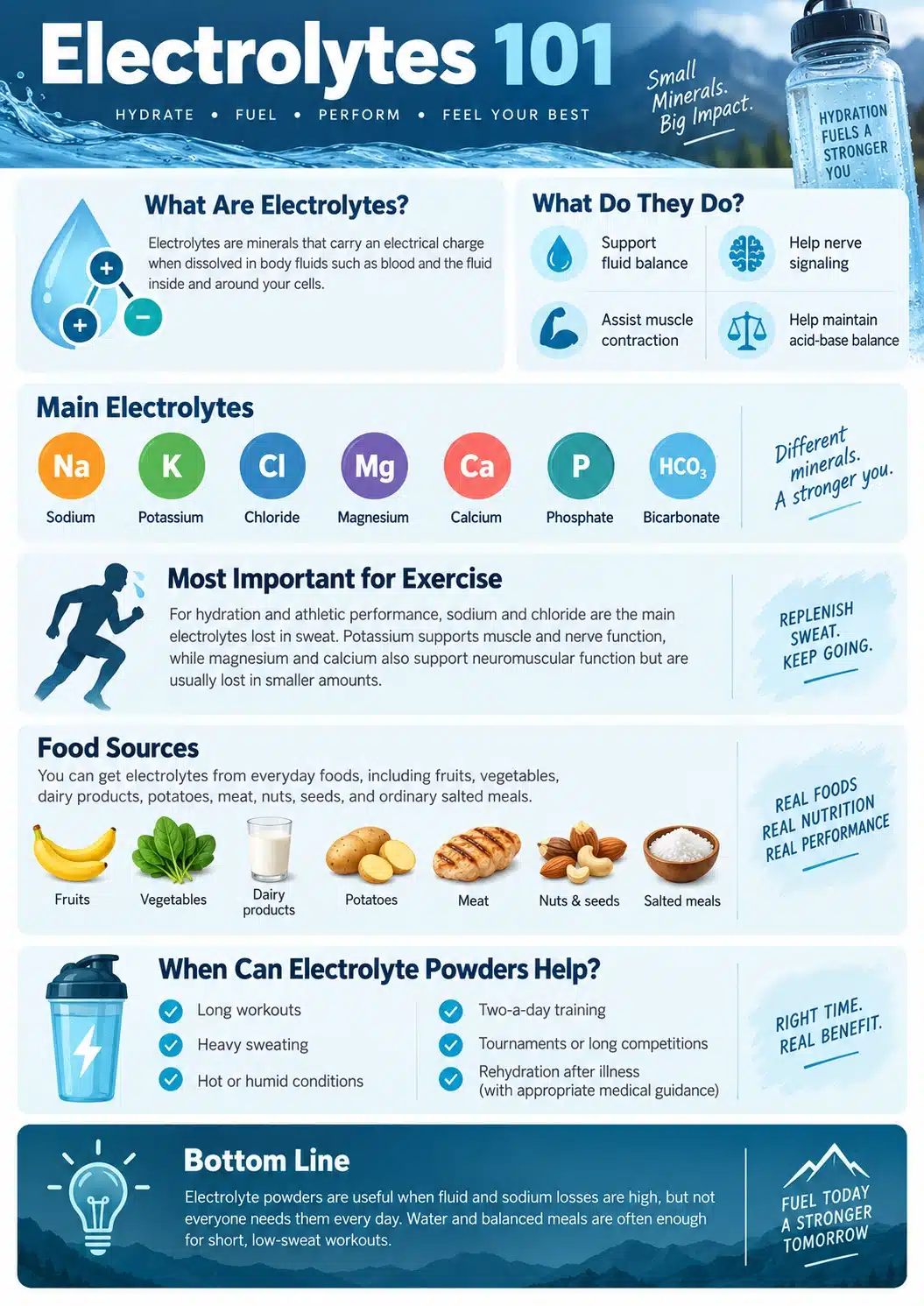
Electrolytes are minerals that carry an electrical charge when dissolved in body fluids, including blood and the fluid inside and around your cells.
The primary electrolytes in the human body include sodium, potassium, chloride, magnesium, calcium, phosphate, and bicarbonate, and together they help regulate fluid balance, nerve signaling, muscle contraction, acid-base balance, and other essential physiological processes (Shrimanker & Bhattarai, 2023).
For exercise and hydration, sodium and chloride are particularly important because they are major electrolytes lost through sweat.
Sodium also plays a central role in maintaining extracellular fluid volume and supporting the electrical activity needed for normal nerve and muscle function (Shrimanker & Bhattarai, 2023).
Potassium mainly works inside your cells and supports muscle contraction, nerve transmission, fluid regulation, and normal cellular membrane function (National Academies, 2019).
Magnesium and calcium also contribute to normal neuromuscular function, but they are generally lost in smaller amounts through sweat than sodium.
This is an important distinction when evaluating an electrolyte powder because a product containing numerous minerals is not automatically better for hydration.
For athletes and people who sweat heavily, the primary purpose of an electrolyte drink is generally to help replace water and sodium lost through sweat, while the other electrolytes can complement the formula.
You also don’t need electrolyte powder just to get electrolytes.
Foods such as fruits, vegetables, dairy products, potatoes, meat, nuts, seeds, and ordinary salted meals provide substantial amounts of these minerals, which is why people who exercise briefly in comfortable conditions and eat a balanced diet can often meet their hydration needs with water and food.
Electrolyte powders are most useful when losses become harder to replace through normal eating and drinking, such as during long workouts, heavy sweating, hot or humid conditions, multiple training sessions in one day, or prolonged athletic competition.
What Do Electrolyte Powders Do?
Electrolytes are minerals that help regulate fluid balance, nerve signaling, and muscle contraction.
Sodium is the central player in most sports drink formulas because it is the primary electrolyte lost in sweat.
Potassium, magnesium, and calcium have important roles in the body, but their presence alone does not make a powder effective for endurance training or heavy sweating.
A quality electrolyte supplement should make it easier to replace fluid and sodium losses, taste good enough to drink consistently, and fit your overall nutrition plan.
But it should not be marketed as a cure for fatigue, a substitute for balanced meals, or a magic fix for every muscle cramp.
For the average person doing a 45-minute indoor strength workout, water and normal meals are often enough.
Electrolyte powders become more valuable when the circumstances change: training lasts longer than an hour, conditions are hot or humid, you are a salty sweater, you train twice per day, or you are trying to rehydrate after a stomach illness under appropriate medical guidance.
Most Important Aspects of a Good Electrolyte Powder Supplement
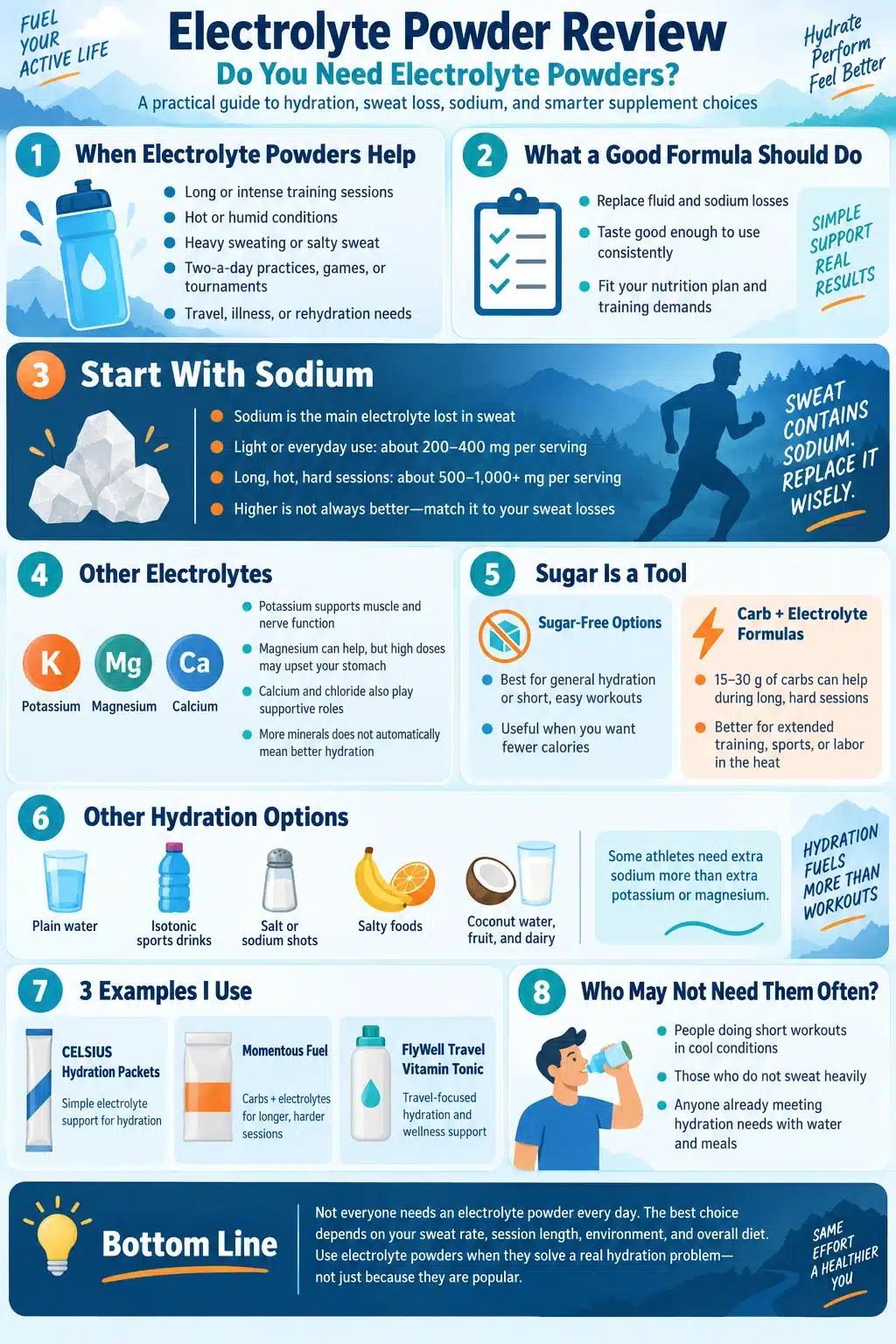
Not all electrolyte powders are designed for the same purpose, and the best option depends on how much you sweat, how long you train, and what you already get from your diet.
When comparing an electrolyte powder, focus less on the marketing and more on the actual formula, especially the sodium content, carbohydrate level, supporting electrolytes, sweeteners, ingredient transparency, and whether the product fits your specific hydration needs.
Sodium: The Key Component
When comparing powders, sodium should be the first number you check.
Many products use words like hydration, minerals, or performance while providing only a small amount of sodium.
That may be fine for lightly active people who want a flavored alternative to water, but it is not necessarily enough for someone who loses a substantial amount of sweat during training.
There is no one perfect sodium target.
A lower-sodium product, roughly 200 to 400 milligrams per serving, can work well for everyday use, short workouts, or for people who already eat a diet high in sodium.
Athletes training hard in the heat may benefit from products with 500 to 1,000 milligrams or more per serving, depending on session length, sweat rate, and individual tolerance.
Higher sodium is not automatically better.
If you have high blood pressure, kidney disease, heart failure, or have been told to limit sodium, speak with your physician or a registered dietitian before routinely using high-sodium electrolyte products.
A practical way to assess your needs is to weigh yourself before and after a hard workout, without drinking excessive fluid during the session.
A noticeable drop in body weight suggests meaningful fluid loss.
This isn’t required for every workout, but doing it a few times can give you a more realistic idea of how much you sweat.
Potassium and Magnesium: Helpful, But Often Overemphasized
Potassium supports normal muscle and nerve function, and it makes sense to include some in an electrolyte formula.
However, you do not need a huge dose in your drink to support training.
Most people can meet much of their potassium needs through foods such as potatoes, fruit, beans, yogurt, and leafy greens.
Magnesium is similar.
It supports energy metabolism and muscle function, but high-dose magnesium powder can cause digestive distress for some people.
In fact, I prefer taking lower amounts of magnesium in my isotonic drinks or electrolyte supplements because I prefer to take magnesium L-threonate or magnesium L-glycinate before sleep.
If a product contains a modest amount and you tolerate it well, that is reasonable.
Don’t choose a formula just because it has more magnesium, especially if sodium is too low for your training demands.
Sugar Is a Tool, Not a Problem
Sugar-free electrolyte powders are popular, and they can be a strong choice for low-intensity exercise, general hydration, fasting periods, or people who simply prefer to avoid added calories.
They are convenient, portable, and often easier to use consistently than plain water.
However, sugar (the simplest form of carbohydrate) is not automatically a negative.
During long, hard sessions, carbohydrates can support endurance performance and help the body absorb fluid and sodium.
An electrolyte powder containing 15 to 30 grams of carbohydrate can be useful for extended cycling, running, basketball training sessions, tournaments, or demanding labor in the heat.
The trade-off is simple: carbohydrate-containing formulas provide energy, but they also add calories and may not sit well in every stomach.
If you are doing a 30-minute walk or lifting session, you likely do not need a sports drink with substantial sugar.
If you are training for two hours in summer heat, a zero-calorie electrolyte powder may leave you underfueled.
Also, pay attention to sweeteners.
Some people tolerate stevia, monk fruit, sucralose, or sugar alcohols without an issue.
Others experience bloating, aftertaste, or stomach discomfort.
No ingredient list can replace your personal training experience, so I suggest you test a new product in practice, not on race day, game day, or the first day of a demanding workout program.
Ingredients in Electrolyte Supplements That Deserve a Closer Look
The best electrolyte powders generally have a straightforward formula.
You should be able to identify the sodium content, the other minerals, the carbohydrate source if included, and the sweetener.
A long list is not always bad, but it should raise the question of whether the extras serve a real purpose.
Be cautious with products that add stimulant-level caffeine, proprietary blends that hide ingredient amounts, or large doses of vitamins marketed as energy support.
Caffeine can improve performance when used strategically, but it turns a hydration product into a pre-workout product.
That distinction matters if you train late in the day, are caffeine-sensitive, or already drink coffee.
BCAAs, collagen, adaptogens, and greens powders may have a place in other contexts, but they do not make an electrolyte formula inherently better.
More ingredients can mean more cost, more flavor problems, and more chances for gastrointestinal issues.
For hydration, a simpler formula is often the more disciplined choice.
How to Choose the Best Electrolyte Powder Formula for Your Routine?
The best electrolyte powder depends on what you are actually doing, how much you sweat, and whether you also need carbohydrates or other ingredients.
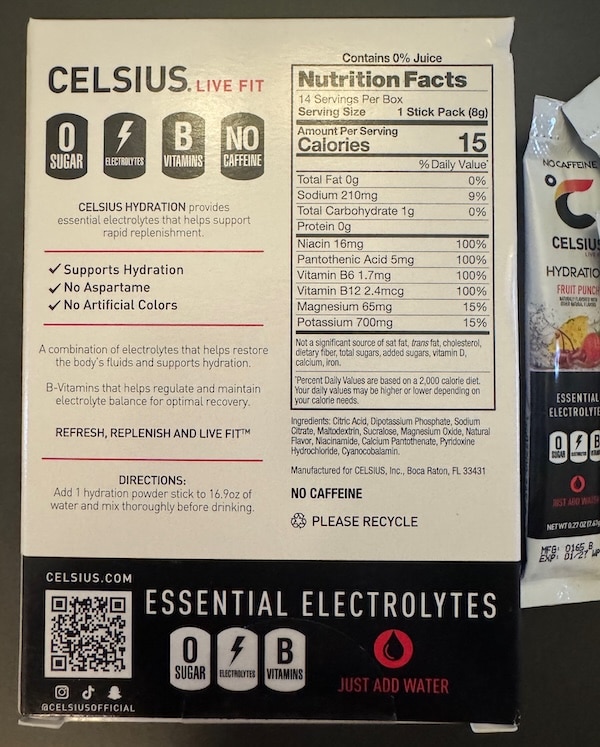
For shorter workouts or general hydration, I prefer something simple like CELSIUS Hydration Packets.
They are caffeine-free and provide electrolytes, including sodium, potassium, and magnesium, making them a convenient option when I want hydration support without turning the drink into a full sports-fueling product.

Last update on 2026-10-03 / This article includes affiliate links/Images via Amazon Product Advertising API. I may earn commissions on purchases made through these links.
For longer practices, games, or demanding training sessions, I prefer Momentous Fuel because it combines electrolytes with carbohydrates.
One serving provides 28 grams of carbohydrates, along with sodium, potassium, and magnesium, so it functions more like an intra-workout fueling drink than a basic electrolyte powder and is intended for harder sessions lasting about an hour or longer.

Last update on 2026-10-03 / This article includes affiliate links/Images via Amazon Product Advertising API. I may earn commissions on purchases made through these links.
Travel is a different situation entirely.
I like FlyWell Travel Vitamin Tonic for flights and travel days because it combines electrolytes with vitamins and botanicals such as ashwagandha, chamomile, peppermint, ginger, and L-theanine.
I wouldn’t consider it an electrolyte powder for basketball practice or intense exercise, but I wanted to mention it because it is an excellent travel electrolyte supplement that reduces jet lag symptoms and supports hydration.

Last update on 2026-10-03 / This article includes affiliate links/Images via Amazon Product Advertising API. I may earn commissions on purchases made through these links.
These examples show why I do not think there is one “best” electrolyte powder.
Sometimes I want straightforward electrolyte replacement, sometimes I need carbohydrates and sodium during a hard training session, and sometimes I want something designed around the unique demands of travel.
Key Points: Flavor, cost, sodium content, carbohydrate content, digestive tolerance, and third-party testing should all factor into your decision about which electrolyte powder to buy.
When Water Is the Better Choice than Electrolyte Powders

Electrolyte powders are useful tools, not a daily requirement for everyone.
If your activity is brief, your environment is cool, and you eat regular meals, water is usually the most practical hydration choice.
Constantly treating normal thirst with sweetened drinks can add unnecessary calories and expense, and create a habit of relying on flavored beverages.
Final Thoughts: Should You Buy and Use Electrolyte Supplements?
Electrolyte supplements can be useful, but they are not something everyone needs every day.
Urine color, thirst, energy levels, body-weight changes during training, and workout performance can all provide useful feedback about hydration, but no single marker should be treated as perfect.
Completely clear urine throughout the day is not necessarily the goal, and forcing excessive amounts of fluid can create its own problems.
A better approach is to start training reasonably hydrated, drink according to the demands of the session, and replace the fluid and sodium you actually lose afterward.
For shorter workouts, cooler conditions, and people who do not sweat heavily, water and normal meals may be all that is needed.
Electrolyte powders become more useful when training is long or intense, sweat losses are high, conditions are hot or humid, or you are practicing and competing repeatedly with limited recovery time.
Even then, an electrolyte powder is only one option.
Salted foods, sodium supplements, isotonic drinks, coconut water, fruit, dairy products, and other foods can all help replace different electrolytes, so your overall diet should influence what you look for in a supplement.
The strongest hydration plan is usually simple: drink water consistently, eat a nutrient-dense diet, replace sodium intelligently when sweat losses are high, and test your hydration strategy during normal training before relying on it for an important game, race, or competition.
If an electrolyte powder helps you do that more consistently and conveniently, it can be a valuable tool.
If your hydration and electrolyte needs are already being met through water and food, there is little reason to use one simply because electrolyte supplements are popular.
This website does not provide medical advice. This website site does contain affiliate links, and purchases may earn a commission.
Read my Medical Disclaimer, Review Disclaimer, and Publishing Policies for more details. Use of this site indicates acceptance of these terms.
Check Out Some of My YouTube Videos Below, and Please Follow on YouTube for More Educational Health and Fitness Content!
![Subscribe to @AdamKempFitness for more training, general health, recovery, and nutrition tips from a professional basketball player with a master’s degree in Nutrition Education! 🏀💪
Seated Max Vertical Jumps From a Box are one way I train explosive takeoff power with maximum intent on every rep.
Starting seated, with a pause and minimal rocking or dipping, reduces the contribution of a quick countermovement and emphasizes producing force from a relatively static position (National Strength and Conditioning Association [NSCA], 2020).
For athletes, the training goal is explosive lower-body force production and coordinated extension through the hips, knees, and ankles. I use this variation to practice driving hard into the floor and accelerating my body upward.
My preferred setup: 3 sets of 3 reps or 4 sets of 2 reps, supersetted with a strength or power exercise.
I keep the reps low, reset between jumps, and take longer rest periods so I’m ready to attack every takeoff. Even when pairing exercises, I give myself enough recovery to keep the jumps sharp.
Every rep has one goal: jump as high as possible. I focus on an explosive takeoff, a controlled landing, and consistent quality throughout the session.
Save this for your next power workout! 🚀
Reference: NSCA. (2020). Stretch-shortening cycle.
#VerticalJump #JumpTraining #ExplosivePower #AthleticPerformance #BasketballTraining](https://www.adamkempfitness.com/wp-content/plugins/feeds-for-youtube/img/placeholder.png)