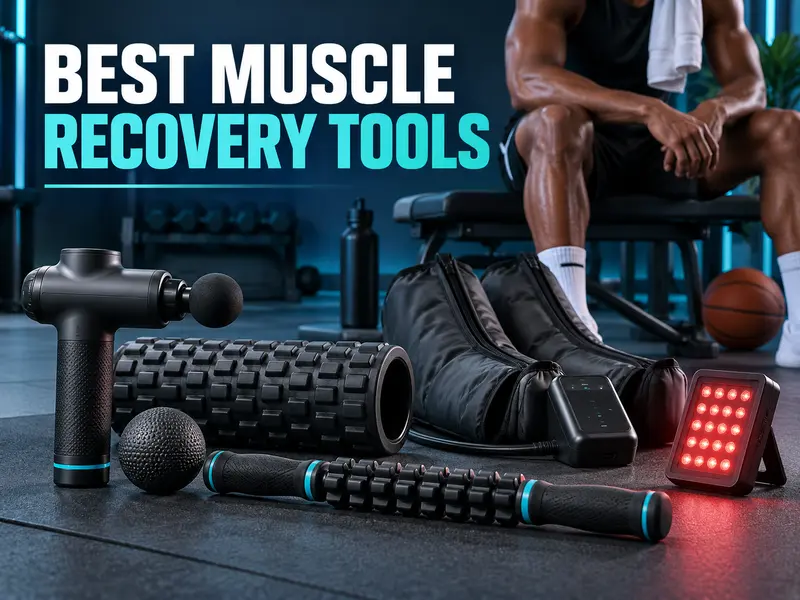
Best Muscle Recovery Tools for Athletes and Active People
 Reading Time: 18 minutes
 As I’ve learned throughout my career as a professional athlete, the best muscle recovery tools can help you manage soreness, reduce stiffness, restore comfortable movement, and make it easier to maintain a consistent recovery routine.
In fact, to this day I often tell people that access to top-of-the-line muscle recovery tools and other recovery equipment is the main reason that it is easier to play longer as an athlete now.
There is an incredible variety and incredible quality of muscle recovery tools, and throughout more than a decade of playing professional basketball, I have used nearly every major category of recovery equipment, including massage guns, foam rollers, compression boots, massage sticks, cupping devices, vibrating rollers, and red-light therapy devices.
Some of these products have been useful enough to remain in my routine for years.
Others offered a temporary benefit but were too expensive, inconvenient, or specialized to recommend to most people.
If I had to pick one, I’d have to say my top overall choice as my favorite muscle recovery tool is the Theragun G5 Pro because it delivers powerful, adjustable percussion and works on nearly every major muscle group.
However, the best recovery tool for you will depend on whether you want targeted pressure, full-leg compression, passive relaxation, improved mobility, or an inexpensive option you can use anywhere.
Quick recommendation: Start with a basic foam roller if you want an affordable tool. Choose a massage gun if you want greater versatility, or consider compression boots if you train frequently and want a passive option for recovering your legs.
Best Muscle Recovery Tools at a Glance
| Recovery tool | Best for | My recommendation | Typical cost | Main limitation |
|---|---|---|---|---|
| Massage gun | Most versatile targeted treatment | Theragun G5 Pro | $$$ | Easy to use too aggressively |
| Compression boots | Passive lower-body recovery | Therabody JetBoots Pro Plus | $$$$ | Expensive and less portable |
| Foam roller | Affordable mobility and general soreness | TriggerPoint GRID or Therabody Wave Roller | $–$$$ | Requires floor space and body positioning |
| Lower-body roller | Calves, shins, quadriceps and hamstrings | Roll Recovery R8 | $$$ | Primarily useful for the extremities |
| Portable massage gun | Travel and gym bags | Hypervolt Go 2 | $$ | Less powerful than premium models |
| Cupping device | Localized suction, heat and vibration | Therabody TheraCup | $$$ | Can leave temporary skin marks |
| Red-light device | Passive light-based recovery sessions | PRUNGO FluxGo | $$$ | Results depend on dose and device quality |
| Massage stick or ball | Budget-friendly targeted pressure | The Stick or massage ball | $ | Requires more effort and leverage |
| Relaxation device | Downregulation and pre-sleep relaxation | Therabody SmartGoggles | $$$ | Does not directly treat most muscles |
Cost guide: $ generally represents under $50, $$ represents approximately $50–$200, $$$ represents approximately $200–$500, and $$$$ represents more than $500. Prices vary by model and retailer.
What Are Muscle Recovery Tools?
Muscle recovery tools are products designed to address one or more parts of the recovery process through pressure, movement, vibration, percussion, compression, heat, cold, light, or relaxation.
These tools can make you feel better between workouts, but they do not replace the fundamentals of post-workout recovery: sufficient sleep, appropriate nutrition, hydration, intelligent training loads, and time.
That distinction matters because “recovery” can describe several different outcomes.
For example, a massage gun might make your quadriceps feel looser without accelerating the underlying repair process.
Or, compression boots may help your legs feel fresher even when measurable performance changes are relatively small.
Those subjective improvements can still be useful: if a tool helps you move comfortably, relax after training, or follow your recovery routine consistently, it may be worth owning even if it doesn’t produce dramatic physiological changes.
Do Muscle Recovery Tools Actually Work?
Some muscle recovery tools have useful evidence behind them, but their effects are generally more modest than product marketing suggests.
Self-myofascial release tools such as foam rollers can produce short-term improvements in flexibility and range of motion without meaningfully reducing strength or power.
They may also improve perceived recovery and reduce delayed-onset muscle soreness after demanding exercise (Martínez-Aranda et al., 2024).
Massage-gun research is newer and less consistent.
Current evidence suggests that percussive therapy may improve short-term flexibility, range of motion, and certain recovery-related outcomes, although aggressive use immediately before explosive activity may not improve performance and could occasionally be counterproductive (Ferreira et al., 2023).
Evidence for compression boots and other advanced technologies is more mixed.
These devices may help some athletes feel less sore or fatigued, but they don’t guarantee improvements in objective performance.
The realistic goal is not to find a machine that eliminates the need to recover.
It is to select one or two tools that address your specific limitations while supporting a well-designed training and recovery plan.
How I Evaluated the Best Muscle Recovery Tools
I considered the following factors when choosing the best muscle recovery tools:
- Practical benefit
- Versatility
- Ease of use
- Portability
- Durability
- Quality of construction
- Ability to control intensity
- Research supporting the underlying method
- Price relative to usefulness
- My firsthand experience
- Likelihood that the tool will be used consistently
Personal experience matters because a product can look excellent on paper but become useless if it is inconvenient to set up.
Throughout my basketball career, the tools that have survived the longest in my routine are the ones I can use quickly, control easily, and apply to the areas that accumulate the most stress from practices, games, lifting, jumping, and travel.
Best Overall Muscle Recovery Tool: Theragun G5 Pro
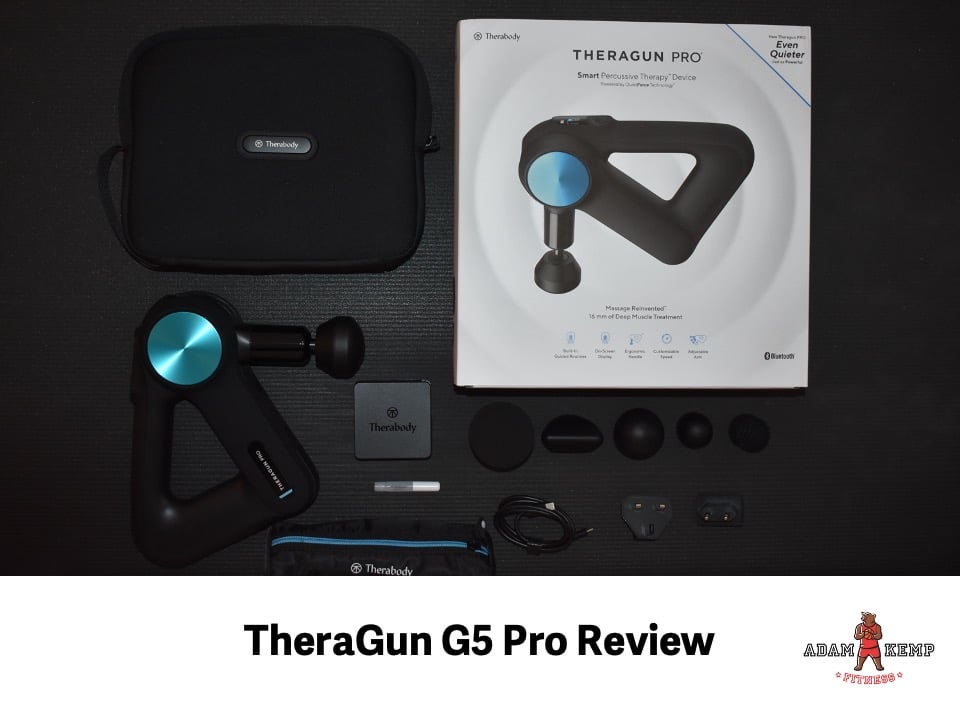
The Theragun G5 Pro is my top overall muscle recovery tool because it combines power, adjustability, durability, and versatility.
I can use it on my quadriceps, hamstrings, calves, glutes, shoulders, upper back, and other large muscle groups without needing to lie on the floor or create leverage with my body weight.
The G5 Pro provides a 16-millimeter amplitude, several speed settings, interchangeable attachments, and an adjustable arm.
Its triangular handle also makes it easier to reach different areas without placing my wrist or shoulder in an awkward position.
I primarily use it to reduce stiffness and help my muscles feel more comfortable before mobility work or after demanding training.
It is powerful enough for deeper pressure, but I rarely need to use the highest intensity for an effective session.
The Theragun PRO Plus is the newer premium model, but newer does not automatically mean necessary.
My recommendation is based on my extensive personal experience with the G5 Pro and the fact that its core percussion features are already more than adequate for most athletes.
Read my complete Theragun review to compare the major Theragun models and determine whether the additional features of a premium version justify the cost.
Pros
- Powerful percussion
- Adjustable speed and arm position
- Multiple attachments
- Excellent for large muscle groups
- Ergonomic multi-grip handle
- Durable enough for frequent use
- Easier to control than bodyweight rolling
Cons
- Expensive
- Heavier than travel-sized massage guns
- Can feel excessively intense for sensitive areas
- Requires caution around bones, joints and injured tissue
Who Should Buy It?
The Theragun G5 Pro is best for athletes, frequent lifters, runners, and active people who want one versatile recovery device instead of purchasing several smaller tools.
For more information about the massage method itself, read my guide to the benefits of massage guns.

Last update on 2026-10-22 / This article includes affiliate links/Images via Amazon Product Advertising API. I may earn commissions on purchases made through these links.
Best Recovery Tool for Tired Legs: Therabody JetBoots Pro Plus
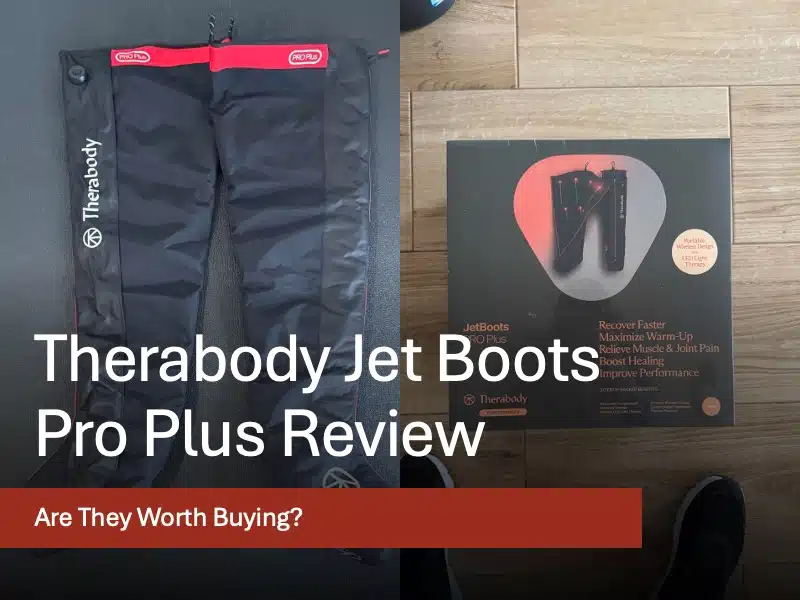
The Therabody JetBoots Pro Plus are my top recovery tool for athletes whose legs accumulate significant fatigue.
Compression boots surround the legs and inflate sequentially, creating waves of pressure from the feet upward.
Unlike a foam roller or massage gun, they allow you to sit or lie down while the device does the work.
That passive quality is their greatest advantage.
After a demanding practice or game, I don’t always want another physically demanding recovery session that requires me to hold a tool or roll around on the floor.
JetBoots are particularly appealing for basketball players, runners, cyclists, soccer players, and anyone who completes repeated lower-body sessions.
They can also be useful during congested competition schedules when the primary goal is to help the legs feel less heavy between events.
The evidence for intermittent pneumatic compression is not conclusive enough to promise faster biological recovery.
Some research suggests potential improvements in perceived soreness or fatigue, while other analyses have found limited effects on objective muscle recovery.
I therefore view compression boots as a high-end convenience product rather than an essential purchase.
They feel good, encourage relaxation, and make it easy to complete a structured recovery session, but they should come after sleep, nutrition, hydration, and sensible programming.
Pros
- Completely passive once the session begins
- Covers both legs simultaneously
- Adjustable pressure
- Useful after games, practices and travel
- Encourages athletes to remain still and relax
- Particularly helpful for high-volume lower-body training
Cons
- Very expensive
- Less versatile than a massage gun
- Requires storage space
- Primarily benefits the lower body
- Not necessary for recreational exercisers
Who Should Buy Them?
Compression boots make the most sense for competitive athletes, coaches, clinics, and people who train their lower body frequently enough to justify the price.

Last update on 2026-10-22 / This article includes affiliate links/Images via Amazon Product Advertising API. I may earn commissions on purchases made through these links.
Best Affordable Muscle Recovery Tool: Foam Roller
A traditional foam roller remains one of the best values in fitness equipment.
Foam rolling can temporarily improve range of motion, reduce perceived soreness, and help stiff areas feel more comfortable without producing the performance reductions sometimes associated with prolonged static stretching (Martínez-Aranda et al., 2024).
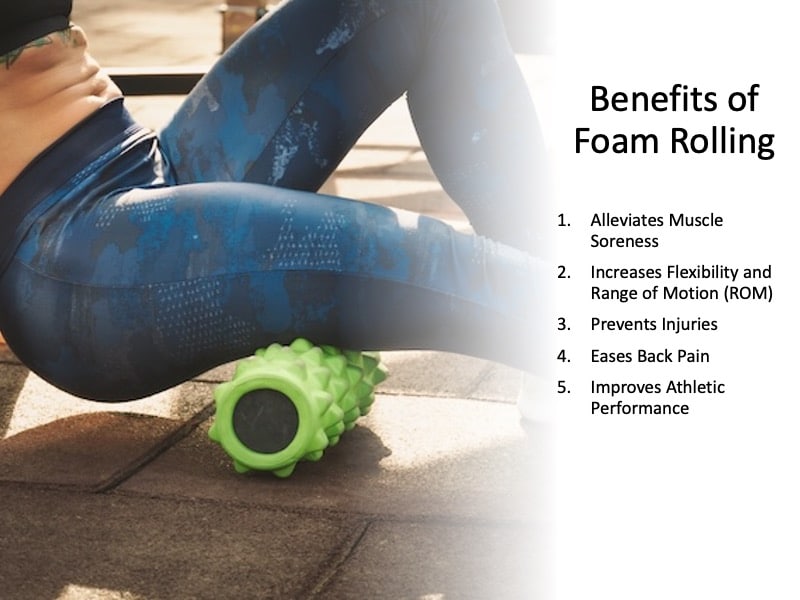
A smooth or moderately firm roller is usually the best starting point.
An extremely hard or aggressively textured roller isn’t necessarily more effective, especially if the discomfort makes you tense your muscles or rush through the session.
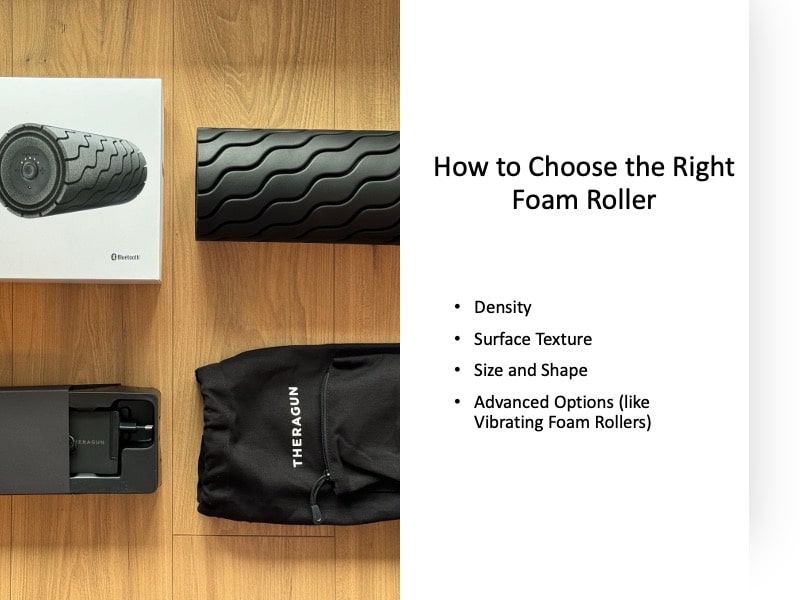
The TriggerPoint GRID is a practical option for most people because it is compact, durable, and firm without being completely unforgiving.
It works particularly well for the quadriceps, hamstrings, glutes, calves and upper back.


Last update on 2026-10-22 / This article includes affiliate links/Images via Amazon Product Advertising API. I may earn commissions on purchases made through these links.
If you prefer vibration, the Therabody Wave Roller adds multiple intensity settings to a traditional foam-rolling design.
Read my Therabody Wave Roller review for a closer look at whether the additional technology is worth paying for.

Last update on 2026-10-22 / This article includes affiliate links/Images via Amazon Product Advertising API. I may earn commissions on purchases made through these links.
Pros
- Affordable
- Durable
- No batteries or charging
- Useful before or after training
- Effective for broad muscle groups
- Can improve short-term range of motion
- Easy to integrate into mobility sessions
Cons
- Requires floor space
- Difficult to use on certain upper-body areas
- Body positioning can be uncomfortable
- Pressure is less adjustable than with a massage gun
- Not ideal for people with limited mobility
Who Should Buy One?
Nearly every active person can benefit from owning a basic foam roller, especially if budget is a primary consideration.
If you cannot decide between the two most popular options, my foam roller versus massage gun comparison explains which tool is better for different situations.
Best Lower-Body Only Massage Tool: Roll Recovery R8
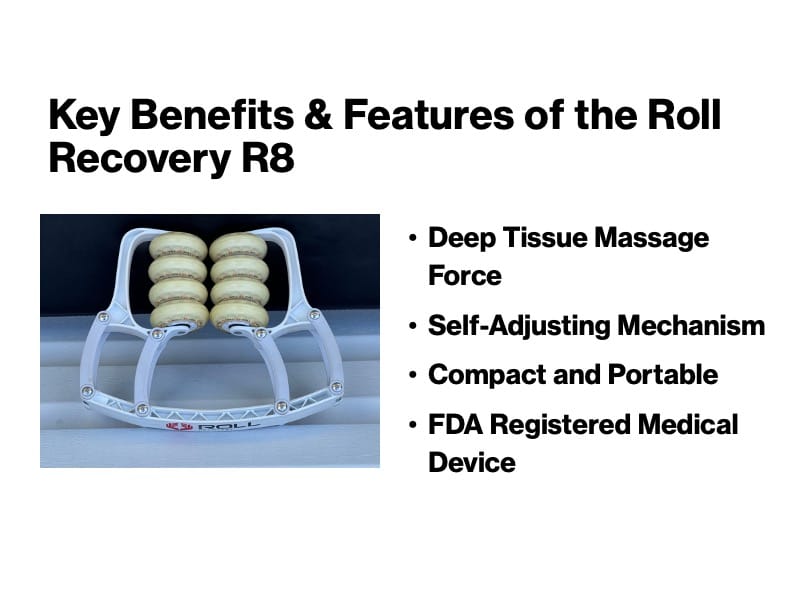
The Roll Recovery R8 is one of the best recovery purchases I have made for my lower body.
I originally began using it while recovering from a significant ankle injury during the 2015–2016 season.
Its spring-loaded design allowed me to apply firm, controlled pressure to my calves, shins, hamstrings and quadriceps without having to balance my body on a traditional foam roller.
The R8 surrounds the limb with opposing rollers, providing pressure from both sides.
That design is particularly helpful for athletes with chronically tight calves or lower legs because it creates leverage that is difficult to reproduce with a conventional roller.
It is less versatile than a massage gun because it does not work well on the back, shoulders, glutes or other large areas.
However, few tools are as convenient for repetitive lower-body recovery.
Pros
- Excellent leverage
- Easy to control
- Particularly effective for the calves and shins
- More convenient than floor-based rolling
- Durable construction
- Portable enough for team travel
Cons
- Expensive for a manual tool
- Primarily designed for the arms and legs
- Pressure may initially feel intense
- Less versatile than a massage gun
Who Should Buy It?
The Roll Recovery R8 is a strong choice for runners, basketball players, cyclists, and athletes who repeatedly experience lower-leg or thigh stiffness.

Last update on 2026-10-22 / This article includes affiliate links/Images via Amazon Product Advertising API. I may earn commissions on purchases made through these links.
Best Portable Massage Gun: Hypervolt Go 2
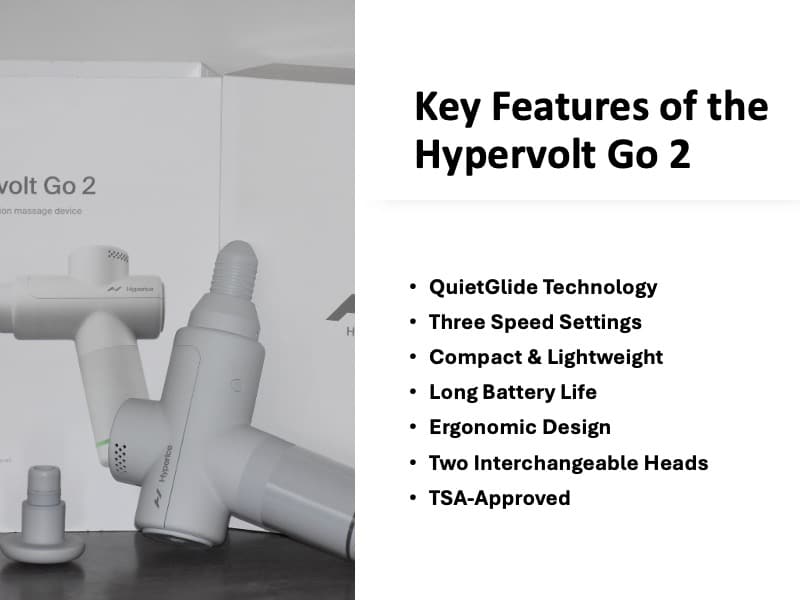
The Hypervolt Go 2 is a better choice than a full-sized massage gun when portability matters more than maximum power.
Its compact size makes it easy to keep in a gym bag, carry-on, or locker.
This matters for athletes because a recovery tool is only useful when you actually have it available.
The Hypervolt Go 2 is quieter and lighter than many premium percussion devices.
Although it lacks some of the power and adjustability of the Theragun G5 Pro, it is sufficient for brief sessions on the calves, quadriceps, hamstrings, shoulders and upper back.
Pros
- Lightweight
- Travel-friendly
- Simple controls
- Quieter than many full-sized massage guns
- Easier to hold for longer sessions
- Generally less expensive than premium models
Cons
- Less powerful than the Theragun G5 Pro
- Fewer attachments
- Limited adjustability
- Not ideal for people who strongly prefer deep pressure
Who Should Buy It?
The Hypervolt Go 2 is best for travelers, recreational athletes, and people who prioritize convenience over maximum percussion depth.

Last update on 2026-10-22 / This article includes affiliate links/Images via Amazon Product Advertising API. I may earn commissions on purchases made through these links.
Best At-Home Cupping Tool: Therabody TheraCup
The Therabody TheraCup combines suction, heat, and vibration in a portable electronic cupping device.
Traditional cupping usually requires a practitioner or a collection of manual cups.
The TheraCup makes the process easier to control by providing multiple suction levels, interchangeable cup sizes, automatic shutoff, and built-in pressure monitoring.
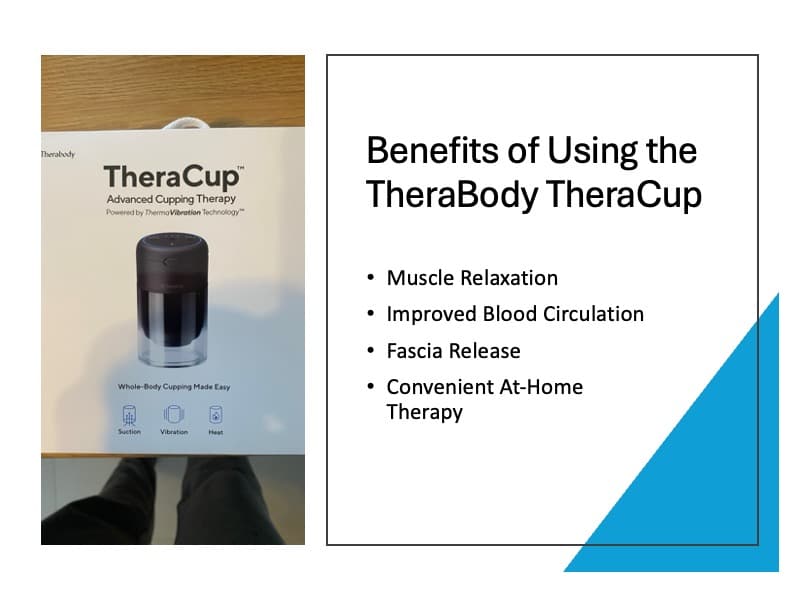
I view cupping as a complementary option rather than a foundation of recovery.
It can provide a strong localized sensation and may help certain areas feel more relaxed, but evidence supporting cupping is less consistent than the marketing surrounding it.
I enjoy the tension relief cupping therapy provides and use it to support my overall mobility and recovery routine.
Cupping can also leave temporary circular marks.
These marks do not necessarily indicate that toxins have been removed or that deeper tissue damage has been repaired.
Pros
- Combines suction, heat and vibration
- Portable
- Adjustable intensity
- Easier to use than traditional cups
- Useful for localized treatment
- Automatic safety features
Cons
- Can leave temporary skin discoloration
- Less research support than foam rolling
- Difficult to use on some body areas without assistance
- Not appropriate over broken, irritated or recently injured skin
Who Should Buy It?
The TheraCup is best for people who already enjoy cupping and want a convenient home-use option.

Last update on 2026-10-22 / This article includes affiliate links/Images via Amazon Product Advertising API. I may earn commissions on purchases made through these links.
Best Red-Light Recovery Tool: PRUNGO FluxGo

The PRUNGO FluxGo is one of the more interesting recovery technologies I have tested because it can be used totally passively on muscles and joints and provides unique regenerative benefits..
Photobiomodulation uses red and near-infrared wavelengths with the goal of influencing cellular processes involved in energy production, inflammation, and tissue recovery.
Research is promising, but outcomes depend heavily on wavelength, dose, treatment timing, distance, and the device being used.
A systematic review comparing photobiomodulation and cryotherapy found moderate-to-very-low-certainty evidence due to small sample sizes and variation across treatment protocols (Ferlito et al., 2022).
That does not mean red-light therapy is ineffective, but it does mean consumers should be skeptical of universal promises.
I began using the PRUNGO FluxGo primarily to manage chronic shoulder discomfort from an old labral tear.
With consistent use, I noticed meaningful improvements in comfort and day-to-day function, although my personal response cannot establish what every user should expect.
Pros
- Passive and comfortable
- Can be used on muscles and joints
- Portable compared with large red-light panels
- Does not require mechanical pressure
- May complement rehabilitation and mobility work
Cons
- More expensive than traditional recovery tools
- Benefits depend on consistent use and appropriate dosing
- Device specifications matter
- Research protocols are not standardized
- Individual responses vary
Who Should Buy It?
A quality red-light device is most appropriate for someone who already has the basic recovery tools and wants to experiment with a passive complementary technology.
Best Recovery Tool for Relaxation: Therabody SmartGoggles

The Therabody SmartGoggles are not a direct muscle-treatment device, but they can support the relaxation side of recovery.
They combine vibration, massage and heat around the eyes and temples. I use them primarily to relax, reduce facial tension, and transition away from stimulation before sleep.
This is an important distinction because physical recovery is influenced by more than what happens inside a muscle.
A tool that helps you downshift, follow a nighttime routine, and prepare for sleep may be more valuable than another device that aggressively pounds sore tissue.
SmartGoggles should not be purchased as a treatment for an injury or a substitute for medical evaluation of persistent headaches, eye symptoms or neurological concerns.
Their best use is relaxation.
For a broader approach to nighttime recovery, read my guide to sleep optimization for athletes.

Last update on 2026-10-22 / This article includes affiliate links/Images via Amazon Product Advertising API. I may earn commissions on purchases made through these links.
Best Manual Recovery Tools: Massage Stick and Massage Ball
You do not need an electronic device to build an effective recovery kit.
A massage stick is inexpensive, portable, and useful for rolling the calves, quadriceps, hamstrings and forearms.
Its main limitation is that you must create the pressure manually, which can become tiring.

Last update on 2026-10-22 / This article includes affiliate links/Images via Amazon Product Advertising API. I may earn commissions on purchases made through these links.
A firm massage ball works well for smaller areas such as the feet, glutes, hips and muscles around the shoulder blade.
Using the ball against a wall is generally easier to control than placing it on the floor and dropping your full body weight onto it.

Last update on 2026-10-22 / This article includes affiliate links/Images via Amazon Product Advertising API. I may earn commissions on purchases made through these links.
These tools provide excellent value, but concentrated pressure can become uncomfortable quickly.
Start gently and avoid repeatedly grinding directly over a painful tendon, bone, joint or inflamed area.
My complete guide to the best self-massage tools compares massage sticks, massage balls, foam rollers, massage guns, the Roll Recovery R8, TheraCup and other options.
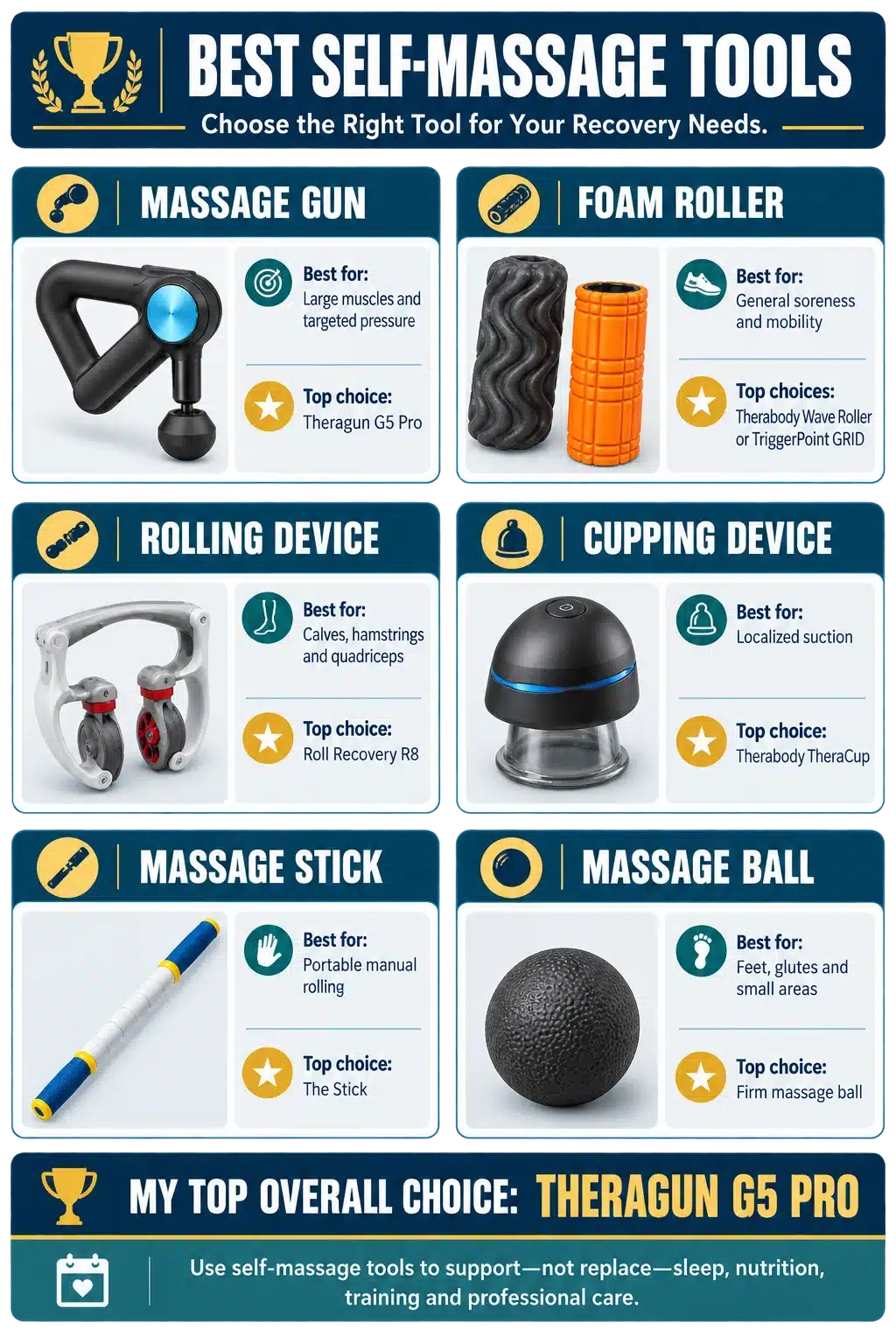
Best Therabody Recovery Tools
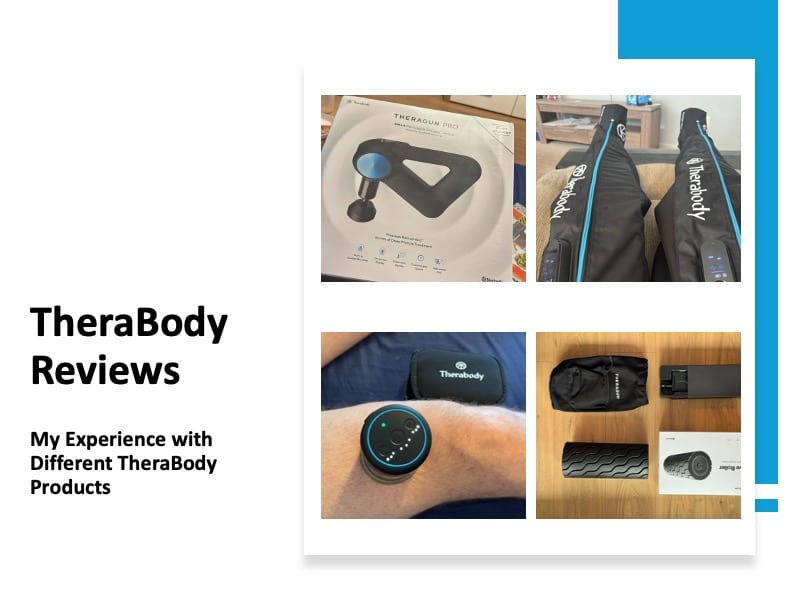
Therabody produces several of the most advanced recovery devices I have used, but you do not need to buy its entire ecosystem.
The Theragun is the best all-around option; JetBoots is the best passive choice for tired legs; the Wave Roller modernizes traditional foam rolling; and the TheraCup offers a specialized form of localized treatment.
If you are comparing several devices from the brand, read my complete collection of Therabody reviews.
That guide explains which products have remained useful in my routine and which features may not justify their price for every athlete.
How to Choose the Right Muscle Recovery Tool
The right muscle recovery tool should solve a specific problem.
Buying expensive equipment without identifying that problem usually creates an impressive collection of devices that rarely get used.
| If your main need is… | Start with… |
|---|---|
| One versatile tool for most muscles | Massage gun |
| An inexpensive recovery option | Foam roller |
| Passive recovery for both legs | Compression boots |
| Calf, shin and thigh pressure | Roll Recovery R8 |
| A device for travel | Hypervolt Go 2 |
| Small, localized areas | Massage ball |
| Manual rolling without using the floor | Massage stick |
| At-home cupping | TheraCup |
| Passive light-based treatment | Red-light device |
| Relaxation before sleep | SmartGoggles |
Consider the Body Area
Massage guns work well on large muscles, while massage balls are more precise.
Compression boots are excellent for the legs but offer no benefit for the shoulders or back.
The Roll Recovery R8 is exceptional for the extremities, but it cannot replace a more versatile device if your soreness moves between several areas.
Consider How Much Pressure You Prefer
More pressure is not automatically better.
If aggressive tools cause you to brace, hold your breath, or tense the target muscle, a softer foam roller or lower massage-gun setting may be more productive.
Consider Convenience
A slightly less powerful tool that you use four times per week is more valuable than an advanced device that remains in its case.
Think about where you will store it, whether it needs to be charged, how long setup takes, and whether you can use it comfortably without help.
Consider Your Budget
Most people should begin with a foam roller and massage ball before investing in compression boots or premium technology.
Competitive athletes may place greater value on convenience because they need to recover between frequent practices, games, lifting sessions, and travel days.
How to Use Muscle Recovery Tools Effectively
Start with the minimum pressure and duration required to produce a useful response.
For foam rollers and massage guns, approximately 30–60 seconds on one muscle is a practical starting point.
Then, reassess how the muscle feels rather than assuming a longer or more painful session is better.
Before training, keep the session brief and follow it with dynamic movement specific to your workout.
Your goal is to feel prepared, not to make the muscles numb or exhausted.
After training, you can use gentler and slightly longer sessions to reduce stiffness and relax.
Combine the tool with controlled breathing rather than treating recovery as another high-intensity workout.
Do not use aggressive pressure directly over bones, joints, open wounds, recent surgical sites, unexplained swelling, varicose veins, or areas with numbness or reduced sensation.
People with blood-clotting disorders, vascular disease, neuropathy, pregnancy-related concerns, recent surgery, or other relevant medical conditions should ask a qualified healthcare professional before using compression, heat, cupping, or intense percussive devices.
What Muscle Recovery Tools Cannot Do
Recovery tools cannot compensate for excessive training, chronic sleep deprivation, inadequate calorie intake, dehydration, or an injury that requires diagnosis and rehabilitation.
They also cannot reliably “flush toxins,” break up scar tissue, permanently reshape fascia, or guarantee that you will avoid an injury.
The strongest recovery routine remains relatively simple:
- Manage training stress.
- Sleep consistently.
- Eat enough total energy and protein.
- Replace carbohydrates when training volume is high.
- Stay hydrated.
- Use light movement when appropriate.
- Add recovery tools for comfort, mobility and consistency.
My guide to hydration for athletes explains how to replace fluids after training, while my sports nutrition basics guide covers the nutritional foundation of performance and recovery.
For basketball players managing repeated practices and games, my basketball recovery routine provides a more sport-specific strategy.
Frequently Asked Questions About Muscle Recovery Tools
Final Thoughts: Which Muscle Recovery Tool Should You Buy?
From my experience, the best muscle recovery tools are the products that address your actual needs and are convenient enough to use consistently.
The Theragun G5 Pro is my best overall choice because it provides a combination of power, control and versatility that few other tools can match.
The Therabody JetBoots Pro Plus are my preferred option for passive lower-body recovery, while a traditional foam roller remains the best value for most active people.
The Roll Recovery R8 is outstanding for calves, shins and thighs, the Hypervolt Go 2 is better for travel, and the TheraCup and PRUNGO FluxGo provide more specialized recovery options.
Start with one tool that fits your most common problem.
Use it consistently, evaluate whether it actually improves how you feel or move, and remember that no device can replace sleep, nutrition, hydration and appropriately managed training.
If you would like to see how I use recovery equipment around professional basketball training, subscribe to my YouTube channel for recovery routines, exercise demonstrations and long-term product reviews.
More Articles About Muscle Recovery Tools
This website does not provide medical advice. This website site does contain affiliate links, and purchases may earn a commission.
Read my Medical Disclaimer, Review Disclaimer, and Publishing Policies for more details. Use of this site indicates acceptance of these terms.
Check Out Some of My YouTube Videos Below, and Please Follow on YouTube for More Educational Health and Fitness Content!
![Subscribe to @AdamKempFitness for more training, general health, recovery, and nutrition tips from a professional basketball player with a master’s degree in Nutrition Education! 🏀💪
Seated Max Vertical Jumps From a Box are one way I train explosive takeoff power with maximum intent on every rep.
Starting seated, with a pause and minimal rocking or dipping, reduces the contribution of a quick countermovement and emphasizes producing force from a relatively static position (National Strength and Conditioning Association [NSCA], 2020).
For athletes, the training goal is explosive lower-body force production and coordinated extension through the hips, knees, and ankles. I use this variation to practice driving hard into the floor and accelerating my body upward.
My preferred setup: 3 sets of 3 reps or 4 sets of 2 reps, supersetted with a strength or power exercise.
I keep the reps low, reset between jumps, and take longer rest periods so I’m ready to attack every takeoff. Even when pairing exercises, I give myself enough recovery to keep the jumps sharp.
Every rep has one goal: jump as high as possible. I focus on an explosive takeoff, a controlled landing, and consistent quality throughout the session.
Save this for your next power workout! 🚀
Reference: NSCA. (2020). Stretch-shortening cycle.
#VerticalJump #JumpTraining #ExplosivePower #AthleticPerformance #BasketballTraining](https://www.adamkempfitness.com/wp-content/plugins/feeds-for-youtube/img/placeholder.png)