Creatine vs Protein Powder: Which One Should You Choose?
 Reading Time: 18 minutes
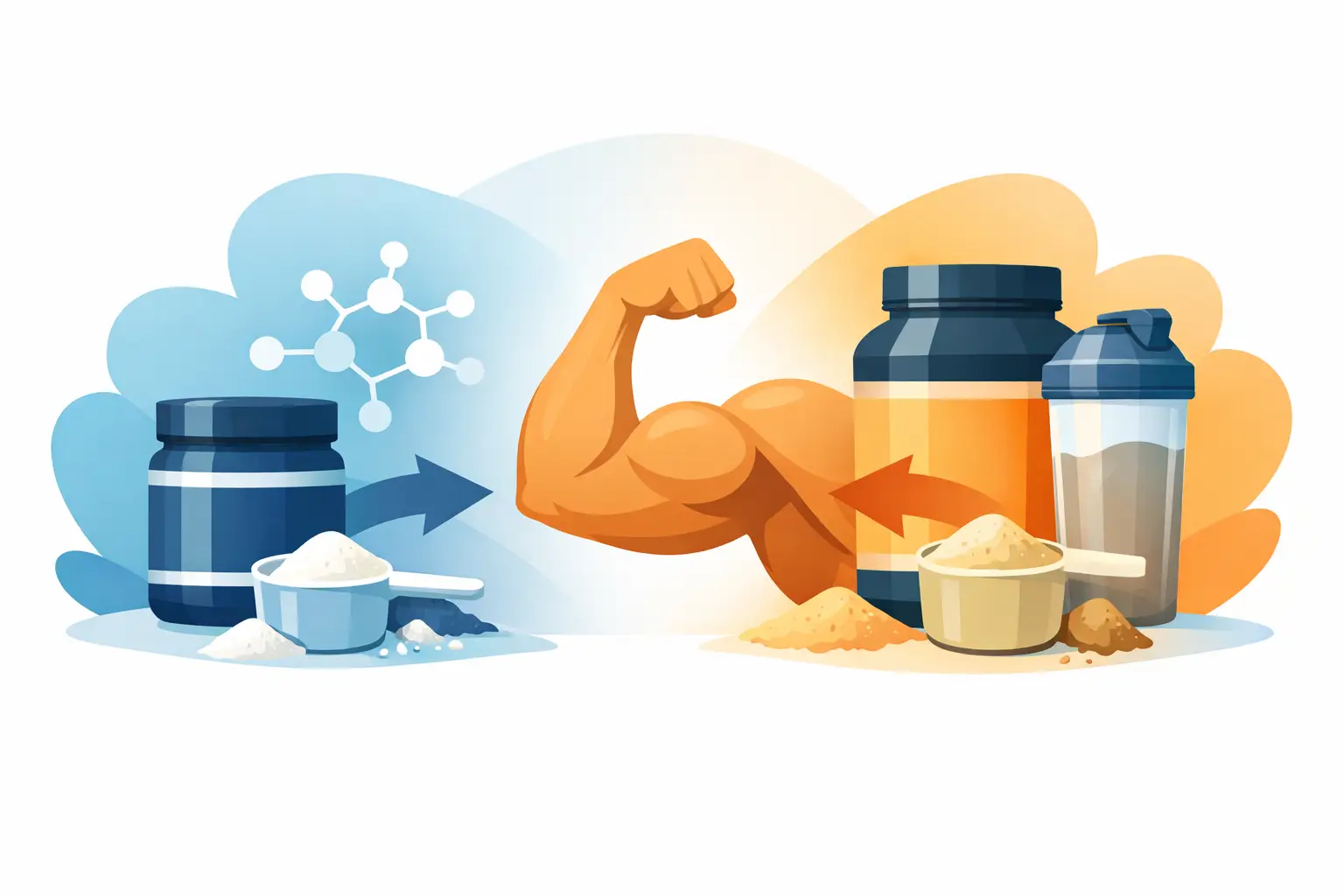
 Creatine and protein powder are often grouped as muscle-building supplements, but they serve different purposes and offer distinct benefits.
Protein powder helps you consume enough protein and supports various metabolic processes, while creatine helps your muscles produce energy during repeated high-intensity efforts.
That distinction makes the creatine vs protein powder debate relatively simple.
If your diet does not provide enough protein, correcting that deficiency is the priority; if your protein intake is already adequate, creatine is more likely to provide a benefit you are not receiving from food alone.
As a professional basketball player, I have used both supplements for years, but never as substitutes for training, sleep, hydration, or a nutrient-dense diet.
Their value comes from how effectively they support those fundamentals.
Creatine vs Protein Powder: Quick Comparison
| Category | Creatine | Protein Powder |
|---|---|---|
| Primary function | Improves rapid energy production | Helps meet daily protein needs |
| Main benefits | Strength, power, repeated sprint ability, training capacity | Muscle repair, growth, recovery, satiety |
| Best for | Lifters, power athletes, team-sport athletes, vegetarians, older adults | Anyone who struggles to consume enough protein |
| Is it essential? | No, but it can provide benefits beyond normal dietary intake | Protein is essential, but protein powder is not |
| Standard serving | 3–5 grams daily | Usually 20–40 grams as needed |
| Timing | Any time; daily consistency matters most | Whenever it helps distribute protein across the day |
| Rest days | Continue taking it | Use only if needed to meet your protein target |
| Immediate effect | Usually requires consistent use to saturate muscle stores | Immediately contributes to daily protein intake |
| Common scale change | May increase water stored inside muscle | No predictable weight change |
| Best type | Creatine monohydrate | Whey, casein, soy, or a well-formulated plant blend |
What Is the Difference Between Creatine and Protein Powder?
Creatine is a naturally occurring compound made from the amino acids arginine, glycine, and methionine.
Most of the body’s creatine is stored in skeletal muscle, where it helps regenerate adenosine triphosphate, or ATP, which is the energy currency used during brief, intense activity.
Increasing muscle creatine stores can support strength, power, repeated sprint performance, and the ability to complete more high-quality training.
When paired with resistance training, these performance improvements may eventually contribute to greater increases in strength and lean mass (Kreider et al., 2017).
Protein powder is concentrated dietary protein derived from sources such as milk, eggs, soy, peas, or rice.
During digestion, protein is broken into amino acids that the body uses to maintain and repair muscle, connective tissue, enzymes, hormones, immune proteins, and other structures.
Exercise and protein ingestion work together to stimulate muscle protein synthesis.
Most active adults can meet their protein requirements with food, but protein powder offers a convenient way to close the gap when meals fall short (Jäger et al., 2017).
In practical terms, creatine can help you perform more productive work, while protein provides material your body needs to adapt to that work.
Creatine does not replace protein, and protein powder does not fully reproduce the effects of increasing muscle creatine stores.
Which Is More Necessary: Creatine or Protein Powder?
Dietary protein is physiologically more necessary because protein is an essential nutrient.
However, protein powder itself is not necessary if you already consume enough protein through meals.
Creatine is also not essential because the body produces it and obtains additional amounts from foods such as meat and fish.
Nevertheless, supplementation can raise muscle creatine stores beyond what most people achieve through an ordinary diet, making it more than a convenient dietary replacement (Kreider et al., 2017).
Therefore, the most accurate answer depends on what your routine is missing:
- Choose protein powder if you repeatedly fall short of your protein target.
- Choose creatine if your protein intake is adequate and you want to improve strength, power, or high-intensity training capacity.
- Use both if protein powder makes your nutrition easier and creatine supports your training goals.
- Choose neither if your diet already covers your needs and your training does not align with creatine’s primary benefits.
Before buying either product, track your normal food intake for three to five days.
That short assessment can reveal whether inadequate protein is actually a problem or whether creatine would add something more distinct.
When Protein Powder Is the Better Choice
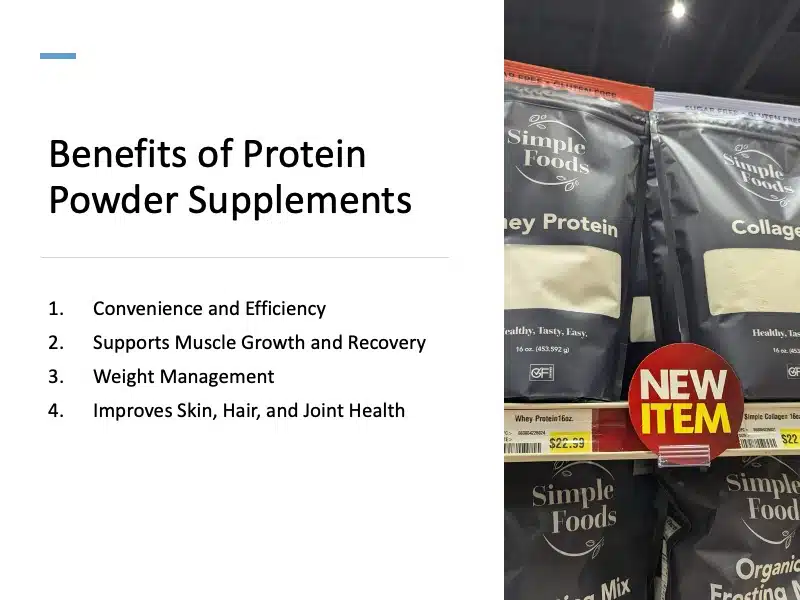
Protein powder should take priority when your diet does not consistently provide enough total protein.
Even the best creatine routine cannot compensate for an inadequate supply of essential amino acids.
A daily range of approximately 1.4–2.0 grams of protein per kilogram of body weight is sufficient for most exercising individuals.
A major meta-analysis found that gains from resistance training tended to plateau around 1.6 grams per kilogram per day, although individual needs may be higher during calorie restriction or demanding training periods (Jäger et al., 2017; Morton et al., 2018).
For a 180-pound person, 1.6 grams per kilogram equals approximately 131 grams of protein per day.
That amount is achievable through food, but a high-protein shake can make it easier when breakfast is rushed, appetite is low, or training schedules interfere with regular meals.
Protein powder is particularly useful for:
- People who regularly skip meals
- Athletes with demanding practice or travel schedules
- Older adults with reduced appetite
- Vegetarians and vegans who struggle to plan protein-rich meals
- People dieting for fat loss
- Individuals who need an easy post-workout meal
- Anyone who consistently finishes the day below their protein target
Protein powder is not inherently superior to eggs, fish, poultry, Greek yogurt, cottage cheese, tofu, beans, or lean meat, and its primary advantage is convenience, not unique anabolic power.
When Creatine Is the Better Choice
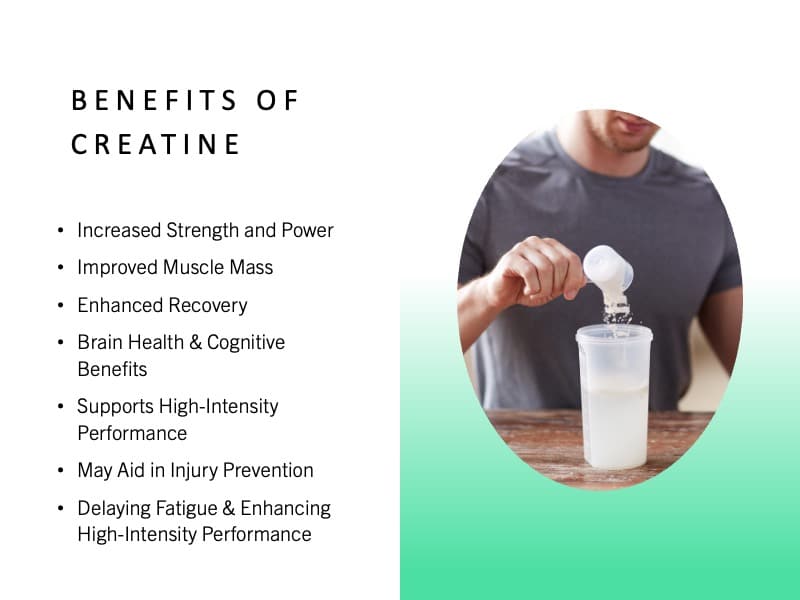
Creatine is usually the better first purchase when your protein intake is already adequate.
Unlike protein powder, it can create a performance advantage that may be difficult to obtain from ordinary meals alone.
Creatine is especially valuable for activities involving short, repeated bursts of force.
Examples include resistance training, sprinting, jumping, wrestling, football, basketball, hockey, and high-intensity interval training.
A 2024 meta-analysis found that combining creatine with resistance training improved upper- and lower-body strength in adults younger than 50 compared with resistance training alone (Wang et al., 2024). Another meta-analysis found that adding creatine to resistance training produced a small but meaningful improvement in direct measures of muscle growth (Burke et al., 2023).
Creatine is particularly useful for:
- Strength and power athletes
- Team-sport athletes
- Sprinters and jumpers
- Recreational lifters pursuing progressive overload
- Vegetarians and vegans, who may begin with lower muscle creatine stores
- Older adults performing resistance training
- People who already consume sufficient protein
- Athletes trying to preserve training quality during a calorie deficit
Creatine is less compelling for someone who does not perform resistance exercise or repeated high-intensity activity.
It may still have applications outside sports, but the strongest evidence remains connected to muscular performance and training adaptations.
Creatine vs Protein Powder for Muscle Growth
Protein intake deserves priority for muscle growth because building new tissue requires an adequate supply of essential amino acids.
If your diet is protein-deficient, adding creatine without fixing that deficiency leaves a major limitation unresolved.
Protein supplementation can improve resistance-training-induced gains in muscle size and strength, but its additional benefit diminishes once total daily protein intake is sufficient (Morton et al., 2018).
In other words, another protein shake is not automatically better when you already consume plenty of protein.
On the other hand, creatine supports muscle growth more indirectly.
By improving high-intensity energy availability, it may help you complete more repetitions, maintain performance across sets, or train with slightly greater quality.
Creatine can also increase intracellular water, which may produce an early rise in lean mass before significant new muscle tissue develops.
Over longer periods, its effect on training capacity can contribute to genuine improvements in muscle growth when the training stimulus is progressive (Antonio et al., 2021).
Verdict: Protein powder is more important if protein intake is inadequate. Creatine becomes the more useful addition once protein and calorie needs are already covered.
Protein Powder vs Creatine for Strength and Power
Creatine is the stronger choice for directly improving strength and power.
Its role in rapid ATP regeneration makes it relevant to heavy lifting, explosive movements, and repeated maximum or near-maximum efforts.
Protein powder supports the repair and remodeling that allow strength to develop, but drinking a shake does not acutely make a well-fed athlete stronger.
Its benefit depends primarily on whether it improves total protein intake.
This difference is important for experienced athletes.
If I already eat enough protein, adding a second protein shake may contribute very little, while consistently taking creatine may still help support training quality and repeated explosive output.
Verdict: Creatine generally wins for strength, power, sprinting, and repeated high-intensity performance, provided that protein intake is already sufficient.
Creatine vs Protein Powder for Athletic Performance
Athletic performance involves more than muscle size.
Speed, power, skill, decision-making, conditioning, body composition, and recovery all influence an athlete’s performance.
Creatine is especially relevant to sports containing repeated sprints, jumps, collisions, or high-force actions.
As a basketball player, I see creatine as a way to support the quality of explosive work across training sessions, not as a product that simply makes muscles look bigger.
Protein powder has a broader nutritional role.
Athletes may use it to support recovery between practices, protect lean mass during congested schedules, and replace missed meals while traveling.
Verdict: Creatine provides the more distinct performance benefit for explosive athletes, while protein powder is more valuable when logistics make adequate nutrition difficult.
Creatine vs Protein Powder for Endurance Athletes
Protein powder is often more useful for runners, cyclists, swimmers, and other endurance athletes who already consume enough carbohydrates but struggle with recovery nutrition.
Protein supports the maintenance and remodeling of muscle and other exercise-stressed tissues.
A systematic review found that protein supplementation alongside endurance training may modestly support lean mass and some measures of aerobic capacity or time-trial performance, although protein should not displace the carbohydrates needed to fuel demanding endurance work (Lin et al., 2021).
Creatine may benefit endurance athletes who rely on repeated surges, sprint finishes, hill attacks, or strength training.
However, the initial increase in body water may be undesirable in sports where carrying additional mass has a meaningful energy cost.
Verdict: Protein powder generally has broader relevance for pure endurance athletes. Creatine becomes more useful when the sport includes sprinting, surges, strength work, or repeated high-intensity efforts.
Creatine vs Protein Powder for Fat Loss
Neither creatine nor protein powder directly causes substantial fat loss.
A sustained calorie deficit remains necessary, but both supplements can help preserve qualities that often decline while dieting.
Protein powder is usually the more immediately useful option because it can help increase protein intake without requiring a large meal.
Higher-protein diets may improve satiety and help preserve lean tissue during calorie restriction (Leidy et al., 2015; Kokura et al., 2024).
Creatine can support a fat-loss phase by helping preserve strength and training performance.
However, increased water inside muscle cells can temporarily hide fat loss on the scale, especially during the first few weeks.
That scale change does not mean creatine is preventing fat loss.
Track waist circumference, training performance, progress photos, and longer-term weight trends instead of relying on a single measurement.
Verdict: Protein powder usually takes priority for appetite management and lean-mass retention, while creatine is a valuable secondary tool for maintaining training quality.
Creatine vs Protein Powder for Older Adults
Both supplements can be useful for healthy aging, especially when paired with resistance training.
Age-related declines in appetite, muscle mass, strength, and anabolic sensitivity can make nutrition and training increasingly important.
Healthy older adults are commonly advised to consume at least 1.0–1.2 grams of protein per kilogram per day, with higher amounts potentially appropriate during illness, malnutrition, or increased physical demands (Bauer et al., 2013).
Protein powder can help meet that target when chewing difficulty, low appetite, or limited meal preparation becomes a barrier.
Creatine combined with resistance training may further improve strength and lean tissue in older adults (Devries & Phillips, 2014).
These outcomes matter beyond appearance because strength and muscle support mobility, balance, physical confidence, and independence.
Verdict: Protein takes priority when overall intake is low, but creatine and protein can complement each other exceptionally well in older adults who perform resistance training.
Creatine vs Protein Powder for Women
The decision process is essentially the same for women as it is for men.
Protein powder is useful when it increases total protein intake, while creatine is useful when the goal is strength, power, training capacity, or lean-mass preservation.
Women should not avoid creatine because of a fear of becoming bulky.
Creatine does not override training style, genetics, calorie intake, or hormonal physiology, although it may cause a small initial increase in body weight due to greater water retention within muscle.
Evidence specific to women remains less extensive than evidence in men, and results can vary across age and hormonal status.
This makes it important to present creatine as a potentially valuable tool rather than promise identical results for every woman.
Verdict: Protein powder is more necessary when dietary protein is low; creatine is more distinct when protein intake is sufficient and performance or strength is the priority.
Creatine vs Protein Powder for Vegetarians and Vegans
Vegetarians and vegans can meet their protein requirements without animal products, but doing so may require more deliberate meal planning.
Soy protein or blends of complementary sources, such as pea and rice, can provide a useful amino acid profile.
Research comparing soy and whey supplementation alongside resistance training has not shown a meaningful difference in gains when the protein doses and training programs are comparable (Messina et al., 2018).
Plant-based athletes should still check the protein amount per serving because some products provide relatively small doses.
Creatine may be especially relevant because its richest dietary sources are meat and fish.
People who consume little or no animal food often have lower baseline creatine stores and may experience a more noticeable response to supplementation (Kreider et al., 2017).
Verdict: Both can be valuable. Protein powder helps fill dietary gaps, while creatine replaces a compound that is harder to obtain in meaningful amounts from plant foods.
Creatine vs Protein Powder for Beginners
A beginner should not automatically purchase either supplement on the first day of training.
Establishing a consistent program, learning proper technique, eating balanced meals, and sleeping enough will produce the largest early improvements.
Protein powder becomes useful if food tracking shows that protein intake is consistently low.
Creatine becomes worthwhile once the beginner is training regularly enough to benefit from improved high-intensity performance.
There is no requirement to reach an advanced training level before using creatine. The more important question is whether the person has a structured routine that provides opportunities for the supplement to help.
Verdict: Fix protein intake first, establish consistent training, and then consider creatine as a simple performance addition.
Benefits of Creatine Beyond Exercise Performance and Muscle Growth
Creatine is being studied for possible effects on cognition and brain health because the brain also relies on creatine-dependent energy metabolism.

A 2024 systematic review and meta-analysis reported potential improvements in memory, attention time, and processing speed, although the authors emphasized the need for larger, higher-quality trials (Xu et al., 2024).
Some evidence suggests that the cognitive response may be more noticeable in older adults, vegetarians, or situations involving metabolic stress or sleep deprivation.
These findings are promising, but they are not yet as consistent as the evidence supporting creatine for high-intensity exercise.
Protein also has functions far beyond muscle growth.
Amino acids are required for enzymes, transport proteins, immune components, and numerous structural and regulatory processes throughout the body.
This broader perspective reinforces why protein is an essential nutrient while protein powder is merely one delivery method.
Creatine is not nutritionally essential, but supplementation may raise tissue stores enough to create benefits that normal dietary intake does not reliably provide.
Can You Take Creatine and Protein Powder Together?
Yes. Most healthy adults can take creatine and protein powder together, and mixing creatine into a shake is one of the easiest ways to build a consistent routine.
There is no evidence-based need to separate them.
A post-workout shake containing 20–40 grams of protein and 3–5 grams of creatine is a practical option, but taking creatine with breakfast and protein later in the day can work just as well.
Protein timing can matter at the margins, but total daily intake and reasonable distribution across meals matter more than hitting a narrow post-workout window.
General recommendations suggest approximately 20–40 grams of high-quality protein per meal, distributed every three to four hours when practical (Jäger et al., 2017).
Creatine works through gradual tissue saturation, making daily consistency more important than precise timing.
Continue taking it on rest days because muscle creatine stores do not need to be matched to individual workouts.
How Much Creatine Should You Take?
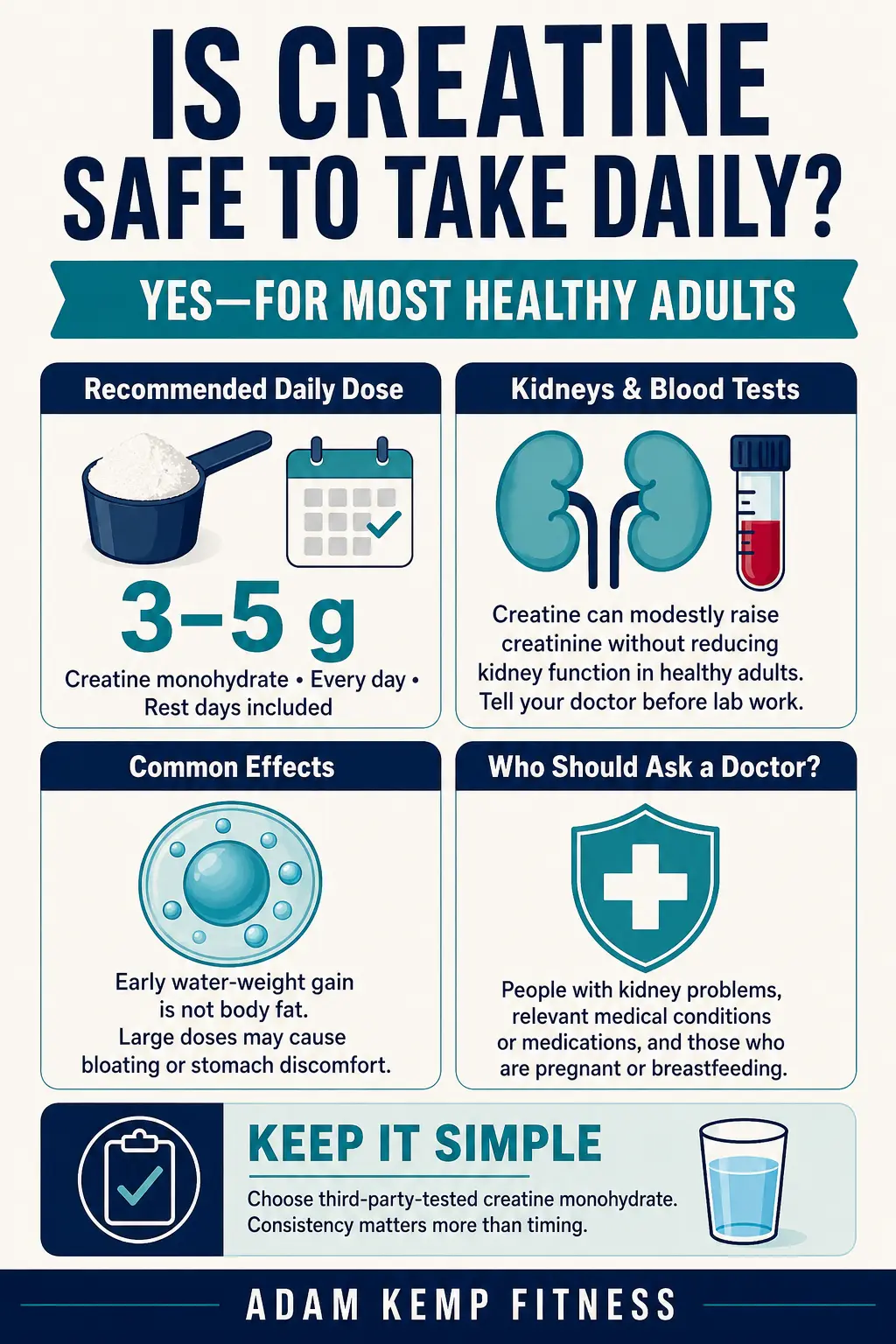
Creatine is safe to take daily, and for most people, the simplest approach is 3–5 grams of creatine monohydrate every day.
Larger athletes may prefer the upper end of that range, but more is not automatically better once muscle stores are saturated.
A loading phase can increase muscle creatine stores faster.
The traditional method is approximately 20 grams per day, divided into four 5-gram servings, for five to seven days before transitioning to a maintenance dose.
Loading is optional.
Taking 3–5 grams daily without loading typically produces similar saturation over several weeks and may reduce the likelihood of stomach discomfort.
Creatine does not need to be cycled.
There is also no convincing evidence that healthy adults need periodic breaks to preserve their natural creatine production or responsiveness (Antonio et al., 2021).
Is Creatine Safe to Take Every Day?
Creatine monohydrate is generally considered safe for healthy adults when used at recommended doses. Decades of controlled research have not shown that standard supplementation damages healthy kidneys (Kreider et al., 2017).
A 2025 meta-analysis found no statistically significant difference in glomerular filtration rate between creatine and control groups (Naeini et al., 2025).
However, creatine can modestly increase serum creatinine because creatinine is a breakdown product of creatine, which can complicate the interpretation of creatinine-based kidney tests.
Tell your healthcare professional that you use creatine before blood work, especially if you have substantial muscle mass.
Creatinine, estimated glomerular filtration rate, cystatin C, urine markers, hydration status, and clinical history may need to be considered together rather than interpreted in isolation.
People with kidney disease, pregnant or breastfeeding individuals, children, and anyone taking medications that affect kidney function or fluid balance should seek individualized medical guidance before supplementation.
How Much Protein Powder Should You Take?
Protein powder dosage should be determined by the difference between your dietary intake and daily target.
It should not be prescribed as a fixed number of shakes for everyone.
If your target is 150 grams and meals provide 125 grams, one shake containing approximately 25 grams is enough.
Taking three additional shakes would add calories and protein without necessarily producing greater results.
A serving of 20–40 grams works well for many adults, but body size, age, meal composition, and training demands affect the ideal amount.
Larger athletes and older adults may benefit from servings toward the upper end of that range.
Use protein powder strategically rather than automatically.
Some days you may need a shake, while on other days your meals may already cover your target.
Is Protein Powder Safe to Use Every Day?
Protein powder can be used daily when it fits within an appropriate diet and does not aggravate an allergy, intolerance, or medical condition.
However, relying excessively on shakes can reduce dietary variety and displace foods that provide fiber, vitamins, minerals, and beneficial plant compounds.
Someone with a milk allergy should avoid dairy-derived whey and casein, while a person with lactose intolerance may tolerate whey isolate better than concentrate.
Plant powders may be more appropriate when dairy causes digestive symptoms.
People with chronic kidney disease or another condition requiring protein restriction need individualized recommendations from a physician or registered dietitian.
General high-protein targets intended for healthy athletes should not automatically be applied to people with impaired kidney function.
Whey, Casein, or Plant Protein: Which Is Best?
Whey protein is rich in essential amino acids and leucine, mixes easily, and digests relatively quickly.
Whey concentrate is generally affordable, while whey isolate contains a higher percentage of protein and usually less lactose.
Casein digests more slowly and can be helpful when you want a filling shake or an evening protein source.
Its slower digestion does not make it universally better before bed, but it offers another practical way to distribute protein.
Soy is a complete plant protein with strong research support.
Pea and rice blends can also work well because their amino acid profiles complement each other.
The best protein powder is one that provides a meaningful dose, agrees with your digestion, fits your dietary preferences, and helps you consistently reach your target.
The label matters more than whether the container uses words such as “anabolic,” “advanced,” or “elite.”
Related Reading: Whey vs Plant Protein Powder
What Type of Creatine Is Best?
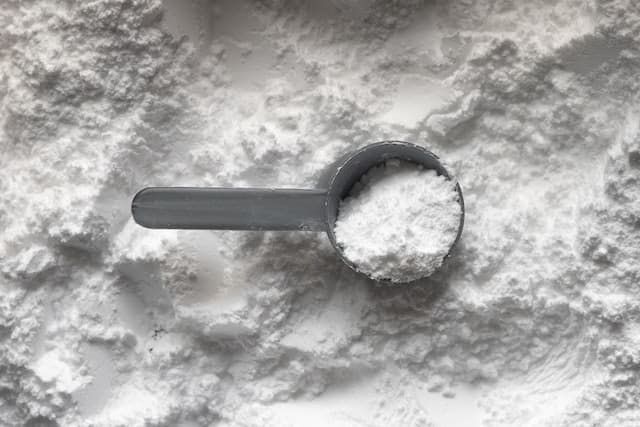
Creatine monohydrate remains the best option for most people. It is effective, widely studied, stable, and generally less expensive than newer forms.
Buffered creatine, creatine hydrochloride, creatine nitrate, and other variations are often marketed as having superior absorption or producing less water retention.
Current evidence has not established these alternatives as consistently superior to creatine monohydrate (Jagim et al., 2012).
Micronized creatine monohydrate is still creatine monohydrate.
The smaller particles may mix more easily, but micronization does not transform it into a more powerful compound.
Choose a simple product that lists creatine monohydrate as its only active ingredient.
There is rarely a reason to pay substantially more for a proprietary creatine blend.
How to Choose Safe, High-Quality Supplements
Look for a short, transparent ingredient list and a manufacturer that verifies identity, purity, and label accuracy.
Protein powder should clearly state the amount and source of protein, while a basic creatine product generally needs only creatine monohydrate.
Third-party certification is especially important for tested athletes because supplements can contain undeclared substances.
NSF Certified for Sport evaluates products for label accuracy, contaminants, and substances prohibited by major sporting organizations (NSF).
Certification reduces risk but does not make a supplement necessary or guarantee that it will improve performance.
It simply provides greater confidence that the contents better match the label.
Common Creatine and Protein Powder Mistakes
The first mistake is purchasing protein powder without knowing how much protein you already consume.
More protein does not automatically mean greater productivity once nutritional needs are met.
The second is taking creatine only on workout days.
Creatine works by maintaining elevated tissue stores, so a consistent daily dose is more logical than using it like a stimulant.
Another mistake is expecting creatine to work immediately.
Some people notice greater muscle fullness early, but meaningful performance and training adaptations should be evaluated over weeks or months.
People also sometimes mistake creatine-related water retention for fat gain.
Most early water gain occurs inside muscle, although it can still raise scale weight.
Finally, neither supplement can rescue a poorly designed program.
The product is not the program, and supplements cannot replace progressive training, adequate energy intake, sleep, or recovery.
Protein Powder vs Creatine: Which Should You Buy First?
Use this decision order:
- Are you consuming enough total calories and protein?
If not, improve your meals and use protein powder when necessary. - Are you training consistently?
If not, establish a structured routine before expecting much from either supplement. - Does your training involve strength, power, sprinting, or repeated intense efforts?
If yes, creatine is likely worthwhile once protein intake is adequate. - Do you regularly miss your protein target because of appetite, work, travel, or dietary restrictions?
If yes, protein powder may improve consistency. - Can you afford both without sacrificing food quality?
If yes, creatine and protein powder can be used together because they provide complementary benefits.
Final Thoughts: Protein Powder vs Creatine
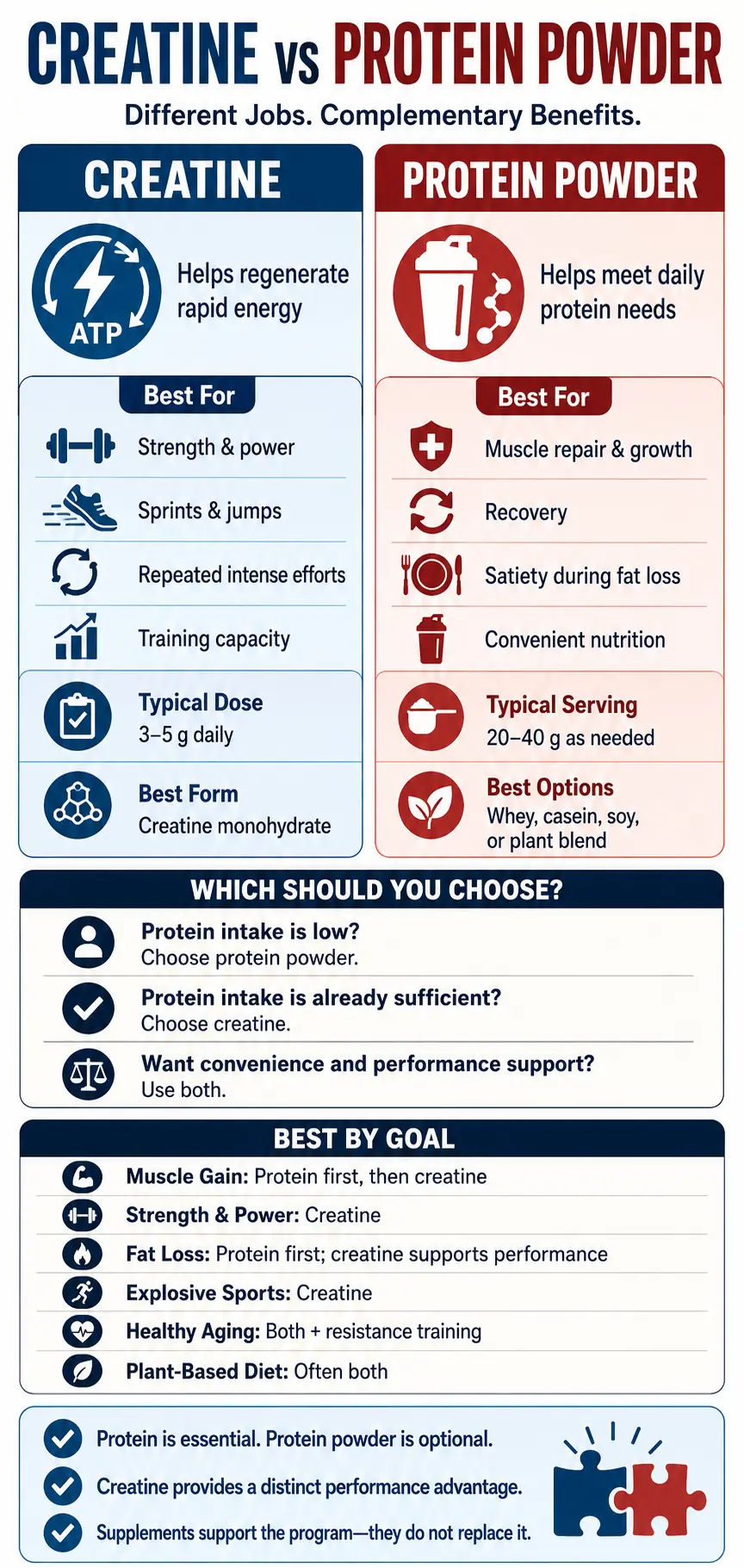
In the creatine vs protein powder comparison, protein is more biologically necessary, but protein powder is only necessary when it helps correct an intake gap.
If you already consume sufficient protein, another shake may offer little additional value.
However, creatine is more likely to provide a distinct benefit once your nutritional foundation is in place.
It can support strength, power, high-intensity training, lean-mass development, and potentially some aspects of cognitive function.
Choose protein powder first if you struggle to meet your protein needs.
Choose creatine first if your protein intake is already sufficient and you want a well-supported performance advantage.
Use both if they fit your needs and budget, but remember that neither is responsible for the result by itself.
Training creates the demand, nutrition supplies the resources, recovery allows adaptation, and supplements provide only targeted support.
This website does not provide medical advice. This website site does contain affiliate links, and purchases may earn a commission.
Read my Medical Disclaimer, Review Disclaimer, and Publishing Policies for more details. Use of this site indicates acceptance of these terms.