
How to Live the Lifestyle of an Athlete for Peak Performanc
 Reading Time: 9 minutes
 The lifestyle of an athlete extends far, far beyond workouts, practices, and competition.
For me, professionalism means taking responsibility for how I prepare, how I recover, and the everyday choices I bring to my team.
Becoming an elite athlete requires years of purposeful practice to master your sport’s skills and perform them consistently under pressure, but living the lifestyle of an athlete also means paying attention to the habits surrounding that practice, including nutrition, sleep, recovery, and mental preparation.
Throughout my professional basketball career, I have approached those responsibilities as part of the job.
Being dependable means showing up ready to contribute, paying attention to my body, and recognizing when more effort needs to give way to better recovery.
My approach combines the demands of professional sport with what I learned while earning my master’s degree in nutrition education.
I prioritize consistent routines, purposeful training, adequate nutrition, and time for physical and mental recovery.
You don’t need a professional contract to apply that approach to your own goal, and if your goals is to become a professional athlete, you won’t reach that level without a professional approach to the lifestyle of an athlete
Whether you compete in a sport or simply want to train with greater purpose, building sustainable habits is the foundation of living the lifestyle of an athlete.
How to Live Like an Elite Athlete
Living like an elite athlete starts with giving your daily habits the same attention as your training.
In my professional basketball career, that means planning meals, protecting time for sleep, preparing for practice, and making room for recovery.
You can adapt this approach to your own schedule without copying a professional athlete’s workload.
The following strategies offer a practical way to build the lifestyle of an athlete around your goals, responsibilities, and training needs.
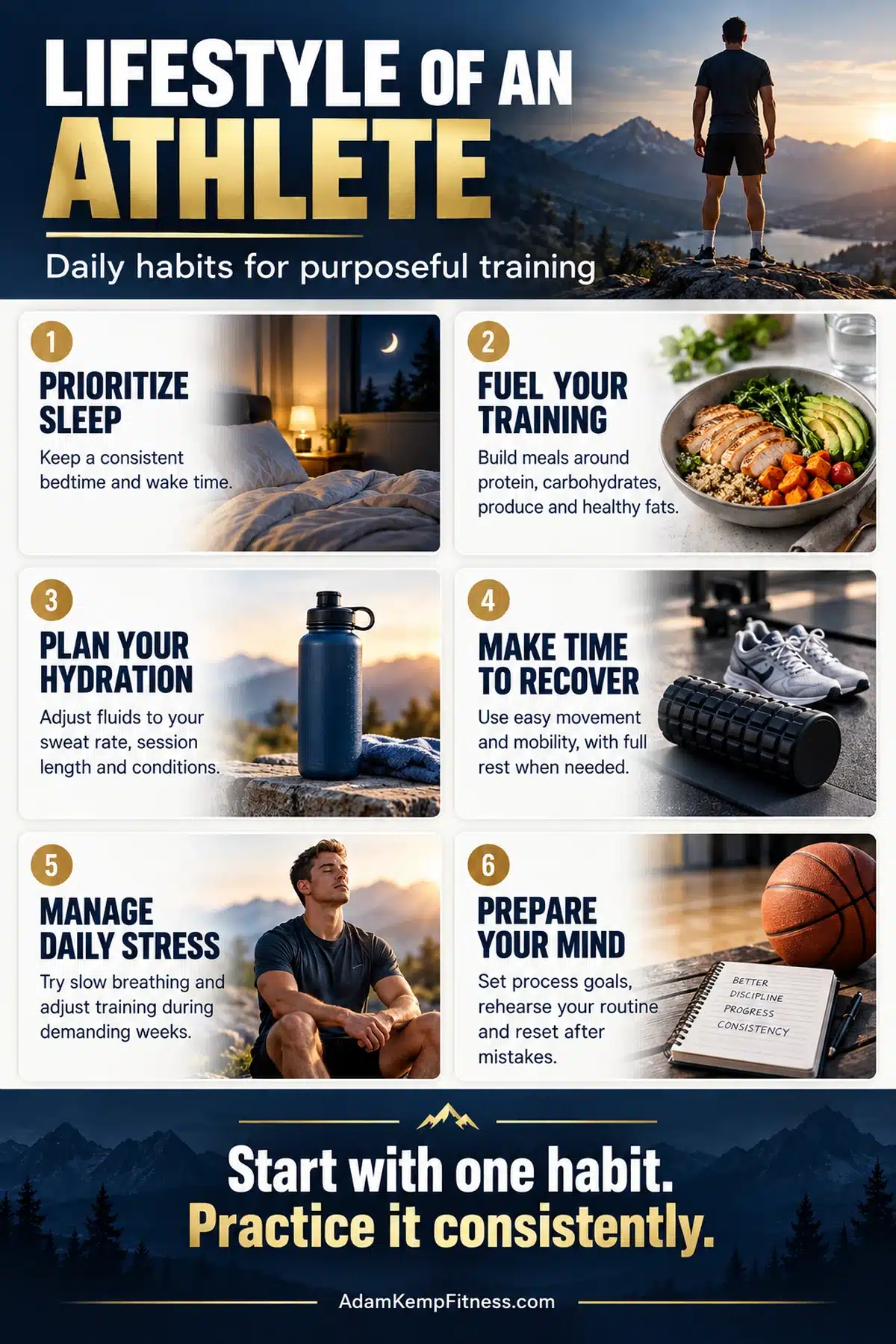
Sleep Like a Pro
Sleep is part of preparing for your next performance.
As a professional basketball player, I consider protecting my sleep one of the responsibilities that comes with expecting my body to perform consistently.
Sleep supports physical recovery, attention, emotional control, and the learning that happens after practicing a skill.
In basketball, being physically present means little if you are mentally a step behind the play.
Most adults need around seven to nine hours of sleep, and demanding training schedules may increase individual sleep needs.
Give yourself enough time to sleep instead of treating seven hours as a ceiling.
Start with a reasonably consistent bedtime and wake time, then create a bedroom that is cool, dark, and quiet.
My guide to healthy sleep habits explains how to build a routine that remains practical through work, family responsibilities, and travel.
Your evening routine can be simple: finish demanding tasks, lower the lights, and spend a few minutes reading, praying, or relaxing.
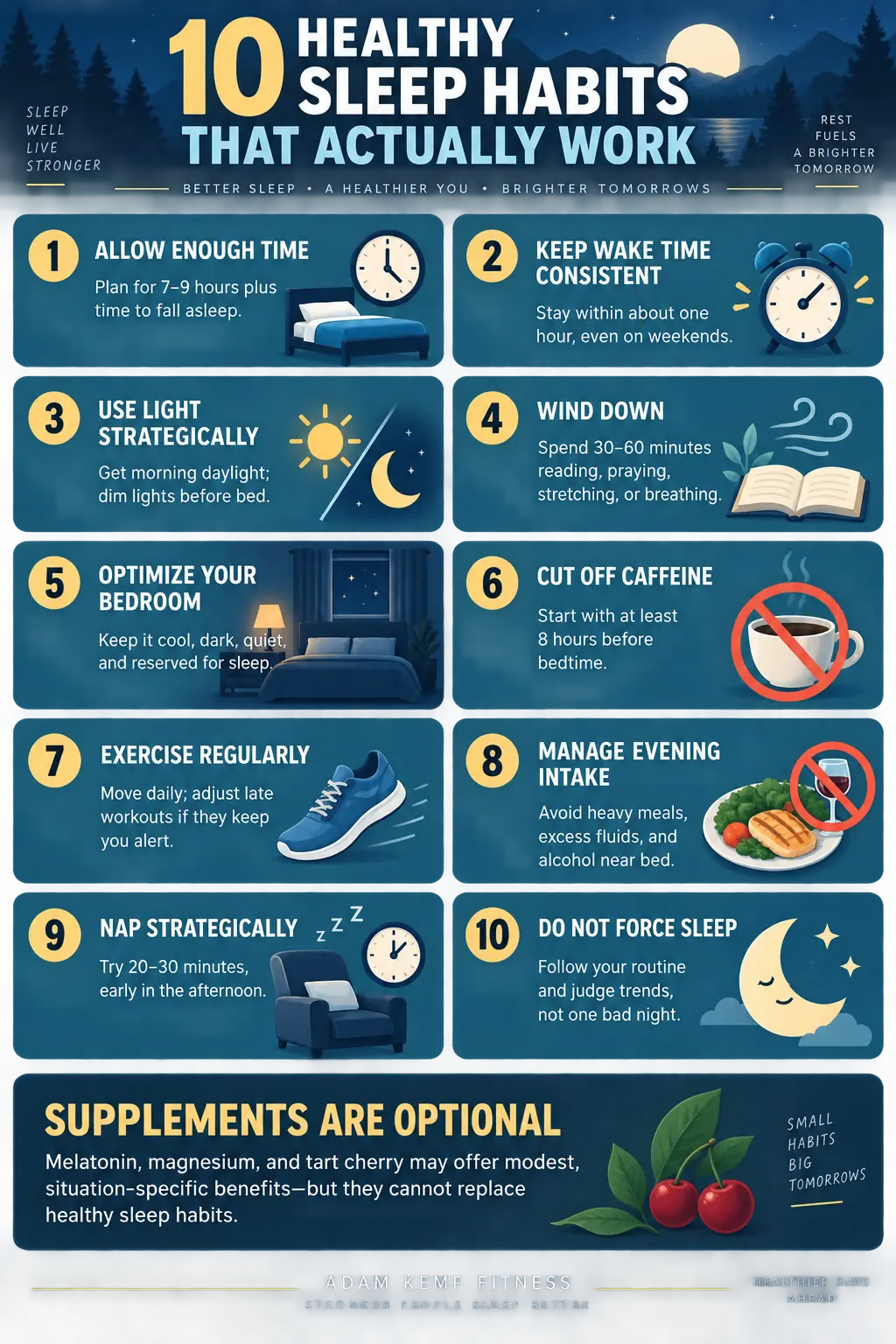
Pay attention to caffeine timing, especially when afternoon coffee or pre-workout supplements leave you feeling alert late into the evening.
If late practices are unavoidable, allow yourself a gradual transition through cooling down, eating, showering, and reducing stimulation before bed.
You still need to refuel after training, so skipping a necessary meal simply because it is late is not a useful recovery strategy.
Judge your sleep routine by the pattern across several weeks, rather than panicking over one difficult night.
Notice your morning energy, daytime concentration, mood, and training quality, using wearable data as additional information rather than a daily verdict.
Learn How to Manage Stress for Better Performance
The lifestyle of an athlete includes managing pressures that never appear on a training program.
Competition, travel, family responsibilities, financial concerns, and uncertainty can all affect how prepared you feel to train.
For me, professionalism includes recognizing those demands and responding thoughtfully.
A training plan should account for your ability to recover from the week you are actually living.
Pay attention when restless sleep, irritability, unusual fatigue, and declining motivation begin appearing together.
These changes do not automatically mean you are overtraining, but they deserve attention when they persist.
Talk with your coach about adjusting training volume, replacing a demanding conditioning session with easy movement, or taking a rest day when appropriate.
Prayer is an important part of how I manage stress, and I also value practical techniques such as slow breathing and progressive muscle relaxation.
Choose a routine you can repeat on an ordinary day, even if it only takes five minutes.
Protecting some time away from performance demands can also make your routine more sustainable.
Stress can also push athletes toward quick performance solutions.
Online searches such as “buy steroids online” may expose people to products carrying significant medical, legal, and quality-control concerns.
Anabolic steroid misuse can damage cardiovascular health, increase the risk of heart attack and stroke, injure the liver or kidneys, disrupt hormone production and fertility, and contribute to psychiatric problems and dependence (National Institute on Drug Abuse, n.d.).
My approach to athletic professionalism includes protecting long-term health, and I would not recommend risking it for faster physical changes.
If fatigue, stalled progress, or concerns about hormones are pushing you toward these drugs, speak with a qualified clinician about the underlying problem.
Someone already using anabolic steroids should also seek medical support, including help with withdrawal and mood symptoms.
Make Active Recovery Part of Your Routine
Recovery should help prepare you for your next meaningful training session.
Easy movement can be useful when you feel stiff after lifting, practicing, or competing, provided it does not become another source of fatigue.
Try a relaxed walk, a comfortable bike ride, or a gentle swim at an intensity where you can hold a full conversation.
Ten to twenty minutes may be enough to start, and there is no reason to extend the session just to reach an arbitrary calorie target.
Use how you feel during and afterward to guide the amount.
Mobility work should also have a purpose.
Personally, I do tons of mobility workouts using the Team BeachBody on Demand BODi App.
Choose a few movements relevant to your sport and restrictions, such as comfortable ankle mobility for landing and squatting or upper-back rotation for reaching and turning.
Move through a controlled range without forcing painful positions.
You can also use foam rolling when it helps temporarily reduce soreness or improve your range of motion.
Keep the pressure tolerable and avoid treating every tender area as something you must aggressively work through.
As an athlete, I want recovery tools to serve a clear purpose within my routine.
Having more equipment or spending longer on recovery does not automatically mean I am better prepared to play.
Complete rest belongs in a serious training plan, too.
If movement increases pain, changes your walking pattern, or leaves you feeling worse, stop and reassess.
Persistent pain, unusual dizziness, or illness deserves appropriate medical attention rather than another recovery circuit.
The practical goal is to choose the amount of activity that fits your condition that day.
Optimize Your Diet for Peak Performance
My approach to nutrition combines the practical demands of professional basketball with what I learned while earning my master’s degree in nutrition education.
An athlete’s diet needs to provide enough fuel for training, recovery, and everyday health.
A meal plan can look impressive on paper and still fall short if it leaves you consistently hungry, exhausted, or unable to complete quality sessions.
The best diet for an athlete should adapt to your sport, schedule, preferences, and training demands.
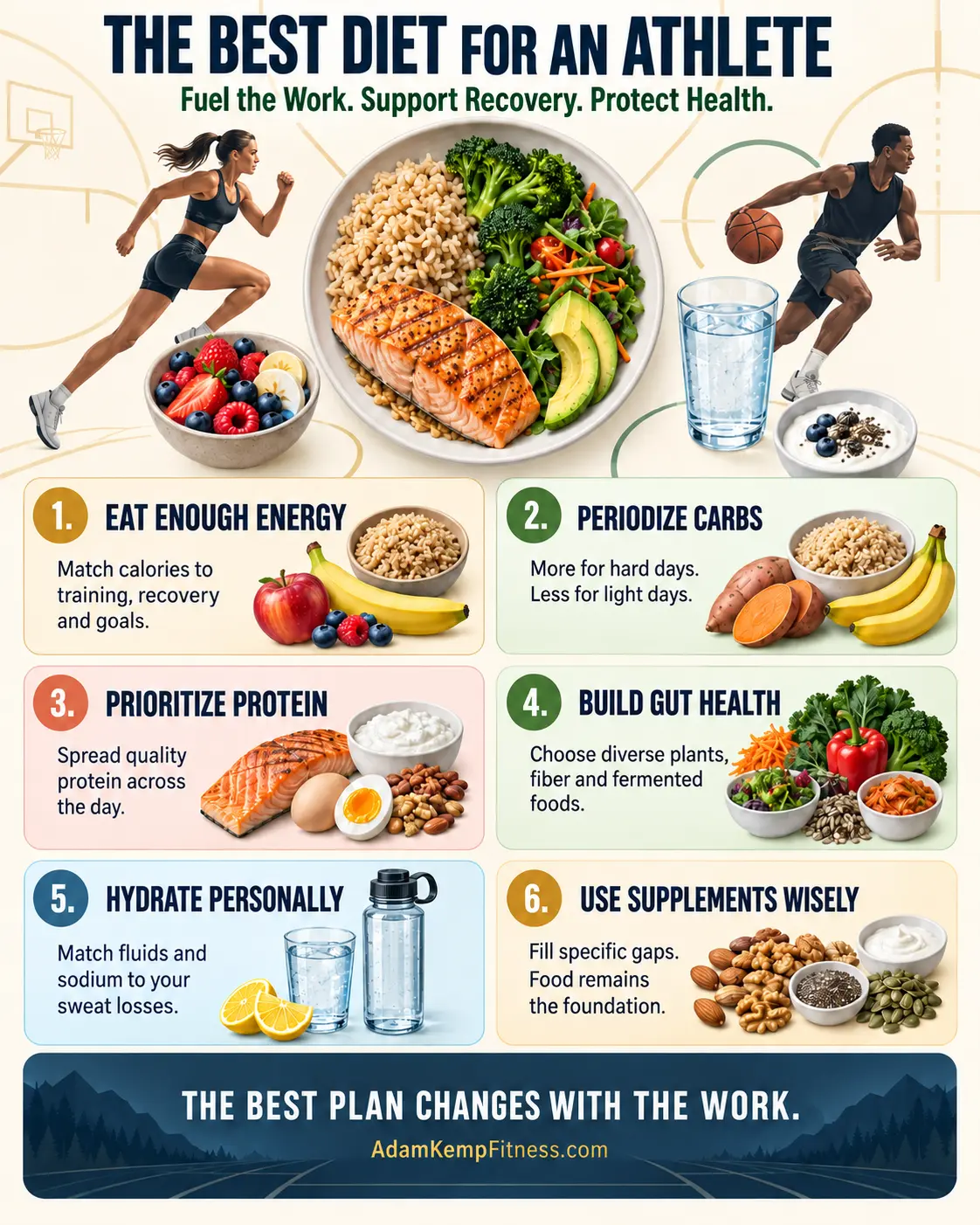
Build most meals around a protein source, carbohydrates, fruit or vegetables, and some dietary fat.
Breakfast might include eggs, oatmeal, and berries, while lunch could combine chicken, rice, vegetables, and avocado.
Carbohydrates deserve particular attention when your sport involves repeated sprints, jumping, demanding practices, or prolonged endurance work.
Adjust portions to the work ahead instead of eating exactly the same amount regardless of your training schedule.
Include protein across your main meals rather than leaving almost all of it for dinner.
Your total daily intake matters, while distributing protein gives you several opportunities to support muscle repair.
Consistency becomes easier when you plan for the moments most likely to disrupt your eating.
Preparing a few staple foods, carrying a portable snack, and knowing what you will eat after practice can prevent long stretches without adequate fuel.
My nutrition strategies for busy athletes offer practical ways to make those habits fit a demanding schedule.
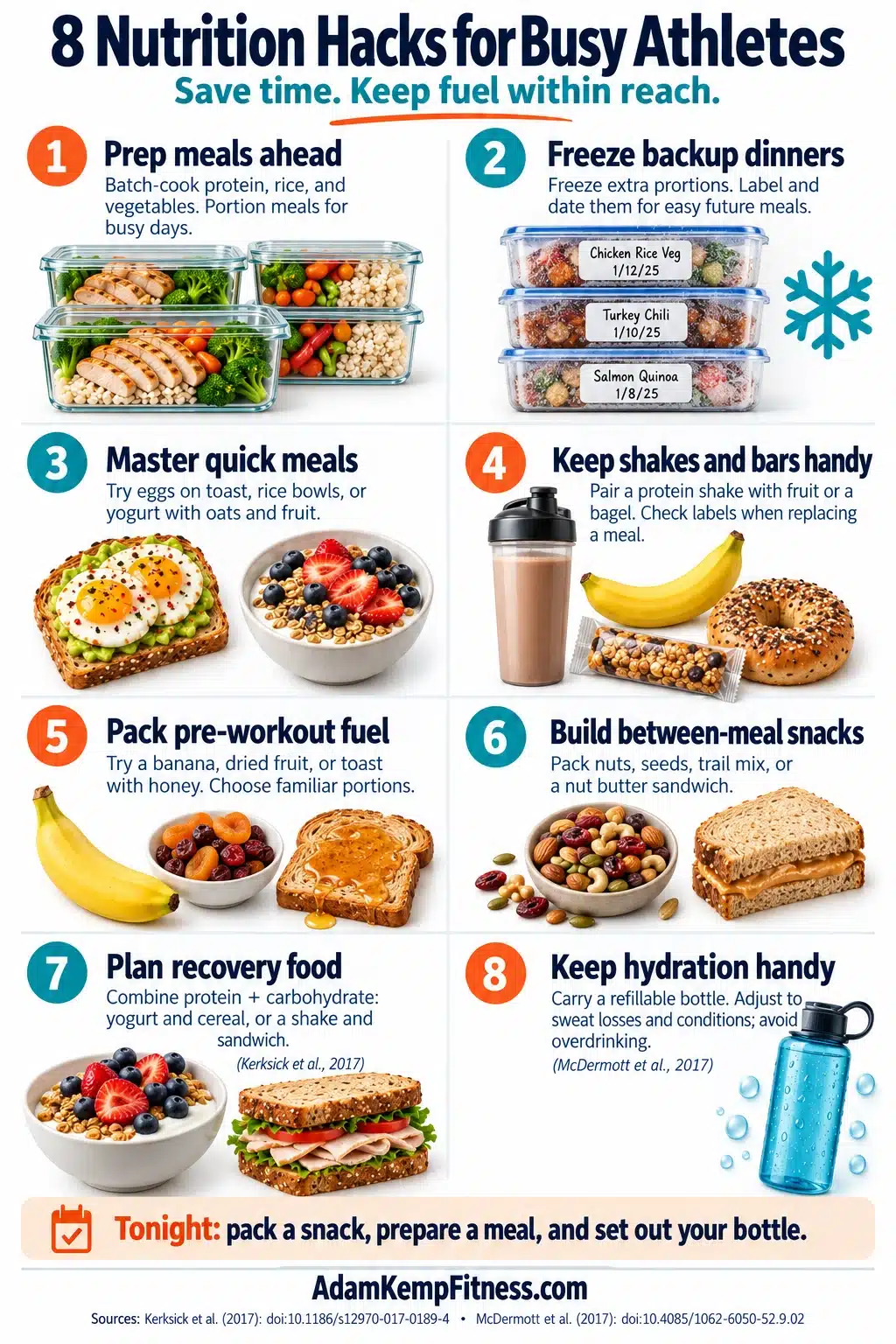
Hydration also requires a plan that matches your body and environment.
Fluid needs change with sweat rate, session length, temperature, clothing, and exercise intensity.
Thirst, urine color, and body-weight changes around training can provide useful clues when considered together.
Long, hot, or particularly sweaty sessions may require additional sodium, while prolonged demanding exercise may also benefit from carbohydrates during activity.
Avoid forcing excessive amounts of plain water simply because you assume more is always better.
Supplements should have a specific purpose, such as making it easier to meet a nutritional need.
Choose products with credible sport-specific third-party testing, understanding that certification reduces contamination risk without eliminating it.
Persistent fatigue, repeated illness, or declining performance deserves a closer look at your training, food intake, sleep, and health with an appropriately qualified professional.
Prepare Your Mind and Build Mental Fortitude
Mental fortitude includes preparation, accountability, and the ability to respond constructively when things go wrong.
In basketball, there is rarely time to feel completely confident before making the next decision.
You need a routine that helps you stay involved in the game, even after a mistake.
Start by setting a specific process goal for each practice.
That might mean communicating earlier on defense, maintaining your footwork when tired, or staying balanced through a particular movement.
This is the same principle I emphasize in my basketball training guide: practice should have a clear purpose.
Give yourself one or two useful cues instead of trying to consciously control every detail at once.
A short pre-performance routine can include a comfortable breath, a technical reminder, and a clear picture of your first action.
Practice that sequence during ordinary sessions so it becomes familiar before competition adds pressure.
Have a plan for mistakes as well as successful performances.
After a missed shot or poor possession, a cue such as “next action” can remind you to return your attention to the immediate task.
You can analyze the mistake afterward without allowing it to occupy the next several plays.
Following training, write down one thing you did well, one thing that needs work, and one adjustment for the next session.
Over time, that record gives you concrete evidence of preparation and improvement.
Being mentally strong also means communicating honestly when you are overwhelmed, injured, or struggling.
For me, the lifestyle of an athlete includes taking responsibility for preparation while remaining willing to learn, accept support, and adjust.
Final Thoughts: Building the Lifestyle of an Athlete
The lifestyle of an athlete takes shape in the choices you repeat: preparing for training, eating with purpose, protecting your sleep, and making time to recover.
In my professional basketball career, I view these habits as part of my responsibility to arrive ready to contribute to my team.
That approach also requires flexibility.
Some days call for a demanding workout, while others call for adjusting your plan, addressing discomfort, or giving yourself time to rest.
Start with one habit you can follow consistently, whether that means setting a regular bedtime, preparing meals ahead of a busy week, or scheduling recovery.
You don’t need a professional contract to bring professionalism to your routine and build the lifestyle of an athlete around your own goals.
This website does not provide medical advice. This website site does contain affiliate links, and purchases may earn a commission.
Read my Medical Disclaimer, Review Disclaimer, and Publishing Policies for more details. Use of this site indicates acceptance of these terms.
Check Out Some of My YouTube Videos Below, and Please Follow on YouTube for More Educational Health and Fitness Content!
![Subscribe to @AdamKempFitness for more training, general health, recovery, and nutrition tips from a professional basketball player with a master’s degree in Nutrition Education! 🏀💪
Seated Max Vertical Jumps From a Box are one way I train explosive takeoff power with maximum intent on every rep.
Starting seated, with a pause and minimal rocking or dipping, reduces the contribution of a quick countermovement and emphasizes producing force from a relatively static position (National Strength and Conditioning Association [NSCA], 2020).
For athletes, the training goal is explosive lower-body force production and coordinated extension through the hips, knees, and ankles. I use this variation to practice driving hard into the floor and accelerating my body upward.
My preferred setup: 3 sets of 3 reps or 4 sets of 2 reps, supersetted with a strength or power exercise.
I keep the reps low, reset between jumps, and take longer rest periods so I’m ready to attack every takeoff. Even when pairing exercises, I give myself enough recovery to keep the jumps sharp.
Every rep has one goal: jump as high as possible. I focus on an explosive takeoff, a controlled landing, and consistent quality throughout the session.
Save this for your next power workout! 🚀
Reference: NSCA. (2020). Stretch-shortening cycle.
#VerticalJump #JumpTraining #ExplosivePower #AthleticPerformance #BasketballTraining](https://www.adamkempfitness.com/wp-content/plugins/feeds-for-youtube/img/placeholder.png)