A Professional Level Guide to Basketball Recovery Routines
 Reading Time: 12 minutes
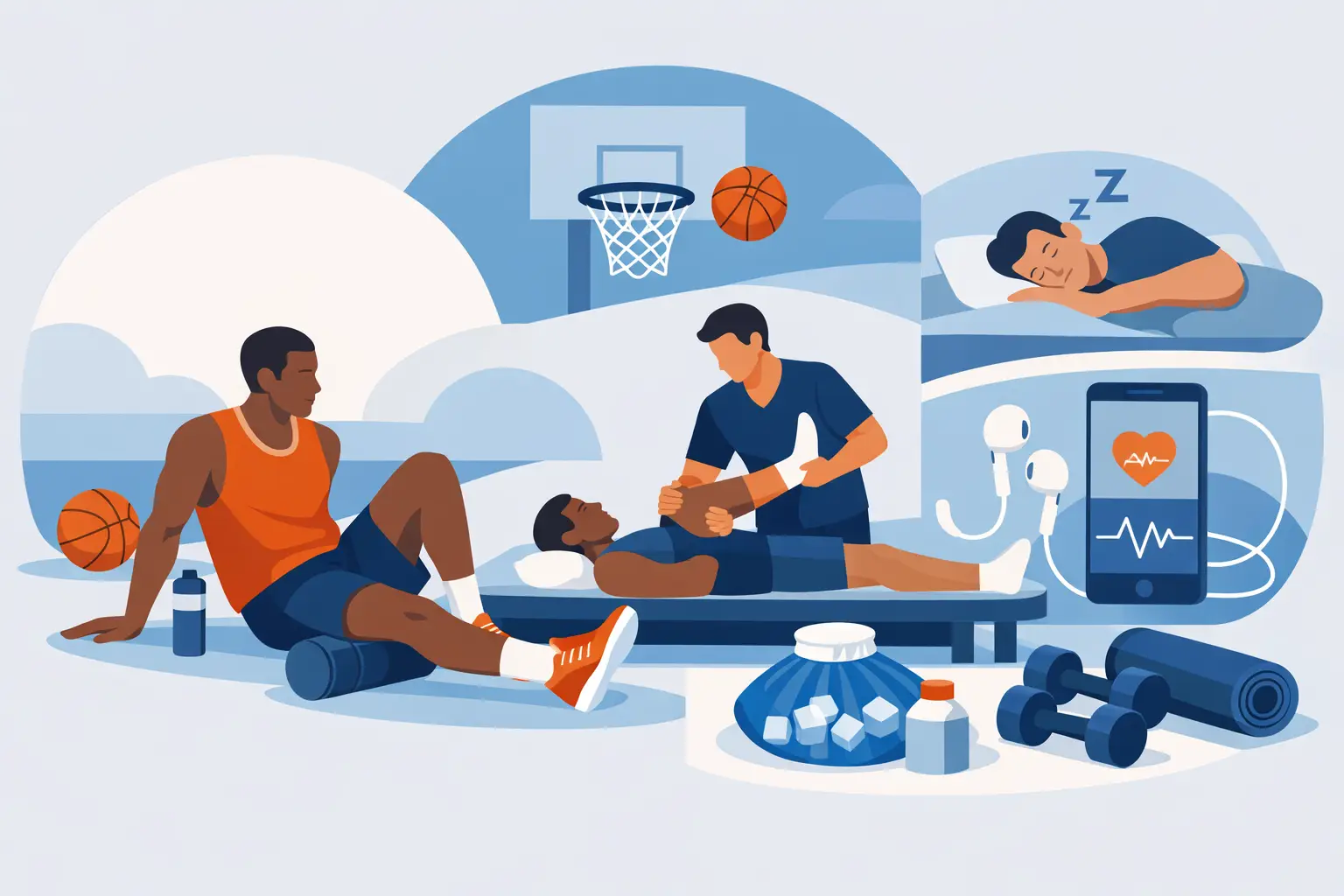
 A pro-level basketball recovery routine can improve sleep, reduce soreness, and improve performance without wasting time or relying on gimmicks.
Likewise, a well-designed evidence-based basketball recovery routine can be the difference between feeling explosive on game day and feeling heavy, sore, and half a step slow.
During more than a decade of playing professional basketball across Europe, I learned that the hardest workouts often determine peak athletic performance, but how well I recover between practices, games, and travel often dictates whether I step onto the court feeling fresh and ready to compete or struggle with accumulated fatigue.
Many athletes think recovery begins when they feel exhausted or injured, but exercise recovery is an essential part of athletic development, allowing your body to adapt to training rather than simply survive it.
Key Point: A well-designed basketball recovery routine helps restore energy, repair muscle tissue, maintain movement quality, and reduce the cumulative physical and mental stress that builds over the course of a long season.
The good news is that effective recovery is not built around expensive gadgets or trendy treatments.
Most of the strategies that consistently improve performance are simple, repeatable, healthy habits such as getting enough sleep, eating the right foods, staying hydrated, managing training load, and using recovery techniques strategically.
Once those fundamentals are in place, additional tools can provide meaningful benefits, but they should always support, not replace, the basics.
Build those habits into your basketball recovery routine, and you’ll give yourself the best opportunity to stay healthy, perform consistently, and continue improving throughout the season.
What Should a Basketball Recovery Routine Actually Do?
An effective basketball recovery routine does far more than reduce soreness.
Its primary purpose is to support a proper science-based basketball training program to help your body adapt to training, restore physical and mental readiness, repair damaged tissues, and prepare you to perform at a high level during your next practice or game.
Key Point: Basketball recovery is about managing fatigue so that it does not accumulate faster than your body can recover from it (Kellmann et al., 2018).
Research consistently shows that recovery is multifactorial, and no single recovery method can compensate for poor lifestyle habits.
The greatest improvements occur when the lifestyle of an athlete consistently prioritizes adequate sleep, proper nutrition, hydration, appropriate training loads, and individualized recovery strategies aligned with their competition schedule (Thomas et al., 2016; Kellmann et al., 2018).
How to Build Your Basketball Recovery Routine on the Fundamentals

Every successful basketball recovery routine should prioritize five essential components:
- High-quality sleep
- Adequate hydration and electrolyte replacement
- Sufficient calories, protein, and carbohydrates
- Appropriate recovery movement and circulation
- Intelligent management of training and competition stress
Once those foundations are consistently in place, additional strategies such as foam rolling, massage therapy, compression garments, cold-water immersion, and contrast therapy may provide additional benefits for certain athletes.
However, they should support, not replace, the fundamentals.
This is where many basketball players unintentionally waste time and money.
Recovery gadgets continue to improve, but none of them can overcome chronic sleep deprivation, under-fueling, or dehydration.
The body recovers most effectively when it has enough energy, protein, fluids, and rest to repair the physiological stress created by training and competition.
Why and How to Start Your Basketball Recovery Routine Immediately After Practice
Recovery begins the moment practice or a game ends, not hours later.
The first hour following intense exercise is particularly important because it sets the stage for how efficiently your body restores glycogen, repairs muscle tissue, and begins recovering from accumulated fatigue (Thomas et al., 2016).
Cool Down Before You Head Home
Rather than finishing practice and immediately sitting in your car, spend five to ten minutes gradually lowering your heart rate through light walking, easy cycling, or other low-intensity movement.
A brief cool-down promotes circulation, helps your body transition back toward its resting state, and often reduces the heavy, stiff feeling that develops later in the day.
Afterward, perform several targeted mobility exercises for the areas that absorb the greatest stress during basketball, including the ankles, calves, hips, quadriceps, hip flexors, and thoracic spine.
Maintaining mobility in these regions helps preserve movement quality and may reduce compensatory movement patterns over the course of a long season.
Rehydrate and Replace Electrolytes
Fluid replacement should begin shortly after practice and continue throughout the next several hours.
Basketball players lose significant amounts of water and electrolytes through sweat, particularly during high-intensity practices or games played in warm environments.
Replacing both fluids and sodium supports normal muscle contraction, cardiovascular function, and overall recovery (Sawka et al., 2007).
Rather than drinking a large volume all at once, aim to steadily replace lost fluids over several hours.
Monitoring body weight changes before and after practice or checking urine color can provide practical insight into hydration status.
Refuel With Protein and Carbohydrates
Nutrition is one of the most powerful recovery tools available.
After intense basketball training, consuming high-quality protein supports muscle protein synthesis, while carbohydrates replenish depleted glycogen stores, helping you recover more effectively before your next workout or game (Jäger et al., 2017; Thomas et al., 2016).
The goal is not to consume the “perfect” recovery shake immediately after every practice.
Instead, focus on eating a balanced meal or snack containing protein and carbohydrates within the first couple of hours after exercise.
Delaying nutrition for several hours after demanding practices may unnecessarily prolong recovery.
The Daily Habits That Matter More Than Recovery Gadgets
The most effective basketball recovery routine is usually not the most exciting.
It is built around simple habits performed consistently over weeks and months rather than expensive devices or viral recovery trends.
Prioritize Sleep Above Everything Else
If I could recommend only one recovery strategy to basketball players, it would be improving sleep quality.
Sleep is when much of your body’s physical and neurological recovery occurs.
Research has shown that inadequate sleep impairs reaction time, cognitive performance, hormone regulation, immune function, muscle recovery, and decision-making while increasing the risk of injury (Fullagar et al., 2015; Watson, 2017).
For basketball players, these effects influence far more than how rested you feel.
Poor sleep can reduce shooting accuracy, slow defensive reactions, impair explosive performance, and decrease your ability to make quick decisions during competition.
Aim to maintain a consistent bedtime whenever possible, minimize bright light exposure during the hour before bed, and avoid heavy meals or stimulants too close to bedtime.
If your travel or practice schedule limits nighttime sleep, a brief afternoon nap may improve alertness without replacing healthy nighttime sleep habits.
Meet Your Daily Energy Needs
Recovery is not limited to what you eat after practice.
Many basketball players unintentionally under-fuel, especially when trying to stay lean during the season.
Over time, inadequate calorie intake reduces glycogen storage, slows tissue repair, increases fatigue, and limits adaptation to training.
A well-designed nutrition plan should consistently provide enough calories, protein, carbohydrates, healthy fats, vitamins, and minerals to support your training demands.
Matching energy intake to workload is one of the simplest ways to improve recovery while maintaining performance throughout a long season (Thomas et al., 2016).
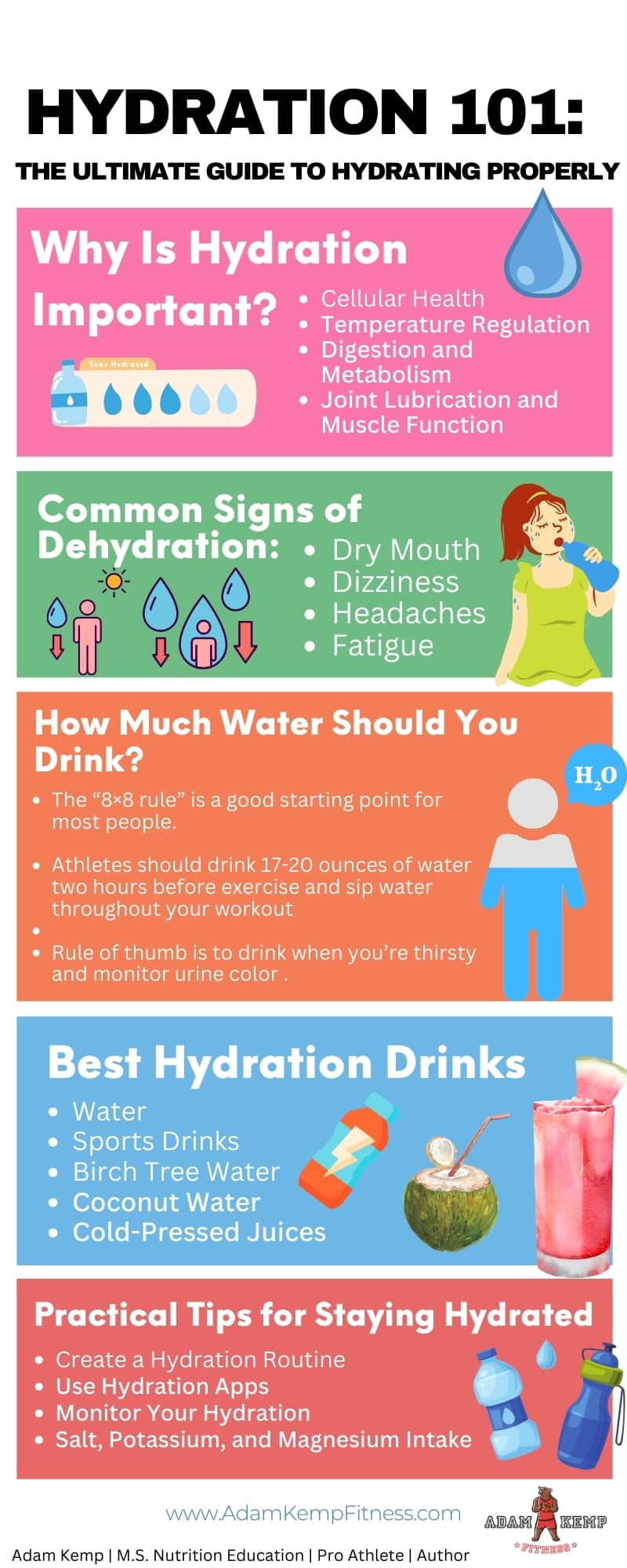
Stay Hydrated Every Day
Hydration for athletes should be viewed as an all-day habit rather than something you address only after practice.
Even mild dehydration, as little as approximately 2% of body mass, can reduce sprint performance, cognitive function, and repeated high-intensity exercise capacity (Sawka et al., 2007).
If your urine remains dark throughout the day, your energy levels decline rapidly during workouts, or muscle cramps become frequent, hydration likely deserves greater attention.
This becomes even more important during tournaments, summer training, travel, and stretches with multiple games in a short period.
Manage Muscle Soreness Without Overdoing Recovery
Some muscle soreness after a challenging practice, strength workout, or game is completely normal.
In fact, mild soreness often reflects your body adapting to training.
However, persistent stiffness, heavy legs that never seem to recover, recurring joint pain, or soreness that worsens over time usually indicates that your recovery is not keeping pace with your workload.
Active Recovery Is Often Better Than Complete Rest
One of the biggest misconceptions in sports recovery is that doing nothing is always the best way to recover.
Research suggests that light, low-intensity activity can help reduce muscle soreness and restore movement more effectively than complete inactivity after strenuous exercise (Dupuy et al., 2018).
Recovery walks, easy cycling, swimming, mobility sessions, or light shooting workouts increase circulation without placing significant additional stress on the body.
The goal is not to create another workout.
The goal is simply to promote recovery while allowing your body to continue repairing itself.
Use Recovery Tools Strategically
Foam rollers, massage guns, compression garments, stretching, and manual therapy can all play a role in a well-designed basketball recovery routine, but none of them should become the foundation of your recovery plan.
For example, systematic reviews suggest that foam rolling may temporarily reduce muscle soreness and improve range of motion without negatively affecting athletic performance (Wiewelhove et al., 2019).
Likewise, massage therapy and compression garments may help some athletes feel fresher between competitions, although individual responses vary.
These tools are most valuable when they help you move better, reduce discomfort, or prepare for your next session.
If they do not meaningfully improve how you feel or perform, there is little reason to rely on them simply because they are popular.
Cold Water Immersion and Contrast Therapy
Cold-water immersion and contrast showers are among the most commonly used recovery strategies in basketball, particularly during tournaments and stretches with multiple games in a short period.
Research suggests these methods can reduce perceived soreness and improve short-term recovery between competitions (Machado et al., 2016).
However, there is an important trade-off.
Regular cold-water immersion immediately after resistance training may reduce some of the long-term adaptations associated with muscle growth and strength development (Roberts et al., 2015).
During the competitive season, recovering quickly for the next game often outweighs maximizing muscle growth.
During the offseason, when strength and hypertrophy become larger priorities, limiting frequent post-lifting cold exposure may be the better strategy.
How to Build a Weekly Basketball Recovery Routine
The most effective basketball recovery routine is not something you improvise whenever you feel sore. Like strength training or skill development, recovery should follow a consistent weekly structure.
On demanding practice and game days, prioritize the fundamentals immediately afterward:
- Perform a brief cool-down.
- Replace fluids and electrolytes.
- Eat a meal containing protein and carbohydrates.
- Wind down with a consistent evening routine that supports high-quality sleep.
Lighter training days provide an opportunity to spend more time on mobility work, active recovery, and soft tissue techniques while reducing overall physical stress.
Most athletes also benefit from scheduling at least one lower-stress day each week.
Recovery happens when many of the physiological adaptations to training actually occur, so continually pushing hard without adequate recovery eventually limits progress rather than accelerating it.
Monitor Your Recovery
Elite athletes rarely rely on guesswork to determine whether they are fully recovered.
Many of these recovery markers can now be monitored using wearable fitness trackers and smartwatches.
Devices from companies such as Fitbit, Garmin, Apple, Polar, COROS, and WHOOP can track metrics like resting heart rate, heart rate variability (HRV), sleep duration and quality, training load, and overall recovery trends.
While these devices are not perfect and should not replace how you actually feel, they can provide useful objective data that helps identify patterns and guide smarter training and recovery decisions (Peake et al., 2018; Düking et al., 2023).
Simple indicators can provide valuable feedback about whether your training and recovery are properly balanced, including:
- Resting heart rate
- Sleep quality
- Mood and motivation
- Muscle soreness
- Energy levels
- Jump performance
- Heart rate variability (if available)
If several of these markers begin trending in the wrong direction simultaneously, your recovery strategies or training load likely need adjustment.
Listening to these signals early often helps prevent performance declines before they become injuries.
Recovery Is One of Your Best Injury Prevention Strategies
Recovery and injury prevention are closely connected.
Basketball places repeated stress on the ankles, knees, hips, feet, lower back, and shoulders.
When fatigue accumulates faster than your body can recover, movement quality often deteriorates, increasing the likelihood of overuse injuries and inefficient movement patterns (Kellmann et al., 2018).
For this reason, every basketball player should include regular mobility and stability work for the joints that absorb the greatest demands of the sport.
Even ten to fifteen focused minutes several times per week can help maintain movement quality throughout a long season.
Equally important is recognizing when soreness is no longer normal.
Sharp pain, significant swelling, pain that changes your movement mechanics, or symptoms that persist beyond the expected recovery timeline warrant evaluation by a qualified healthcare professional.
Continuing to play through those warning signs rarely demonstrates toughness, and it often prolongs the problem.
Basketball Recovery Routine Checklist
Use this checklist to make sure you’re consistently covering the recovery habits that have the greatest impact on basketball performance.

After Every Practice or Game
- Perform a 5–10-minute cool-down with light walking or cycling.
- Complete 5–10 minutes of mobility work for your ankles, hips, calves, quadriceps, and thoracic spine.
- Rehydrate with water and electrolytes based on your sweat losses.
- Eat a meal or snack containing high-quality protein and carbohydrates within 1–2 hours.
- Continue drinking fluids throughout the rest of the day.
- Wind down with a consistent evening routine that promotes quality sleep.
Daily Recovery Habits
- Sleep at least 7–9 hours each night whenever possible.
- Consume enough calories to support your training volume.
- Eat adequate protein throughout the day to support muscle repair.
- Stay hydrated before, during, and after training.
- Spend 10–15 minutes maintaining mobility in your ankles, hips, knees, and thoracic spine.
- Monitor your energy levels, mood, soreness, and overall readiness to train.
Weekly Recovery Habits
- Schedule at least one lower-stress recovery day each week.
- Include one or two active recovery sessions, such as walking, cycling, swimming, or light basketball skill work.
- Use foam rolling, massage, compression, or other recovery tools only when they meaningfully improve how you feel and perform.
- Review your recovery metrics, such as resting heart rate, sleep quality, heart rate variability (if available), and overall fatigue.
- Adjust your training load if multiple recovery markers trend in the wrong direction.
Recovery Red Flags
Consider reducing your training load and consulting a qualified healthcare professional if you experience:
- Sharp or worsening pain during activity.
- Persistent swelling around a joint.
- Pain that changes your normal movement mechanics.
- Fatigue that does not improve after several days of proper recovery.
- Declining performance despite consistent training.
- Poor sleep, elevated resting heart rate, low motivation, and excessive soreness occurring together.
Remember: The most effective basketball recovery routine is not the one with the most recovery gadgets; it’s the one you consistently follow. Prioritize sleep, nutrition, hydration, and intelligent training first, then use recovery tools to complement those fundamentals.
Final Thoughts: Keys to a Great Recovery Routine for Basketball Players
You could be doing every single one of the best exercises for basketball players and studying the game as much as possible, but without a proper basketball recovery routine, you will lack longevity and eventually burn out.
A great basketball recovery routine is not built around expensive equipment or complicated recovery protocols.
It is built around consistently doing the fundamentals well.
Sleep enough to recover.
Fuel your body with adequate calories, protein, and carbohydrates.
Stay hydrated.
Manage your training load intelligently.
Use recovery tools strategically instead of depending on them.
Throughout my professional basketball career, one lesson has become increasingly clear: the athletes who stay healthy, improve consistently, and perform their best over the course of a long season are often both the ones who train the hardest every single day and the ones who recover the smartest.
Treat recovery with the same discipline and consistency that you give your practices, workouts, and games, and your body will reward you with better performance, greater durability, and a longer, healthier basketball career.
This website does not provide medical advice. This website site does contain affiliate links, and purchases may earn a commission.
Read my Medical Disclaimer, Review Disclaimer, and Publishing Policies for more details. Use of this site indicates acceptance of these terms.
Check Out Some of My YouTube Videos Below, and Please Follow on YouTube for More Educational Health and Fitness Content!
![Subscribe to @AdamKempFitness for more training, general health, recovery, and nutrition tips from a professional basketball player with a master’s degree in Nutrition Education! 🏀💪
Seated Max Vertical Jumps From a Box are one way I train explosive takeoff power with maximum intent on every rep.
Starting seated, with a pause and minimal rocking or dipping, reduces the contribution of a quick countermovement and emphasizes producing force from a relatively static position (National Strength and Conditioning Association [NSCA], 2020).
For athletes, the training goal is explosive lower-body force production and coordinated extension through the hips, knees, and ankles. I use this variation to practice driving hard into the floor and accelerating my body upward.
My preferred setup: 3 sets of 3 reps or 4 sets of 2 reps, supersetted with a strength or power exercise.
I keep the reps low, reset between jumps, and take longer rest periods so I’m ready to attack every takeoff. Even when pairing exercises, I give myself enough recovery to keep the jumps sharp.
Every rep has one goal: jump as high as possible. I focus on an explosive takeoff, a controlled landing, and consistent quality throughout the session.
Save this for your next power workout! 🚀
Reference: NSCA. (2020). Stretch-shortening cycle.
#VerticalJump #JumpTraining #ExplosivePower #AthleticPerformance #BasketballTraining](https://www.adamkempfitness.com/wp-content/plugins/feeds-for-youtube/img/placeholder.png)