Time-Saving Nutrition Hacks for Busy Athletes That Actually Work!
 Reading Time: 7 minutes
 An athlete’s performance isn’t just about training, which is why these time-saving nutrition hacks for busy athletes can make a huge difference in your results.
Juggling school or work, social and family life, and a tough training schedule often leaves little time to cook, making it tempting to grab whatever’s easy rather than what’s best.
For athletes who are always on the go, getting your nutrition right, and fast, isn’t just convenient; it’s key to success.
Fortunately, fueling your body for peak performance doesn’t mean spending hours in the kitchen.
With a few clever nutrition hacks for busy athletes, you can keep your energy high and help your body recover without missing a beat.
The Challenge of Time-Crunched Fueling for Athletes
The most useful nutrition hacks for busy athletes make eating well easier when your schedule gets difficult.
Early practices, work, family responsibilities, and travel all create situations where having food ready matters more than having the perfect recipe.
Start by identifying when your eating routine usually breaks down.
If you regularly skip breakfast, scramble for lunch, or return from training with nothing prepared, build a convenient food option around that specific problem.
Think in three layers: prepared meals at home, a few meals you can cook quickly, and portable backup snacks.
This gives you several ways to follow through when plans change.
Nutrition Hacks That Busy Athletes Will Actually Love!
The most useful nutrition hacks for busy athletes solve everyday problems: an early practice, a missed lunch break, or an empty refrigerator after a long day.
Start with the moments when eating well feels hardest, and give yourself a convenient option before you need it.
From ready-to-drink shakes and portable snacks to freezer meals and quick recipes, these sports nutrition strategies can help you build a fueling routine around your actual schedule.
Choose a few that fit your needs, food preferences, and budget, then make them part of your weekly preparation.
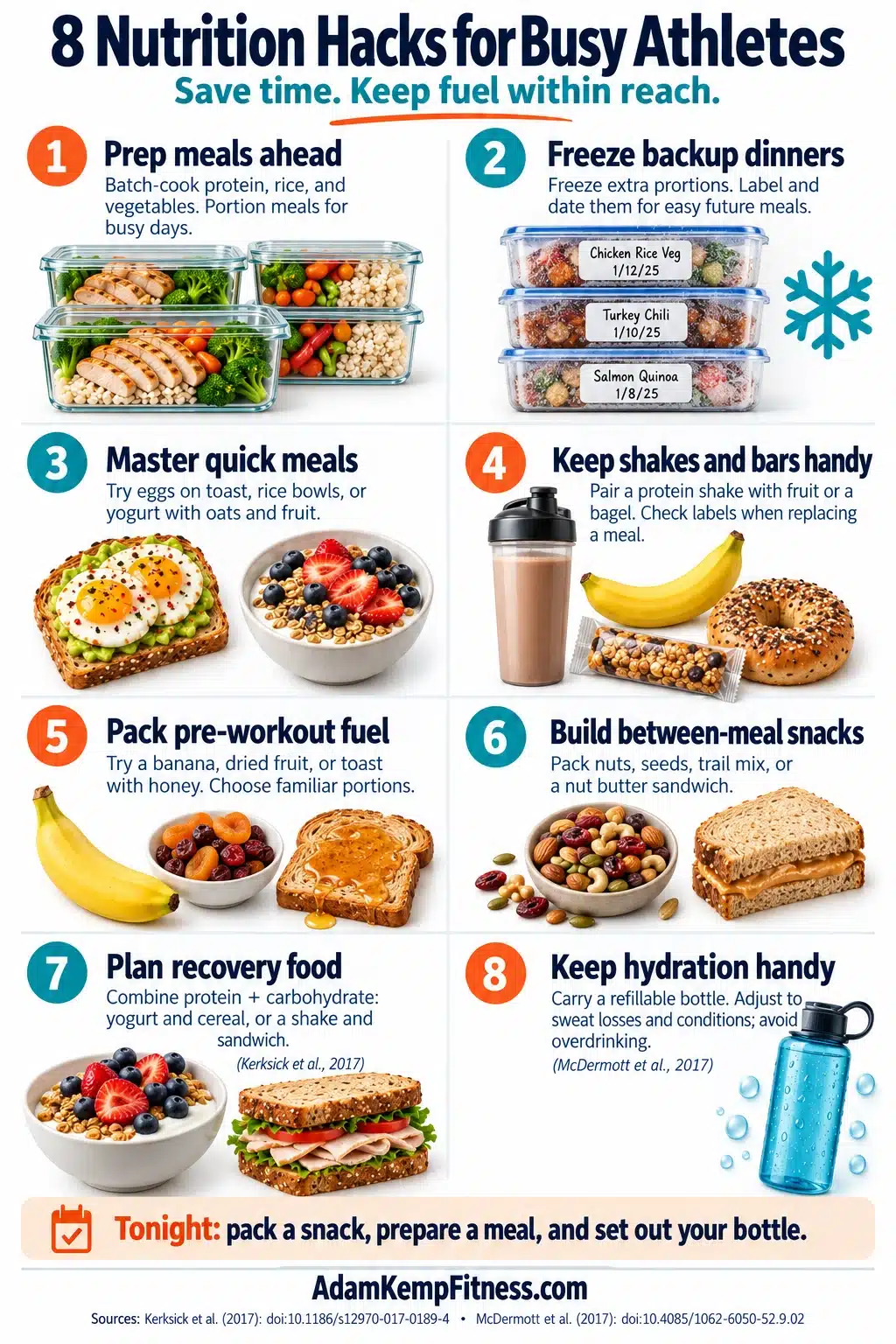
Meal Prep for the Days You Have the Least Time
Learning the art of meal prepping and preparing food for your busiest days before those days arrive is one of the smartest nutrition hacks for busy athletes.
Instead of planning an elaborate weekly menu, try doubling a dinner recipe and saving individual portions for upcoming lunches or evenings after practice.
Choose meals that are easy to portion and reheat, such as chicken with rice and vegetables, bean chili, turkey pasta, or tofu bowls.
Keep a few portions in the refrigerator and freeze the rest for later.
You can also prepare ingredients separately: cook a grain, prepare a protein source, and wash or portion vegetables.
Combine them into bowls, wraps, or salads throughout the week, changing sauces and seasonings for variety.
Label containers with the preparation date and promptly freeze portions you will not use.
Use most cooked leftovers, including meat, poultry, soups, and stews, within three to four days when refrigerated at 40°F/4°C or below (FoodSafety.gov, 2023a).
Refrigerate perishable food within two hours, or within one hour when temperatures exceed 90°F/32°C.
Divide large batches into shallow containers to cool faster, and use an insulated bag with ice packs when transporting meals (FoodSafety.gov, 2023b).
Learn a Few Fast Meals You Can Make Without a Recipe
One of the simplest nutrition hacks for busy athletes is learning three or four dependable meals you can make with ingredients you usually keep at home.
Aim for meals that require little chopping, minimal cleanup, and roughly 10–15 minutes of preparation.
Try these combinations:
- Eggs on toast: Scrambled eggs, whole-grain toast, and fruit.
- Quick rice bowl: Microwave rice, canned beans or precooked chicken, frozen vegetables, and salsa.
- Easy pasta: Quick-cooking pasta, canned salmon or lentils, tomato sauce, and spinach.
- Loaded yogurt bowl: Greek yogurt, oats, berries, and a spoonful of nut butter.
- Simple wrap: Hummus, chicken or tofu, bagged greens, and a piece of fruit.
Use these as templates and adjust portions to your appetite and training schedule.
Keep the ingredients for at least two options available so an empty refrigerator does not become the reason you miss a meal.
Use These Tips for Pre-Workout Fueling Made Simple
Athletes often get stuck with not having enough time to properly fuel for their workouts, which is why I often recommend making your pre-workout snack part of packing your training bag.
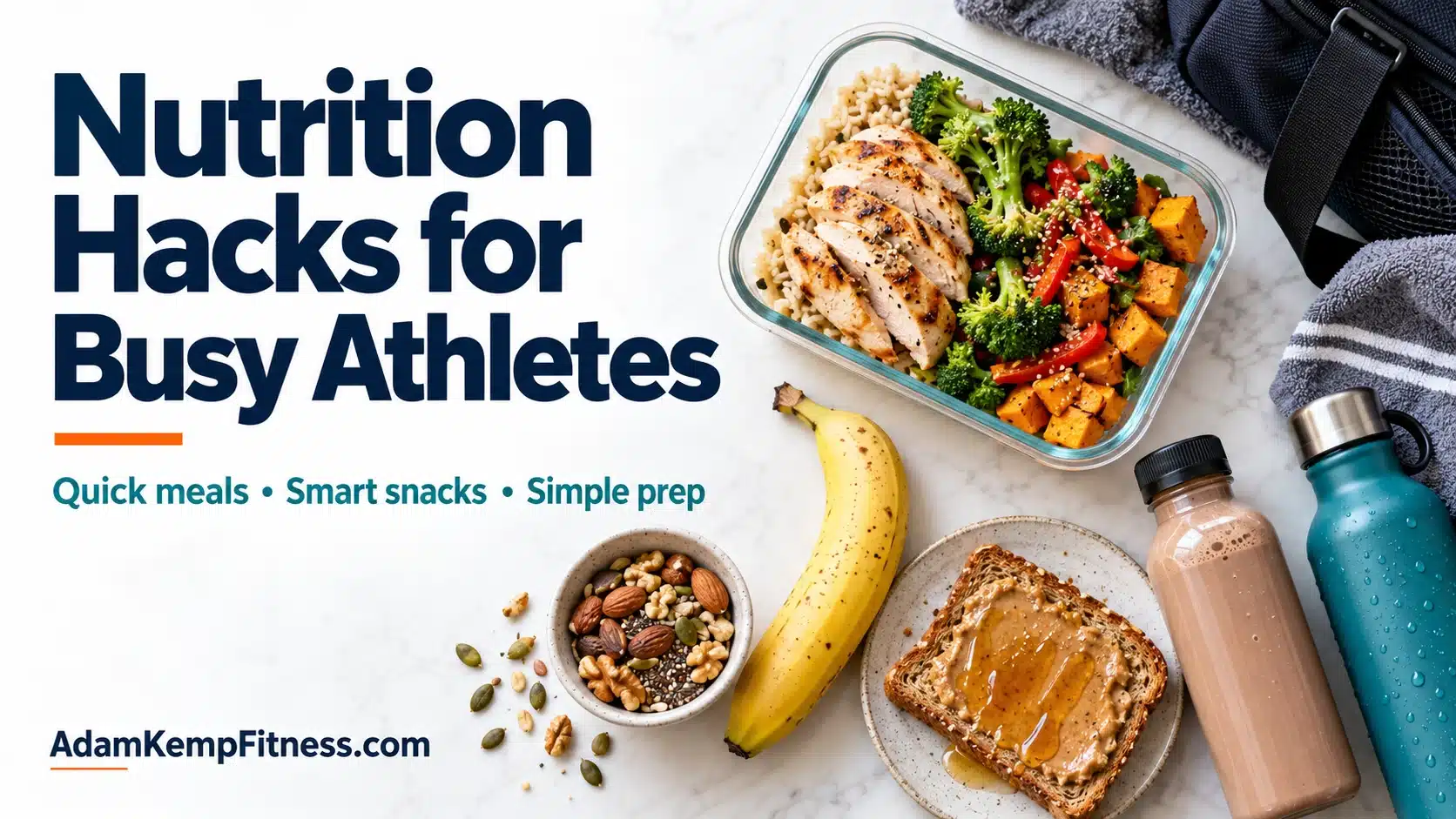
A banana, applesauce pouch, toast with honey, or a small serving of dried fruit gives you an easy option when a full meal is impractical.
Try a small, familiar carbohydrate-rich snack about 30–60 minutes before training, adjusting the portion and timing to your digestive comfort.
Carbohydrate availability is particularly relevant for prolonged or demanding exercise (Kerksick et al., 2017).
If you are trying to properly fuel for early morning workouts, put breakfast ingredients and your snack beside your training gear the night before.
If eating before exercise is difficult, experiment with a smaller portion during ordinary training rather than trying something new on competition day.
Keep Ready-to-Drink Shakes and Nutrition Bars Available
Ready-to-drink protein shakes, including OWYN, offer a convenient option when you cannot mix powder or prepare food.
OWYN makes plant-based protein drinks, but check the specific bottle’s nutrition label because its products differ.


Last update on 2026-09-21 / This article includes affiliate links/Images via Amazon Product Advertising API. I may earn commissions on purchases made through these links.
However, it is crucial you remember that a high-protein shake is not automatically a complete meal.
Look at total calories, carbohydrates, fats, and micronutrients alongside protein, particularly when the drink will replace breakfast or lunch.
For a practical combination, pair a shake with a banana and a bagel, or drink it alongside overnight oats.
If you choose a meal replacement shake, check whether the serving provides enough energy for the meal you are replacing.
Apply the same approach to healthy nutrition bars: decide what you need the bar to contribute.
Compare carbohydrate content when choosing workout fuel, protein when filling a protein gap, and total calories when bridging a long stretch between meals.
Keep a small backup supply at work or in your training bag, following each product’s storage instructions.
Replenish it during your regular grocery shop so your emergency food is available when you need it.
Always Pack Nuts, Seeds, Nut Butter, and Honey
Build portable snacks from foods you enjoy and can consistently keep on hand.
Useful combinations include trail mix with dried fruit, pumpkin seeds with raisins, or a peanut butter and honey sandwich.
For a quick carbohydrate option close to training, consider honey on toast or dried fruit; use nuts, seeds, and nut butter as additions to snacks and meals rather than expecting them to fill the same role.
Adjust portions based on how comfortably you tolerate each combination before exercise.
Try preportioning trail mix into reusable containers or keeping nut butter packets beside your bread and fruit.
The practical advantage is having a snack assembled before you are hungry and rushing out the door.
Smart Snacking for Recovery
Plan your post-workout recovery food before training begins.
Pairing protein with carbohydrate provides a practical way to support muscle repair and replenish fuel after demanding exercise (Kerksick et al., 2017).
Convenient combinations include Greek yogurt with nuts, seeds, dates, and fruit, a protein shake with a sandwich, or a prepared rice and meat bowl.
Choose portions that fit the session and your overall daily needs.
For many adults, 20–40 grams of protein per meal is a useful reference, though body size and protein source matter.
Daily intake remains a priority, and the timing of your previous meal influences how urgently you need to eat afterward (Kerksick et al., 2017).
If a meal is ready at home, eat that; if dinner is hours away, pack a recovery snack. Prompt refueling deserves more attention when you have another demanding session later the same day (Kerksick et al., 2017).
Make Hydration Part of Your Daily Routine
Pack your water bottle when you pack your food, and identify where you can refill it during the day. Keeping fluids accessible makes drinking during a busy schedule more practical.
Hydration needs vary with sweat rate, exercise conditions, and the individual, so a single daily water target will not suit every athlete.
Both inadequate replacement and excessive drinking can create problems (McDermott et al., 2017).
For prolonged, sweaty sessions, develop a plan that considers fluid and electrolyte losses rather than relying on guesswork.
A sports dietitian or athletic trainer can help estimate your sweat rate and personalize your approach (McDermott et al., 2017).
Final Thoughts: How Athletes Can Use Nutrition Hacks to Improve Their Performance and General Health
The best diet for athletes wouldn’t be possible without some of the best nutrition hacks for busy athletes that make consistent fueling easier to fit into everyday life.
Preparing meals ahead, learning a few quick recipes, and keeping portable snacks available give you practical options when training, work, and family responsibilities compete for your time.
Start with the part of your routine that needs the most support.
That might mean freezing dinners for late-practice nights, packing breakfast before an early workout, or pairing a ready-to-drink protein shake with food when a sit-down meal isn’t practical.
Build these habits around your overall nutritional needs, then adjust meal timing to your training schedule.
Meeting daily protein needs and planning carbohydrate intake around demanding exercise can support recovery and performance (Kerksick et al., 2017).
Give hydration the same attention, with an approach that reflects your sweat losses and training conditions.
Both drinking too little and drinking excessively can compromise health and performance (McDermott et al., 2017).
Use convenience to make room for a varied diet, including fruits, vegetables, whole grains, protein sources, nuts, and seeds.
Aim for a routine you can maintain during your busiest week, with enough flexibility to adapt as your schedule changes.
This website does not provide medical advice. This website site does contain affiliate links, and purchases may earn a commission.
Read my Medical Disclaimer, Review Disclaimer, and Publishing Policies for more details. Use of this site indicates acceptance of these terms.