
What to Eat Before Morning Workouts for Better Performance
 Reading Time: 14 minutes
What to eat before morning workouts depends on three practical factors: how soon you will exercise, how demanding the session will be, and what your stomach can comfortably digest.
The right choice should provide useful energy without leaving you feeling heavy, nauseated, or distracted by hunger.
As a professional basketball player, I’ve learned that early training is not an excuse to underfuel, especially before lifting, conditioning, or basketball practice.
In fact, I love morning workouts and regularly do them fasted in the off-season.
But, in-season, when it is time for our longer team training sessions, knowing what to eat before morning workouts is crucial for me to having enough energy and stamina.
However, eating a large breakfast right before intense activity can be just as disruptive as eating nothing.
Morning workout nutrition does not need to be complicated or perfect.
You need to assess the session, calculate how much digestion time you have, and choose the smallest useful meal or snack that supports performance without interfering with your overall diet quality.
That may mean eating oatmeal and eggs before a later workout, drinking a banana-protein smoothie before an earlier session, or simply having applesauce before walking out the door.
Once you understand what to eat before morning workouts, you can build a routine that delivers energy without causing stomach pain.
Should You Eat Before a Morning Workout?
You do not necessarily need food before every morning workout.
A short walk, mobility routine, or easy zone two workout may feel comfortable with water and breakfast afterward, particularly if the session lasts less than an hour.
Food becomes more important as the duration, intensity, and performance demands increase.
Strength training, sprint intervals, long endurance sessions, and basketball practices rely more heavily on carbohydrate availability than easy movement does (Thomas et al., 2016).
An overnight fast lowers liver glycogen because the liver helps maintain blood glucose while you sleep, although your muscle glycogen is not automatically depleted.
A small amount of carbohydrate before demanding morning exercise can support blood glucose and provide readily available energy without requiring a full breakfast.
Consider eating before your workout if:
- You will exercise intensely or for longer than approximately 60 minutes.
- You are doing heavy strength training, intervals, sprinting, or sport practice.
- Your performance noticeably declines when you train fasted.
- You feel shaky, lightheaded, weak, nauseated, or excessively hungry without food.
- You did not eat enough carbohydrates or total calories the previous day.
- You will not be able to eat a balanced meal soon after training.
- Your goal is to maximize training quality, athletic performance, or muscle growth.
Fasted exercise is not inherently harmful, and it may be comfortable for some easy sessions.
However, it offers no meaningful fat-loss advantage if it makes you train poorly, move less later, or overeat because you become excessively hungry.
How Carbohydrates Support Morning Exercise
Carbohydrates are the primary pre-workout priority when intensity matters.
Your body can use stored muscle glycogen, liver glycogen, and carbohydrates consumed before or during exercise to help supply energy.
You do not need a large carbohydrate load before every gym session.
However, carbohydrate availability becomes increasingly relevant during prolonged endurance exercise, repeated high-intensity efforts, or sports involving sprinting, jumping, and frequent changes of direction (Thomas et al., 2016).
Your needs also depend on what you ate the night before.
An athlete who consumed an adequate dinner may begin the morning with more stored energy than someone who skipped dinner, severely restricted carbohydrates, or trained hard the previous evening.
Do You Need Protein Before a Morning Workout?
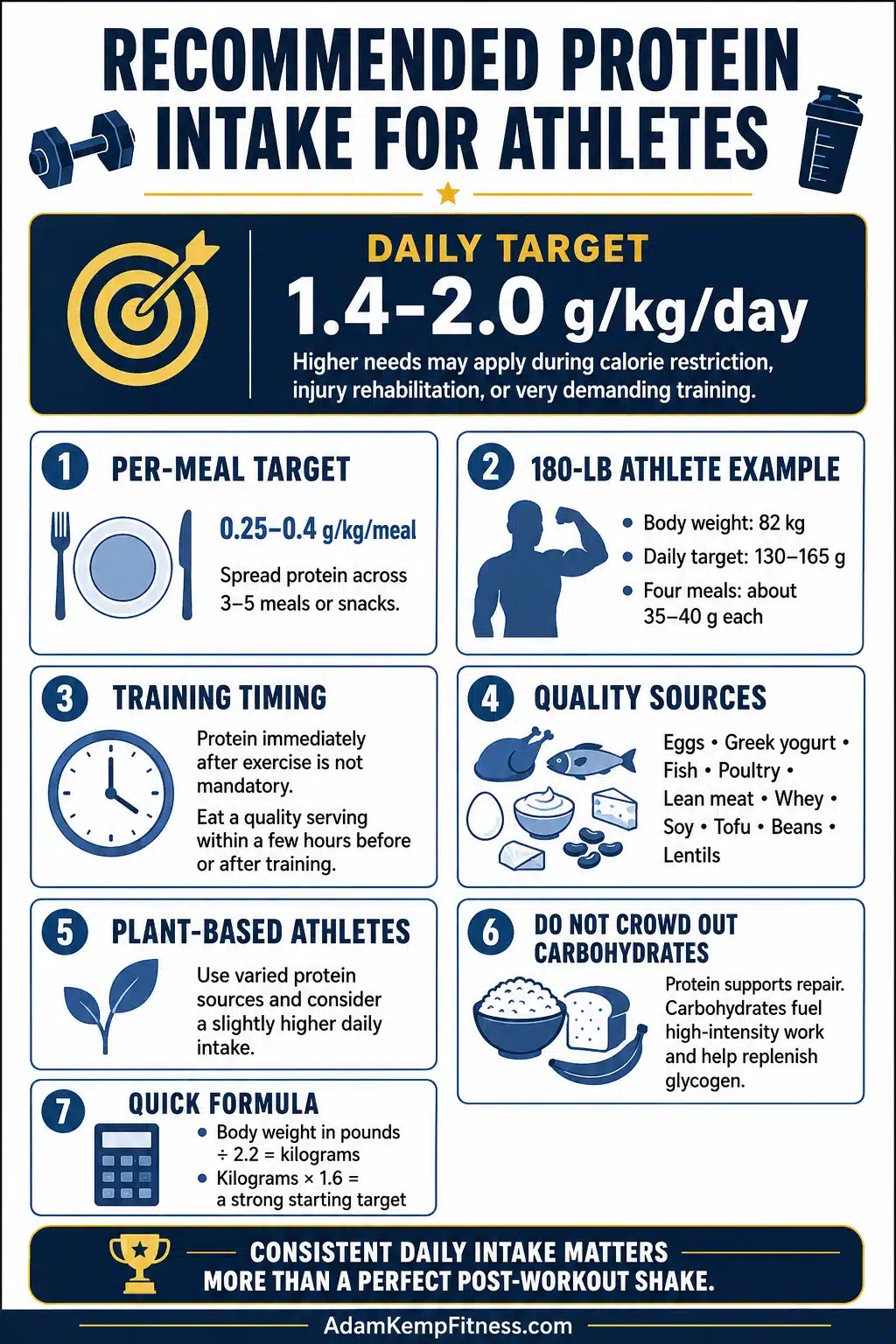
Protein is useful before morning exercise, particularly for strength-focused training or when breakfast will be delayed.
It supplies amino acids that support muscle remodeling, but it does not provide the same rapid fuel for exercise as carbohydrates.
A small serving of Greek yogurt, milk, eggs, or protein powder can work well when digestion time allows.
If you have only a few minutes or protein makes you nauseated, focus on tolerable carbohydrates before training and include a quality protein source afterward.
General sports-nutrition guidance supports meals containing approximately 20–40 grams of high-quality protein, although the ideal amount depends partly on body size and total daily intake (Jäger et al., 2017).
This is a useful target for a complete breakfast, not a requirement that must be consumed immediately before every workout.
How to Decide What to Eat Before Morning Workouts
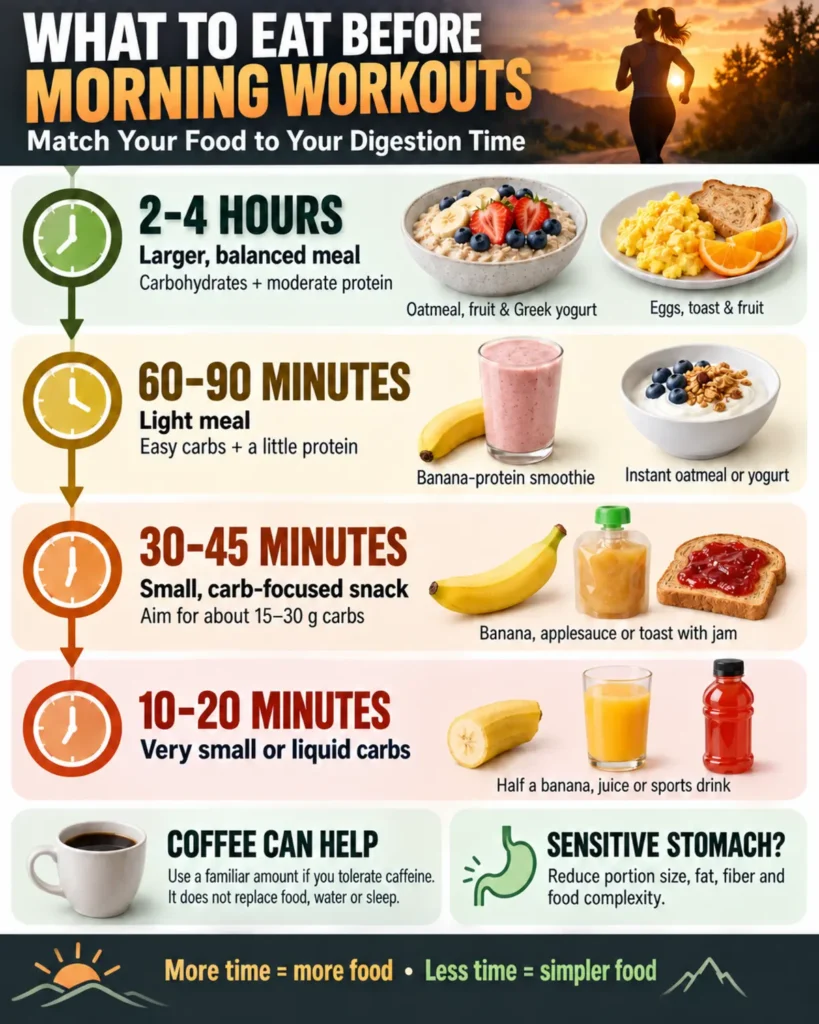
The best pre-workout food is determined by the time between eating and exercising.
As that window becomes shorter, your meal should generally become smaller, simpler, lower in fat and fiber, and easier to digest.
A full meal may work well two or three hours before exercise but cause stomach pain if eaten 20 minutes beforehand. Conversely, a few bites of banana may be enough immediately before training but insufficient fuel for a two-hour practice.
Use this simple rule:
- More digestion time: Eat a larger, more balanced meal.
- Less digestion time: Eat a smaller, carbohydrate-focused snack.
- Almost no digestion time: Use a very small portion or liquid carbohydrate.
- A sensitive stomach: Reduce fat, fiber, portion size, and food complexity.
Your routine should also reflect the type of movement you will perform. Running, jumping, and high-intensity conditioning tend to trigger digestive problems more than walking or controlled resistance exercises because strenuous, high-impact activity can increase gastrointestinal symptoms (Costa et al., 2017).
What to Eat Two to Four Hours Before a Morning Workout
If you have at least two hours before training, you have enough time for a substantial breakfast.
Build the meal around carbohydrates, add a moderate serving of protein, and keep fat and fiber within your personal tolerance.
Formal sports-nutrition guidelines suggest approximately 1–4 grams of carbohydrate per kilogram of body weight during the 1–4 hours before prolonged or high-intensity exercise, with the amount increasing when the session is longer and more demanding (Thomas et al., 2016).
This broad range is primarily designed for serious training and competition, so an average gym workout rarely requires the upper end.
Good options include:
- Oatmeal with banana, berries, and Greek yogurt
- Eggs with toast and fruit
- Greek yogurt with granola, honey, and berries
- Rice with eggs or lean meat
- A turkey-and-egg sandwich with fruit
- A smoothie containing fruit, milk, oats, and protein powder
- Cereal with milk and a banana
This meal should resemble a normal, nutritious breakfast rather than a collection of sports supplements.
Whole foods provide carbohydrates, protein, vitamins, minerals, and phytochemicals that support overall diet quality and workout performance.
What to Eat 60 to 90 Minutes Before a Morning Workout
With 60–90 minutes available, choose a lighter meal that emphasizes easily digested carbohydrates and includes a modest amount of protein.
Reduce the fat, fiber, and total food volume if you are prone to reflux, cramping, or nausea.
Practical options include:
- Instant oatmeal with protein powder
- Greek yogurt with banana and honey
- Toast with eggs or sliced turkey
- A banana-protein smoothie
- Cereal with milk
- Rice cakes with yogurt
- Applesauce with a small protein shake
A full 20–40-gram serving of high-quality protein can support muscle protein synthesis, but you do not have to force that amount down immediately before training.
Protein can be consumed before or after exercise, while meeting your overall daily protein needs remains the larger priority (Jäger et al., 2017).
If a complete protein serving feels too heavy, consume a smaller amount before training and finish the rest with breakfast afterward.
Dividing the food across both sides of your workout can be more comfortable than trying to digest everything at once.
What to Eat 30 to 45 Minutes Before a Morning Workout
When your workout begins within 30–45 minutes, a small snack containing approximately 15–30 grams of easily digested carbohydrate is a reasonable starting point.
Larger athletes and people completing long or intense sessions may benefit from more, but tolerance matters as much as the number.
Good choices include:
- One banana
- Applesauce or a fruit pouch
- One or two slices of toast with jam
- A small bowl of low-fiber cereal
- A few crackers or pretzels
- A rice cake with honey
- A small glass of juice
- A light smoothie
- A small sports drink
- A banana with a few sips of a protein shake
These options are not necessarily more nutritious than beans, vegetables, nuts, or high-fiber whole grains.
They are simply easier for many people to digest immediately before exercise.
You can protect overall diet quality by consuming fiber, healthy fats, vegetables, and other nutrient-dense foods throughout the rest of the day.
Pre-workout nutrition is a small part of your diet, and choosing refined carbohydrates strategically before intense exercise doesn’t make your overall eating pattern unhealthy.
What to Eat 10 to 20 Minutes Before a Morning Workout
If you are heading out the door almost immediately, avoid treating this as an opportunity to eat a full meal.
Choose a small amount of rapid, familiar carbohydrate that will not sit heavily in your stomach.
Try one of these:
- Half a banana
- A small applesauce pouch
- A few sips of juice
- Half a slice of toast with jam
- A small handful of pretzels
- A few dates, if you tolerate their fiber
- A small sports drink
- A carbohydrate gel before prolonged endurance training
Liquid and semisolid foods are often useful when you have little appetite or digestion time.
However, highly concentrated drinks, gels, and large amounts of sugar can still cause discomfort, so test them during normal training before using them for a competition.
If even a small snack feels uncomfortable, start with a few bites rather than forcing an arbitrary amount.
You can gradually train your stomach to tolerate more by consistently practicing the same fueling routine.
How to Hydrate Before a Morning Workout
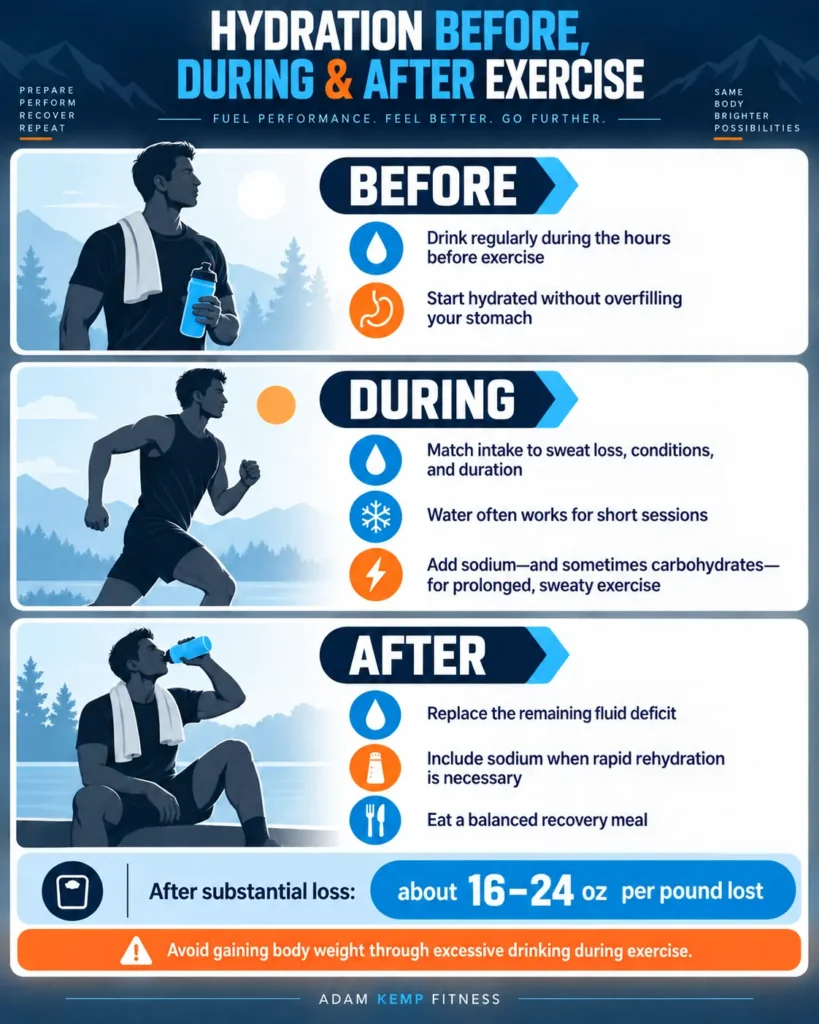
You continue losing water through breathing and urine overnight, so drinking after waking is a sensible part of preparing for morning exercise.
However, your hydration needs depend on your body size, climate, sweat rate, previous-day intake, and workout duration.
Drink gradually instead of forcing a fixed amount immediately before moving.
Pale-yellow urine and normal thirst can offer practical feedback, although neither is a perfect measurement of hydration.
Plain water is appropriate for many workouts lasting less than an hour.
Electrolytes become more useful when you train for a long time, sweat heavily, exercise in heat, or begin the morning incompletely recovered from previous activity.
Avoid overdrinking because excessive water intake can produce nausea, uncomfortable sloshing, and, in extreme cases, dangerously low blood sodium.
The objective is to begin adequately hydrated, not to consume as much water as possible.
Can You Drink Coffee Before a Morning Workout?
Coffee can improve alertness and exercise performance when you tolerate caffeine, but it cannot replace sleep, food, or hydration.
Caffeine is effective at relatively modest doses, and more is not always better because larger doses increase the likelihood of anxiety, rapid heartbeat, sleep disruption, and gastrointestinal distress (Guest et al., 2021).
Start with your usual coffee instead of a high-stimulant pre workout supplement or energy drink.
If coffee on an empty stomach causes nausea, reflux, or shakiness, drink it with a small snack or wait until after training.
Caffeine also should not become the tool you use to hide chronic under-recovery.
If you need progressively larger amounts to feel normal, assess your sleep, calorie intake, workload, and recovery habits.
Easily Digestible Foods for Morning Workouts
“Easy to digest” does not describe one universal list because people respond differently to lactose, fructose, fiber, sweeteners, and food volume.
Nevertheless, simple carbohydrate-rich foods with relatively little fat and fiber are generally the most practical choices close to exercise.
Reliable options include:
- Bananas
- Applesauce
- White or sourdough toast
- Jam or honey
- Rice cakes
- Pretzels
- Low-fiber cereal
- White rice
- Instant oatmeal
- Juice
- Sports drinks
- Low-fat yogurt, if you tolerate dairy
- Whey protein mixed with water or milk
- Smoothies made with familiar ingredients
Avoid labeling these foods as “good” while calling more slowly digested foods “bad.”
Whole grains, nuts, seeds, avocado, and vegetables are nutritious, but their fat or fiber content may make them less comfortable immediately before running, conditioning, or basketball.
Foods to Avoid Before Early-Morning Exercise
Foods that cause problems vary, but the following choices are commonly difficult to tolerate immediately before intense exercise:
- Fried or greasy breakfasts
- Large servings of bacon or sausage
- Heavy cream sauces
- Large quantities of nuts or nut butter
- High-fiber bran cereals
- Large raw-vegetable meals
- Large servings of beans
- Unfamiliar protein bars
- Products containing substantial sugar alcohols
- Very concentrated pre-workout supplements
- Excessive caffeine
- Oversized smoothies containing many ingredients
These foods may fit comfortably elsewhere in your diet. The issue is not whether a food is healthy; it is whether its portion size, nutrient composition, and digestion rate match the time before exercise.
How to Prevent Stomach Pain During Morning Workouts
Stomach pain often occurs when the amount or composition of a meal does not match the available digestion time.
Large servings and foods high in fat, fiber, or protein tend to remain in the digestive system longer and may increase discomfort during strenuous exercise.
To reduce the risk:
- Eat less when you have less time to digest.
- Limit greasy, fried, or unusually high-fat foods.
- Reduce fiber immediately before intense or high-impact exercise.
- Avoid unfamiliar supplements and energy drinks.
- Be cautious with sugar alcohols if they cause gas or diarrhea.
- Choose lactose-free options if dairy bothers you.
- Avoid chugging large amounts of fluid at once.
- Eat slowly instead of swallowing food while rushing.
- Use liquid nutrition if solid food feels too heavy.
- Practice your routine during ordinary workouts.
Reducing fiber around a workout does not mean following a low-fiber diet all day.
It means moving high-fiber foods away from the period when a full stomach and increased intestinal contents are most likely to interfere with movement.
Persistent vomiting, severe abdominal pain, blood in the stool, frequent dizziness, or recurring gastrointestinal symptoms deserve medical attention.
Nutrition adjustments can help with common exercise-related discomfort, but they should not be used to ignore a medical problem.
Morning Workout Fueling Based on the Type of Exercise
Different workouts require different amounts of fuel. Matching food intake to the session helps you avoid both unnecessary eating and preventable underfueling.
Walking, Mobility, or Easy Cardio
For 30–45 minutes of comfortable movement, water may be all you need.
Eat beforehand if you are hungry or feel better with food, but many people don’t need a full pre-workout snack.
Strength Training
A small carbohydrate-and-protein snack can support training quality, particularly before heavy or high-volume sessions.
A banana with a protein shake, yogurt with honey, or toast with eggs are practical choices.
HIIT, Sprinting, and Conditioning
These sessions depend heavily on carbohydrate metabolism and can be uncomfortable with a full stomach.
Choose a small, easily digested carbohydrate source, then consume a balanced meal after training.
Running
Running produces more gastrointestinal movement than many gym exercises.
Reduce fat, fiber, and portion size as the workout approaches, and repeatedly test your strategy before races or long runs.
Team-Sport Practice
Team sports such as basketball often combine sprinting, jumping, physical contact, and repeated changes of direction.
A carbohydrate-rich snack or light meal can support intensity, but it should be digested enough that you can run and jump comfortably.
Long Endurance Workouts
Long runs and rides require more deliberate carbohydrate planning than short workouts.
Depending on duration and intensity, you may also need carbohydrates and fluids during the session rather than trying to consume everything beforehand.
A Practical Morning Workout Food Chart
| Time before exercise | Fueling approach | Example |
|---|---|---|
| 2–4 hours | Balanced carbohydrate-rich breakfast with protein | Oatmeal, fruit, and Greek yogurt |
| 60–90 minutes | Light meal with carbohydrates and moderate protein | Banana-protein smoothie |
| 30–45 minutes | Small, low-fat and low-fiber snack | Toast with jam or applesauce |
| 10–20 minutes | Very small or liquid carbohydrate source | Half a banana or sports drink |
| No food tolerated | Begin with fluids and prioritize nutrition afterward | Water before; breakfast after |
These examples are starting points rather than rigid prescriptions.
Body size, training volume, personal preference, medical conditions, and gastrointestinal tolerance should influence your final choice.
What to Eat After a Morning Workout
Post-workout nutrition becomes especially important when your pre-workout snack was small or you trained without food.
Within the next few hours, eat a balanced breakfast containing carbohydrates, quality protein, fluids, and nutrient-dense foods.
Good post-workout breakfasts include:
- Eggs, potatoes, and fruit
- Greek yogurt, oats, berries, and nuts
- A smoothie with protein powder, fruit, oats, and milk
- A turkey-and-egg sandwich with fruit
- Rice, eggs, vegetables, and avocado
- Cottage cheese with toast and fruit
There is no need to panic about a 30-minute “anabolic window.”
However, delaying breakfast until noon after a demanding early workout is generally less supportive of recovery than eating a substantial meal within a practical timeframe.

How to Build a Repeatable Morning Fueling Routine
Prepare your food, shaker bottle, and water the night before. Removing decisions from the morning makes consistent fueling easier when you are tired or short on time.
Choose one reliable option for each schedule:
- 75 minutes or longer: Oatmeal, fruit, and Greek yogurt or protein powder
- 30–45 minutes: Banana and a protein shake
- 10–20 minutes: Applesauce, toast with jam, or a small sports drink
- Nothing tolerated beforehand: Fluids before training and a balanced breakfast afterward
Practice the same option for several sessions before deciding whether it works.
Constantly changing foods makes it difficult to determine what improves performance or causes discomfort.
Final Thoughts: Choosing the Best Meal Before Morning Workouts

Pre-workout foods should complement a nutritious eating pattern rather than compensate for a poor one.
Most of your daily intake should still come from minimally processed foods that supply quality protein, fiber-rich carbohydrates, healthy fats, fruits, vegetables, and adequate micronutrients.
At the same time, sports nutrition requires context.
White toast before sprints may be more useful than a high-fiber salad, even though the salad would normally be considered more nutrient-dense.
This distinction allows you to fuel performance without becoming overly restrictive. Use quickly digested foods when they solve a specific training problem, then build the rest of your meals around long-term health and recovery.
Track your energy, stomach comfort, pace or strength, concentration, hunger later in the day, and recovery by the next morning. These signals can help you personalize general sports-nutrition recommendations.
If you feel weak or lose intensity, add a small amount of carbohydrate. If you feel heavy or nauseated, reduce the portion, lower the fat and fiber, choose a liquid option, or allow more digestion time.
The best answer to what to eat before morning workouts is not the most impressive breakfast. It is the smallest practical amount of familiar food that helps you train well, protects your stomach, and fits into a consistently nutritious diet.
This website does not provide medical advice. This website site does contain affiliate links, and purchases may earn a commission.
Read my Medical Disclaimer, Review Disclaimer, and Publishing Policies for more details. Use of this site indicates acceptance of these terms.
Check Out Some of My YouTube Videos Below, and Please Follow on YouTube for More Educational Health and Fitness Content!