How to Eat for Muscle Growth and Strength Gains
 Reading Time: 18 minutes
 Learning how to eat for muscle growth and strength gains begins with knowledge of adequate calories, enough protein, and meals that support consistent strength training.
Muscle-building nutrition doesn’t require a perfect food, an expensive supplement stack, or eating until you feel uncomfortable, but it does require a repeatable plan that connects what you eat to the work you want your body to do.
As a professional basketball player, I have learned that eating enough to recover isn’t the same as eating without structure, and that paying attention to the details when building muscle can have a huge impact on your results.
My approach is to consider performance, body composition, digestion, schedule, and long-term health together, and I want my meals to help me train well today while supporting the athlete and person I want to be months from now.
That is the approach I recommend for anyone learning how to eat for muscle growth and strength gains, whether you are new to lifting or trying to make progress after years of training.
How to Eat to Build Muscle and Strength
Learning how to eat to build muscle and strength starts with matching your nutrition to your training: enough energy to support your workload, adequate protein, and meals you can repeat consistently.
Protein supports the adaptations to resistance training, but increasing your intake indefinitely does not produce greater gains (Morton et al., 2018).
As a professional basketball player, I approach muscle-building nutrition with more than just body composition in mind, because I still need meals that support performance, recovery, and comfortable digestion.
Start with the fundamentals below, then adjust your portions and meal timing as your training demands and progress change.
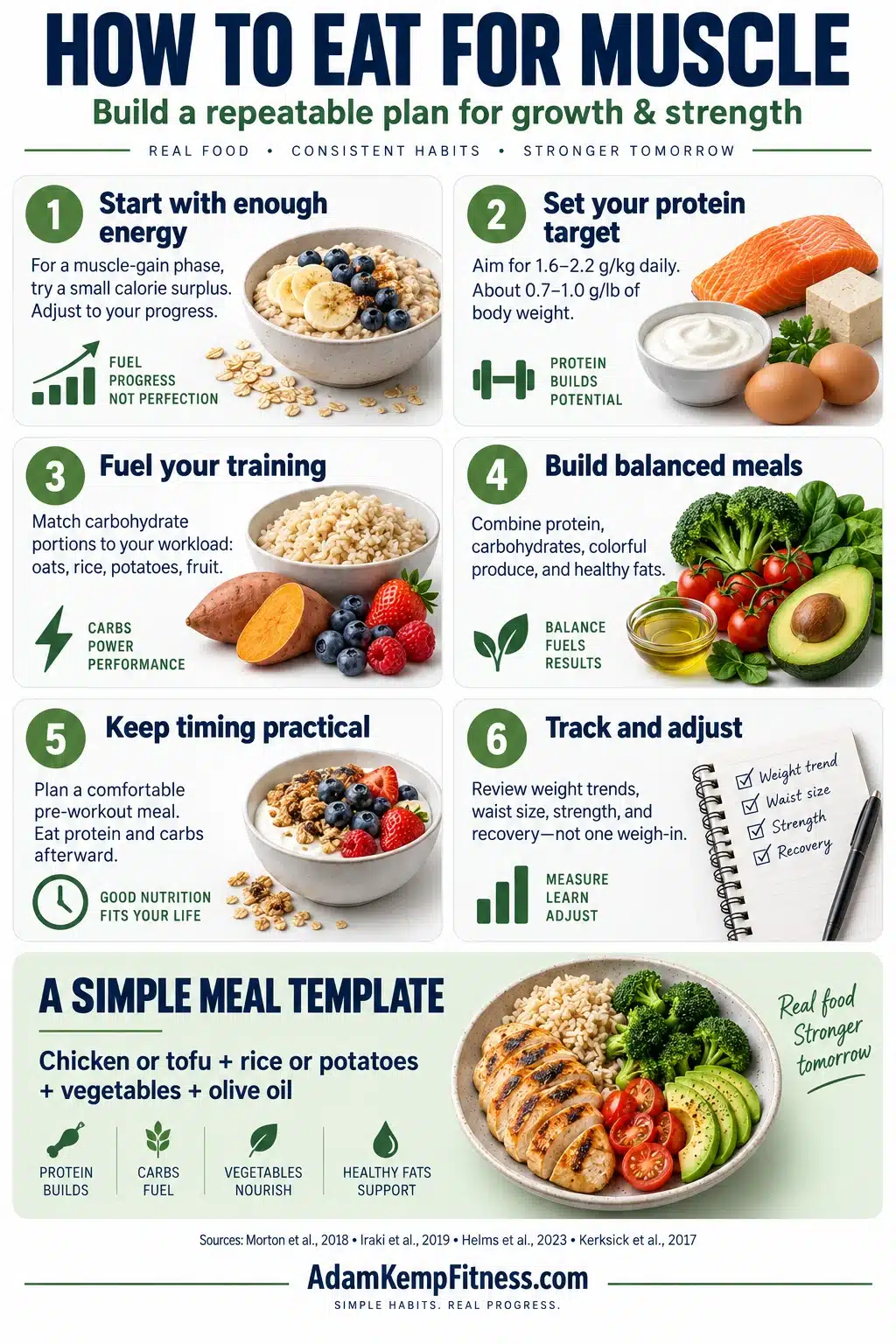
1.) Start With a Repeatable Plan
Before changing everything about your diet, identify the part of your current routine that needs the most attention. Use these questions to organize your first week:
| Priority | Question to ask | Practical first step |
|---|---|---|
| Energy intake | Am I maintaining, losing, or gaining weight? | Record your usual meals and several morning weigh-ins. |
| Protein | Does each main meal have a substantial protein source? | Plan breakfast, lunch, and dinner around one. |
| Training fuel | Do I regularly arrive at workouts hungry or underprepared? | Schedule a meal or snack before training. |
| Food variety | Am I eating produce and several different staple foods? | Add a fruit or vegetable to meals that lack them. |
| Consistency | Which meal falls apart on busy days? | Keep a convenient backup available. |
You do not need to solve every issue at once. Start with the biggest obstacle, repeat the improvement, and then address the next one.
2.) Eat Enough Calories to Support Growth
A calorie surplus means consuming more energy than you expend over time, but it isn’t an absolute requirement for muscle growth.
Muscle gain can occur alongside fat loss, although a modest surplus can be a useful strategy when gaining muscle is the main priority (Helms et al., 2023).
Avoid treating a large surplus as insurance against slow progress.
In an eight-week study with 17 participants who completed it, faster weight gain primarily predicted greater increases in skinfold thickness rather than consistently better muscle or strength gains; the small sample and short duration limit how broadly the findings apply (Helms et al., 2023).
How Many Extra Calories Should You Eat Per Day?
For an adult choosing a muscle-gain phase, I suggest testing a small increase of roughly 150–300 calories per day above an intake that has been maintaining body weight.
However, this is a practical starting point, not a scientifically established requirement for everyone.
For example, if your average weight has remained stable while eating approximately 2,500 calories, try around 2,700 rather than immediately jumping to 3,500.
Keep your routine reasonably consistent for two to three weeks before deciding whether another change is necessary.
You can also work without calorie tracking.
Add one repeatable snack or increase a familiar meal portion, then evaluate the trend instead of guessing differently every day.
How Fast Should You Gain Weight?
The often-cited target of 0.25%–0.5% of body weight per week comes from recommendations for novice and intermediate bodybuilders, with more conservative gains advised for advanced lifters.
At 180 pounds, that range is about 0.45–0.9 pounds per week, but it reflects total weight gain, not pure muscle (Iraki et al., 2019).
I would not make the top of that range your automatic target.
If minimizing fat gain matters, begin conservatively and consider your waist measurement, training progress, and longer-term weight trend together.
3.) Prioritize Enough Protein Each Day
Knowing how much protein you need to build muscle is one of the most important parts of eating for muscle growth and strength.
Resistance training provides a growth stimulus, while protein supplies amino acids used to build and maintain muscle tissue.

A meta-analysis of 49 studies found that protein supplementation improved training-related gains, with the average benefit for fat-free mass leveling off around a total intake of 1.6 grams per kilogram daily (Morton et al., 2018).
However, that average is not a precise ceiling for every individual.
The practical range of 1.6–2.2 g/kg/day, approximately 0.7–1.0 g/lb/day, gives you room to account for individual needs without assuming that more protein always produces more muscle (Morton et al., 2018; Iraki et al., 2019).
| Body weight | Approximate daily protein range |
|---|---|
| 130 lb / 59 kg | 95–130 g |
| 150 lb / 68 kg | 110–150 g |
| 170 lb / 77 kg | 125–170 g |
| 190 lb / 86 kg | 140–190 g |
| 210 lb / 95 kg | 150–210 g |
Spread Protein Across Your Meals
A practical protein target is approximately 1.6–2.2 grams per kilogram of body weight daily, or about 0.7–1.0 grams per pound (Morton et al., 2018; Iraki et al., 2019).
Including protein at several meals is a practical way to reach your daily target.
Sports nutrition guidance commonly suggests servings of roughly 20–40 grams, adjusted for body size, age, and training demands, spread across the day (Jäger et al., 2017).
For a 160-gram daily target, you could plan four eating occasions with approximately 40 grams each.
If three meals suit your schedule better, use larger portions and check whether you actually reach the total.
Do not interpret a suggested serving size as a limit on what your body can absorb.
Meal size, digestion, muscle protein synthesis, and whole-body protein use are related but different questions (Jäger et al., 2017).
Choose Protein Foods You Enjoy Eating
Create a rotation of the best muscle-building foods that fit your preferences and budget.
My suggested shopping list includes eggs, Greek yogurt, cottage cheese, fish, poultry, lean meat, tofu, tempeh, edamame, beans, lentils, and an optional protein powder.
Think about the whole meal rather than expecting every ingredient to do the same job.
Match Carbohydrates to Your Training Demands
Carbohydrates provide fuel for exercise and replenish glycogen, the stored carbohydrate in the muscles and liver.
Their timing is especially relevant when you need to recover between demanding sessions with limited time (Kerksick et al., 2017).
However, extra carbohydrates do not automatically improve every lifting workout.
A meta-analysis found that benefits from acute carbohydrate feeding were more apparent in longer resistance-training sessions and after longer periods without food (King et al., 2022).
There is also a difference between fueling a workout and independently increasing muscle growth.
A 2026 meta-analysis of 11 studies found no significant hypertrophy advantage from higher carbohydrate intake when protein was matched, although the certainty of evidence was low (Henselmans et al., 2026).
My practical interpretation is to use carbohydrates to support the training you actually do.
For example, a brief lifting session after lunch and a heavy lift followed by basketball practice do not require identical meal planning.
How Many Carbohydrates Should You Eat?
Around 3–5 g/kg/day is a commonly suggested starting range in off-season bodybuilding guidance, rather than a universal minimum for muscle growth.
An 80-kilogram person would get 240–400 grams daily within that range (Iraki et al., 2019).
If you are unsure where to start, include a carbohydrate food in each main meal and adjust portions around your activity.
Rice, potatoes, oats, bread, pasta, fruit, beans, and cereal all offer possibilities.
On a heavy lower-body training day, I would plan a larger rice or potato serving than on a quiet day.
Then I would judge that choice by appetite, digestion, performance, and the overall weight trend.
Monitor Dietary Fat, Produce, and Food Variety
Dietary fat belongs in a muscle-building plan, and protein should not crowd out every other food group.
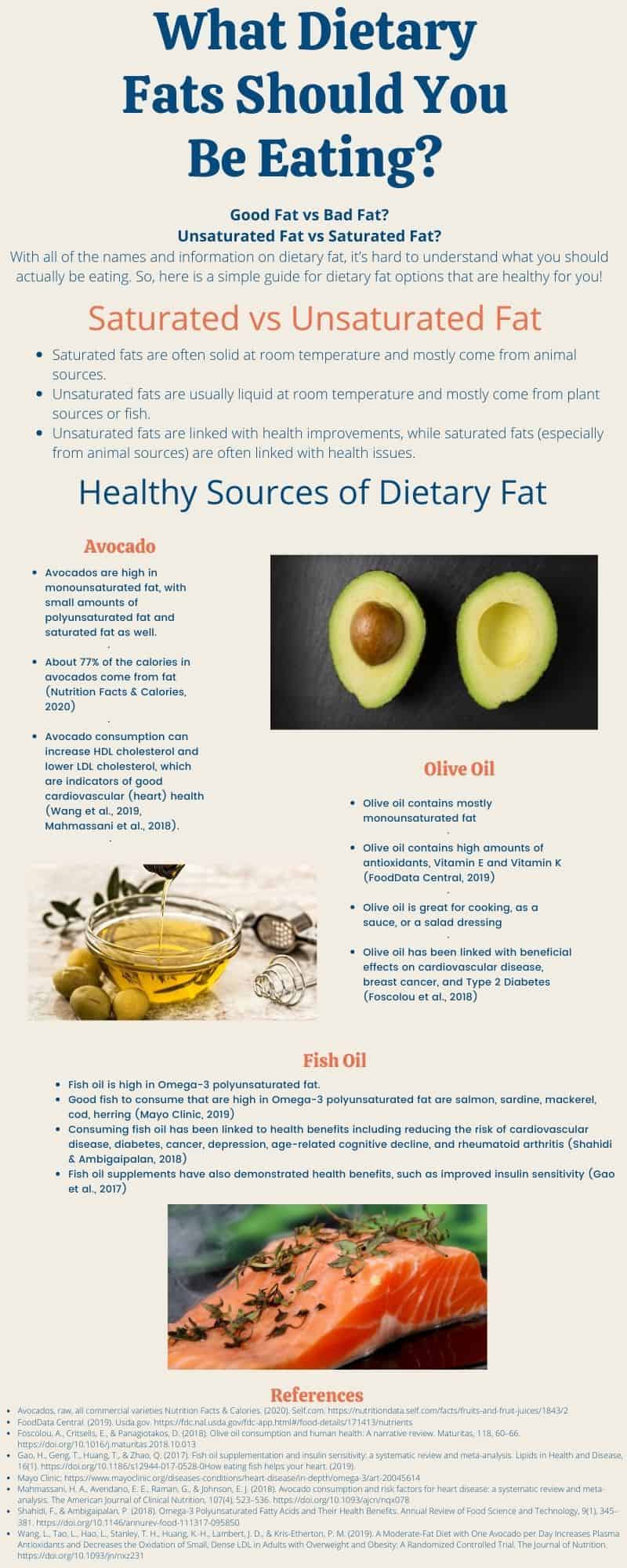
Sports nutrition recommendations call for moderate fat intake alongside sufficient carbohydrates and protein, rather than an extremely low-fat approach (Iraki et al., 2019).
For everyday meals, rotate foods such as olive oil, avocado, nuts, seeds, eggs, and fish.
Measure calorie-dense additions initially if you want to understand how much you are adding to a meal.
I also recommend keeping fruits, vegetables, legumes, and whole grains in the routine.
My guide to eating a balanced diet offers a broader framework for building that variety.
Do not turn muscle building into a rigid “clean eating” contest.
Frozen vegetables, canned beans, bread, yogurt, and convenient prepared foods can all fit into a workable weekly menu.
Best Supplements for Muscle Building to Add to Your Diet
You do not need supplements to build muscle, but certain products can make your nutrition plan more convenient or support your training results.
Protein powder can help fill a dietary gap, while creatine monohydrate can improve high-intensity exercise capacity and enhance resistance-training adaptations (Jäger et al., 2017; Kreider et al., 2017).
My approach is always to identify a specific need before adding a supplement.
Start with consistent meals and a structured training routine, then consider whether a product offers enough practical value to justify its cost.
Protein Powder: Useful for Convenience
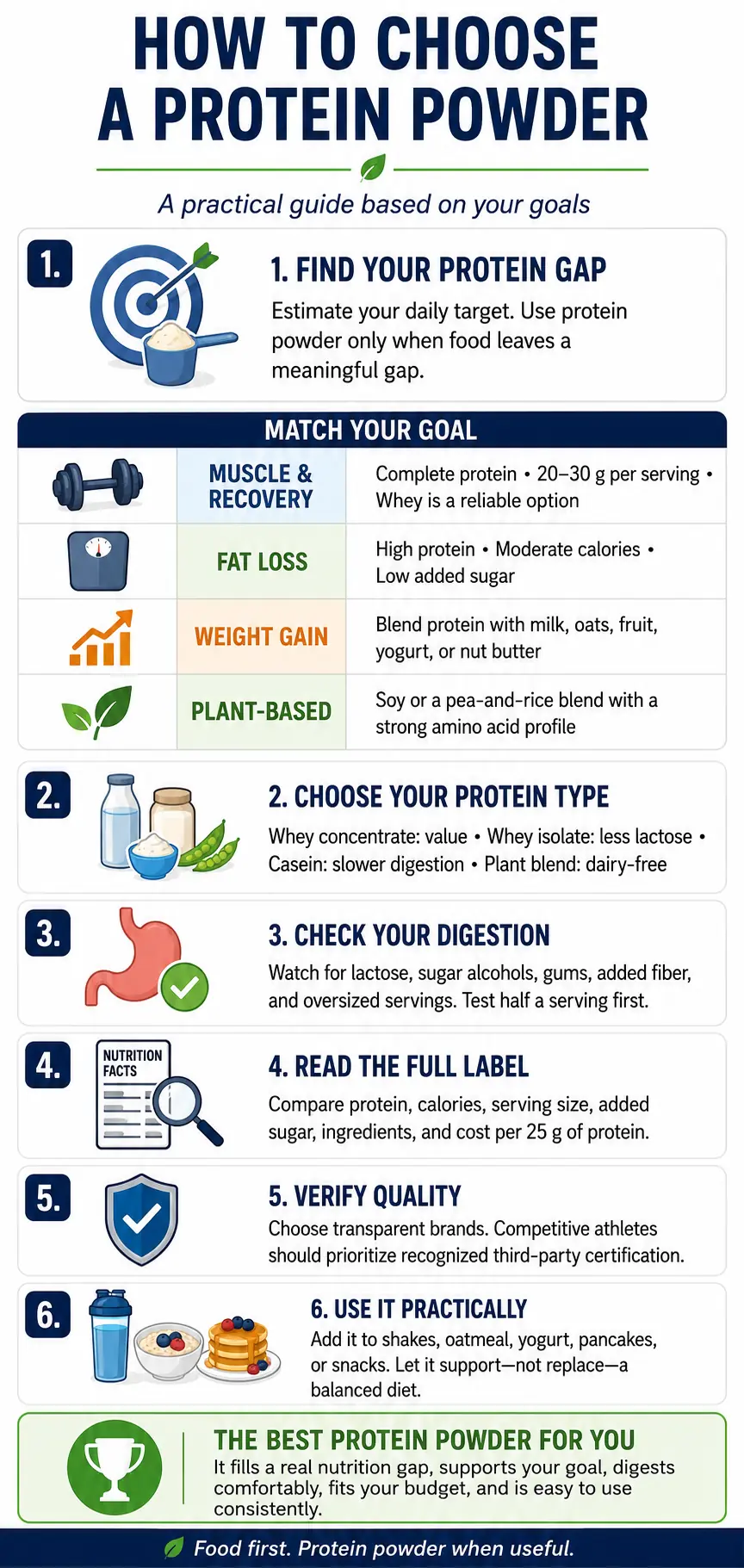
Protein powder can help you reach an intake target, but it is not required when food already supplies enough protein.
The value lies in conveniently closing a gap, rather than assuming a shake has a special effect that an adequate diet cannot provide (Jäger et al., 2017).
Choose a product based on protein content, cost, taste, and digestive tolerance.
Plan where it fits before buying it: breakfast, travel, or an afternoon snack may be more useful than automatically adding it after every workout.
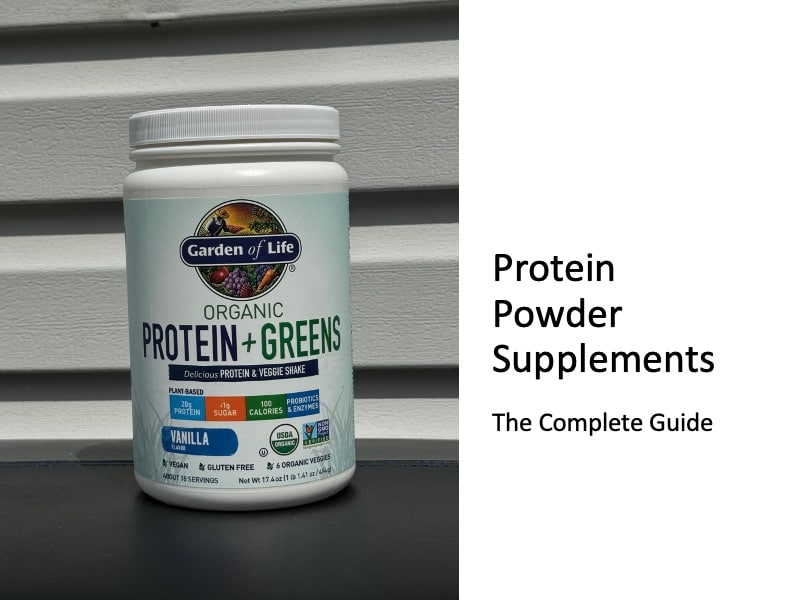
My favorite option is Garden of Life Protein and Greens.
For more first-hand supplement reviews, athlete nutrition information, basketball training, and strength-and-conditioning advice, subscribe to the Adam Kemp Fitness YouTube channel.
Garden of Life Protein and Greens is my favorite protein powder because it combines 20 grams of protein with fiber, vegetables, probiotics, and digestive enzymes.
I recommend it most for smoothies and for shoppers who prioritize ingredient quality, nutrition, and value over a milkshake-like taste.


Last update on 2026-09-21 / This article includes affiliate links/Images via Amazon Product Advertising API. I may earn commissions on purchases made through these links.
Creatine: A Well-Supported Option
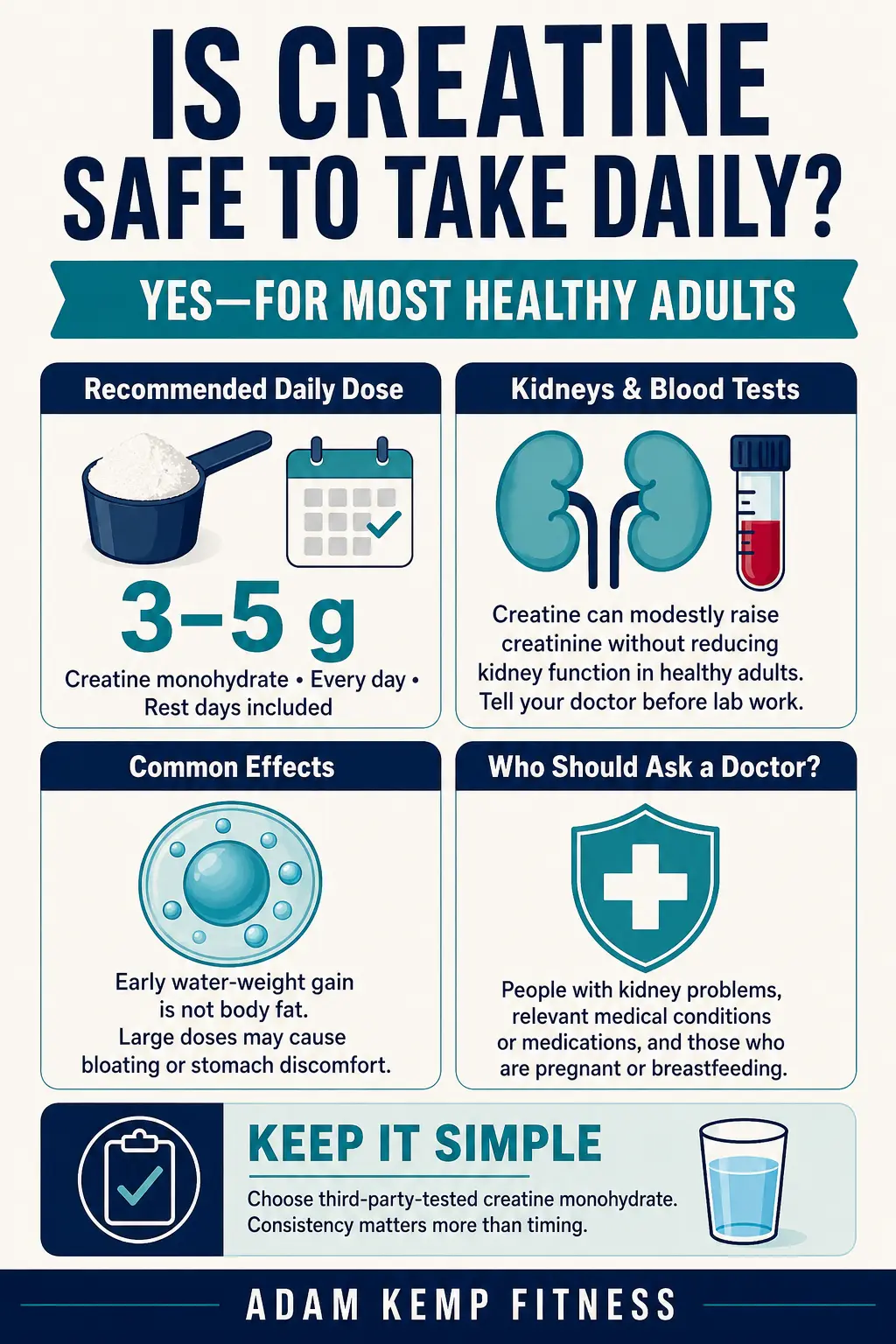
Creatine monohydrate can improve high-intensity exercise capacity and enhance adaptations to resistance training.
A common approach is 3–5 grams daily, with a loading phase optional rather than necessary (Kreider et al., 2017).
Some early weight gain can reflect increased water retention, so do not mistake every added pound for new muscle or body fat.
Record when you start creatine to help interpret changes on the scale (Kreider et al., 2017).
For competitive athletes, select supplements with reputable sport-specific third-party testing.
If you have a medical condition or take medications that affect supplement suitability, discuss the product with your clinician first.
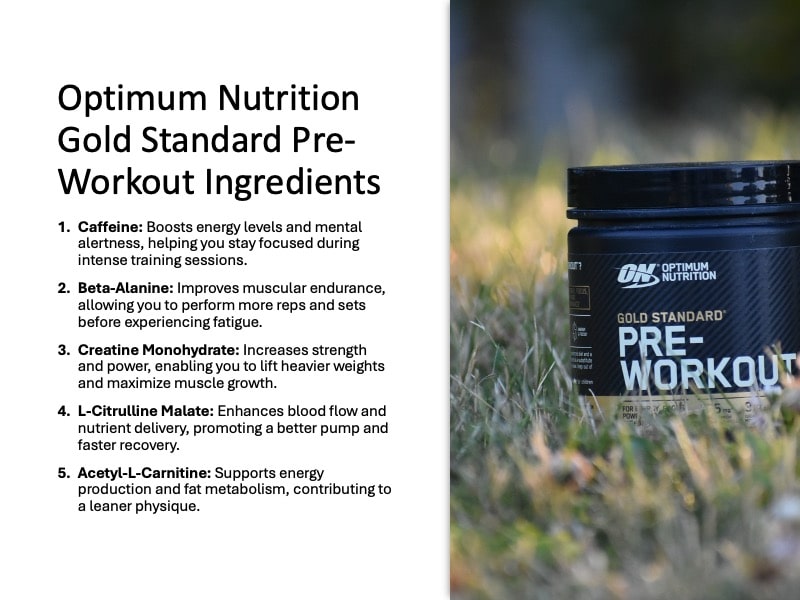
I recommend Optimum Nutrition Gold Standard Creatine Monohydrate.

Last update on 2026-09-21 / This article includes affiliate links/Images via Amazon Product Advertising API. I may earn commissions on purchases made through these links.
Make the Muscle-Building Diet Plan Comfortable to Eat
If you struggle to finish your meals, try smaller eating occasions rather than forcing enormous portions.
Experiment with a smoothie, a healthy snack between meals, or a modest addition of olive oil or nut butter to your other foods of the day.
If a particular pre-workout meal feels heavy, move it earlier or simplify it.
Keep a short record of the food, portion, timing, and symptoms so you can identify a pattern rather than eliminating entire food groups at random.
Tracking Progress and Making Small Adjustments
Choose a simple review routine that you can sustain.
I prefer morning weigh-ins under similar conditions, a weekly average, and notes on training performance and how the meals feel.
| What you observe over several weeks | What I would check or change |
|---|---|
| Gradual weight gain and improving training | Keep the current plan. |
| Stable weight, improving performance, and satisfactory body changes | Continue observing rather than forcing weight gain. |
| Stable weight and stalled progress during a planned gain phase | Check meal consistency and training, then test a small food increase. |
| Faster weight gain than intended | Review portion changes and reduce the added food slightly. |
| Digestive discomfort or difficulty finishing meals | Adjust meal size, timing, or food choices. |
| Poor training despite adequate food | Review programming, sleep, stress, and recovery. |
An increase or reduction of roughly 100–150 calories is a manageable adjustment to test.
This is a coaching suggestion, not a precise threshold that determines whether muscle growth occurs.
Keep your training plan visible alongside your meal plan.
My guides to strength training and building muscle can help you connect nutrition to the work you do in the gym.
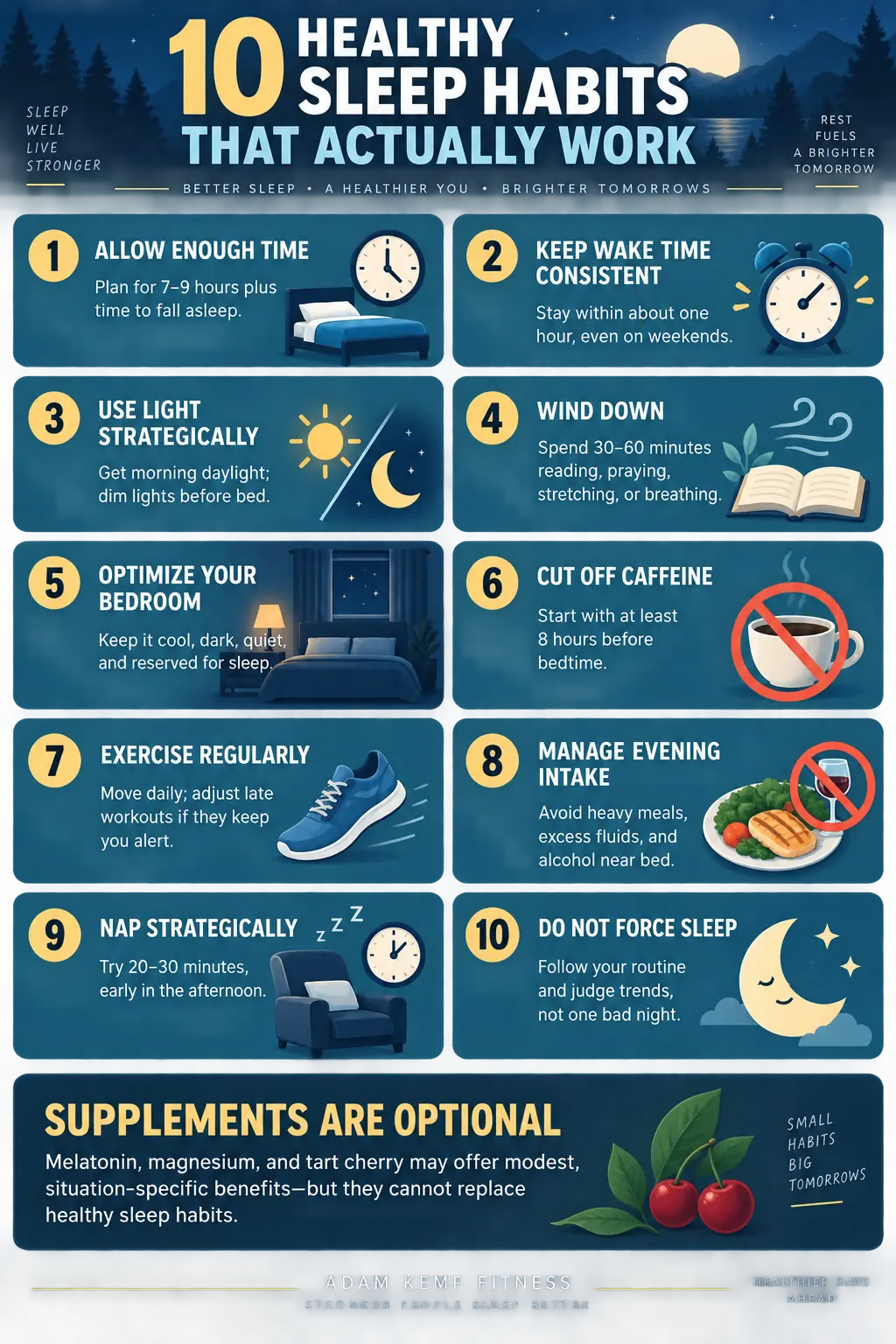
Also, make sure you give sleep the same attention you give meal preparation.
If your evenings are inconsistent, start with one change from my guide to healthy sleep habits and make it part of your weekly routine.
What to Eat Before and After a Workout for Maximum Muscle Growth
An important part of learning how to eat for muscle growth includes fine-tuning your workout meals once your daily calorie and protein needs are consistently met.
To begin, spread protein intake throughout the day and plan a protein-containing meal a few hours before or after lifting, prioritizing post-workout nutrition if you train fasted or have gone several hours without eating (Kerksick et al., 2017).
Carbohydrate timing offers another way to personalize your muscle-building diet, particularly before longer lifting sessions or when exercising after an extended period without food (King et al., 2022).
For example, try oats with Greek yogurt before training and chicken with rice afterward, adjusting portions to your daily targets and digestive comfort.
If you train twice daily, prioritize carbohydrate replenishment between sessions to support your next workout (Kerksick et al., 2017).
These adjustments can support performance and recovery, but higher carbohydrate intake alone has not consistently produced greater muscle growth when protein intake is matched (Henselmans et al., 2026).
Before Training
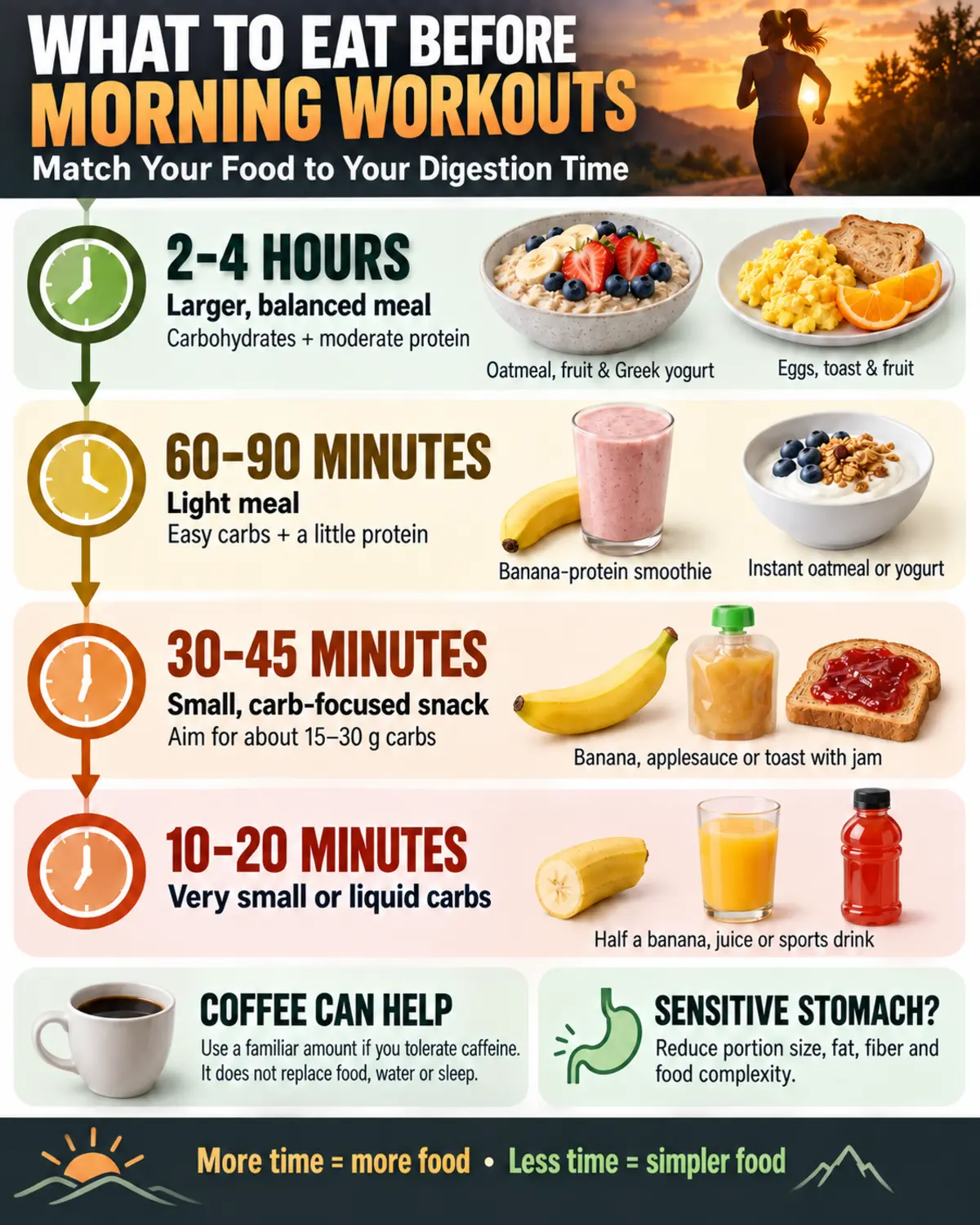
For pre-workout nutrition, start with a familiar meal about two to three hours before lifting.
I suggest chicken with rice and cooked carrots, or eggs with potatoes and fruit.
Use that timing as a starting point, then adjust the portion and interval based on how comfortably you train.
A meal that works before an afternoon lift may need to be smaller before an early-morning session.
Include a substantial protein source alongside carbohydrates, especially if you would otherwise go several hours without eating.
Approximately 20–40 grams of protein is a practical serving for many adults, although needs vary with body size, age, and training demands (Jäger et al., 2017).
Try to match your carbohydrate portion to the workout you plan.
Consuming carbohydrates before or during resistance exercise may be particularly useful for longer sessions or when you have gone an extended period without food (King et al., 2022).
If a full meal does not fit your schedule, try Greek yogurt with a banana and a little honey, or a small protein smoothie with milk and blueberries.
Kefir with fruit is another option to test, with the serving size and protein content checked against your needs.
If you are looking for options for what to eat before early-morning workouts, choose a manageable portion rather than forcing a large breakfast. You might start with a banana and a small shake, then eat a fuller meal after training.
If a meal leaves you feeling heavy, experiment with smaller portions of whole milk, avocado, walnuts, peanuts, or chia seeds near your workout.
These are foods I enjoy, but I would adjust their timing rather than insist on including them in every pre-workout meal.
An important aspect of learning how to eat for muscle growth includes finding meals you can digest comfortably and repeat consistently.
So, test your choices during ordinary workouts, noting the portion, timing, and whether you feel hungry, comfortably fueled, or overly full.
After Training
For post-workout nutrition, a meal with protein and carbohydrates within the next few hours is a sensible default.
If you trained fasted or have gone several hours without protein, prioritize getting a protein-containing meal or snack afterward.
But, if you ate a substantial meal before lifting, you generally have more flexibility with your next meal (Kerksick et al., 2017).
I recommend building your recovery meal around a protein source, then adding carbohydrates in a portion that fits your workload and daily energy needs.
Some combinations I would suggest are the classic chicken with rice and broccoli, venison with potatoes and carrots, or ground beef pasta with tomatoes, garlic, and onions.
You can always rotate the ingredients, especially the spices, without changing the basic approach.
Try lamb with sweet potatoes and asparagus, or eggs with rice and a side of Greek yogurt, adjusting portions to fit your daily targets.
Think of your post-workout meal as one contribution to your daily protein intake.
Carbohydrate replenishment deserves more immediate attention when you have another demanding workout or practice later that day.
With more recovery time, you can spread carbohydrate-containing meals across your usual eating schedule (Kerksick et al., 2017).
If dinner is already waiting at home, let dinner be your recovery meal.
When travel, work, or a low appetite makes that difficult, try a smoothie with milk or kefir, protein powder, and a banana, then follow with a fuller meal when practical.
Greek yogurt with blueberries and a little honey or maple syrup is another convenient option to build into your plan.
Choose the portion based on what you still need that day, rather than assuming every post-workout snack has to become an extra meal.
For the broader training-and-recovery picture, see my guide to post-workout recovery.
A Sample Day of Eating for Muscle Growth
The following is a meal-planning example, not a fixed calorie prescription, that you can use to eat for muscle growth and strength development.
You can scale portions to your needs and use product labels or a food database if you want numerical totals.
| Eating occasion | Example meal | Possible adjustment |
|---|---|---|
| Breakfast | Oats, Greek yogurt, berries, and walnuts | Use a protein-rich soy yogurt or add soy protein to the oats. |
| Lunch | Chicken or tofu, rice, vegetables, and olive oil | Change the rice portion to fit your energy needs. |
| Pre-workout snack | Banana and toast, with yogurt if desired | Choose a smaller portion when training soon. |
| Dinner | Salmon or tempeh, potatoes, and vegetables | Add bread or another potato portion on demanding days. |
| Optional evening snack | Cottage cheese and fruit, or a soy-based shake | Use it when the day’s meals leave a protein or calorie gap. |
To build your own version, first select a daily protein target and divide it among your preferred eating occasions.
Then choose carbohydrate and fat portions that make the total amount of food appropriate for your goal.
For example, a hypothetical 2,600-calorie plan could contain 160 grams of protein, 85 grams of fat, and approximately 300 grams of carbohydrate.
Those macros provide roughly 2,605 calories using standard calorie-per-gram calculations; they illustrate the arithmetic, not what every reader should eat.
How to Eat for Muscle Growth on a Budget
Start with a short shopping list built around locally affordable staples.
Consider oats, rice, potatoes, eggs, dried or canned beans, lentils, frozen produce, tofu, and whichever meat, fish, or dairy options offer good value where you shop.
Keep frozen vegetables, frozen fruit, canned beans, and canned fish on your shopping list, especially when fresh alternatives cost more or tend to go unused.
Compare unit prices, choose store brands when they offer better value, and buy larger packages only when you can use or freeze the extra portions.
Prepare ingredients that can become several meals.
A pot of rice, a tray of vegetables, and a protein source can become bowls, wraps, or quick dinners with different sauces.
| Budget-friendly meal | Example portion | Estimated cost per serving* |
|---|---|---|
| Greek yogurt oatmeal bowl | ½ cup dry oats, ¾ cup plain Greek yogurt, and a banana | $1.25–$2.25 |
| Eggs, beans, and rice | 3 eggs, ½ cup canned beans, and 1 cup cooked rice | $1.50–$2.75 |
| Lentil and rice bowl | 1 cup cooked lentils, 1 cup cooked rice, and frozen vegetables | $1.00–$2.00 |
| Tofu stir-fry | ½ of a 14-ounce tofu package, rice, and frozen vegetables | $1.75–$3.00 |
| Chicken and potato plate | 5 ounces cooked chicken, a medium potato, and frozen broccoli | $2.00–$3.50 |
| Tuna and bean bowl | One 5-ounce can of tuna, ½ cup beans, rice, and canned tomatoes | $1.75–$3.00 |
For U.S. shoppers, Ibotta offers cash back on eligible purchases, while Fetch lets you earn receipt-based points toward gift cards, providing another way to get value from planned grocery purchases.
Check each offer’s eligibility requirements and compare the final cost with the store-brand alternative before buying.
Treat rewards as a bonus to your shopping plan, because spending more on something you did not need can erase the benefit.
Lastly, choose one backup meal for days when you don’t cook.
How to Eat on Rest Days
Keep protein intake consistent on days without lifting.
The muscle response to a training session continues beyond the workout itself, so recovery days are still part of the nutrition plan (Jäger et al., 2017).
You do not have to make your rest-day menu identical to your training-day menu.
I suggest keeping the same basic meals and adjusting portions only when your appetite, activity level, and overall goal justify it.
For example, you might remove a workout snack while keeping breakfast, lunch, and dinner intact.
Avoid making several large changes at once, because that makes the resulting weight and performance trends harder to interpret.
Frequently Asked Questions About How to Eat for Muscle
This website does not provide medical advice. This website site does contain affiliate links, and purchases may earn a commission.
Read my Medical Disclaimer, Review Disclaimer, and Publishing Policies for more details. Use of this site indicates acceptance of these terms.