
Magnesium Glycinate Vs Magnesium Citrate: Which Should You Use?
 Reading Time: 9 minutes
Comparing magnesium glycinate vs magnesium citrate is a practical debate between two forms that suit different needs: glycinate is my preferred option for an evening routine focused on sleep support, while citrate is worth considering when occasional constipation is also a concern.
Your goals, digestive tolerance, and dietary intake can help you decide which form fits your routine.
Magnesium supports normal muscle and nerve function, energy production, and bone health, making adequate intake important for both everyday well-being and athletic performance (National Institutes of Health Office of Dietary Supplements [NIH ODS], 2026).
After more than a decade in professional basketball and earning my master’s degree in nutrition education, I evaluate supplements by how they support the demands of training, sleep, and recovery.
Qunol Magnesium Glycinate is my preferred glycinate option, particularly because I want magnesium supplementation without intentionally seeking a laxative effect.
Understanding how each form fits those needs, along with how to compare doses, gives you a useful starting point for choosing magnesium glycinate vs magnesium citrate.


Last update on 2026-11-10 / This article includes affiliate links/Images via Amazon Product Advertising API. I may earn commissions on purchases made through these links.
Magnesium Glycinate Vs Magnesium Citrate: Key Differences

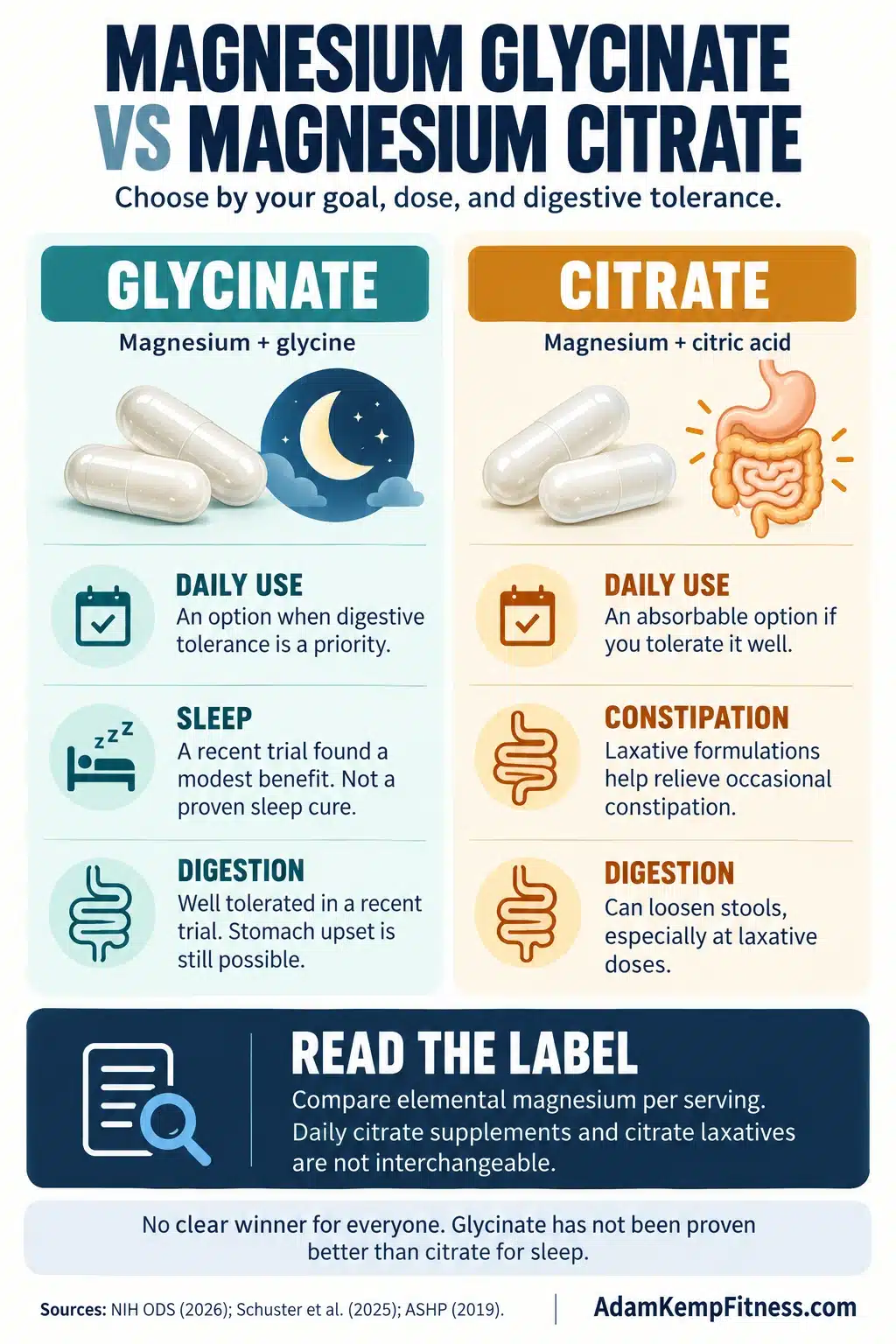
Magnesium glycinate pairs magnesium with the amino acid glycine, while magnesium citrate pairs it with citric acid.
Glycinate is commonly chosen for tolerability, whereas citrate also has an established role as a short-term saline laxative (Schuster et al., 2025; American Society of Health-System Pharmacists [ASHP], 2019).
| Consideration | Magnesium glycinate | Magnesium citrate |
|---|---|---|
| Main reason to consider it | Daily supplementation when tolerability is a priority | Daily supplementation, or short-term constipation treatment in an appropriate laxative formulation |
| Digestive effects | Well tolerated in a recent clinical trial, but stomach upset remains possible | Can loosen stools, particularly at laxative doses |
| Sleep evidence | A recent trial found a modest improvement in insomnia symptoms | The cited glycinate trial does not establish superiority over citrate |
| Constipation | Not my choice when a laxative effect is the goal | An established option for occasional constipation |
| Main buying consideration | Elemental dose and the exact formulation | Whether the product is a dietary supplement or a laxative medicine |
These distinctions are practical starting points rather than guarantees about how your body will respond.
In particular, a low-dose citrate supplement should not be treated as interchangeable with a bottle of magnesium citrate laxative.
Is Magnesium Glycinate or Citrate Better Absorbed?
Magnesium citrate has direct human evidence supporting better absorption than magnesium oxide.
In a randomized crossover study involving 20 healthy men, citrate produced higher urinary magnesium excretion and higher serum magnesium at several time points after supplementation (Kappeler et al., 2017).
However, that study compared citrate with oxide, not glycinate.
It also measured indicators of absorption rather than improvements in sleep, strength, or recovery.
Therefore, I would not claim that citrate is definitively better absorbed than glycinate based on the evidence discussed here.
A product can be a reasonable choice without winning an absorption comparison that has not been adequately tested.
For practical use, I would consider absorption alongside tolerability, serving size, and whether supplementation addresses a dietary gap.
A supplement that repeatedly disrupts your digestion deserves reassessment, regardless of its marketing claims.
When Magnesium Glycinate is Better Than Magnesium Citrate
Magnesium glycinate is my preferred choice over citrate when the goal is to support an evening routine without intentionally producing a laxative effect.
It makes particular sense when bowel movements are already regular, and the main reason for considering supplementation is better sleep.
For sleep specifically, magnesium glycinate has direct clinical evidence suggesting a modest benefit: a randomized trial of 155 adults with self-reported poor sleep found that 250 mg of elemental magnesium as bisglycinate daily improved insomnia severity more than placebo over four weeks (Schuster et al., 2025).
Participants taking magnesium improved by approximately 3.9 points on the Insomnia Severity Index, compared with 2.3 points for those taking placebo, indicating a small additional benefit.
Exploratory findings suggested that people reporting lower dietary magnesium intake might benefit more, although that needs confirmation (Schuster et al., 2025).
Throughout my professional basketball career, I have approached sleep and recovery as habits that need consistent attention, with supplements playing a supporting role.
That is why my approach to reducing workout fatigue includes reviewing sleep consistency, nutrition, and training demands, as well as any decision to use magnesium for sleep.

Why Qunol Magnesium Glycinate Is My Preferred Option
Qunol Magnesium Glycinate is my preferred magnesium glycinate product, and it is the option I would highlight for readers considering this form.
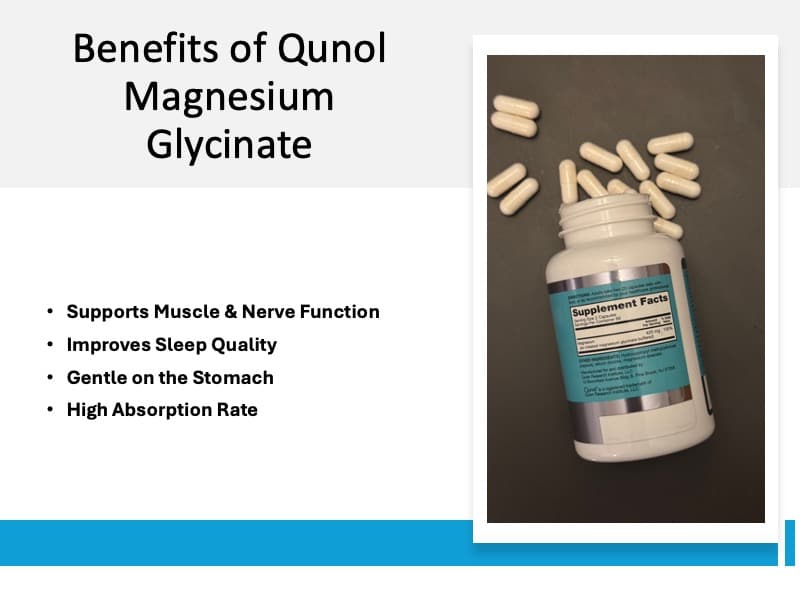
For a concrete label comparison, Qunol’s 300 mg Magnesium Glycinate tablets list 300 mg of elemental magnesium per two-tablet serving, supplied as chelated magnesium glycinate.
The manufacturer recommends that adults take 2 tablets daily with food.
That works out to 150 mg per tablet, which is useful when comparing serving sizes and calculating total supplemental intake.
However, you should check your own bottle, as this information applies specifically to the 300 mg tablet.
Last update on 2026-11-10 / This article includes affiliate links/Images via Amazon Product Advertising API. I may earn commissions on purchases made through these links.
When Magnesium Citrate Makes the Most Sense
Magnesium citrate makes the most sense when you want an absorbable magnesium supplement, particularly if occasional constipation is also a concern.
Research supports that it is absorbed more readily than magnesium oxide, making it a reasonable option for increasing magnesium intake even when bowel regularity is already normal (Kappeler et al., 2017).
For constipation relief, magnesium citrate works by retaining water in the stool, which softens it and makes it easier to pass.
However, the product and dose matter, as daily magnesium supplements and citrate laxatives have different intended uses and directions (ASHP, 2019).
Choosing Between a Daily Supplement and a Laxative
Before using magnesium citrate, check whether your product is intended for daily supplementation or occasional constipation relief, and follow the directions on that specific bottle.
A daily supplement should be chosen based on your magnesium needs, while a laxative should be used according to its instructions for treating constipation.
Magnesium citrate laxatives generally produce a bowel movement within 30 minutes to six hours, so consider your schedule before taking one.
They should not be used for longer than one week unless directed by a healthcare professional (ASHP, 2019).
When to Consider Glycinate Instead
If you already have loose stools or citrate makes your bowel movements more frequent or watery, I would consider glycinate instead of continuing with a product that disrupts your digestion.
For me, citrate’s appeal is strongest when its digestive effects serve a useful purpose, while glycinate is my preferred starting point when they do not.
However, if constipation keeps returning, discuss the cause with a healthcare professional rather than repeatedly increasing the laxative dose.
Magnesium Citrate Vs Magnesium Glycinate: How to Compare Doses
When comparing magnesium citrate vs magnesium glycinate, focus on the elemental magnesium per serving, as this tells you how much magnesium the supplement provides.
You can find this amount on the Supplement Facts panel, where it is listed separately from the total weight of the magnesium-containing compound (NIH ODS, 2026).
For example, Qunol’s 300 mg Magnesium Glycinate tablet product provides 300 mg of elemental magnesium per two-tablet serving, or 150 mg per tablet (Qunol, n.d.).
However, you should check your own bottle, as serving sizes and formulations vary between products.
How Much Magnesium Do You Need?
Adult men generally need 400–420 mg of magnesium daily, while nonpregnant adult women generally need 310–320 mg, including magnesium from food, beverages, and supplements.
The U.S. upper limit for adults is 350 mg daily from supplements and medications, unless a healthcare professional recommends otherwise; magnesium naturally present in food does not count toward this limit (NIH ODS, 2021).
Your supplement should help fill the gap between what you eat and what you need, so consider your usual diet before selecting a dose.
Nuts, seeds, beans, whole grains, leafy greens, and yogurt can all contribute to your daily intake (NIH ODS, 2021).
Include Magnesium From Other Supplements
If you use a multivitamin, electrolyte powder, or sleep supplement, check whether it already contains magnesium before adding glycinate or citrate.
The elemental amounts contribute to the same daily total, regardless of which form each product contains.
For example, taking 300 mg from a magnesium supplement and another 100 mg from a sleep product provides 400 mg of supplemental magnesium, exceeding the U.S. adult upper limit without medical guidance.
When Should You Take Magnesium Supplements?
An evening dose can be convenient if you are using magnesium glycinate as part of your sleep routine, while another consistent time may suit you better when your goal is increasing daily intake.
Follow your product’s directions, including whether to take it with food, as Qunol recommends for its 300 mg tablet product (Qunol, n.d.).
For sleep support, assess how you feel over several weeks of consistent use, as the glycinate trial measured improvements over four weeks (Schuster et al., 2025).
Keeping a simple record of sleep quality and digestive comfort can help you decide whether the supplement earns a place in your routine.
Side Effects and Safety Considerations
Magnesium supplements can cause diarrhea, nausea, or abdominal cramping, particularly at higher doses. If these symptoms develop, reassess your dose and whether the product suits your digestion (NIH ODS, 2021).
Magnesium can also reduce the absorption of certain antibiotics and bisphosphonates, so ask your pharmacist how far apart to take them.
If you have kidney disease, speak with your clinician before supplementing, as reduced magnesium clearance increases the risk of toxicity (NIH ODS, 2021, 2026).
Persistent constipation, diarrhea, unexplained weakness, or ongoing fatigue should be evaluated rather than managed by repeatedly changing supplements.
Where Magnesium L-Threonate Fits Into the Conversation
Magnesium L-threonate is another form worth considering when sleep and cognitive function are your main interests.
Its research focuses on outcomes such as memory, mental alertness, and sleep-related functioning, giving it a different emphasis from citrate’s established use for occasional constipation.

In a randomized trial of 80 adults with self-reported sleep problems, magnesium L-threonate improved selected sleep and daytime-function measures over 21 days (Hausenblas et al., 2024).
These findings suggest potential benefits, although the study was short and used a consumer wearable to estimate sleep outcomes.
A newer six-week trial involving 100 adults found improvements in some cognitive measures, including working and episodic memory, along with reduced self-reported sleep-related impairment.
However, wearable-measured sleep outcomes did not improve significantly compared with placebo (Lopresti & Smith, 2026).
For me, these findings make L-threonate worth discussing when someone is interested in both cognition and sleep, while glycinate remains my preferred starting point for an evening magnesium supplement.
Research has not yet established which of these two forms provides better sleep benefits.
If you choose L-threonate, check its elemental magnesium content before combining it with another product.
The 2 g daily dose used in the newer trial refers to the L-threonate compound, so it should not be read as 2 g of elemental magnesium.
Life Extension Neuro Mag Magnesium L-threonate is my preferred option for this form because I am particularly interested in its potential to support both sleep and cognitive function.
It fits my recovery approach, where feeling mentally refreshed matters as much as being physically ready for the next practice or game.

Last update on 2026-11-10 / This article includes affiliate links/Images via Amazon Product Advertising API. I may earn commissions on purchases made through these links.
Final Thoughts: Which Magnesium Should You Choose?
Magnesium glycinate is my preferred starting point when sleep support and digestive tolerance are the priorities, with Qunol Magnesium Glycinate as my preferred product.
Magnesium citrate makes sense when you want an absorbable supplement you tolerate well, especially if occasional constipation is part of the decision.
Magnesium L-threonate adds an option for those interested in emerging research on cognition and sleep, although I would choose it around a specific goal rather than automatically combine several forms.
To decide between magnesium glycinate vs magnesium citrate, start with what you want the supplement to help you accomplish, then choose an elemental dose that fits your dietary intake and existing routine.
Pay attention to how you sleep and how your digestion responds, as those practical outcomes will help you judge whether your choice is working for you.
Last update on 2026-11-10 / This article includes affiliate links/Images via Amazon Product Advertising API. I may earn commissions on purchases made through these links.
This website does not provide medical advice. This website site does contain affiliate links, and purchases may earn a commission.
Read my Medical Disclaimer, Review Disclaimer, and Publishing Policies for more details. Use of this site indicates acceptance of these terms.
Check Out Some of My YouTube Videos Below, and Please Follow on YouTube for More Educational Health and Fitness Content!