

How to Reduce Workout Fatigue Without Only Resting
 Reading Time: 14 minutes
 Workout fatigue can often be reduced by adjusting your training load, eating enough to support your activity, and improving sleep and hydration alongside getting adequate rest.
Some tiredness is expected after challenging exercise, but consistently struggling through sessions can signal that your training demands are exceeding your ability to recover (Schwellnus et al., 2016).
Throughout more than a decade of professional basketball, I have learned how important it is to manage workout fatigue while still preparing for the next practice or game.
To maintain my performance throughout a long season, I have to consider how my strength training, basketball conditioning, nutrition, and exercise recovery habits fit together.
These experiences have shaped how I approach days when my legs feel heavy, or my usual workouts feel harder than they should.
Before deciding what to change, I look at my recent workload, how well I have been eating and sleeping, and whether my schedule has given me enough time to recover.
Rest remains essential to that process, but the habits around your workouts also deserve attention.
Understanding where your recovery falls short gives you a practical starting point to make adjustments that support consistent training and reduce workout fatigue.
Why Workout Fatigue Builds Up
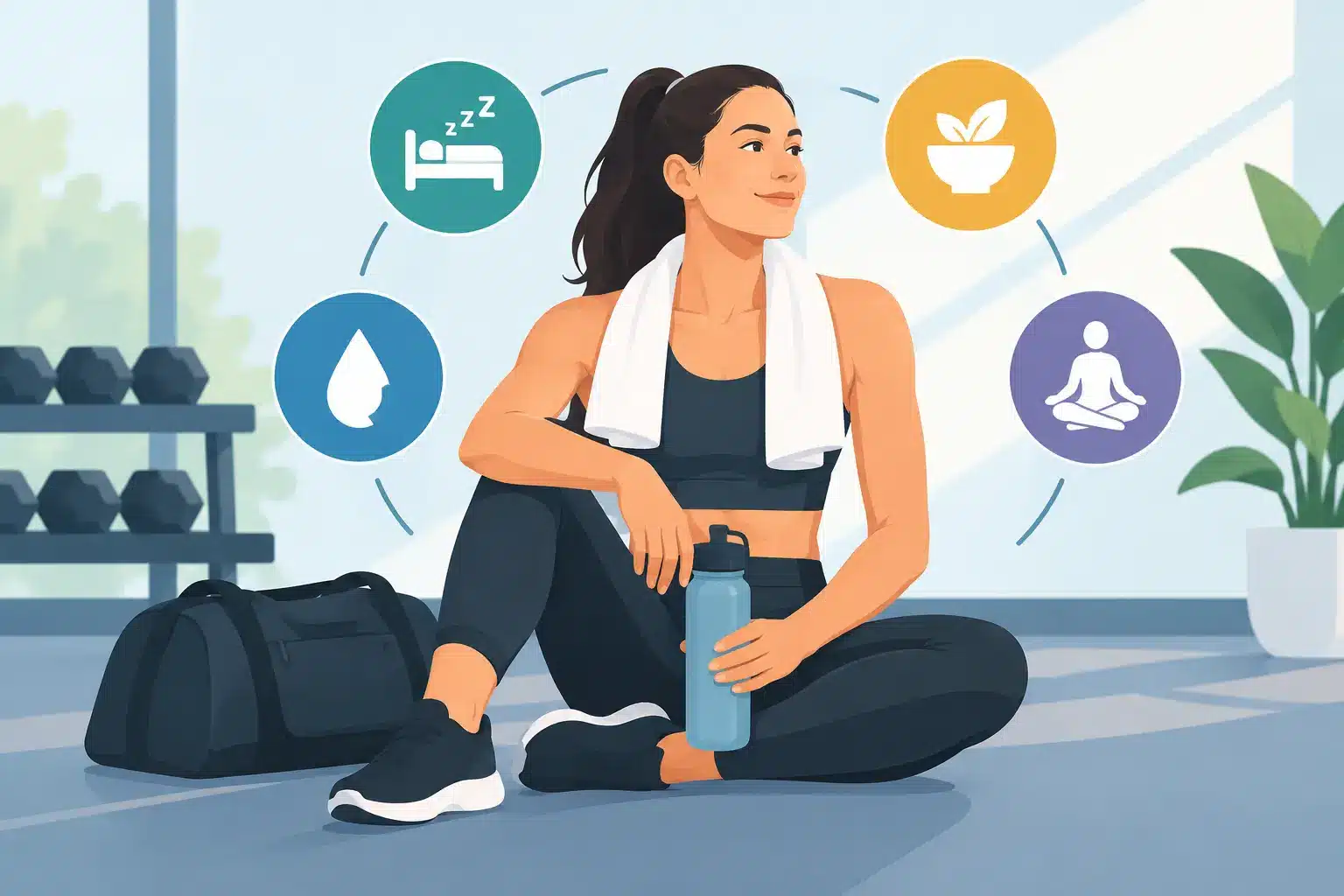
Workout fatigue builds up when the demands of training and daily life exceed your ability to recover.
A challenging lifting session, hard run, or basketball practice uses energy and stresses the body, so some temporary tiredness is to be expected during training.
With enough food, sleep, and recovery time between demanding sessions, your body can adapt to that workload and become better prepared for future exercise.

When those recovery opportunities consistently fall short, fatigue can accumulate and your performance may begin to decline (Schwellnus et al., 2016).
Increasing your training volume, scheduling too many intense sessions together, or eating too little for your activity level can contribute to this imbalance.
Poor sleep, long workdays, travel, and personal stress can add to the demands you are managing, which helps explain why a familiar workout may feel much harder during a stressful week.
Throughout my professional basketball career, I have learned to consider the overall picture when evaluating how I feel.
A strength workout that fits comfortably into a lighter week may need adjustment when practices, games, and travel leave less time to recover.
The most useful distinction is whether your fatigue improves with recovery or continues to interfere with your usual performance.
When familiar weights repeatedly feel heavier, your energy stays low between sessions, or completing your normal workload becomes increasingly difficult, those patterns deserve attention before you add more training.
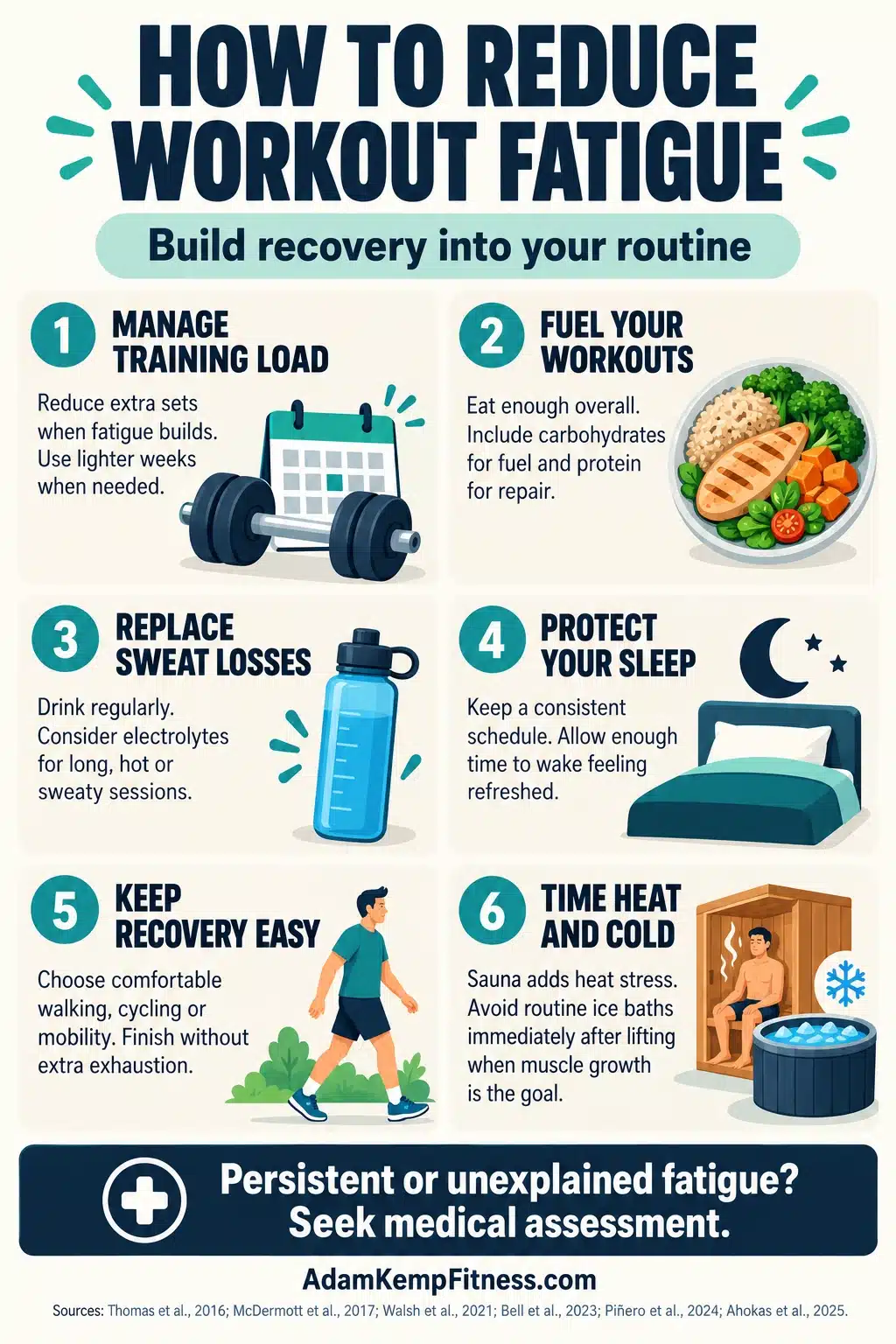
How to Reduce Workout Fatigue by Managing Training Load
To reduce workout fatigue, start by matching your training volume and intensity to what you can consistently recover from.
Hard sessions should have a clear purpose, whether that is building strength, improving conditioning, or preparing for competition.
For strength training, you can make meaningful progress without taking every set to muscular failure, which is the point where you cannot complete another repetition with proper technique.
A systematic review found that training to failure was not necessary for improving strength or muscle size, although results depend on how the overall program is structured (Grgic et al., 2022).
A practical starting point is to finish most demanding compound sets with approximately one to three good repetitions remaining.
If you include failure training, use it selectively on exercises where you can safely end the set and account for its impact on the rest of your session.
Also review everything you have added to your weekly schedule, including extra lifting sets, running, fitness classes, and recreational sports.
During basketball season, I have to balance strength training with practices and games because all that work adds to the demands I need to recover from.
If fatigue has increased alongside your workload, try a lighter week and reassess how you feel.
For example, reducing an exercise from four working sets to three lowers its set volume by 25%, giving you a concrete adjustment to evaluate without replacing your entire program.
Learning how to avoid overtraining starts with recognizing these patterns early and making your training schedule flexible enough to respond.
Use Deloads to Manage Accumulating Fatigue
A deload is a temporary reduction in training stress intended to support recovery and prepare you for the next phase of training.
It commonly lasts about a week and may involve fewer sets, lighter weights, less demanding conditioning, or a combination of these adjustments (Bell et al., 2023).
For a practical deload, keep familiar exercises, reduce the amount of work, and finish your sets comfortably before failure.
This gives you an opportunity to practice technique while lowering the demands of the session.
The timing should reflect your training history, competition schedule, and recovery trends.
Although some programs schedule lighter weeks at regular intervals, research has not established one ideal deload frequency for everyone, and much of the guidance comes from coaching experience and expert consensus (Bell et al., 2023).
Pay attention when several changes appear together, such as unusually difficult workouts, lingering soreness, disrupted sleep, and declining motivation.
Those patterns are a reason to review your workload instead of automatically progressing to another harder week.
Make Sleep Part of Your Workout Recovery Plan
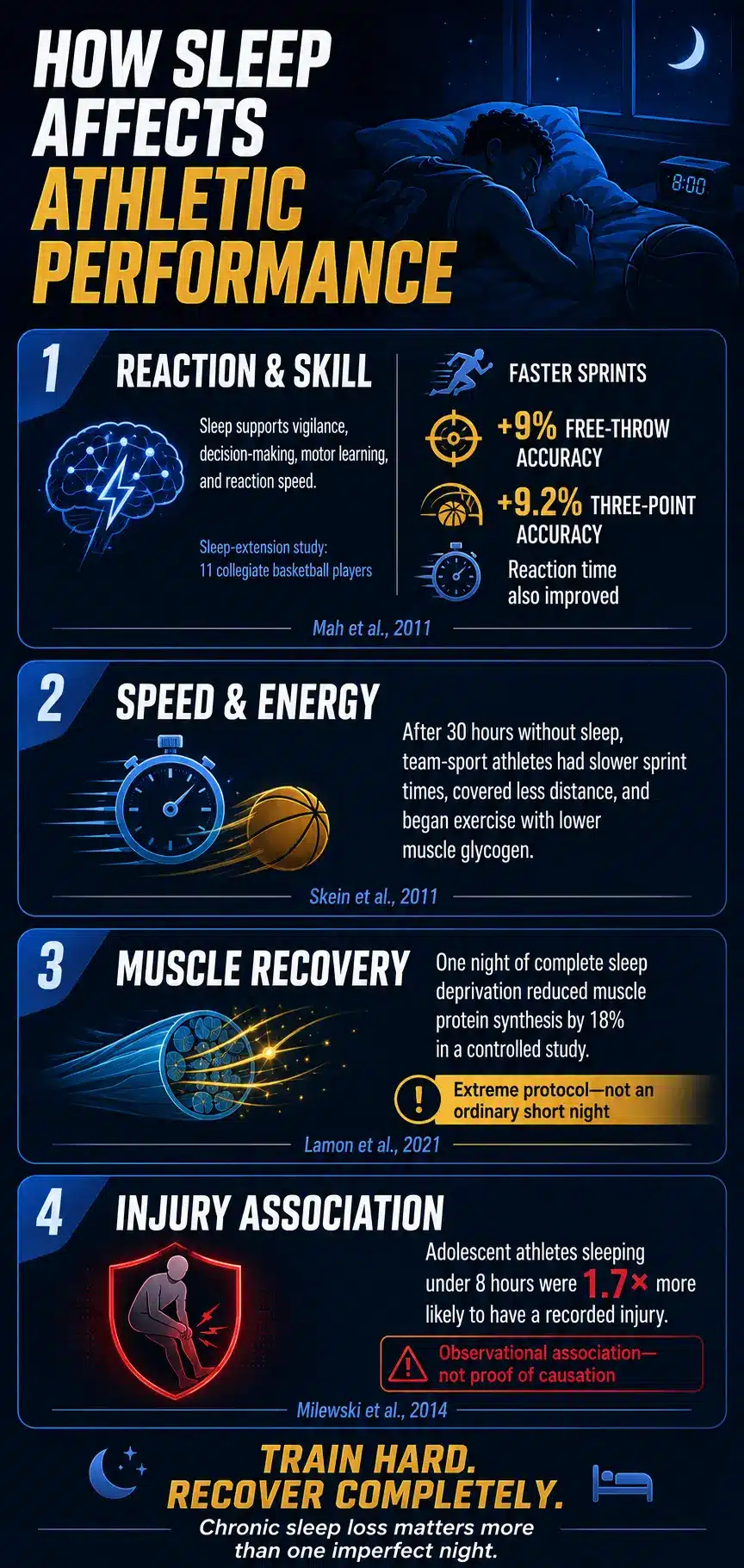
Besides managing training volume and intensity, I consider sleep the most important factor in reducing workout fatigue.
Athletes face particular challenges from late competitions, early practices, travel, and stress, which make protecting sleep opportunities an important part of fatigue management (Walsh et al., 2021).
Seven to nine hours is a useful starting range for many adults, but individual needs vary, and demanding training periods may require more.
Evaluate your sleep alongside daytime alertness, how refreshed you feel when waking, and your ability to handle your normal workload.
To make that sleep opportunity more consistent, establish a realistic bedtime and wake-up time, keep your bedroom cool and dark, and give yourself a short transition away from work or stimulating activities.
My guide to sleep optimization for athletes explains how to adapt these habits around training and competition.
Caffeine timing also deserves attention, especially if you use coffee or pre-workout supplements for evening sessions.
A controlled study found that 400 mg of caffeine disrupted sleep even when taken six hours before bedtime, supporting an earlier cutoff for substantial doses (Drake et al., 2013).
Try moving your last caffeine intake at least six to eight hours before bed, and earlier if you remain sensitive to its effects.
Consider both the amount and timing rather than assuming that falling asleep easily means caffeine has no effect on your sleep.
Fuel Your Workouts to Support Energy and Recovery
To manage workout fatigue, make sure your food intake supports both your exercise and the recovery that follows.
Skipping meals, sharply restricting carbohydrates, or increasing training without adjusting your eating habits can leave you underprepared for demanding sessions.
Protein supplies amino acids for muscle repair, while carbohydrates help replenish glycogen, the stored carbohydrate your muscles use during exercise.
Meeting your overall energy needs and adjusting these nutrients to your workload are central sports nutrition basics for supporting performance and recovery (Thomas et al., 2016).
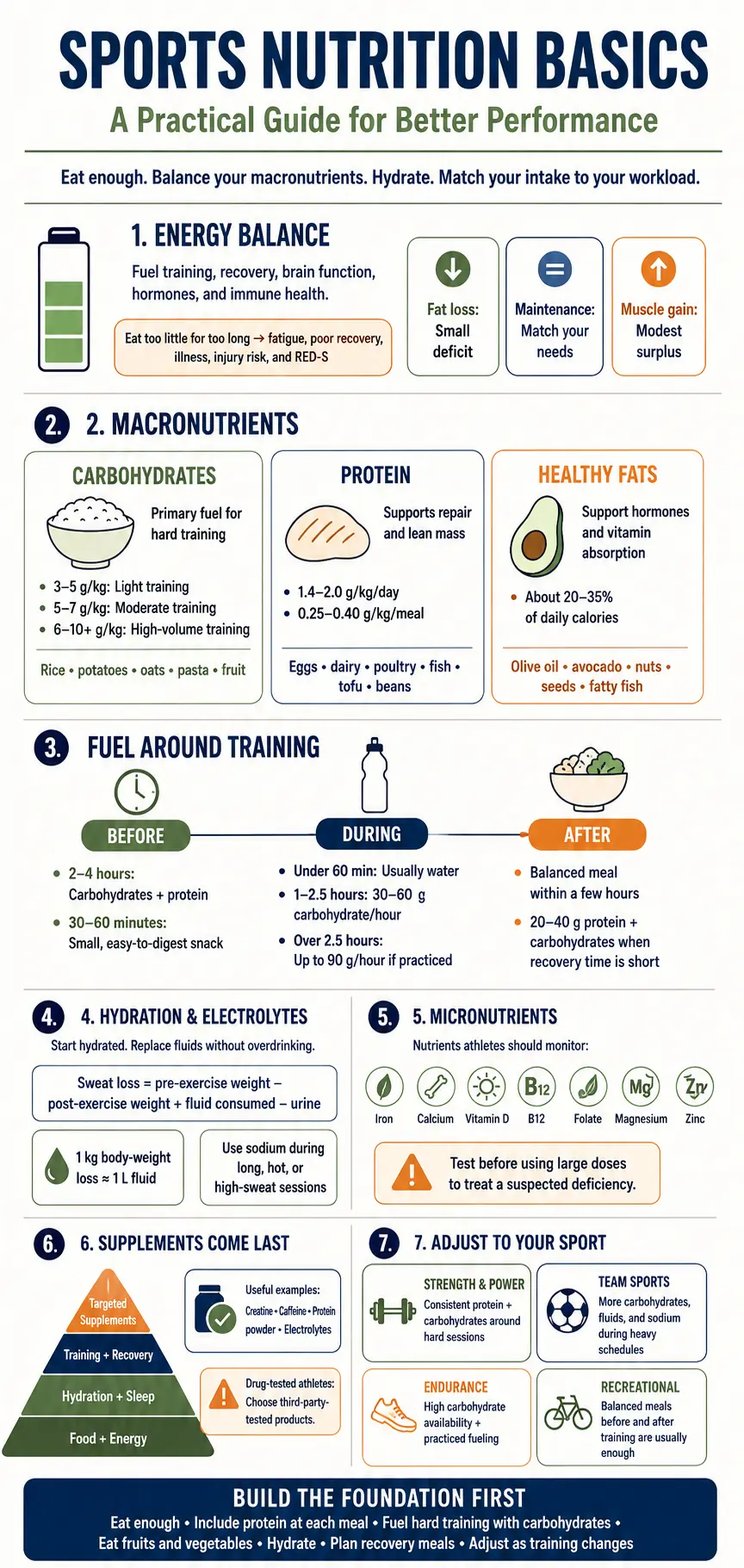
Before training, choose familiar foods that provide carbohydrates and, when comfortable, some protein.
Oatmeal with Greek yogurt, eggs and toast, or a turkey sandwich can work when you have a few hours to digest, while a banana or toast may be more comfortable closer to exercise.
Afterward, plan a meal containing protein, carbohydrates, and fruit or vegetables.
Rice with chicken and vegetables, potatoes with fish, or yogurt with oats and fruit are straightforward options that help make recovery nutrition part of your normal routine.
Eating promptly becomes more useful when another demanding session is scheduled later that day or early the next morning.
When you have longer to recover, consistently meeting your daily nutrition needs matters more than eating at an exact minute after your workout (Thomas et al., 2016).
Match Hydration and Electrolytes to Your Sweat Losses
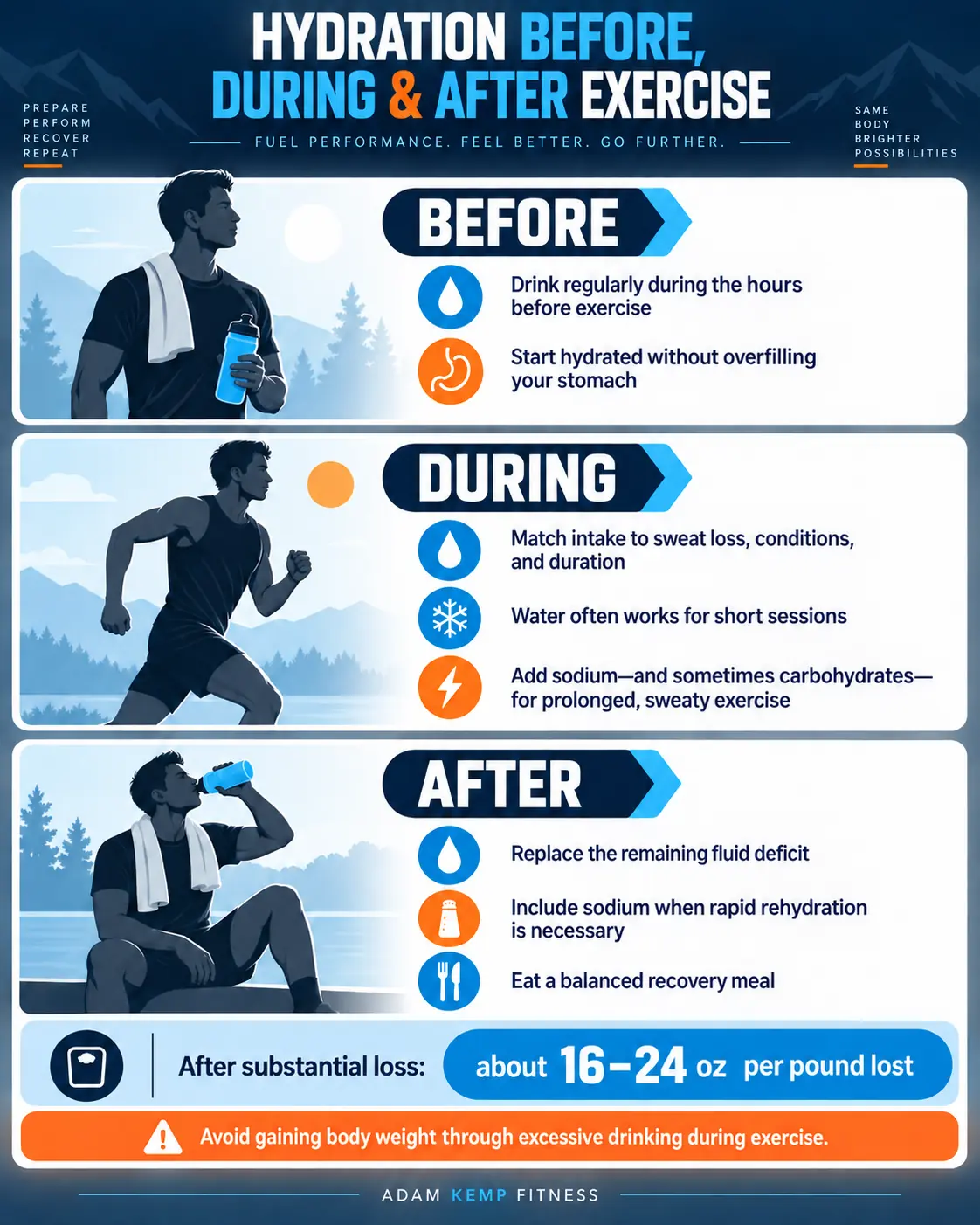
Hydration deserves attention when workouts feel unusually difficult, particularly during long sessions or exercise in the heat.
Substantial fluid losses can increase cardiovascular and temperature-regulation demands, making it harder to maintain performance (McDermott et al., 2017).
Start with regular fluid intake throughout the day and during exercise.
Thirst, changes in your usual urine color, and body-weight changes around sweaty sessions can help you identify patterns, although no single indicator gives a complete picture of your hydration status.
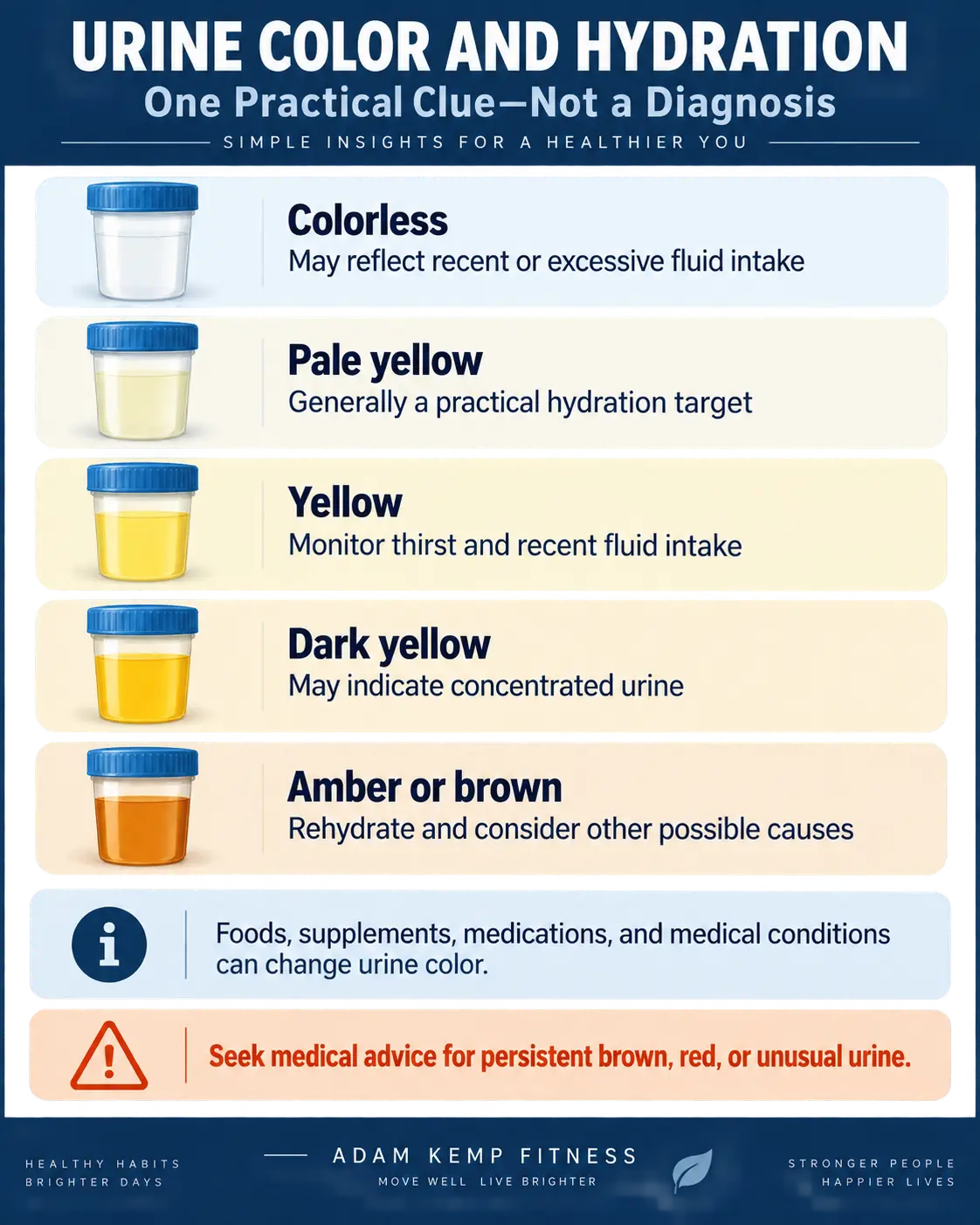
For short sessions in comfortable conditions, water and your regular meals are often sufficient.
Longer practices, hot conditions, and heavy sweating may make a sodium-containing drink useful, while carbohydrates in a sports drink can also provide fuel during demanding exercise.
My approach to hydration for athletes is to consider the session, environment, and amount of sweating before choosing what to drink.
The goal is to replace what you need without forcing excessive fluid intake, as overdrinking can also pose health risks (McDermott et al., 2017).
Choose Supplements That Support Your Training Needs
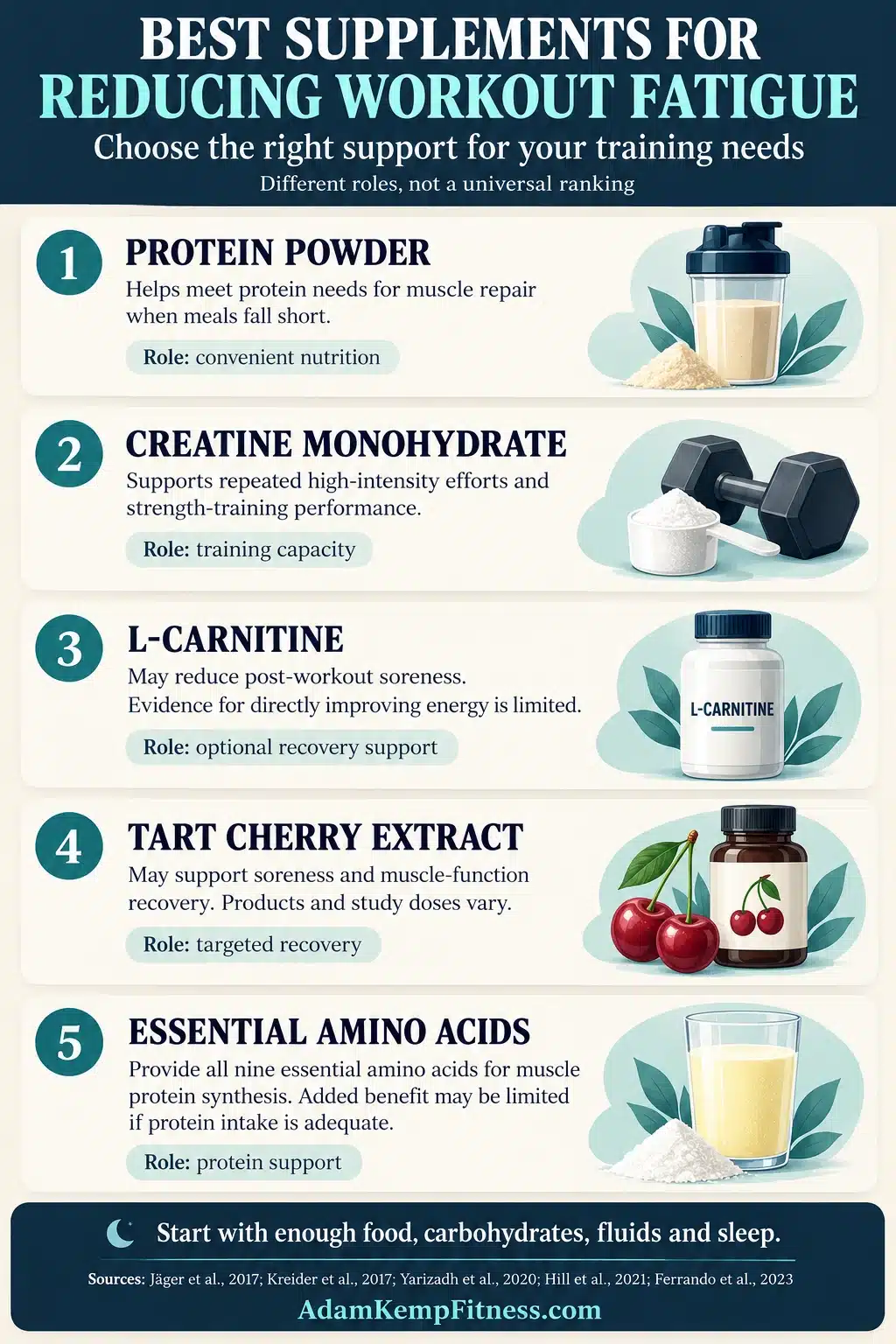
The right supplements can support your workout fatigue management plan by helping you meet nutritional needs, maintain training quality, or recover from demanding exercise.
Start with the specific benefit you need, then choose a supplement that fits your diet and training schedule.
- Protein powder: Whey, casein, or a well-formulated plant protein can make it easier to meet your daily protein needs when meals are inconvenient or your appetite is low. Its main value is supplying protein for muscle repair and adaptation, especially when your usual intake falls short (Jäger et al., 2017).
- Creatine monohydrate: Taking approximately 3–5 grams daily supports the rapid energy system used during lifting, sprinting, and repeated explosive efforts. Consistent supplementation can improve high-intensity exercise capacity and training adaptations, making it particularly useful for strength training and court sports (Kreider et al., 2017).
- L-carnitine: Research suggests supplementation may reduce post-exercise soreness and certain markers of muscle damage, although findings come from a relatively small collection of studies. Consider it an optional recovery aid, with less established benefits for directly improving workout energy or performance (Yarizadh et al., 2020).
- Tart cherry extract: Tart cherry products may support recovery of muscle function and reduce soreness after strenuous exercise. Studies use different juices, concentrates, and powders, so you shouldn’t assume an extract capsule will have the same effects as a studied product (Hill et al., 2021).
- Amino acid supplements: Essential amino acid supplements provide all nine essential amino acids needed to support muscle protein synthesis and may be convenient when eating a protein-rich meal is difficult. Prioritize complete protein or an EAA formula over BCAAs alone, while recognizing that additional benefits are less certain when you already consume enough high-quality protein (Ferrando et al., 2023).
To manage workout fatigue, base your supplement choices on the demands you actually face, rather than adding every recovery product at once.
Keep adequate food, carbohydrates, hydration, and sleep at the center of that plan.
Use Saunas and Ice Baths to Support Workout Recovery
Saunas and ice baths can play a useful role in managing workout fatigue when you choose them around your training goals and competition schedule.
In my own basketball recovery routine, I generally prefer sauna sessions earlier in the week for relaxation and cold plunges closer to games when I want my legs to feel fresher.
Saunas: Consider the Added Heat Stress
I find sauna bathing helpful for relaxing after training, particularly when I have a couple of days before my next game. However, research on post-exercise heat exposure shows mixed effects on performance recovery, so feeling more relaxed does not necessarily mean your strength or energy has fully recovered (Ahokas et al., 2025).
To make sauna use support your recovery, account for the additional heat and sweating it adds to an already demanding day. Keep sessions comfortable, replace lost fluids, and shorten or skip the sauna if you finish training dehydrated, overheated, or unusually exhausted.
Repeated heat exposure may also support heat acclimation and certain endurance adaptations, but those benefits develop over time and should be considered separately from immediate fatigue relief (Ahokas et al., 2025).
Ice Baths: Prioritize Timing and Your Training Goal
Ice baths have stronger evidence for reducing post-exercise soreness and improving perceived recovery after demanding exercise. A meta-analysis also found small improvements in muscular power recovery at 24 hours, although strength recovery did not consistently improve (Moore et al., 2022).
That makes cold-water immersion worth considering during congested competition schedules, when feeling ready for the next game is a priority. Personally, I am more likely to use an ice bath the day before a game because I often notice that my legs feel fresher afterward.
If building muscle is your main goal, avoid making an ice bath immediately after every strength workout a routine habit. A meta-analysis suggests that repeated cold-water immersion immediately after resistance training may modestly reduce muscle growth, although the available studies have limitations and do not establish an ideal waiting period (Piñero et al., 2024).
My approach to choosing between a cold plunge and sauna for recovery starts with what I need from the next few days of training. Use your schedule, recovery needs, and response to each method to decide whether either deserves a place in your workout fatigue management plan.
Keep Active Recovery Easy and Purposeful
An active recovery day gives you an opportunity to move comfortably while keeping training demands low.
A short walk, gentle mobility routine, or easy bike ride can be a practical option when you want movement without another demanding workout.
For example, try 10 to 20 minutes at an effort level that lets you talk comfortably, then assess how you feel afterward.
Treat that as a starting point; you can shorten or skip it when additional rest feels more appropriate.
The goal is to finish without adding meaningful exhaustion or soreness.
If an easy ride turns into intervals or your mobility routine becomes a demanding strength session, adjust the activity to match the recovery day you intended.
For localized soreness, foam rolling and other muscle recovery tools are another option with evidence of modest benefits for post-exercise muscle pain, although effects on restoring performance are generally small (Wiewelhove et al., 2019).
Choose recovery activities based on the specific problem you want to address, whether that is stiffness, discomfort, or difficulty relaxing.
Keep the routine manageable enough that it leaves time for eating well, sleeping, and preparing for your next session.
Use Saunas and Ice Baths to Support Workout Recovery
Saunas and ice baths can play a useful role in managing workout fatigue when you choose them around your training goals and competition schedule.
In my own basketball routine, I generally prefer sauna sessions earlier in the week for relaxation, and cold plunges closer to games to keep my legs feeling fresh.
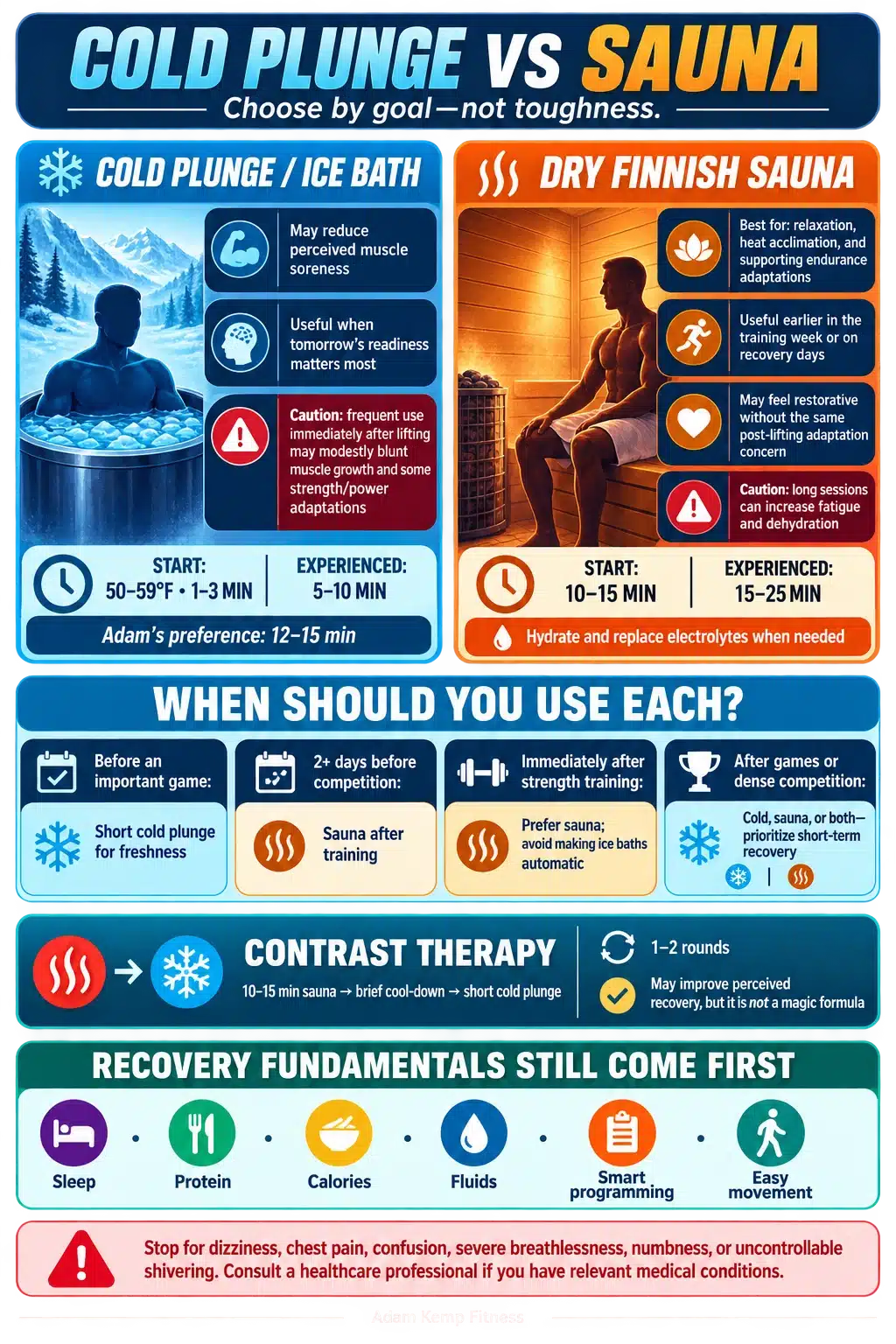
My approach to choosing between a cold plunge and sauna for recovery starts with what I need from the next few days of training.
Use your schedule, recovery needs, and responses to each method to decide whether each deserves a place in your workout fatigue-management plan.
Saunas
I find sauna bathing helpful for relaxing after training, particularly when I have a couple of days before my next game.
However, research on post-exercise heat exposure shows mixed effects on performance recovery, so feeling more relaxed does not necessarily mean your strength or energy has fully recovered (Ahokas et al., 2025).
To make sauna use support your recovery, account for the additional heat and sweating it adds to an already demanding day.
Keep sessions comfortable, replace lost fluids, and shorten or skip the sauna if you finish training dehydrated, overheated, or unusually exhausted.
Repeated heat exposure may also support heat acclimation and certain endurance adaptations, but those benefits develop over time and should be considered separately from immediate fatigue relief (Ahokas et al., 2025).
Ice Baths
Ice baths have stronger evidence for reducing post-exercise soreness and improving perceived recovery after demanding exercise.
A meta-analysis also found small improvements in muscular power recovery at 24 hours, although strength recovery did not consistently improve (Moore et al., 2022).
That makes cold-water immersion worth considering during congested competition schedules, when feeling ready for the next game is a priority.
Personally, I am more likely to use an ice bath the day before a game because my legs often feel fresher afterward.
If building muscle is your main goal, avoid making an ice bath immediately after every strength workout a routine habit.
A meta-analysis suggests that repeated cold-water immersion immediately after resistance training may modestly reduce muscle growth, although the available studies have limitations and do not establish an ideal waiting period (Piñero et al., 2024).
Know When Workout Fatigue Needs Medical Attention
Persistent workout fatigue deserves medical attention when it remains unexplained, affects daily life, or continues despite sensible changes to training and recovery.
Conditions such as chronic fatigue syndrome, iron-deficiency anemia, thyroid disorders, and sleep apnea, along with medication effects and mental health concerns, can contribute to ongoing tiredness (National Health Service [NHS], n.d.-b).
Arrange an appointment if fatigue lasts for several weeks, your exercise tolerance keeps declining, or you notice additional changes such as unintended weight loss, persistent palpitations, or disrupted breathing during sleep.
A clinician can review your symptoms, nutrition, medications, and training history to decide whether testing is appropriate.
Chest pain during exercise also needs prompt medical assessment.
Stop exercising and seek emergency care for sudden chest pain that does not resolve, particularly when accompanied by shortness of breath, sweating, or lightheadedness (NHS, n.d.-a).
Final Thoughts: Build a Sustainable Plan for Managing Workout Fatigue
Managing workout fatigue starts with understanding what your current schedule demands and building recovery habits that fit those demands.
My experience in professional basketball has taught me to evaluate strength training, practices, games, meals, sleep, and travel together when deciding how to prepare for the next session.
To put that approach into practice, keep a simple record of your workouts, energy, sleep, and how difficult familiar exercises feel.
Use those observations to identify a practical adjustment, such as reducing extra sets, preparing food before a busy day, or creating more time for sleep.
The goal is to maintain a routine that supports progress while giving you room to respond when your needs change.
Paying attention to those patterns makes it easier to train consistently and address workout fatigue before it repeatedly disrupts your plans.
This website does not provide medical advice. This website site does contain affiliate links, and purchases may earn a commission.
Read my Medical Disclaimer, Review Disclaimer, and Publishing Policies for more details. Use of this site indicates acceptance of these terms.
Check Out Some of My YouTube Videos Below, and Please Follow on YouTube for More Educational Health and Fitness Content!
![Subscribe to @AdamKempFitness for more training, general health, recovery, and nutrition tips from a professional basketball player with a master’s degree in Nutrition Education! 🏀💪
Seated Max Vertical Jumps From a Box are one way I train explosive takeoff power with maximum intent on every rep.
Starting seated, with a pause and minimal rocking or dipping, reduces the contribution of a quick countermovement and emphasizes producing force from a relatively static position (National Strength and Conditioning Association [NSCA], 2020).
For athletes, the training goal is explosive lower-body force production and coordinated extension through the hips, knees, and ankles. I use this variation to practice driving hard into the floor and accelerating my body upward.
My preferred setup: 3 sets of 3 reps or 4 sets of 2 reps, supersetted with a strength or power exercise.
I keep the reps low, reset between jumps, and take longer rest periods so I’m ready to attack every takeoff. Even when pairing exercises, I give myself enough recovery to keep the jumps sharp.
Every rep has one goal: jump as high as possible. I focus on an explosive takeoff, a controlled landing, and consistent quality throughout the session.
Save this for your next power workout! 🚀
Reference: NSCA. (2020). Stretch-shortening cycle.
#VerticalJump #JumpTraining #ExplosivePower #AthleticPerformance #BasketballTraining](https://www.adamkempfitness.com/wp-content/plugins/feeds-for-youtube/img/placeholder.png)


