Best Supplements for Joint Health and Support That Work
 Reading Time: 11 minutes
 The best supplements for joint health are those that match your needs, are supported by relevant research, and complement the habits that keep you moving.
Certain supplements may improve joint comfort, but results depend on the ingredient, formulation, and underlying cause of pain (National Center for Complementary and Integrative Health [NCCIH], n.d.).
Although I don’t have the experience or understanding of an older person who has battled joint problems for years, if not decades, I am no stranger to joint problems fomr my career as a professional basketball player, and I have been looking for the best supplements for joint health and support for years as a way to profilactively prevent long-term joint pain and support my current goals.
A sore knee after basketball, stiff hips after sitting, or shoulders that complain during pressing can make a joint supplement sound appealing, but I always reccomend you first consider what has changed in training, recovery, or daily activity before deciding what to add.
Throughout my professional basketball career, keeping my joints healthy has been essential, and I view supplements for joint health as part of a larger system that includes strength training, adequate nutrition, sleep, and knowing when to adjust my workload.
Below, I explain how I evaluate the best supplements for joint health and support, where the evidence is promising, and which popular ingredients deserve more realistic expectations.
Medical & Affiliate Disclosure: This article is for educational purposes and does not replace medical advice; consult your healthcare provider before starting supplements. It may contain affiliate links, meaning I may earn a commission on qualifying purchases at no additional cost to you.


Last update on 2026-09-26 / This article includes affiliate links/Images via Amazon Product Advertising API. I may earn commissions on purchases made through these links.
Do Supplements for Joint Health Really Work?
Some joint supplements can help reduce pain or improve function in specific populations, but symptom relief does not necessarily mean damaged cartilage has been repaired.
Research on joint structure remains inconsistent, even for widely used ingredients such as glucosamine and chondroitin (NCCIH, n.d.).
The distinction matters because osteoarthritis, rheumatoid arthritis, and exercise-related discomfort are different problems.
Evidence that a supplement helps one group should not automatically be applied to everyone with sore joints.
For example, collagen research includes physically active adults with activity-related knee discomfort, while much of the joint-related research on fish oil involves rheumatoid arthritis (Zdzieblik et al., 2021; Office of Dietary Supplements [ODS], n.d.).
I judge a joint supplement by whether it helps someone move and function better, not by how many ingredients appear on the label.
Best Supplements for Joint Health and Support
These five options deserve different levels of consideration depending on your symptoms and goals.
They are not interchangeable, and I would not recommend starting all five together.
1.) Collagen Peptides
Hydrolyzed collagen peptides are worth considering for active adults with recurring joint discomfort.
In a randomized trial, 5 grams of specific collagen peptides daily for 12 weeks reduced activity-related knee pain more than placebo in young, physically active adults (Zdzieblik et al., 2021).
That finding supports a potential role in joint comfort, but it does not establish that every collagen powder works equally well or prevents injuries.
How Much Collagen Should You Take?
Trials have used different formulations and amounts; 5–10 grams daily has been studied for activity-related joint discomfort.
Consistent use over several months is a more reasonable expectation than immediate relief (Khatri et al., 2021).
Should You Take Collagen With Vitamin C Before Exercise?
Vitamin C supports normal collagen synthesis, and a small study found that 15 grams of vitamin C-enriched gelatin taken one hour before exercise increased a blood marker associated with collagen synthesis.
However, it did not demonstrate faster injury healing or establish an optimal timing protocol for joint pain (Shaw et al., 2017).
Taking collagen alongside a vitamin C-containing food is reasonable, but pre-workout nutrition timing should remain optional.
Collagen also has an incomplete amino acid profile, so it should complement adequate dietary protein rather than become your primary muscle-building protein source (Khatri et al., 2021).
What Hydrolyzed Collagen Supplement Should You Buy for Your Joints?
If you are interested in trying a collagen supplement for joint health, I suggest Vital Proteins Collagen Peptides or Purely Inspired Collagen Peptides.
Both of these are quality collagen supplements, but Purely Inspired is a bit cheaper, while Vital Proteins contains added hyaluronic acid and other compounds that may provide additional joint support.
You can read my Vital Proteins Collagen Peptides vs Purely Inspired Collagen Peptides review to learn more about which may be better for you.
Last update on 2026-09-26 / This article includes affiliate links/Images via Amazon Product Advertising API. I may earn commissions on purchases made through these links.
2.) Curcumin
Curcumin is a compound found in turmeric, and research suggests certain turmeric or curcumin extracts may help with knee osteoarthritis symptoms.
In one 12-week randomized trial, a turmeric extract improved knee pain compared with placebo without improving the measured knee effusion-synovitis outcome, illustrating that pain relief and structural or inflammatory changes are not the same thing (Wang et al., 2020).
I consider curcumin a potential adjunct for diagnosed knee osteoarthritis, rather than a general recommendation for every athlete with soreness, but I also regularly take turmeric supplements with high curcumin content because they support a wide variety of other aspects of health, along with joint health.
How Should You Choose a Curcumin Supplement?
Check the exact extract and studied dose, because turmeric powder and concentrated curcumin formulations are not interchangeable.
Absorption-enhancing ingredients such as piperine can change bioavailability, but higher absorption alone does not establish a better product (NCCIH, 2025).
Naturewise Turmeric Curcumin has been my go-to turmeric supplement for years due to its high-quality and cost efficiency.

Last update on 2026-09-26 / This article includes affiliate links/Images via Amazon Product Advertising API. I may earn commissions on purchases made through these links.
What Should You Know About Safety?
Curcumin can cause digestive symptoms, and liver injury has been reported, including with enhanced-bioavailability formulations.
Discuss use with a clinician if you take medication, and stop the supplement and seek medical advice if symptoms such as dark urine or yellowing skin develop (NCCIH, 2025).
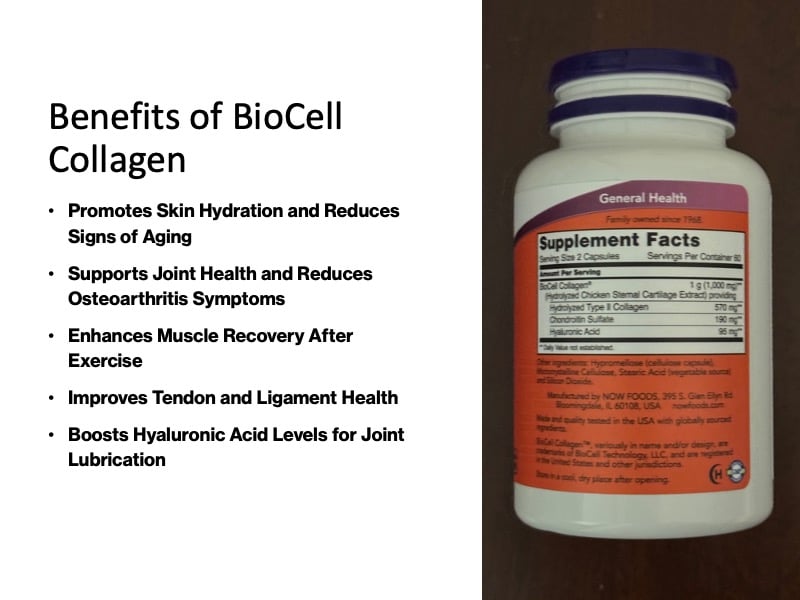
3.) Undenatured Type II Collagen: BioCell Collagen
Undenatured type II collagen, also known by the brand name, BioCell Collagen, including the branded ingredient UC-II, differs from hydrolyzed collagen peptides.
Its proposed action involves immune tolerance rather than supplying gram-sized amounts of collagen amino acids, although its mechanism and clinical role need further investigation (Lugo et al., 2016).
In a randomized trial involving 191 people with knee osteoarthritis, 40 milligrams of the UC-II ingredient daily improved overall osteoarthritis symptom scores compared with placebo after 180 days.
The study had manufacturer involvement, so I view it as encouraging evidence that still benefits from independent confirmation (Lugo et al., 2016).
How Much Undenatured Type II Collagen Should You Take?
The commonly studied UC-II dose is 40 milligrams of the ingredient daily, which is not the same as 40 milligrams of purified undenatured collagen.
Choose a product that identifies the ingredient and dose rather than assuming any supplement labeled “type II collagen” matches the research (Lugo et al., 2016).
A small capsule and a scoop of collagen peptides serve different purposes; comparing their milligram amounts alone tells you little about their likely effects.
If you’re interested in adding an undenatured Type II collagen supplement to your routine, I regularly use NOW Foods BioCell Collagen and consider it one of the best BioCell collagen supplements.
Last update on 2026-09-26 / This article includes affiliate links/Images via Amazon Product Advertising API. I may earn commissions on purchases made through these links.
4.) Omega-3 Fish Oil
Fish oil provides the omega-3 fatty acids EPA and DHA, and although it provides a variety of potential health benefits, its joint-related evidence is more relevant to rheumatoid arthritis, where supplementation alongside standard treatment may reduce the need for pain-relief medication, although effects on pain, swelling, and stiffness are inconsistent (ODS, n.d.).
Additionally, fish oil supplies EPA and DHA, omega-3 fatty acids that help regulate inflammatory signaling and may support joint comfort (Office of Dietary Supplements, n.d.).
A meta-analysis found modest improvements in osteoarthritis pain and function, suggesting potential benefits beyond rheumatoid arthritis and supporting consideration of fish oil for joint pain management (Deng et al., 2023).
The American College of Rheumatology/Arthritis Foundation guideline conditionally recommends against fish oil for hand, hip, or knee osteoarthritis because supporting evidence is insufficient (Kolasinski et al., 2020).
How Should You Evaluate a Fish Oil Supplement?
Start by reading the combined EPA and DHA amount rather than the total fish oil weight.
A capsule containing 1,000 milligrams of fish oil may provide substantially less than 1,000 milligrams of EPA and DHA (ODS, n.d.).
There is no established fish oil dosage for general joint health, but rheumatoid arthritis studies have evaluated at least 2.7 grams of combined EPA and DHA daily for three months or longer, with evidence of reduced anti-inflammatory medication use rather than consistent pain relief (Lee et al., 2012).
Count the EPA and DHA content, not total fish oil, and discuss these higher doses with your clinician, particularly if you take blood thinners.
Sports Research Omega-3 Fish Oil is my preferred fish oil supplement because it clearly lists the EPA and DHA amounts.
Each softgel provides 690 milligrams of EPA and 260 milligrams of DHA, 950 milligrams combined, within its 1,250 milligrams of fish oil.
Its wild Alaska pollock sourcing and MSC sustainability certification add to its appeal, and I have been very satisfied with using this as a convenient omega-3 supplement option.

Last update on 2026-09-26 / This article includes affiliate links/Images via Amazon Product Advertising API. I may earn commissions on purchases made through these links.
5.) Glucosamine and Chondroitin
Glucosamine and chondroitin are among the most recognizable joint supplement ingredients, but popularity does not settle their effectiveness.
Study results vary, and clinical guidelines disagree about their usefulness for knee osteoarthritis (NCCIH, n.d.).
The American College of Rheumatology/Arthritis Foundation recommends against glucosamine and against chondroitin for knee osteoarthritis, while some European guidance supports specific prescription-grade preparations.
Osteo Bi-Flex Triple Strength is an option worth considering if you and your healthcare provider decide to try a glucosamine and chondroitin supplement.
Its two-tablet daily serving combines glucosamine with Joint Shield 5-LOXIN Advanced, a Boswellia serrata extract, offering a convenient combination formula.
Last update on 2026-09-26 / This article includes affiliate links/Images via Amazon Product Advertising API. I may earn commissions on purchases made through these links.
Are They Worth Trying?
I would treat glucosamine and chondroitin as something to discuss with your healthcare provider rather than an automatic first purchase.
If you agree to a trial, set a reassessment date and decide beforehand what improvement would justify the ongoing cost.
Both ingredients can increase bleeding risk with warfarin, and glucosamine may increase blood glucose in some people, so medication use and diabetes management deserve attention before starting either of them (NCCIH, n.d.).
How to Choose the Best Supplements for Joint Pain
Choosing from the best supplements for joint pain starts with understanding the cause of the pain.
My buying process focuses on three questions: does the research match the problem, does the product match the research, and does the result justify the price?
Match the Evidence to Your Symptoms
Choosing the best supplements for joint support starts with evaluating what hurts, what may have caused it, and what the affected tissue needs to recover.
The way discomfort began can provide useful clues: pain after a sudden twist or fall raises different concerns than soreness that develops after increasing your running mileage or jumping volume.
These patterns help guide an assessment, but symptoms alone cannot reliably identify the injured tissue or establish a diagnosis (National Institute of Arthritis and Musculoskeletal and Skin Diseases [NIAMS], n.d.).
Once the likely cause is clearer, ask: What is the main recovery need, and does this supplement have evidence for helping with it?
An injury may require temporary protection followed by rehabilitation to restore strength and movement, while osteoarthritis management emphasizes improving function and controlling symptoms over time (NIAMS, n.d.).
For example, collagen may be worth discussing as an addition to a rehabilitation plan, but research showing changes in collagen-synthesis markers does not prove that it heals a tendon injury.
Likewise, a supplement that reduces osteoarthritis pain has not necessarily repaired cartilage or corrected the reason a joint is being overloaded (Shaw et al., 2017; Wang et al., 2020).
I recommend you look for research that matches the condition, the intended benefit, and the specific ingredient and dose being considered.
A plausible explanation for how something might help is a useful starting point, but measurable improvements in people with a similar problem provide stronger support.
For ongoing or recurring pain, getting an assessment is a better starting point than repeatedly switching products.
Joint pain that disrupts sleep or normal activities, worsens, or keeps returning warrants medical attention (National Health Service [NHS], n.d.).
Check the Ingredient, Dose, and Product Testing
My preference is a product that clearly states each ingredient and amount, making it possible to compare the formula with published research.
I would skip proprietary blends that prevent that comparison.
For competitive athletes, sport-specific third-party certification is particularly valuable.
The USADA recommends NSF Certified for Sport to reduce supplement-related risk, while emphasizing that certification cannot eliminate every risk or prove a product will work (U.S. Anti-Doping Agency [USADA], n.d.).
Track Results Before Buying Again
I always recommend trying one supplement at a time and recording a few practical measures: morning stiffness, discomfort during a familiar activity, and how easily you complete everyday movements.
Agree on a review period appropriate to the ingredient and your condition; roughly 8–12 weeks can be a useful initial checkpoint, although some collagen trials have lasted longer.
Record changes in training and treatment as well; for example, if you reduce your workload, start rehabilitation, and add a supplement at the same time, improvement cannot automatically be credited to the supplement.
How to Build a Strong Foundation for Joint Health
Supplements should support a plan that keeps you moving.
Exercise is strongly recommended for osteoarthritis and joint pain relief, and weight loss is recommended for people with knee or hip osteoarthritis who are overweight or obese (Kolasinski et al., 2020).
In my own approach, that means prioritizing manageable strength training, adjusting workloads when necessary, eating regular balanced meals, and protecting recovery time.
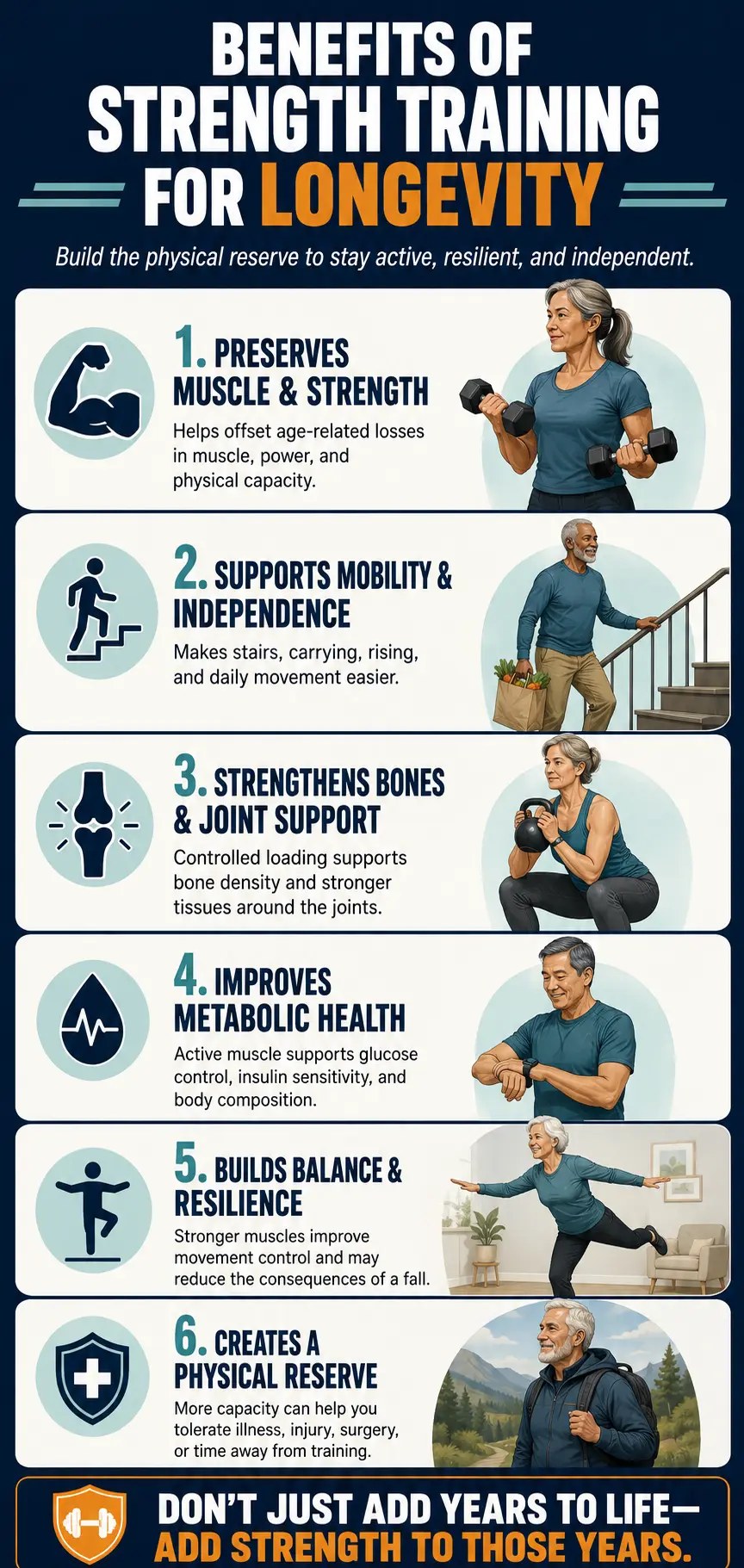
Strength training for longevity is particularly important for bone and joint health as you age.
I would rather make those habits sustainable than depend on an increasingly complicated supplement routine.
If pain keeps limiting your progress, seek help adapting the plan.
A useful joint health strategy should make daily life and training more manageable.
When Joint Pain Needs Additional Medical Attention
Seek urgent medical assessment for a hot, swollen joint or joint pain accompanied by fever or feeling unwell.
Severe joint pain after an injury, inability to bear weight, or numbness after an injury also requires prompt attention rather than a supplement (NHS, n.d.).
Final Thoughts: What Are the Best Supplements for Joint Health?
The best supplements for joint health depend on your symptoms and priorities.
Collagen peptides and undenatured type II collagen have promising, formulation-specific findings, while curcumin may help some people with knee osteoarthritis symptoms (Zdzieblik et al., 2021; Lugo et al., 2016; Wang et al., 2020).
My recommendation is to choose selectively, track how you feel and function, and keep only what provides a worthwhile benefit.
The goal is to build a reliable routine that helps you continue training, moving, and enjoying an active life
Last update on 2026-09-26 / This article includes affiliate links/Images via Amazon Product Advertising API. I may earn commissions on purchases made through these links.
This website does not provide medical advice. This website site does contain affiliate links, and purchases may earn a commission.
Read my Medical Disclaimer, Review Disclaimer, and Publishing Policies for more details. Use of this site indicates acceptance of these terms.
Check Out Some of My YouTube Videos Below, and Please Follow on YouTube for More Educational Health and Fitness Content!