How to Stay Healthy Over the Holidays: Tips and Tricks for Staying Healthy From Halloween Through New Year’s!
 Reading Time: 9 minutes
 Learning how to stay healthy over the holidays starts with making room for both celebration and everyday self-care.
You can enjoy Halloween candy, Thanksgiving dinner, Christmas traditions, and New Year’s festivities while continuing to invest in your health, and enjoying those ddays and activities won’t stop you from staying helathy over the holidays.
My approach is to protect a few useful healthy habits tat I don’t want to lose and I know will carry my overall health and physical condition through the holiday season, enjoy the occasions that matter, and return to my full routine at the next reasonable opportunity.
A holiday meal doesn’t need to become a judgment about your discipline, and a missed workout doesn’t need to determine the rest of your month.
Think of staying healthy over the holidays as practicing flexibility: keep what works, adjust what needs to change, and make returning to your habits part of the plan.
What Does Staying Healthy Over the Holidays Look Like?
When you are considering “how to stay healthy over the holidays,” you first need to remember to give yourself a broader definition of success than a number on the scale or the amount of healthy meals yo eat.
Consider whether you are getting regular movement, eating nourishing meals, sleeping adequately, and making time for people and activities you value.
Healthy eating patterns, physical activity, and sufficient sleep support health throughout the year; these fundamentals remain relevant during the holidays (Centers for Disease Control and Prevention [CDC], 2026).
For a busy season, maintaining your existing healthy habits can be a worthwhile goal.
If you have room to improve something, choose one manageable addition, such as a lunchtime walk or a more consistent bedtime.
How Can You Stay Healthy Over the Holiday Season
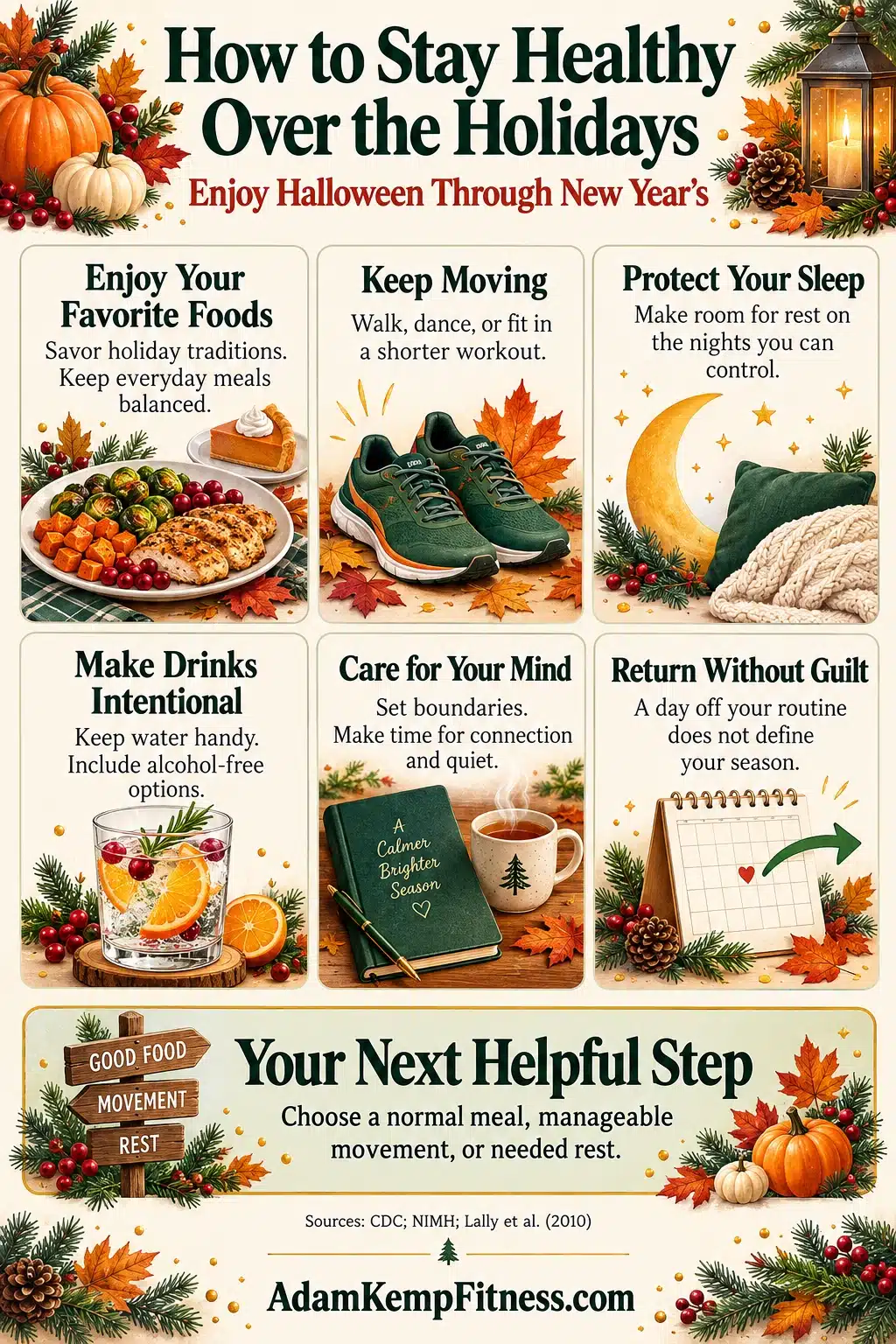
Staying healthy over the holiday season starts with making room for both your favorite traditions and the everyday habits that support your well-being.
From Halloween through New Year’s, aim for a flexible routine that includes nourishing meals, movement, rest, and time to enjoy the people around you.
Give yourself permission to celebrate without treating a change in routine as a failure.
When a holiday meal, busy schedule, or late night changes your plans, focus on the next helpful choice instead of waiting until January to start again.
1.) Choose a Few Healthy Habits You Can Maintain
Start with a short list of habits that fit your actual holiday calendar.
Avoid building a plan that requires every day to unfold perfectly.
For example, choose three priorities:
- Include a fruit or vegetable with your usual meals.
- Make time for a walk or another accessible form of movement.
- Protect enough time for sleep on most nights.
These are starting points, not a complete health prescription or another checklist to feel guilty about.
Adjust them around travel, disability, illness, caregiving, and your individual needs.
Create a smaller version of each habit for busy days: a brief walk, a convenient balanced meal, or a few minutes of winding down before bed.
Let the smaller version count as intentional follow-through.
2.) Enjoy Holiday Foods While Keeping Everyday Meals Familiar
Build your ordinary meals around a variety of foods, including vegetables, fruit, whole grains, and protein sources such as beans, eggs, fish, poultry, or yogurt because a varied, nutritious eating pattern supports long-term health (CDC, 2026).
A practical breakfast might be eggs with toast and fruit, or yogurt with oats and berries.
For lunch, try a sandwich with vegetables, a bean soup, or leftovers with a side of produce.
At a celebration, choose the foods you genuinely look forward to eating. Give yourself time to enjoy them, notice how satisfied you feel, and decide whether you want more.
You do not need to turn a meaningful family recipe into a “diet” version to include it in your holiday plans.
Consider adding variety to the meal instead: vegetables alongside stuffing, fruit alongside breakfast pastries, or beans alongside your favorite main dish.
3.) Keep a Normal Eating Rhythm Around Celebrations
My practical recommendation is to eat your usual meals before a holiday gathering instead of treating the entire day as preparation for one dinner.
If dinner is late, plan an appropriate healthy snack that fits your appetite and schedule.
Try an apple with peanut butter, yogurt, or a small sandwich.
The aim is to arrive ready to enjoy the event without making food management the center of your day.
Afterward, return to your usual eating pattern. Avoid making the next meal a punishment for the previous one.
4.) Make Movement Part of the Celebration
Adults should generally aim for at least 150 minutes of moderate-intensity aerobic activity each week, or an equivalent amount of vigorous activity, plus muscle-strengthening activities on at least two days.
Activity can be divided into smaller sessions, and some activity is better than none (CDC, 2025a).
Use that guidance as a direction to work toward while allowing your schedule to change.
A shorter workout can be the right choice when the alternative is abandoning movement because your full session no longer fits.
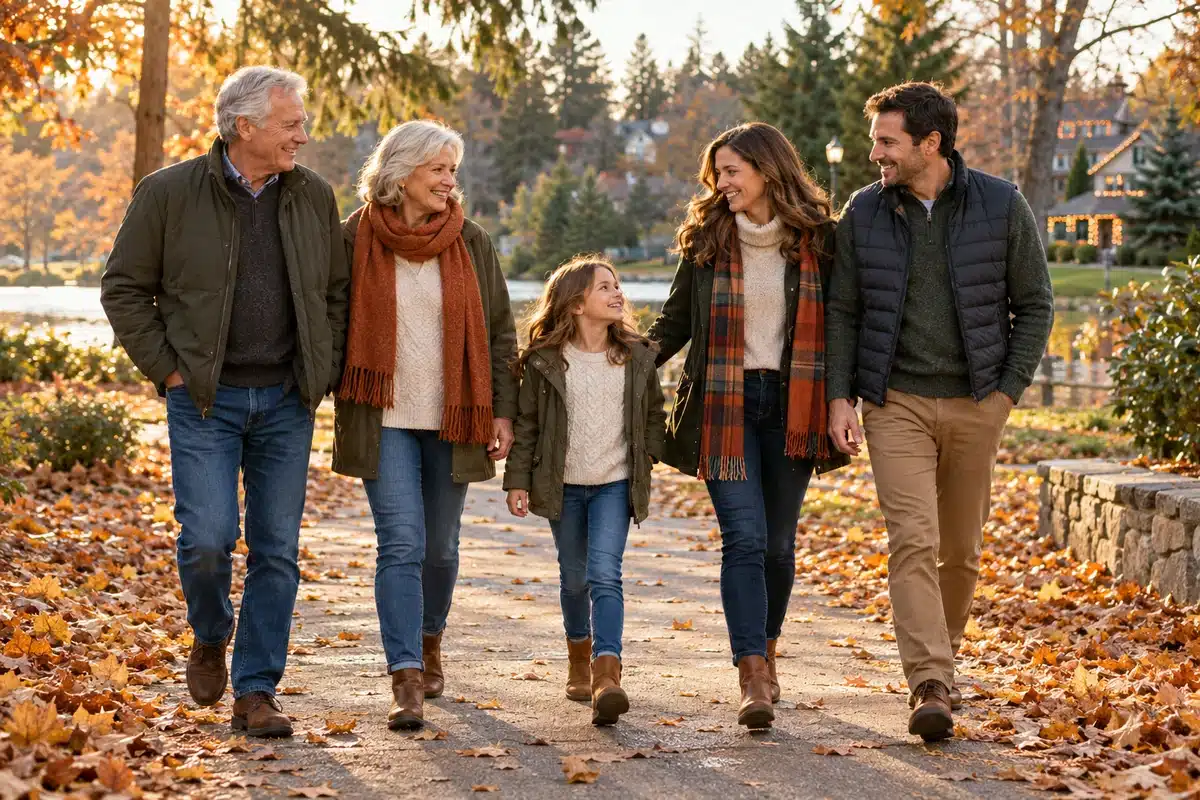
Try a walk to see holiday decorations, a family dance session, an indoor exercise break, or a manageable strength workout.
Choose activities appropriate for your fitness, health, and surroundings.
Treat movement as an enjoyable part of caring for yourself. There is no need to assign exercise as repayment for dessert.
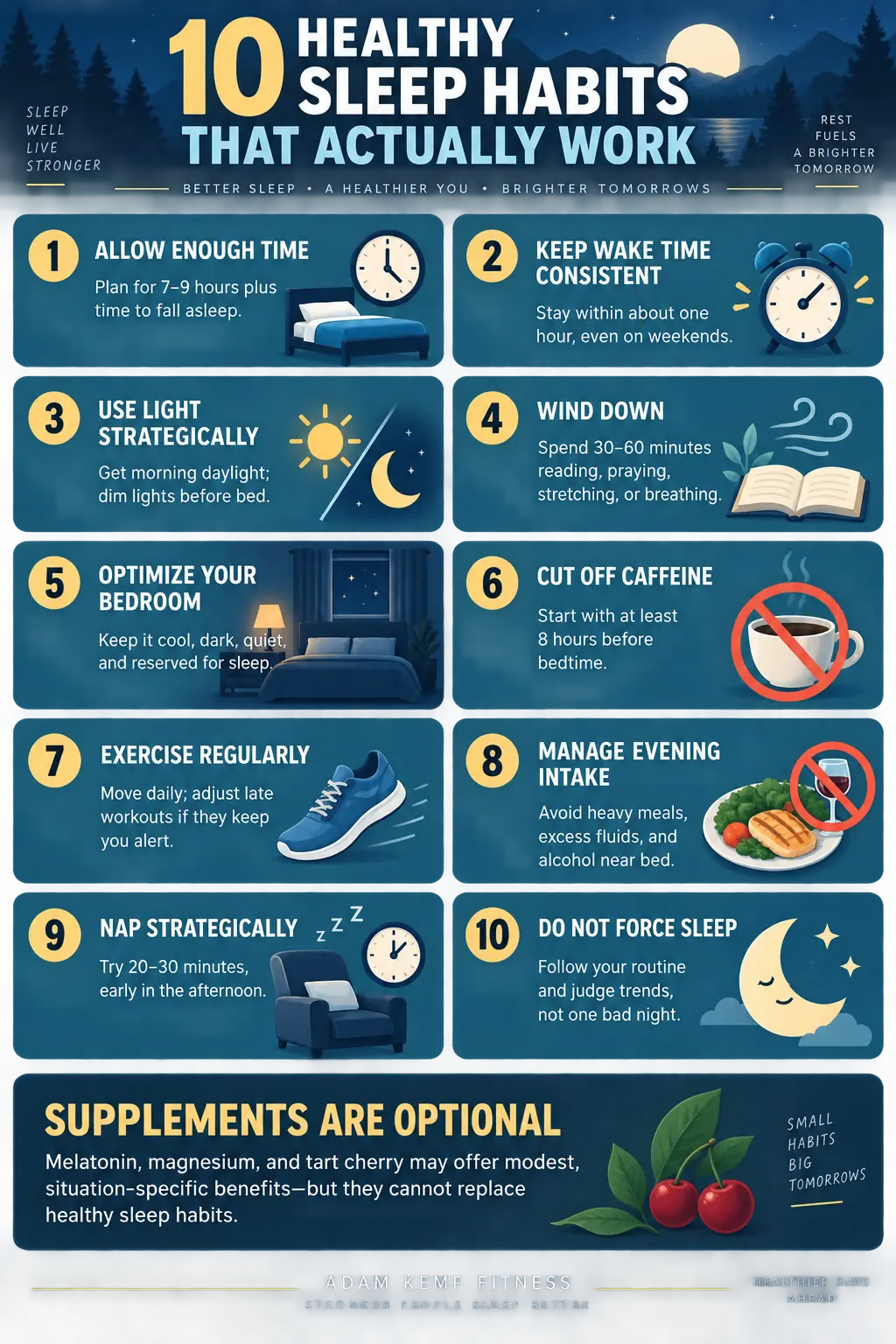
5.) Protect Sleep on the Nights You Can Control
Adults ages 18–60 generally need at least seven hours of sleep nightly, and consistent sleep timing is one recommended sleep habit.
Adequate sleep supports mood, attention, and overall health (CDC, 2024).
Choose the late nights that matter to you, then protect your usual bedtime when you can.
Prepare for the next morning earlier in the evening, and give yourself a brief wind-down period after entertaining.
If you are tired after a celebration, adjust the following day’s expectations.
A packed schedule of errands and an unusually hard workout do not need to become your response to a late night.
For more healpful tips, check out my guide to healthy sleep habits that should help you sleep better through the holiday season:
6.) Make Water and Alcohol-Free Drinks Easy Choices
Keep water accessible during travel, shopping, and gatherings.
At home, put a pitcher on the table; when heading out, bring a refillable bottle.
If alcohol is part of your celebration, decide in advance whether and how much you want to drink, and include alcohol-free days.
Setting goals and tracking drinks are strategies recommended by the National Institute on Alcohol Abuse and Alcoholism (NIAAA, n.d.).
Hosts can offer appealing alcohol-free options and respect guests who decline alcohol without asking them to explain.
NIAAA recommends making nonalcoholic beverages available and supporting guests’ decisions not to drink (NIAAA, 2024).
Sparkling water with citrus, a festive alcohol-free drink, or a warm cup of tea can still feel like part of the occasion.
7.) Protect Your Mental Health and Your Calendar
Along with the other aspects of physical health you must try to maintain during the holidays, you also need to leave room to maintain your mental health and enjoy for quiet time alongside shopping, hosting, travel, and family commitments.
Decide which events matter most, what you can afford, and where you need to say no.
Relaxing activities, realistic priorities, supportive relationships, and challenging unhelpful thoughts are among the self-care approaches recommended by the National Institute of Mental Health (NIMH, 2026).
Choose a practice that feels natural: prayer, journaling, reading, listening to music, or spending time outdoors.
Put it on your calendar with the same intention you give a social event.
You also do not have to feel cheerful throughout the season.
If distress persists or interferes with everyday life, seek support from a qualified professional rather than expecting yourself to manage everything alone (NIMH, 2026).
8.) Do Not Let a Few Off-Routine Days Define the Season
Notice thoughts such as “I already ruined the week” or “I might as well wait until January.”
Replace them with a specific observations, such as: “My routine changed yesterday, and I can make one helpful choice now.”
In a study of everyday habit formation, missing one opportunity to perform a behavior did not meaningfully disrupt the habit-building process.
The study examined relatively simple daily behaviors, so it does not prove that every interruption is inconsequential, but it supports moving away from the idea that one missed day erases your effort (Lally et al., 2010).
My practical takeaway is to make returning easier by deciding what your next ordinary meal, next realistic movement opportunity, or next bedtime will look like.
Measure success partly by your willingness to resume, rather than demanding an uninterrupted streak.
How to Get Back Into Your Routine After a Holiday
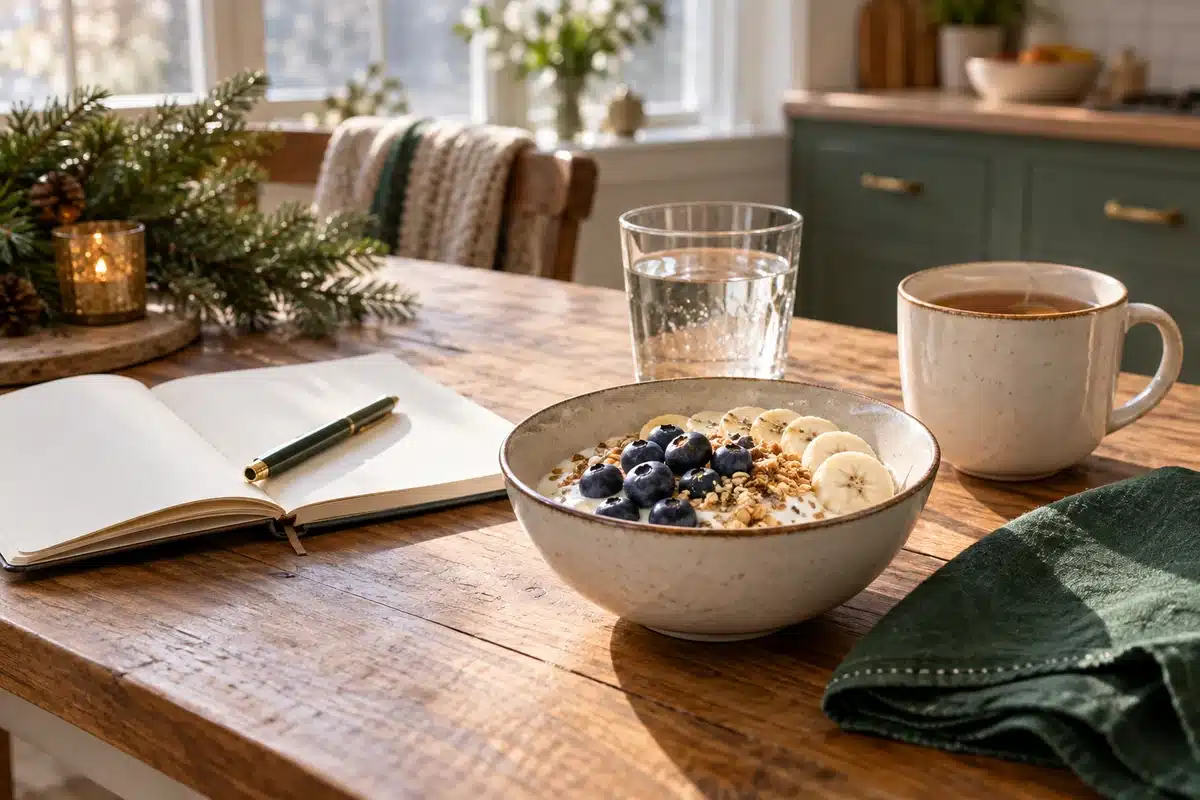
Use a simple return plan whenever celebrations, travel, or an unexpectedly busy week disrupt your othdrwise healthy habits:
- Describe What Happened Without Judging Yourself. “I had several late nights” gives you something specific to address.
- Choose the Next Helpful Action. Eat a normal meal, rest, take a manageable walk, or prepare for bed.
- Restore One Familiar Cue. Put walking shoes by the door or set out breakfast ingredients.
- Plan for the Actual Obstacle. If you ran out of groceries, restock convenient staples; if your schedule changed, choose a new workout time.
- Continue Without Trying to Repay the Past. Resume ordinary meals and appropriately paced activity.
Use this as a flexible planning tool, not a deadline.
If you are ill, injured, or exhausted, returning to appropriate self-care may mean resting before resuming exercise.
Healthy Holiday Hacks From Halloween Through New Year’s

Each holiday presents different opportunities to combine enjoyment with a few familiar habits.
Use the following “Healthy Holiday Hacks” as options that fit your traditions.
| Holiday or Occasion | Enjoy the Celebration | Keep a Helpful Habit |
|---|---|---|
| Halloween | Savor favorite candy, costumes, and time with family. | Eat your usual dinner and include walking if it is accessible and safe. |
| Thanksgiving | Enjoy traditional dishes and an unhurried meal. | Keep breakfast familiar and invite anyone interested on a relaxed walk. |
| December Parties | Choose the events and foods you most look forward to. | Keep groceries available and protect some quieter evenings. |
| Christmas or Other Seasonal Celebrations | Make room for meaningful meals, faith, connection, and rest. | Fit in an easy meal or gentle movement when it suits the day. |
| New Year’s Eve | Celebrate in a way you enjoy. | Plan transportation and include appealing alcohol-free drinks. |
| New Year’s Day | Begin at a comfortable pace. | Resume one familiar habit and choose one realistic goal. |
- For Halloween, decide how you want to enjoy leftover candy beyond the evening itself.
- For Thanksgiving and Christmas, plan a few ordinary meals around the celebration so the next day does not require starting from scratch.
- For New Year’s, choose a goal with a clear action or New Year’s Fitness Resolution, such as walking after lunch three days a week.
Give yourself something you can practice immediately.
Remember That Holiday Health Includes Preventing Illness
Food and exercise are only part of staying healthy over the holidays.
CDC prevention guidance also emphasizes recommended immunizations, hand hygiene, cleaner indoor air, and staying home when sick with a respiratory illness (CDC, 2025b).
Before hosting, consider ventilation and make handwashing easy.
If you become ill, give yourself permission to change plans and protect the people you hoped to celebrate with.
Final Thoughts: Can You Stay Healthy and Enjoy the Holidays?
If you are trying to become a healthy person and are stressing that the holiday seasons is going to ruing your journey, my advice for how to stay healthy over the holidays is to build a routine with room for celebration and a clear way back to everyday habits.
Enjoy the food, traditions, relationships, and rest that make the season meaningful.
Keep the habits that fit, simplify the ones that need adjusting, and choose one area to improve if you have the capacity.
When a day goes differently than planned, let your next decision be an act of care rather than a punishment.
There is no need to wait until January to practice that approach.
Give yourself permission to enjoy the holiday and continue caring for yourself afterward.
This website does not provide medical advice. This website site does contain affiliate links, and purchases may earn a commission.
Read my Medical Disclaimer, Review Disclaimer, and Publishing Policies for more details. Use of this site indicates acceptance of these terms.
Check Out Some of My YouTube Videos Below, and Please Follow on YouTube for More Educational Health and Fitness Content!