
How to Prevent Exercise Burnout Without Losing Progress
 Reading Time: 8 minutes
One of the easiest signs of exercise burnout to overlook is the relief you feel when a workout gets canceled.
If you used to look forward to training and now quietly hope something else comes up, it’s worth asking what changed.
Researchers studying burnout in athletes describe three experiences that can occur together.
You feel physically and emotionally drained, you get less satisfaction from what you accomplish, and a sport you once cared about starts to matter less (Raedeke & Smith, 2001).
Playing professional basketball has taught me to judge a workout by what it helps me do on the court.
During a week with two games and a long bus ride, I still want to maintain my strength, but I also want my legs to feel ready when I go up for a rebound in the fourth quarter.
You can apply that same thinking to your own routine.
To prevent exercise burnout while protecting your progress, identify the work that matters most to your goal, then give yourself room to shorten a session, take a rest day, or bring back an activity you genuinely look forward to.
What is Exercise Burnout?
Exercise burnout is a lasting pattern of physical and emotional exhaustion, a fading sense of accomplishment, and a loss of interest in exercise you once valued.
You can still show up for every workout while experiencing burnout, but you might finish a run you spent weeks building toward and feel little satisfaction, then find yourself dreading the next one before you’ve even taken off your shoes.
One frustrating workout tells you little on its own.
Pay attention to the pattern over time, especially if you regularly feel drained before training and have trouble remembering what you used to enjoy about it.
What Exercise Burnout Actually Looks Like
Exercise burnout is more than temporary soreness or a bad week; it is a prolonged mismatch between the demands of your training and your ability to recover from them.
That mismatch can come from excessive volume, poor sleep, inadequate nutrition, emotional stress, unrealistic expectations, or simply doing a style of exercise you no longer enjoy.
Common signs include declining performance despite consistent effort, persistent fatigue, disrupted sleep, irritability, recurring aches, and a growing sense of dread around training.
Some people respond by trying harder, adding more cardio, reducing food intake, or buying another program. In many cases, that makes the problem worse.
Burnout can also be confused with overtraining syndrome, but they are not identical.
True overtraining syndrome is a more serious and less common condition that may involve prolonged performance decline and broader physiological changes.
Exercise burnout is often driven by behavioral and psychological factors alongside physical fatigue. Both deserve attention, especially when symptoms last for several weeks.
How to Prevent Exercise Burnout
The most reliable way to avoid exercise burnout is to stop treating every workout as a test of character.
A good program gives you a clear purpose for training, enough challenge to create adaptation, and enough recovery to make that adaptation possible.
Train for the Goal You Have Now
Your training should match your current season of life, not the routine you followed when you had fewer responsibilities, better sleep, or a competitive event on the calendar.
A busy professional with limited time may get better results from three focused full-body strength sessions than from six demanding workouts completed inconsistently.
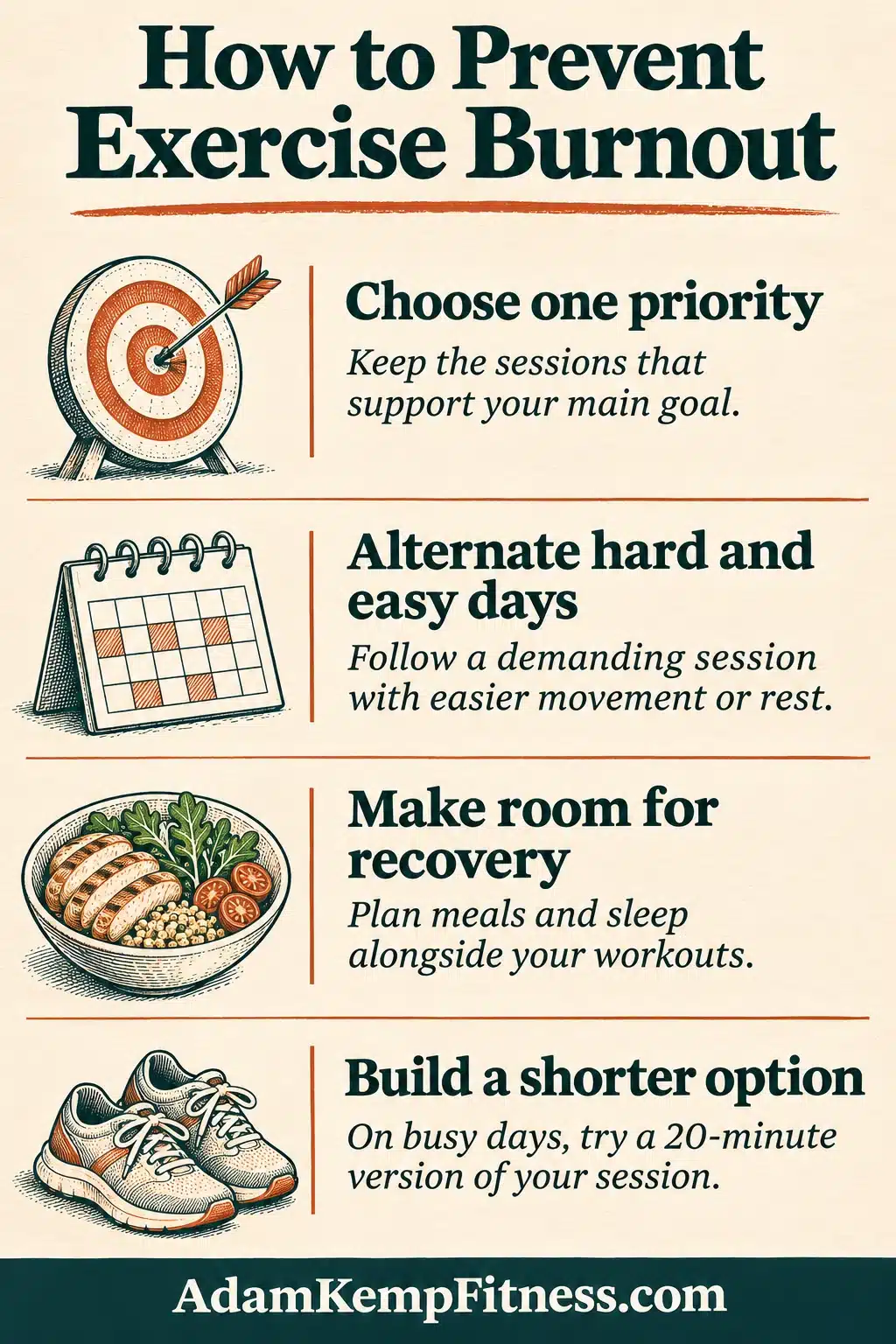
So, choose one or two primary goals for a training block.
You might focus on building strength, improving conditioning, reducing body fat, or preparing for a race.
Trying to maximize all qualities at once often turns every session into an exhausting mixed workout with no clear progression.
Specificity also protects motivation.
When you understand why you are doing a lift, interval, mobility exercise, or recovery walk, the work feels purposeful rather than random punishment.
Use Hard and Easy Days on Purpose
I always try to stick to the phrase “keep the high days high, and the low days low.”
Many people train at the same moderate-hard intensity every day.
That approach is tiring but not always productive.
Your body benefits from contrast: demanding sessions followed by easier training or rest.
For strength training, this might mean two or three challenging sessions each week, with lighter sessions, walking, mobility work, or recreational activity between them.
For endurance training, the principle is similar: most work should be easy enough to recover from, while high-intensity sessions remain limited and intentional.
Do not judge every workout by how exhausted you feel afterward.
A session can be effective without leaving you depleted.
In fact, consistently finishing with one or two reps still available on most working sets is often a smarter long-term strategy than chasing failure every day.
Plan Deloads Before You Need Them
A deload is a planned reduction in training stress, usually by lowering volume, load, intensity, or all three for several days to a week.
It is not a sign that you are losing discipline, but it is a tool that allows discipline to continue.
Athletes often benefit from a lighter week after several weeks of progressively harder training, but the exact schedule depends on the person.
If your sleep, mood, joint health, and performance are stable, you may not need a formal deload on a rigid calendar.
If fatigue is accumulating, take action early rather than waiting for your body to force a complete shutdown.
Remember Recovery Is Part of the Training Plan
You cannot out-program chronically poor recovery.
Exercise adds stress to the body, and stress from work, family obligations, financial pressure, travel, and poor sleep all draw from the same recovery budget.
Sleep is the foundation.
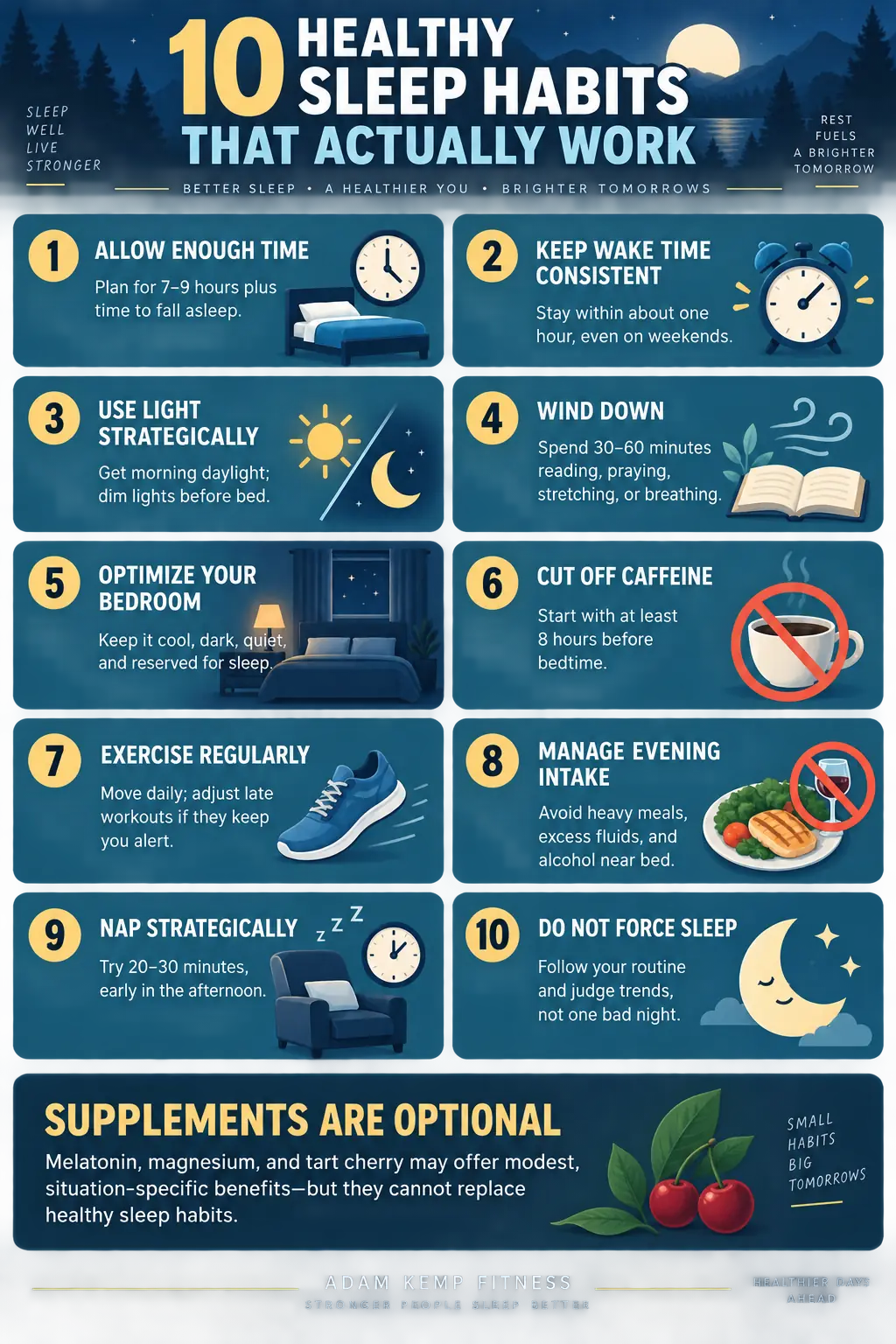
Most adults should aim for seven to nine hours per night, with a consistent sleep and wake schedule whenever possible.
One perfect night will not erase a week of short sleep, but improving sleep consistency can quickly improve training readiness, appetite regulation, and mood.
Nutrition matters just as much.
Under-eating is a common burnout trigger, especially for people trying to lose fat while training intensely.
Protein supports muscle repair, carbohydrates support demanding training, and dietary fats contribute to overall health and hormone function.
You do not need a perfect diet plan, but you do need enough energy to support the work you expect your body to perform.
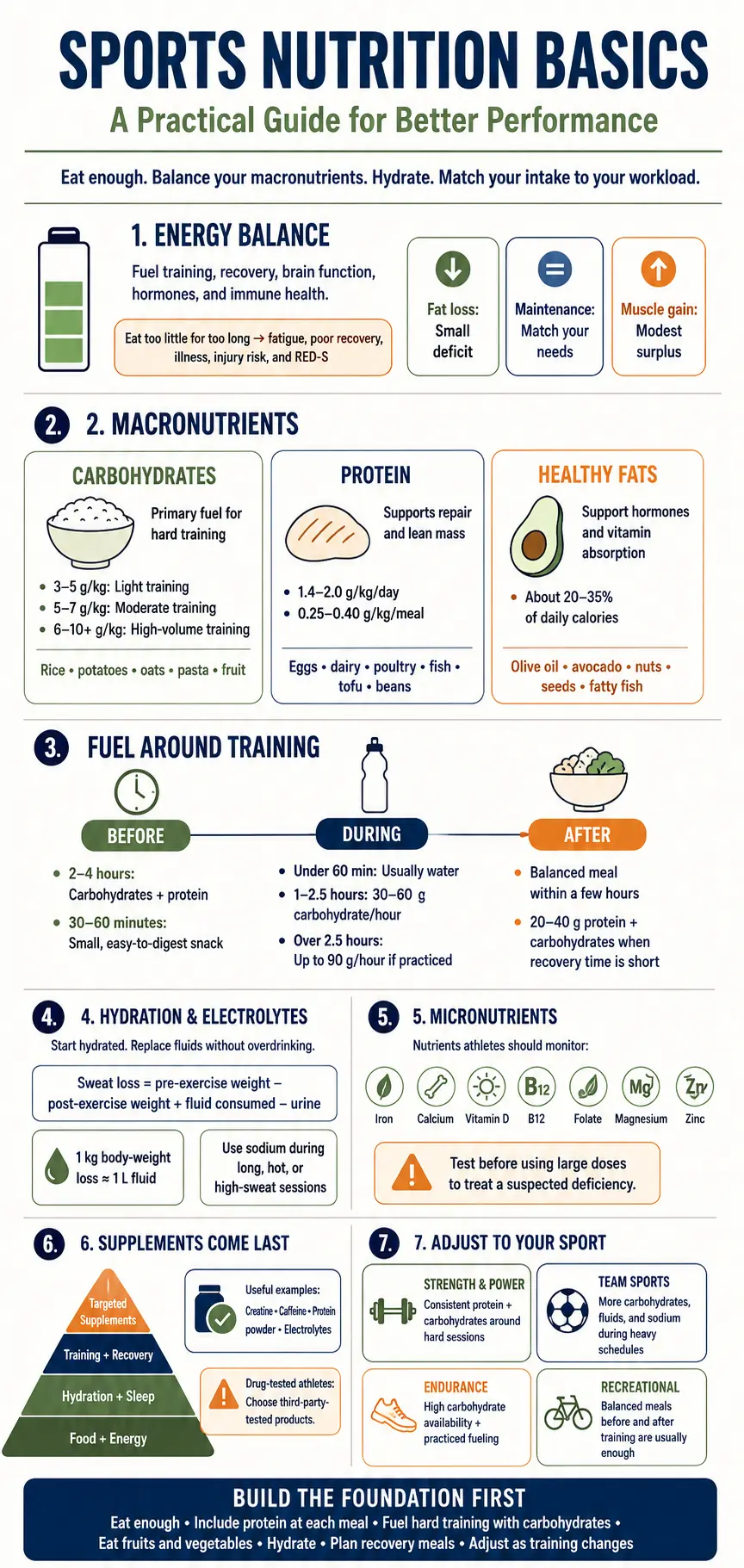
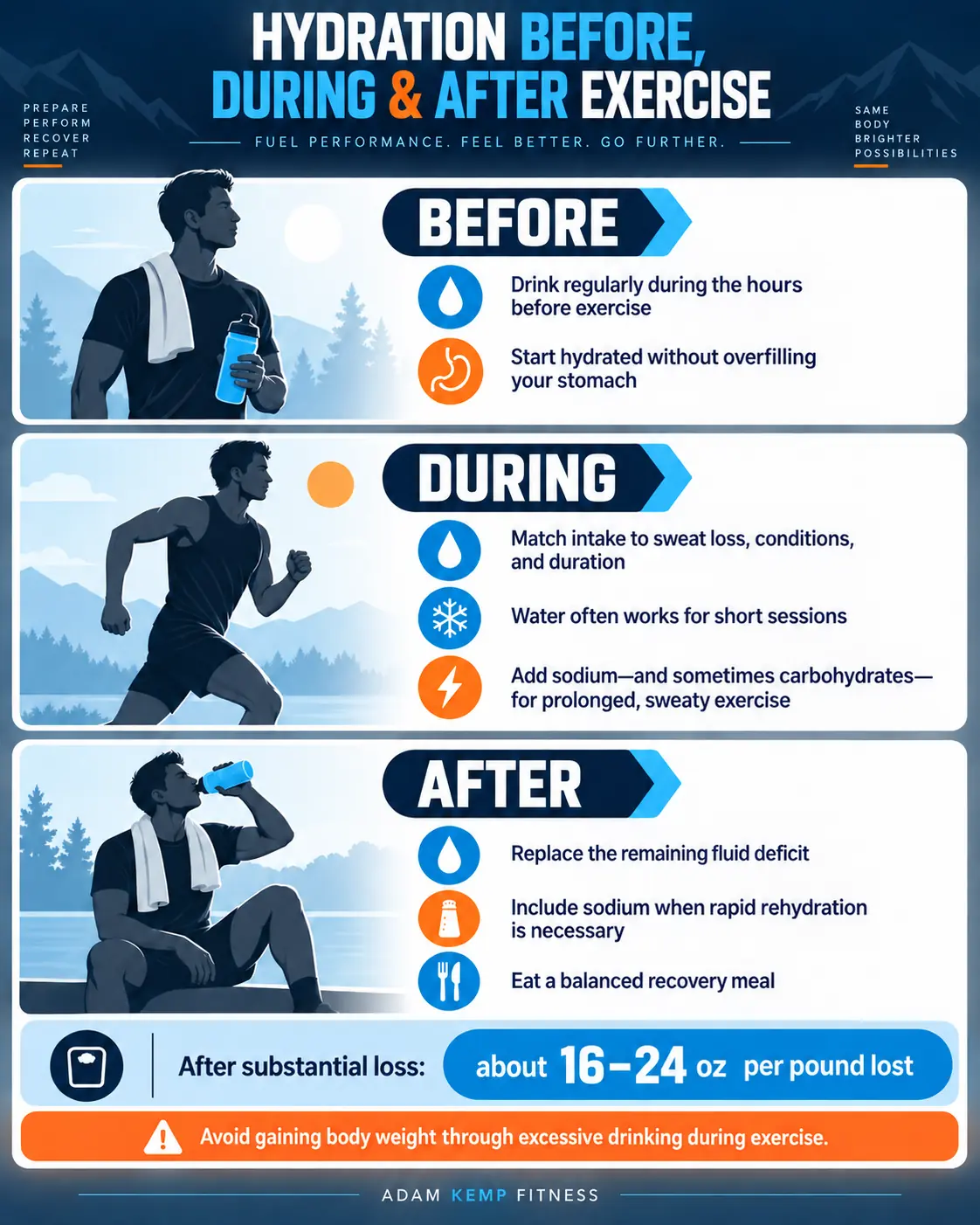
Hydration, especially around long workouts or hot conditions, is another basic factor that is easy to overlook.
If you regularly finish sessions with headaches, unusual fatigue, or poor concentration, examine your fluid and electrolyte intake along with your total workload.
Keep Exercise From Becoming Another Source of Pressure
Discipline is valuable, but rigid thinking can turn a healthy habit into a constant obligation.
Missing one workout does not erase your progress, and a disrupted week does not require punishment through doubled workouts or aggressive calorie restriction.
Build flexibility into your routine before life gets busy.
Have a 20-minute version of your workout for demanding days.
Keep a simple walking plan for periods when heavy training is not realistic.
Know which sessions are essential and which are optional.
These adjustments preserve momentum without asking you to force an unrealistic standard.
It also helps to separate exercise from body-image anxiety.
If every workout is driven by fear of gaining weight or losing progress, training becomes emotionally expensive.
Performance goals can create a healthier focus: add a few pounds to a lift, improve your resting heart rate, complete a hike comfortably, or move with less pain and more confidence.
Change the Stimulus When Motivation Drops
You do not need to abandon structure every time you get bored, but a change of stimulus can restore engagement.
A lifter might spend a few weeks emphasizing dumbbells, sled work, carries, or athletic conditioning.
A runner might add trails, cycling, swimming, or recreational sports.
The trade-off is that constant novelty makes progression difficult.
Keep the core movements or habits that support your main goal, then use variety around the edges.
This approach gives you enough consistency to improve without making every week feel identical.
Training with another person can help as well, provided the relationship supports your actual goals.
A good training partner adds accountability and energy. A competitive partner who pushes you beyond your recovery capacity can contribute to burnout.
Final Thoughts: Best Ways to Prevent Exercise Burnout
To prevent exercise burnout while protecting your progress, pay attention to changes in both performance and enjoyment.
If your usual weights feel heavier across several sessions and you’ve started dreading workouts you once looked forward to, make next week a little easier.
Start with one concrete adjustment.
You might keep the main lift and skip the extra sets, swap an interval session for an easy walk, or take a full rest day and give yourself time for dinner and a good night’s sleep.
If fatigue interferes with daily life, persists despite rest, or comes with unexplained weight loss or significant mood changes, speak with a healthcare professional (NHS, n.d.).
Call emergency services if you faint during exercise, have severe difficulty breathing, or develop chest pain that persists or comes with sweating, lightheadedness, or shortness of breath.
During a long basketball season, I judge a training week partly by how my legs feel in the fourth quarter.
Whatever you’re training for, ask yourself a similar question when you plan your next week of exercise:
Which sessions help me do what I care about, and where can I give myself more room to recover?
This website does not provide medical advice. This website site does contain affiliate links, and purchases may earn a commission.
Read my Medical Disclaimer, Review Disclaimer, and Publishing Policies for more details. Use of this site indicates acceptance of these terms.
Check Out Some of My YouTube Videos Below, and Please Follow on YouTube for More Educational Health and Fitness Content!