
When Should You Drink Electrolytes?
 Reading Time: 6 minutes
When should you drink electrolytes?
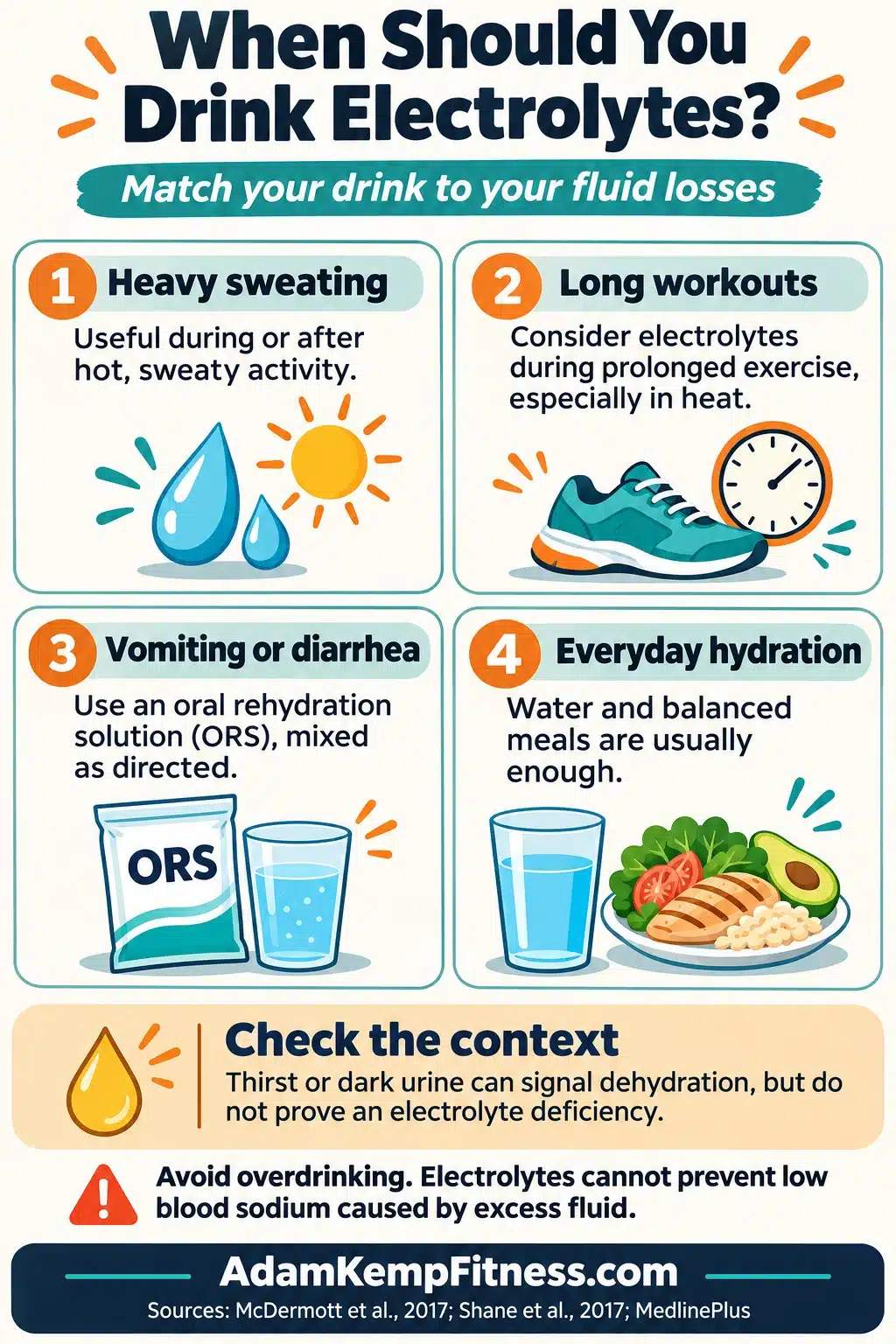
Electrolyte drinks are most useful when you lose substantial fluids and salts through heavy sweating, prolonged exercise, or illnesses involving vomiting and diarrhea; ordinary daily activity usually requires water and balanced meals rather than a supplement (McDermott et al., 2017; Shane et al., 2017).
As a professional basketball player with a master’s degree in Nutrition Education, I approach hydration by considering the demands of the day.
A long practice in a hot gym calls for a different strategy than a recovery day at home.
Your activity level, sweat losses, diet, and health provide the context for answering the question: when should you drink electrolytes?
What Are Electrolytes?
Electrolytes are minerals that carry an electrical charge when dissolved in water or body fluids.
They include sodium, potassium, chloride, calcium, magnesium, phosphate, and bicarbonate (National Library of Medicine [NLM], n.d.-a).
Although hydration products often emphasize their mineral blends, these nutrients also come from everyday foods and beverages.
Drinking an electrolyte supplement is only one way to obtain them.
Why Are Electrolytes Important?
Electrolytes help regulate fluid balance, transmit nerve signals, support muscle contractions, and maintain normal heart function.
They also help control your body’s acid–base balance, which supports normal cellular function (NLM, n.d.-a).
Different electrolytes perform different jobs, so a drink containing several minerals does not automatically address every hydration need.
For exercise involving substantial sweating, sodium replacement deserves particular attention because sweat contains considerably more sodium and chloride than calcium or magnesium (McDermott et al., 2017).
The goal is to maintain an appropriate balance.
Both excessively low and excessively high electrolyte levels can cause problems, and symptoms alone cannot reliably identify which mineral is out of balance (NLM, n.d.-a).
When Should You Consume Electrolytes?
The best time to consume electrolytes depends on what you are losing and how quickly you need to replace it.
Consider the following situations when deciding whether water, food, or an electrolyte drink makes the most sense.
After Heavy Sweating
Heavy sweating during basketball, running, outdoor work, or exercise in hot weather increases fluid and sodium losses.
Electrolyte replacement becomes more relevant as the amount of sweat you lose increases (McDermott et al., 2017).
You do not necessarily need to wait until exercise ends.
For long, demanding sessions, replacing some fluids and sodium during activity can be more practical than trying to catch up afterward.
Afterward, water and a sodium-containing meal may provide what you need.
A sports drink with electrolytes becomes particularly convenient when you have a limited appetite, cannot eat soon, or need to recover before another session.
For a broader approach to planning fluids around practices and competition, my guide to hydration for athletes connects electrolyte replacement with the demands of your sport.
During Prolonged Exercise
For activity lasting less than an hour, water is usually sufficient under ordinary conditions.
Longer sessions, intense exercise, and unusually heavy sweating increase the potential usefulness of a carbohydrate-electrolyte drink (McDermott et al., 2017).
Treat the one-hour mark as a practical guide rather than a strict cutoff. A demanding workout in a hot gym may create different replacement needs than a longer, comfortable walk.
When comparing electrolytes, check the sodium content per serving and the recommended mixing instructions.
Choose the product around your intended use, rather than assuming every electrolyte powder offers the same replacement strategy.
When You Are Sick
Vomiting and diarrhea can cause substantial losses of water and electrolytes. For mild to moderate dehydration associated with acute diarrhea, clinical guidelines recommend an oral rehydration solution, or ORS, as first-line treatment (Shane et al., 2017).
An ORS contains glucose and electrolytes in proportions designed to support intestinal fluid absorption.
An ordinary sports drink or fitness supplement should not automatically be treated as an equivalent replacement.
Prepare an ORS exactly as directed, and try small, frequent sips if nausea makes drinking difficult.
Confusion, fainting, or very little urination warrants immediate medical attention; seek medical advice promptly if you cannot keep fluids down (NLM, n.d.-b).
Signs You Need More Fluids
Thirst, dry mouth, darker urine, reduced urination, fatigue, and dizziness can indicate dehydration.
These signs suggest that you should assess your fluid intake, but they do not prove that you need an electrolyte supplement (NLM, n.d.-b).
Consider what happened before the symptoms appeared.
Missing drinks on an ordinary day is different from sweating through a long practice or having repeated diarrhea.
Persistent symptoms deserve medical evaluation rather than repeated doses of electrolyte powder.
A blood test may be needed to identify an actual electrolyte imbalance (NLM, n.d.-a).
Best Sources of Electrolytes
The best sources of electrolytes depend on whether you are supporting everyday nutrition, replacing exercise losses, or managing illness.
Everyday Foods
A varied diet provides several important electrolytes alongside protein, fiber, and other nutrients. Useful food sources include the following:
| Electrolyte | Practical food sources |
|---|---|
| Potassium | Potatoes, beans, lentils, tomatoes, milk, and yogurt |
| Magnesium | Nuts, seeds, legumes, whole grains, and leafy greens |
| Calcium | Milk, yogurt, cheese, and calcium-fortified foods |
| Sodium and chloride | Table salt and foods prepared with salt |
Potassium-rich foods extend well beyond bananas, while magnesium is widely available in plant foods and calcium is abundant in dairy products (National Institutes of Health, Office of Dietary Supplements [ODS], n.d.-a, n.d.-b, n.d.-c).
For a practical meal, consider potatoes with chicken and vegetables, followed by yogurt.
This approach makes electrolyte intake part of a complete eating pattern rather than another supplement to remember.
My guide to the best diet for an athlete offers a broader framework for organizing meals around training, performance, and recovery.
Electrolyte Drinks and Powders
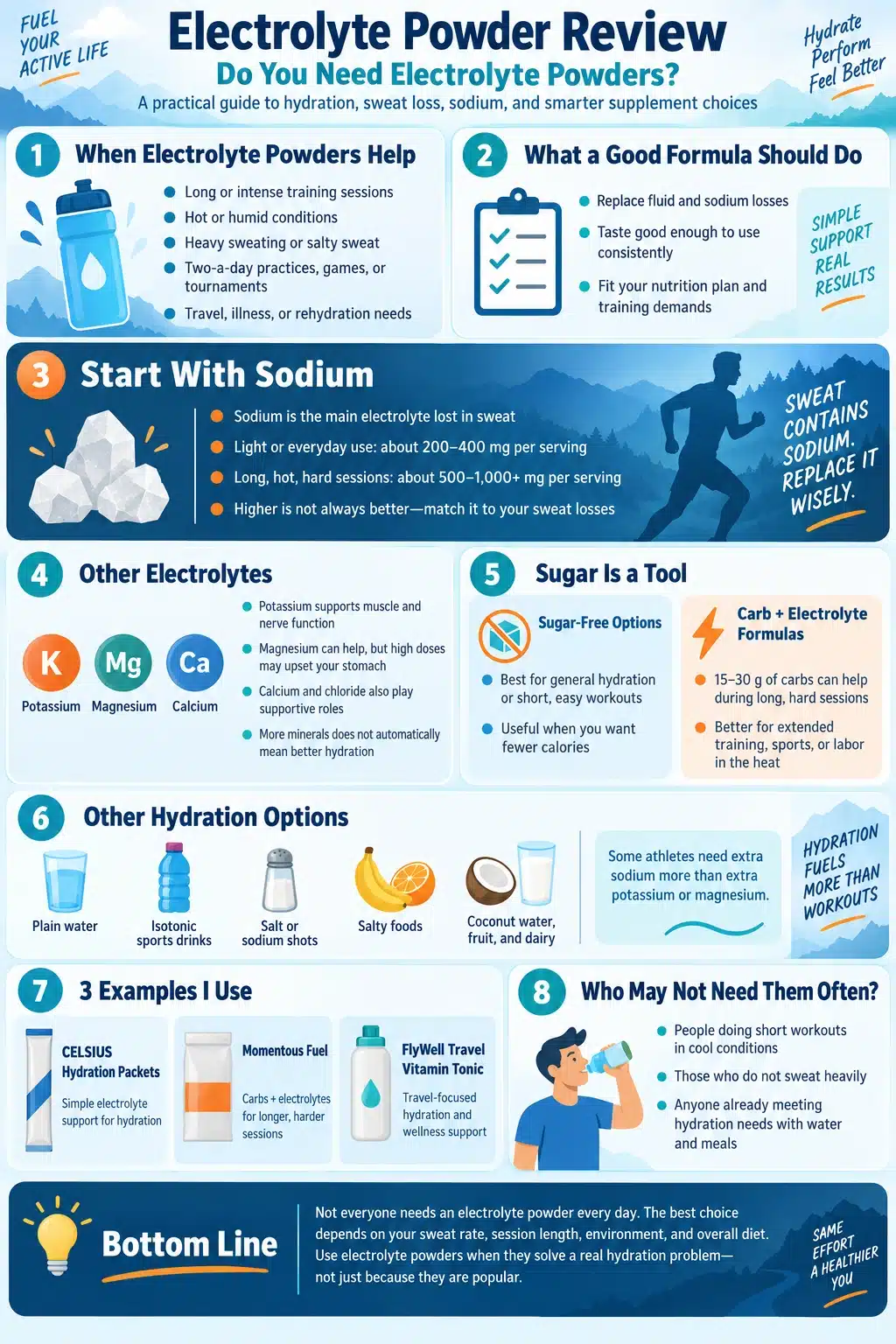
Electrolyte drinks and powders offer convenience when eating is difficult or when sweat loss is significant.
Compare the prepared drink’s sodium content, carbohydrate content, serving size, and mixing instructions.
Carbohydrates can serve a useful purpose during prolonged exercise by supplying fuel.
A sugar-free product and a carbohydrate-containing sports drink therefore serve somewhat different goals, even when both contain electrolytes (McDermott et al., 2017).
Oral Rehydration Solutions
For dehydration from diarrhea or vomiting, choose a product specifically labeled as an oral rehydration solution.
Its formulation serves a medical rehydration purpose rather than simply adding minerals to a flavored drink (Shane et al., 2017).
What Are the Benefits of Electrolyte Drinks?
When they match your needs, electrolyte drinks help replace fluid and salts lost through sweating or illness.
Supporting normal hydration can help preserve exercise performance and make recovery between sessions more manageable (McDermott et al., 2017).
However, adding electrolytes does not guarantee more energy or better performance when you are already adequately hydrated.
The benefit comes from addressing a replacement need, rather than consuming the product itself.
Hydration also belongs within a complete recovery routine.
My guide to how to recover after workouts faster covers complementary strategies involving nutrition, rest, and movement.
Should You Drink Electrolytes Every Day?
Most people do not need a daily electrolyte supplement when they eat a varied diet and have ordinary fluid losses.
Daily use may be more relevant during demanding training blocks or repeated exposure to heat, depending on individual losses (McDermott et al., 2017).
People with kidney disease, heart conditions, or prescribed sodium or fluid restrictions should discuss supplementation with their clinician.
Certain conditions and medications can alter how the body handles minerals such as sodium and potassium (NLM, n.d.-a).
Also, avoid forcing large amounts of fluid: electrolyte drinks do not prevent exercise-associated hyponatremia when you overdrink.
Sodium supplementation cannot compensate for persistent excessive fluid intake (Hew-Butler et al., 2015).
Final Thoughts: Keys to Appropriate Electorlyte Drink Timing
Use electrolyte drinks strategically around substantial sweat losses, prolonged exercise, and situations where replacing fluids through regular meals is difficult.
For dehydration from vomiting or diarrhea, use an appropriate oral rehydration solution.
Keep water and balanced meals as your everyday foundation, then adjust your approach to training demands, weather, and illness.
Those circumstances help you decide when you should drink electrolytes.
This website does not provide medical advice. This website site does contain affiliate links, and purchases may earn a commission.
Read my Medical Disclaimer, Review Disclaimer, and Publishing Policies for more details. Use of this site indicates acceptance of these terms.
Check Out Some of My YouTube Videos Below, and Please Follow on YouTube for More Educational Health and Fitness Content!