
12 Best High Fiber Breakfast Foods for Health and Performance
 Reading Time: 7 minutes
A breakfast that leaves you hungry again by 10 a.m. is usually missing one key nutrient: fiber.
As a strong advocate for fiber-rich foods, I often find myself explaining that the best high fiber breakfast foods do more than support digestion, as they help create steadier energy, improve fullness between meals, support healthy cholesterol levels, and make it easier to eat in a way that matches your training and body-composition goals.
For athletes and active adults, breakfast should not be treated as a random snack before coffee.
It is an opportunity to establish a strong nutrition foundation for the day.
Fiber does not replace the need for adequate protein, carbohydrates, or healthy dietary fats, but it makes all of them work better together by slowing digestion and increasing meal satisfaction.
Importantly, most adults need more fiber than they currently eat.
A practical target is roughly 25 grams per day for women and 38 grams for men, though needs vary by body size, calorie intake, and activity level.
If your current intake is low, increase it gradually and drink enough water.
Adding too many grams of fiber before you are used to consuming it can lead to bloating, cramps, or an uncomfortable workout.
Keep reading below to learn more about the best high-fiber breakfast foods and what they can do for you!
What Are the Benefits of Eating a High-Fiber Breakfast?
High fiber breakfast foods such as oats, berries, and whole-grain toast can help you feel full through the morning and make it easier to meet your daily fiber needs.
Different fibers offer different benefits: wheat bran adds bulk to stool and supports regular bowel movements, while the soluble fiber in oats can help moderate the rise in blood sugar after a meal (Slavin, 2013).
Some dietary fibers also act as prebiotics, meaning they feed specific gut microbes in ways that benefit your health.
When gut bacteria ferment these fibers, they can produce short-chain fatty acids such as butyrate, which provides energy for the cells lining your colon (Slavin, 2013).
Why a High-Fiber Breakfast Supports Performance
Fiber is the carbohydrate your body does not fully digest.
- Soluble fiber absorbs water and forms a gel-like consistency that can help moderate blood sugar and cholesterol.
- Insoluble fiber adds bulk to stool and supports regularity. Most high-fiber plant foods provide a useful mix of both.
Furthermore, the performance benefits are practical.
A breakfast built around refined cereal, pastries, or white toast can digest quickly and leave your energy and appetite less stable.
Pairing fiber-rich foods with protein and a minimally processed carbohydrate source gives you a meal that is more likely to carry you through work, school, errands, or a longer training session.
When Should You Not Consume High-Fiber Breakfast Foods
There is a timing trade-off for consuming high-fiber breakfast foods.
If you’re eating shortly before a game, race, or intense workout, consider a smaller portion of high fiber breakfast foods, especially if you tend to feel bloated or need the bathroom during exercise.
A bowl of oats with raspberries and chia seeds might sit comfortably three hours before tipoff but leave you feeling too full if you eat it during the final hour (de Oliveira et al., 2014).
After a meal, blood flow to your intestines increases to support digestion and nutrient absorption.
When you start exercising hard, your working muscles need more oxygen, and your body redirects some blood away from your digestive organs (Perko et al., 1998).
That shift helps explain why a large breakfast can feel uncomfortable once you start running the floor.
For an early game or practice, try a familiar, lower-fiber option such as toast with honey, then enjoy your oats, berries, and Greek yogurt afterward.
If your usual high-fiber breakfast sits well when you eat it a few hours before training, keep it in your routine and use practice days to find the portion and timing that feel best.
12 Best High Fiber Breakfast Foods
The following foods are practical, affordable options that can fit into a performance-focused breakfast.
Fiber amounts vary by brand and serving size, so use nutrition labels as a guide rather than chasing a perfect number.
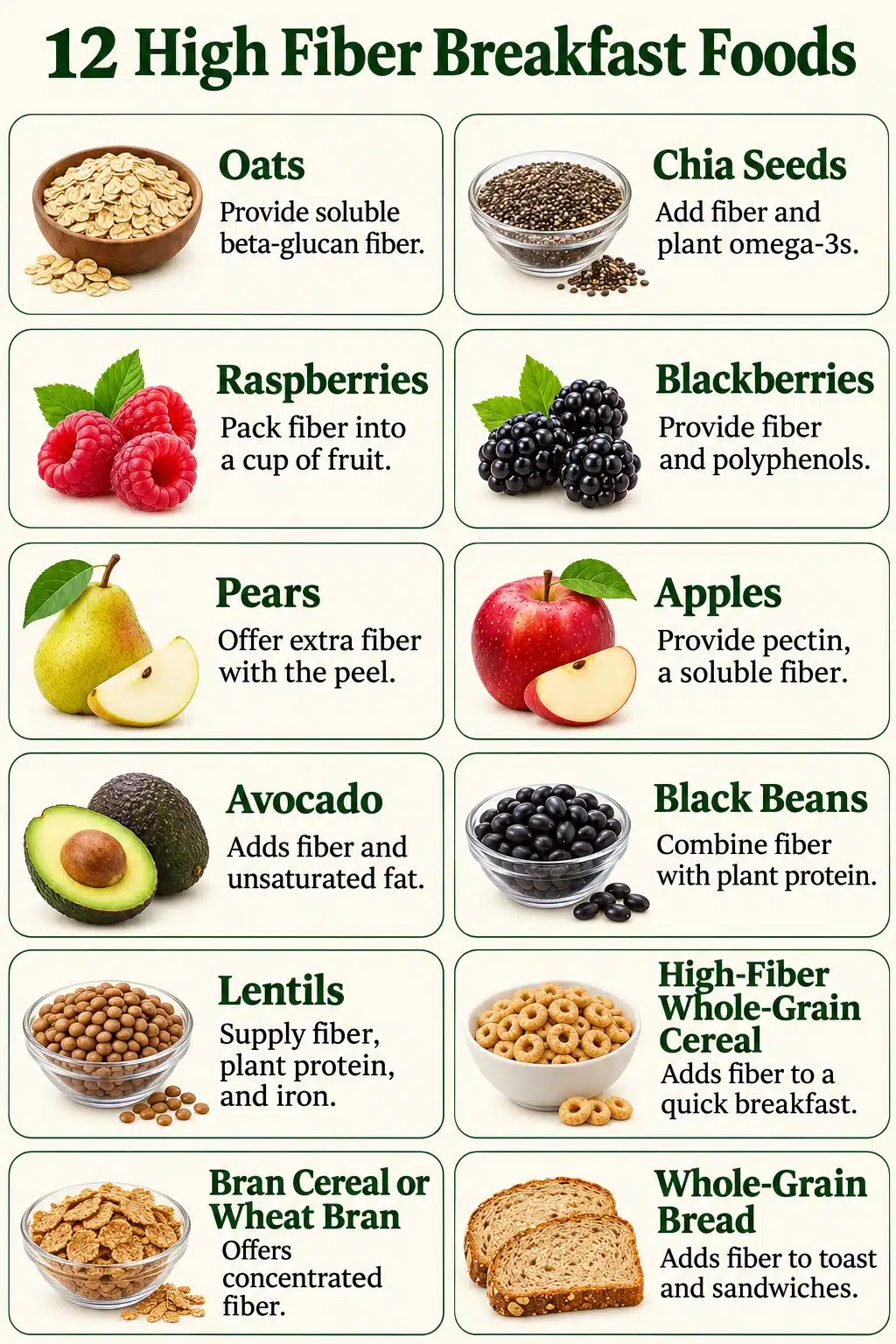
Oats
Oats are one of the best sources of prebiotic fiber and my first choice for a high-fiber breakfast.
A half-cup of dry rolled oats provides about 4 grams of total fiber, including beta-glucan, a soluble fiber that gut bacteria can ferment.
That fermentation produces short-chain fatty acids that help nourish the cells lining your colon, and they are one of the best foods for suppressing appetite, if you are looking to lose weight.
Eating oats regularly can also help lower LDL cholesterol, giving you another reason to keep oatmeal in your breakfast rotation (Slavin, 2013).
For a higher-protein breakfast, cook your oats in dairy or soy milk, then stir in plain Greek yogurt once the oatmeal cools slightly.
Top with raspberries for extra fiber and chopped walnuts for crunch.
Chia seeds
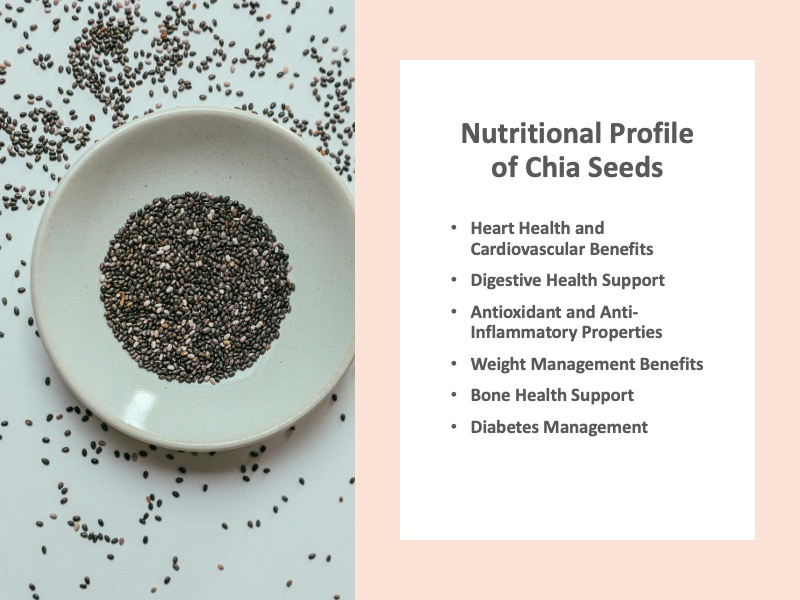
Two tablespoons of chia seeds provide roughly 10 grams of fiber.
They absorb liquid and work well in overnight oats, yogurt bowls, smoothies, or chia pudding.
Start with one tablespoon if you are not used to high-fiber foods.
Raspberries
One cup offers around 8 grams of fiber, making raspberries one of the strongest fruit choices for breakfast.
Frozen raspberries are often less expensive and work just as well in oatmeal or smoothies.
Blackberries
Like raspberries, blackberries are high in fiber and rich in polyphenols. Their tart flavor balances sweeter foods such as Greek yogurt, oats, and bananas.
Pears
A medium pear delivers about 5 to 6 grams of fiber, especially when you eat the skin.
Slice one over cottage cheese or pair it with eggs and whole-grain toast for a fast breakfast.
Apples
An apple is portable, reliable, and easy to pair with protein.
Keep the peel on, add natural peanut butter or Greek yogurt, and you have a better option than grabbing a low-fiber breakfast bar on the way out the door.
Avocado
Half an avocado provides about 5 grams of fiber and monounsaturated fat.
Avocado toast can be a legitimate high-performance breakfast when it is built on whole-grain bread and paired with eggs, salmon, cottage cheese, or another protein source.
Black Beans
Beans may not be traditional breakfast food in every household, but they should be.
A half-cup of black beans provides around 7 to 8 grams of fiber plus plant protein, iron, potassium, and slow-digesting carbohydrates.
Add them to an egg scramble or breakfast burrito.
Lentils
Lentils are another underused breakfast option, particularly if you meal prep.
Use leftover lentils in a savory bowl with eggs, greens, and roasted vegetables.
They are filling enough to support long mornings or post-training recovery.
High-fiber Whole-grain Cereal
Some cereals provide 5 to 10 grams of fiber per serving, but read the label carefully.
The best options have whole grains or bran near the top of the ingredient list and limited added sugar.
Combine cereal with Greek yogurt, milk, berries, and nuts instead of treating it as a stand-alone meal.
Bran Cereal or Wheat Bran
Bran is one of the most concentrated sources of breakfast fiber.
It can help people who struggle to meet their daily fiber needs, but it is also easy to overdo.
Start with a small serving in oatmeal or yogurt, then see how your digestion responds.
Whole-grain Bread
Whole-grain toast is not as fiber-dense as beans or berries, but it is a useful base for a balanced breakfast.
Look for bread with at least 3 grams of fiber per slice and make sure the first ingredient is a whole grain.
Common Mistakes When Increasing Breakfast Fiber
The biggest mistake is adding fiber without adding fluid.
Foods such as chia, bran, and beans pull water into the digestive tract.
If you increase them while staying dehydrated, digestion can become worse rather than better.
Another mistake is assuming every packaged product labeled “whole grain” is automatically a good choice.
Many cereals, muffins, and breakfast bars use health-focused language but are still high in added sugar and low in protein.
Check the nutrition facts panel, look at the actual fiber per serving, and consider whether the food will satisfy you on its own.
Finally, do not ignore individual tolerance.
If you have irritable bowel syndrome, inflammatory bowel disease, chronic digestive symptoms, or a history of gastrointestinal issues during exercise, the right fiber strategy may need to be more individualized.
A registered dietitian can help you identify foods and serving sizes that work with your symptoms and training demands.
Final Thoughts:How to Build a Breakfast That Actually Keeps You Full
If your usual breakfast leaves you hungry by midmorning, start with a meal you already enjoy and look for what’s missing.
If you eat bran flakes, try serving them over Greek yogurt with raspberries for more protein and fiber.
If you prefer eggs and toast, add a spoonful of black beans and a few slices of avocado.
Protein is worth including when you choose metabolism-boosting breakfast foods.
Your body uses more energy to digest and process protein than it does for an equal number of calories from fat or carbohydrate, a temporary increase in energy expenditure called the thermic effect of food (Westerterp, 2004).
Adjust the portions to fit your morning.
If your goal is fat loss and you regularly reach for a snack before lunch, try oatmeal with Greek yogurt and berries, and notice how long it keeps you full.
If you’re trying to gain muscle and have a long practice ahead, keep the yogurt for protein and add an extra serving of oats or a slice of whole-grain toast.
For busy mornings, keep one sweet option and one savory option ready to go.
Frozen raspberries can go straight into warm oatmeal, and leftover black beans can go into scrambled eggs while the bread toasts.
Working high-fiber breakfast foods into meals you already make gives you a habit you can keep even when your schedule changes.
This website does not provide medical advice. This website site does contain affiliate links, and purchases may earn a commission.
Read my Medical Disclaimer, Review Disclaimer, and Publishing Policies for more details. Use of this site indicates acceptance of these terms.
Check Out Some of My YouTube Videos Below, and Please Follow on YouTube for More Educational Health and Fitness Content!