
10 Best Low-Impact Cardio Workouts for General Fitness
 Reading Time: 9 minutes
The best low-impact cardio workouts include brisk walking, stationary cycling, swimming, and elliptical training because they let you build aerobic fitness without the repeated landings of running and jumping.
You can use them for steady aerobic work or increase the pace or resistance for a harder session (Centers for Disease Control and Prevention [CDC], 2025).
Low-impact cardio workouts are especially useful if you’re new to exercise, getting back into a routine after a break, or looking for options that feel more comfortable on your knees or ankles.
They’re also a staple in my basketball training because I can build conditioning on the bike when I’m already getting plenty of running and jumping on the court.
After more than a decade in professional basketball, I’ve learned that a conditioning workout has to make sense alongside everything else I’m asking my body to do.
When I’m already running, jumping, and changing direction at practice, a hard bike session lets me challenge my conditioning without adding more landings to the day.
Low impact describes how you move, while intensity describes how hard you work.
Whether you want to build an aerobic base, stay active between lifting days, or get in a hard session when your legs are already carrying a heavy workload, you can find an option among the best low-impact cardio workouts.
What Is a Low-Impact Cardio Workout?
A low-impact cardio workout raises your heart rate and breathing while limiting the repeated landings that come with running or jumping.
During brisk walking, one foot stays on the ground. During stationary cycling, elliptical training, or swimming, the equipment or water supports your movement.
However, low impact can still be high intensity.
An easy bike ride and a hard set of cycling intervals use the same low-impact movement, but they challenge your conditioning differently.
At moderate intensity, you can talk but would have trouble singing.
At vigorous intensity, you’ll usually need to pause for breath after a few words (Centers for Disease Control and Prevention [CDC], 2025).
In basketball, I use that distinction to plan my conditioning.
When practice already includes plenty of running and jumping, I can use the bike to get in a hard cardio session without adding more landings.
The Best Low Impact Cardio Workouts for Sustainable Fitness
The right choice of cardio exercises depends on your current fitness, injury history, access to equipment, and what you can realistically do more than once.
These are the options I recommend most often because they can be scaled from beginner-level movement to demanding performance training.
1.) Brisk Walking and Incline Walking

Walking is easy to underestimate because most of us already do it every day.
Pick up the pace enough to breathe harder while still holding a conversation, and a walk can become moderate-intensity aerobic exercise (CDC, 2025).
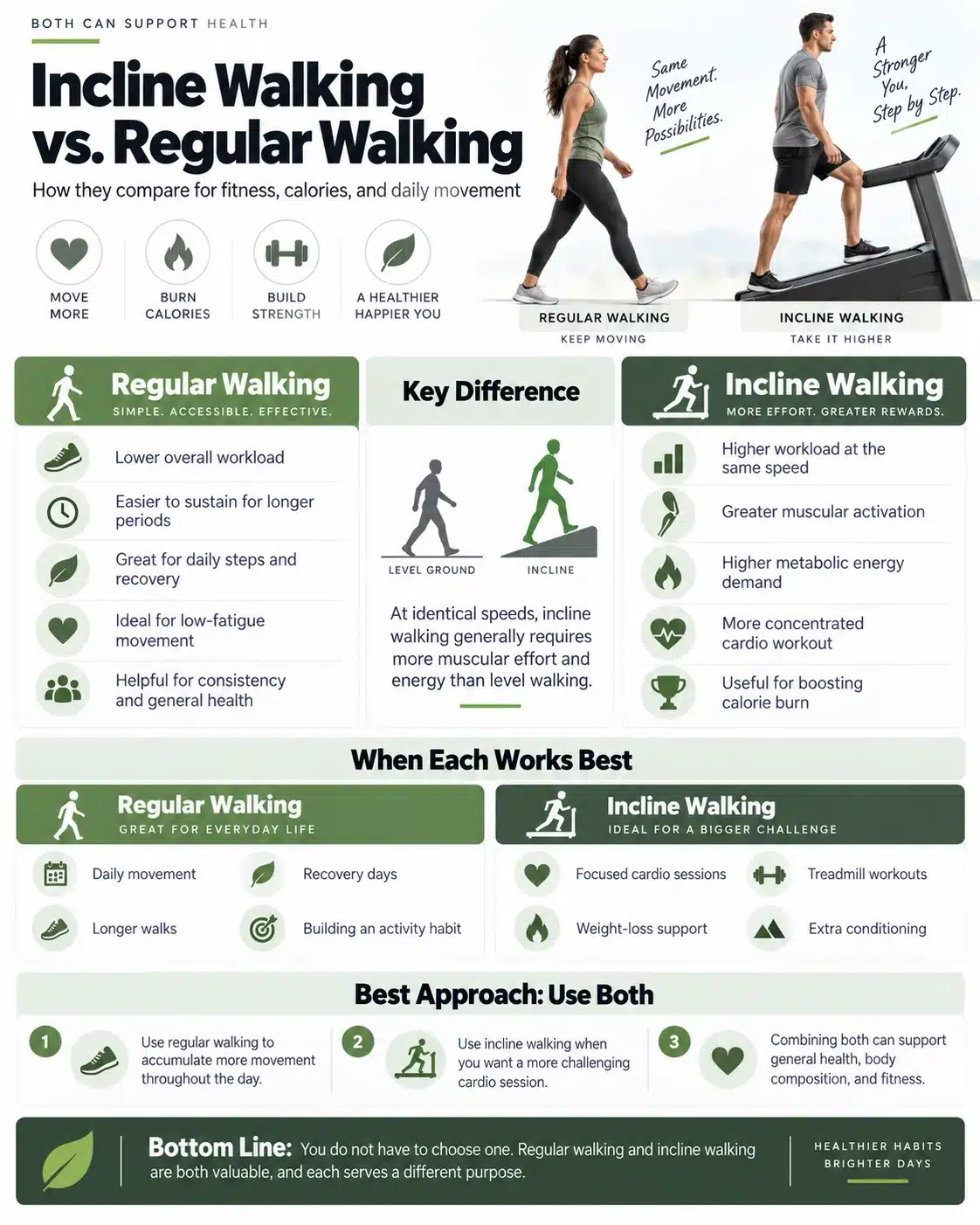
If flat walking feels too easy, try a hill or a slight treadmill incline before trying to walk faster.
Incline walking lets you increase effort at a pace that still feels natural, though your calves may fatigue sooner than on flat ground.
Start with 10–20 minutes if you’re rebuilding consistency.
If you already walk regularly, try adding two or three short climbs to a familiar route and use the flat stretches to settle your breathing.
2.) Stationary Cycling
Stationary cycling (aka stationary biking) is one of my first choices when I want a demanding cardio session without more time on my feet.

I can ride steadily after lifting or increase the resistance for intervals without having to change the movement.
Bike setup matters if your knees feel uncomfortable.
Start with the saddle at a height that leaves a slight bend in your knee at the bottom of the pedal stroke, and check that your hips stay level as you pedal.
For intervals, warm up for five minutes, then alternate one minute of challenging riding with two minutes of easy pedaling for four to six rounds.
Choose a resistance that lets you keep turning the pedals smoothly, especially during the last few rounds.
3.) Swimming
Swimming gives you a way to train your cardiovascular system while the water supports your body weight.
An easy recreational swim and a sustained lap workout can sit at very different points on the intensity scale (CDC, 2025).
If you’re new to lap swimming, breathing rhythm and stroke efficiency may dictate how long you can swim comfortably.
Start with one easy length at a time and rest until you can begin the next one without rushing your breathing.
Once you can repeat several lengths at a similar pace, add a second consecutive length or shorten the rest slightly.
Either change gives you a way to progress while keeping your stroke under control.
4.) Elliptical Training

The elliptical machine keeps you upright and supports your feet throughout each stride.
I’d use it when I want the rhythm of running during an aerobic session and already have enough running and jumping in my sport practice.
Choose enough resistance that you have to drive each stride, and keep the ramp at a setting that lets you stand comfortably.
If you start leaning heavily on the handles or shortening your stride, lower the ramp and adjust the resistance from there.
For a steady workout, warm up for five minutes and then hold a conversational pace for another 15–25 minutes.
Keep the settings consistent for the first few sessions so you have a useful point of comparison as your fitness improves.
5.) Rowing Machine Workouts

ERG rowing machine workouts work well when you want to involve your legs, trunk, and upper body in a short cardio session.
The harder you row, the more important it is to keep the stroke order consistent.
Start the drive with your legs, open your torso slightly, and finish by pulling the handle toward your lower ribs.
Reverse that sequence on the return by sending your hands forward, hinging at the hips, and then bending your knees.
Try six rounds of 45 seconds of moderate rowing and 75 seconds of easy rowing.
If you find yourself pulling early with your arms or rushing back toward the machine, slow the stroke rate before trying to increase your output.
6.) Water Walking and Deep-Water Running

Water walking and other forms of aquatic training are a practical choice if you like walking and want support from the pool.
Chest-deep water gives you room to swing your arms and move at a brisk pace while the water provides resistance.
Deep-water running works especially well for runners and court-sport athletes who want to keep a running rhythm in a conditioning session.
Use a flotation belt in water deep enough that your feet clear the bottom, stay tall, and let your arms move as they would during an easy run.
Start with a minute of brisk movement followed by a minute at an easy pace.
As you get comfortable, try faster leg turnover on the work intervals while keeping the same upright position.
7.) SkiErg or Upper-Body Ergometer
A SkiErg and an arm bike both give your upper body a larger role in conditioning, but they fit different needs.
A standing SkiErg still uses your hips and knees, while a seated arm bike lets you do cardio with your feet supported and your legs largely at rest.
On the SkiErg, use a small hip hinge and let your trunk and arms work together through the pull.
On an arm bike, set the seat so you can reach the handles without leaning forward or shrugging your shoulders.
Start with six rounds of 30 seconds of purposeful work and 60 seconds of easy movement.
If your shoulders or grip give out early, lower the resistance so you can finish each round with a smooth motion.
8.) Low-Impact Cardio Circuits
Low-impact cardio circuits work best when the exercises are simple enough to repeat as you get tired.
Prowler sled pushes, farmer carries, low step-ups, and stationary cycling all fit, and you can choose stations based on how you want to feel when the workout ends.
Sled pushes are one of my favorites because I can change the load to suit the day.

For conditioning, I choose a weight that lets me keep walking with controlled steps for the entire push.
When every step becomes a grind, I’m training for a different goal.
For a simple circuit, cycle for one minute, do low step-ups for 30 seconds, and finish with a 30-second farmer carry.
Rest for a minute and repeat for three rounds, keeping the pace and load manageable enough to maintain your form.
9.) Battle Rope Exercises

Battle rope exercises are a good fit when you want a short, hard conditioning session with your feet planted.
In a small study, a 10-minute battle rope interval workout reached vigorous intensity, which helps explain why a few rounds can feel demanding even when you stay in one spot (Fountaine & Schmidt, 2015).
Start with alternating waves, bringing one hand up as the other comes down.
Double-arm waves are another option once you can keep a steady rhythm.
Leave a little slack in the ropes, soften your knees, and use a wave size you can sustain without shrugging your shoulders.
Try six rounds of 15 seconds of work and 45 seconds of rest.
When the waves in your last round look about the same as they did in your first, add five seconds to each work interval or shorten your rest slightly.
10.) Low-Impact Dance Cardio
Low-impact dance cardio fills a gap in this list because you can do it indoors with a little floor space and no equipment.
Marching, step-touches, and forward-and-back steps are enough to put together a workout, and the tempo helps you control how hard you work (CDC, 2025).
Start with a few movements you can do comfortably at the speed of the music.
Keep your steps close to the floor and add arm movements when you want to raise the effort.
Try three songs.
March through the first to warm up, alternate step-touches and forward-and-back steps during the second, and use the third to alternate brisk movement with easier steps.
For a longer session, repeat the last two songs.
How Hard Should Low-Impact Cardio Be?
For steady aerobic work, use the talk test.
At moderate intensity, you can still carry on a conversation but would struggle to sing.
At vigorous intensity, you’ll generally need to pause to breathe after a few words (CDC, 2025).
If you’re building a routine, start with a weekly schedule you can repeat, such as two brisk walks and a steady bike ride.
Adults can build toward 150 minutes of moderate aerobic activity, 75 minutes of vigorous activity, or an equivalent combination each week (CDC, 2023).
If you already lift or play a sport regularly, count those demands when deciding where to put harder intervals.
During basketball season, I might use an easy ride the day before a demanding practice and put harder conditioning on a day when I have more room to recover.
Final Thoughts: How to Choose the Best Low-Impact Cardio Workout for You
Start with what you need from the workout.
A brisk walk or dance session makes sense when time and equipment are limited, a stationary bike works well for controlled intervals, and pool work gives you an option when you want the support of water.
Give yourself a few sessions to see how the workout feels and how it fits alongside the rest of your training.
Once you find something you can do comfortably and consistently, add a little time, resistance, or pace to improve it.
This website does not provide medical advice. This website site does contain affiliate links, and purchases may earn a commission.
Read my Medical Disclaimer, Review Disclaimer, and Publishing Policies for more details. Use of this site indicates acceptance of these terms.
Check Out Some of My YouTube Videos Below, and Please Follow on YouTube for More Educational Health and Fitness Content!