When Should You Ice Bath During a Training Week?
 Reading Time: 9 minutes
 When should you ice bath? This is an important question for many people looking to get the most out of their workouts and progress as fast as possible while staying as healthy as possible.
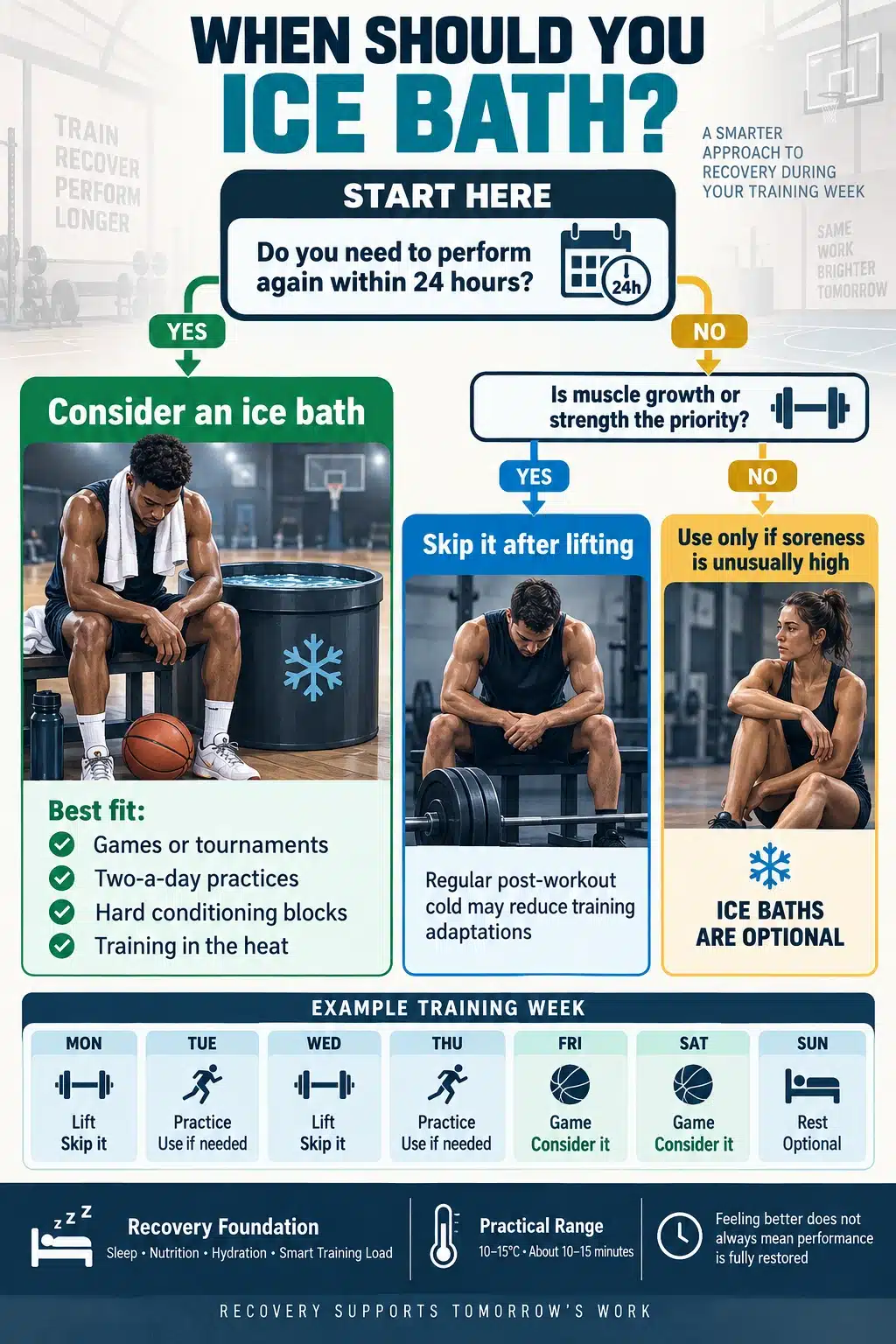
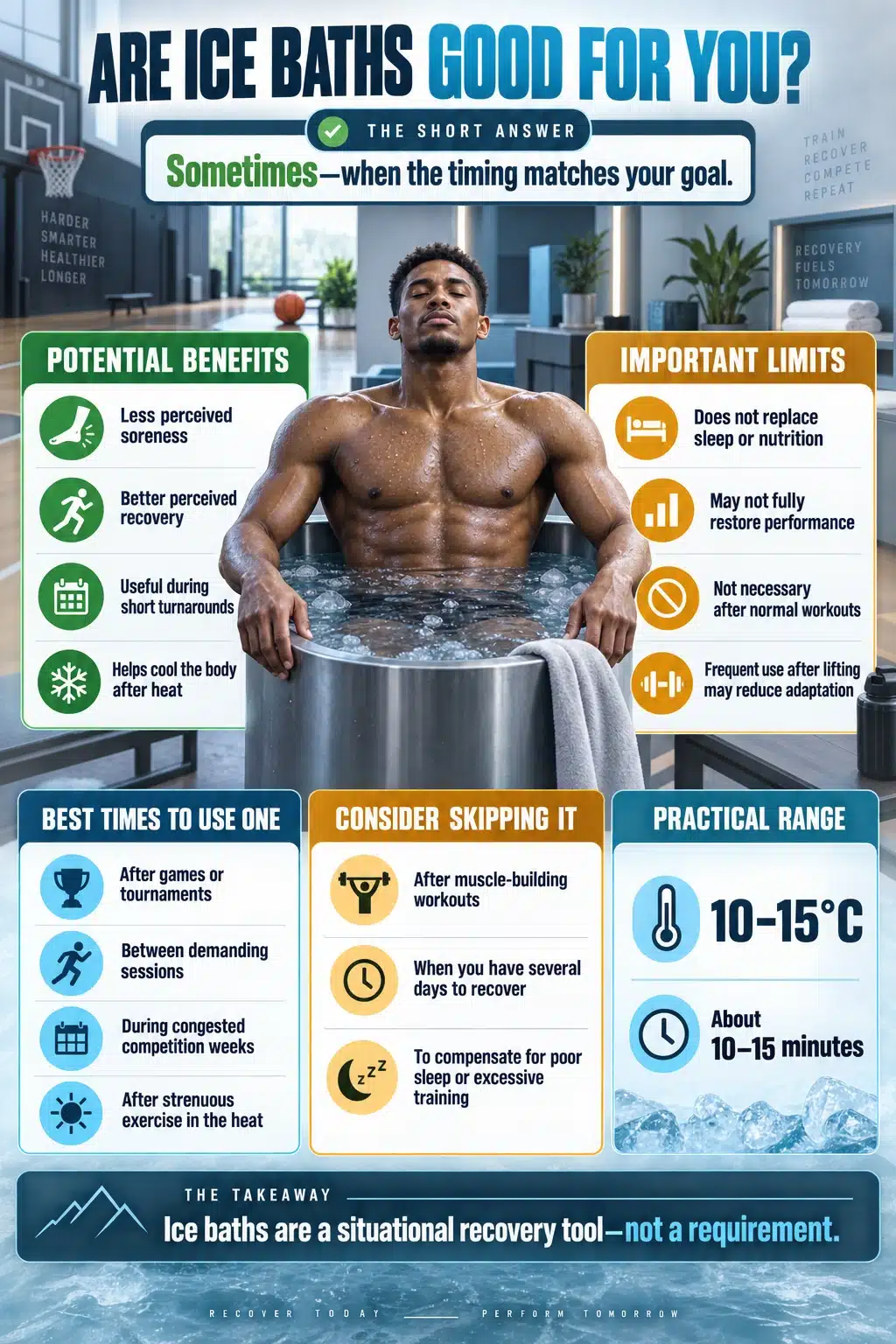
The best time to take an ice bath is after an unusually demanding workout, game, or tournament when you need to perform again within about 24 hours.
But if you are only “working out” and just want to recover faster after exercising, you should first ask yourself, do you need to take ice baths often?
Ice baths may reduce soreness and improve how recovered you feel, but they are rarely necessary after ordinary workouts and should not be used automatically after every strength-training session.
A Monday lifting session and a Saturday tournament have very little in common, yet athletes sometimes use the same recovery routine after both.
Cold-water immersion, including ice baths and cold plunges, can be useful when recovery time is limited.
However, when you should take an ice bath depends on what you did, how soon you must perform again, and whether your immediate priority is recovery or long-term adaptation.
Do You Even Need to Use an Ice Bath?
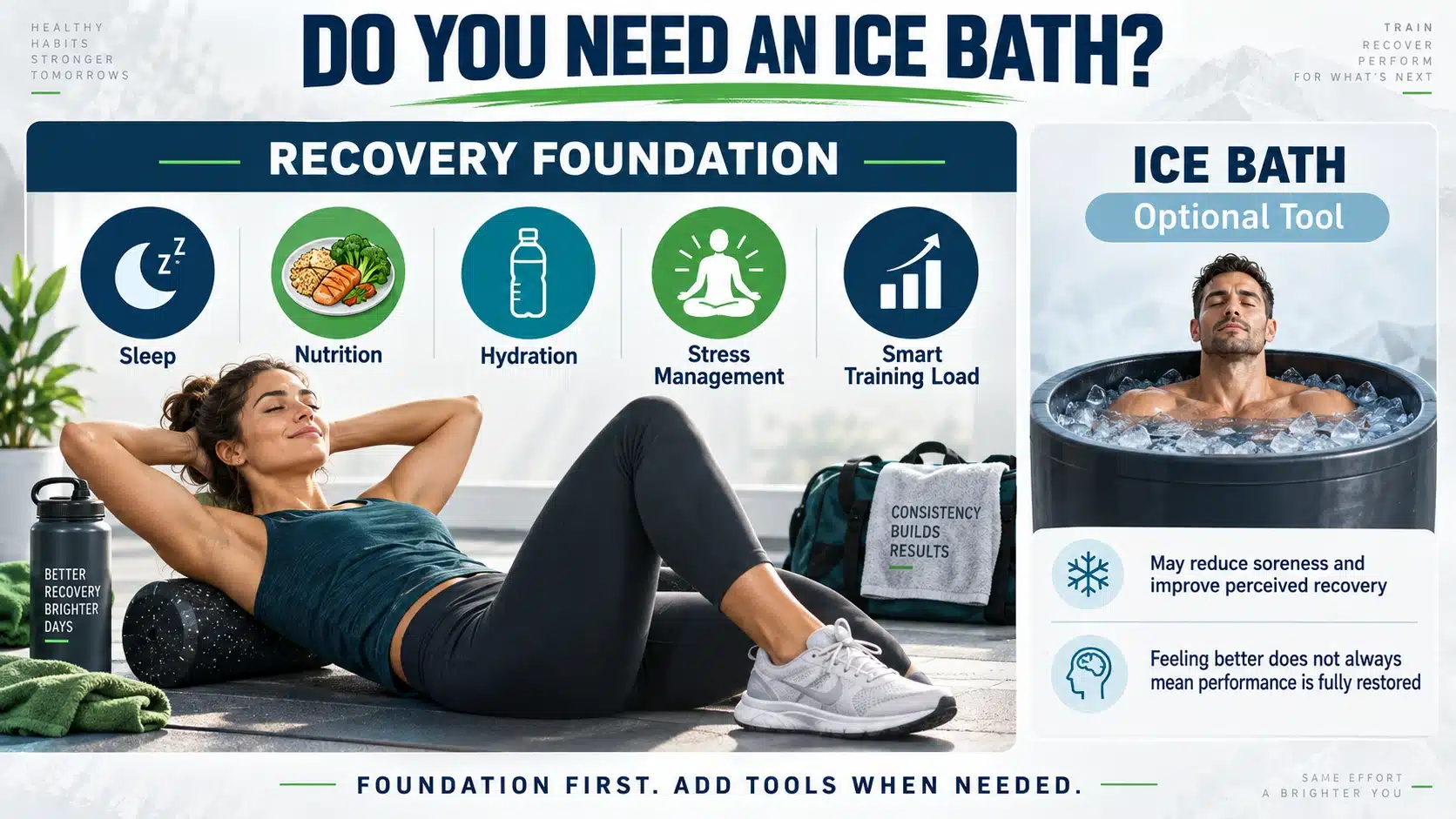
Most people do not need an ice bath to recover from a normal workout.
Consistent sleep, sufficient calories and protein, carbohydrate intake, hydration, stress management, and an appropriate training load have a much greater influence on recovery than any cold-water treatment.
Ice baths are best viewed as an optional recovery tool rather than an essential part of training.
They may reduce delayed-onset muscle soreness and improve perceived recovery after strenuous exercise, but these subjective improvements do not guarantee full restoration of strength, speed, or power.
A systematic review found that cold-water immersion reduced soreness and improved perceived recovery approximately 24 hours after high-intensity exercise.
However, its effects on objective performance measures were smaller and depended on the exercise and recovery interval (Moore et al., 2022).
This distinction matters because feeling better can be valuable before another game, even if the ice bath has not completely repaired the physiological effects of the previous session.
Ice Baths Should Complement the Basics
Cold-water immersion receives attention because it looks and feels like an active recovery strategy.
Eating a balanced meal and going to bed on time are less dramatic.
But, they are still more important.
After a long practice, an athlete may primarily need carbohydrates to restore glycogen, protein to support muscle repair, fluids and sodium to replace sweat losses, and sleep to support the wider recovery process.
An ice bath cannot replace any of these requirements.
At best, it is an additional tool that may reduce soreness or make an athlete feel more prepared during a demanding stretch.
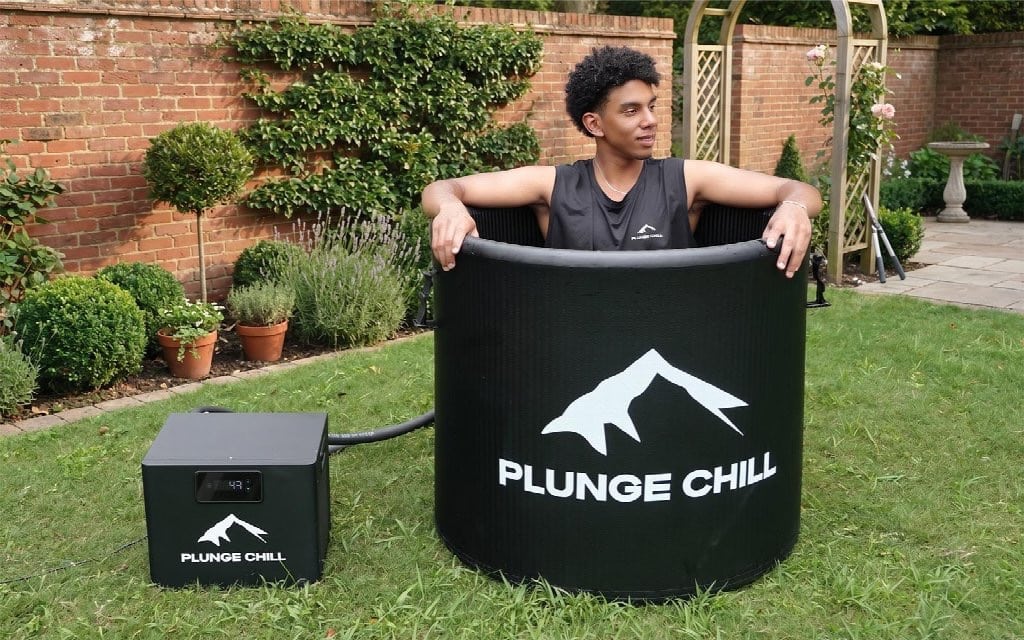
Convenience can influence whether the practice is realistic. Buying bags of ice, carrying them home, and repeatedly filling a bathtub may be manageable occasionally but frustrating several times per week. Athletes who regularly use cold-water immersion may prefer a cold plunge with a chiller, but easier access won’t turn an occasional recovery strategy into an automatic daily habit.
When Should You Ice Bath?
The best times to use an ice bath are when short-term readiness is more important than maximizing the adaptation produced by that day’s training.
Cold-water immersion becomes most relevant in the following situations:
- After a game when another game is scheduled the following day
- Between matches during a multiday tournament
- After an unusually demanding conditioning session
- During two-a-day practices or congested training schedules
- After exercise in hot conditions when lowering body temperature is important
- During an in-season period when maintaining performance is more important than creating new training adaptations
- When soreness could meaningfully interfere with the next practice or competition
The key consideration is not simply how difficult the workout felt, but how much recovery time you have before your body must perform again.
After a Game or Tournament
A tournament weekend is one of the clearest situations in which an ice bath may be worthwhile.
Imagine a basketball player finishing a hard Friday-night game before playing again Saturday afternoon.
Reducing soreness and improving the athlete’s perception of recovery may help them feel more prepared for the next warm-up, even if cold water does not completely restore physical performance.
Cold-water immersion appears particularly useful for managing soreness after high-intensity exercise.
Evidence suggests that it can modestly support muscular-power recovery at approximately 24 hours, although it does not consistently improve every measure of strength or performance (Moore et al., 2022).
The same logic applies to soccer tournaments, track meets, tennis competitions, and other events containing multiple performances within a short period.
An ice bath is less compelling when the next demanding activity is several days away.
If Sunday’s game is followed by an easy Monday and a day off Tuesday, normal recovery practices may provide everything the athlete needs.
After Two-a-Day Practices
Two-a-day practices offer another good opportunity to use an ice bath, especially when sessions cause significant fatigue or take place in the heat.
In this situation, the athlete isn’t trying to feel perfect; the goal is to manage soreness and fatigue well enough to complete the next practice with acceptable movement quality and intensity.
However, cold-water immersion should not replace the recovery steps that directly replenish what the first session depleted.
The athlete still needs fluids, electrolytes, carbohydrates, protein, and as much rest as the schedule allows.
Should You Ice Bath After Lifting Weights?
You generally should not ice bath immediately after strength workouts when building muscle, strength, or power is the primary objective.
Resistance training creates physiological signals that help the body adapt. Regularly cooling the exercised muscles immediately afterward may reduce some of the processes involved in muscle growth.
A 2024 systematic review and meta-analysis concluded that repeated cold-water immersion immediately after resistance training may modestly reduce muscle hypertrophy.
The researchers also emphasized that the available evidence remains limited, with relatively few studies (Piñero et al., 2024).
That does not mean one ice bath will erase your gains. The greater concern is making immediate post-lifting immersion a routine habit throughout a muscle-building or strength-development phase.
For example, an athlete completing heavy squats, Romanian deadlifts, and split squats on Monday, with only light training scheduled for Tuesday, has little reason to rush into cold water.
Some fatigue and soreness are expected parts of training, and you shouldn’t try to avoid them at all costs.
The calculation changes if an athlete must lift during a tournament and compete again later that day.
In that case, short-term readiness may matter more than extracting every possible adaptation from one strength session.
Should You Ice Bath on Rest Days?
You can use an ice bath on a rest day, but the calendar alone does not make it necessary.
A rest-day ice bath may make sense after a competition, an unusually demanding training block, or several consecutive days of practice.
Separating cold-water immersion from resistance training may also be a reasonable compromise when muscle growth is a priority.
However, a weekly rest day does not automatically need its own recovery checklist.
Athletes sometimes turn rest days into another form of work by combining stretching, foam rolling, mobility exercises, massage, heat, cold exposure, and recovery devices.
An easy walk, nutritious meals, and an early bedtime may be more restorative.
Use an ice bath on a rest day when it addresses a specific need, not because recovery feels incomplete without it.
What Is the Best Time of Day for an Ice Bath?
The best time for an ice bath is determined more by your training schedule than by the clock.
When the goal is short-term recovery, cold-water immersion is normally performed soon after the demanding workout or competition.
This is the timing used in much of the research examining soreness and subsequent performance.
However, you do not need to enter the water immediately.
Rehydrating, eating, changing clothes, and returning home first are unlikely to make the session meaningless.
If muscle growth is the priority, avoid making cold-water immersion part of your immediate post-lifting routine.
Use it later, on a separate recovery day, or only during periods when rapid recovery outweighs the possible adaptation tradeoff.
Some people find late-evening cold exposure stimulating rather than relaxing.
If it makes it harder for you to wind down, move the session earlier rather than letting a secondary recovery tool interfere with sleep.
When Should You Avoid an Ice Bath?
Skip the ice bath when you are using it to compensate for a training program that is consistently too demanding.
Cold water cannot correct inadequate sleep, low energy intake, dehydration, excessive weekly volume, or an injury that requires evaluation.
Feeling temporarily less sore does not necessarily mean the underlying problem has been resolved.
You may also want to avoid an ice bath:
- Immediately before explosive training or competition
- Routinely after muscle-building workouts
- When you are already unusually cold
- When cold exposure causes dizziness, breathing difficulty, numbness, or chest discomfort
- When you have a medical condition that makes sudden cold exposure unsafe
Entering cold water produces an immediate cold-shock response that can sharply increase breathing, heart rate, and blood pressure.
People with cardiovascular conditions or other relevant medical concerns should consult a qualified healthcare professional before attempting cold-water immersion (American Heart Association, 2022).
Enter gradually, stay above water, and never do extreme cold exposure alone.
End the session if you feel faint, confused, excessively numb, or unable to control your breathing.
How Long Should You Stay in an Ice Bath?
An ice bath does not need to be painfully cold to qualify as cold-water immersion.
Research protocols differ substantially, but many athletic-recovery studies use water temperatures around 10–15°C, or 50–59°F, for approximately 10–15 minutes.
Evidence has not established one universally optimal combination of temperature and duration, and colder is not automatically better (Moore et al., 2022).
Start conservatively if you are new to cold-water immersion.
The objective is controlled cooling—not proving how much discomfort you can tolerate.
You also do not necessarily need to add large amounts of ice.
Cool tap water may provide adequate cold exposure, especially during winter or in colder climates.
Example Ice-Bath Schedule for a Training Week
There is no universal ice-bath schedule, but the following example shows how recovery decisions can change throughout a typical week:
| Day | Training | Ice bath? | Reason |
|---|---|---|---|
| Monday | Heavy lower-body strength | Usually no | Preserve the intended training stimulus when there is adequate recovery time |
| Tuesday | Light skill work or mobility | No | Training stress is low, so basic recovery should be sufficient |
| Wednesday | Hard conditioning practice | Maybe | Consider it if Thursday is demanding or soreness is unusually high |
| Thursday | Moderate practice | Usually no | Avoid adding recovery tools without a specific need |
| Friday | Pre-competition practice | Usually no | The session should already be designed to limit unnecessary fatigue |
| Saturday | Game or tournament | Often useful | Short turnaround and immediate readiness may justify cold-water immersion |
| Sunday | Second game or recovery day | Maybe | Base the decision on soreness, schedule, and the next demanding session |
The ice bath appears only when it solves a scheduling problem. It does not receive a permanent place after every workout.
Final Thoughts: How to Let Your Training Week Decide When You Should Take an Ice Bath
So, when should you ice bath?
Use an ice bath when you have completed a strenuous session or competition and must perform again before normal recovery is likely to be complete. Tournament weekends, consecutive games, two-a-day practices, and unusually demanding in-season stretches are the strongest practical examples.
Skip it when you have adequate time to recover, when the workout was not especially demanding, or when maximizing muscle and strength adaptations is more important than feeling less sore tomorrow.
Before getting into an ice bath, ask two questions:
What did I do today, and what do I need to be ready for next?
If the answer shows a genuine short turnaround, cold-water immersion may help. If not, food, hydration, sleep, and sensible training will usually do more of the work.
Read Next: Cold Plunge vs Sauna: Which is Better for Recovery?
This website does not provide medical advice. This website site does contain affiliate links, and purchases may earn a commission.
Read my Medical Disclaimer, Review Disclaimer, and Publishing Policies for more details. Use of this site indicates acceptance of these terms.