Foam Rolling 101: Foam Roller Benefits, Uses, How to Do
 Reading Time: 12 minutes
Foam rolling has evolved into a cornerstone of self-myofascial release (SMR), offering myriad benefits to athletes, fitness enthusiasts, and anyone seeking relief from muscle tension.
By combining massage-like pressure with an affordable, easy-to-use tool, foam rolling supports recovery, flexibility, and relaxation.
For years, I wasn’t a fan of foam rolling. It seemed overly hyped and, honestly, uncomfortable.
Like many others, I didn’t understand how to foam roll properly or make it a meaningful part of my muscle recovery program, and it wasn’t until I learned more about the techniques and principles behind foam rolling that I began to see its value.
Learning how to reset muscle tissue tension through deliberate foam rolling, combined with specific exercises targeting fascia and muscle tissue, has changed how my body feels as much as any other addition to my routine ever has.
Now, I make my 25-minute foam rolling routine a part of my morning routine every day, and most nights too.
As someone who has accumulated years of joint pain, muscle soreness, and physical imbalances from the physical demands of professional basketball, foam rolling has helped me release stubborn knots, improve mobility, and reduce the chronic tightness that has developed over the course of my career.
Now, after a couple of years of having foam rolling in my daily routine, I’m a firm believer in the power of foam rolling as a simple and effective way to improve recovery and overall performance.
What Is Foam Rolling?
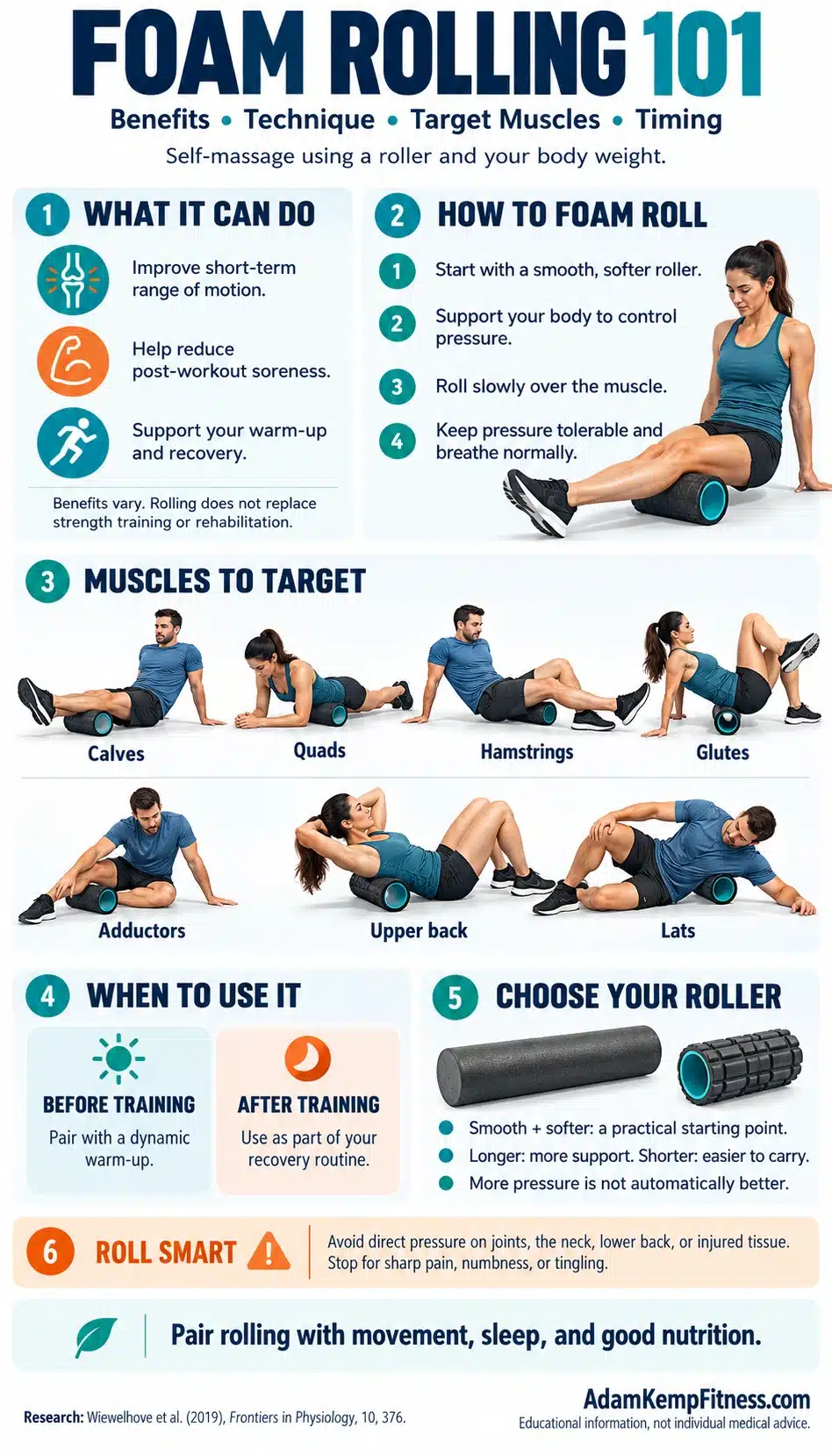
Foam rolling is a self-massage technique that uses a cylindrical roller and your body weight to apply pressure to muscles and surrounding soft tissues.
It is commonly used before exercise to improve short-term flexibility or afterward to help reduce muscle soreness (Wiewelhove et al., 2019).
While foam rolling, you position a muscle group over the roller and move your body across it, adjusting your position to control the pressure.
For example, to roll your calves, sit with the roller beneath your lower legs and support yourself with your hands.
Foam rolling is often called self-myofascial release, a term for self-applied massage that targets muscles and fascia, the connective tissue surrounding them.
However, researchers have not established that rolling physically breaks apart muscle “knots” or fascial adhesions; changes in pain perception and tolerance to stretching may help explain its benefits (Wiewelhove et al., 2019).
For me, foam rolling became more useful when I learned to apply deliberate pressure and combine it with strength and mobility exercises that addressed my movement limitations.
After years of professional basketball, it is now an everyday part of my exercise recovery routine.
Benefits of Foam Rolling
Foam rolling is a powerful muscle recovery tool backed by science and widely embraced by athletes, trainers, and health enthusiasts.
Whether you’re looking to reduce muscle soreness, improve flexibility, or support overall recovery, foam rolling offers a host of benefits that support both performance and well-being.
By targeting fascia and muscle tissue, it helps to release tension, improve circulation, and restore mobility, which are all key components of an effective recovery program.
Let’s explore the many ways foam rolling can positively impact your health, body, and overall fitness.
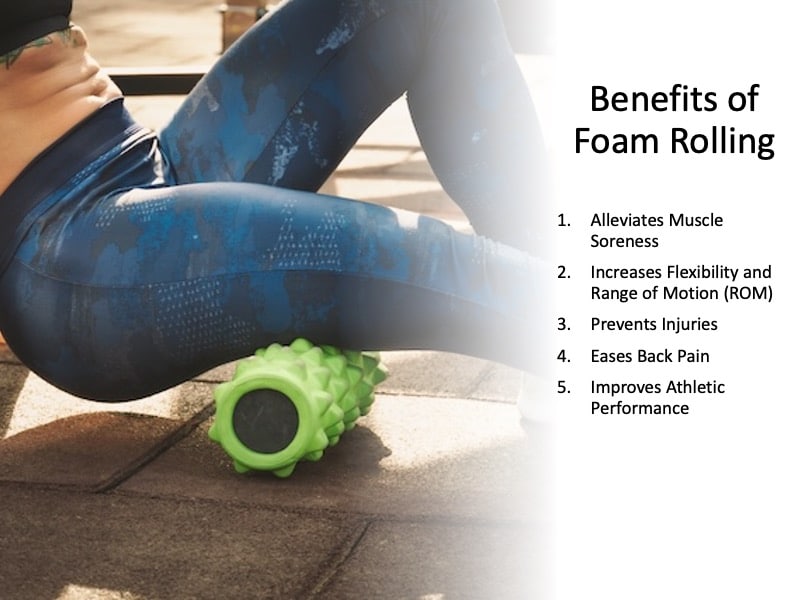
1.) Alleviates Muscle Soreness
Foam rolling is one of the most effective ways to combat delayed-onset muscle soreness (DOMS).
By improving blood circulation and breaking down adhesions in muscle tissue, it helps speed up recovery.
Research demonstrates that individuals who incorporate foam rolling post-workout experience significantly less soreness and faster recovery compared to those who skip it (Konrad et al., 2022).
This makes foam rolling a go-to tool for anyone wanting to bounce back quickly from tough workouts or demanding physical activities.
2.) Increases Flexibility and Range of Motion (ROM)
Foam rolling is an excellent way to improve flexibility and joint range of motion (ROM), both of which are critical for optimal movement and injury prevention.
Used consistently, it softens fascial tissue and reduces muscle stiffness, allowing greater mobility.
Studies suggest that chronic foam rolling, especially when combined with stretching, can result in moderate improvements in ROM over time (Pagaduan et al., 2022).
Whether you’re preparing for a workout or recovering after a long day, foam rolling can keep your body limber and ready for action.
3.) Prevents Injuries
One of the most overlooked benefits of foam rolling is its role in injury prevention.
By releasing tension and improving muscle elasticity, foam rolling helps maintain proper muscle length and function.
This reduces the risk of common injuries caused by overuse, tightness, or muscle imbalances.
Regular foam rolling can also address movement restrictions caused by poor posture or repetitive stress, allowing you to move more freely and with better alignment.
4.) Eases Back Pain
Foam rolling isn’t just for athletes; it’s an effective tool for anyone experiencing chronic tension, particularly in the back and shoulders.
Rolling the targeted areas of the upper and lower back can help relieve stiffness and improve posture, making it especially useful for desk workers and people with sedentary lifestyles.
Additionally, the pressure applied during foam rolling stimulates the parasympathetic nervous system, promoting relaxation and reducing stress.
It’s a simple yet effective way to wind down after a long day, and it can help with back pain, depending on the cause.
5.) Improves Athletic Performance
While foam rolling may not directly improve athletic performance metrics such as speed or strength, its indirect benefits are undeniable.
Better recovery, flexibility, and less soreness support better movement patterns and more efficient workouts.
By addressing muscle imbalances and tension before they become problematic, foam rolling ensures you’re consistently able to train and perform at your peak.
Over time, this can translate into sustained athletic growth and fewer setbacks.
How to Foam Roll Properly

Foam rolling requires proper technique to maximize effectiveness and prevent discomfort. Follow these tips for how to foam roll safely and efficiently:
- Pressure Control: Start with a low-density roller to adjust to the sensation. Gradually increase intensity as your tolerance improves.
- Slow, Targeted Movements: Roll slowly, pausing on tender spots to encourage myofascial release.
- Consistency: Perform foam rolling 3–4 times weekly for optimal results.
Risks and Precautions When Using a Foam Roller
Foam rolling is generally safe but may not be suitable for individuals with:
- Severe muscle tears or joint injuries
- Advanced pregnancy (without physician clearance)
- Small joint areas like the knees or elbows
Avoid rolling directly over injuries or bony areas to prevent discomfort or further damage.
Best Foam Roller Exercises

Foam rolling is a versatile tool for relieving tension, improving mobility, and enhancing recovery.
Below is a detailed guide to the best foam roller exercises for key muscle groups and connective tissues, with added techniques for targeting often-overlooked areas.
Foam rolling these areas consistently can dramatically improve flexibility, reduce muscle soreness, and optimize recovery, leaving your body feeling balanced, mobile, and ready to perform at its best.
Quads and Hip Flexors
Foam rolling the quads and hip flexors is essential to reduce tightness from prolonged sitting or repetitive activity.
It improves blood flow, restores muscle length, and promotes hip mobility, making it a must for anyone looking to prevent knee and hip issues.
- Lie face down, positioning the roller under your quads.
- Use your forearms for support and brace your core.
- Slowly roll from the hip flexors to just above the knees.
- Pause on tight or tender areas for 20–30 seconds.
- Shift your weight to roll one leg at a time for more precision.
Calves
Releasing tight calves through foam rolling helps prevent Achilles tendon issues and improves lower leg mobility, especially important for runners and individuals who spend long hours on their feet.
- Sit with your legs extended and position the roller under your calves.
- Use your arms to lift your body and control movement.
- Roll from the ankles to the knees.
- Pause on tender areas for deeper release.
- Cross one leg over the other for added pressure.
Hamstrings
Foam rolling is crucial for counteracting hamstring tightness caused by prolonged inactivity or excessive sitting, which can lead to lower back and knee strain.
- Position the roller under your hamstrings and lift your body to apply pressure.
- Roll from the base of your glutes to just above the knees.
- Focus on one hamstring at a time for deeper relief.
- Pause on tight spots for 20–30 seconds to encourage muscle relaxation.
Glutes
Releasing tension in the glutes improves hip mobility, reduces lower back strain, and relieves sciatic nerve pain. This is especially beneficial for athletes and individuals with sedentary lifestyles.
- Sit on the roller with one foot crossed over the opposite knee in a figure-four position.
- Lean slightly into the glute of the bent leg and roll slowly.
- Shift your body angle to target the gluteus maximus and medius.
- Roll for 30 seconds per side, pausing on tender spots.
IT Band
Targeting the IT band helps relieve lateral knee pain, improve hip stability, and prevent common overuse injuries, particularly in runners and cyclists.
- Lie on your side with the roller positioned along the outer thigh.
- Use your forearm and opposite leg for support.
- Slowly roll from the hip to the knee.
- Avoid rolling directly on the knee joint.
- Pause on tight areas for 20–30 seconds.
Adductors
Foam rolling the inner thighs promotes hip mobility, reduces groin tightness, and prepares the muscles for dynamic movements like running or squatting.
- Lie face down with the roller parallel to your body.
- Bend one leg to the side, positioning the inner thigh on the roller.
- Slowly roll from the groin to just above the knee.
- Focus on tender areas for 20–30 seconds per side.
TFL (Tensor Fasciae Latae)
Releasing the TFL reduces tightness in this small but crucial muscle, which can alleviate tension in the IT band and improve hip function.
- Lie on your side, positioning the roller just below your hip bone.
- Roll a small area at the top of the IT band for precise targeting.
- Move slowly, pausing on tender spots for 20–30 seconds.
Upper Back and Lats
Foam rolling the upper back and lats helps improve posture, alleviate shoulder tightness, and promote thoracic mobility, which is essential for optimal movement and breathing.
- Lie on your back with the roller beneath your shoulder blades.
- Cross your arms over your chest to expose the lats and upper back.
- Roll from the mid-back to the base of your neck.
- Shift slightly to roll from the armpit down to the mid-back for lats.
- Pause on tight areas for 20–30 seconds.
Lying Thoracic Spine Extensions
This movement improves thoracic spine mobility, essential for healthy posture, efficient breathing, and optimal shoulder function.
- Lie on your back with the roller placed horizontally beneath your upper back.
- Support your head with your hands and gently arch your back over the roller.
- Hold for a few seconds, then return to neutral.
- Repeat for 8–10 reps, focusing on opening up the thoracic spine.
Kneeling Foam Roller Thoracic Spine Extensions
This stretch helps alleviate stiffness in the thoracic spine and improves mobility in the shoulders and upper back, which is beneficial for overhead movements.
- Kneel on the floor with the roller placed horizontally in front of you.
- Place your forearms on the roller and lean your chest toward the floor.
- Keep your back straight as you stretch.
- Hold the position for 20–30 seconds, then release.
- Repeat 3–4 times, relaxing further into the movement with each repetition.
How to Choose the Right Foam Roller
When choosing a foam roller, consider your experience level, specific muscle recovery needs, and comfort with varying intensities.
Starting with a softer, smooth roller can help beginners acclimate to the practice, while more experienced users might benefit from textured or vibrating rollers for deeper muscle engagement.
Density
- Soft (Low-Density) Foam Rollers: These provide gentle pressure, making them ideal for beginners or individuals with sensitive muscles. They are less intense and help users acclimate to foam rolling without discomfort.
- Medium-Density Foam Rollers: Offering a balance between softness and firmness, these are suitable for individuals ready to progress from low-density rollers but not yet prepared for high-intensity pressure.
- Firm (High-Density) Foam Rollers: Designed for deeper, more intense pressure, these are preferred by experienced users aiming to target tight knots and dense muscle tissue. They are effective for deep tissue massage but may cause discomfort if not used properly.
Surface Texture
- Smooth Rollers: Provide even pressure across the muscle and are generally less intense. They are suitable for beginners and those seeking a gentler massage experience.
- Textured Rollers: Equipped with ridges, knobs, or wave patterns, these rollers mimic the hands of a massage therapist, allowing for targeted, deeper muscle relief. They are beneficial for addressing specific tight areas but can be more intense and may require some acclimation.
Size and Shape
- Length:
- Long Rollers (36 inches): Versatile and ideal for rolling larger areas like the back. They provide stability and are suitable for full-body exercises.
- Medium Rollers (24 inches): Good for targeting smaller muscle groups and are more portable.
- Short Rollers (12 inches or less): Best for focused areas such as arms and calves; highly portable and convenient for travel.
- Diameter:
- Standard Diameter (5-6 inches): Commonly used and comfortable for most users.
- Smaller Diameter (3-4 inches): Allows for deeper, more targeted massage, suitable for specific areas requiring focused attention.
- Specialty Shapes:
- Half-Round Rollers: Flat on one side, these are useful for balance exercises and gentle muscle release.
- Foam Balls and Massage Sticks: Designed to target hard-to-reach areas and provide precise pressure, enhancing the effectiveness of self-myofascial release.
Advanced Options
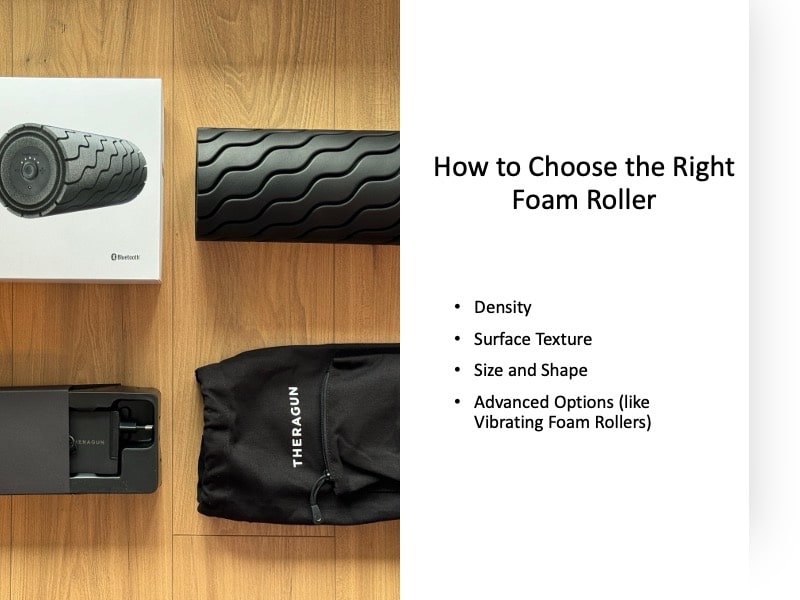
Vibrating Foam Rollers: Incorporate vibration technology to promote muscle relaxation and increase blood flow. For example, the Therabody Wave Roller combines powerful vibration therapy with an innovative wave texture to deliver an efficient full-body foam rolling experience.
I own multiple foam rollers, including this one, and it features five customizable vibration frequencies and can be connected via Bluetooth to a companion app for personalized recovery routines.
This roller is designed to release tension and increase mobility where you need it most.
Best Times to Foam Roll
For best results:
- Pre-Workout Warm-Up: Stimulate blood flow and prepare muscles for activity.
- Post-Workout Recovery: Alleviate soreness and aid muscle repair.
- Daily Relaxation: Use foam rolling as part of your evening routine to reduce stress and improve sleep quality.
Final Thoughts: Is Foam Rolling Good for You?
Foam rolling is an accessible, affordable, and highly effective tool for improving recovery, enhancing flexibility, and promoting relaxation.
While it’s not a cure-all, foam rolling plays a significant role in managing muscle tension and improving mobility, making it a valuable addition to any fitness routine.
By helping to alleviate soreness, release fascial tightness, and improve circulation, it leaves you feeling looser, more mobile, and ready to perform at your best.
Beyond foam rolling, a wide array of self-massage tools can further support your recovery routine.
- Devices like the Roll Recovery R8 are excellent for deeper, more targeted pressure, particularly on the legs.
- Percussive massage guns provide customizable intensity levels, offering a more advanced way to break up muscle adhesions and promote blood flow.
- For those looking to explore DIY cupping therapy, tools like TheraCups deliver suction-based myofascial release, which can target stiffness and improve circulation.
- Similarly, gua sha blades allow for precision scraping to relieve tension and improve muscle recovery in smaller, more specific areas. Each of these tools complements foam rolling, creating a holistic approach to self-care and muscle maintenance.
However, it’s essential to remember that foam rolling and other self-massage tools are just one piece of the recovery puzzle.
Foundational aspects of muscle recovery, like adequate sleep, proper nutrition, and consistent hydration, play far more critical roles in supporting your body’s ability to repair and rebuild after physical exertion.
That said, foam rolling undeniably feels good.
It’s an easy way to soothe tight muscles, relieve stress, and boost your overall well-being.
Whether you’re an athlete aiming to optimize performance or someone simply seeking relief from the tension of daily life, foam rolling and other self-massage tools offer effective, convenient solutions to help you feel your best.
When combined with a well-rounded approach to recovery, these practices will keep your body resilient, balanced, and ready for whatever challenges lie ahead.
This website does not provide medical advice. This website site does contain affiliate links, and purchases may earn a commission.
Read my Medical Disclaimer, Review Disclaimer, and Publishing Policies for more details. Use of this site indicates acceptance of these terms.
Check Out Some of My YouTube Videos Below, and Please Follow on YouTube for More Educational Health and Fitness Content!