Health Benefits of Blueberries: Are Blueberries Good for You?
 Reading Time: 9 minutes
Blueberries are often referred to as a superfood, and for good reason.
These small, nutrient-dense berries are packed with vitamins, antioxidants, and fiber that provide numerous health benefits.
Including blueberries in your diet can help improve heart health, enhance brain function, support weight management, and even reduce the risk of chronic diseases.
Whether you enjoy them fresh, frozen, or in smoothies, blueberries can be a versatile and delicious addition to a balanced diet.
I’ve been going blueberry picking every summer since I was a child, and it’s become a family tradition that I continue to cherish. After getting married, I started bringing my wife along, and now, we make it a special outing with our son.
We’re a huge “seasonal fruit” loving family, and we love taking advantage of Upstate New York’s incredible blueberries throughout the summer.
Eating seasonal fruits and vegetables, such as fresh blueberries, is one of the best summer health tips I regularly recommend.
Blueberries aren’t just a treat; they are a powerhouse of nutrition.
Whether you enjoy them in smoothies, on their own, made into jam, or as a topping for pancakes, cereal, yogurt, or other foods, they deliver an instant boost of valuable nutrients for your health, immune system, and digestive system.
The seasonal, local varieties are especially great because they taste better and contain more nutrients, making them a perfect addition to a balanced diet!

Last update on 2026-11-07 / This article includes affiliate links/Images via Amazon Product Advertising API. I may earn commissions on purchases made through these links.
Nutritional Profile of Blueberries
Blueberries are low in calories but contain a signficant amount of essential nutrients.
- A one-cup serving of blueberries provides about 80 calories and is a great source of vitamin C, vitamin K, and manganese.
- They also contain dietary fiber, which supports digestive health and helps regulate blood sugar levels.
- The high antioxidant content, particularly anthocyanins, gives blueberries their rich color and powerful health-promoting properties.
For those concerned about the acidity of foods, blueberries are slightly acidic and have a relatively mild acidity level, typically ranging from a pH of 3.1 to 3.5.
This makes them less likely to cause digestive discomfort compared to more acidic fruits like citrus, but they still have acidic properties.
Blueberries are also gentle on the stomach and generally well-tolerated by most people, even those with sensitive digestive systems.
The combination of fiber and antioxidants, particularly anthocyanins, helps promote gut health and supports smooth digestion, reducing the risk of bloating or digestive issues.
Health Benefits of Blueberries: Why Are Blueberries Good for Your Diet?
Blueberries are not just a tasty snack; they are a powerful dietary ally with numerous health benefits.
Incorporating blueberries into your diet is a smart, tasty, and convenient way to boost your overall health.
Their rich nutrient profile, high fiber content, and impressive antioxidant levels make them an excellent food choice for supporting heart health, brain function, weight management, and immune health.
Their ability to enhance heart and brain function, support weight management, and strengthen the immune system makes blueberries one of the best superfoods for a balanced diet.
For anyone looking to improve their well-being, adding more blueberries to their meals can be a small but impactful step toward a healthier lifestyle.
Adding blueberries to your diet is an easy way to improve your overall well-being while enjoying a delicious, natural source of essential nutrients.
Antioxidants for Fighting Free Radicals
Blueberries are renowned for their high antioxidant levels, which combat oxidative stress and reduce inflammation in the body.
Blueberries’ primary antioxidants, anthocyanins, have been linked to a lower risk of heart disease and improved cognitive function (Stull et al., 2024).
Antioxidants also play a critical role in protecting the body’s cells from free-radical damage, which can lead to chronic conditions like cancer and diabetes.
Heart Health
Regular blueberry consumption is associated with better heart health.
Research suggests that the anthocyanins in blueberries can lower blood pressure, reduce LDL cholesterol (the “bad” cholesterol), and improve overall cardiovascular function (Kalt et al., 2019).
Including blueberries in your diet may also reduce arterial stiffness, which is crucial for preventing hypertension and maintaining healthy blood flow.
Supporting Brain Function and Memory
Blueberries benefit brain health because of their high levels of antioxidants and anti-inflammatory compounds, and research suggests that eating them can improve memory and slow age-related cognitive decline (Soveid et al., 2023).
The nutrients in blueberries help increase blood flow to the brain, promote neural communication, and protect brain cells from oxidative damage.
Weight Management and Gut Health
Blueberries are a fantastic addition to a weight management plan, offering a powerful combination of nutrients that help you stay on track with your fitness goals.
As a source of complex carbohydrates, blueberries provide a steady release of energy, making them one of the best carbohydrates for bodybuilders and others who are working on their physiques but need sustained fuel for their workouts.
Beyond their energy-providing properties, they are low in calories and high in both fiber and water content, which helps you feel fuller for longer periods, reducing the urge to overeat.
The fiber in blueberries is also one of the best prebiotic food sources available, supporting gut health by promoting the growth of beneficial bacteria in the digestive tract.
These prebiotic fibers fuel probiotics, helping create a balanced gut microbiome, which is crucial for improving digestion, enhancing immune function, and optimizing metabolism.
Including blueberries regularly in your diet not only supports weight management but also lays the foundation for a healthy digestive system and a strong immune response.
Better Immune Health
The vitamin C and other antioxidants in blueberries contribute to a stronger immune system, making it easier for the body to fight off infections and illnesses.
Eating blueberries regularly may reduce the severity and duration of colds and other respiratory infections (McAnulty et al., 2011).
How to Choose the Right Blueberries for Your Diet

Choosing the right blueberries can make a big difference in taste and nutrition.
Local blueberries, often found at farms or farmers’ markets, are typically fresher and more nutrient-dense than chain-store varieties.
They are picked at peak ripeness, offering better flavor and higher antioxidant content. In contrast, store-bought blueberries are usually mass-produced and picked before fully ripening, leading to less flavor and reduced nutritional value.
Wild Alaskan blueberries, such as those used in the supplement Kyani Sunrise, excel among blueberry varieties for their significantly higher antioxidant levels, thanks to their unique growing conditions (Dinstel & Koukel, 2013).
They produce more anthocyanins to protect against the harsh Alaskan climate, making them one of the most nutrient-packed options.
While highbush and lowbush blueberries commonly found in stores are still healthy, they generally don’t match the antioxidant power of Wild Alaskan varieties.
For the best nutritional value, choose local or Wild Alaskan blueberries when possible.
If these aren’t available, opt for organic blueberries to ensure a cleaner, pesticide-free choice.
Incorporating these nutrient-dense berries into your diet can significantly boost your overall health and well-being.
Are Fresh or Frozen Blueberries Healthier for You?
Fresh and unsweetened frozen blueberries are both nutritious choices, and fresh blueberries are not automatically healthier.
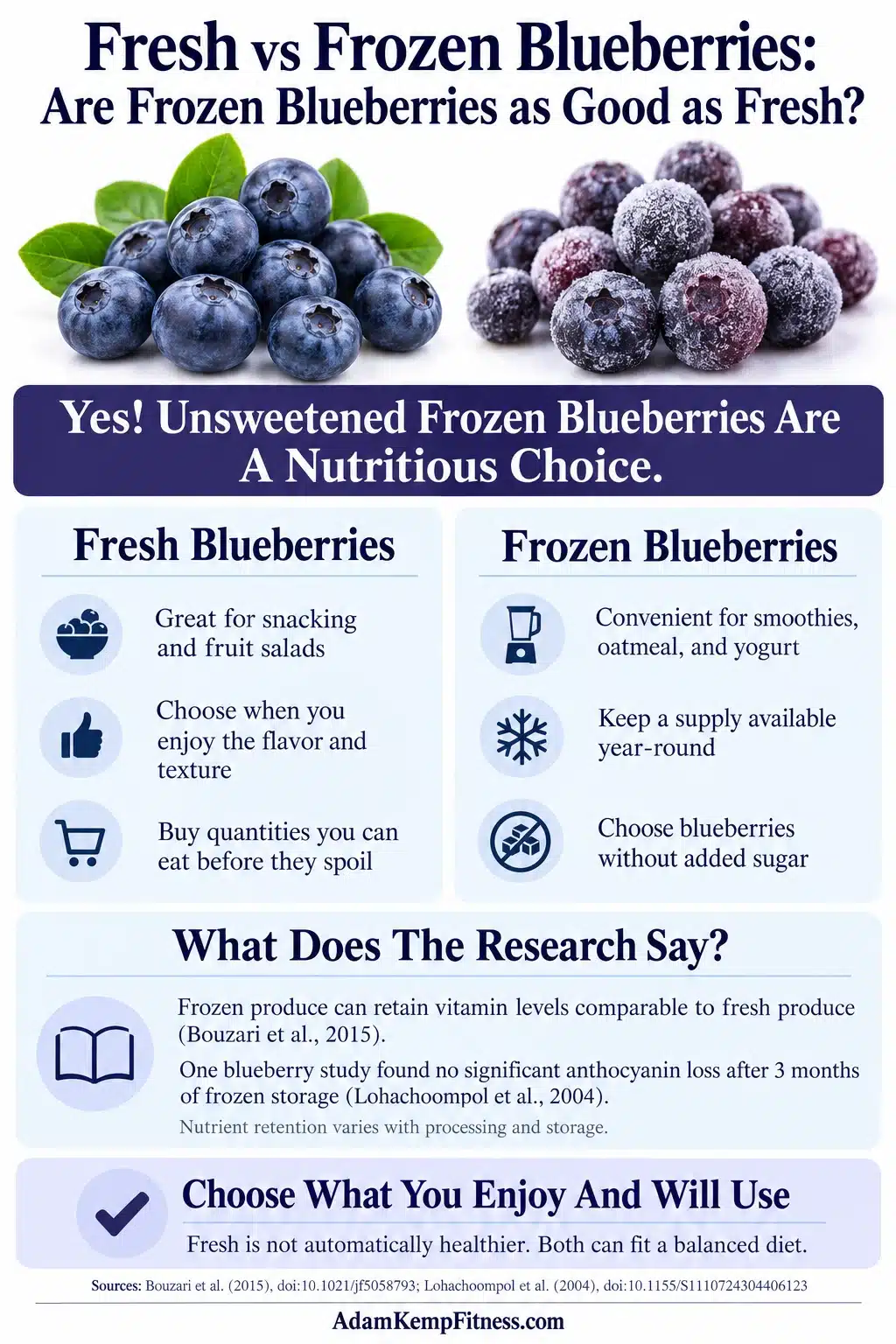
Research comparing eight fruits and vegetables, including blueberries, found that frozen produce generally retained vitamin levels comparable to, and sometimes higher than, refrigerated fresh produce (Bouzari et al., 2015).
Freezing can also preserve the anthocyanins responsible for blueberries’ blue-purple color.
One study found no significant decrease in blueberry anthocyanin levels after three months of frozen storage, although this does not mean that every nutrient remains unchanged indefinitely (Lohachoompol et al., 2004).
For me, freshly picked blueberries will always have a special place because of our family’s summer blueberry-picking tradition.
However, I wouldn’t assume local berries are more nutritious just because they are fresh, or that frozen berries are an inferior choice.
- Choose fresh blueberries when you enjoy their flavor and texture and plan to eat them soon.
- Choose frozen blueberries when you want to keep a supply on hand for smoothies, oatmeal, or yogurt.
I recommend buying whichever option fits your budget and helps you enjoy blueberries regularly, but for frozen products, choose blueberries as the only ingredient, with no added sugar or syrup.
Wyman’s Wild Blueberries are the best frozen blueberries I have ever tried.


Last update on 2026-11-07 / This article includes affiliate links/Images via Amazon Product Advertising API. I may earn commissions on purchases made through these links.
Wyman’s Wild Alaskan Blueberries: The Best Frozen Blueberries!
Wyman’s has earned a reputation as one of the best growers of Wild Alaskan blueberries in the United States, thanks to their commitment to quality and sustainability.
Known for their dedication to producing nutrient-rich, antioxidant-packed berries, Wyman’s specializes in harvesting blueberries that thrive in Alaska’s unique conditions.
The region’s cold climate and rich soil help these berries develop higher anthocyanin concentrations, making them among the most potent blueberries available.
You can find Wyman’s frozen Wild Alaskan blueberries at major retailers like Walmart, making it easy to add these nutritious berries to your daily diet.
For those who want to explore the full range of flavors and products, Wyman’s also offers a variety of blueberry-based products online.
You can order their blueberry syrup or fresh, whole dried blueberries on Amazon to enjoy these delicious and versatile berries in different forms.
Whether in smoothies, on yogurt, or as a snack, Wyman’s Wild Alaskan blueberries deliver a powerful health boost, making them a top choice for any diet!
Last update on 2026-11-07 / This article includes affiliate links/Images via Amazon Product Advertising API. I may earn commissions on purchases made through these links.
Is Blueberry Powder as Good as Blueberries?
Whole blueberry powder can be a nutritious alternative, but it is not automatically equivalent to fresh or frozen blueberries.
The distinction matters: powder made from the entire berry differs from blueberry juice powder, concentrated extracts, or flavored blends.
Freeze-dried whole blueberry powder retains fiber and naturally occurring plant compounds, and researchers have used it in human nutrition trials (Krikorian et al., 2018).
However, its composition and serving size matter when comparing it with whole fruit.
For example, a six-month study found improved blood vessel function in adults with metabolic syndrome who consumed 26 grams of freeze-dried blueberry powder daily, equivalent to about one cup of fresh blueberries (Curtis et al., 2019).
This supports the potential benefits of that preparation, but the study did not directly compare powder with fresh berries or establish that every commercial powder delivers the same results.
Do not assume a small scoop provides the equivalent of a full serving of blueberries.
Check the ingredient list, fiber content, serving weight, and any manufacturer information about its whole-fruit equivalent.
When choosing a product, I would look for 100% freeze-dried whole blueberry powder without added sugar, rather than relying on “antioxidant” claims alone.
I prefer keeping fresh or frozen blueberries as the everyday option and using powder when convenience matters, such as adding it to oatmeal, yogurt, or smoothies.
Powder can be a useful addition, but you don’t need to replace the blueberries you already enjoy.

Last update on 2026-11-07 / This article includes affiliate links/Images via Amazon Product Advertising API. I may earn commissions on purchases made through these links.
Best Ways to Include Blueberries in Your Diet

Adding blueberries to your daily meals is simple and versatile.
You can mix them into your morning oatmeal, blend them into smoothies, use them as a topping for yogurt or salads, or even bake them into healthy treats like muffins or pancakes.
Blueberries also pair well with savory dishes, such as salads with goat cheese or balsamic glaze, adding a burst of sweetness and antioxidants.
Opt for fresh or frozen blueberries to get the most nutrients, and try to avoid those with added sugars to keep your meals as healthy as possible.
Adding blueberries to your diet not only boosts flavor but also significantly increases your intake of vitamins, antioxidants, and fiber.
Final Thoughts: Should You Add Blueberries to Your Diet?
Yes, blueberries are a fantastic addition to a balanced diet, and you don’t need to treat them like a miracle food to appreciate their value, as their flavor, versatility, and ease of preparation make them a fruit I regularly recommend.
Research also gives us reasons to include them beyond taste, as, for example, a six-month randomized trial found that one cup of blueberries daily improved blood vessel function and arterial stiffness measures in adults with metabolic syndrome (Curtis et al., 2019).
For me, blueberries also represent a family tradition, from picking them in Upstate New York as a child to sharing that experience with my wife and son.
That enjoyment is a big part of why they remain a regular choice in our home.
My practical recommendation is to choose fresh or unsweetened frozen blueberries that fit your budget and add them to foods you already enjoy, such as oatmeal, yogurt, or smoothies.
This website does not provide medical advice. This website site does contain affiliate links, and purchases may earn a commission.
Read my Medical Disclaimer, Review Disclaimer, and Publishing Policies for more details. Use of this site indicates acceptance of these terms.
Check Out Some of My YouTube Videos Below, and Please Follow on YouTube for More Educational Health and Fitness Content!