Sleep Optimization for Athletes: What Works and What Doesn’t?
 Reading Time: 11 minutes
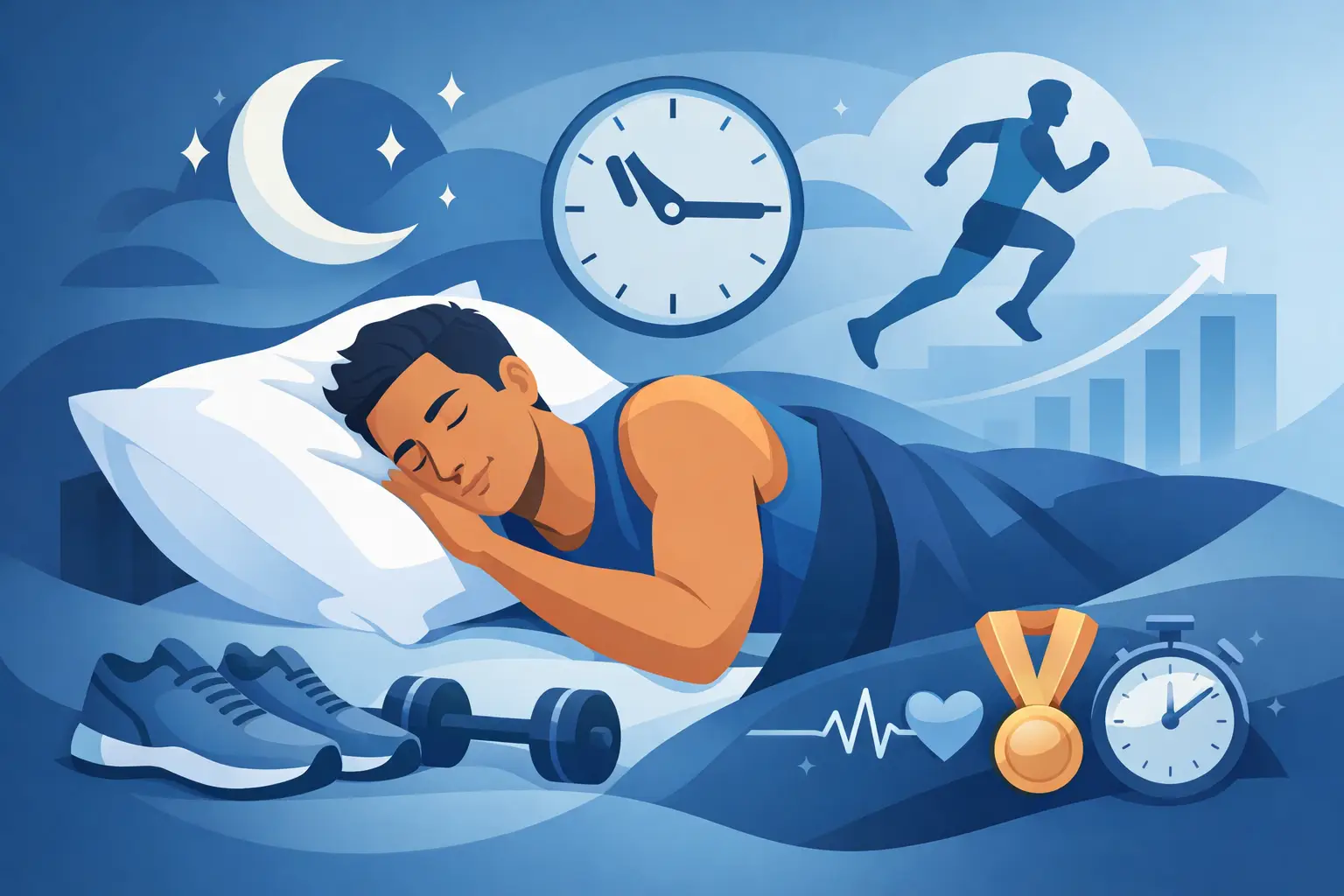
 Sleep optimization for athletes begins with a simple reality: training creates the stimulus for improvement, but sleep gives the body and brain the opportunity to respond.
While you sleep, your body coordinates many processes involved in tissue repair, energy regulation, immune function, learning, and nervous system recovery.
Throughout my professional basketball career, I have experienced how quickly poor sleep can affect performance.
Late games, long bus rides, international travel, unfamiliar hotel rooms, physical discomfort, and the mental stimulation of competition have made it difficult to fall asleep, even when my body desperately needed to recover.
I have also learned that effective sleep optimization for athletes is rarely about finding one perfect supplement, wearable, or bedtime ritual.
The biggest improvements usually come from consistently protecting enough time for sleep, managing caffeine, controlling the sleep environment, creating a reliable wind-down routine, and adapting those habits to the realities of training and competition.
Athletes are especially vulnerable to inadequate or disrupted sleep during intensified training, travel, and competition, and individual sleep needs can differ considerably (Walsh et al., 2021).
That is why this guide separates strategies that reliably support better sleep from popular “sleep hacks” that are ineffective, exaggerated, or useful only under specific circumstances.
If you want a complete system for turning these principles into a realistic nightly routine, buy my Athlete Sleep System book.
It provides a practical, athlete-tested framework for improving sleep quality, recovery, and performance without requiring you to live by a perfect schedule.
Optimize Your Sleep.
Improve Your Performance.
Learn the exact sleep strategies I use as a professional athlete to improve recovery, boost energy, and perform at a higher level every day.
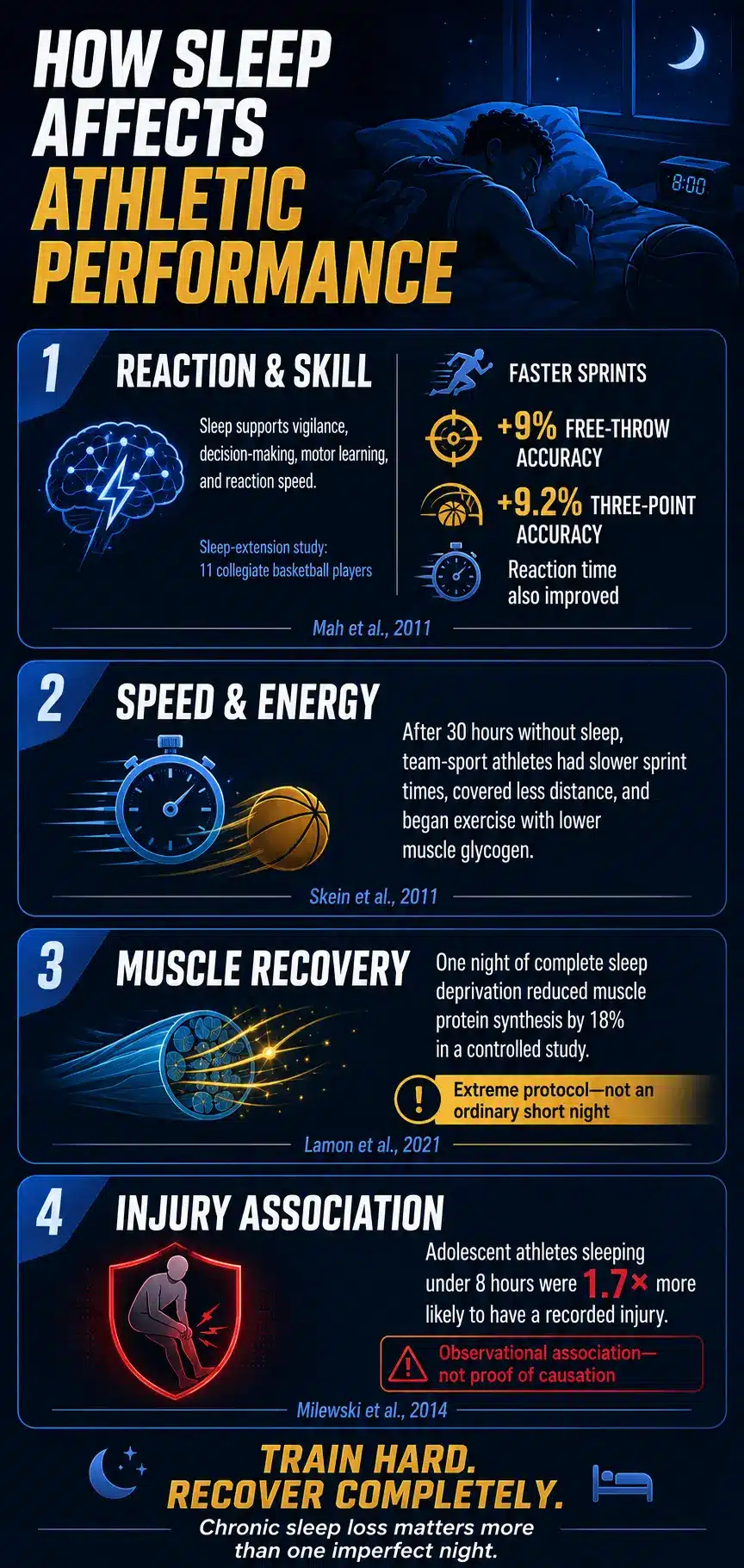
How Sleep Affects Athletic Performance
Sleep affects overall fitness and athletic performance through both physical recovery and brain function.
Adequate sleep supports muscular repair, energy metabolism, immune regulation, motor learning, emotional control, and the nervous system’s ability to respond quickly and accurately.
Reaction Time, Decision-Making, and Skill Execution
Reaction time is especially important in basketball and other fast-moving sports, where an athlete must recognize a play, choose a response, and execute it within fractions of a second.
Insufficient sleep can impair vigilance, attention, decision-making, learning, and reaction speed, potentially creating a small delay that has a significant effect during competition (Charest & Grandner, 2022).
Research involving Stanford University men’s basketball players demonstrates what better sleep may accomplish.
After extending their sleep for five to seven weeks, the players improved their psychomotor reaction time, completed a timed sprint faster, and increased both their free-throw and three-point accuracy by approximately nine percentage points (Mah et al., 2011).
That study included only 11 players and did not use a randomized control group, so its results should not be taken as proof that sleeping longer will immediately improve every athlete’s shooting percentage.
However, it provides sport-specific evidence that habitually underslept athletes may have unrealized performance capacity.
Speed, Strength, and Training Quality
Sleep loss does not affect every physical quality equally, but repeated-sprint performance, speed, skill control, and endurance appear particularly vulnerable.
After 30 hours without sleep, male team-sport athletes recorded slower sprint times, covered less distance during self-paced exercise, and began the next exercise session with lower muscle glycogen concentrations than after a normal night’s sleep (Skein et al., 2011).
These effects can also change how an athlete trains.
When concentration, motivation, coordination, and pacing are impaired, the athlete may complete the planned workout without producing the speed, precision, or intensity required to create the intended adaptation.
Muscle Recovery and Adaptation
Sleep is not a passive period in which the body simply “switches off.”
It creates physiological conditions that support tissue remodeling, metabolic regulation, and recovery from training-induced stress.
In a controlled study, one night of complete sleep deprivation reduced post-meal muscle protein synthesis by approximately 18% while increasing cortisol and reducing testosterone concentrations (Lamon et al., 2021).
This extreme protocol does not replicate an ordinary short night, but it illustrates how severe sleep loss can temporarily shift the body toward a less favorable environment for muscular recovery.
That does not mean one poor night will erase a workout or cause muscle loss.
The greater concern is a recurring pattern in which inadequate sleep reduces training quality and limits the body’s ability to recover and adapt between sessions.
Sleep and Sports Injury Risk
Poor sleep may also contribute to injury risk because fatigue can reduce reaction speed, motor control, situational awareness, and the ability to absorb or redirect force.
Sleep loss may not directly “cause” an injury, but it can become one part of a larger risk profile that includes training load, previous injuries, strength deficits, stress, nutrition, and competition exposure.
In a frequently cited study of 112 adolescent athletes, those who reported averaging fewer than eight hours of sleep per night were approximately 1.7 times more likely to have recorded an injury than those sleeping at least eight hours (Milewski et al., 2014).
This was a retrospective observational study, so it identified an association rather than proving that short sleep caused the injuries.
The broader evidence supports a link between chronically inadequate sleep and musculoskeletal pain or injury, but researchers have not identified a universal sleep threshold that protects every athlete (Huang & Ihm, 2021).
Sleep should therefore be treated as a modifiable component of injury-risk management, not as a guarantee against injury.
Why One Bad Night Is Different From Chronic Sleep Loss
One poor night does not automatically ruin the next game or workout, particularly when motivation and adrenaline are high.
The larger problem is accumulated sleep restriction, because athletes may gradually adapt to feeling tired without recognizing how much their reaction time, mood, recovery, and training quality have declined.
Training provides the stimulus, but recovery determines how consistently an athlete can respond to that stimulus.
Repeatedly sacrificing sleep to fit in more work can eventually produce the opposite of the intended result: slower reactions, lower-quality training, impaired recovery, greater fatigue, and potentially higher injury risk.
Keys to Sleep Optimization for Athletes
Effective sleep optimization for athletes is less about discovering one perfect sleep hack and more about consistently controlling the factors that have the greatest influence.
Sleep duration, schedule, light exposure, bedroom conditions, caffeine, nutrition, mental arousal, and travel habits can all affect how easily you fall asleep and how well you recover.
Not every recommendation will fit every athlete, particularly when late practices, games, travel, family responsibilities, or work obligations interfere with an ideal routine.
The goal is to build a flexible system that protects the fundamentals, identifies your biggest sleep disruptors, and helps you make better recovery decisions under realistic conditions.
Sleep Optimization for Athletes Starts With Allowing Enough Time
The best sleep routine cannot compensate for an inadequate sleep opportunity.
Most adults function best with seven to nine hours per night, while athletes with demanding training loads often benefit from being near the upper end of that range.
During periods of double sessions, heavy lifting, intense competition, or travel, some athletes may need more.
The key is to distinguish time in bed from actual sleep.
If you need eight hours of sleep and normally take 20 to 30 minutes to fall asleep, your schedule needs to allow more than eight hours between getting into bed and getting up.
Wearables can offer useful trends, but do not let a sleep score override common sense. Your energy, mood, training performance, and daytime alertness matter too.
Start by working backward from your required wake time.
If you need to be up at 6:00 a.m., an 11:30 p.m. bedtime is not a serious recovery plan if your goal is eight hours of actual sleep.
Build a realistic wind-down period and protect it like you would a training appointment.
Keep Your Wake Time Consistent
A consistent wake time is often more practical and effective than obsessing over a perfect bedtime.
Your circadian rhythm responds strongly to regular morning wake times, light exposure, meal timing, and activity patterns.
You do not need to live on a rigid military schedule.
However, sleeping until noon every weekend after waking at 6:00 a.m. all week can make Sunday night difficult and Monday morning miserable.
Try to keep your wake time within about an hour of your normal schedule whenever possible.
If you need extra recovery, go to bed earlier or take a strategic nap rather than shifting your entire schedule dramatically.
Build a Pre-Sleep Routine That Lowers Arousal
Athletes often struggle with sleep because their bodies and minds are still switched on.
Late practices, evening games, stimulants, bright lights, post-game meals, work obligations, and replaying mistakes can all keep the nervous system activated.
Your goal is not to create a complicated ritual. It is to create a repeatable transition from performance mode to recovery mode.
For the final 30 to 60 minutes before bed, lower your environment’s intensity.
Dim the lights, finish demanding work, and choose activities that don’t pull you back into a competitive mindset.
A practical routine may include a warm shower, light stretching, reading, calm music, or a few minutes of slow breathing.
Some athletes also benefit from writing down tomorrow’s priorities or any concerns racing through their minds.
This is not about forcing sleep; it is about giving your brain fewer reasons to stay alert.
Make the Bedroom Support Recovery
Your sleep environment will not replace good habits, but it can make those habits easier to maintain.
Keep the room cool, dark, and quiet.
Most people sleep better in a slightly cool room, though the ideal temperature varies from person to person.
If outside noise, roommates, or travel conditions are a problem, use simple solutions such as a fan, white noise, earplugs, or an eye mask.
These are not glamorous purchases, but consistency beats novelty in recovery.
Also, reserve your bed primarily for sleep.
If you regularly work, study, eat, watch games, and scroll for hours in bed, your brain can start associating that space with alertness.
For busy professionals and student-athletes, even moving to a chair or table for work can reinforce the right mental cue.
Manage Screens Without Being Unrealistic
The advice to eliminate all screens before bed is not realistic for everyone.
The more useful standard is to reduce stimulating screen use.
Watching emotionally intense content, scrolling social media, answering work messages, or reviewing game film in bed can delay sleep far more than a short, calm activity on a dimmed screen.
If you use your phone at night, keep it out of the bed when possible, lower the brightness, and set a clear stopping point.
More importantly, do not let your phone become the reason you trade away an hour of sleep night after night.
Use Caffeine and Nutrition Strategically
Caffeine can improve training quality and performance, but its benefits come with a trade-off.
Caffeine has a relatively long half-life, meaning a pre-workout drink or a large coffee late in the day may still affect your sleep hours later.
The exact cutoff depends on your sensitivity, dose, body size, and bedtime.
A useful starting point is to avoid caffeine within eight hours of sleep, then adjust based on your response.
If you train in the evening, you may need to choose between a stimulant-heavy session and the sleep quality that supports tomorrow’s recovery.
In many cases, reducing the dose is smarter than treating more caffeine as the only solution.
Do not go to bed overly hungry after a demanding session.
A balanced evening meal or snack with protein and carbohydrates can support recovery and help you settle down.
At the same time, a huge, high-fat meal immediately before lying down may cause discomfort or reflux for some people.
Alcohol deserves special attention.
It may make you feel sleepy at first, but it often disrupts sleep later in the night and can impair recovery, hydration, and next-day readiness.
If performance matters, alcohol should not be treated as a sleep tool.
Naps Can Help, but Timing Matters
A short nap can be a valuable recovery tool, particularly after early training, travel, poor sleep, or a demanding competition schedule.
For many athletes, 20 to 30 minutes is enough to improve alertness without creating the grogginess that can follow a longer nap.
Longer naps can work when there is a major sleep deficit, but they are more likely to interfere with bedtime if taken late in the afternoon.
If you already struggle to fall asleep at night, keep naps earlier and shorter.
Think of a nap as a supplement to nighttime sleep, not a substitute for it.
Use Sleep Supplements Strategically
Sleep supplements can support a strong routine, but they cannot compensate for an inconsistent schedule, inadequate sleep opportunity, late caffeine, or an overstimulating environment.
I use supplements as targeted tools for relaxation, travel, and recovery, not as the foundation of my sleep system.
- Melatonin is a hormone that helps regulate circadian timing rather than simply acting as a sedative. It may be most useful when an athlete’s internal clock is misaligned by jet lag, late competition, or a major schedule change, although its effects on ordinary insomnia are generally modest and depend heavily on timing (Ferracioli-Oda et al., 2013; Herxheimer & Petrie, 2002).
- Magnesium glycinate, also called magnesium bisglycinate, combines magnesium with the amino acid glycine and is generally well tolerated. It may promote relaxation or correct inadequate magnesium intake, but research on magnesium supplements and sleep remains mixed, with benefits more likely in people with low magnesium status or existing sleep difficulties (Arab et al., 2023).
- Magnesium L-threonate is a different form designed to increase magnesium delivery to the brain. Early research suggests possible benefits for sleep quality, daytime functioning, and cognitive relaxation, but the evidence is still emerging and should not be treated as conclusive (Hausenblas et al., 2024).
- Tart cherry provides small amounts of naturally occurring melatonin along with polyphenols that may support recovery from demanding exercise. Small studies suggest tart cherry concentrate can modestly increase sleep duration or improve certain sleep measures, although it should not be presented as a guaranteed treatment for insomnia (Howatson et al., 2012).
I often combine magnesium glycinate, magnesium L-threonate, low-dose melatonin, and tart cherry as part of my nighttime routine.
However, athletes should introduce supplements individually, monitor next-day alertness, discuss potential interactions with a healthcare professional, and choose independently tested products to reduce contamination and anti-doping risks.
Adjust Expectations During Travel and Competition
Perfect sleep is not always possible.
Early flights, hotel beds, unfamiliar rooms, and late games are part of many athletes’ schedules.
The goal during these periods is not perfection: it is damage control and consistency where you can create it.
Bring familiar sleep items when traveling, such as an eye mask, earplugs, or a small pillowcase.
Get outdoor light early in the day when adjusting to a new time zone.
Hydrate well, plan caffeine intake carefully, and avoid turning one disrupted night into three more by abandoning your normal routine.
Most importantly, do not panic after a bad night.
Anxiety about sleep can become more damaging than the poor night itself.
Return to your basic habits the next day, train intelligently, and give your body another chance to recover.
When Sleep Problems Need More Than Habit Changes
If you consistently have trouble falling asleep, wake repeatedly, snore loudly, wake gasping, experience unusual daytime sleepiness, or need stimulants just to function, speak with a qualified healthcare professional.
Sleep apnea and other sleep disorders can affect athletic performance, health, and safety, even in people who appear fit.
Supplements should not be your first answer.
Some people may benefit from options such as magnesium or melatonin in specific circumstances, but dosage, timing, medication interactions, and the underlying cause of poor sleep all matter.
A better plan is to first improve your sleep opportunity, schedule, environment, and stimulant habits.
Treat your bedtime as part of your training plan.
The next great workout is not only built by what you do in the gym. It is also built by the recovery decision you make when the day is over.
This website does not provide medical advice. This website site does contain affiliate links, and purchases may earn a commission.
Read my Medical Disclaimer, Review Disclaimer, and Publishing Policies for more details. Use of this site indicates acceptance of these terms.