Matcha DNA Review: Is Matcha DNA a Good Brand? (2026)
 Reading Time: 11 minutes
Finding an affordable matcha you actually enjoy can take some trial and error, so this Matcha DNA review explains why my wife and I have bought this matcha tea brand for years.
For our homemade lattes and smoothies, USDA Organic MatchaDNA offers a practical balance of price, flavor, and versatility.
We usually blend it with almond milk, or soy milk for my wife, honey (preferably raw honey), and sometimes a little coconut oil for added richness.
It has become a familiar part of our routine because it works well in the drinks we enjoy most.
My Matcha DNA review also comes with a qualification: I find its flavor more bitter and less refined than premium matcha, particularly when prepared with water alone.
However, that trade-off matters considerably less when I mix it into a creamy latte or protein smoothie, and when I consider the price.
If you want an everyday USDA organic matcha green tea without a premium price tag, this Matcha DNA review will help you decide whether it fits your preferences.
Read below to learn about my experience with its taste, texture, value, and the ways I prefer to use it.
Disclaimer: This Matcha DNA review reflects my personal experience and opinions. My master’s degree in Nutrition Education informs my perspective, but this article is for educational purposes only and does not replace individualized medical advice.
Matcha contains caffeine, and individual responses vary. Research discussed here concerns matcha, green tea, or their compounds and does not guarantee specific results from Matcha DNA.
This article may contain affiliate links. If you purchase through these links, I may earn a commission at no additional cost to you.

Last update on 2026-10-21 / This article includes affiliate links/Images via Amazon Product Advertising API. I may earn commissions on purchases made through these links.
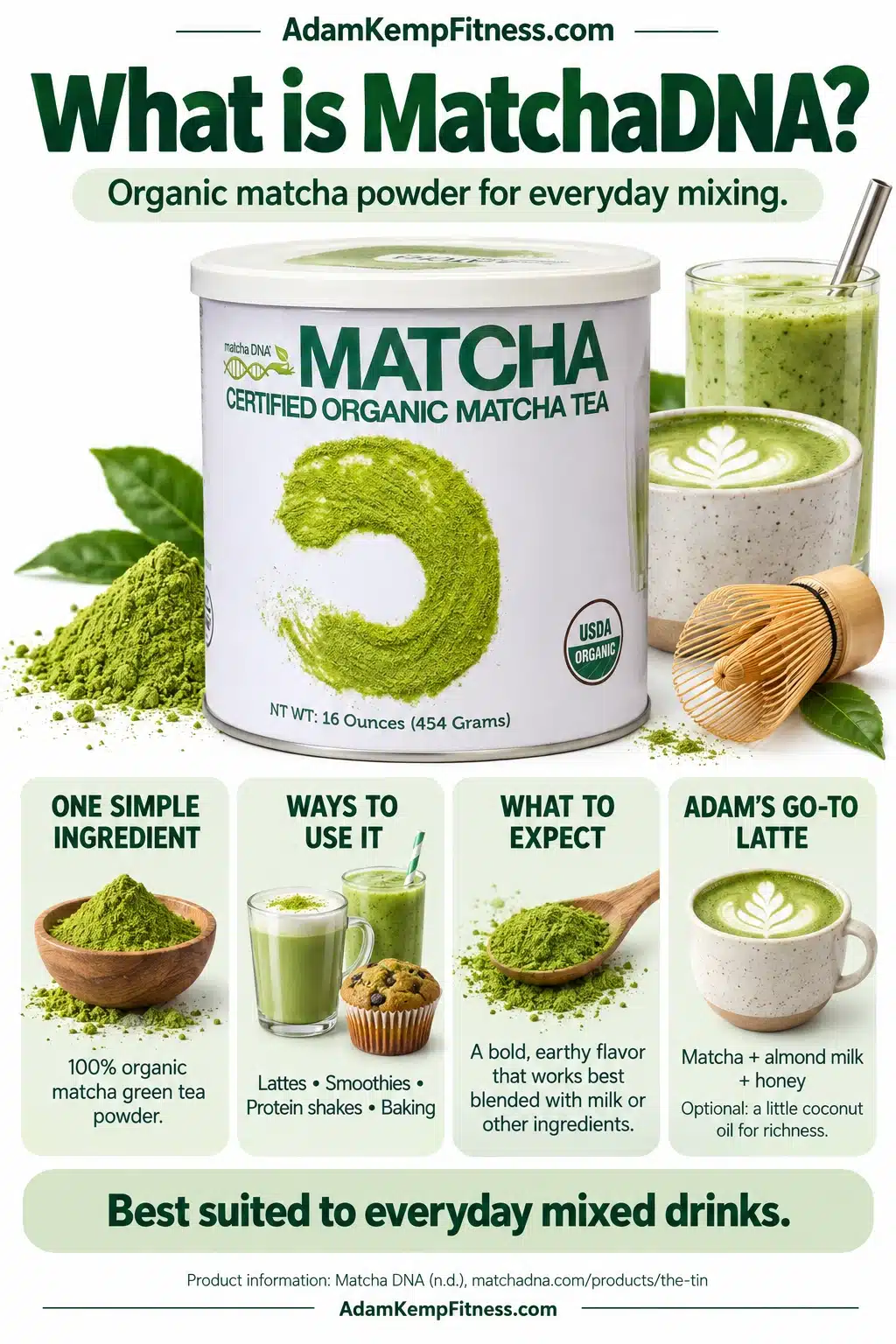
What is Matcha DNA?
Matcha DNA is a USDA-certified organic Matcha tea powder.
The matcha is grown in the pristine mountains of Yunnan Province, China, using sustainable farming practices that prioritize purity and environmental responsibility.
The tea is lab-tested to ensure it is free from lead and heavy metals, which is a significant advantage over many cheaper, non-organic options.
Although Matcha DNA is not ceremonial grade, it is still a high-quality culinary-grade matcha that works well in recipes, lattes, and smoothies.
The taste isn’t as smooth or as naturally sweet as premium Japanese ceremonial-grade matcha, but for its price and quantity, it’s still a fantastic everyday option.
Health Benefits of Drinking Matcha DNA
I view drinking matcha as one of the small, repeatable habits that can contribute to a healthier lifestyle.
My wife and I enjoy our homemade matcha drinks, which makes this an easy addition to our routine.
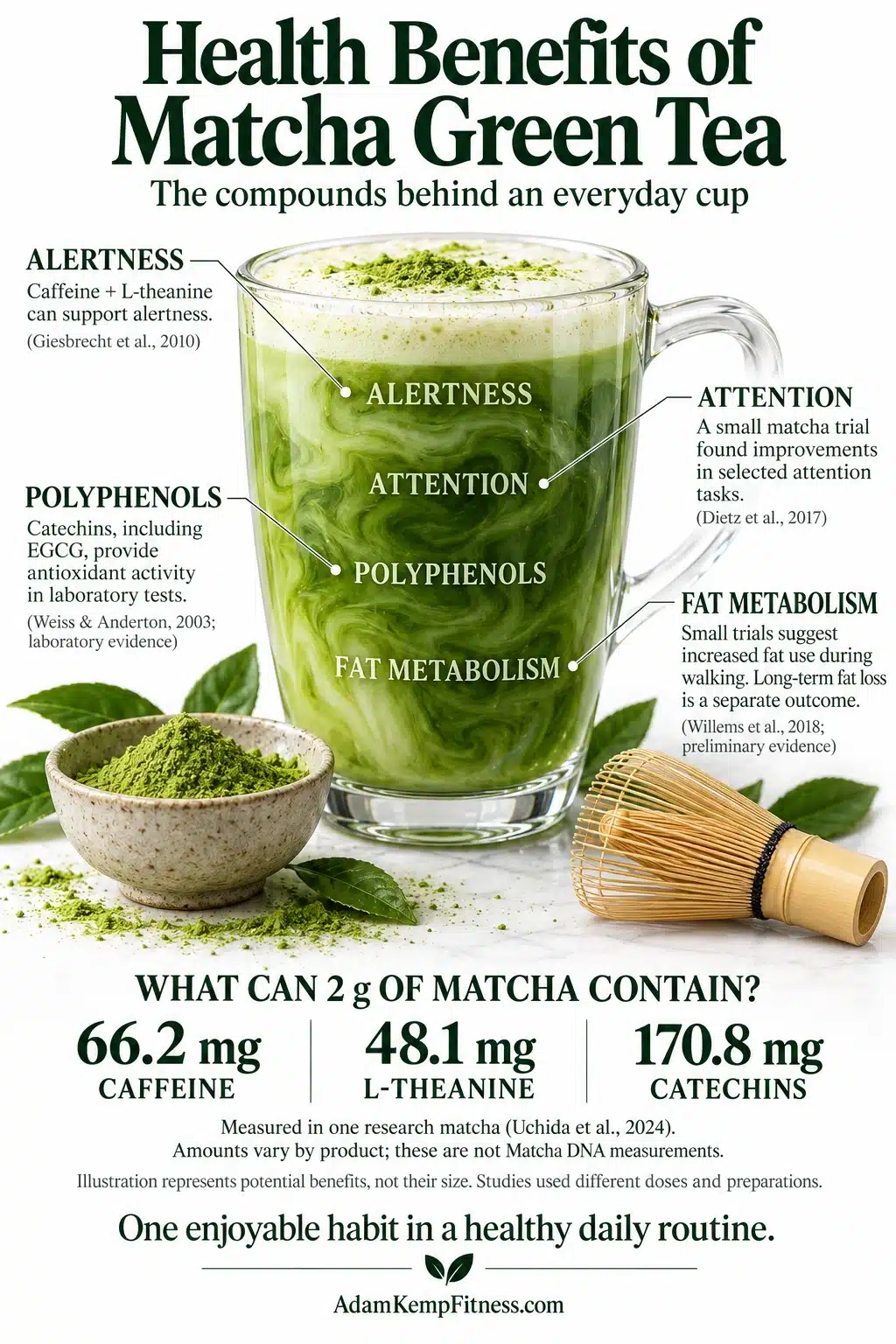
Matcha provides tea polyphenols, including EGCG, along with caffeine and L-theanine, which give this everyday drink nutritional value beyond its enjoyable flavor (Weiss & Anderton, 2003; Dietz et al., 2017).
Research suggesting modest improvements in certain measures of attention and memory offers another reason to appreciate it as part of a healthy routine (Dietz et al., 2017).
Small benefits are still worth considering, especially when the habit is enjoyable and easy to maintain.
That is how I approach Matcha DNA: as a practical addition alongside nutritious meals, regular movement, and other daily choices that support my goals.
May Support Alertness and Focus
One reason I enjoy Matcha DNA is the energy it adds to my daily routine. Matcha contains caffeine and L-theanine, and research on this combination suggests it can support attention and alertness (Giesbrecht et al., 2010).
In a controlled trial, participants who consumed 40 milligrams of caffeine with 97 milligrams of L-theanine performed better on an attention-switching task and reported greater alertness than those receiving a placebo (Giesbrecht et al., 2010).
A separate study using matcha found small improvements in certain measures of attention and memory, but it did not determine the effects of a single serving of Matcha DNA (Dietz et al., 2017).
A modest improvement in focus can still be useful in everyday life. For me, enjoying a matcha latte is a simple way to make an energizing drink part of a routine I look forward to.
Provides Beneficial Green Tea Polyphenols
Matcha contributes plant compounds called catechins, including epigallocatechin gallate, or EGCG.
Researchers have measured these compounds in matcha, making it another dietary source of the polyphenols naturally present in green tea (Weiss & Anderton, 2003).
I approach this benefit through the same lens I use for other everyday food choices: look for enjoyable ways to add nutritional variety.
Matcha DNA gives me another ingredient to include alongside the fruits, vegetables, and other foods I already enjoy.
The practical appeal is its versatility.
Adding matcha to a latte or smoothie makes these tea compounds part of a familiar habit without requiring a major change to how I eat.
Makes a Low-Calorie, Unsweetened Starting Point for Drinks
Matcha DNA Original Matcha provides 5 calories and no added sugar per 1.5-gram serving, according to the manufacturer’s current product information (Matcha DNA, n.d.).
This gives you a simple base for creating a drink that suits your taste and nutrition goals.
When I make a matcha latte at home, I can choose the milk, adjust the sweetness, and decide whether I want extras like coconut oil.
I enjoy using raw honey, and preparing the drink myself lets me choose exactly how much to add.
That flexibility is a useful everyday advantage.
You can keep the recipe simple or make it richer depending on your preferences and how it fits into the rest of your day.
Can Support a Practical Weight-Management Routine
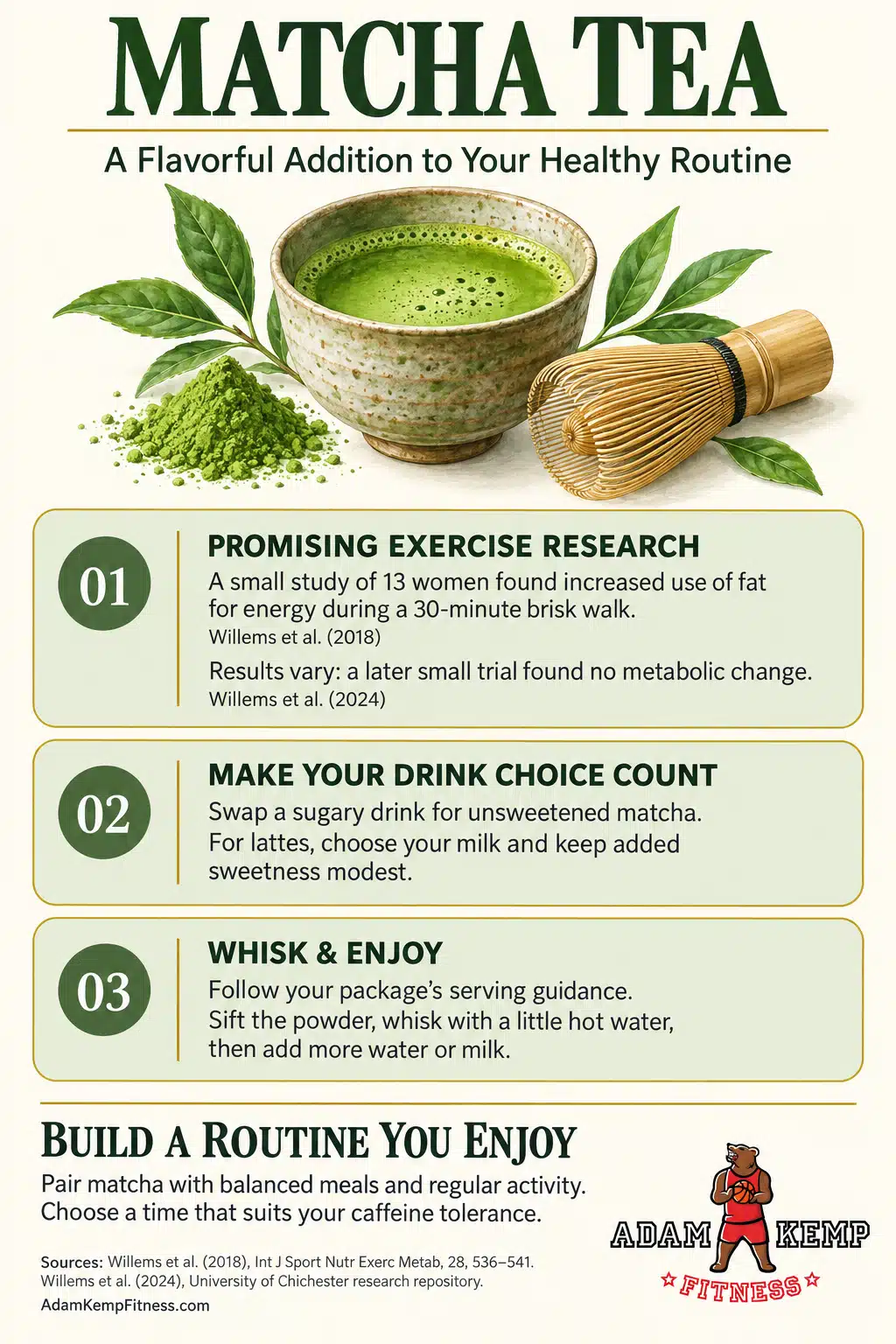
For someone interested in matcha tea for weight loss, one useful option is to replace a higher-calorie drink with a homemade matcha with fewer calories.
Research also puts matcha’s potential metabolic contribution in perspective, as a Cochrane review found that green tea preparations produced small weight changes that were unlikely to be clinically important on their own, but did have some contribution (Jurgens et al., 2012).
My approach is to find small adjustments I enjoy enough to repeat.
A satisfying homemade matcha can be one of those choices, especially when it helps you maintain a drink routine that fits your nutrition plan.
Pros & Cons of Matcha DNA
Matcha DNA offers a balance of affordability, quality, and convenience, making it a popular choice for those looking to incorporate matcha into their daily routine.
While it provides clean energy and is made from organic, lab-tested leaves, it may not match the flavor profile of higher-end ceremonial-grade matcha.
Below is a breakdown of the key advantages and potential drawbacks to help you decide if Matcha DNA is the right choice for you.

Pros
There are several reasons I love Matcha DNA, but one of the primary reasons I enjoy Matcha DNA is the long-lasting energy it provides.
Unlike coffee, which can cause a sharp spike and crash, this matcha delivers a steady boost in focus and alertness, thanks to its high L-theanine content.
This amino acid helps promote a calm, sustained energy level, making it an excellent alternative for those who want to avoid the jitters associated with synthetic pre-workouts or high-caffeine drinks.
- Organic and lab-tested for purity, free from contaminants like lead and heavy metals.
- Affordable for the quality, offering a large quantity at a reasonable price compared to competitors.
- Sustainably sourced from small-scale, organic farms in China.
- Provides clean, jitter-free energy for hours.
- Works well in lattes, smoothies, and baking.
Cons
- Not the best-tasting matcha, slightly more bitter than higher-end ceremonial matcha.
- Can be slightly grainy, requiring blending or sifting for the best texture.
- Packaging could be better; while it comes in a sealed tin, some users report that the powder can settle unevenly.
How to Use Matcha DNA: Lattes, Smoothies, and Protein Shakes
My favorite way to use Matcha DNA is in a homemade latte, although I also enjoy adding it to smoothies and protein shakes. In my experience, its earthy flavor works best when combined with milk, fruit, or other ingredients.
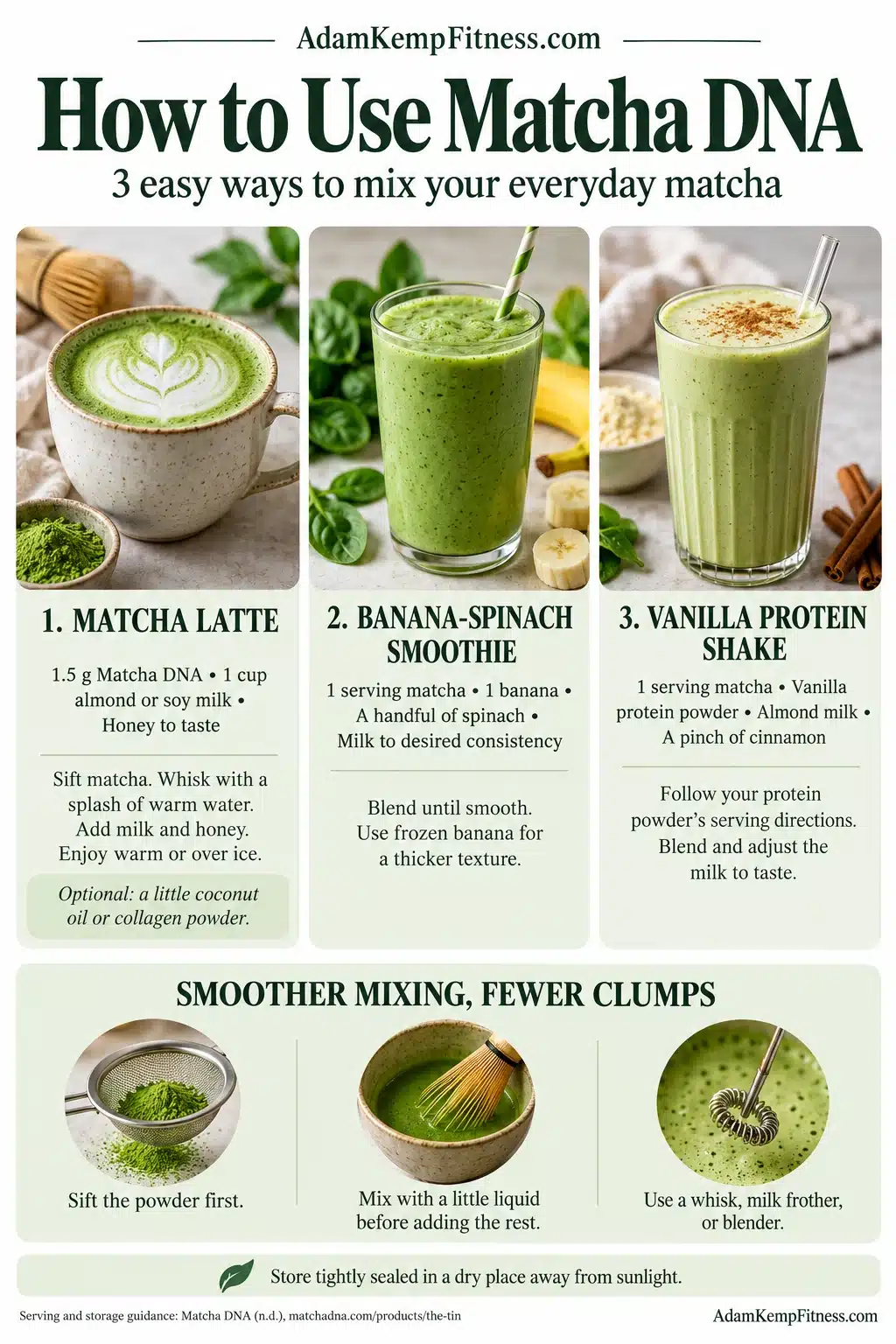
The brand recommends mixing one 1.5-gram scoop of its Original Matcha powder with one cup of milk as a useful starting point for adjusting your drink’s strength and consistency.
How to Make a Matcha DNA Latte
For my everyday matcha latte, I use almond milk, honey, and sometimes a small amount of coconut oil for added richness.
My wife prefers soy milk, so we adjust the recipe depending on who is drinking it.
Suggested ingredients for one latte:
- 1.5 grams of Matcha DNA powder
- 1 cup of almond milk, soy milk, or your preferred milk
- A small splash of warm water for mixing
- Honey to taste
- Optional: a little coconut oil or collagen powder
Preparation:
- Sift the matcha into a mug or small bowl to break up clumps.
- Add a splash of warm water and whisk into a smooth mixture.
- Stir in the honey, then add your milk.
- Whisk or froth to combine, adding the optional ingredients if desired.
- Enjoy warm, or pour over ice for an iced matcha latte.
I occasionally add collagen powder because I enjoy the frothier texture it creates in my latte.
Coconut oil is another optional addition when I want a richer drink.
Tips for Making a Matcha DNA Latte Without Clumps
In my experience, Matcha DNA mixes more evenly when I sift it first and combine it with a small amount of liquid before adding the rest.
A whisk, milk frother, or blender makes preparation easier than stirring dry powder directly into a full glass of milk.
How to Use Matcha DNA in Smoothies
A banana-spinach smoothie is another way I enjoy Matcha DNA.
For a simple version, blend one serving of matcha with a banana, a handful of spinach, and enough almond or soy milk to reach your preferred consistency.
Use frozen banana for a thicker smoothie, or add more milk for a lighter drink. Start with less matcha if you prefer a milder flavor, then adjust to taste.

How to Make a Matcha DNA Protein Shake
For a matcha protein shake, combine one serving of Matcha DNA with vanilla protein powder, almond milk, and a pinch of cinnamon.
Follow your protein powder’s serving instructions, and adjust the liquid to reach your preferred texture.
Blend everything until evenly mixed, or prepare the matcha with a small amount of water before adding it to a shaker bottle.
Vanilla and cinnamon are my preferred flavor combination for this drink.
Matcha DNA Tea Bags: A Convenient and Affordable Option
Matcha DNA offers both matcha powder and matcha tea bags, catering to different preferences for enjoying this antioxidant-rich drink.
While the powder provides a traditional matcha experience, the tea bags offer a more convenient and travel-friendly alternative.

Last update on 2026-10-21 / This article includes affiliate links/Images via Amazon Product Advertising API. I may earn commissions on purchases made through these links.
Matcha DNA Powder vs. Tea Bags: Which Should You Choose?
For the recipes in this Matcha DNA review, I recommend the powder because it is the format my wife and I regularly use. It lets us adjust how much matcha we add and mix it directly into our favorite drinks.
Matcha DNA tea bags are another example of the brand’s commitment to affordability and quality.
They provide an easy way to incorporate matcha’s health benefits into a daily routine without needing a whisk or blender.
At $19.99 for 100 tea bags, they offer incredible value compared to single-serve matcha packets or high-end ceremonial blends.
For those who prioritize convenience and cost-effectiveness, Matcha DNA tea bags are an excellent choice.
They provide a clean energy boost, mild green tea flavor, and organic ingredients, making them a practical option for busy lifestyles.
Whether you’re a dedicated matcha drinker or just starting out, these tea bags offer a simple way to enjoy matcha without the extra steps required for traditional preparation.
Preparation
- Matcha Powder: Requires whisking or blending with water, milk, or smoothies for a smooth and creamy texture.
- Tea Bags: Simply steep in hot water for a quick, mess-free matcha tea.
Taste and Texture
- Matcha Powder: More vibrant in flavor, with a rich umami taste and smoother consistency when properly mixed.
- Tea Bags: Milder flavor with a light green tea taste, ideal for those who prefer a less intense matcha experience.
Convenience
- Matcha Powder: Best for those who enjoy matcha lattes, baking, and smoothies.
- Tea Bags: Perfect for those who want a simple, fast cup of matcha without any additional tools.
Versatility
- Matcha Powder: Can be used in lattes, protein shakes, baking, and even skincare.
- Tea Bags: Designed primarily for brewing a standard cup of matcha-infused green tea.
Last update on 2026-10-21 / This article includes affiliate links/Images via Amazon Product Advertising API. I may earn commissions on purchases made through these links.
Is Matcha DNA a Good Brand of Matcha Tea?
Matcha DNA is a good option for budget-conscious matcha drinkers, especially if you primarily make lattes, smoothies, or recipes.
My wife and I have purchased it for years, and my Matcha DNA review comes down to one practical question: how do you plan to use your matcha?
Our homemade matcha lattes offer the combination of affordability and versatility that keeps us buying them.
I particularly enjoy it blended with almond milk, honey, and sometimes a little coconut oil for added richness.
However, Matcha DNA makes the most sense when value and everyday usefulness matter more to you than a delicate, naturally sweet flavor.
I find its taste less refined than premium matcha, but that trade-off matters much less when I blend it into a latte.
Final Verdict: Should You Buy Matcha DNA?
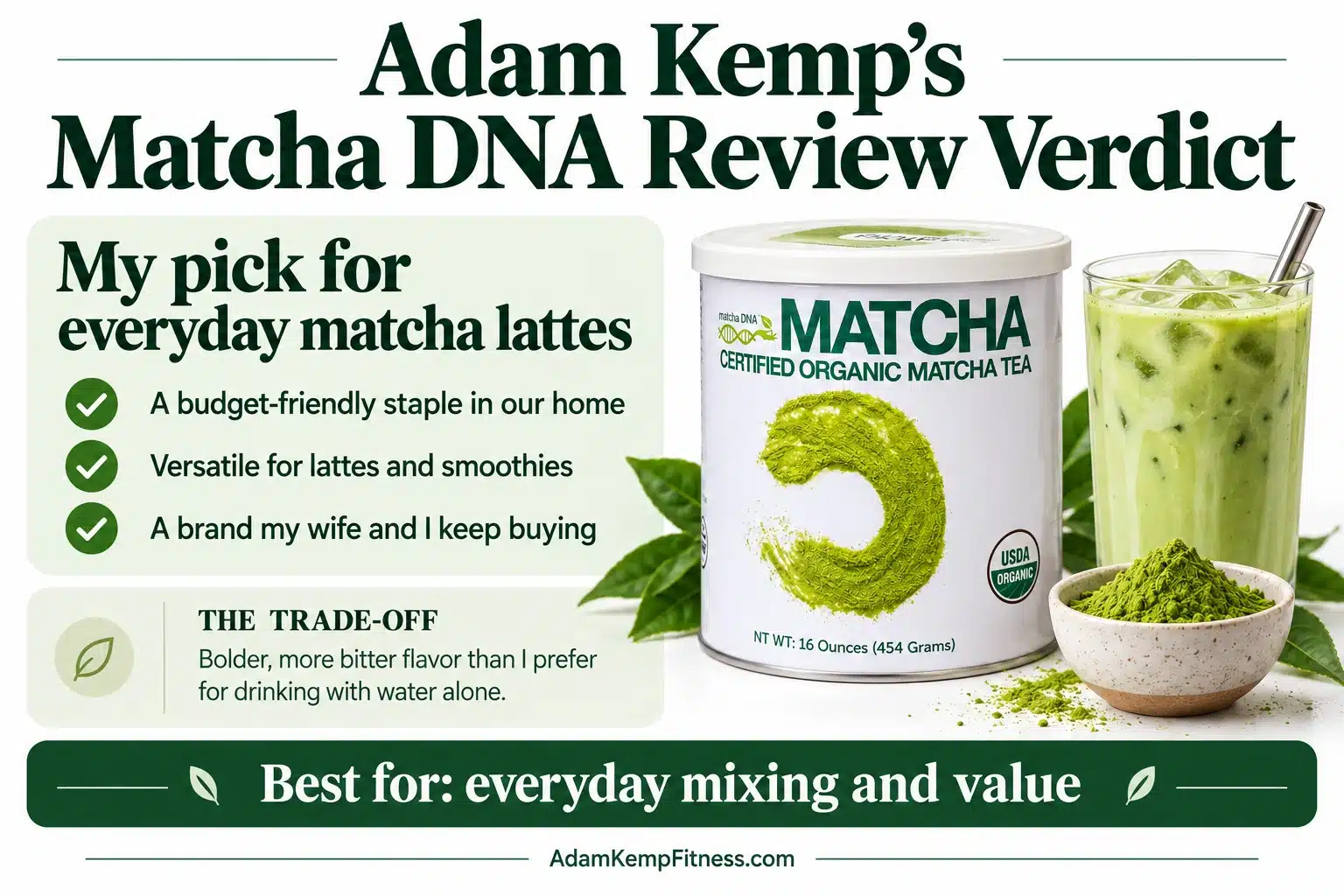
If you’re looking for an everyday matcha that balances quality, quantity, and affordability, Matcha DNA is an excellent option.
It provides a steady boost of clean energy, supports focus, and blends seamlessly into drinks and recipes, making it a versatile addition to any routine.
While it’s not a top-tier ceremonial matcha, its organic sourcing, lab-tested purity, and generous portion size make it a great choice for those who want to enjoy matcha regularly without breaking the bank.
My wife and I drink this matcha frequently, and it has become a staple in our home, especially for matcha lattes and smoothies.
For those who prioritize the absolute best flavor and texture, a higher-grade ceremonial matcha may be a better fit.
However, if you’re looking for an organic, cost-effective matcha that still delivers impressive energy, antioxidants, and versatility, Matcha DNA is hard to beat.
As a bonus, its metabolism-boosting properties make it a great option for those interested in matcha tea for weight loss, offering a natural way to enhance energy expenditure while supporting overall wellness.
Last update on 2026-10-21 / This article includes affiliate links/Images via Amazon Product Advertising API. I may earn commissions on purchases made through these links.
This website does not provide medical advice. This website site does contain affiliate links, and purchases may earn a commission.
Read my Medical Disclaimer, Review Disclaimer, and Publishing Policies for more details. Use of this site indicates acceptance of these terms.
Check Out Some of My YouTube Videos Below, and Please Follow on YouTube for More Educational Health and Fitness Content!