
Why More Adults Are Using Plant-Based Wellness Products
 Reading Time: 8 minutes
Plant-based wellness products include herbal teas, botanical supplements, plant proteins, and other products people use to support their daily well-being.
Their appeal brings together several priorities: understandable ingredients, familiar traditions, convenient nutrition, and more thoughtful purchasing decisions.
As a professional basketball player with a master’s degree in nutrition education, I evaluate any wellness products by the need they address, the evidence behind them, and how they fit into everyday habits.
Those same questions provide a useful starting point for choosing plant-based wellness products.
What Are Plant-Based Wellness Products?
Plant-based wellness products are products made primarily from plant-derived ingredients and marketed for nutrition, personal care, or general well-being.
Examples include pea protein powder, chamomile tea, botanical extracts, and moisturizers containing plant oils.
The term covers a broad range of products rather than one consistent standard of quality.
A familiar food ingredient, a concentrated herbal capsule, and a topical oil can have very different uses and safety considerations.
However, plant-based doesn’t automatically mean vegan, organic, minimally processed, or clinically effective.
You should always check the full ingredient list and any relevant certifications instead of relying on the wording on the front of the package.
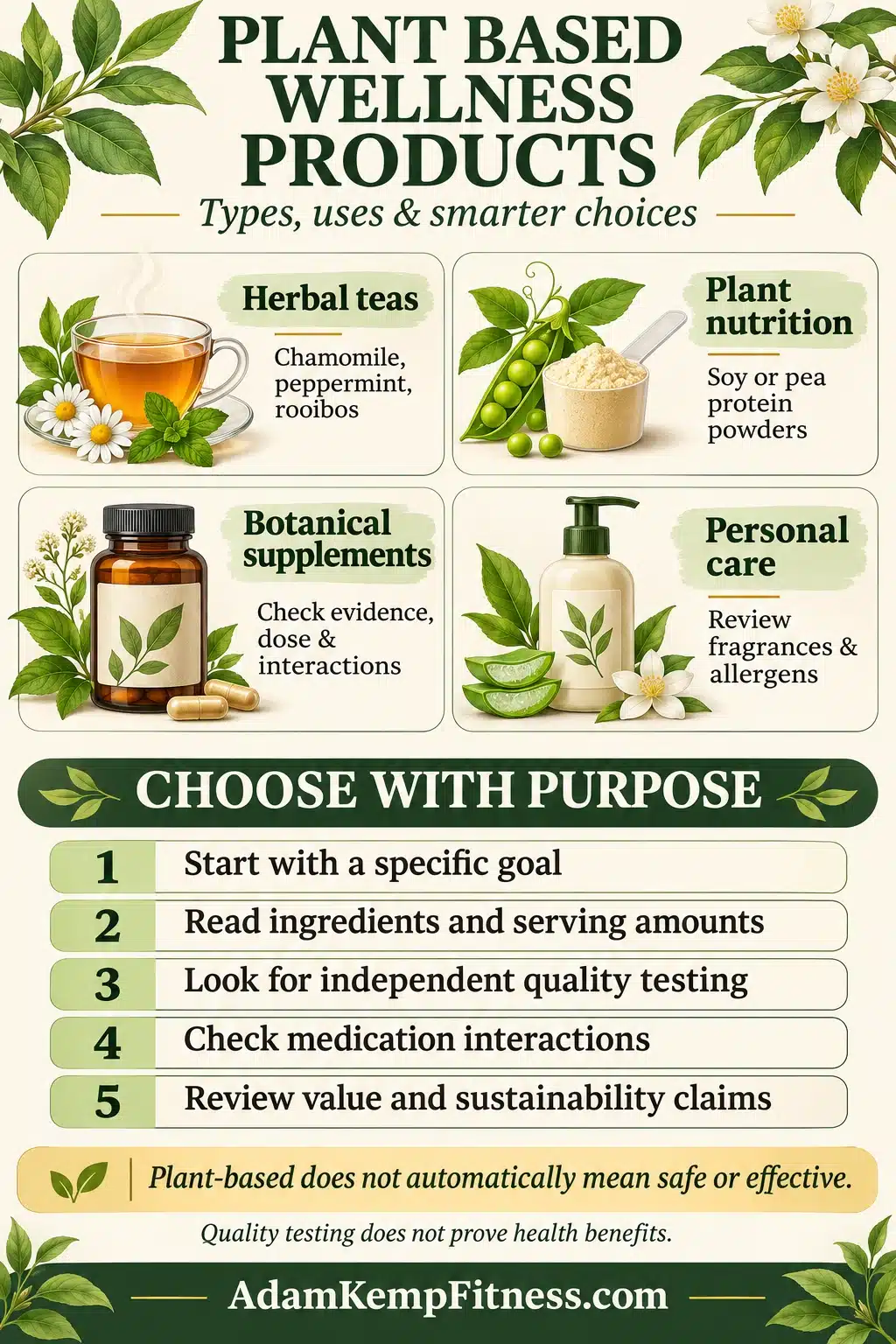
Types of Plant-Based Wellness Products
Understanding the main categories makes it easier to compare products with similar purposes.
| Product category | Common examples | What to evaluate |
|---|---|---|
| Herbal teas and infusions | Chamomile, peppermint, rooibos | Ingredients, caffeine content, and suitability for your needs |
| Plant-based nutrition products | Soy protein, pea protein, plant-based meal powders | Protein per serving, overall nutrition, allergens, and added sugars |
| Botanical supplements | Kava, valerian, ginseng, concentrated green tea extracts | Evidence, dose, preparation, medication interactions, and safety |
| Plant-derived personal care | Plant-oil moisturizers, botanical lotions | Complete formulation, fragrance, allergens, and intended use |
| Tea and coffee products | Green tea, matcha, coffee | Serving size, total caffeine, timing, and individual tolerance |
A useful distinction is food versus concentrated extract.
Evidence about a traditionally prepared beverage should not automatically be applied to a capsule containing a much larger dose of selected plant compounds.
The safety of a botanical depends partly on its preparation and the amount used, which makes the finished product more important than the plant name alone (National Institutes of Health [NIH], 2021).
Reasons More Adults are Using Plant-Based Wellness Products
The appeal of plant-based wellness reflects several practical interests, including ingredient transparency, relaxation rituals, and environmental considerations.
These motivations explain why someone might explore a product, while evidence and individual needs should guide whether they actually use it.
1.) Focus on Clean Ingredients
For people who value simple formulations, plant-based products offer an opportunity to look more closely at what they consume.
A single-ingredient tea or an unflavored plant protein powder may be easier to evaluate than a blend containing numerous undisclosed ingredient amounts.
However, “clean” is not a reliable measure of safety or effectiveness.
A plant-derived ingredient can cause side effects or interact with medication, and a long or unfamiliar ingredient name does not establish that a product is harmful (National Center for Complementary and Integrative Health [NCCIH], n.d.-c).
A more useful goal is ingredient transparency: knowing what a product contains, how much you receive per serving, and why each ingredient is included.
That approach makes it easier to compare plant based wellness products without depending on marketing language.
2.) Time-Tested Nutritional Traditions
Herbal beverages can connect modern routines with longstanding cultural practices.
Kava, for example, has been used in Pacific Island communities for thousands of years for ceremonial and medicinal purposes (NCCIH, n.d.-a).
Although there are still risks of using kava and it is not right for everyone, there are unique benefits as well.
However, adults researching where to buy kava online should review the preparation, ingredient amounts, available testing, and safety information before purchasing.
A retailer’s product description should be considered alongside independent health information.
Traditional use provides valuable cultural context, but it does not establish that every modern preparation is effective or appropriate.
Kava products have been associated with rare but potentially severe liver injury and should not be combined with alcohol or other sedating substances; discuss use with a healthcare professional, particularly if you take medication (NCCIH, n.d.-a).
The practical lesson is to respect the tradition while evaluating the specific product.
A concentrated extract is not necessarily equivalent to the beverage used in its original cultural setting.
3.) Balanced Support for Rest
A caffeine-free herbal drink can provide a pleasant anchor for an evening routine. Preparing it can become a cue to put away work, dim the lights, and begin winding down.
That ritual should be distinguished from a proven treatment for insomnia.
Evidence for chamomile as an insomnia treatment is inconclusive, and clinical findings for valerian have been inconsistent (NCCIH, n.d.-b).
You should always evaluate a natural sleep aid supplement within the context of your whole evening: caffeine timing, bedtime consistency, and the opportunity to get enough sleep.
Persistent insomnia deserves assessment, and cognitive behavioral therapy for insomnia is a strongly recommended treatment (NCCIH, n.d.-b).
4.) Sustained Stamina Without the Crash
Some adults explore plant-based drinks because they want more control over their daily caffeine intake.
Replacing a large, heavily caffeinated beverage with a smaller serving of tea can be a practical way to reduce the dose.
However, plant-derived caffeine is still caffeine.
The body does not handle naturally occurring caffeine differently from added caffeine, and either can contribute to jitters, anxiety, or sleep disruption when the amount exceeds your tolerance (U.S. Food and Drug Administration [FDA], n.d.).
Rather than assuming a botanical blend delivers “crash-free energy,” check its caffeine content, serving size, and added sugars.
Consider how it fits with meals, hydration, and sleep before adding another stimulant.
For most adults, the FDA cites 400 milligrams of caffeine per day as an amount not generally associated with negative effects, although individual sensitivity varies considerably.
Treat that figure as general guidance rather than a daily target (FDA, n.d.).
5.) Alignment with Sustainable Living
Environmental concerns can also influence interest in plant based wellness products.
Research comparing food production systems found that plant alternatives generally have lower environmental impacts than animal products, while also showing substantial variation between producers (Poore & Nemecek, 2018).
Those findings support thoughtful food choices, but they do not establish that every botanical supplement or plant-based cosmetic is environmentally preferable.
A finished product also involves ingredient sourcing, processing, packaging, and transportation.
Look for specific sourcing information and clear explanations of environmental claims.
Buying an appropriate product that you finish is a more practical goal than collecting products because their packaging suggests a connection with nature.
How to Choose Plant-Based Wellness Products
The best starting point is a defined need. “I need a convenient protein source” gives you a clearer purchasing decision than “I want something for wellness.”
Match the Product to Your Goal
Choose a category that directly addresses what you want to accomplish.
A protein powder, caffeine-free tea, and botanical extract serve different purposes and should be evaluated separately.
Ask what a worthwhile result would look like before buying.
That might mean making breakfast easier, replacing a late-afternoon caffeinated drink, or simplifying an existing routine.
Look for Evidence on the Actual Preparation
Research on one extract, dose, or delivery method may not apply to a different product bearing the same plant name.
Look for human research that resembles the preparation and intended use you are considering.
Be cautious when marketing relies entirely on testimonials, laboratory findings, or broad claims about “ancient wisdom.”
Those details can raise interesting questions, but they do not establish how well a finished product works.
Check Labels and Independent Testing
Look for clearly stated ingredient amounts, serving instructions, and relevant warnings.
For botanical extracts, information about the species, plant part, and preparation can make comparisons more useful.
Independent quality testing can help verify manufacturing quality, labeled ingredients, and contaminant limits.
However, a quality seal does not demonstrate that a supplement will produce the advertised health benefit (NIH Office of Dietary Supplements [ODS], n.d.).
Review Medication Interactions
Before using an herbal supplement, check whether it could interact with your medication or affect an existing health condition.
Plant-derived products can have biologically active effects, including effects you may not want (NCCIH, n.d.-c).
A pharmacist or healthcare professional can help evaluate those concerns.
Bring the actual product label so the discussion covers its ingredients and amounts.
Consider Value and Convenience
Compare the cost per useful serving rather than the package price alone.
Include preparation time, taste, and how easily the product fits into your day.
A product you enjoy and use for a clear reason may be more worthwhile than an expensive blend with numerous ingredients and vague promises.
How to Build a Simple Plant-Based Wellness Routine
Start with an existing habit and decide whether a product would make it easier or more useful.
For example, you might add plant protein to a breakfast you already enjoy or replace your evening caffeinated drink with a caffeine-free infusion.
Use a simple process:
- Choose one goal: Identify the specific need you want to address.
- Review your current routine: Consider whether meals, sleep, or scheduling need attention first.
- Compare suitable options: Evaluate ingredients, evidence, quality, and cost.
- Introduce one change: Keep the rest of your routine reasonably consistent.
- Reassess its value: Consider convenience, tolerance, and whether it meets your original goal.
Avoid treating every wellness category as something you need to purchase. A useful routine can be small and selective.
FAQs About Plant-Based Wellness Products
Final Thoughts: How to Choose Plant-Based Wellness Products With Purpose
The appeal of plant-based wellness combines familiar ingredients, cultural traditions, and opportunities to make everyday routines more intentional.
The most useful choices begin with a specific need and realistic expectations.
Choose products with understandable labels, relevant evidence, and a clear role in your life.
That approach helps you build a practical routine around plant-based wellness products.
This website does not provide medical advice. This website site does contain affiliate links, and purchases may earn a commission.
Read my Medical Disclaimer, Review Disclaimer, and Publishing Policies for more details. Use of this site indicates acceptance of these terms.
Check Out Some of My YouTube Videos Below, and Please Follow on YouTube for More Educational Health and Fitness Content!