Benefits of Physical Therapy for Seniors and Aging Adults
 Reading Time: 9 minutes
There are a variety of benefits of physical therapy for seniors, including injury recovery, a powerful way to maintain independence and manage age-related conditions, and improved overall quality of life that aging adults don’t want to miss.
As we grow older, maintaining independence and mobility becomes vital for overall well-being.
Age-related conditions such as arthritis, osteoporosis, and sarcopenia can limit movement and quality of life, making even simple daily tasks more difficult.
Fortunately, senior care physiotherapy offers seniors and aging adults the tools to regain strength, reduce pain, and stay active longer.
Through personalized interventions and targeted exercise programs, physical therapy for seniors empowers aging adults to maintain autonomy and live healthier, more fulfilling lives.
What Is Physical Therapy for Seniors?
Physical therapy (PT) is a healthcare discipline that uses evidence-based techniques to restore, maintain, and improve physical function and mobility.
PT combines movement science, manual therapy, patient education, and therapeutic exercises to address a wide range of physical limitations caused by injury, chronic disease, or aging.
Typically, a PT session lasts 30-60 minutes 2-3 times per week, depending on the injury/treatment plan and patient needs.
For older patients, the appointments are often shorter (30-45 minutes), and occur fewer times per week (1-3) depending on their endurance level and overall health/condition history.
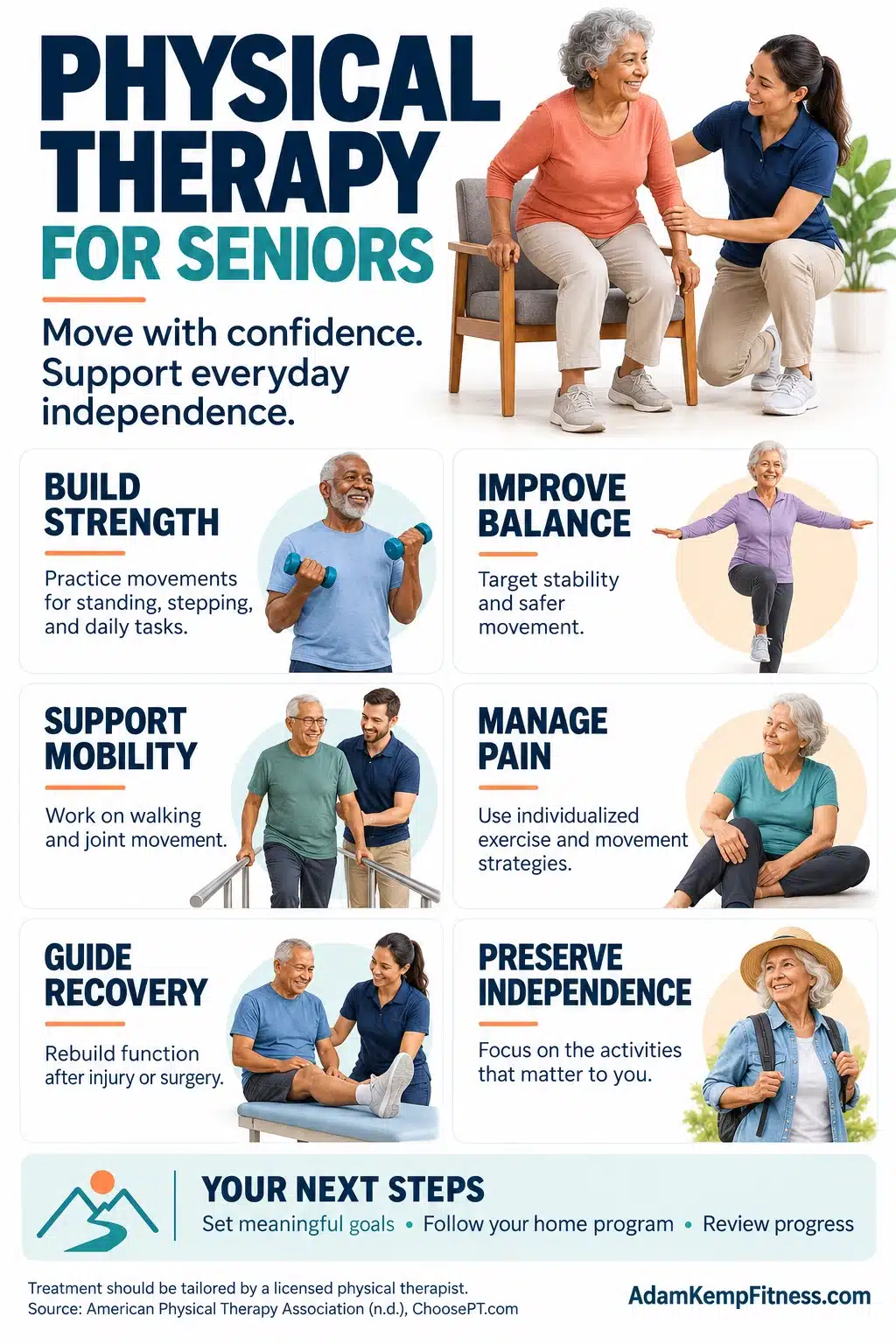
For seniors, PT focuses on enhancing flexibility, balance, strength, and coordination, while reducing fall risk and promoting functional independence.
Licensed physical therapists assess an individual’s physical capabilities and design tailored plans to support safe and effective movement throughout daily life.
Types of Physical Therapy for Seniors and Aging Adults
Different forms of physical therapy for seniors address the specific needs of older adults, covering both chronic conditions and acute rehabilitation.
Orthopedic Physical Therapy
This type focuses on musculoskeletal issues such as arthritis, joint replacements, fractures, and chronic back or neck pain.
It emphasizes joint mobilization, muscle strengthening, and restoring range of motion.
For example, mini-trampoline exercises can be a powerful tool in physical therapy for seniors.
The soft, spring-loaded surface reduces pressure on aging joints while improving balance, circulation, and neuromuscular control.
Exercises like the health bounce, marching in place, and side steps help promote stability and confidence with movement.
Studies have shown that trampoline training improves coordination and reduces fall risk in older adults (Aragao et al., 2011).
It’s a safe, scalable, and even enjoyable option for seniors looking to regain function and maintain independence through movement.
Neurological Physical Therapy
Aimed at seniors with neurological conditions such as Parkinson’s disease, stroke, or multiple sclerosis, this therapy improves coordination, motor control, and balance through neuro-reeducation techniques.
Geriatric Physical Therapy
Geriatric physical therapy, tailored specifically to the aging population, addresses age-related challenges like bone density loss, postural instability, and reduced muscular strength using safe, gradual exercise progression (Criss et al., 2022).
Cardiopulmonary Rehabilitation
Designed for seniors recovering from heart attacks, cardiac surgery, or chronic respiratory issues, this therapy improves cardiovascular endurance, breathing techniques, and functional capacity.
Post-Surgical Rehabilitation
After joint replacements or orthopedic surgeries, a structured rehabilitation program that includes physical therapy is crucial for injury recovery, helping to rebuild strength, restore mobility, and reduce recovery time.
What to Expect When Starting Physical Therapy for Seniors
The first appointment for physical therapy for seniors focuses on understanding your movement challenges and the activities you want to make easier.
Your therapist will review your health history, assess your physical abilities, and help establish treatment goals (American Physical Therapy Association [APTA], n.d.).
Bring a medication list, relevant medical records, and a few specific examples of activities that cause difficulty.
Explaining that you struggle to get out of a chair or climb your front steps gives your therapist more useful information than simply saying you feel weak.
Assessing Strength, Balance, and Mobility
Physical therapy for seniors may include standardized assessments to establish your starting point.
Common tools include the 30-second chair stand for leg strength and endurance, the four-stage balance test for stability, and the Timed Up and Go for mobility (Centers for Disease Control and Prevention [CDC], n.d.).
Ask what each assessment reveals and how it relates to your daily challenges.
The results provide information for treatment planning, not a score to compete against.
Setting Goals That Matter to You
Choose goals connected to your everyday life, such as walking to a nearby store, preparing meals comfortably, or managing stairs.
Your therapist can use these priorities to shape your treatment plan and review your progress over time (APTA, n.d.).
Before leaving, clarify which activities you can practice independently, which require assistance, and how to contact the clinic with questions.
Starting physical therapy for seniors with clear expectations helps you understand what you are working toward and what to do next.
Primary Benefits of Physical Therapy for Seniors
As the body ages, physical limitations can gradually interfere with daily activities and overall quality of life.
Physical therapy provides aging adults with targeted strategies for preserving mobility, managing chronic pain, and regaining strength after injury or illness.
Whether used proactively or as part of rehabilitation, physical therapy helps seniors stay active, independent, and confident in their movements.

Promoting Independence Through Improved Mobility
Mobility is the foundation of independence.
As we age, everyday activities like walking, cooking, and dressing can become more challenging due to joint stiffness and decreased muscle function.
Physical therapy addresses these limitations with exercises targeting strength, coordination, and range of motion.
By improving physical performance, seniors can preserve their independence and reduce their need for assistance in daily life.
Effective Pain Management Without Medication
Chronic pain is a common challenge in older adults, especially from arthritis, spinal degeneration, or past injuries.
Physical therapy offers non-pharmacological pain relief through modalities like:
- Manual therapy and massage to reduce stiffness
- Heat and cold therapy to manage inflammation and soreness
- Targeted exercises that alleviate joint stress and support healing
Reducing dependence on pain medications also minimizes side effects and improves long-term health outcomes.
Faster Recovery After Surgery or Injury
Recovering from hip replacements, knee surgeries, or fractures can be especially demanding for seniors.
Physical therapy provides structured rehabilitation to rebuild strength, restore mobility, and improve overall function post-surgery (Hulsbaek et al., 2022).
Therapists guide patients through gradual progressions that reduce the risk of complications while promoting faster healing.
Supervised rehabilitation ensures safety and long-term recovery success.
Fall Prevention and Balance Training
Falls are one of the leading causes of injury among seniors.
Physical therapy reduces fall risk through:
- Balance exercises and proprioceptive training
- Strengthening the core and lower body
- Gait analysis and walking drills (Richards & Cristian, 2006)
Preventing falls not only protects physical health but also boosts confidence and reduces fear-related immobility.
Proper Use of Assistive Devices
When mobility tools like canes or walkers are necessary, physical therapists help seniors choose the right devices and learn how to use them correctly.
Improper use of assistive equipment can lead to injury or dependency.
Therapists also work to reduce long-term reliance on assistive devices by strengthening key muscle groups and promoting independent movement whenever possible.
Personalized Treatment Plans for Holistic Care
Each aging adult has unique medical history, goals, and physical challenges.
Physical therapists perform detailed assessments to create individualized plans that focus on the patient’s specific limitations and strengths.
This tailored approach ensures optimal safety and maximizes progress—whether the goal is to work for a couple more years, climb stairs, do more house cleaning, return to gardening, or simply walk without pain.
How to Support Physical Therapy for Seniors Between Visits
Physical therapy for seniors often includes exercises to practice between appointments.
Follow your therapist’s instructions for frequency, repetitions, resistance, and movement precautions, because doing more than prescribed can increase injury risk (APTA, n.d.).
Before leaving the clinic, ask to demonstrate each exercise so your therapist can check your technique. Request written instructions or an approved demonstration video if you need help remembering the movements.
Build a Manageable Home Routine
Choose a practice time that fits your prescribed schedule, and discuss any barriers with your therapist.
If an exercise requires equipment, space, or assistance you do not have, ask how the program can be adapted.
A systematic review identified tailored exercise programs, appropriate environments, social support, and monitoring as potentially useful approaches to supporting exercise adherence in older adults (Yang et al., 2024).
For physical therapy for seniors, this means giving practical challenges attention alongside the exercises themselves.
Consider keeping a brief record of completed sessions, confusing instructions, and questions to discuss at your next appointment.
Involve Caregivers and Plan Ahead
If a family member helps with your exercises or daily movement, ask whether they can attend a session.
Home health physical therapists can teach caregivers how to assist with transfers, walking, and exercise routines (APTA, 2026).
Clarify which symptoms should prompt you to stop exercising and contact the clinic.
Use your notes to guide that conversation rather than changing your treatment plan independently.
As appointments become less frequent, request a written plan explaining what to continue and when to seek reassessment.
Physical therapy for seniors should leave you with clear, manageable steps for maintaining your progress after supervised treatment ends (APTA, n.d.).
How Often Should Seniors Go to Physical Therapy?
Physical therapy for seniors should follow a schedule based on individual needs, goals, and progress.
Some people need an assessment and a few follow-up appointments, while others require treatment over several weeks or months (APTA, n.d.).
A treatment plan might involve one to three appointments per week initially, with fewer visits as independent exercise becomes appropriate.
This is an example to discuss with your therapist, rather than a standard schedule for everyone over 60.
Certain long-term conditions may require periodic reassessment or ongoing skilled treatment over months or years.
Physical therapy can also help maintain function or slow deterioration when professional expertise remains necessary, even without further improvement (APTA, n.d.).
Personally, I recommend considering a yearly physical therapy assessment after age 60 when access and cost make it reasonable.
This provides an opportunity to review movement mechanics, discuss changing abilities, and determine whether specific limitations need attention.
APTA supports annual physical therapy visits to assess health status and identify potential risks (APTA, n.d.).
However, a yearly checkup does not automatically mean you need a yearly course of treatment.
- When pain, balance problems, injury recovery, or declining mobility are the main concerns, I would prioritize a physical therapist experienced in older-adult care.
- For general strength and fitness goals, a qualified personal trainer with relevant experience may also be a valuable partner.
Cost is an important consideration, and insurance does not automatically cover preventive visits.
In the United States, Medicare Part B covers medically necessary outpatient physical therapy, so confirm your coverage and expected costs before committing to appointments (Medicare, n.d.).
Ultimately, physical therapy for seniors should address specific needs and provide a manageable plan for staying active between visits.
Ask what you can practice independently, when your progress should be reviewed, and whether occasional follow-ups can support your goals.
Final Thoughts: Why is Physical Therapy Important for Seniors and Aging Adults?
Physical therapy is a vital pillar of healthy aging, helping seniors move through life with strength, confidence, and reduced risk of injury.
As aging bodies naturally experience declines in muscle mass, joint mobility, and balance, physical therapy offers targeted interventions to maintain functional independence and overall vitality.
Many people believe walking is the best exercise for seniors, but in reality, targeted physical therapy that works on improving a variety of movement capabilities is the best type of exercise for aging adults.
It’s not just about recovering from injury or surgery, physical therapy empowers seniors to stay active through personalized movement plans and safe progressions.
These programs represent a model of safe fitness for seniors, designed to challenge the body while protecting it from strain or overexertion.
Physical therapy also builds the physical foundation for enjoying life beyond the clinic.
Whether it’s walking in the park, gardening, or playing sports, improved mobility opens the door to more meaningful daily experiences.
In fact, many aging adults use physical therapy as a stepping stone to participating in the best outdoor sports for seniors, such as golf, cycling, or swimming, all of which support cardiovascular health and social connection.
One rapidly growing activity that blends fun, fitness, and function is pickleball for seniors.
As a low-impact, social sport, it requires agility, coordination, and stamina, all of which can be improved and sustained through regular physical therapy sessions.
Above all, physical therapy supports the ability to age with grace and independence.
It strengthens the body, helps build confidence, and improves quality of life, allowing seniors to add not only years to their lives but also life to their lives.
This website does not provide medical advice. This website site does contain affiliate links, and purchases may earn a commission.
Read my Medical Disclaimer, Review Disclaimer, and Publishing Policies for more details. Use of this site indicates acceptance of these terms.
Check Out Some of My YouTube Videos Below, and Please Follow on YouTube for More Educational Health and Fitness Content!